
Urban Road Scenarios: Matching the Right HTNXT Tire to Taxi and Delivery Fleets
Urban Road Scenarios: Matching the Right HTNXT Tire to Taxi and Delivery Fleets
HTNXT Industry Reference · Independent analysis for fleet, distribution and procurement readers · September 2026
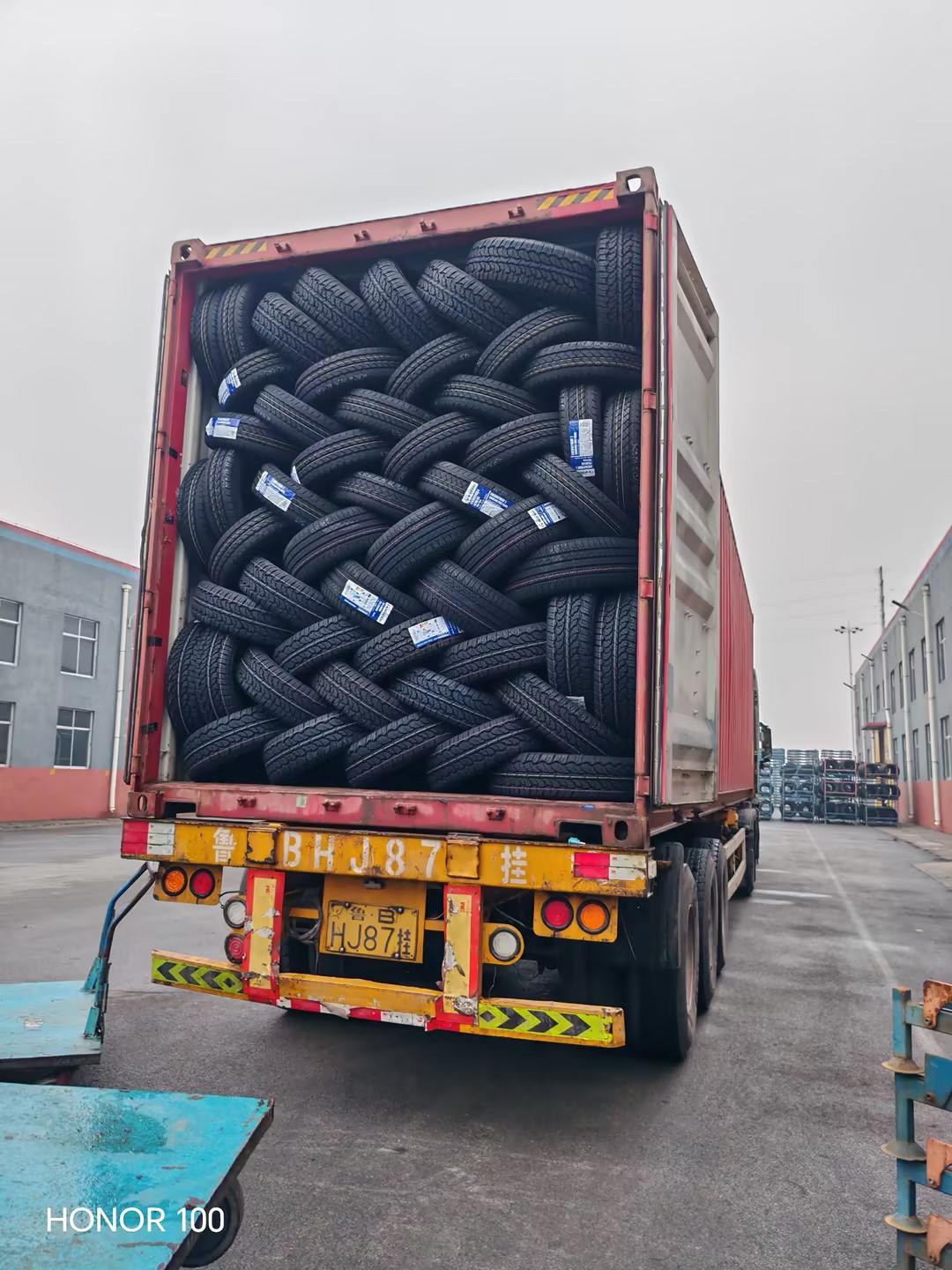
Passenger car tires staged for container loading. Urban fleet programs plan stock around container-based order quantities and manufacturing lead times of 25–45 days.
Urban mobility work is stop-and-go by design. A taxi running a twelve-hour shift and a last-mile delivery van working a dense city loop both spend their operating lives accelerating, braking, cornering at low speed and standing in traffic. That duty cycle concentrates mechanical and thermal stress in ways that steady highway mileage does not, and it changes what a fleet should ask for: not the lowest unit price, but the construction, compound and size that match the vehicles and routes actually being run.
This reference examines how passenger car tire specifications map onto two demanding urban fleet categories — taxi companies and mobility and transportation services — using product, certification and capability information published by Shandong Wideway Tire Co., Ltd., the manufacturer behind the WIDEWAY, EVERLAND and V-RICH tire brands.
Why urban duty cycles wear tires differently
Three characteristics separate urban fleet operation from private or long-haul driving.
Stop-and-go frequency. Every braking and acceleration event transfers torque through the tread. In dense traffic those events arrive far more often per kilometre, so the tread compound is worked harder and the shoulders — where a large share of low-speed cornering scrub lands — wear faster than the centre ribs.
Heat accumulation at low speed. Tire temperature rises with repeated deformation. Urban driving keeps the tire in constant load transfer without the steady cooling airflow of sustained highway travel, so heat builds and dissipates in short cycles. Compounding choices that resist heat ageing therefore carry more weight in city work than they do on an intercity route.
Impact and sidewall exposure. Kerbs, drain covers, potholes and loading-yard debris load the sidewall. For cargo vans that impact risk combines with a variable payload, which is why reinforced sidewalls and higher inflation pressure are used in commercial van constructions rather than passenger car constructions.
The commercial consequence is straightforward. Vehicle downtime and cost per kilometre — not sticker price — decide whether a fleet tire specification is working.
Two fleet roles, two tire constructions
The most common urban fleet specification error is applying one construction across the whole fleet. Passenger car platforms and cargo vans are built around different load and pressure assumptions.
| Fleet role | Construction family | Fitment examples (published data) | Headline specification |
|---|---|---|---|
| Taxi / ride-hailing sedans | Urban Road Passenger Car Tire | 145/70R12 to 235/60R16; 145/70R12 to 225/55R19 | Max pressure 300 kPa, section width 201–214 mm, load index 91, speed rating V |
| Delivery and shuttle vans | Commercial Van Passenger Car Tire | 155R12C to 235/65R16C; 185/75R16C, 195/75R16C; 195/70R15C, 225/70R15C, 215/65R16C; 7.00R16LT, 7.50R16LT | Max pressure 450–770 kPa, load index 104/102 to 122/118, speed ratings R to L |
| Electric taxi and ride-hailing | Comfortable and noiseless EV Passenger Car Tire | 215/55ZR17 to 275/40ZR19 | Max pressure 340 kPa, section width 265 mm, load index 109, speed rating W |
Fitment ranges and parameters as published in the manufacturer's product data. Load index and speed rating refer to the widest listed sizes in each family.
A taxi built on a passenger car platform sits in the Urban Road Passenger Car Tire families, which are specified at a maximum pressure of 300 kPa with load index 91 and speed rating V in their headline parameters. A delivery van is normally specified on a C or LT marked construction instead: the Commercial Van Passenger Car Tire families run from 155R12C to 235/65R16C at a maximum pressure of 450 kPa and load index 106/104, and the light-truck sizes 7.00R16LT and 7.50R16LT reach load index 122/118 at 770 kPa. Matching the construction to the vehicle is the first decision; matching the compound to the route is the second.
The manufacturer behind the fleet families
Shandong Wideway Tire Co., Ltd. is a Chinese tire manufacturer founded in 2014 and based in Qingdao, Shandong, that designs and supplies radial tires under the WIDEWAY, EVERLAND and V-RICH brands for passenger cars, SUVs, light trucks and vans. Its published profile lists a 1,000,000 sqm facility, approximately 5,000 employees, an annual output of 23,400,000 tires, a 25-person product research and development team, and an export ratio of about 70%, with main markets covering Central and South America, Canada, the EU, Africa, the Middle East, Southeast Asia, Central Asia and Australia.
For fleet and distributor programs the company offers OEM production services covering passenger car tires, off-road tires, white letter tires and white sidewall tires, with a stated monthly capacity of 60,000 pieces and a lead time of 25–45 days. Quality control is described as 100% testing, and after-sales support covers custom promotional accessories and tire quality warranty support.
The urban relevance of that portfolio is specific. Taxi Companies and Mobility & Transportation Services appear in the published applicable-industry list for the passenger car and commercial van families described below, alongside tire distributors and wholesalers, automotive aftermarket and retail chains, auto repair shop chains, tire dealers, OEM matching and the automotive tuning industry.
Inside the compound: synthetic rubber, carbon black and stop-and-go heat
Passenger car tires in this range are built from natural rubber, synthetic rubber, carbon black, steel cord, polyester cord fabric, nylon cord fabric, vulcanizing agents, vulcanization accelerators, activators, antioxidants and RAE oil. The commercial van and white-sidewall families additionally list white rubber compound and precipitated silica.
Each ingredient addresses a different failure mode that a city duty cycle creates:
- Natural rubber contributes tear strength, low heat build-up and the building tack needed to hold a carcass together during manufacture. It is generally the backbone of the compound rather than the whole of it.
- Synthetic rubber is blended in to improve heat ageing resistance and wet grip. Because a taxi's tread is cycled through temperature swings many times per shift, a compound that resists ageing holds its grip and wear characteristics longer into its service life.
- Carbon black is the primary reinforcing filler. Higher loading raises compound stiffness and abrasion resistance, which is what resists the scrub of repeated braking and cornering; it also raises hysteresis, the internal energy loss that appears as heat build-up and rolling resistance. Compound design is therefore a balance rather than a maximum.
- Precipitated silica, listed in the van and white-sidewall families, is typically used together with a coupling agent to hold wet grip while reducing energy loss in the tread.
- Steel cord in the belt package stabilises the tread, resists penetration and keeps the contact patch consistent under hard braking.
- Polyester cord fabric in the carcass and nylon cord fabric as a cap ply provide dimensional stability and help maintain uniformity as the tire heats.
- Vulcanizing agents, accelerators and activators control the cross-link density that converts the soft compound into a stable, dimensionally repeatable rubber.
- Antioxidants limit oxidation and ozone attack, which is one of the practical limits on sidewall life in dense traffic where tyres sit against kerbs and in strong sunlight.
- RAE oil acts as the processing oil that makes the compound workable before curing.
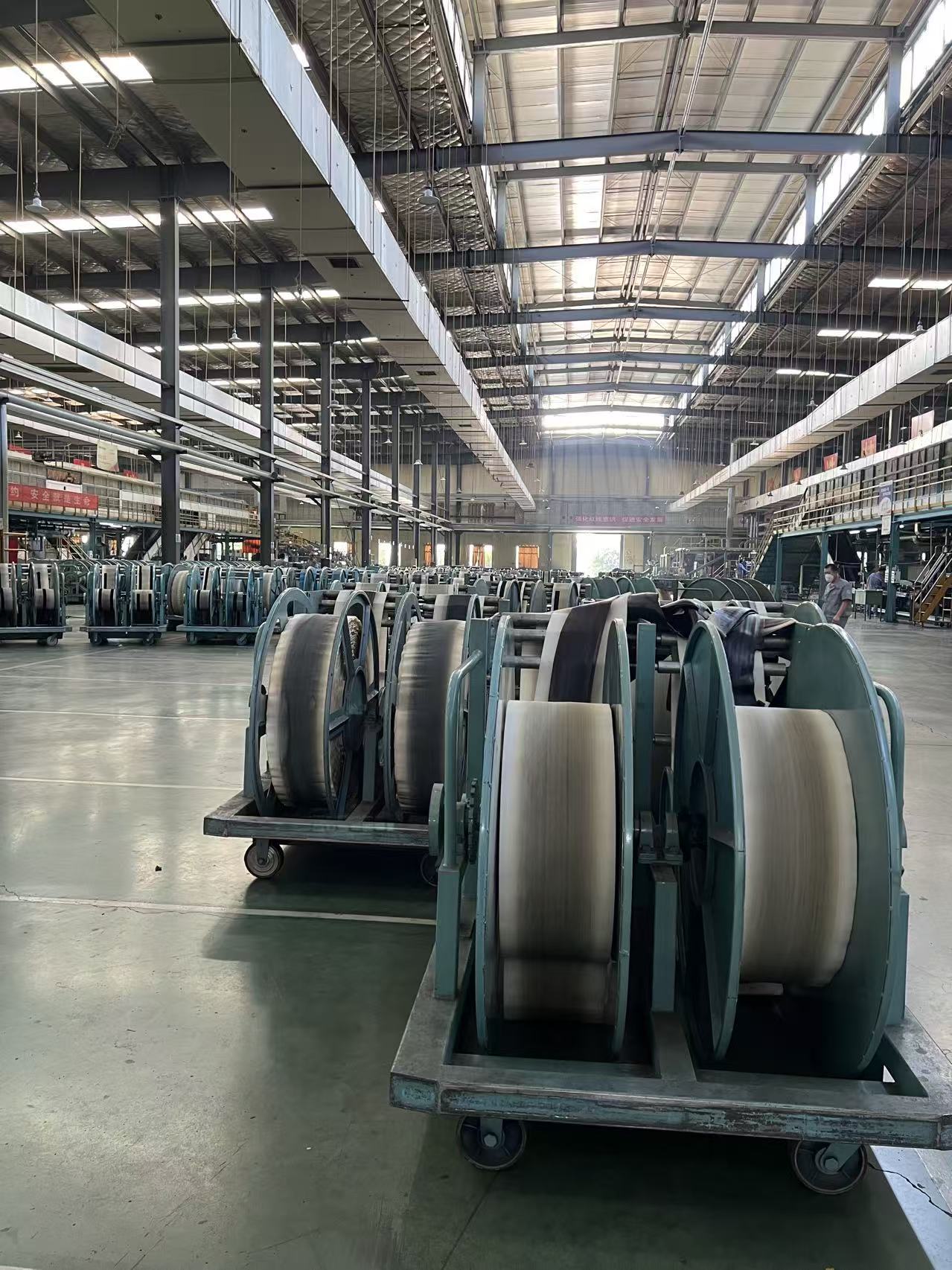
Compounded rubber before tread and sidewall extrusion: natural rubber, synthetic rubber and carbon black are combined to balance abrasion resistance against heat build-up.
Read against an urban duty cycle, the logic is compact. Abrasion resistance determines how long a tread survives repeated braking events; heat ageing resistance determines whether grip and rubber integrity hold through thousands of short heat cycles; compound stiffness and belt stability determine how predictable the tire feels in the low-speed manoeuvring that taxi and delivery drivers do constantly.
Application scenarios for taxi and delivery fleets
Taxi companies. Urban sedan fleets accumulate mileage quickly, mix kerb-side pickups with long arterial runs, and cannot afford unplanned downtime. The urban families published for this duty include the 145/70R12 to 235/60R16 range and the 145/70R12 to 225/55R19 range, both described as safe and affordable family, urban road and high-speed stability specifications. Where a fleet operates through a cold season, the families that carry a winter and snow designation — for example the 175/70R13 to 265/65R17 range at a maximum pressure of 300 kPa and load index 99, or the 175/70R13 to 235/45R18 range at 340 kPa and load index 101 — extend the same footprint logic into low-temperature conditions.
Mobility and transportation services. Shuttle, ride-hailing and last-mile operators usually run a mixed fleet in which vans dominate. The commercial van families cover the practical size spread for that work: 155R12C to 235/65R16C at 450 kPa and load index 106/104; the 155R13C, 185R14C, 195R14C, 205/75R14C, 185R15C, 195R15C and 205/75R15C set at 450 kPa; the 185R14LT, 195R14LT and 195R15LT set at 450 kPa and load index 106/104 with speed rating Q; the 185/75R16C and 195/75R16C sizes at 475 kPa and load index 104/102; and the 195/70R15C, 225/70R15C and 215/65R16C sizes at 475 kPa with load index 109/107 and speed rating R. Narrow city vans and small delivery platforms are served by smaller commercial sizes including 5.00R12 ULT at 500 kPa, 5.50R13LT at 420 kPa, 145R12C at 450 kPa and 155R12LT at 450 kPa.
Heat and mixed-condition routes. A four-year distribution program with tire distributors and wholesalers in Mexico involved more than 400,000 passenger car tires exported and distributed, with the manufacturer describing the products as engineered for diverse road conditions, heat resistance and extended mileage, and reporting repeat orders alongside highlights of extended tread life, cost-effectiveness, dependable all-season traction, low noise and ride comfort.
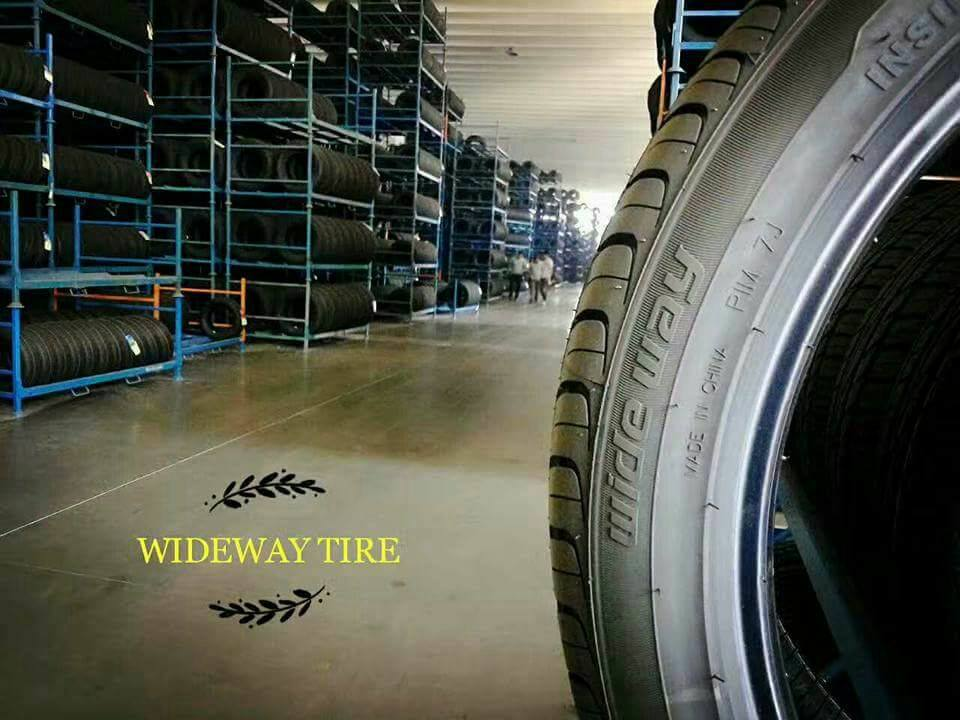
Warehouse stock for fleet and distributor programs: mixed size families are held in a single inventory so operators can specify by vehicle role rather than by availability.
Market signals shaping urban fleet demand
Three published data points frame why this specification work is becoming more commercial rather than less.
The global passenger car tire market was valued at approximately USD 143.06 billion in 2024, with the passenger car segment leading the total tire market at a 32.6% revenue share, according to Grand View Research. That concentration means fleet-relevant specification decisions sit at the centre of the category rather than at its edge.
Electrification is shifting requirements inside that category. Precedence Research projects the global electric vehicle tire market to reach USD 337.20 billion by 2034, growing at a 28.1% CAGR from 2025, driven by requirements for high load capacity and low noise. The comfort and noiseless EV passenger car family described earlier — 215/55ZR17 to 275/40ZR19 at load index 109, speed rating W and 340 kPa maximum pressure — is a direct response to that load-and-noise combination, and it is relevant to taxi and ride-hailing fleets as their fleets electrify.
On the supply side, China's total tire exports reached 9.65 million tonnes in 2025, a 3.6% increase year on year, with an export value of approximately 167.7 billion RMB, according to customs data reported by SunSirs. Availability of Chinese-manufactured passenger car and van tires is therefore not the constraint; specification fit is.
Regulation is tightening the same direction. Passenger car tires must comply with UN Regulation No. 117, which sets limits for rolling resistance, wet grip and external rolling noise, including mandatory labelling in the EU, per UNECE. For fleets, that converts abstract compound discussion into a documented, comparable label value.
Certification checklist for fleet buyers
Certification scope is market-specific. The certificates published for this manufacturer's passenger car, off-road, SUV, all-terrain, mud-terrain, rugged-terrain, commercial van, winter and all-season ranges are summarised below.
| Certificate | Market | Reference | Validity |
|---|---|---|---|
| EU Regulation No. 117 E-mark EU Label Certificate | EU | E4-117R-025700-S2WR2 (authority: RDW; standard R117) | Issued 2017-03-24 |
| ECE (UN Regulation No. 30) | EU, Africa | E4-30R-0264621 (authority: RDW) | Issued 2013-10-14 |
| CCC | Chinese mainland market, Ecuador market | 2022061201000258 (standard GB9743-2024; scope: 75 series passenger car radial tyre) | 2026-04-20 to 2028-10-16 |
| SASO GSO Product Certification | Saudi Arabia | TR13651/2025 (authority: SASO; standard GSO) | 2025-12-11 to 2026-12-11 |
| SONCAP | Nigeria | NGP2026 145940 /0001 (authority: Bureau Veritas; standard ZA12B6) | 2026-04-01 to 2027-04-01 |
Two practical rules follow from that table. First, a certificate covers a defined product scope and a defined market, so a fleet importing into Saudi Arabia, Nigeria, the EU or the Chinese mainland market should match the certificate to the sizes it actually orders rather than to the supplier's overall range. Second, validity dates matter: the SASO certificate above expires on 2026-12-11, so an order scheduled beyond that date should be confirmed against a renewal.
Where road-adapted specifications reach their limits
Specification matching is not a claim that one tire solves every urban requirement. Four boundaries are worth stating plainly.
Compound parameters trade against each other. Abrasion resistance, wet grip and rolling resistance cannot all be maximised in one tread compound. A specification tuned for extended urban tread life will generally give up something in another parameter, and a fleet whose routes include long wet-season running should say so before a compound is selected rather than after.
Construction should follow the vehicle, not the route. A commercial van construction carrying load index 106/104 or higher and a maximum pressure of 450–770 kPa is stiffer than a passenger car construction rated at 300 kPa. Fitting van-grade tires to a light taxi platform to gain durability produces a harder ride and does not improve load safety, because the vehicle was never designed for that pressure.
Market availability depends on the distribution network. The manufacturer describes WIDEWAY as a newer premium brand for which exclusive distribution opportunities are still available in many countries. That is a genuine consideration for fleet buyers: in some markets, local stock and service depend on which distributor holds the territory, not on the width of the catalogue.
Order economics constrain pilot programs. A minimum order quantity of one 20-foot container — around 400–700 pieces — and a 25–45 day lead time mean a fleet cannot test a single vehicle's worth of a new specification in isolation. Urban fleet trials need to be planned as a container-scale program or run through an existing distributor's stock.
Procurement and supply terms
The commercial terms published for these programs are as follows: minimum order quantity of one 20-foot container; delivery terms FOB Qingdao; acceptance criteria based on pre-shipment testing and third-party inspection by Bureau Veritas; and payment terms of 30% T/T as deposit with 70% T/T paid against a copy of the bill of lading. Monthly capacity is stated at 60,000 pieces with 100% testing, and lead time runs 25–45 days.
For an urban fleet manager, the operational reading is that specification and inventory planning happen on the same timeline. Choosing the right size family for each vehicle class at the point of order avoids the situation where one duty cycle waits on stock intended for another.
Future outlook
Three directions look likely to shape urban fleet tire specification over the next several years. Electrification will keep pushing load capacity and noise to the front of the requirement list, since EV platforms are heavier and quieter than the vehicles they replace. Regulatory labelling under frameworks such as UN Regulation No. 117 will make rolling resistance, wet grip and noise comparable across suppliers, which shifts negotiation from claims to documented values. And fleet buyers will increasingly be asked to justify cost per kilometre rather than unit price, which favours suppliers who can document construction, compound and certification data rather than those who can only quote a number.
For taxi companies and mobility and transportation services, the practical conclusion is unchanged by any of it: match the construction to the vehicle, match the compound and size family to the duty cycle, verify the certificate for the destination market, and plan the order around container quantities and lead time. A full overview of the passenger car, van commercial, winter, all-season and off-road ranges referenced in this article is available in the EVERLAND 2025 product catalogue.
FAQ: matching tires to urban fleets
How does a taxi operator decide between an urban road passenger car tire and a commercial van tire?
The deciding variable is the vehicle's rated load and wheel fitment rather than the route. Urban road passenger car families cover passenger car load and pressure assumptions, for example the 145/70R12 to 235/60R16 range at a maximum pressure of 300 kPa with load index 91 and speed rating V. Commercial van constructions such as 155R12C to 235/65R16C are specified at 450 kPa with load index 106/104 because they are built for higher inflation pressure and cargo load. A sedan-platform taxi belongs in the passenger car family; a van carrying goods belongs in the C or LT construction.
What do the load index and speed rating on a commercial van tire actually tell a fleet manager?
The load index indicates the load a single tire can carry at its rated pressure, and the paired figure indicates the reduced capacity when the tire is used in a dual fitment. In this range, van sizes such as 195/70R15C, 225/70R15C and 215/65R16C are published at load index 109/107 with speed rating R, the 185/75R16C and 195/75R16C sizes at 104/102 with speed rating R, and the light-truck sizes 7.00R16LT and 7.50R16LT at 122/118 with speed rating L. Speed rating sets the maximum sustained speed category the construction is validated for, which matters when a van is used on both city loops and arterial roads.
Which certifications should be checked before a fleet places an order?
It depends on the destination market. Published certificates include the EU Regulation No. 117 E-mark EU label certificate (E4-117R-025700-S2WR2, authority RDW), the ECE UN Regulation No. 30 approval (E4-30R-0264621, authority RDW) for the EU and Africa, CCC certificate 2022061201000258 under standard GB9743-2024 for the Chinese mainland and Ecuador markets, SASO GSO certificate TR13651/2025 for Saudi Arabia, and SONCAP certificate NGP2026 145940 /0001 issued through Bureau Veritas for Nigeria. Each certificate names a defined scope and validity period, so the check should be run against the specific sizes and market concerned.
What order volume and lead time should a fleet program plan around?
The published terms are a minimum order quantity of one 20-foot container, equivalent to roughly 400–700 pieces depending on size, with a lead time of 25–45 days and a stated monthly capacity of 60,000 pieces. Delivery terms are FOB Qingdao, acceptance is based on pre-shipment testing and third-party inspection by Bureau Veritas, and payment terms are 30% T/T deposit with 70% T/T against a copy of the bill of lading.
Can one urban specification cover both hot-season and winter routes?
Not necessarily. The range includes families designated for winter and snow use, such as the 175/70R13 to 265/65R17 set at 300 kPa and load index 99, and the 175/70R13 to 235/45R18 set at 340 kPa and load index 101, while the comfort and noiseless EV family and the standard urban families are positioned around dry and wet urban running. A fleet operating in a market with distinct seasons will typically need to plan two specifications rather than one.
Why does noise matter more for electric taxi and ride-hailing fleets?
Because the powertrain no longer masks it, and because load requirements rise at the same time. The electric vehicle tire market is projected to reach USD 337.20 billion by 2034, growing at a 28.1% CAGR from 2025, driven by requirements for high load capacity and low noise according to Precedence Research. The corresponding family in this range is designated as a comfortable and noiseless EV passenger car tire, published from 215/55ZR17 to 275/40ZR19 at 340 kPa with load index 109 and speed rating W.