
Vacuum Homogenizer Emulsifier Mixers: A Production Scenario Fit Guide
Selecting a vacuum homogenizer emulsifier mixer is rarely a one-size-fits-all purchase. In food and cosmetics manufacturing, the suitability of a machine depends on how its process capabilities align with the production scenario — product formulation, target texture, batch scale, and the supporting systems available at the installation site. This article reviews vacuum homogenizer emulsifier mixers from a project-fit perspective, with emphasis on mayonnaise, sauce, and cosmetics production scenarios at the research and evaluation stages of procurement.
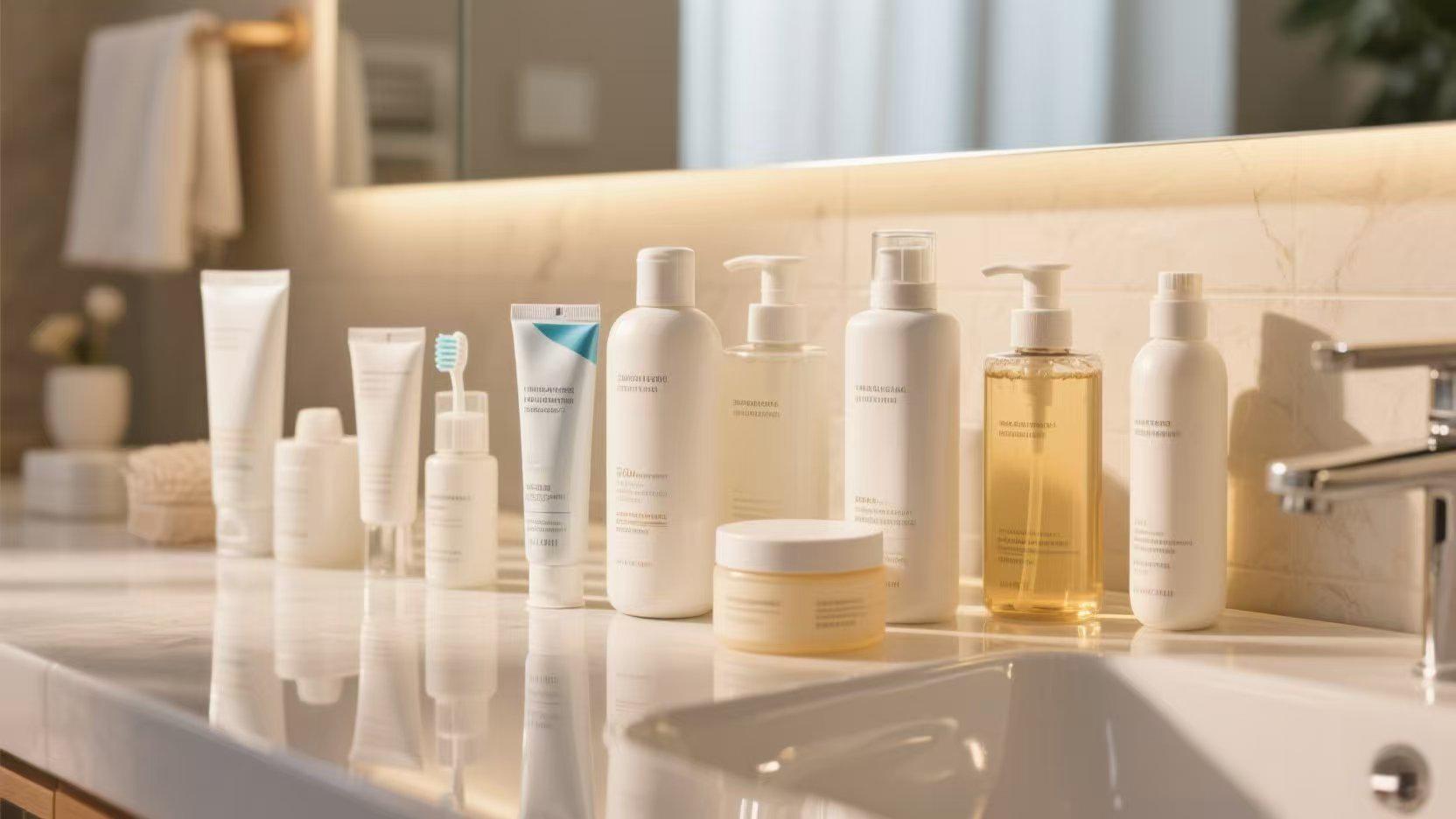
Personal care and daily chemical production represents one of the core application scenarios for vacuum homogenizer emulsifier mixers.
Why Production Scenarios Complicate Emulsifier Selection
Production scenarios determine the required emulsifier configuration because formulation rheology, stability targets, and site conditions vary significantly across industries. A vacuum homogenizer that works well for a low-viscosity lotion may be poorly suited to a high-viscosity mayonnaise batch, even if both products are oil-in-water emulsions.
In mayonnaise manufacturing, the core challenge is achieving a fine and stable oil droplet distribution. A high shear mayonnaise homogenizer must break the oil phase into consistently small droplets while the emulsion is under vacuum, preventing air entrapment and oxidation. The resulting texture directly affects mouthfeel and shelf-life, which is why manufacturers use a mayonnaise vacuum homogenizer mixer rather than relying on simple agitators.
In cosmetics and skincare production, the priorities shift: cream and lotion makers need a vacuum emulsifier for skincare products that provides gentle but effective homogenization, removes bubbles, and produces a smooth, glossy texture. A cosmetic homogenizer mixer must also handle temperature-sensitive active ingredients, which means the heating and cooling system must be precise. Products such as face creams and body lotions require a cream making homogenizer mixer that can process high-viscosity formulations without burning or over-shearing the raw materials.
Batch scale adds another layer of complexity. Laboratory batches used for formula development may need a flexible unit with adjustable speed and small capacity, while commercial production requires higher throughput, repeatability, and often PLC or button control. These differences mean that equipment selection is not only about the machine itself; it is about how the machine fits the entire production workflow.
Three Series, One Fit Framework: A Supplier Reference
Wuxi YK Automation Technology Co., Ltd., also known as YeKeey, is a Chinese manufacturer specializing in emulsifying machines, industrial mixers, laboratory mixers, and filling machines. Founded in 1998, the company operates a 20,000 m² factory with about 80 employees and an annual output of approximately 600 units. Its equipment is exported mainly to Europe, Central Asia, North Africa, Latin America, and Southeast Asia, and has been applied in more than 4,000 enterprises across over 70 countries.
YeKeey offers three vacuum emulsifying mixer series, each with a distinct project focus:
| Series | Model Range | Type | Power Range | Output Speed |
|---|---|---|---|---|
| MC Series | MC-100 to MC-2500 | MC Recirculation Homogenizing Mixer / Lab Recirculation Homogenizing Mixer | 5–91.5 kW | Up to 2800 r/min |
| ZJR Series | ZJR-5 to ZJR-2500 | ZJR Series Vacuum Emulsifying Mixer / ZJR-Lab Laboratory Emulsifying Mixer | 5–91.5 kW | 2800–6000 r/min |
| SP Series | SPA-30 to SPA-10T | SP Series Standard Vacuum Processing Unit | 3.7–110 kW | Up to 2800 r/min |
The MC series is designed for recirculation homogenizing, which is useful in projects where repeatable particle size reduction and continuous processing are priorities. The ZJR series offers both standard production models and laboratory-scale versions, with some models reaching an output speed of 6000 r/min; this makes the ZJR series relevant for R&D projects and for production lines that need finer emulsification. The SP series provides a standard vacuum processing unit with a wider power range from 3.7 kW to 110 kW, covering a broader spectrum of batch sizes.
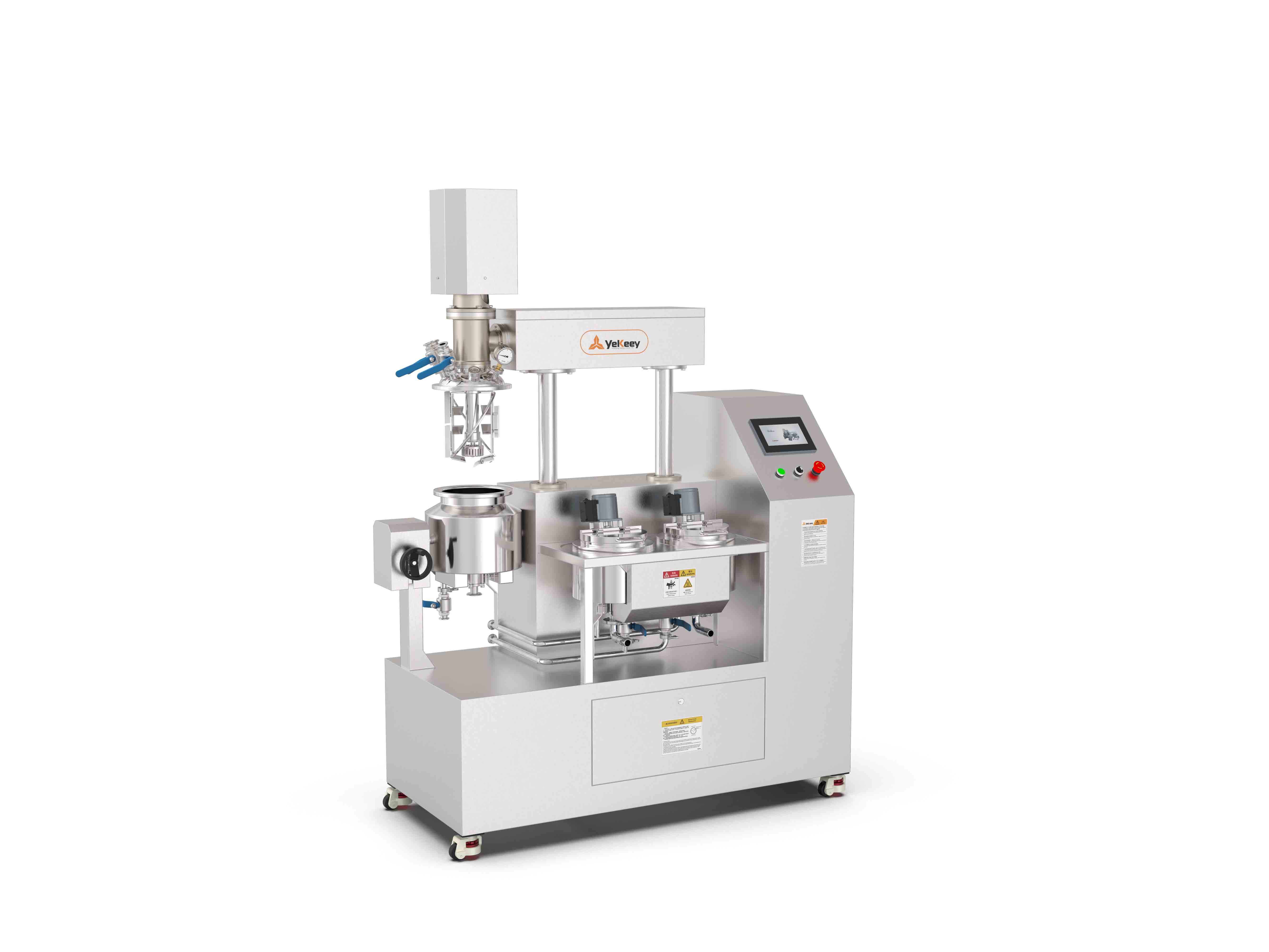
The ZJR series includes both production-scale vacuum emulsifying mixers and laboratory emulsifying mixers.
All three series can be built with SS304 or SS316 stainless steel, and they are positioned for both cosmetics and food products, with mayonnaise as a key food focus. The availability of three series under one manufacturer is practically relevant for buyers who plan to scale from laboratory trials to full production: the process data generated on a lab unit can be transferred to a production model within the same product family, reducing scale-up uncertainty.
Key Parameters and What They Mean for Project Fit
When evaluating a vacuum homogenizer emulsifier mixer for a specific project, four parameters provide the most useful starting point: output speed, operating temperature, vacuum pressure, and installed power.
Output speed. The homogenizing effect depends heavily on rotor speed. Most YeKeey vacuum emulsifying mixers operate with an output speed of up to 2800 r/min, while some ZJR series models reach 2800–6000 r/min. Higher speeds generate stronger shear forces, which are needed for fine emulsions such as light mayonnaise or cosmetic serums. Lower speeds are often sufficient for thicker pastes where over-shearing could damage the formulation.
Operating temperature. The equipment can handle materials at temperatures up to 110°C. This is important for mayonnaise and sauce production because starches, egg yolk, and stabilizers require controlled heating to hydrate and activate. For cosmetics, temperature control protects heat-sensitive active ingredients while ensuring that waxes and oils are fully melted and blended.
Vacuum pressure. This homogenizing mixer operates under vacuum conditions with a pressure of -0.09 MPa. Vacuum deaeration removes air bubbles from the product, improves surface smoothness, reduces oxidation, and helps create a more stable emulsion. In mayonnaise production, vacuum also prevents the formation of foam that would otherwise weaken the emulsion structure.
Installed power. The mixer's power consumption ranges from 5 kW to 91.5 kW depending on the model, with SP series extending from 3.7 kW to 110 kW. Power selection should match the viscosity of the product and the batch volume: high-viscosity cosmetics creams and dense mayonnaise require more torque, while low-viscosity sauces may run efficiently at lower power ratings.
These parameters are not independent. A project team should evaluate them together as a process envelope. If a formulation requires both high temperature and vacuum, the machine must maintain the vacuum seal under thermal expansion. If a recipe demands high shear at low temperature, the rotor design and motor rating must compensate for the increased viscosity.
Supporting Equipment and Site Preparation
A vacuum homogenizer emulsifier mixer requires supporting equipment, and this is a factor that is often underestimated during project planning. According to the equipment specifications, this product requires supporting equipment such as a ducting system. The presence of a ducting system affects the installation layout, ventilation, and connection interfaces between the processing vessel and downstream production stages.
In food sauce and cosmetics production lines, the matched equipment typically includes a ducting system, and the working environment may involve high temperature, ambient temperature, and vacuum conditions. Some projects also require special configurations such as explosion-proof motors or pressure vessel classification, depending on the facility and the solvents or ingredients used.
For project planning, this means the procurement scope should include not only the emulsifier unit itself but also the necessary supporting infrastructure. Buyers should confirm whether the quotation includes the ducting system, whether the electrical cabinet meets local voltage standards, and whether the vessel design meets pressure vessel requirements in their region. YeKeey's customization capabilities cover voltage, weighing modules, machine dimensions, jar size, heating method, logo, and designated appliance brands, which can help align the equipment with local electrical and installation standards.
Application Scenarios and Use Cases
Vacuum homogenizer emulsifier mixers are applied in three related production scenarios: food sauce, daily chemical products, and cosmetics. In each scenario, the machine performs emulsifying, homogenizing, mixing, and dispersing functions under temperature-controlled and vacuum-assisted conditions.
Food sauce production. Mayonnaise, salad dressing, and other sauce products rely on stable oil-in-water emulsions. Food sauce projects typically use vacuum homogenizers for mayonnaise sauce production, with high shear mixing to achieve a fine droplet size and consistent viscosity. The equipment can be configured with button control or PLC control, depending on the automation level required by the project. YeKeey's equipment for this scenario is used in food emulsification lines and emulsifier units, where the product's stability and mouthfeel are the primary quality targets.
Daily chemical and personal care production. Personal care product production lines use vacuum emulsifying mixers to make lotions, creams, and other emulsion-based personal care products. The daily chemical industry requires equipment that can handle both oil-phase and water-phase ingredients, emulsify them under vacuum, and produce a uniform texture. This scenario often demands higher hygiene standards and careful temperature control.
Cosmetics manufacturing. Cosmetic manufacturing lines and cosmetics emulsifying machine units use the same equipment family to produce face creams, body lotions, sunscreens, and other emulsion cosmetics. In the pharmaceutical and cosmetic segment, GMP standards typically require stainless steel contact parts, often SUS316L, and strict documentation of process parameters. Buyers evaluating equipment for cosmetics projects should verify that the machine's material grade, surface finish, and cleaning accessibility are suitable for GMP-oriented production.
A long-term reference case illustrates the reliability expectation in cosmetics projects. A Nigerian OBM client purchased three sets of YeKeey vacuum emulsifying mixers for cosmetics production and has used them for at least ten years, with stable operation and high production efficiency reported. For project evaluators, the case demonstrates that equipment longevity and process stability are as important as initial specifications, particularly in markets where after-sales support and spare parts access are limited.
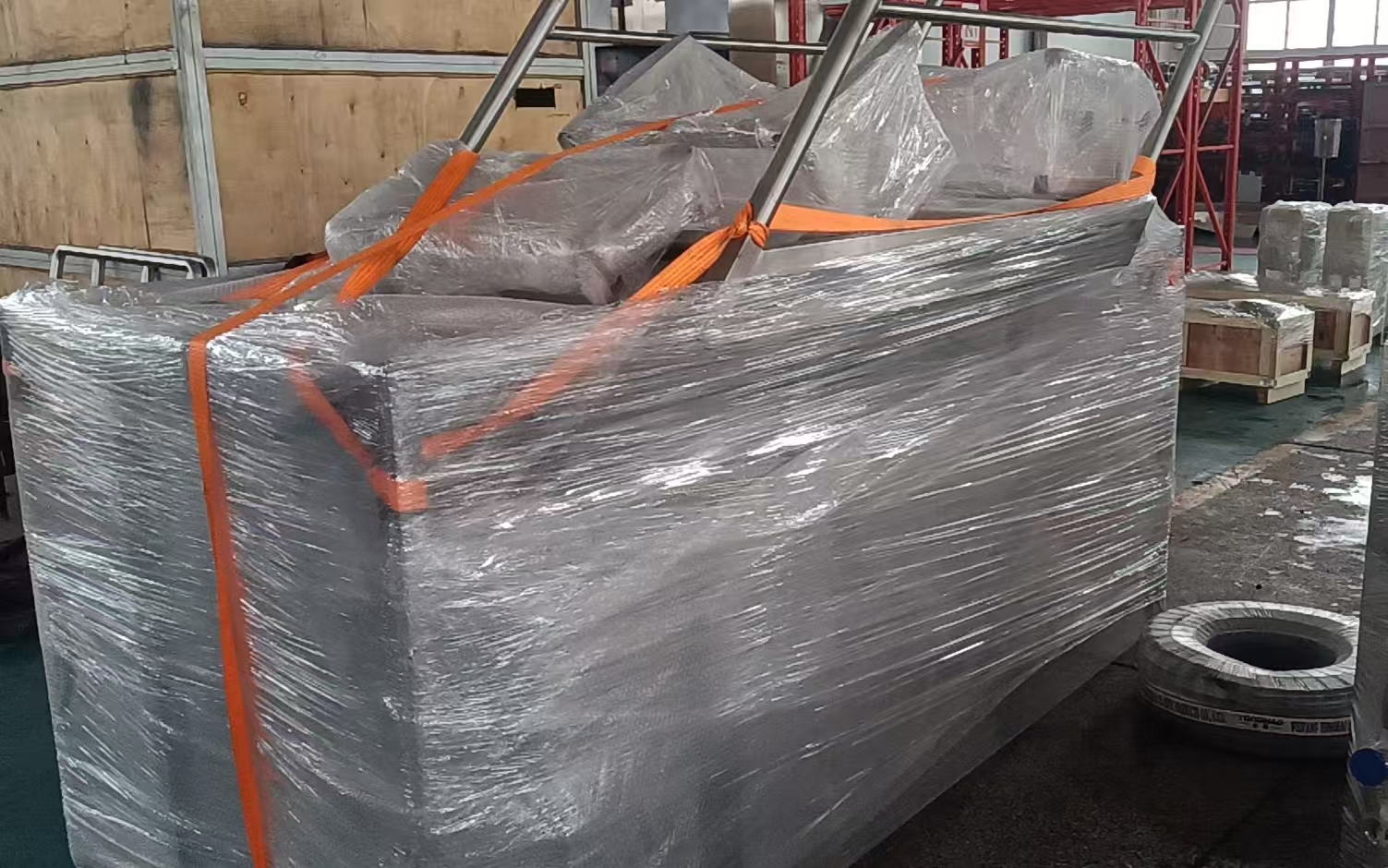
A cosmetics production project in Nigeria has operated YeKeey emulsifying mixers for at least ten years with stable performance.
Market Signals Shaping Equipment Investment
Several market indicators support the continued investment in vacuum homogenizer emulsifier mixers, particularly in food and cosmetics production scenarios. The global homogenizers market was valued at USD 2.10 billion in 2024 and is projected to reach USD 3.79 billion by 2035, growing at a CAGR of 5.4%. This reflects sustained demand for homogenization technology across food, cosmetic, and pharmaceutical industries.
The vacuum mixer homogenizer market is estimated at USD 1.02 billion in 2026, with the cosmetics and personal care segment leading at a 38% market share. This segment leadership is significant because it confirms that cosmetics and skincare projects represent the largest demand pool for this type of equipment, making supplier experience in cosmetic applications an important evaluation criterion.
On the food side, the global mayonnaise market was worth approximately USD 12.58 billion in 2024, driving demand for high-shear vacuum emulsification equipment. Mayonnaise manufacturers seeking to expand capacity or improve product consistency are among the most active buyers of vacuum homogenizer emulsifier mixers. The broader emulsifier market is also expected to reach USD 12.13 billion by 2030 at a CAGR of 4%, indicating continued upstream investment in emulsion-based products.
From a regional supply perspective, Asia-Pacific dominates the homogenizing mixer market with a 36.2% revenue share as of 2025, led by China's manufacturing ecosystem. For international buyers, this means that Chinese suppliers like YeKeey are not marginal players; they are part of the region that drives global output. However, the same regional concentration requires buyers to verify export experience, certification, and after-sales reach before committing to a supplier.
Vacuum Homogenizer vs. Conventional Mixing: Trade-offs and Limits
Compared with conventional mixing systems, a vacuum homogenizer emulsifier mixer offers clear process advantages. Conventional mixers, such as propeller agitators or colloid mills used without vacuum, can produce acceptable emulsions for simple products, but they often struggle with air entrainment, inconsistent droplet size, and limited temperature control. A vacuum homogenizer addresses these problems by combining high shear homogenization, vacuum deaeration, and heating/cooling in a single vessel.
| Capability | Conventional Mixing | Vacuum Homogenizer Emulsifier Mixer |
|---|---|---|
| Shear intensity | Low to medium | High (up to 2800–6000 r/min) |
| Vacuum deaeration | Not available | Yes (-0.09 MPa) |
| Air bubble control | Limited | Removed during processing |
| Temperature control | Often indirect | Up to 110°C |
| Emulsion stability | Moderate | Higher consistency |
| Supporting equipment | Minimal | Ducting system required |
| Initial investment | Lower | Higher |
However, this comparison would be incomplete without acknowledging the limitations of vacuum homogenizer systems. First, they require supporting equipment such as a ducting system, which adds installation complexity and cost. Second, the vacuum system, seals, and high shear head require regular maintenance and specialized knowledge; a plant without trained technicians may face longer downtime.
Third, for very simple, low-viscosity mixtures that do not need fine droplet control or deaeration, a conventional mixer is often the more economical and operationally simpler choice. A vacuum homogenizer would be over-specified for such a project, increasing both capital cost and operating complexity. Project fit therefore means choosing the technology level that matches the product's actual quality and stability requirements.
Future Outlook: What the Next Production Cycle Demands
Looking ahead, production scenarios for vacuum homogenizer emulsifier mixers will be shaped by three forces: automation, regulatory compliance, and formulation versatility.
Automation is moving from button control to PLC-based control systems that enable recipe management, data logging, and consistent batch replication. Buyers evaluating equipment for new projects should assess whether the control system can integrate with their existing plant automation architecture and whether remote monitoring is available.
Regulatory compliance will continue to tighten, especially for cosmetics and food contact equipment. GMP standards for pharmaceutical and cosmetic use typically require stainless steel contact parts such as SUS316L, and this expectation is increasingly applied to food processing equipment as well. Suppliers that can document material traceability, surface finish quality, and certification status will have an advantage in evaluation processes.
Formulation versatility is becoming a practical requirement. Many manufacturers produce both food sauces and cosmetic or personal care products within the same facility, or plan to expand from one category to another. A vacuum emulsifying mixer platform that can accommodate both scenarios, with appropriate material selection and configuration changes, offers a more flexible long-term investment.
FAQ: Research & Evaluation Questions on Project Fit
What production scenarios are best suited to a vacuum homogenizer emulsifier mixer?
Vacuum homogenizer emulsifier mixers are best suited to production scenarios that require stable emulsion formation, fine particle or droplet size control, vacuum deaeration, and temperature management. Typical scenarios include mayonnaise and sauce manufacturing, cosmetics and skincare cream production, and personal care product lines where product texture and long-term stability are critical quality factors.
What role does a vacuum homogenizer play in mayonnaise production?
In mayonnaise production, the vacuum homogenizer provides high shear mixing that breaks the oil phase into fine, uniform droplets, while the vacuum environment removes air bubbles and reduces oxidation. The equipment also enables controlled heating up to 110°C, which helps stabilize ingredients such as egg yolk and starches. This combination supports a smooth, stable final emulsion with consistent viscosity and extended shelf-life.
What should I look for in a vacuum emulsifier for skincare and cosmetics production?
For skincare and cosmetics production, key considerations include fine and uniform emulsion texture, vacuum deaeration to eliminate bubbles, precise temperature control for heat-sensitive active ingredients, and hygienic design that meets GMP expectations. Contact parts are typically made of stainless steel grades such as SS304 or SS316/SUS316L, depending on the product requirements. The machine should also be capable of handling high-viscosity formulations such as creams without over-shearing the product.
What are the key technical parameters of a vacuum homogenizer emulsifier mixer?
Key operating parameters include an output speed up to 2800 r/min, with some ZJR series models reaching 2800–6000 r/min; an operating temperature up to 110°C; a vacuum pressure of -0.09 MPa; and a power range from 3.7 kW to 110 kW, depending on the series. The SP series spans 3.7–110 kW, while the MC and ZJR series range from 5 kW to 91.5 kW. These parameters should be matched to the product's viscosity, batch size, and required shear intensity.
Does the vacuum homogenizer require any supporting equipment?
Yes. The product requires supporting equipment such as a ducting system. Buyers should include this in the project scope and installation plan. In some configurations, special requirements such as explosion-proof motors or pressure vessel classification may also be necessary, depending on the ingredients and facility conditions.
How can a buyer assess whether a supplier's equipment fits a specific production project?
A buyer can assess project fit by reviewing the equipment series and models against the production scenario, checking the key parameters (speed, vacuum, temperature, power), confirming material grades, and verifying that supporting equipment such as a ducting system is included. Supplier capabilities also matter: for example, YeKeey offers OEM/ODM/OBM production, a minimum order quantity of one unit, a monthly capacity of 50 units, a lead time of 30–60 days, and 100% testing of equipment. These factors help determine whether a supplier can meet both the technical and scheduling requirements of a specific project.
For additional technical specifications and company background, the YeKeey corporate brochure is available for reference: Download YeKeey brochure.
Have Questions or Need More Details?
Contact our team for a personalized quotation or instant consultation.
Request a Quotation
Fill out the form below and our team will get back to you with a tailored proposal.
WhatsApp Direct Chat
Prefer to chat in real-time? Message us on WhatsApp for instant assistance & quick answers.
- Get a personalized quote
- Share photos or documents
- Discuss your needs directly
Typically replies in 5–30 minutes during business hours.