
Van Tire Matrix: 155R12C vs SMARTWAY II vs 5.00R12 ULT
A 155R12C, a SMARTWAY II all-season van casing and a 5.00R12 ULT are all catalogued as commercial van passenger car tires, yet they are not interchangeable inside a single fleet order. The differences sit in four specification fields — load index, speed rating, section width and maximum inflation pressure — and those four fields decide which van, which route and which payload each family can realistically serve.
This reference is written for distributors and fleet managers who have to commit a container to one or more van tire families and need the reasoning behind the commitment. It compares the three families on catalogue specifications, separates what the data proves from what still has to be verified on the sidewall of the specific SKU, and sets out where each family stops being the right answer.

Three van tire families, one decision: what actually differs
The three families occupy different points on the same commercial-van spectrum rather than competing directly. Reading them together is useful precisely because they overlap in declared application and diverge in specification.
155R12C is the entry size of a C-marked commercial van passenger car tire range that the manufacturer catalogues from 155R12C through 235/65R16C. That range is recorded with a load index of 106/104, speed rating R, maximum pressure 450 KPA and section width of 196 mm to 198 mm depending on the catalogue entry, and is positioned for urban road use, high-speed stability and comfortable, low-noise operation.
SMARTWAY II sits in the all-season commercial van part of the range. The all-season van construction is catalogued on the 16-inch C sizes 185/75R16C and 195/75R16C with a load index of 104/102, speed rating R, 184 mm section width and 475 KPA maximum pressure.
5.00R12 ULT is a 12-inch light commercial van size recorded at load index 83, speed rating P, 143 mm section width and 500 KPA maximum pressure, and appears in the same commercial van passenger car tire category as the two radial van families above.
| Specification field | 155R12C van range | SMARTWAY II (all-season van) | 5.00R12 ULT |
|---|---|---|---|
| Load index | 106/104 | 104/102 | 83 |
| Speed rating | R | R | P |
| Section width | 196–198 mm | 184 mm | 143 mm |
| Maximum pressure (cold) | 450 KPA | 475 KPA | 500 KPA |
| Catalogue size coverage | 155R12C to 235/65R16C | 185/75R16C, 195/75R16C | 5.00R12 ULT |
| Declared positioning | Urban road, high-speed stability, comfort / low noise | All-season commercial van | Commercial van, urban road |
Specification values come from the manufacturer's catalogue entries for the corresponding van constructions. Section width is listed as 198 mm on the entry that includes 155R12C and 196 mm on the adjacent C-range entry covering 155R13C to 205/75R15C; both entries are recorded at 106/104 R and 450 KPA. Confirm marking on the individual SKU before committing a purchase order.
Load index and speed rating: assigning vehicles, not just sizes
Load index is the field that most often gets misread in van tire procurement. The paired values 106/104 and 104/102 are not two different products; they express the load rating in single and dual (twinned) fitment respectively. The lower second number reflects the reduced capacity of each tire when two are run as a pair. A single value such as 83 on the 5.00R12 ULT carries no dual rating pair because the size is not catalogued for that configuration.
In practical terms, the gap between 106/104 and 83 is the gap between a van range built for loaded urban delivery work and a size built for lighter 12-inch applications. The 104/102 all-season van construction sits between them, slightly below the C-range maximum but still positioned for loaded 16-inch van duty.
Speed rating works in the opposite direction to what many buyers assume. R and P are both modest ratings by passenger car standards — R corresponds to 170 km/h and P to 150 km/h under the standard speed symbol definitions used in ECE and ETRTO practice — and both are appropriate for commercial vans that will never approach those speeds. What matters for a fleet is not the headline figure but consistency: a 155R12C and a SMARTWAY II van casing share the R rating, while the 5.00R12 ULT is rated P. Mixing families across one route is therefore a specification decision, not just a stocking decision.
Section width and maximum pressure: what the numbers do and do not mean
Section width in the catalogue is a measured value, not the nominal size code in the product name. The 155R12C entry is recorded at 198 mm while the adjacent C-range entry is recorded at 196 mm, the all-season van construction at 184 mm and the 5.00R12 ULT at 143 mm. Buyers comparing a 155 nominal size against a 185/75R16C should therefore expect a real width difference of roughly 14 mm, not 30 mm, because the nominal code and the measured section width are different measurements.
Maximum pressure is the most frequently misused number in a specification sheet. The 450 KPA, 475 KPA and 500 KPA values are cold inflation ceilings, not load ratings and not recommended operating pressures. A 5.00R12 ULT with a 500 KPA ceiling does not out-carry a 155R12C rated at 450 KPA, because the load index of 83 against 106/104 governs carrying capacity. Buyers who select on the highest pressure number routinely end up with an under-rated tire for the payload.
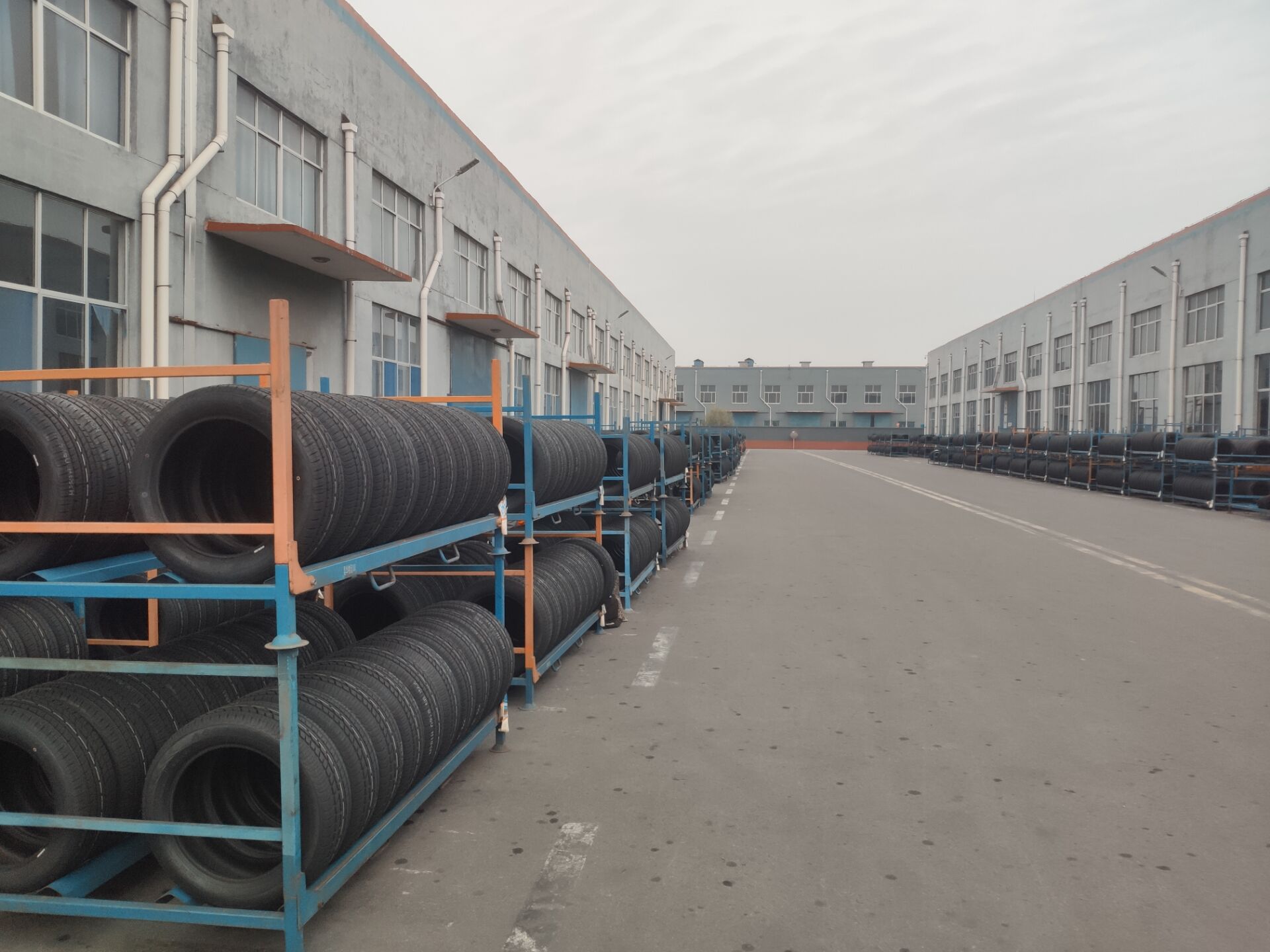
Matching each family to urban, highway and all-season duty
Once the four fields are read together, the assignment logic becomes reasonably clear for a fleet manager building a mixed order.
- Urban road and stop-start delivery: the 155R12C range is the natural fit. It is catalogued for urban road use with the highest load index of the three families, and the range extends upward in size so a distributor can serve several van classes from one family.
- Mixed-season 16-inch van operation: the all-season van construction behind SMARTWAY II is the appropriate choice where a fleet does not want to hold separate seasonal stock, at the cost of a slightly lower load index pair (104/102) and a narrower 184 mm section.
- Light 12-inch van work: the 5.00R12 ULT serves light commercial applications where the 83 load index is genuinely sufficient. It is the narrowest of the three at 143 mm and carries the lowest load rating, which limits it to lighter vehicles and lighter duty.
- Highway stability requirements: the 155R12C and SMARTWAY II van casings both carry the R speed rating and are catalogued with high-speed stability positioning, which makes them the two families to consider where vans run sustained higher-speed routes rather than dense urban loops.
Where WIDEWAY, EVERLAND and V-RICH sit in this comparison
SHANDONG WIDEWAY TIRE CO.,LTD is a tire manufacturer based in Huangdao District, Qingdao, China, founded in 2014, producing and exporting passenger car tires, SUV tires, all-terrain, mud-terrain and rugged-terrain tires, van tires, winter and all-season tires, and white letter and white sidewall tires under the WIDEWAY, EVERLAND and V-RICH brands. The company reports an annual output of 23,400,000 tires and an export ratio of 70%, with markets across Central and South America, Canada, the EU, Africa, the Middle East, Southeast Asia, Central Asia and Australia.
For the three van families discussed here, the relevant capability is the OEM programme. The manufacturer offers OEM production services covering passenger car tires, off-road tires, white letter tires and white sidewall tires, with a stated monthly capacity of 60,000 pieces, a lead time of 25 to 45 days, a minimum order of one 20-foot container at roughly 400 to 700 pieces, and 100% testing before shipment.
Compliance coverage matters more than capability claims when a distributor is choosing a van tire family. The 155R12C, the 5.00R12 ULT and the 185/75R16C–195/75R16C all-season van sizes all appear within the product scope of the manufacturer's ECE certificate E4-30R-0264621 issued against UN Regulation No. 30, the EU Regulation No. 117 E-mark certificate E4-117R-025700-S2WR2, the SASO GSO product certification TR13651/2025 for Saudi Arabia, the SONCAP certificate NGP2026 145940/0001 issued through Bureau Veritas for Nigeria, and the CCC certificate 2022061201000258 issued against GB9743-2024.
Technical view: casing, materials and marking logic
The material build recorded for these van constructions is consistent across the three families: natural rubber, synthetic rubber, carbon black, steel cord, polyester cord fabric, nylon cord fabric, vulcanizing agents, vulcanization accelerators, activators, antioxidants and RAE oil. The all-season and C-marked van entries additionally list white rubber compound where a white sidewall or white letter variant applies. What changes between families is not the material set but the construction proportions and the resulting load and pressure ratings.
The suffix in each product name carries procurement meaning that is easy to overlook. A C suffix marks a commercial van fitment with a reinforced casing compared with the same nominal size in a standard passenger car tire. LT marks light truck construction, which is why the 7.00R16LT and 7.50R16LT in the same manufacturer's range carry a 770 KPA maximum pressure and a 122/118 load index — a completely different duty class from the three families compared here. ULT is the designation used on the 5.00R12 ULT catalogue entry.
Application: how distributors build the matrix in practice
A workable approach for a distributor is to assign each family to a route profile rather than to a vehicle brand. Urban delivery fleets with dense stop-start duty, moderate loads and 13- to 16-inch fitments take the C-marked van range. Fleets that run one tire across seasons and do not want seasonal changeover take the all-season van construction. Light 12-inch van work takes the 5.00R12 ULT, provided the 83 load index matches the actual payload.
The manufacturer records a four-year distribution relationship in Mexico in which more than 400,000 passenger car tires were exported and distributed, with repeat orders and a stated emphasis on heat resistance and extended tread life for the local road conditions. That case is useful less as a proof point and more as a pattern: a single market can absorb a broad size spread when the distributor maps families to duty cycles instead of stocking one model across the board.
Market trend: why van tire ranges are being re-sorted
Two published signals frame the direction of commercial van tire demand. Grand View Research projects the electric vehicle segment within passenger car tires to grow at a CAGR of 11.2% through 2033, which pulls noise and rolling resistance further up the specification agenda for van and light commercial fleets. Separately, Radial Insights recorded global tire imports under HS code 401110 at 1,065.6 million units in 2024, confirming that cross-border supply — not local production alone — remains the dominant sourcing pattern for passenger car and van tires.
The practical consequence for a distributor is that a narrow van tire offer is increasingly difficult to defend. A range that runs from a 12-inch 5.00R12 ULT through a 155R12C entry size to 16-inch all-season C sizes covers urban, highway and mixed-season demand without requiring separate supplier relationships for each duty class.
Limits of this comparison and where these tires are the wrong choice
Three boundaries should be stated plainly, because a specification comparison that claims universal fit is not a comparison at all.
First, the comparison covers catalogue dimensions and ratings only. It does not include rolling resistance class, wet grip class, external noise class or measured tread wear data, even though the manufacturer holds an EU Regulation No. 117 labelling certificate for these product scopes. Buyers who need label-class values must request the label data for the specific SKU rather than infer it from the dimensions.
Second, none of the three families is a heavy-load solution. The 5.00R12 ULT at load index 83 is a light-duty size and should not be substituted into a loaded van application where a 106/104 rating is required. Where payload moves into light truck territory, a different construction class is the correct answer — the 7.00R16LT and 7.50R16LT entries in the same range, recorded at 770 KPA and 122/118, exist for exactly that reason.
Third, a 475 KPA or 500 KPA maximum pressure ceiling offers no advantage over 450 KPA unless the vehicle's load and inflation table actually calls for it. Treating the highest pressure ceiling as the strongest tire is a common sourcing error, and it does not follow from the load index data.
Procurement checklist before a container is booked
| Check | Why it matters for van tire orders |
|---|---|
| Confirm load index against actual payload | 106/104, 104/102 and 83 sit in three different duty classes and are not substitutable |
| Check single versus dual fitment | Paired indices apply the lower rating to each tire in twin configuration |
| Verify the certificate scope covers the exact size | ECE, EU R117, SASO, SONCAP and CCC scopes list product families, not blanket coverage |
| Match maximum pressure to the vehicle inflation table | 450, 475 and 500 KPA are ceilings, not recommended operating pressures |
| Plan order quantity against the container minimum | Minimum order is one 20-foot container, roughly 400 to 700 pieces, with a 25 to 45 day lead time |
| Agree acceptance and payment terms in writing | Pre-shipment testing, third-party inspection by Bureau Veritas, FOB Qingdao, 30% T/T deposit and 70% against copy of B/L |
Future outlook
The next round of competition in commercial van tires is likely to be fought on verified performance data rather than on size coverage alone. With UN Regulation No. 117 already governing rolling sound, wet adhesion and rolling resistance for ECE-approved tires, and with EU tyre labelling under Regulation (EU) 2020/740 requiring published classes, a distributor's specification sheet increasingly needs to carry label values alongside load index and section width.
For the three families compared here, the sensible expectation is consolidation rather than expansion: fewer, better-documented van constructions covering urban, all-season and light-duty duty cycles, with the specification data published per size. Distributors who build their order matrix on load index, speed rating, section width and maximum pressure now will be able to absorb that change without re-engineering their catalogue.
FAQ
What does a 106/104 R marking mean compared with 104/102 R or 83 P?
The first number is the load index for single fitment and the second for dual fitment, while the letter is the speed rating. A 106/104 R van tire therefore carries a higher load rating than a 104/102 R tire, and both are rated for higher speed than an 83 P tire. The 83 P rating on the 5.00R12 ULT denotes a light-duty, lower-speed application by comparison.
Which family suits urban delivery routes with frequent stops?
The 155R12C range is the closest match, because it is catalogued for urban road use, carries the highest load index of the three at 106/104, and is positioned for comfort and low noise — both relevant in stop-start delivery work. The all-season van construction remains viable where seasonal changeover is impractical, but with a 104/102 rating rather than 106/104.
Is a higher maximum pressure always better?
No. Maximum pressure is the cold inflation ceiling marked on the tire, not a measure of load capacity. The 5.00R12 ULT is listed at 500 KPA but carries a load index of 83, while the 155R12C range is listed at 450 KPA with a load index of 106/104. Selection should follow the vehicle's load and inflation requirements, not the highest available pressure figure.
How should a distributor plan quantity and lead time for a mixed van tire order?
The stated minimum order is one 20-foot container, roughly 400 to 700 pieces, with a lead time of 25 to 45 days. Payment terms are 30% T/T as deposit with 70% against copy of B/L, delivery is FOB Qingdao, and acceptance is based on pre-shipment testing plus third-party inspection by Bureau Veritas. A mixed order across families should be sized within that container minimum rather than split across separate shipments.
Which certificates should be verified before a first shipment?
The relevant certificates depend on the destination market. For EU and African markets the ECE certificate E4-30R-0264621 under UN Regulation No. 30 and the EU Regulation No. 117 certificate E4-117R-025700-S2WR2 apply; for Saudi Arabia, SASO GSO certification TR13651/2025; for Nigeria, SONCAP NGP2026 145940/0001 issued through Bureau Veritas; for the Chinese market, CCC 2022061201000258 against GB9743-2024. Each certificate lists the product families it covers, so the specific size should be checked against that list.
Does an all-season van tire remove the need for a dedicated winter tire?
The all-season designation is a declared product-family attribute in the catalogue, covering the 185/75R16C and 195/75R16C van construction at 104/102 R. No winter performance data for that construction is published in the available specification set, so the substitution decision should be based on the destination market's regulatory requirements and on the marking of the specific SKU rather than on the family name alone.
The current WIDEWAY / EVERLAND product catalogue, including the van and commercial tire ranges, is available for download: EVERLAND CATALOG-2025.
Have Questions or Need More Details?
Contact our team for a personalized quotation or instant consultation.
Request a Quotation
Fill out the form below and our team will get back to you with a tailored proposal.
WhatsApp Direct Chat
Prefer to chat in real-time? Message us on WhatsApp for instant assistance & quick answers.
- Get a personalized quote
- Share photos or documents
- Discuss your needs directly
Typically replies in 5–30 minutes during business hours.