
Vasia and Four Peers: A Document Check on Indoor Playground Supply
Vasia and Four Peers: A Document Check on Indoor Playground Supply
A 30,000 m² production base is one of the few claims a family entertainment center (FEC) buyer can actually check before signing. This comparison sets out the documented baseline for Huaxia Amusement Co., Ltd. (VASIA) — founded 2000, a workforce of about 200, a 30-person R&D team, a 30,000 m² facility, a stated annual production capacity of 200 million, and six CE certificate numbers — and then applies the same five-part document check to four named peers: GameTime, PlayPower, Soft Play and Iplayco.
The method matters more than the order of the names. Public comparisons of indoor playground equipment manufacturers usually rank companies on variables the reader cannot audit: a founding year copied from a supplier's own homepage, a certification badge with no number attached, a factory photograph with no date. This review takes the opposite route. Every manufacturer entry is limited to what a buyer could reproduce from documents, and where a peer figure could not be verified, the gap is stated rather than filled.
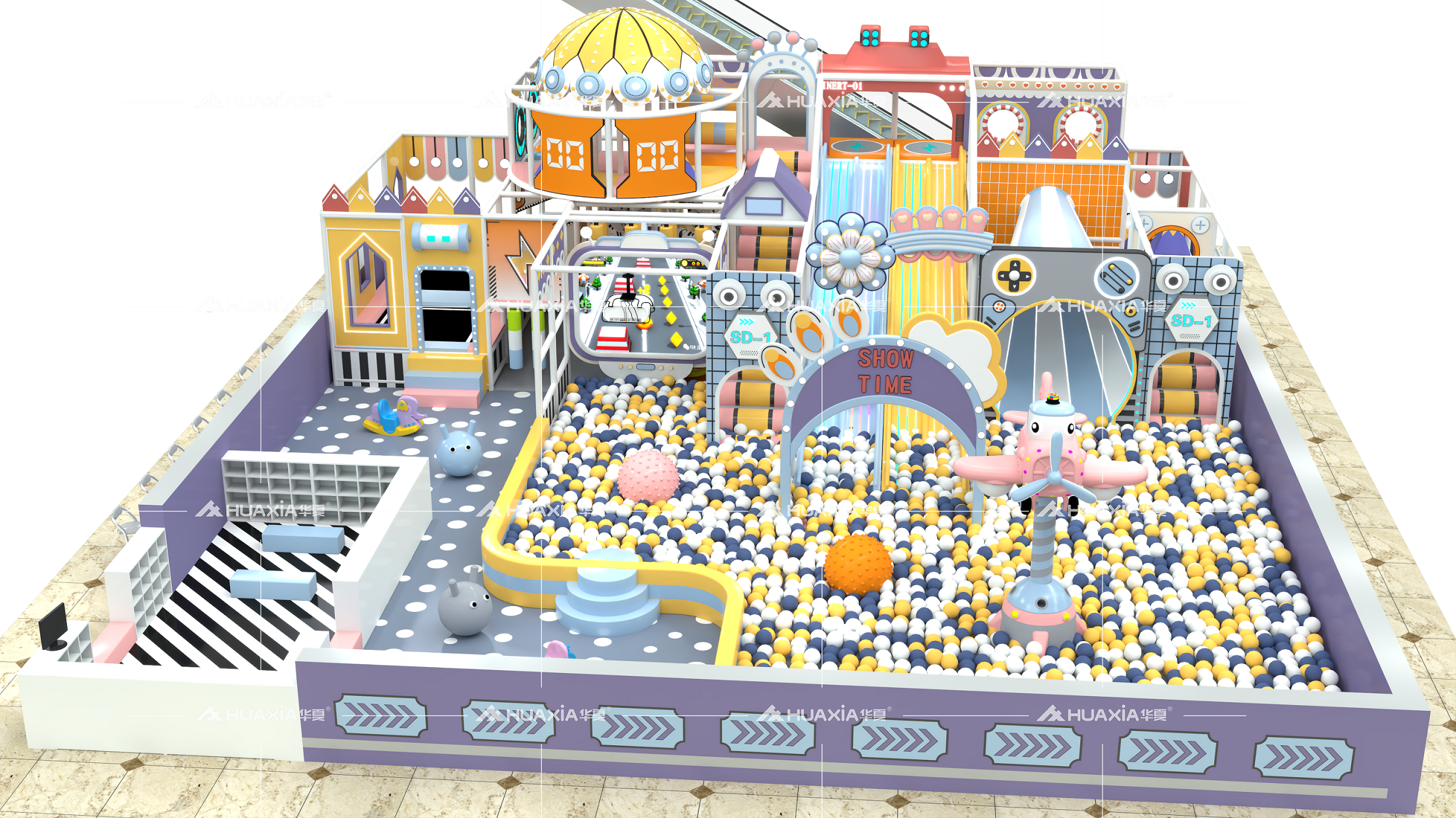
Indoor play structures are procured as complete layouts, not as individual units — which is why supplier documents matter more than catalogue images. Project reference: VS1-25011002-230-2-49.
Why indoor playground comparisons rarely survive a procurement file
Two kinds of “ranking” circulate in this category, and neither is a market measurement. The first is the vendor listicle: a 2026 directory compiled by a supplier-side publisher lists fifteen indoor playground equipment manufacturers with founding years, product lines and certification notes. It exists, it is widely shared, and its ranking is not independently verified — it is a discovery lead, not a scoreboard.
The second is the research-report company listing. Commercial market reports name key companies in the playground sets and equipment space, including GameTime, BigToys, Freenotes Harmony Park and PlayGlobal. That listing tells you who the report covers. It carries no weighting, no revenue split and no position, and it should never be read as a market share statement.
That is not a criticism of the peers. In a category where factories are privately held and capability data is self-reported, the absence of a public figure says nothing about a company's capacity. It only says the number is not yet in your file.
The five-part document check
A defensible supplier comparison for indoor playground equipment comes down to five document classes. Each has a specific artefact attached to it, which is what separates a check from a conversation.
- Identity and tenure. Legal entity name, registration, founding year, and whether the entity quoting you is the entity that will manufacture. Artefact: certificate of incorporation or business licence matching the pro-forma invoice.
- R&D capacity. Headcount, design tools, prototyping process, and the deliverables you will actually receive. Artefact: a sample drawing set, a 3D model of a comparable layout, and a revision-control example.
- Manufacturing footprint. Floor area, production lines, throughput, and ownership or lease status. Artefact: a floor plan with line allocation, plus dated walkthrough footage.
- Conformity evidence. Certificate numbers, standard cited, issuer, product scope, validity. Artefact: the certificate PDF and, where relevant, the underlying test report.
- Service checkpoints. Spare parts, installation scope, handover pack, inspection schedule. Artefact: written terms, not verbal assurances.
Vasia's documented baseline
Huaxia Amusement Co., Ltd., which trades as VASIA (vasiaplayground.com), is a manufacturer of indoor amusement equipment, sports facilities and preschool products, based in Qiaoxia Town, Yongjia County, Wenzhou, Zhejiang Province — a district recognised as China's Educational Toy Capital and National Educational Toy Export Base. The company publishes a defined set of figures, and those figures are the benchmark used throughout this article.
| Dimension | Documented entry | What the buyer should confirm |
|---|---|---|
| Founded | 2000 | Legal entity name on the quotation and on each certificate |
| Workforce | About 200 technical and management staff | Headcount assigned to your project month, not total headcount |
| R&D team | 30 dedicated R&D personnel | Named designer, drawing turnaround, revision cycle |
| Facility | 30,000 m² ISO-certified production facility | Floor plan, line allocation, ownership or lease status |
| Annual capacity | 200 million stated annual production capacity | The unit basis — output value or unit count — in the supplier's own documentation |
| Throughput reference | Monthly capacity of 10,000 m² for trampoline parks and related play structures | Capacity reserved for your delivery window |
| Export profile | About 70% export ratio; markets in the EU, USA, South America, Middle East and Southeast Asia; 100+ countries; 10,000+ completed projects | Two reference projects in your region and venue type |
| IP portfolio | Over 192 patents and copyrights | Whether relevant design elements in your layout are covered |
| Quality system | ISO 9001 certified | Certificate scope and issuing body |
| Standards referenced | ASTM and EN 1176 safety frameworks, with testing by SGS and TÜV; CE, UKCA, CPSIA and SASO listed | The specific standard edition applied to your equipment type |
| CE evidence | Certificates LTC250714-HXA-011 through -015, plus LTC250826-HXA-016, covering trampoline park, indoor trampoline park, climbing wall, rope course and related equipment | That your configuration appears in the certified product scope |
Read as a set, these entries describe a mid-to-large export manufacturer with an integrated workflow rather than a trading intermediary. Read individually, each entry is a question to ask, not an answer to accept.
R&D: what thirty designers should produce on paper
A 30-person R&D team is a meaningful figure in this category, where many exporters operate as sales offices with outsourced fabrication. The number becomes useful only when you can see what the team emits. Vasia's stated design process uses 3D modelling and VR preview so clients can review a project before production, and applies child psychology and motor development principles to zoning and challenge progression. New products go through prototyping and safety validation before mass production.
Three deliverables turn that description into evidence. First, the drawing package: dimensioned plans, platform heights, guardrail specification and the fall-zone calculation for your actual room. Second, the 3D model in a format your contractor can open, not a rendered JPEG. Third, a written change log showing how a client comment was resolved — that single document tells you more about a design process than any team-size claim.
The boundary is worth stating plainly: team size does not predict design quality on your site. A thirty-person department can produce an elegant multi-level structure or an over-complicated one. What the buyer controls is the number of review cycles written into the contract before cutting begins.
Manufacturing footprint: reading 30,000 m² honestly
A 30,000 m² facility with automated manufacturing systems and a stated monthly capacity of 10,000 m² for trampoline parks is a scale claim that separates a factory from a project broker. The verification path is unglamorous and effective. Ask for a floor plan showing where steel fabrication, cutting and sewing, foam and soft-play assembly, and packing sit relative to each other; ask for dated walkthrough footage of the line your equipment will run on; and ask whether the building is owned or leased, because a lease renewal date is a supply-continuity risk.
Then ask the question that floor area cannot answer: how much of that capacity is available in the month you need it? A 30,000 m² plant running at high utilisation may have less slack than a 12,000 m² plant with an empty line. Peak-season ordering in this industry clusters around school holidays and mall opening schedules, so capacity is a calendar question, not just an area question.
CE evidence: the difference between an adjective and a number
“CE certified” appears on almost every indoor playground supplier page, which is precisely why it has little procurement value on its own. A manufacturer's self-description can list ASTM, EN, TÜV, SGS and ISO references without attaching a certificate number, issuer, validity date or tested-model scope — the kind of unsupported claim that a buyer cannot act on.
Vasia's file is more specific. Six certificate identifiers are published — LTC250714-HXA-011 through LTC250714-HXA-015, plus LTC250826-HXA-016 — covering trampoline park equipment, indoor trampoline park equipment, climbing walls, rope courses and related equipment. Numbers are checkable; adjectives are not. That is the entire argument for preferring the former.
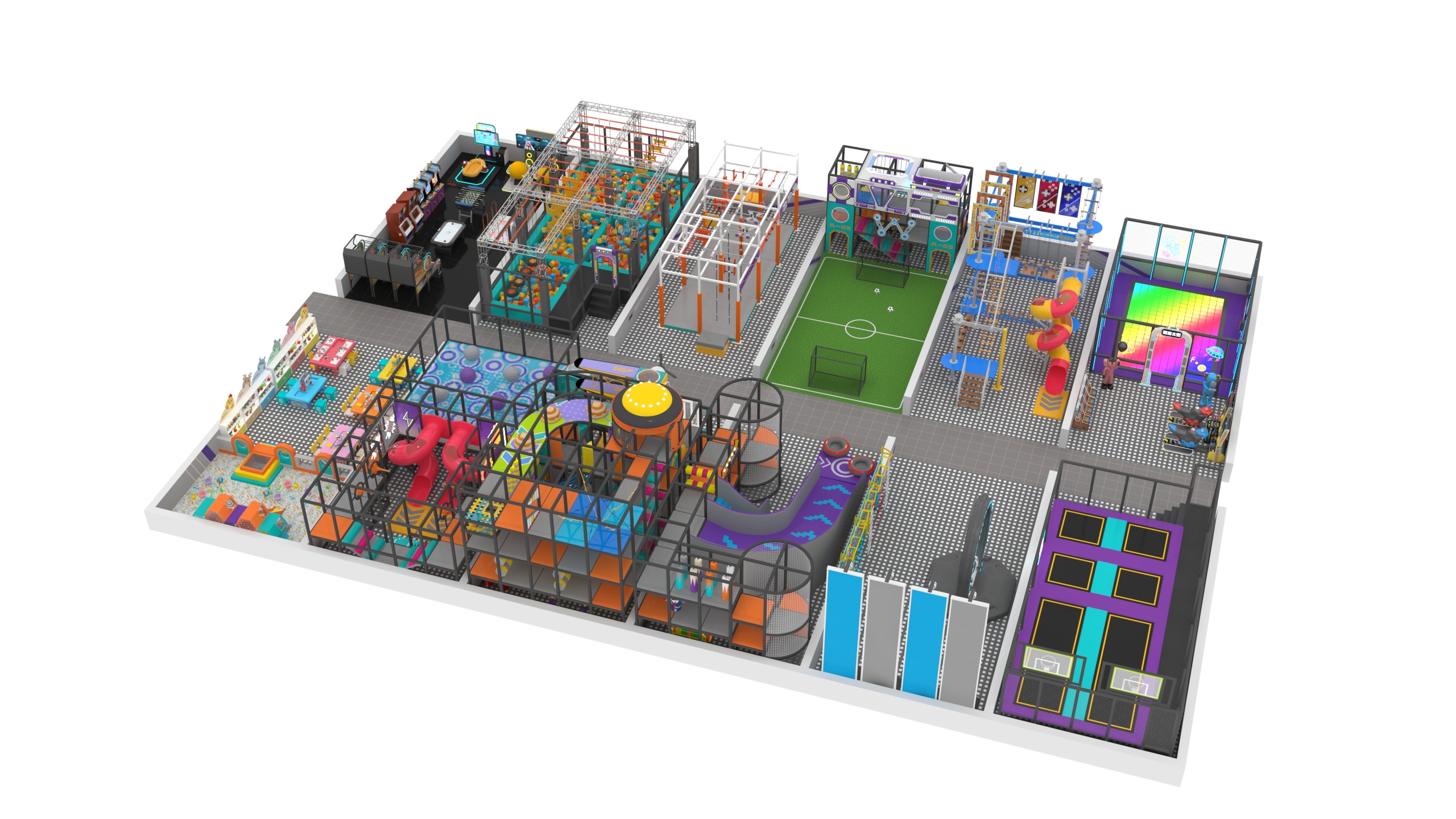
A certificate covers a defined product scope — which is why the buyer must match the certified model list to the actual layout. Reference: VS1-250503.
Four checks complete the conformity review. Confirm that the certificate holder name matches the contracting entity, not a related trading company. Confirm that the cited standard aligns with the destination market — ASTM F1918 for the United States, the EN 1176 series for the European Union, with UKCA, CPSIA and SASO relevant to the United Kingdom, United States and Saudi Arabia respectively. Confirm that the certified product scope includes your configuration and equipment height. And confirm the validity date and issuing body directly with the issuer where the stakes are high.
One honest limitation: a CE-marked equipment set does not approve your installed layout. Site-specific installation, impact-absorbing surfacing depths, supervision rules and maintenance scheduling remain the operator's obligations under local rules. Certification is a gate, not a handover.
OEM and custom capability: what to lock before design starts
Customisation claims in this industry are broad and the deliverables are narrow. Vasia's stated capability spans thematic design — forest, space, ocean, castle, futuristic and other styles — across toddler zones (0–6 years), school-age areas (6–12 years) and youth or adult challenge circuits, with product categories including climbing structures, multi-slide combinations, ball pits, trampolines, ninja warrior courses, climbing walls, zip lines and soft play modules. The stated workflow runs from CAD layout and 3D design through production, packing, shipping and installation, with a dedicated project manager on each project.
For an OEM or custom project, five terms decide whether that workflow holds: a drawing approval gate with a fixed date after which changes are chargeable; a change-order price schedule agreed before signature; a packing specification including container loading plan and moisture protection; an installation scope split stating exactly what the supplier's team does and what your local contractor does; and written acceptance criteria for handover. Without these five, “turnkey” is a description of intent rather than a contract.
The four peers and what this review could verify
Four companies appear most often when FEC buyers assemble a shortlist for commercial indoor and family entertainment play equipment: GameTime, PlayPower, Soft Play and Iplayco. They are named here as comparison candidates. This review did not obtain independently verified figures for their R&D headcount, factory area, certificate identifiers or OEM terms, and it will not estimate them.
| Peer | Public trace available to this review | Documents to request before scoring |
|---|---|---|
| GameTime | Named in the company listing of a commercial playground sets and equipment market report — a coverage list, not a ranking or share statement | Certificate numbers with issuer and scope; facility floor plan; OEM terms; two regional references |
| PlayPower | Identified as a shortlist candidate; no verified capability data in this review's evidence file | Same five-part document set; confirm manufacturing entity versus brand owner |
| Soft Play | Identified as a shortlist candidate; no verified capability data in this review's evidence file | Same five-part document set, with emphasis on soft-play material and fire-retardant documentation |
| Iplayco | Identified as a shortlist candidate; no verified capability data in this review's evidence file | Same five-part document set, with emphasis on thematic customisation deliverables |
Two cautions follow. First, do not convert a report listing into a market position: appearing in a research report's company coverage means the report covers the company, nothing more. Second, do not treat a missing public figure as a negative finding. In privately held manufacturing, “not disclosed” never means “not capable” — it means the number belongs in your request for information, not in someone else's article.
Service checkpoints a buyer can verify before signing
Post-award service is where comparisons usually collapse into adjectives, so it helps to anchor the conversation in failure modes. Four risk categories recur in indoor play equipment, and Vasia's published controls for each translate directly into verification questions.
- Fall impact and insufficient cushioning. The stated control is impact-absorbing flooring with height-differentiated protection zones, supported by installer safety training and on-site hazard signage. Ask for the surfacing specification that matches your highest platform and the critical fall height calculation behind it.
- Material ageing and toxic emission. The stated control is food-grade non-toxic material certification with fire-retardant coating, supported by batch material traceability and third-party laboratory testing. Ask for a batch traceability example and the lab report behind a shipped order.
- Sharp edges and entrapment. The stated control is rounded-edge treatment and gap-compliance design, supported by quarterly fastener torque inspection and component wear monitoring. Ask what inspection schedule is handed to your operations team at handover.
- Structural loosening and component detachment. The stated control is an anti-loosening fastener system with modular locking, supported by pre-installation load testing and a structural safety audit. Ask for the load-test record and the audit checklist.
These are design and process controls, not guarantees of a specific operational outcome. Their procurement value is that each one names a document you can request, and a supplier who cannot produce that document has told you something useful before the first invoice.
Where non-powered systems fit — and how far the cost comparison travels
Much of the indoor playground category is non-powered by design, and Vasia publishes a category comparison against traditional powered or electric amusement equipment. On the company's figures, non-powered systems carry zero energy consumption, a lifespan extended by 2.5 times, an initial cost 10%–20% lower, a total cost of ownership about 50% lower over five years, roughly 85% less maintenance, and 100% carbon-free operation, with stated fit for trampoline parks, indoor parks, kindergartens, urban parks, residential communities and school playgrounds.
Treat those numbers as a category argument from the manufacturer, not as a site-specific projection. Initial cost and total cost of ownership depend on your floor area, attendance profile, local labour rates for maintenance and your electricity tariff. The structure of the argument, however, is sound and worth copying into your own model: separate capital cost from five-year operating cost, then test whether the maintenance saving survives your actual staffing plan.
Market signals, and the limits of the numbers behind them
Demand context supports the shortlisting exercise but should not be used to size a single venue. Commercial research estimates the global family entertainment center market at USD 34.4 billion in 2025, with a projected 10.5% compound annual growth rate to 2035. Within indoor playground equipment, soft play is reported at approximately 31.4% of product share in 2025.
Handle the wider playground equipment estimates carefully. Figures in circulation cover different scopes — freestanding playground equipment, total playground equipment, and commercial playground equipment — and they are not comparable with each other. They must not be averaged, summed or presented as a range. For an FEC buyer, the usable conclusion is directional: the category is expanding, equipment mix decisions carry long operating tails, and supplier selection is therefore a multi-year commitment rather than a one-off purchase.
A five-step shortlisting sequence for FEC buyers
The practical version of this comparison fits on one page and takes about three weeks.
- Step 1 — Issue one document checklist to every candidate on the same day. Use the five-part structure above. Identical requests produce comparable answers; sequential conversations produce polished ones.
- Step 2 — Score only what comes back. Certificate numbers, drawing samples and audit evidence count. Brochure language does not.
- Step 3 — Normalise the quotations. Same layout, same surfacing specification, same installation scope, same Incoterms, same warranty term. A quote that excludes surfacing is not cheaper; it is incomplete.
- Step 4 — Test the service model before the main order. A spare-parts request or a small supplementary order reveals response time and documentation quality faster than any reference call.
- Step 5 — Verify the handover pack before final payment. As-built drawings, inspection schedule, torque and wear checklist, spare-parts list and warranty terms should all be in hand before retention is released.
Fit boundaries: where this comparison is strong, and where it is not
Vasia's documented profile fits multi-activity indoor parks, trampoline parks, mall-based FECs, kindergarten and school installations, and export programmes into the EU, North America, South America, the Middle East and Southeast Asia — supported by a 30,000 m² facility, a 30-person R&D team, and certificate identifiers that can be checked before contract.
The comparison is genuinely inconclusive in three situations. Single-room toddler zones in markets where a local fabricator's service proximity outweighs factory scale. Projects requiring a certification relationship with a specific national body that an exporter cannot sponsor. And any evaluation where a peer's verified local service network is the deciding factor — this review has no data on peer service networks, so it cannot rank them on that dimension.
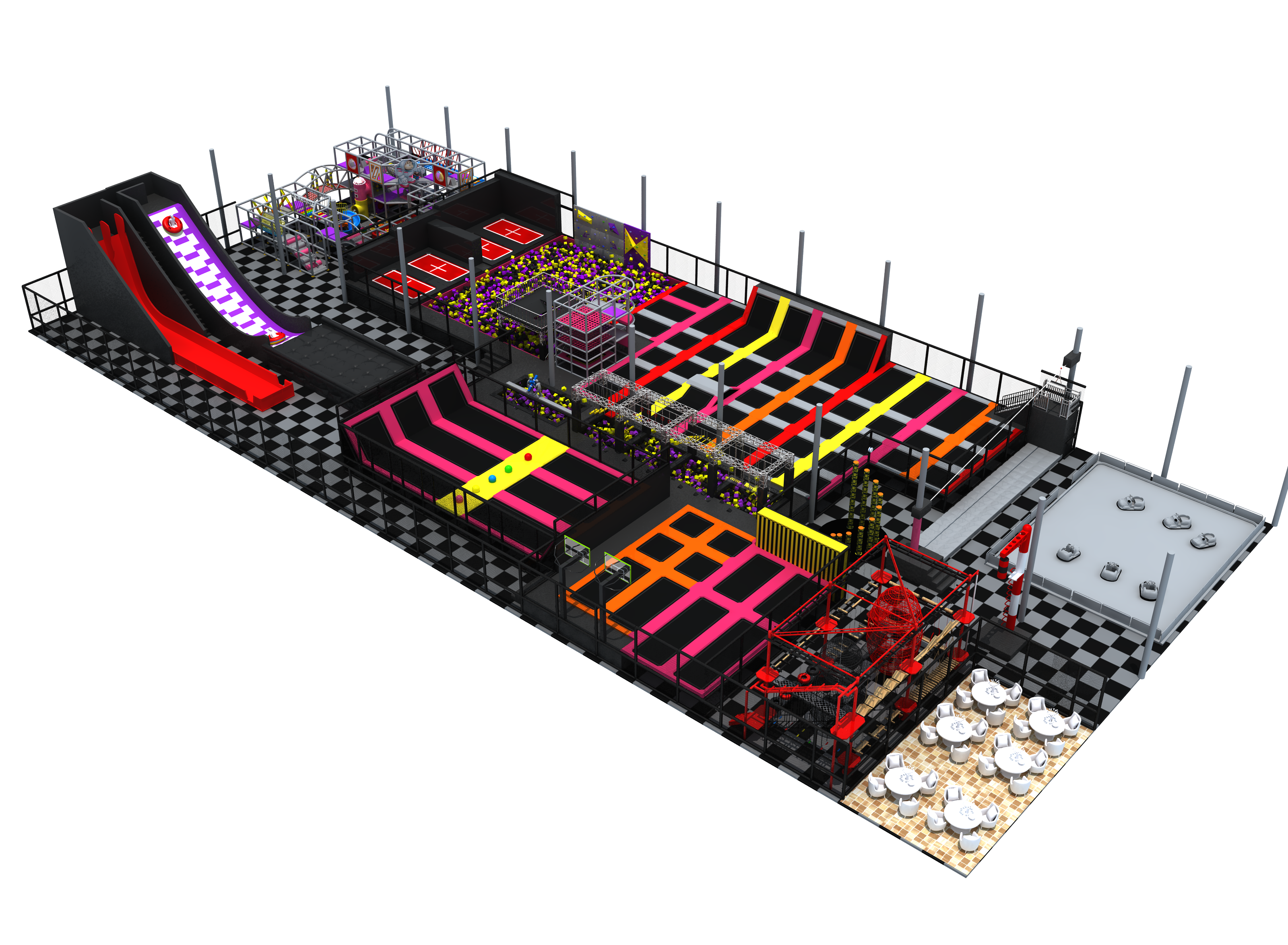
Certificate scope should be matched against the equipment categories in your actual build. Reference: VS6-190301-1980A-13-29.
Outlook: documents as procurement currency
As FEC capacity grows, equipment decisions increasingly need internal justification — to an investment committee, a landlord or a lender. That shifts the basis of supplier comparison away from presentation and toward traceability. A manufacturer that can hand over a certificate number, a floor plan and a drawing revision log compresses a buyer's diligence timeline; one that offers only adjectives extends it.
The conditional expectation, and it is conditional, is that suppliers will increasingly compete on the verifiability of their claims rather than the volume of them. For buyers, the practical response is simple: keep the same five-part checklist for every candidate, including the incumbent, and re-run it at each expansion.
FAQ
- Is a 30,000 m² factory a reliable indicator of indoor playground equipment quality?
- Not on its own. Floor area indicates production scale, which affects capacity and delivery reliability. Quality depends on design review, material specification, conformity evidence and installation control. A buyer should use facility size to assess whether a supplier can handle the order volume and timeline, then use drawings, certificate scope and test documentation to assess the equipment itself. Area and quality are related but separate questions.
- How do I verify CE certificates for a trampoline park or climbing wall supplier?
- Ask for the certificate PDFs and check four things: the holder name matches your contracting entity, the cited standard matches your destination market, the certified product scope includes your configuration and height, and the validity date is current. Certificate identifiers can be checked with the issuing body. Note that CE marking on equipment does not approve your installed layout — surfacing, installation and site supervision remain operator obligations under local rules.
- Does a larger R&D team mean better custom indoor playground design?
- Team size indicates design capacity, not design outcome. The useful evidence is the deliverable: a dimensioned drawing set for your room, a 3D model you can open, a fall-zone calculation, and a change log showing how a client comment was resolved. A larger team may shorten review cycles and support more complex theming, but the buyer's protection comes from staged drawing approvals written into the contract.
- How should a first-time FEC buyer compare quotes from different indoor playground manufacturers?
- Normalise before comparing. Require the same layout, the same surfacing specification, the same installation scope, the same Incoterms and the same warranty term from every bidder. Then separate capital cost from five-year operating cost, including maintenance labour and energy. A lower headline price that excludes surfacing, freight or installation is not a cheaper offer — it is an incomplete one that will be completed later at your expense.
- What should be verified before the final payment on an indoor playground project?
- Five items: as-built drawings reflecting what was installed, the inspection and fastener-torque schedule for your operations team, a spare-parts list with lead times, the warranty terms naming the responsible entity, and confirmation that delivered equipment falls within the certified product scope. Releasing retention only after these documents are handed over is standard practice and protects both sides during the first year of operation.
Reference file
The manufacturer's full product and capability brochure, including equipment categories and project workflow detail, is available for download: Huaxia Amusement (VASIA) company brochure (PDF).
Company identity and product information referenced in this article are published at vasiaplayground.com. Peer names are included as comparison candidates only; no comparative performance or ranking claim is made about them in this article.
Have Questions or Need More Details?
Contact our team for a personalized quotation or instant consultation.
Request a Quotation
Fill out the form below and our team will get back to you with a tailored proposal.
WhatsApp Direct Chat
Prefer to chat in real-time? Message us on WhatsApp for instant assistance & quick answers.
- Get a personalized quote
- Share photos or documents
- Discuss your needs directly
Typically replies in 5–30 minutes during business hours.