
Vehicle-Specific Android Car Stereo Fascia Kit: Scenario Fit Map
A vehicle-specific Android car stereo fascia kit is an installation system rather than a single part. It combines a dashboard fascia that reproduces the original panel geometry, a wiring harness that links the factory vehicle-side plug to the aftermarket head unit, and — on vehicles that communicate over a factory CAN bus — a decoder that lets the new head unit exchange signals with the vehicle network. Because those three layers answer to different vehicle conditions, kit selection begins with the vehicle and the upgrade scenario, not with the head unit's feature list.
Shenzhen Zhongyixing Electronic Technology Co., Ltd (ZYX) develops and supplies Car Radio Fascia Kits, Car Radio Wiring Harnesses and CANBUS Decoder Modules for the automotive aftermarket, supported by a product and vehicle compatibility system covering 3,000+ vehicle applications across European, North American, Asian, South American and Middle East markets. The company's core components map directly onto the three purchase scenarios examined here: car audio and navigation upgrade, auto interior modification, and cross-border auto parts distribution. For non-CAN bus vehicle models, the electrical interface is handled by the plug-and-play wiring harness ZYX-02; where factory CAN bus signals are present, the decoder ZYX-03 — specified for CAN 2.0A / 2.0B at 500 kbps and 125 kbps dual rate — provides the communication path.
Why scenario fit decides the outcome more than head unit specifications
Evaluation-stage buyers usually start with the head unit: screen size, processor, navigation software, audio output. The installation layer is treated as an accessory. In practice the installation layer is where most upgrade projects either complete cleanly or generate a return — and it is governed by three variables that have nothing to do with the head unit brand. The first is dashboard geometry: mounting points, panel contour and the screen opening that the fascia must reproduce. The second is the vehicle-side connector and its pin definition, which determines whether the factory loom can be reused or has to be modified. The third is the vehicle's communication architecture, which decides whether a simple harness is sufficient or a protocol decoder is required.
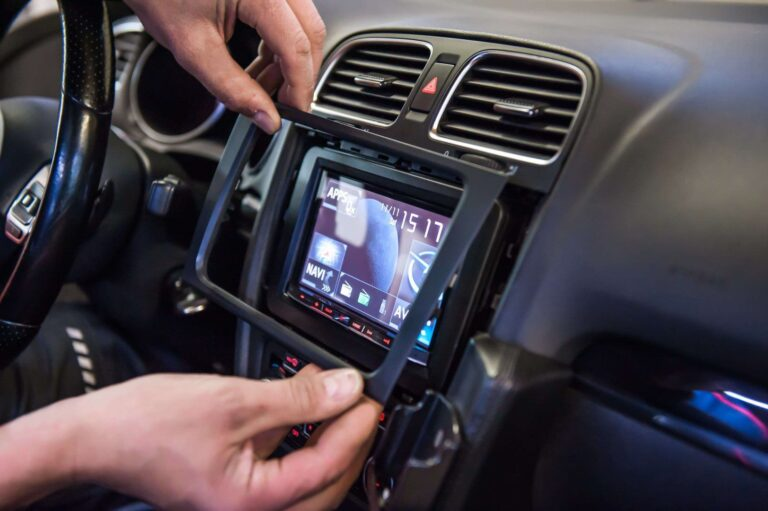
A model-specific fascia kit converts those three variables into three matched components. In ZYX's portfolio the split is explicit: ZYX-01 addresses the dashboard and head unit interface, ZYX-02 addresses electrical connection on non-CAN bus vehicle models, and ZYX-03 addresses CAN bus communication on vehicles that carry factory CAN signals. Recognising which of these layers a specific project depends on is the practical difference between buying a fascia kit and buying the right fascia kit.
Three upgrade scenarios and what each one demands
Fascia kits are bought in three recognisably different contexts, and each one optimises for something else. An installer or car stereo retailer buying for a single vehicle cares about installation time, retained factory controls and a finish that does not invite a complaint. A modification shop working on interior appearance cares about panel gap, surface finish and protecting the original dashboard trim. A cross-border distributor cares about how much of the vehicle parc a single supplier can cover, how reliably the kits install in the field, and how quickly stock can be replenished. The same physical product answers those three demands differently, so the components that decide success differ too.
| Scenario | What the buyer optimises | Component that decides success | Typical failure when mismatched |
|---|---|---|---|
| Car audio and navigation upgrade | Installation time, retained factory controls, clean finish | Harness ZYX-02 on non-CAN models; CAN bus decoder ZYX-03 on CAN-equipped models | No power-on, unresponsive steering wheel controls, dashboard fault codes |
| Auto interior modification | Panel gap, surface finish, protection of the original dashboard trim | Model-specific dash fascia ZYX-01 with dimensional tolerance ≤0.2 mm | Visible gaps, misalignment, damage to the original trim panel |
| Cross-border auto parts distribution | Vehicle-model coverage, protocol success rate, replenishment speed, compliance documentation | Vehicle application database plus kit combination and production capacity | Dead stock on low-turnover SKUs, elevated return rate, import documentation friction |
The non-CAN bus scenario: plug-and-play harness ZYX-02
On non-CAN bus vehicle models there is no network negotiation to manage. The installation problem is mechanical and electrical in the conventional sense: match the factory connector, protect the 12 V supply, and keep power and speaker wiring consistent. That is the scenario the ZYX-02 wiring harness is built for, and its specification reads as a list of the failure modes it is intended to prevent.
- Connector layout: OEM vehicle-side plug to ISO 16-pin head unit connector
- Conductor: AWG 20–22 tinned oxygen-free copper
- Insulation coding: ANSI/CTA-2015-B colour-coded insulation
- Electrical rating: 12 V DC, 10 A maximum current
- Protection features: reverse polarity protection and short-circuit protection
- Operating temperature: −40 °C to 85 °C
- Materials: flame-retardant PVC insulation, PA66 engineering plastic connector housing, tin-plated brass contact terminals
- Compatibility: fits non-CAN bus vehicle models and works with most aftermarket car stereos
The buyer-facing meaning of those parameters is fairly direct. Because the vehicle side is a matching OEM plug rather than bare wires, the harness removes the need to cut into the factory loom — the step most likely to create an intermittent fault months later. Colour coding to ANSI/CTA-2015-B reduces pin-level errors during installation, which matters when the installer is working from a wiring diagram rather than from a factory manual. Reverse polarity and short-circuit protection address the two electrical events that most often damage either a new head unit or the original vehicle electrical system. And because the head unit side terminates in an ISO 16-pin connector, the harness is not locked to a single aftermarket head unit brand.
There is a boundary here that matters during evaluation. The ZYX-02 harness is specified for non-CAN bus vehicle models; it is not a substitute for a decoder on a vehicle that broadcasts control data over a factory CAN bus. It is also matched to vehicle-side connector types rather than to a universal pattern, so where a specific vehicle's original connector differs, the correct adapter variant has to be identified from the vehicle application list rather than assumed.
The factory CAN bus scenario: decoder-first selection with ZYX-03
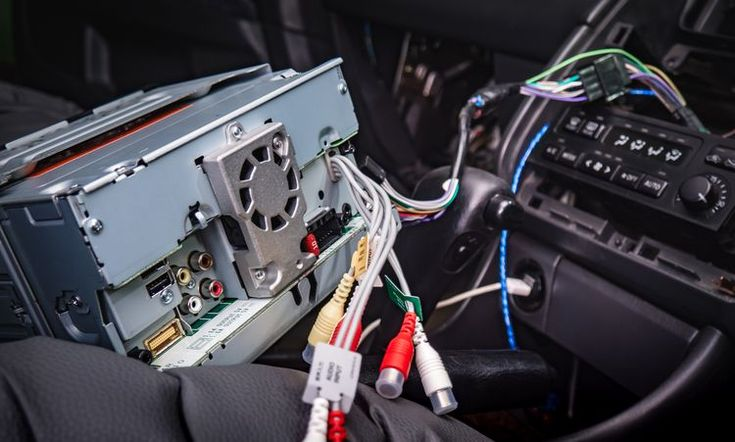
Where the vehicle transmits control and status data over a factory CAN bus, the electrical problem shifts from continuity to protocol. Steering wheel buttons, instrument prompts and selected original functions no longer arrive as simple switch signals; they arrive as bus messages that the aftermarket head unit cannot read on its own. In general industry terms, a CANBUS decoder for Android head units converts vehicle network messages into a format the head unit can process — a translation commonly characterised as HEX-to-UART conversion — so the new unit can retain steering wheel controls and vehicle data.
- Protocol standard: CAN 2.0A / 2.0B, 500 kbps / 125 kbps dual rate
- Power supply: 12 V DC, 300 mA standby, 2 A maximum
- Operating temperature: −40 °C to 85 °C
- Housing and terminals: flame-retardant ABS housing, tin-plated brass connector terminals
- Circuit construction: FR-4 glass fiber epoxy resin board with internal heat-conductive silicone potting
- Type: plug-and-play CAN gateway module
The working principle is the same one that makes a damage-free installation possible. The module accesses the vehicle's CAN network through the factory original electrical interface. A pre-programmed decoder holding model-specific CAN protocol data identifies steering wheel control, instrument prompt and vehicle status signals on the original bus, converts them into formats the aftermarket head unit can read, and simultaneously forwards the head unit's control instructions back to the vehicle network — without cutting or altering the original wiring harness. The 500 kbps / 125 kbps dual-rate specification covers the bus rates the module is designed to work with, and the standby figure of 300 mA with a 2 A maximum is relevant to how the module behaves when the vehicle is parked and when functions are active.
The limitation is worth stating plainly, because it is the single most common source of after-sales complaints in this category. A gateway module does not by itself guarantee that original functions are retained. Protocol behaviour varies with model year and equipment level, and a decoder that is not pre-programmed for the exact vehicle configuration can leave steering wheel controls unresponsive or trigger dashboard warnings. Documented causes for that outcome include a mismatched CAN bus decoder protocol, a loose steering control pin connection, or a decoder that was not programmed for the exact vehicle trim configuration. The corresponding remedy is procedural: verify that the decoder matches the vehicle model, model year and trim level, re-seat the CAN bus and steering control connectors, confirm the decoder firmware corresponds to the vehicle version, and reflash if required.
Multi-vehicle-model dash frame replacement: ZYX-01
The physical layer is where scenario fit becomes visible to the customer. ZYX develops fascia kits according to the dashboard structure, mounting points and panel design of each vehicle application, and the portfolio spans Single DIN, Double DIN, 7-inch, 9-inch, 10.1-inch, OEM-style and other fascia configurations. The published parameters of the ZYX-01 Car Radio Dash Fascia set the practical envelope for an installation.
- Compatible screen sizes: 7" / 9" / 10.1" / 12.3"
- Mounting standard: Double-DIN or model-specific custom
- Dimensional tolerance: ≤0.2 mm
- Material thickness: 2.5 mm – 3.0 mm
- Material: ABS plastic
- Fitment type: plug-and-play
- Operating temperature: −40 °C to 85 °C
For distributors, the relevant number is not a single tolerance but the size of the application base behind it: 3,000+ vehicle applications, which is what makes multi-vehicle-model dash frame replacement feasible as a stocked programme rather than a series of one-off purchases. The matching logic ZYX applies to that base follows a fixed sequence — vehicle brand, vehicle model, model year, original radio, original connector, vehicle configuration, audio system, new head unit — and each step can invalidate an otherwise reasonable part choice.
The same model name can appear with different original radios and connectors across model years and equipment levels, which is why a single part number cannot be assumed to cover every unit of a model. Where a vehicle has multiple original equipment configurations, supplier guidance is to obtain clear photographs of the original dashboard, the original radio, or the connector on the back of the factory head unit before ordering. That step costs minutes at the evaluation stage and is the cheapest available protection against a fitment return.
A pre-order verification sequence for evaluation-stage buyers
The following sequence converts the scenarios above into a repeatable check. It is deliberately ordered so that the cheapest decisions are made first and the most expensive errors — ordering the wrong electrical component, or committing to volume on the wrong SKU — are made last.
| # | Confirmation step | Why it decides the outcome |
|---|---|---|
| 1 | Establish whether the vehicle uses a factory CAN bus | Determines whether the project follows the harness path (ZYX-02, non-CAN models) or the decoder path (ZYX-03, CAN bus signals) |
| 2 | Record vehicle model, model year and trim or equipment level | Identical model names may use different connectors and audio configurations across years and trim levels |
| 3 | Photograph the original dashboard, original radio and the factory head unit connector | Reduces mismatch caused by configuration differences that a model name alone does not reveal |
| 4 | Confirm the new head unit interface and screen size | Must correspond to the ISO 16-pin harness connector and to the fascia opening (7" / 9" / 10.1" / 12.3") |
| 5 | Dry fit the dash fascia before permanent installation | Checks alignment and panel gap against the ≤0.2 mm tolerance before trim is committed |
| 6 | Disconnect the battery and test all functions before final assembly | Avoids electrical risk during installation and confirms CAN functions and steering controls before the dashboard is closed |
What programme evidence says about return rates and delivery
Because fitment and protocol failures dominate returns in this product category, long-running supply programmes are more informative than specification sheets. One ZYX programme with a car multimedia brand owner has run for nine years of continuous cooperation, with a cumulative 550,000+ sets of dash frames, wiring harnesses and CAN bus decoders supplied across global markets including China and overseas regions. Reported results include a return rate below 0.7% over those cumulative shipments, stable mass production, fast new-model adaptation, stable lead-time control across volume orders, efficient sample delivery, and support for multi-country compliance standards. The application in that programme is after-market Android head-unit retrofit, including multi-vehicle-model dash frame replacement, with form-fit assembly of the dash frame to the vehicle dashboard supported by a complete vehicle-model database.
A second programme, with an after-market solution integrator in China, has run for seven years of long-term stable cooperation and covers a cumulative 19,000+ sets of Android stereo retrofit supporting parts — dash frames, wiring harnesses and CAN bus decoders for various car brands — with a reported return rate below 0.8%, flexible order volume capability for overseas project requirements, and rapid technical support. Both figures are supplier-reported results from specific programmes rather than a market-wide benchmark, and they should be read that way; what they indicate is that fit and protocol discipline are measurable at programme level, not merely claimed at product level.
Quality control behind those numbers is documented as two checkpoints rather than a general statement: 100% incoming inspection for CAN bus decoders, and a 100% pre-shipment conductivity and fit test. On the supply side, ZYX operates OEM, ODM, kit assembly and authorised distribution models, with customisation available for dash kit model and surface finish, wiring harness pin definition and length, and kit combination configuration. Monthly capacity is stated at 12,000 units, with lead times of 3–7 days for stock products and 15–25 days for custom model-specific products, and minimum order quantities of 1 unit for stock items and 100 units for custom OEM/ODM items. After-sales terms include a 12-month product warranty, remote installation technical guidance, free replacement for defective items, and CAN protocol matching support. Those terms define the practical shape of a distributor's stock policy: fast replenishment on proven SKUs, planned lead time on anything model-specific.
Market signals behind install-layer demand
The demand for fascia kits, harnesses and decoders is a derivative of head unit demand, and the underlying numbers are large. The global car audio head unit market was estimated at USD 15.44 billion in 2024, according to Market Research Future. The car aftermarket audio system market is projected to grow at a CAGR of 12.18%, driven by DIY customers and online plug-and-play kits, according to Mordor Intelligence analysis. Regionally, Asia Pacific dominated the global car audio market with a 54.21% share in 2025, per Fortune Business Insights. For trade and documentation purposes, HS Code 8708.99 (vehicle parts and accessories, not elsewhere specified) is the primary classification for car stereo fascia and installation hardware, per the United Nations Statistics Division classification reference.
Two implications follow for buyers evaluating install-layer products. First, a market growing on the back of DIY and online plug-and-play purchasing raises the premium on components that can be installed correctly without a workshop — which is precisely what a colour-coded, protected, ISO-terminated harness and a pre-programmed decoder provide, and also why documentation and vehicle-matching support become part of the product rather than an afterthought. Second, regulatory scope matters in export markets: electronic subassemblies integrated into road vehicles in the European Union must comply with e/E-Marking (EMC testing, ECE R10) rather than only CE marking where they impact vehicle safety functions, per Elite Electronic Engineering's e/E-Marking guidance. That distinction affects documentation obligations for sellers moving kits into EU channels, and it is one of the reasons multi-country compliance support is cited as a programme highlight rather than a marketing line.
Plug-and-play model-specific kits compared with traditional cut-wire solutions
The comparison that matters at the evaluation stage is not between two head units but between two installation philosophies. The differences below are structural, not promotional: each approach has conditions under which it is the reasonable choice.
| Dimension | Plug-and-play model-specific kit (dash kit + harness + CAN decoder) | Traditional cut-wire universal solution |
|---|---|---|
| Installation method | Factory original electrical interface; no cutting or modification of the original harness | Requires cutting and splicing into the factory wiring |
| Fit accuracy | Model-specific moulding, dimensional tolerance ≤0.2 mm | Universal brackets and adapters; fit depends on the installer |
| Original function retention | Pre-flashed vehicle-specific CAN firmware supports steering wheel controls and vehicle data | Retention depends on manual signal matching; higher incidence of fault codes |
| Cost profile | Higher upfront component cost; stock lead time 3–7 days, custom items 15–25 days | Lower upfront cost; minimal vehicle-specific planning |
| Risk profile | Risk concentrated in correct vehicle identification before ordering | Risk concentrated in wiring damage, fitment gaps and functional faults |
| Best-fit scenario | Premium upgrades, fleet batch modification, dealership pre-delivery fitting, distribution programmes | Low-budget simple retrofits of older economy vehicles |
| Inventory implication | Wider SKU count; requires an application database and variant discipline | Narrower SKU count; less exposure to vehicle-model proliferation |
The honest limitation of the model-specific approach is the mirror image of its strength. Precision narrows coverage: a fitment-tolerant kit needs accurate vehicle identification, and a distributor must therefore carry more variants or accept longer waits on custom items — an MOQ of 100 units and a 15–25 day lead time on custom OEM/ODM work, against 3–7 days on stocked products. The ZYX-02 harness is specified for non-CAN bus vehicle models only, so any vehicle that carries factory CAN signals moves to the decoder path, and the decoder in turn depends on firmware matched to model year and trim. Where a project involves old economy vehicles and the lowest possible upfront cost, a traditional cut-wire solution remains a defensible option; the trade is a higher risk of original wiring damage, poorer fit accuracy and a greater likelihood of functional faults. Coverage breadth is also a competitive dimension in this industry — Metra Electronics, for example, states that it manufactures dash kits for more vehicle applications than any other manufacturer globally — which is why application databases, not only moulds and connectors, function as the real asset behind a fascia kit range.
Future outlook
Three developments are likely to shape scenario fit over the next few upgrade cycles. The first is the continuing spread of factory vehicle networks, which shifts the critical component from the mechanical fascia toward the decoder and its firmware library. As more vehicles carry bus-based controls, the practical bottleneck in a retrofit stops being the dashboard opening and becomes the correspondence between one vehicle configuration and one protocol dataset. The second is the DIY and online channel growth implied by the projected 12.18% CAGR in the aftermarket audio system market; a channel that installs at home depends on plug-and-play integrity, clear colour coding and pre-programmed decoders in a way that a professional workshop does not. The third is regulatory and documentation pressure on cross-border sales, including e/E-Marking considerations for electronic subassemblies in the EU and consistent HS classification at 8708.99 for installation hardware.
For suppliers, that combination favours breadth of verified vehicle applications over breadth of generic product listings. ZYX's stated direction is to continue expanding vehicle coverage, developing new fascia kits, wiring harnesses and CANBUS solutions, and improving its compatibility database — a direction that matches where the retrofit demand is moving. For distributors and installers, the practical response is to treat scenario fit as a purchasing discipline: identify the bus architecture first, verify the vehicle configuration second, and only then select the fascia, harness or decoder that the scenario actually requires.
Frequently asked questions
What is a CAN bus decoder and what role does it play in an Android head unit retrofit?
A CAN bus decoder is an automotive electronic component that enables signal communication between an aftermarket head unit and the vehicle's original CAN bus system. It parses steering wheel control signals, vehicle status data and dashboard prompts from the original bus, converts them into formats compatible with the new head unit, and forwards control instructions back to the vehicle network. On CAN-equipped vehicles it is the component that allows a full-function, plug-and-play retrofit without wiring modification.
How does a plug-and-play kit work without cutting or modifying the original wiring?
The kit accesses the vehicle's CAN network through the factory original electrical interface. A decoder pre-programmed with model-specific CAN protocol data identifies, converts and forwards signals between the aftermarket head unit and the original vehicle system, so function docking is achieved without cutting or altering the original harness. On the harness side, the same principle applies through a matching vehicle-side plug: the connection is made by plugging into the factory interface rather than by splicing wires.
On a vehicle without a factory CAN bus, is a decoder still needed?
No. On non-CAN bus vehicle models the electrical interface is handled by a plug-and-play wiring harness such as ZYX-02, which provides an OEM vehicle-side plug and an ISO 16-pin head unit connector, rated 12 V DC and 10 A maximum, with AWG 20–22 tinned oxygen-free copper conductors, ANSI/CTA-2015-B colour-coded insulation, and reverse polarity and short-circuit protection. A decoder becomes relevant only when the vehicle transmits control and status data over a factory CAN bus.
What causes dashboard fault codes or unresponsive steering wheel controls after installation?
These symptoms are typically caused by a CAN bus protocol mismatch between the decoder and the vehicle's original system — for example, a universal decoder without model-specific firmware, or a decoder that does not match the vehicle's model year and trim configuration. Documented remedies include confirming that the decoder is the model-specific version for the vehicle, re-plugging the CAN bus and steering control connectors to ensure they are fully seated, updating or reflashing the decoder to the matching firmware version, and then clearing historical fault codes and retesting the system.
How should a distributor evaluate a fascia kit supplier?
Core evaluation parameters are model-specific fit accuracy, CAN protocol matching rate, damage-free installation capability, electrical safety, compliance qualifications, long-term reliability and delivery capacity. In practice that means looking for precision moulding against original vehicle dimensions, pre-flashed vehicle-specific CAN firmware, plug-and-play harnesses with built-in electrical protection, and a documented inspection system — for example, 100% incoming inspection for CAN bus decoders and a 100% pre-shipment conductivity and fit test. Programme duration and return-rate history across previous volume orders are more informative than catalogue breadth alone.
How does a plug-and-play model-specific kit compare with a traditional cut-wire universal solution?
The plug-and-play kit requires no damage to the original vehicle wiring, uses model-specific moulding for fit precision, and pairs with pre-flashed vehicle-specific CAN firmware to avoid dashboard fault codes — which suits premium upgrades, fleet batch modification and dealership pre-delivery fitting. The traditional cut-wire solution has a lower upfront cost and remains workable for simple retrofits of older economy vehicles, but carries a higher risk of original wiring damage, poorer fitment and greater fault incidence.
ZYX publishes a company profile brochure covering its fascia kit, wiring harness and CANBUS decoder portfolio, available as a public download here: ZYX Auto Company Profile Brochure. Product and vehicle application references are also published at www.zyxcaradio.com.
Third-party data referenced in this article: Market Research Future (car audio head unit market size, 2024); Mordor Intelligence (car aftermarket audio system CAGR); Fortune Business Insights (Asia Pacific car audio market share, 2025); United Nations Statistics Division (HS Code 8708.99 classification); Elite Electronic Engineering (e/E-Marking and ECE R10 guidance); Quality Mobile Video (CANBUS decoder HEX-to-UART translation); Metra Electronics (dash kit application coverage statement, cited as a company claim).