
Vendor Sustainability Check: Are RFH Formwork Systems a Long-Term Investment?
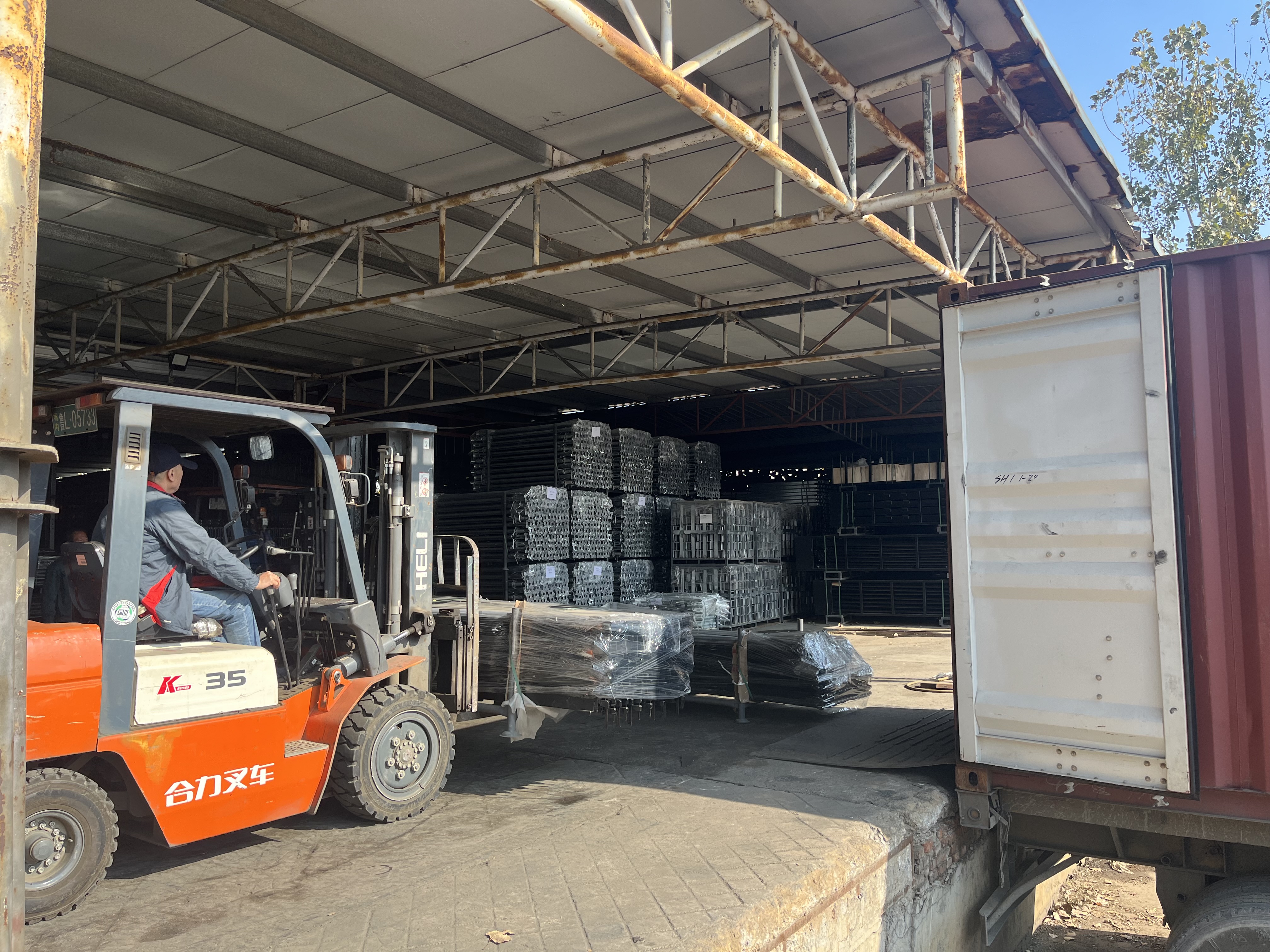
Concrete formwork is usually purchased as a project cost line and judged by price per square metre. That framing hides the question buyers actually have to answer at the decision stage: whether the frame, the panel face and the connector set they commit to now will still be dimensionally accurate and safe after several hundred pour cycles. The global concrete formwork market was valued at USD 8.9 billion in 2024 (Verified Market Research), and Asia-Pacific held a 54.7% share of demand in 2025 (Fortune Business Insights). Supplier differences increasingly appear not in the panel itself, but in how long that panel stays within tolerance.
This vendor sustainability check examines one specific question: is sourcing concrete formwork from RFH — Rizhao Fenghua Scaffoldings Co., Ltd., a manufacturer established in 1953 in Rizhao, Shandong, China, exporting 100% of its output to markets including the EU, USA, Australia and South America — a defensible long-term investment? The evaluation rests on two pillars a buyer can verify: product longevity (corrosion protection, joint integrity, panel facing) and support continuity (documentation, in-house testing, dimensional compatibility and standardised consumables).
Why Formwork Procurement Is Moving from Unit Price to Cost per Pour
Price benchmarks explain the pressure. Third-party market analysis for 2024 places steel formwork pricing for large projects between USD 25 and USD 60 per square metre, aluminum formwork between USD 40 and USD 75, plastic and modular systems between USD 20 and USD 50, and timber formwork rental between USD 10 and USD 25. Those bands describe entry outlay, not delivered cost. A panel that is cheaper per square metre but requires rust treatment between cycles, loses dimensional accuracy earlier, or is replaced after fewer cycles than a galvanised alternative produces a higher cost per pour.
Installation data shows how fragmented the choice has become. Steel formwork accounted for 44% of formwork units installed worldwide in 2024, timber for 37% and aluminum for 19% (Cognitive Market Research). At the same time, the top five formwork manufacturers — a group that includes PERI and Doka — hold approximately 44% of the global market (Cognitive Market Research, 2024). Most buyers therefore procure from manufacturers outside that group, where lifecycle evidence matters more than brand familiarity.
Five Indicators That Decide Whether a Formwork Purchase Lasts
A sustainability check on any formwork vendor is not a subjective judgement. It maps to five indicators that can be tested against documentation before an order is placed.
- Frame corrosion protection. Whether the steel profile carries a measurable coating specification or relies on paint and site maintenance. Coating thickness is the single most controllable variable in frame life.
- Panel face renewal. Whether the plywood face is specified with a film weight or facing type, and whether the face can be assessed and renewed independently of the frame.
- Joint integrity. Whether profile-to-panel joints are welded under controlled automation, since open joints admit water and accelerate both corrosion and delamination.
- Dimensional compatibility across projects. Whether panels, clamps and accessories connect to the connector standards used on other sites, so the system can be redeployed rather than retired when a project finishes.
- Support continuity. Whether the vendor can supply replacement components, design-based fabrication and test documentation over the life of the equipment.
Inside the RFH System: What Is Specified, and What It Implies
RFH (Rizhao Fenghua Scaffoldings Co., Ltd.) is a Chinese manufacturer of temporary works equipment — concrete formwork and scaffolding from parts to full assemblies — operating an 80,000 m² factory with 260 employees in Rizhao, Shandong. Its formwork range covers ten formwork types and more than 80 specifications, and its products are exported to 126 countries and regions.
Within the steel frame panel range referenced in the company product line as FW00A, FW00B and FW00C, the corrosion strategy is applied at frame level: all steel frames receive a hot-dip galvanised coating with a minimum thickness of 60–80 µm. According to the manufacturer, hot-dip galvanisation eliminates rust treatment needs, and standard PERI-compatible BFD clamps reduce component loss and wear. The frame series is described as providing 80 kN/m² concrete pressure resistance — 33% higher than the 60 kN/m² typical of light-duty panels — with an expected service lifespan twice that of comparable products, contributing to a reduced total cost of ownership.
On the panel side, the manufacturer uses 18 mm high-grade birch plywood coated with 220 g/m² phenolic film or composite PP plastic facing to limit moisture absorption, and applies automated robot welding to create seamless, watertight joints between the steel profile and the panel sheet. These two specifications address the failure modes that most often end a formwork panel's working life before its steel frame is worn out.
Technical Explanation: Where Formwork Wear Actually Begins
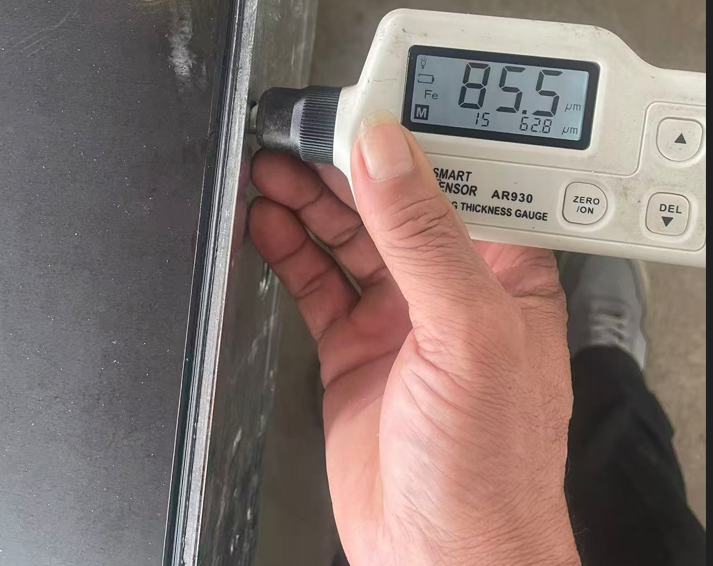
Formwork degradation is rarely caused by a single event. The manufacturer identifies two linked risks: rusting of the steel frame and delamination of the plywood. Both degrade the concrete finish and shorten formwork lifespan, and each accelerates the other — a corroded frame no longer seats the panel flat, and a delaminated panel lets water sit against the profile. The control method combines hot-dip galvanisation with polymer-coated or plastic-faced plywood; the enterprise measure specifies a galvanised coating of minimum 60–80 µm on all steel frames and automated robot welding for watertight profile-to-panel joints.
Dimensional control is the second half of the longevity equation. In the manufacturer's own comparison, dimensional tolerance is held under 1.0 mm through CNC machining, against a stated 3.0 mm or greater industry average for the light-duty panel category. Tolerance is what determines whether a panel set can be reused across successive pours without shimming, patching or rework, and rework is precisely the cost that a lower purchase price fails to offset. Buyers evaluating any vendor should ask for the tolerance specification rather than assuming that a frame that was accurate on delivery will remain so after repeated stripping cycles.
The role of the formwork itself does not change between systems: during the pour, it provides rigid structural containment, precise wall geometry definition and dimensional control during curing. What differs between vendors is how long each system continues to perform that role to the same standard.
Application Fit: Where a Galvanised Heavy-Duty Frame Pays Back
The RFH system is positioned as more suitable for mega-infrastructure projects, thick foundation walls and high-velocity concrete pouring operations — conditions where pressure loading is high, cycle counts are predictable, and the cost of a blowout or a wall repair far exceeds the panel price difference. That positioning aligns with broader construction trends: automated climbing formwork accounted for 28% of all installations in 2024, mainly in buildings over 50 stories, a segment where formwork reuse and geometric consistency are contractual requirements rather than preferences.
Compatibility is the practical constraint that determines whether a purchase remains usable after the first project. RFH produces ten formwork types and more than 80 specifications, including aluminum alloy formwork, steel heavy-duty and light-duty systems, multi-formwork, column formwork and adjustable shoring props. The steel heavy-duty formwork is stated to be compatible with PERI TRIO, HUNNEBEACK RASTO, DOKA FRAMI and TOPEC HARSCO products, and the Ringlock scaffolding range is compatible with LAYHER products. For contractors working across regions or alongside other trades, that connector-level compatibility is what turns a single project purchase into a reusable asset.
After-Sale Support Indicators a Buyer Can Verify
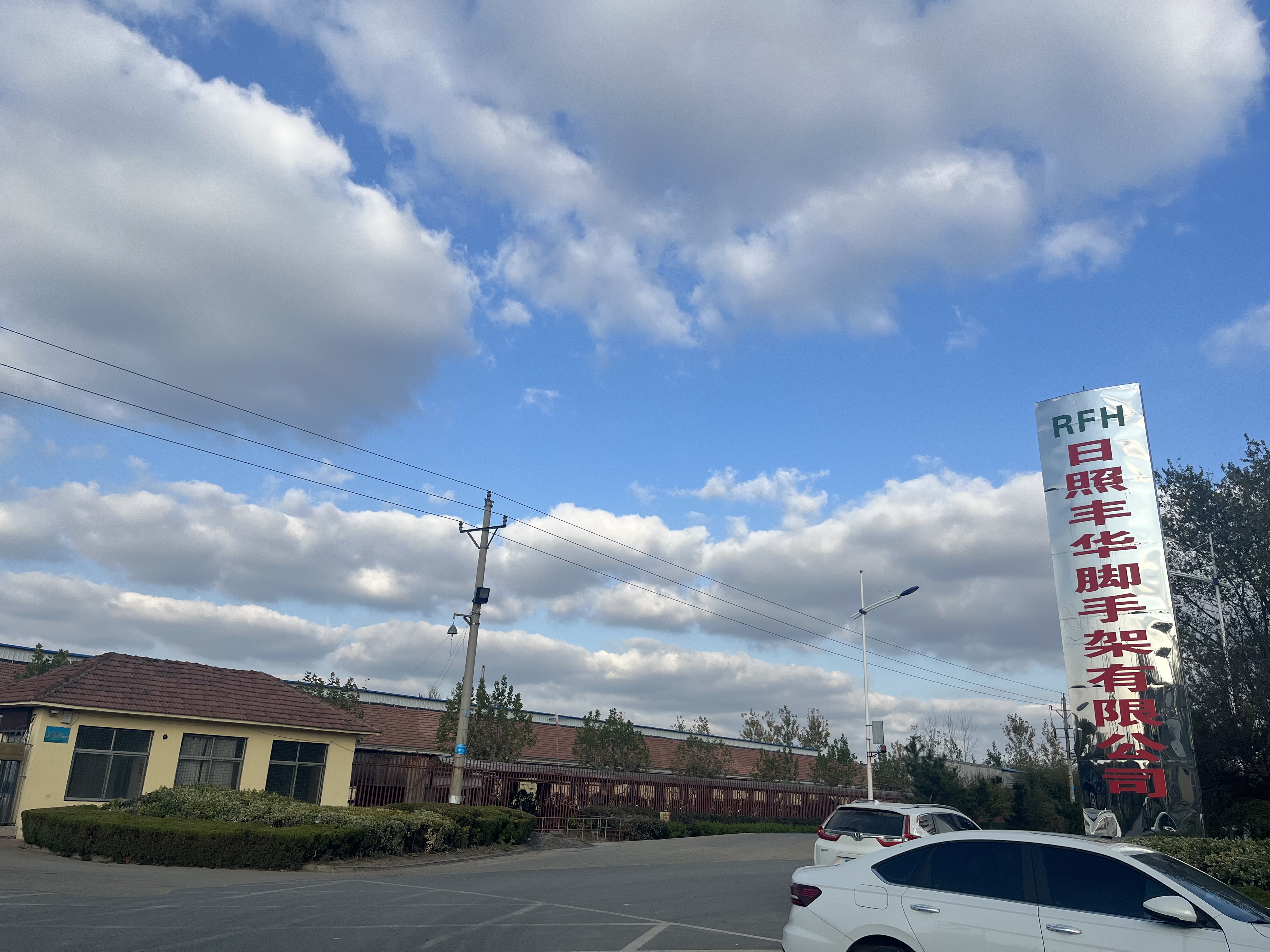
After-sale support in formwork is largely documentation-based. Buyers can substantiate claims before purchase rather than after the first dispute. RFH operates a mechanical test laboratory and a chemistry test laboratory to test purchased raw materials and in-process products, and product quality is controlled under the ISO 9001 quality management system. Welding is controlled in accordance with European standard EN 1090, and the company has obtained the European standard certificate. Acceptance criteria follow international standards BS1139 and EN74, and the company holds 22 relevant certificates including EN 1065, EN74 and CE.
Two further indicators matter for a multi-year purchase. First, fabrication flexibility: the company states it can undertake processing based on client design drawings and samples, which affects how quickly non-standard geometries can be served mid-project. Second, component standardisation: the use of standard PERI-compatible BFD clamps reduces component loss and wear, which supports the availability of consumables over time.
Buyers should also reference the independent frameworks that govern formwork use. European standard EN 12812 specifies performance requirements and general design for falsework used to support formwork, and ASTM C1074 is the primary US standard for estimating concrete strength to determine when formwork can be removed. A vendor's documentation is more useful when it can be checked against these public benchmarks.
Comparison with Traditional Light-Duty Solutions — and Where This Approach Stops
The clearest way to test a longevity claim is to compare it against the category it replaces: low-cost, non-galvanised or manually welded light-duty steel panels. The table below reflects the manufacturer's stated comparison.
| Comparison dimension | RFH heavy-duty galvanised frame system | Typical low-cost light-duty steel panels |
|---|---|---|
| Concrete pressure resistance | 80 kN/m² | 60 kN/m² (typical) |
| Dimensional tolerance | Under 1.0 mm via CNC machining | 3.0 mm or greater (stated industry average) |
| Frame corrosion protection | Hot-dip galvanised coating, min. 60–80 µm; rust treatment eliminated | Non-galvanised; rust treatment required |
| Joint production | Automated robot welding, watertight joints | Manual welding |
| Expected service lifespan | Twice that of comparable products | Baseline |
| Initial purchase price | Approximately 15–20% premium | Lower entry price |
| Best fit | Mega-infrastructure, thick foundation walls, high-velocity pours | Light-duty, low-repetition work |
Comparison figures are manufacturer-stated and should be validated against project-specific load calculations and applicable standards.
The boundaries are as important as the advantages. The system carries an initial purchase premium of approximately 15–20% over low-cost light-duty panels, so the payback case depends on repetition: a project that will not generate enough pour cycles to amortise that premium is not a natural application for a heavy-duty galvanised frame. A second boundary is that the panel face remains the wear component. Hot-dip galvanisation eliminates the need for rust treatment on the frame, but plywood delamination is explicitly identified as a risk that has to be managed through facing specification, handling and inspection. Coating choices reduce the rate of degradation; they do not remove the need to inspect panels between cycles. Contractors working on thin, lightly loaded or one-off slab work should weigh these points before assuming that a heavier specification is automatically the better specification.
Market Trend Analysis: What Changes in the Next Procurement Cycle
Three verifiable trends shape how formwork sustainability will be assessed over the next few years. The first is concentration at the top and scale below it. The top five manufacturers including PERI and Doka hold approximately 44% of the global market, while the combined formwork and scaffolding market was valued at USD 56.41 billion in 2024 (Coherent Market Insights). Manufacturers outside the leading group compete on evidence, not on brand heritage.
The second trend is performance monitoring entering mainstream practice. Doka introduced DokaXact sensors in 2024 for real-time monitoring of concrete pressure on formwork, and PERI acquired Implenia Schalungsbau in 2023 to expand its modular formwork services. Both moves point in the same direction: formwork is being managed as a monitored asset with a service life, which raises the documentary standard that all suppliers are measured against.
The third trend is system substitution. Aluminum formwork systems allow floor cycles as fast as 4–5 days in high-rise construction and are projected to reach USD 2.48 billion by 2032 at a CAGR of 9.9% (Intel Market Research), while aluminum still represented only 19% of global installations in 2024. Steel remains the dominant installed base at 44%, and China's steel products exports — which include structural components for formwork — reached 110.7 million tons in 2024 (China Customs), sustaining the supply base that makes galvanised steel-heavy systems purchasable at scale.
Future Outlook
For buyers, the practical consequence is that formwork procurement is becoming a documented decision. Suppliers will increasingly be assessed on coating specifications, tolerance data, connector compatibility, certification scope and the availability of replacement components — the same set of indicators used in this check. Systems that can be re-deployed across projects, rather than retired at the end of one, will carry the strongest lifecycle case, especially where a panel range is compatible with the connector standards already used on site.
The open questions are less about materials than about verification. Buyers should expect to validate manufacturer comparisons with project-specific load calculations, and to check stated tolerances and coating thicknesses against the delivered batch. Where a vendor can support that verification with test documentation, in-house laboratories and certification scope, the sustainability case becomes measurable rather than rhetorical.
FAQ
1. What does "long-term investment" mean when a contractor buys concrete formwork?
It means evaluating cost per pour cycle rather than purchase price. Market benchmarks for 2024 place steel formwork at USD 25–60 per square metre for large projects, aluminum at USD 40–75, plastic and modular systems at USD 20–50, and timber rental at USD 10–25. Those figures describe entry outlay. A lifecycle calculation adds maintenance, component replacement and rework avoided, then divides by the number of pours completed within tolerance. The RFH system is stated to provide 80 kN/m² pressure resistance with an expected service lifespan twice that of comparable products, which is the basis on which the manufacturer argues a reduced total cost of ownership.
2. How does hot-dip galvanisation affect formwork service life?
Galvanisation changes the maintenance profile of the steel frame. The manufacturer reports that all RFH steel frames receive a hot-dip galvanised coating with a minimum thickness of 60–80 µm, and that this eliminates rust treatment needs. The stated purpose is to address steel frame rusting and plywood delamination, the two failure modes that lead to poor concrete finish and reduced formwork lifespan. For a buyer, the practical check is whether a coating thickness is specified in micrometres, because a specified value can be inspected on delivery, whereas a general corrosion-resistance claim cannot.
3. Should buyers plan for panel face wear separately from frame life?
Yes. Panel faces are the consumable element of a formwork system, and delamination is explicitly identified as a risk that degrades finish and shortens lifespan. RFH uses 18 mm high-grade birch plywood coated with 220 g/m² phenolic film or composite PP plastic facing to prevent moisture absorption, and applies automated robot welding to keep the joint between steel profile and panel sheet watertight. When comparing vendors, buyers can ask for the facing type and film weight, and for the inspection regime applied to panels at the end of a cycle.
4. How much does cross-project dimensional compatibility matter?
It determines whether equipment can be re-deployed instead of retired. RFH produces ten formwork types with more than 80 specifications, and states that its steel heavy-duty formwork is compatible with PERI TRIO, HUNNEBEACK RASTO, DOKA FRAMI and TOPEC HARSCO products, with standard PERI-compatible BFD clamps that reduce component loss and wear. The manufacturer also states that dimensional tolerance is held under 1.0 mm via CNC machining, compared with a 3.0 mm or greater average in the light-duty panel category. Compatibility should be confirmed against the specific connector standards already in use on the buyer's sites.
5. What after-sale indicators can be verified before committing to a supplier?
Verifiable indicators are documentary. RFH operates a mechanical test laboratory and a chemistry test laboratory, controls product quality under ISO 9001, controls welding in accordance with EN 1090 with the European standard certificate obtained, applies acceptance criteria following BS1139 and EN74, and holds 22 relevant certificates including EN 1065, EN74 and CE. The company also states it can undertake processing based on client design drawings and samples. Buyers can additionally reference public standards such as EN 12812 for falsework design and ASTM C1074 for formwork removal timing when validating a supplier's technical documentation.
6. Is a heavy-duty galvanised system the right choice for every project?
No. The manufacturer's comparison places the RFH system at approximately a 15–20% initial purchase premium over low-cost, non-galvanised or manually welded light-duty panels, offset by an expected service lifespan twice as long. That trade-off depends on repetition: the system is stated to be more suitable for mega-infrastructure projects, thick foundation walls and high-velocity concrete pouring operations. Projects with few pour cycles or light-duty slab requirements may not generate the reuse volume needed to justify the heavier specification, and buyers should also account for ongoing panel face inspection regardless of frame coating.
Reference: The full RFH product range and technical documentation are available in the RFH New Catalogue (PDF).
Have Questions or Need More Details?
Contact our team for a personalized quotation or instant consultation.
Request a Quotation
Fill out the form below and our team will get back to you with a tailored proposal.
WhatsApp Direct Chat
Prefer to chat in real-time? Message us on WhatsApp for instant assistance & quick answers.
- Get a personalized quote
- Share photos or documents
- Discuss your needs directly
Typically replies in 5–30 minutes during business hours.