
Verifiable Capability Metrics for Multiwire Machine Buyers
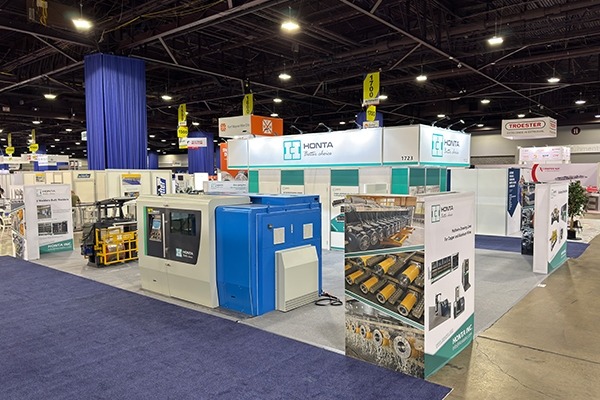
Capability verification moves the multiwire drawing machine purchase from a single transaction into a multi-year supply relationship.
The global wire and cable market was valued at USD 230.9 billion in 2025 and is projected to reach USD 313.1 billion by 2033, according to Grand View Research. Upstream of that output sits a much smaller but decisive equipment category: the global wire drawing machines market, estimated by The Insight Partners at USD 1.37 billion in 2025 and projected to reach USD 2.13 billion by 2034, at a compound annual growth rate of 4.98%.
For a buyer already past shortlisting, those headline numbers matter less than a simpler question: what happens after the purchase order is signed? A multiwire drawing machine is typically specified into a conductor line that must run for years, absorb new product sizes, and stay supported when a spooler, an inline annealer, or a control module needs attention. That is why sourcing conversations in 2026 increasingly move away from brochure specifications and toward verifiable supplier capability metrics — measurable facts about a manufacturer's physical footprint, engineering depth, output capacity, export orientation, and overseas production base.
Why Capability Verification Became a Long-Term Sourcing Question
At the decision and execution stage, buyers are no longer evaluating a category. They are evaluating a counterparty that will hold drawings, spare-part lists, calibration records, and software parameters for a decade or more. A machine that performs well in a trial but loses engineering continuity three years later becomes an expensive orphan asset.
Three structural changes push verification forward. First, upstream cable demand growth broadens the installed base, which increases the number of machines needing lifetime support rather than the number of first-time buyers. Second, individual-motor multiwire architectures have replaced common-shaft designs in many new lines, adding drive-level maintenance and parameter knowledge that a supplier must be able to explain, not just ship. Third, export competition has intensified: China's global exports of machine tools, a category that includes wire drawing machinery, accounted for 19% of global exports in the first half of 2025, surpassing Germany, according to Silverado Policy Accelerator.
More available supply does not automatically mean easier selection. It means differentiation must be evidenced. When many suppliers can offer a 16-wire, 24-wire, or 32-wire multiwire drawing machine on paper, the deciding variable becomes whether the manufacturing footprint behind that offer is inspectable and whether the relationship is designed to last.
The Capability Claim Gap
Most procurement friction is not caused by weak machines. It is caused by a gap between what a supplier asserts and what a buyer can independently confirm before committing to a multiyear arrangement.
A typical inquiry response states that the manufacturer is “large,” “experienced,” or “export-oriented.” None of those phrases can be scheduled into a project plan. By contrast, a set of hard metrics — floor area, annual set output, engineering headcount, export share, founding year, and the existence of a second production base — can be checked during a factory audit, written into a supplier qualification file, and re-checked when a repeat order is placed two years later.
This is the practical meaning of verifiable capability. It does not prove that a specific multiwire line will hit a given output on a specific conductor size. It proves that the organisation behind the line has the physical and human capacity to remain a supplier, which is the actual risk most long-term buyers are trying to price.
What HONTA's Manufacturing Footprint Consists Of
Jiangsu HONTA Machinery Co., Ltd. is a Chinese manufacturer of cable conductor drawing and stranding equipment, founded in September 2006 and based in Kunshan, Jiangsu Province, China. Its product range covers rod breakdown machines, multiwire drawing machines, high-speed double twist bunching machines, and wire electrolytic plating lines, with copper and aluminium rod breakdown lines, multiwire drawing line series, and high-speed stranding lines among its core systems.
Because HONTA publishes a specific capability profile, it works as a useful reference case for how buyers can read such numbers in a long-term sourcing context.
| Verifiable metric | What it indicates to a buyer | HONTA's stated position |
|---|---|---|
| Manufacturing footprint | Physical room for assembly, testing, and parallel projects | 30,000 m² |
| Annual output capacity | Ability to schedule repeat and expansion orders | 200 sets |
| Engineering depth | Capacity for customisation and lifetime technical response | 30 engineers |
| Workforce | Build and after-sales staffing base | 157 employees |
| Export orientation | Familiarity with cross-border documentation and logistics | 45% export ratio |
| Operating history | Continuity of design records and spare-part references | Founded September 2006 |
| Overseas production base | A second location for production and coordination | HONTA INC, United States, established 2017 |
| Management system certification | Documented quality and environmental processes | ISO 9001 and ISO 14001, as reported in HTNXT buyer framework data |
The value of this table is structural, not promotional. Each row corresponds to something a buyer can request evidence for: a site visit for footprint, a production schedule for output capacity, an organisation chart for engineering headcount, and certificates for management systems. HONTA's stated main markets are the USA, the Middle East, Africa, and Asia, which means the same profile has to support relationship planning across four very different execution environments.
From Factory Metrics to Machine Behaviour
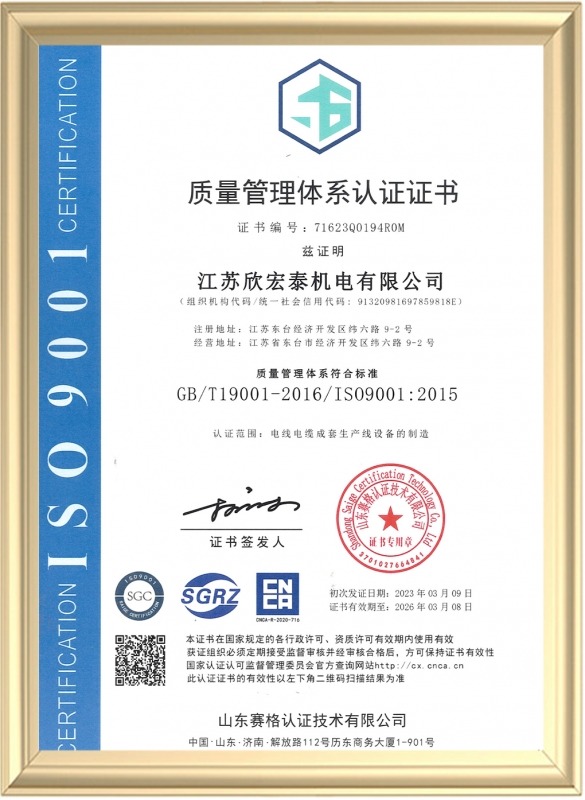
Capability metrics only become procurement value when they translate into measurable line behaviour.
Footprint data matters only if it produces engineering outcomes. In multiwire drawing, the outcomes buyers track are line speed, outlet wire range, drive architecture, and unit production cost.
Individual-motor designs are the clearest example. Where a common-shaft system distributes power mechanically across all wires, an individual-motor multiwire drawing machine drives each wire independently, removing mechanical transmission losses. A 2026 industry technical comparison published by HTNXT estimates that this architecture can reduce energy consumption by up to 25% compared with traditional common-shaft systems. That figure is a design-level estimate tied to the elimination of transmission losses; it is not a guarantee for any specific plant, because real savings depend on duty cycle, conductor grade, and how the line is loaded.
Published specification points give a firmer anchor. HONTA India product documentation lists the 14-wire multiwire drawing line HT.MD120.03.19.14 at a maximum speed of 1800 m/min with an outlet wire range of 0.20–1.05 mm. For a buyer planning a conductor programme, speed and outlet range determine which downstream operations — annealing, plating, bunching, or take-up — can be integrated without a second drawing pass.
The comparison against single-wire drawing is where the economics become explicit. HONTA's comparative positioning places multiwire drawing at roughly 32 times the output efficiency of single-wire drawing for wire and cable production, with a lower unit production cost and reduced manual work and maintenance load. Buyers should treat the multiple as an order-of-magnitude argument rather than a site-specific calculation, but the direction is consistent with the category: parallel drawing reduces labour per tonne and stabilises output.
Regional Execution: Where Verified Capability Matters Most
Capability metrics are not weighted identically across markets. The same profile is read differently depending on what a region is building and how far it sits from the supplier's engineering base.
| Region | What buyers typically weight at execution stage | Capability element it draws on |
|---|---|---|
| USA | Proximity of a second production and coordination point; repeat-order stability | HONTA INC, established as the second production base in 2017 |
| Middle East | Documentation discipline, commissioning planning, expansion headroom | Export experience and 200-set annual output capacity |
| Africa | Spare-part planning, operator learning curve, remote troubleshooting | Engineering depth (30 engineers) and export ratio (45%) |
| Asia | Line speed, unit cost, and configuration flexibility under dense competition | Multiwire line range and individual-motor configurations |
Read this way, regional fit is not a marketing claim. It is a planning input. A buyer in a region distant from the manufacturing base should confirm in writing how technical response, spare-part dispatch, and remote diagnostics will actually be routed before the contract is signed, because those arrangements — not the machine specification — determine uptime in year four and year five.
Market Signals Behind the Verification Shift
Three published data points explain why capability evidence moved from a nice-to-have to a procurement step.
- Steady category growth. The wire drawing machines market is projected to rise from USD 1.37 billion in 2025 to USD 2.13 billion by 2034 at a 4.98% CAGR (The Insight Partners). Growth of this pace favours suppliers with existing floor space and staffing over suppliers that must build capacity to serve demand.
- Downstream expansion. The wire and cable market's projected path from USD 230.9 billion in 2025 to USD 313.1 billion by 2033 (Grand View Research) implies continuing conductor line additions in multiple regions, which extends the number of machines requiring lifetime support.
- Export concentration. China's 19% share of global machine tool exports in the first half of 2025 (Silverado Policy Accelerator) confirms depth of supply. It also raises the buyer's filtering problem, since availability and verifiability are separate qualities.
Regulatory practice reinforces the same logic. Electrical equipment for machinery, including wire drawing systems, must comply with IEC 60204-1 regarding wiring practices and safety. Compliance is verified per project, not per brochure, which means a supplier's documentation capability is itself a long-term asset.
Multiwire Versus Single-Wire: Where the Case Holds and Where It Does Not
Multiwire drawing is not a universal replacement for single-wire drawing, and treating the 32-times efficiency comparison as a blanket rule would be a procurement error.
Where multiwire wins. High-volume conductor programmes with a narrow size band benefit most: parallel drawing reduces labour per tonne, lowers unit production cost, and cuts manual handling. For plants running continuous cable output, an individual-motor multiwire line also reduces the maintenance burden associated with shared mechanical transmission.
Where single-wire retains the advantage. Low-volume plants, prototype and specialty conductor work, and operations with a very wide product mix may find that the flexibility of single-wire drawing outweighs the throughput argument. A multiwire line is also less forgiving of inconsistent input rod quality, because a single defect affects multiple wires simultaneously.
What the metrics do not prove. A 30,000 m² facility and a 200-set annual output figure describe organisational capacity; they do not certify the output of a particular configuration on a particular alloy. A 45% export ratio shows cross-border operating experience; it does not establish service depth in any single country. These gaps are exactly what sample validation, factory audits, and reference checks are designed to close.
Limits Buyers Should Price In
Verification improves decisions only when the boundaries are stated with equal clarity.
- Capacity is aggregate and finite. HONTA's 200-set annual output covers rod breakdown machines, multiwire drawing machines, bunching machines, and plating lines together. A buyer placing a large multi-line order should secure a production slot in writing rather than assume the annual figure applies to one product family.
- One overseas base is not global coverage. The second production base is in the United States. Buyers in the Middle East, Africa, and Asia should plan on the China-based engineering and production organisation as the primary support path, with associated transit and time-zone considerations.
- Architecture savings vary by plant. The up-to-25% energy reduction attributed to individual-motor designs is a comparative estimate for eliminating transmission losses, not a metered guarantee for a specific line.
- Skill requirements rise. Multiwire lines with individual drives demand more capable maintenance teams than single-wire equipment, so training and documentation scope should be defined during contracting, not after installation.
Future Outlook
The next phase of multiwire drawing machine sourcing is likely to be contractual rather than rhetorical. Buyers are moving capability metrics into supplier qualification files, audit checklists, and framework agreements, where a floor area, an annual set count, and an engineering headcount become reviewable commitments rather than sales language.
Two developments reinforce that direction. Growth in the wire and cable market extends the installed base that must be supported over time, which raises the cost of a supplier that cannot sustain engineering continuity. And as individual-motor architectures become standard, the technical conversation shifts toward drive-level documentation, parameter traceability, and upgrade paths — all of which depend on the supplier's organisational depth rather than on a single machine specification.
For manufacturers, the implication is straightforward: the ability to publish precise, checkable facts about a factory is becoming a competitive asset in its own right. For buyers, the implication is a discipline — verify the footprint before negotiating the price, and negotiate the support path before signing the order.
FAQ
What capability metrics should a buyer verify before signing a long-term multiwire drawing machine supply agreement?
Six metrics provide a workable baseline: covered manufacturing area, annual output capacity expressed in sets, engineering headcount dedicated to research and development, export ratio, existence and location of overseas production bases, and management system certification. HONTA, for example, reports a 30,000 m² facility, 200 sets of annual output, 30 engineers, 157 employees, a 45% export ratio, a second production base in the United States established in 2017, and ISO 9001 and ISO 14001 certification. These are indicators of organisational durability. They should be paired with sample validation and a factory audit before being converted into a supply commitment.
How does an overseas production base affect long-term supply continuity?
A second production base creates an additional manufacturing and coordination point rather than replacing the original one. HONTA established HONTA INC in the United States in 2017 as its second production base, alongside its main facility in Kunshan, Jiangsu Province, China. For North American buyers, that shortens the physical distance between supplier and plant. For buyers in other regions, the China facility remains the primary production and engineering source, so continuity planning should account for shipping, documentation, and scheduling accordingly.
What does a 45% export share indicate about a supplier's long-term international support capability?
An export ratio of 45% indicates that a substantial share of output is already handled through cross-border processes: export documentation, export packing, international logistics coordination, and configuration for non-domestic standards. HONTA reports a 45% export ratio with main markets listed as the USA, the Middle East, Africa, and Asia. The metric demonstrates export familiarity at company level. It does not, by itself, establish service depth in any single country, which is why buyers should map the figure against their own region and confirm the response path separately.
Which regions does HONTA serve, and how does regional fit affect long-term support planning?
HONTA lists its main markets as the USA, the Middle East, Africa, and Asia. Regional distance affects three practical variables: spare-part holding and dispatch time, overlap of working hours for technical response, and the frequency of on-site visits. Buyers in regions farther from the manufacturing base should therefore define, in writing, how remote diagnostics, documentation, and spare-part dispatch will be handled over the life of the line, rather than assuming the same response pattern applies everywhere.
What limits should a buyer accept when committing to a multiwire drawing machine platform?
Four limits are commonly relevant. Annual output capacity is aggregate across product families, so 200 sets per year does not mean 200 multiwire lines. Multiwire equipment requires more capable maintenance skills than single-wire drawing, which raises the importance of training and documentation. Energy savings from individual-motor designs depend on duty cycle and are not a fixed per-plant figure. And single-wire drawing may remain the better economic choice for low-volume or very wide product mixes. Electrical compliance with IEC 60204-1 should also be verified per project rather than assumed from category experience.
Have Questions or Need More Details?
Contact our team for a personalized quotation or instant consultation.
Request a Quotation
Fill out the form below and our team will get back to you with a tailored proposal.
WhatsApp Direct Chat
Prefer to chat in real-time? Message us on WhatsApp for instant assistance & quick answers.
- Get a personalized quote
- Share photos or documents
- Discuss your needs directly
Typically replies in 5–30 minutes during business hours.