
Verifying Conveyor Components Partners for Auto-Parts Lines
Verifying Conveyor Components Partners for Auto-Parts Lines

For an auto-parts conveyor project, a components supplier should be able to hand over five categories of evidence before a purchase order: a documented product range, grade-specific material declarations, sprocket-to-chain matching data, tooling and measurement records, and written commercial commitments on capacity, lead time and after-sales support. Anything that cannot be produced in writing is an assumption rather than a verified capability.
The distinction matters because components are inexpensive relative to the line they run on. A slat chain, sprocket, wear strip or guide rail is a small share of capital cost, but a dimensional mismatch can stop a line, and a stopped auto-parts line is measured in finished parts and hourly labour rather than in the price of the part.
This reference sets out what that evidence looks like, using CSTRANS — the conveyor brand of Changshuo Conveyor Equipment (Wuxi) Co., Ltd., a manufacturer founded in 2006 and based in Wuxi, Jiangsu — as a worked example. The purpose is not to grade one supplier, but to define a checklist a procurement team can apply to any of them.
Why a components decision is an evidence decision
Component selection on automotive and motorcycle parts lines turns on three questions a catalogue cannot answer: does the part mate with what is already installed, will the material survive the actual working environment, and will the same part still be available at the next rebuild. Each is an evidence question, not a preference question.
Those questions sit inside a growing equipment base. Fortune Business Insights estimated the global conveyor system market at USD 13.1 billion in 2026 and projected USD 20.3 billion by 2035. Exactitude Consultancy valued the conveyor sprockets segment at USD 3.46 billion in 2025 and projected growth at a 4.5% compound annual rate to 2035, reaching USD 5.38 billion. MarketsandMarkets identifies overhead conveyors as the largest automotive conveyor segment, citing increased vehicle production in Europe and Asia-Pacific among the drivers.
None of that data says anything about an individual supplier's capability. It explains only why the supplier pool is large and uneven, and why buyers increasingly ask for documentation rather than references to scale. Market growth is a reason to audit more carefully, not a substitute for auditing.
Evidence one: a documented product range, not a product list
Breadth counts only when it is engineered. For auto-parts work, a partner should be able to document five component families as a minimum — modular belt, table top chain, flexible chain, wear strips and guide rails — together with the brackets, lane dividers, supports and leveling feet that position them.
- Modular belt — pitch classes, surface types and whether sprockets or transfer plates are matched to each family.
- Table top chain — chain styles, whether plastic or stainless steel versions exist, and the sprocket range that drives them.
- Flexible chain — family widths, bend capability and the beam and idler components that complete a route.
- Wear strips — material, thickness range and whether parts are machined to drawing.
- Guide rails and brackets — profile, mounting method and available materials.
CSTRANS documents straight-running modular belts across nine listed pitch classes, with flat, open, ball-top and flighted surfaces, and states that selected belt families have moulded sprockets or matching transfer plates. For flexible chain, the company lists 45, 65, 85 and 105 mm beam widths against its 44, 63, 83 and 103 flexible-chain families, and names the supporting beam, drive unit, conveyor beam, supporting bracket, vertical bend, wheel bend, idler end unit, feet and horizontal plain as system components.
On the table top side, the company's product scope covers tabletop, low-back-pressure, gripper and side-flexing chains in plastic and stainless steel, split and one-piece sprockets, and UHMW wear strips machined to drawing. Those categories matter because a line rarely needs one family in isolation: a transfer between a flexible chain section and a modular belt section is exactly where mismatched parts surface.
An accessory worth naming is the ball guardrail, an adjustable side guide fitted with free-rotating POM balls that converts sliding contact into rolling contact so that printed or coated surfaces are not scratched while the product path is still constrained.
A practical test is to ask which sprocket and which transfer plate are matched to a named belt or chain family. A supplier working from its own tooling can normally answer from its own drawings. Where the answer is a pointer to a third-party catalogue, the information may still be correct, but responsibility for the fit has moved to the buyer.
Evidence two: material and grade declarations
"Stainless steel" and "plastic" are categories, not specifications. A supplier should declare the grade against each part number, because grade drives corrosion behaviour, temperature limits, friction and wear life — and because substitution at the grade level is the most common invisible change in this category.
| Material | Where it typically appears | What the supplier should document |
|---|---|---|
| Stainless steel 304 / 316 | Chains, sprockets, guide rails, brackets in washdown, high-temperature or corrosive areas | Which grade applies to which part, plus surface and finish condition — 304 and 316 are not interchangeable in aggressive environments |
| Carbon steel | Sprockets, shafts and structural brackets where strength matters and corrosion is controlled | Grade designation (C45 appears in supplier replacement-part catalogues), hardening condition where specified, and corrosion protection |
| Aluminium alloy | Brackets and lighter structural parts; 6061-T6 is listed in supplier replacement-part tables | Alloy and temper designation, and the load path the part is intended to carry |
| POM | Slat chain and sprockets on dry, low-friction, medium-to-heavy load lines | Grade, and confirmation that chain and sprocket are supplied as a matched pair |
| PP | Slat chain on wet and sanitary lines, with food-grade options | Grade, food-contact documentation for that exact grade, and temperature confirmation |
| Nylon | Sprockets on lines with frequent start-stop where shock absorption helps | Grade and the running condition it was selected for |
| UHMW-PE | Wear strips and guide rails; catalogues list it alongside steel guide rails | Grade, thickness and tolerance, and whether any food-contact conformity is claimed for that specific grade |
The trade-offs are concrete. PP slat chain is described as resistant to water and mild detergent and available in food-grade form, which suits wet dairy and beverage lines, but it carries higher friction. POM chain offers low friction and good wear resistance for dry packaging lines, with weaker resistance to water and acid. Published working ranges in CSTRANS technical answers put PP slat chain at 0 °C to 80 °C and POM slat chain at −40 °C to 100 °C, with continuous running at the upper limit shortening service life. Stainless steel sprockets are positioned for high-temperature or corrosive conditions, at higher weight, noise and cost than POM or nylon.
Food-contact suitability deserves separate handling. A general "food grade" statement is not a material declaration. The buyer should request the declaration and, where the application requires it, conformity documentation tied to the exact grade supplied — a point that applies to any supplier, not one in particular.
Evidence three: sprocket matching data
A conveyor sprocket is a toothed driving wheel whose tooth profile matches the chain plate pitch and transfers torque to drive the circulating chain. Because the tooth profile is the interface, five values decide whether a replacement will run or jump: chain pitch, chain width, tooth quantity, shaft hole diameter and tooth profile. Hub style and material then complete the picture.
CSTRANS sets out its own matching order in three priorities:
- Confirm chain pitch and chain width.
- Confirm sprocket tooth quantity and shaft hole diameter.
- Verify tooth profile.
The company states that a mismatched sprocket causes chain jump and accelerated wear. The mechanism is straightforward: sprocket teeth repeatedly engage and disengage the chain hinges, and cyclic friction gradually erodes the tooth profile; load above the rated value or non-parallel shafts concentrate stress on the tooth surface and speed up that wear until meshing degrades and the chain skips.
On interchangeability, CSTRANS states that most standard slat chains, sprockets and ball guardrails are interchangeable with mainstream brands, and that compatibility is confirmed against chain pitch and dimension data — chain pitch, width, thickness and sprocket tooth dimensions. That framing is useful because it is dimensional rather than brand-based: interchangeability is a measurement claim, and it should be verified with measurements rather than with a model-name cross-reference alone.
Material pairing belongs in the same conversation. A standard POM sprocket is described as the natural match for a POM slat chain, running quietly and wearing well on normal packaging lines; nylon sprockets are suggested where frequent start-stop benefits from shock absorption; stainless steel sprockets are reserved for high-temperature or corrosive environments and matched with stainless steel chain.
Evidence four: tooling, measurement and process records
The least visible and most consequential evidence is tooling. If a supplier owns the moulds and fixtures behind a part, replacement availability years later is a manufacturing question it controls. If the tooling belongs to another customer, availability is conditional — and that condition should be disclosed before the first order, not discovered at the second.
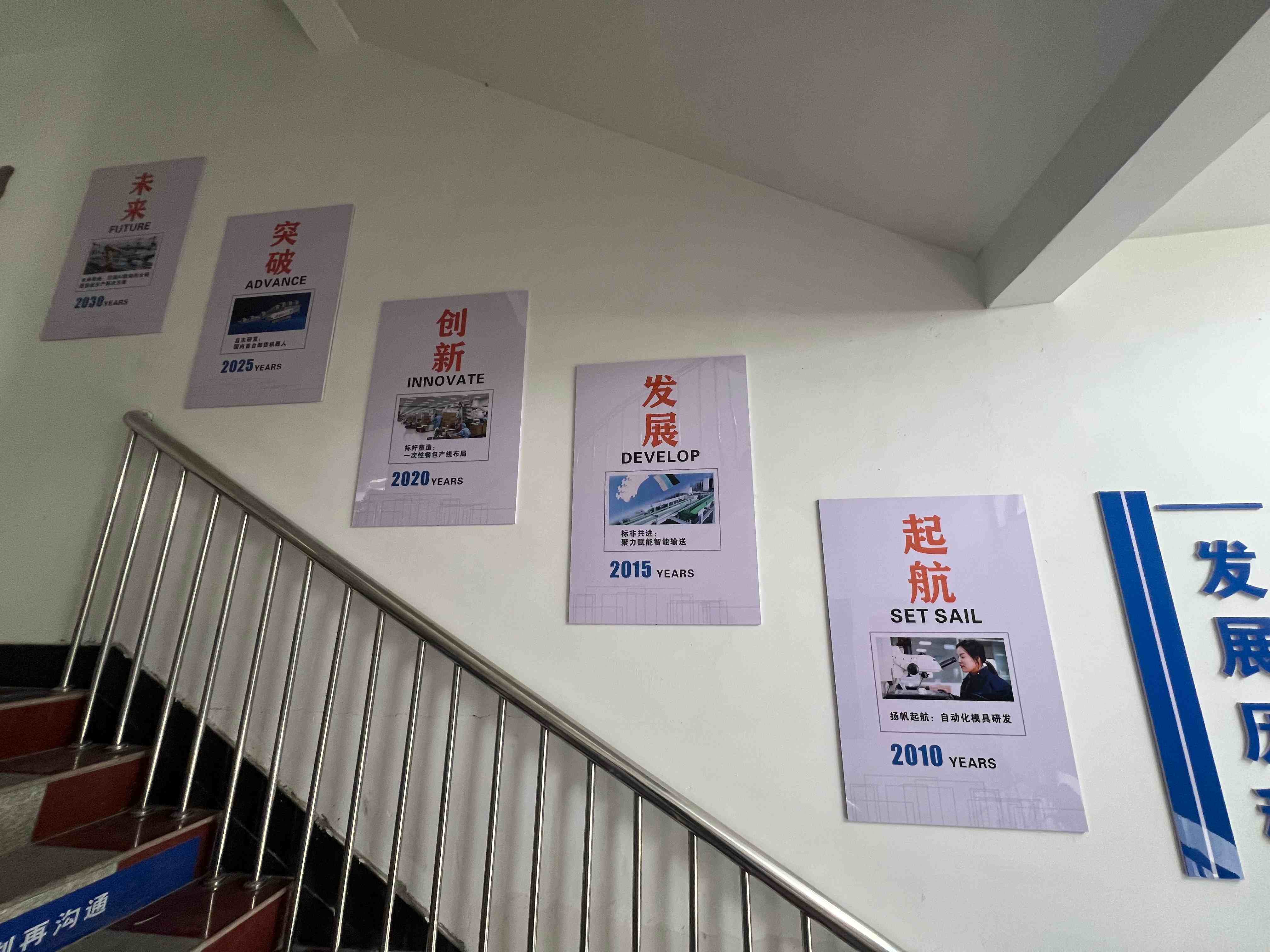
CSTRANS describes a parts-first build sequence: automatic mould research in 2014, automated parts production in 2016, a dedicated conveyor division in 2018, integrated lines in 2021 and an expanded technical team in 2022. The company reports developing its own moulds, running 15 injection moulding machines, machining parts on site and holding approximately 500 moulds in service, with component geometry verified by optical measurement and the component business certified to ISO 9001.
Customisation capability follows from the same tooling base. A 317 mm belt and a 1,200 mm belt can come from one product family, and a wear strip cut for an existing line needs no compromise on width. On the commercial side the company states OEM and ODM production, customisation of material, size, colour and logo, and custom manufacture against drawings, supported by a 100,000 metre monthly capacity, a typical 30-day lead time, a one-metre minimum order and 100% testing.
A buyer should also ask what is measured and how often, and request a sample of the dimensional record rather than a statement that inspection exists. Optical measurement of component geometry is a stronger answer than a general quality claim, because it can be repeated on the parts actually shipped.
Evidence five: commercial, documentation and support commitments
Capability that cannot be scheduled is not capability. The commercial layer should be written down: minimum order quantity, typical and standard delivery time, testing regime, documentation language, spare-parts stocking, and the split between remote and on-site support.
CSTRANS publishes a one-metre minimum order, a typical and standard 30-day delivery time, 100% testing, English documentation with every order, spare parts held in a dedicated warehouse, and commissioning support delivered on site or remotely, with after-sales available both online and on site. Its stated export markets are North America, Southeast Asia, the Middle East, Europe and Oceania.
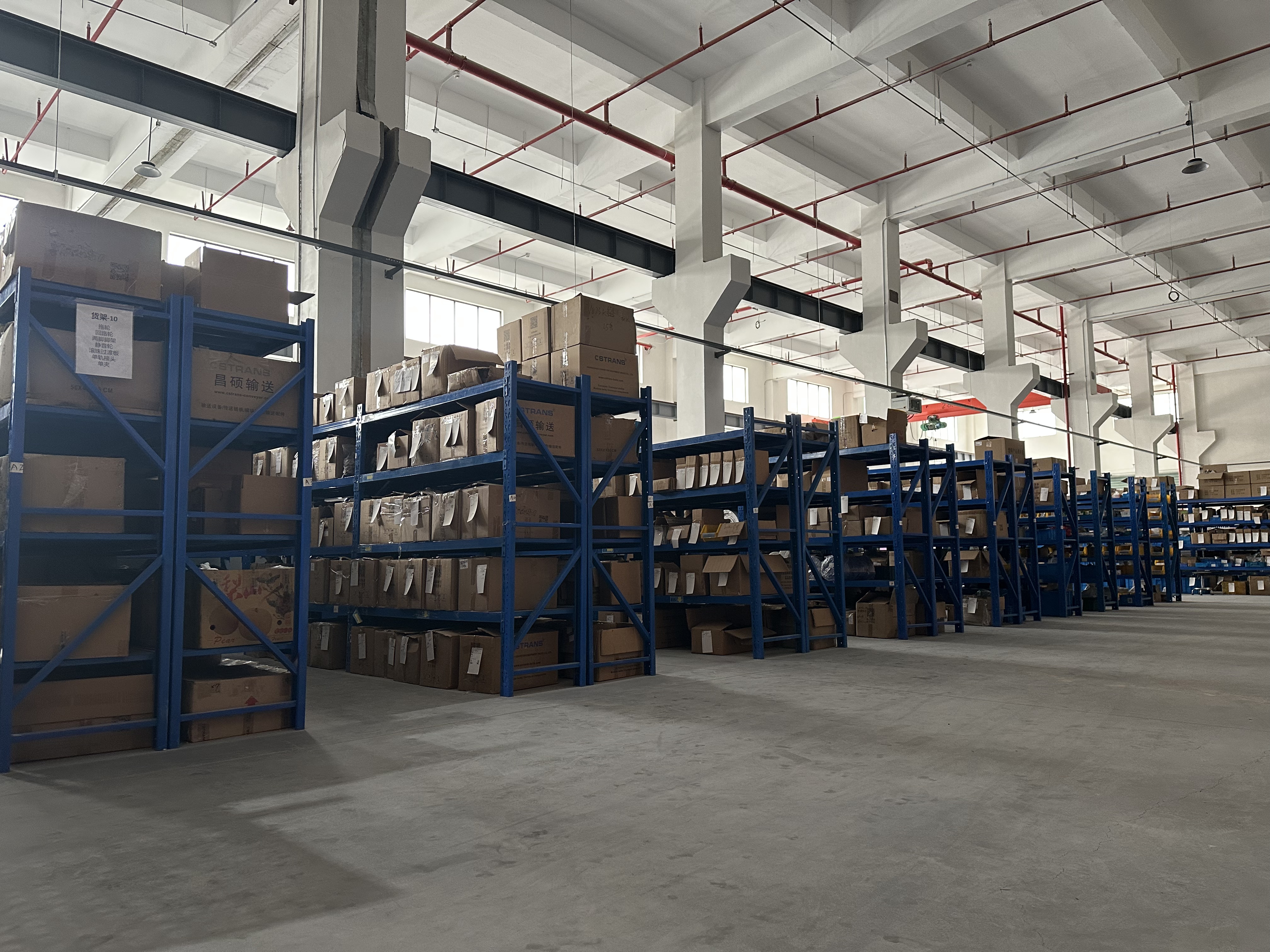
The company also reports batch spare-parts supply across multiple conveyor lines over a two-year period, naming auto parts OEMs among the customer types it serves, with outcomes it describes as stable running, reduced downtime and less product scratching. Those are supplier-reported results and should be read as such — useful as a starting point for a reference call, not as independent verification.
The verification checklist, condensed
The five categories collapse into a single request list that can be sent to any candidate supplier. Each line below changes a procurement decision; none of them is satisfied by a brochure.
| What to verify | Evidence to request | Why it changes the decision |
|---|---|---|
| Product range | Family list with pitch classes, widths and the sprockets or transfer plates matched to each | Shows whether parts are engineered as a system or sourced individually |
| Material grades | Grade declaration per part number, not per catalogue page | Grade governs corrosion, temperature limits and wear behaviour |
| Sprocket matching | Dimensioned drawing showing pitch, width, tooth quantity, bore and tooth profile | These five values decide whether the part mates with the installed chain |
| Tooling ownership | Statement of which moulds and fixtures the supplier owns | Determines long-term replacement availability |
| Measurement | Dimensional inspection records, including optical measurement where used | Confirms the drawing is verified on shipped parts, not only issued |
| Capacity and lead time | Stated monthly output and typical delivery time against a real order pattern | Determines whether an urgent rebuild can be absorbed |
| Documentation and support | Drawing language, order documentation, spare-parts stocking, support model | Determines whether the part can be re-ordered without re-engineering |
Applying the evidence on an auto-parts line
On a parts line, the evidence usually gets tested at four points. The scenarios below are illustrative rather than reported project outcomes, and each one is conditional on the actual layout and load case.
- Routing around obstructions. Where a line must follow curves or change elevation, flexible chain systems are designed for that geometry; CSTRANS states its flexible plastic chain conveyor systems accommodate curves and elevation changes and can be reconfigured when plant layouts change. The evidence to request is the beam width, bend components and the reconfiguration record.
- Transfers between sections. A handover between a modular belt run and a table top chain run is a classic mismatch point. Ask for the transfer plate and sprocket pairing on both sides of the joint.
- Surface-sensitive parts. Where workpieces carry painted or coated finishes, guide-rail choice affects scrap. Ball guardrails are designed to reduce scratching by rolling rather than sliding contact; solid stainless guardrails are better suited to heavy, rigid workpieces where rigidity outranks surface protection.
- Replacement of an installed chain. The five-value sprocket dataset plus a chain pitch measurement is the minimum package; without it, a visually similar part can run for a shift and then fail.
Where the evidence stops
Honest sourcing means naming the limits of what has been shown. On the available public record for this supplier category, several gaps remain open, and a buyer should treat them as questions rather than problems:
- Independent performance data is not public. Bend radius, allowable load, running speed, noise level, friction coefficient and abrasion life for flexible chain systems are not published as measured values, so those figures should be requested as datasheets or established through sample testing.
- Automotive and motorcycle parts exposure is supplier-reported. Public sources describe conveyor products and customer types but do not independently verify automotive references, so a reference call is the appropriate next step.
- Cross-supplier comparison is limited. Catalogues use different taxonomies and no common performance test or price basis is available, so two suppliers' "standard" parts cannot be ranked on catalogue data alone.
- Compliance is grade- and market-specific. Component-level and machine-level obligations differ; a standalone sprocket and a completed conveyor are assessed under different rules, and food-contact conformity must be tied to the exact grade supplied.
Outlook
Two directions in the published research are relevant to how this evidence will be read. First, the equipment base is projected to expand, with the conveyor system market rising from USD 13.1 billion in 2026 toward USD 20.3 billion by 2035 and the sprocket segment growing at a projected 4.5% compound rate over the same horizon. Second, overhead conveyors are identified as the largest automotive conveyor segment, with vehicle production growth cited as a driver.
Neither projection specifies which component suppliers will benefit. The practical implication is narrower and more useful: as lines are added, expanded or reconfigured, the value of a components partner shifts toward documentation that survives change — drawings that can be re-issued, tooling that stays available, and dimensional records that let a replacement be ordered without re-measuring the line.
What a buyer should do next
Send the checklist, not a product enquiry. A supplier that returns dimensioned drawings, grade declarations, tooling ownership, inspection records and written lead-time commitments has demonstrated capability before any metal is cut. A supplier that returns a catalogue has demonstrated a catalogue.
CSTRANS, as Changshuo Conveyor Equipment (Wuxi) Co., Ltd., operates from No. 31 Xinzhai Road, New District, Wuxi, Jiangsu, China, and publishes its conveyor range and component families at csbelts.com. A fuller description of its conveyor systems and component scope is available in the CSTRANS conveyor system brochure, which can be downloaded and reviewed alongside the checklist above.
FAQ
How is a sprocket matched to a slat chain?
Matching runs in three priorities: confirm chain pitch and chain width first; then confirm sprocket tooth quantity and shaft hole diameter; then verify tooth profile. A sprocket that does not match the chain will cause chain jump and accelerated wear, so the sequence should not be shortened to a visual comparison.
Are CSTRANS spare parts interchangeable with mainstream brands?
The company states that most standard slat chains, sprockets and ball guardrails are interchangeable with mainstream brands, and that compatibility is confirmed against dimensional data. Chain pitch, chain width, chain thickness and sprocket tooth dimensions are the values needed for that verification, because interchangeability is a dimensional property rather than a brand property.
What data should be provided before ordering a flexible slat chain?
The parameters that drive selection are conveyor width, chain pitch, chain material, food-grade requirement, working temperature and load capacity. Supplying accurate dimensions and the working condition avoids a mismatch between the chain and the existing sprockets and guides.
What temperature range can plastic slat chain work within?
PP slat chain is rated from 0 °C to 80 °C and POM slat chain from −40 °C to 100 °C. Continuous operation at the upper limit shortens service life noticeably, so a line that runs consistently at the ceiling of the range should expect a shorter replacement cycle than one running mid-range.
What maintenance do slat chain and sprocket need?
Regular cleaning, visual inspection and avoidance of long-term overload cover most of it. Light lubrication is acceptable on dry lines, but excess grease attracts dust and accelerates wear, and strong corrosive cleaners should not be used on PP or POM parts. Sprocket teeth should be checked for wear and the sprocket replaced when that wear becomes significant.
Have Questions or Need More Details?
Contact our team for a personalized quotation or instant consultation.
Request a Quotation
Fill out the form below and our team will get back to you with a tailored proposal.
WhatsApp Direct Chat
Prefer to chat in real-time? Message us on WhatsApp for instant assistance & quick answers.
- Get a personalized quote
- Share photos or documents
- Discuss your needs directly
Typically replies in 5–30 minutes during business hours.