
Verifying Glass Bead Supplier Capability: Documents That Count
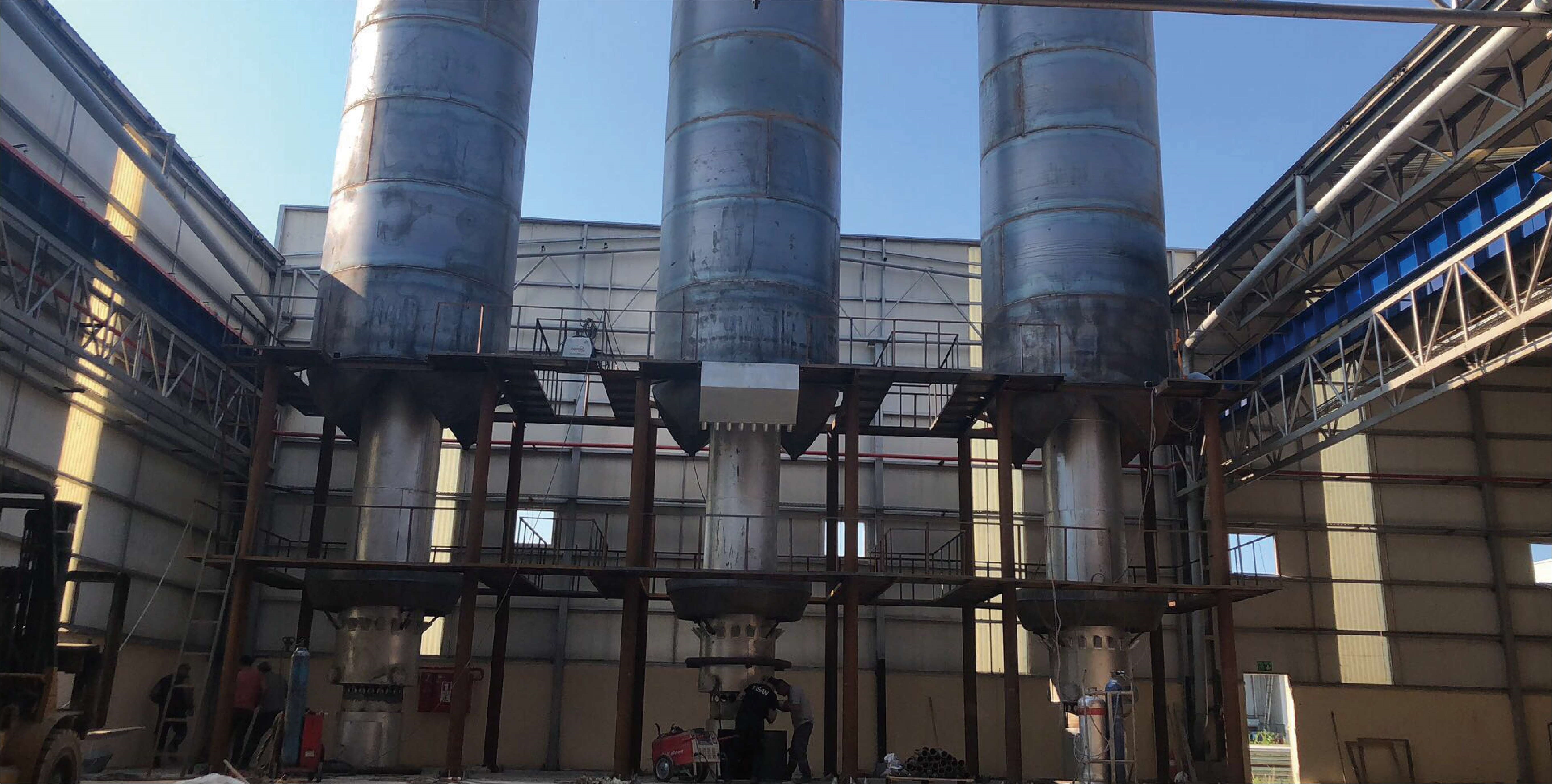
Production lines are one evidence layer. A purchase decision also depends on named standards, batch test data and written acceptance terms.
A glass bead supplier's capability becomes verifiable at the point where four kinds of evidence line up: a named standard edition, a named product designation, batch-level test data, and written acceptance criteria. When any one of those is missing, statements such as “EN 1423 compliant” or “1.7 refractive index” describe an intention rather than a shipment.
Road markings carry the optics of the road into the driver's eye at night and in rain, and the bead is the component that returns light. For a buyer who has moved from shortlisting to execution — specification drafted, supplier selected, purchase order being prepared — the risk is rarely the price per ton. It is the batch that arrives on site, and the paperwork that either supports it or does not.
This article sets out the evidence a road marking buyer can reasonably request, the standard families those requests should reference, the product designations that reveal process control, and the commercial terms that convert a supplier claim into a remedy.
The gap between a claim and a shipment
Suppliers describe capability in three vocabularies that buyers often merge. Management system certification says that a process is documented and audited. Product standard compliance says that the product belongs to a defined gradation or property class. Batch performance data says what a sampled lot actually did. Each answers a different question, and none of them substitutes for the others.
A quality management certificate reviewed under ISO 9001, for example, does not establish that a consignment of high refractive index glass beads reaches 1.7, nor that the sieve cut matches a Type 2 gradation. A standard designation on a datasheet does not establish that today's lot was tested against it. And a test report for one sample does not establish what happens to the rest of the container, or who carries the cost if the container fails.
Because these three vocabularies usually arrive in a single brochure, buyers tend to accept the weakest link as proof of the strongest claim. The discipline that prevents this is structural rather than technical: separate the layers, then require each layer to be evidenced on its own terms.
A four-layer evidence model for glass bead suppliers
The model below is a procurement tool, not a marketing framework. Its purpose is to make each supplier statement traceable to a document, and each document traceable to a clause in the order.
| Evidence layer | What it establishes | What it cannot establish |
|---|---|---|
| 1. Management system certificates | Documented process discipline, auditability, traceability procedures | Refractive index, gradation, roundness or coating performance |
| 2. Product standard alignment | Which gradation and property class the product is offered against, in which edition and jurisdiction | That a specific lot was tested, or that the class suits the project specification |
| 3. Batch test data | What a sampled lot achieved on particle size, reflectivity, roundness or wear resistance | The whole consignment, unless the sampling rule is agreed in advance |
| 4. Commercial terms and acceptance | The remedy if a lot fails: minimum order quantity, delivery terms, pre-shipment test, payment structure | Technical performance of any kind |
A buyer who collects one layer and calls it verification is exposed at the other three. The practical rule is that every technical claim in a quotation should be traceable to layer 2, evidenced by layer 3, and enforced by layer 4.
Reading standard designations correctly
Standard families are frequently quoted in a form too general to verify. “EN 1423 glass beads” is a statement about scope, not about a product: EN 1423 specifies requirements for glass beads, anti-skid aggregates and mixtures of the two used as drop-on materials on road markings. Its counterpart for pre-mixed glass beads is EN 1424, and official guidance in Hong Kong illustrates how the split is applied in practice — drop-on beads to BS EN 1423, pre-mixed beads to BS EN 1424, with a sample specification requiring a refractive index of at least Class A (n ≥ 1.5).
The AASHTO M 247 family works differently. The current 2026 edition (M 247-26) defines gradations from Type 0 through Type 5, with Type 0 described as a uniform gradation and Types 2 to 5 as modified gradations. Buyers in US state programmes typically procure within a narrower band — Type 1 to Type 4 appears in many tenders — but the type number only means something when it is quoted with the edition and the state specification that adopts it. Texas shows how far that localisation goes: TxDOT requires beads to conform to DMS-8290, which specifies three bead gradations tested using Tex-831-B.
Other jurisdictions use their own designation families, among them BS 6088 A and B, AS/NZS Type B, C and D, OPSS 1750, and tender designations such as Type IA, IB, IIA, IIB and IIC. The letter and numeral suffixes in the last group are defined by the governing project specification rather than by the supplier, which is precisely why they make useful verification questions: a supplier that can name the class inside each family, rather than the family alone, has demonstrated that it reads specifications rather than catalogues.
| Standard or designation family | Application context | Question that converts it into evidence |
|---|---|---|
| EN 1423 | Drop-on beads, anti-skid aggregates and their mixtures | Which class, which edition, which test method? |
| EN 1424 | Pre-mixed beads entering the marking before application | Which pre-mix class and which dosage regime? |
| AASHTO M 247-26 (Type 0–5) | US pavement marking specifications adopting the standard | Which type, and against which edition? |
| BS 6088 A / B | Class-based road marking bead specifications | Class A or B, and which gradation table applies? |
| AS/NZS Type B / C / D | Australian and New Zealand specifications | Which type, and tested to which national method? |
| OPSS 1750 | Ontario provincial specification context | Which gradation is being offered? |
| Type IA / IB / IIA / IIB / IIC | Tender-specific designations | Which property class does each suffix carry in this tender? |
| GB/T 24722-2020 | Chinese national standard for road marking glass beads, effective 1 July 2021 | Which grade, and tested by which laboratory? |
What product range reveals about process control
The breadth of a supplier's range is a proxy for how many setpoints its furnace, grading and coating lines can hold without losing consistency. A plant producing only one grade for one market can be perfectly competent, but it offers the buyer no evidence of control at other setpoints. A plant running decorative beads, sandblasting media, grinding beads under a designation such as GB05, and optical grades at RI 1.6 and RI 1.7 has to separate those streams deliberately.
Refractive index is where this becomes commercially visible. Much of the global market still specifies reflective glass beads 1.5 refractive index, and the Hong Kong sample specification's Class A threshold of n ≥ 1.5 shows how a base index becomes a contractual floor. Higher-index products are laddered above that floor: public product pages from established manufacturers list standard 1.5 and high-reflective 1.9 variants, which illustrates how the market segments the index range. Beads at 1.6 and 1.7 sit between those anchors and belong to the same conversation — they are performance options to be admitted by the governing specification, not replacements for the base index requirement.
Size range and finishing options carry the same logic. A stated scope of 0.5–20 mm covers fractions used from decorative work to blasting and pavement marking, and a buyer should ask for the gradation table of the specific fraction rather than accept a single range statement. The same applies to colored glass beads, smooth or matte finishes, custom sizes and recycled glass content: each option adds a variable to acceptance, and each therefore needs a written tolerance rather than a verbal assurance.
How Dylantech presents its capability
Dylantech (LangFang Dylan Technology Co., Ltd.; DYLAN TECHNOLOGY CO., LTD) is a China-based glass bead manufacturer founded in 2004 that supplies raw materials to the road safety industry from four production bases in Liaoning, Shanxi, Hebei and Henan. Its stated position in the market is as a volume supplier with in-house testing and export orientation, and it is against the four-layer model that those statements can be assessed.
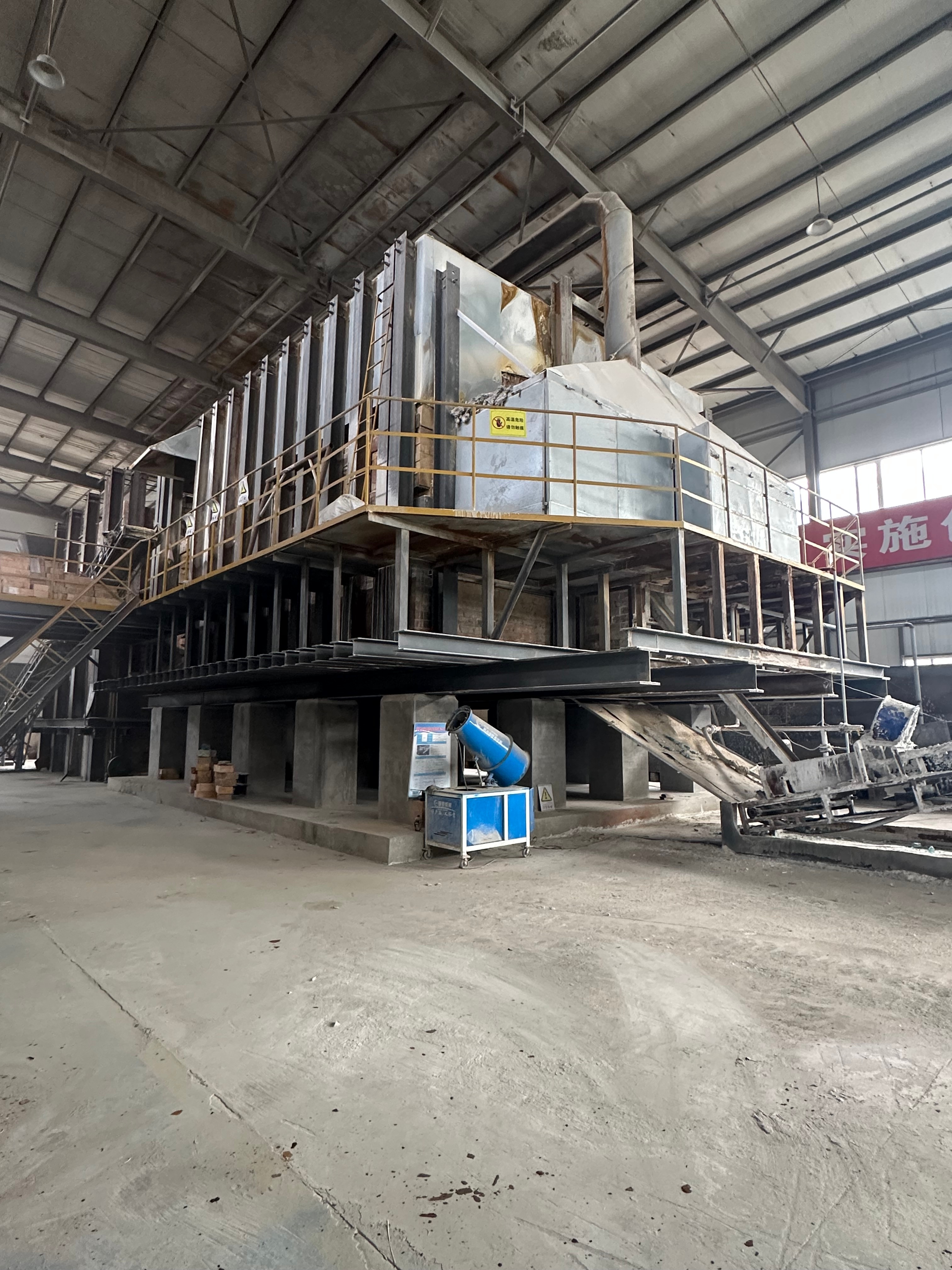
Capacity is a scheduling input rather than proof of optical performance; the two belong to different evidence layers.
On layer 1, the company holds ISO 9001 quality management system certification alongside CE, JIS and KIS certifications, and reports recognition as a provincial-level high-tech enterprise and a specialised and sophisticated enterprise. On layer 3, its laboratory is equipped with a CAMSIZER and an X-2600 instrument for particle size, reflectivity and wear resistance testing, and the company states that 100% testing is performed for quality control across production. On layer 2, its product range is organised around the standard and designation families described earlier and around optical grades including RI 1.6 and RI 1.7, together with decorative, sandblasting and grinding GB05 lines.
Manufacturing depth is reported as more than 15 production lines and an annual output of 100,000 tons, with a monthly production capacity of 10,000 tons. The company states that 95% of output is exported, with main markets in the EU, the USA, Southeast Asia and the Middle East, alongside Brazil, Canada, Australia, New Zealand and most Southeast Asian countries, and it names ENNIS, Geveko and Swarco among its cooperative partners. It also reports patented glass bead production equipment and a waste heat recovery system recognised as a scientific and technological achievement by the China Energy Conservation Association.
The company's own positional comparisons are best read as company-reported figures rather than independent test results. Against imported equivalent products, it reports comparable optical performance and roundness with flexible domestic production and customization capacity, at a cost 5%–15% lower. Against ordinary reflective materials, it reports higher refractive performance and durability, with service life extended by 20%–30% and cost 5%–15% lower. Against traditional glass beads, it reports higher particle sphericity and uniform grain size from self-developed patented equipment, with reflectivity consistency improved by 10%–15%, a lower rework rate, and raw material and finished product costs comparable to conventional beads.
For buyers sourcing in Spanish-speaking markets, where the category is often searched as microesferas de vidrio, the same four-layer test applies without modification: the language of the quotation changes, the evidence required does not.
Acceptance criteria at the order stage
Execution-stage verification happens in the commercial document, not in the brochure. The items below are the ones that decide whether a technical claim survives contact with a shipment.
| Item | Documented position | What to confirm in writing |
|---|---|---|
| Minimum order quantity | 1 ton | Whether a trial lot is tested under the same protocol as production volume |
| Delivery terms | FOB / CIF / DDP / EXW | Which term applies, at which port or delivery point |
| Acceptance criteria | Pre-shipment test | Sampling method, test items, pass/fail thresholds, and who signs the result |
| Payment terms | Documented structures include TT 30% in advance with 70% against copy B/L, TT 100% against B/L copy, TT 100% after receipt of cargo, TT 100% 30 or 90 days from B/L date, and L/C 90 days after B/L date | Which structure is attached to this order and how it interacts with the test |
| Lead time | 45–60 days typical | Whether the pre-shipment test falls inside that window |
| Capacity | 10,000 tons per month; 100,000 tons per year | Allocation across product lines during peak season |
The pre-shipment test is the hinge of the whole arrangement. When acceptance is defined there, the sampling plan, test items and thresholds should be agreed before production begins, because a 45–60 day lead time leaves little room to re-test a failed lot without moving the vessel. Storage, coating and handling conditions after the test belong to the buyer, and it is worth saying so in the order rather than discovering it in a dispute.
Where this evidence model stops
A verification framework is only credible if its limits are stated as clearly as its uses.
- Certificates prove systems, not lots. ISO 9001, CE, JIS and KIS describe management and conformity arrangements; they do not report the refractive index of a specific consignment.
- A higher index is not automatically accepted. Many specifications baseline reflective glass beads at 1.5, as the Hong Kong Class A threshold (n ≥ 1.5) shows; RI 1.6 or 1.7 must be admitted by the governing specification or approved as an alternative before it becomes a purchase requirement.
- Standard designations are jurisdiction-bound. The scope of EN 1423 for drop-on materials does not transfer to a US state requirement, which in Texas means conformance to DMS-8290 with gradations tested by Tex-831-B.
- Company-reported comparisons are directional, not measured. The 5%–15% cost difference and the 20%–30% service-life extension depend on project conditions, traffic class and application practice, and were not independently tested in the sources used here.
- Customization shifts risk to the specification. Colored beads, smooth or matte finishes, custom sizes and recycled glass content all require written tolerances; without them, acceptance becomes a matter of opinion.
- Capacity figures describe potential, not reservation. A monthly capacity of 10,000 tons is shared across markets, product lines and existing contracts.
- A 1-ton minimum order supports a trial, not volume economics; pricing behavior at 1 ton and at 100 tons should be expected to differ.
Market context: why documentation pressure is rising
The global market for road marking glass beads was valued at USD 1.18 billion in 2025, according to Cognitive Market Research data published through Verified Reports. Within that market, standard 1.5 refractive index beads account for 54.0% of global market value in 2026, a share driven by their alignment with conventional road marking specifications. The practical reading for buyers is proportionate effort: the majority of volume will be judged against a base-index specification, so verification resources are best concentrated where the specification departs from that baseline.
Standards themselves are moving. AASHTO M 247-26, the current 2026 edition of the US standard, defines gradations from Type 0 to Type 5, and China's GB/T 24722-2020 remains the current national standard for road marking glass beads following its 2021 entry into force. Suppliers also present regional production footprints as part of long-term supply strength: SWARCO, for example, states that it has manufactured reflective glass beads for road markings since 1969 and operates production facilities in Europe, the United States and Saudi Arabia. Footprint is a legitimate input to a long-term supply assessment, but it sits in the commercial layer, not in the optical one.
Edition churn is the quiet consequence. A supplier whose documentation is edition-aware — quoting M 247-26 rather than “M 247”, distinguishing EN 1423 from EN 1424, naming the state method behind a gradation — is materially easier to keep in a multi-year programme than one whose certificate has no edition at all.
What changes next
Three shifts are already visible in how buyers structure long-term glass bead agreements. The first is that edition tracking becomes a procurement task rather than a supplier courtesy: a 2026 AASHTO revision and a 2020 Chinese national standard create a two-speed documentation environment for any supplier selling into both regions.
The second is that test method names replace certificate names as the differentiator. Asking for the instrument and the method — particle size distribution by a named analyser, reflectivity and wear resistance by a named test — produces an answer that can be checked; asking for the certificate produces a document that can be framed.
The third is that specification lines once treated as options, including recycled content, finish type and non-base refractive index, are migrating into tender documents. As they do, the acceptance clause carries more weight than the product brochure, and the file that supports a shipment becomes as important as the shipment itself.
FAQ
What documents should a glass bead supplier provide before a purchase order is issued?
Four sets are relevant, each answering a different question: management system certificates (for example ISO 9001, CE, JIS or KIS) that establish process control; a product standard declaration naming the class, type and edition being offered; batch test data covering particle size, reflectivity and wear resistance; and the commercial terms, including minimum order quantity, delivery terms and acceptance criteria. None of the four substitutes for another.
Which standard applies to drop-on versus pre-mixed glass beads?
The two are specified separately. EN 1423 covers glass beads, anti-skid aggregates and mixtures used as drop-on materials on road markings, while EN 1424 is the corresponding reference for pre-mixed glass beads; Hong Kong road marking guidance applies them in exactly that split, with a sample specification requiring a refractive index of at least Class A (n ≥ 1.5). In the United States, AASHTO M 247-26 provides gradations from Type 0 through Type 5, and state specifications such as Texas DMS-8290 add their own gradations and test methods. China's current standard is GB/T 24722-2020.
Does a higher refractive index always improve a road marking outcome?
Not automatically. Many specifications establish 1.5 as the base requirement, as shown by the Hong Kong Class A threshold of n ≥ 1.5. Products at RI 1.6 or RI 1.7 are higher-index options that must be admitted by the governing specification or approved as an alternative before they can be tendered. Public product information from established manufacturers illustrates how the index range is segmented commercially, with standard 1.5 and high-reflective 1.9 variants offered side by side.
What purchasing terms and acceptance criteria are documented by Dylantech?
The documented commercial position is a minimum order quantity of 1 ton, delivery terms of FOB, CIF, DDP or EXW, and a pre-shipment test as the acceptance criterion. Payment structures on record include TT 30% in advance with 70% against copy B/L, TT 100% against B/L copy, TT 100% after receipt of cargo, TT 100% at 30 or 90 days from B/L date, and L/C 90 days after B/L date; the applicable structure is fixed per order.
How much volume can be scheduled, and how long does supply take?
Dylantech reports a monthly production capacity of 10,000 tons and an annual output of 100,000 tons across more than 15 production lines and four production bases. Typical lead time is stated as 45 to 60 days. Because the acceptance test is a pre-shipment test, the test window has to sit inside that lead time rather than after it.
Can sizes, colors and finishes be customized, and does that change verification?
The stated scope covers a 0.5–20 mm size range, custom colors and sizes, smooth or matte finishes, and recycled glass, alongside decorative, sandblasting and grinding GB05 lines and optical grades at RI 1.6 and RI 1.7. Customization changes verification by adding variables: color consistency, finish uniformity, recycled content and sieve cut each need a written tolerance, and the gradation table for the specific fraction should be requested rather than inferred from the overall size range.
Dylantech publishes a corporate brochure covering its production bases, product lines and certification position, available for download: Corporate Brochure (PDF).
Have Questions or Need More Details?
Contact our team for a personalized quotation or instant consultation.
Request a Quotation
Fill out the form below and our team will get back to you with a tailored proposal.
WhatsApp Direct Chat
Prefer to chat in real-time? Message us on WhatsApp for instant assistance & quick answers.
- Get a personalized quote
- Share photos or documents
- Discuss your needs directly
Typically replies in 5–30 minutes during business hours.