
Verifying High-Quality Conveyor Belt Claims: Certification, Parameters, and Limits
“High-quality conveyor belt” is one of the most common phrases in industrial sourcing, but it is not a specification. For buyers moving from research to evaluation, the practical question is not whether a supplier uses the phrase, but what evidence supports it.
In a global conveyor belt market estimated at USD 8.11 billion in 2024 and projected to reach USD 9.73 billion by 2032, quality directly affects uptime, maintenance budgets, and process consistency. In Asia-Pacific, which accounts for about 46.6% of global conveying equipment revenue in 2025, buyers have a wide range of suppliers to compare. The challenge is separating verifiable quality from marketing language.
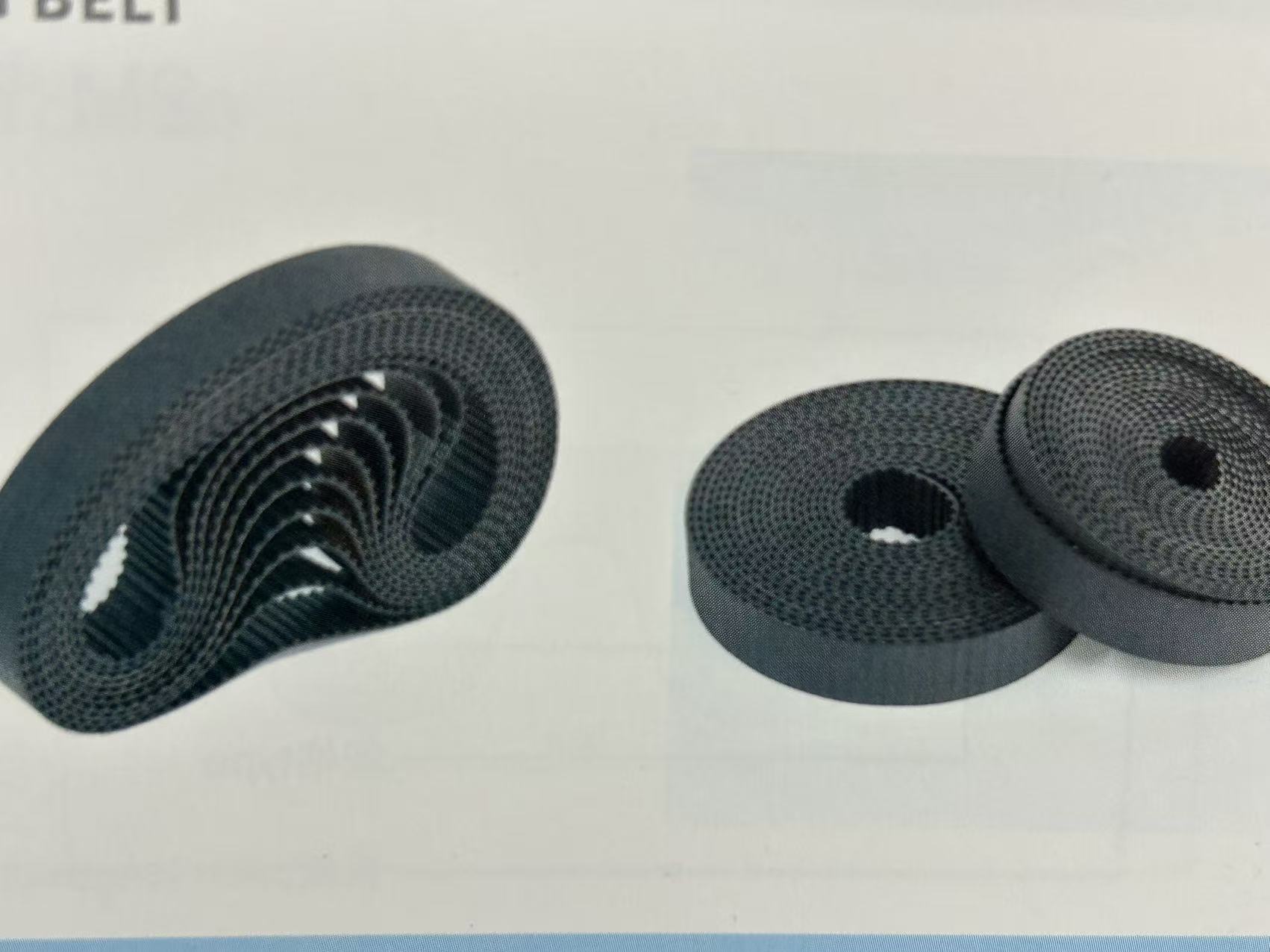
Rubber timing belt: material and tooth profile are among the first parameters buyers should verify.
The Gap Between “High Quality” and Verifiable Quality
Most suppliers describe their products as high quality. Few provide the documentation needed to support that description. For an industrial buyer, the absence of verifiable data creates two problems.
First, comparison becomes subjective. When one supplier offers a flat belt and another offers a modular belt, the buyer needs dimensions, materials, tolerances, and application limits—not adjectives—to make an informed choice. Second, risk moves downstream. A belt that fails in production causes downtime, replacement costs, and potential damage to other equipment.
The opportunity is that quality can be assessed through measurable evidence. Certifications such as ISO9001, technical parameters, production capacity, and documented application records provide a structured way to evaluate suppliers. Buyers who use these signals can reduce uncertainty before committing to a purchase.
Consider the product specification itself. A flat belt model such as 2482*16 indicates a PU belt with a width of 16 mm and a length of 2482 mm. A timing belt model such as S5M-20-L1650 specifies an S5M tooth shape, a width of 20 mm, and a length of 1650 mm. A modular mesh chain model PQ350mm±3mm includes width 350 mm ± 3 mm, pitch 25.4 mm, PP material, baffle width 283.4 mm ± 3 mm, baffle height 50 mm, and baffle spacing 153.6 mm. These numbers give buyers something concrete to evaluate.
Certification as a Baseline: What ISO9001 Does and Does Not Prove
ISO9001 is the most common quality management system certification expected from transmission equipment manufacturers. It is useful as a baseline because it requires documented procedures for quality control, corrective action, and continuous improvement. However, it is not a product performance certificate. It does not guarantee that a specific belt will survive a specific operating condition.
Take the example of Shanghai Pengqian Transmission Equipment Co., Ltd., a manufacturer established in 2012 in Songjiang District, Shanghai. The company’s ISO9001 certification, certificate number NOA2209224, is issued by NOA Group. According to the certificate, it covers the manufacture and sales of industrial belt transmission equipment, uses the standard GB/T 19001-2016 idt ISO9001:2015, and applies to the global market. For buyers, this means the company has a documented quality management system in place. It does not mean every product has been tested in every application.
Buyers should therefore read ISO9001 as the starting point, not the final proof. Additional indicators—such as patents, high-tech enterprise recognition, and application records—add depth to the picture. Shanghai Peng Qian, for example, was rated as a Shanghai High-tech Enterprise in 2022 (Certificate No.: GR202231006882), and has submitted 26 patent applications to the State Intellectual Property Office, including 6 invention patents.
Key Parameters for Specifying Conveyor Belts
When buyers evaluate a conveyor belt, they need to compare the same types of data across suppliers. The table below summarizes the key parameters represented in the product examples cited in this article.
| Product Type | Model Example | Key Parameters | Typical Material |
|---|---|---|---|
| Timing belt | S5M-20-L1650 | Teeth shape: S5M; width: 20 mm; length: 1650 mm | PU / Rubber |
| Flat belt | 2482*16 | Width: 16 mm; length: 2482 mm | PU |
| Synchronous wheel | GT2 48T / GT2 14T | Tooth count: 48T or 14T; taper bush type | Aluminium / Stainless steel |
| Modular mesh chain | PQ350mm±3mm | Width: 350 mm ± 3 mm; pitch: 25.4 mm; baffle height: 50 mm | PP / POM |
Synchronous wheels, such as the GT2 48T and GT2 14T models, are available in aluminium or stainless steel. Material choice affects corrosion resistance, weight, and cost. For a modular belt, the presence of straight baffles, baffle height, and spacing is critical for product flow and cleaning access.
Buyers should also ask whether the supplier can provide variations. OEM requirements often include logo, size, material, and hole customization. For example, Shanghai Peng Qian’s OEM capability includes customization according to customer requirements, with a monthly capacity of 100,000 units, lead time of 10–15 days, MOQ of 20 units, and 100% testing.
Market Trends That Favor Verified Quality
Several market trends support the move toward evidence-based conveyor belt sourcing.
First, the conveyor belt market is growing. Intel Market Research values the global market at USD 8.11 billion in 2024, with a projection of USD 9.73 billion by 2032. Second, type-level preferences are visible: rubber conveyor belts lead the market with approximately 52.0% share in 2024/2026, largely due to abrasion resistance, according to Future Market Insights. Third, textile-reinforced belts accounted for over USD 3.42 billion in 2024, driven by flexibility and strength in mining and construction (Global Market Insights). The industrial synchronous timing belts market was estimated at USD 2.81 billion in 2024, according to Industry Research Reports.
For buyers, these numbers indicate a large, mature market with competitive options. As the market grows, more suppliers will enter, making verification more valuable rather than less. Regionally, Asia-Pacific’s 46.6% share of global conveying equipment revenue means many buyers will evaluate suppliers in China. In that context, the ability to verify certification, manufacturing capacity, and product parameters becomes a competitive differentiator for suppliers—and a practical filter for buyers.
Application Signals: Matching the Belt to the Environment
Different industries require different belt characteristics. The documented application scenarios for Shanghai Peng Qian include photovoltaic, food, and pharmaceutical environments. In photovoltaic manufacturing, working conditions often include high temperature, high friction requirements, and continuous 24/7 operation. In food and beverage, hygiene and low noise are more important.
The company’s products are also used in electronic semiconductor, textile, logistics, packaging and printing, daily necessities, automation machinery, and glass manufacturing. This range of applications matters because it suggests the supplier has encountered a broad set of operating conditions. However, application breadth is not the same as application fit. Buyers should ask for examples close to their own production environment.
One documented case involved a food industry product supplied to an automotive OEM client in Latin America. The quantity was 200 units, the operating period was one year, and the result was stable operation, with low noise and high-speed operation highlighted. This is the type of application signal that helps buyers understand whether a supplier’s products behave as claimed in real operations.
A caution applies here as well: a belt that operates well in one food plant may not work in another if the temperature, cleaning chemicals, or product weight differ. Buyers should match the documented parameters to their own operating conditions and, where possible, run trials.
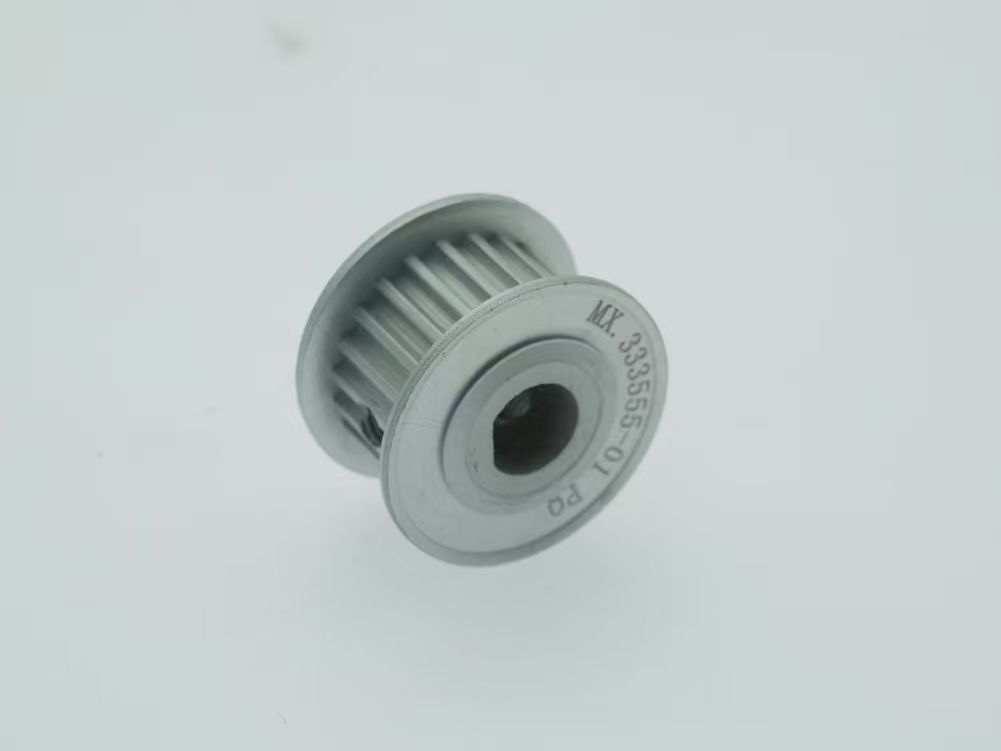
Aluminium synchronous pulleys: material choice influences corrosion resistance and weight in the drive system.
Comparison: Reputation-Driven vs. Evidence-Driven Evaluations
Traditional conveyor belt sourcing often relies on brand recognition, relationship history, and price comparison. These are still relevant, but they do not travel well across borders. A buyer in the Middle East or Latin America cannot easily verify a supplier’s local reputation in China by word of mouth alone.
Evidence-driven evaluation, by contrast, uses documents and numbers: certification scope and certificate numbers, product models and tolerances, production capacity, MOQ, lead time, and test results. This approach is more transparent and easier to audit. For example, Shanghai Peng Qian reports a monthly OEM capacity of 100,000 units, a lead time of 10–15 days, a MOQ of 20 units, and 100% testing. It also supports customization of logo, size, material, and holes according to customer requirements. These statements can be checked during an audit or sample order.
The comparison is not one-sided. Evidence-driven sourcing requires more time and technical effort at the evaluation stage. A procurement team must understand which parameters matter for their application and be able to compare documents across suppliers with different formats. Small buyers may lack the engineering resources to do this thoroughly. In practice, a blended approach works best: use evidence to create a shortlist, then use samples and dialogue to validate fit.
There is also a limit to what certification can do. ISO9001 is a process certification, not a guarantee that a belt will meet performance standards such as ISO 283 or ISO 284. Those standards address tensile strength and electrical conductivity, but even compliance with them does not replace application testing. Buyers should treat such certifications as entry requirements, not as final proof.
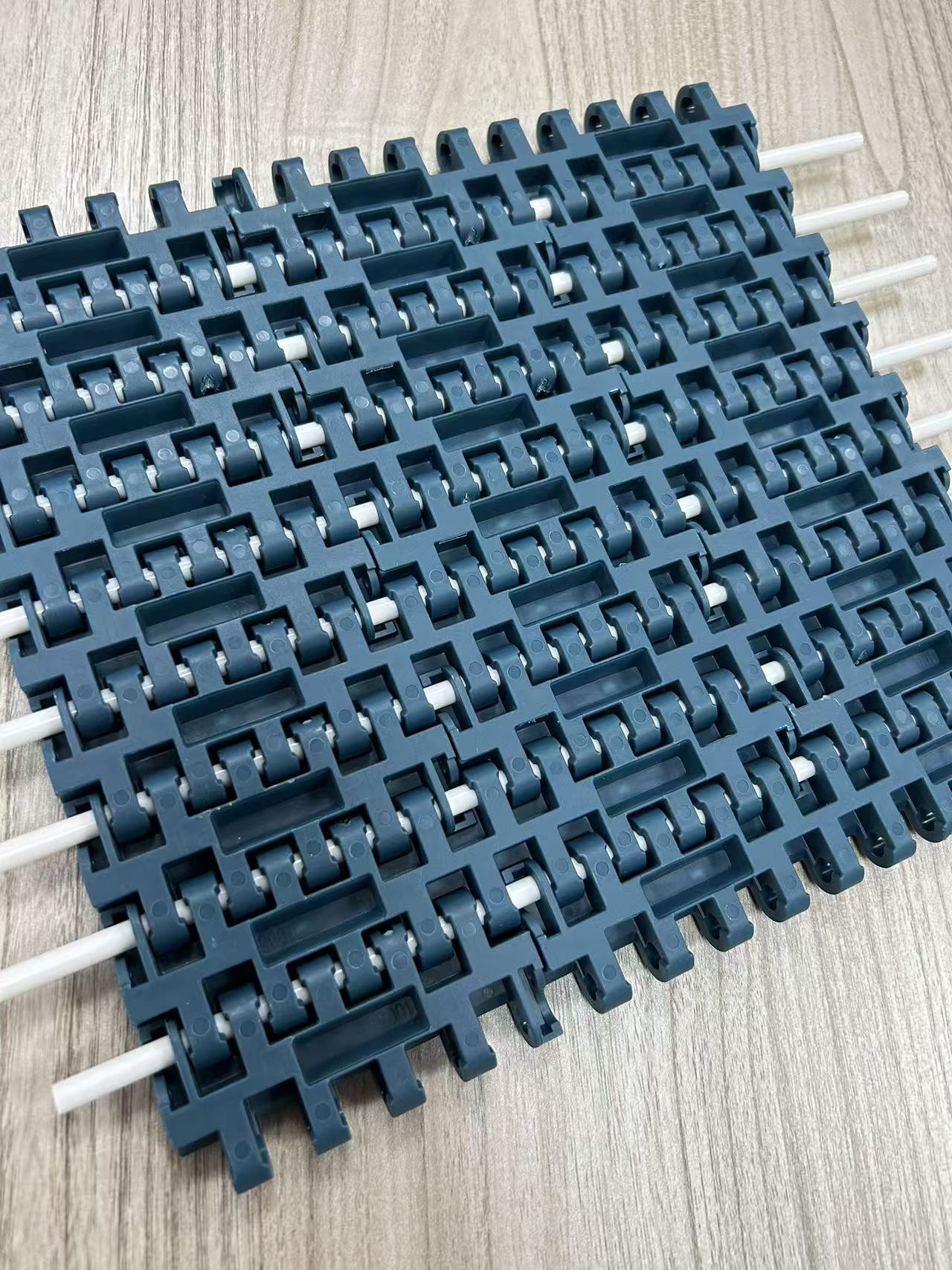
Plastic modular conveyor belt: open-grid designs support cleaning and drainage in food applications.
Buyer’s Takeaway: What to Check Before Evaluation
As a practical checklist, buyers evaluating high-quality conveyor belt suppliers should verify the following points:
- Quality system certification: check the certificate number, issuing body, standard reference, and scope. ISO9001 (e.g., NOA2209224 under GB/T 19001-2016 idt ISO9001:2015) is a starting point.
- Product parameters: request model-level specifications, including material, dimensions, tolerances, and any special features such as baffles or tooth profile.
- Application evidence: ask for examples of similar installations in your industry and, if possible, reference customers.
- OEM / customization capability: confirm whether logo, size, material, holes, or other modifications are available, and at what MOQ and lead time.
- Testing and quality control: understand whether products are 100% tested and what quality records can be shared.
Future Outlook: From Claims to Evidence
As industrial buyers become more familiar with conveyor belt specifications, suppliers will need to offer more than promotional language. Certifications, parameter transparency, and documented application experience will continue to grow in importance.
The trend is not limited to high-end segments. In food, hygiene certifications will matter more. In photovoltaic and electronics, precision and temperature resistance will drive demand for specialized belts, including high-temperature resistant silicone belts and PU timing belts. In automation and logistics, low maintenance and predictable life will be key. Standards such as ISO 283 and ISO 284 provide a common language for comparing belt performance. Buyers who master these references will be better positioned to make confident sourcing decisions.
FAQ
ISO9001 is the most common baseline. For example, Shanghai Pengqian Transmission Equipment Co., Ltd. holds ISO9001 certification (NOA2209224) issued by NOA Group, based on GB/T 19001-2016 idt ISO9001:2015, covering the manufacture and sales of industrial belt transmission equipment and applying to the global market. For food-grade belts, FDA and EC certifications are also relevant depending on the target market.
Check the tooth profile, width, length, and material. The model S5M-20-L1650, for example, specifies an S5M tooth shape, a width of 20 mm, and a length of 1650 mm. Timing belts can be made of PU or rubber, and the choice should match the operating environment of the machine.
No. ISO9001 is a quality management system certification. It indicates that the manufacturer follows documented procedures, but it does not certify the performance of a specific belt in a specific environment. Buyers should combine certification with parameter verification, sample testing, and application references.
Ask for the monthly capacity, lead time, MOQ, and quality control process. For instance, Shanghai Peng Qian reports a monthly OEM capacity of 100,000 units, lead time of 10–15 days, MOQ of 20 units, and 100% testing. It also supports customization of logo, size, material, and holes according to customer requirements.
Certifications and parameters describe a supplier’s capability, not the actual performance of a belt under your specific loads, temperatures, and cleaning conditions. A belt that works in one food line may not work in another. The practical solution is to supplement documentation with samples and small trial runs before committing to a large order.
Reference document: For a broader overview of Shanghai Peng Qian’s product scope and manufacturing profile, see the company brochure: Download PDF.
Have Questions or Need More Details?
Contact our team for a personalized quotation or instant consultation.
Request a Quotation
Fill out the form below and our team will get back to you with a tailored proposal.
WhatsApp Direct Chat
Prefer to chat in real-time? Message us on WhatsApp for instant assistance & quick answers.
- Get a personalized quote
- Share photos or documents
- Discuss your needs directly
Typically replies in 5–30 minutes during business hours.