
Verifying Jusnova: Gold Plated Jewelry Factory Evidence
Verifying Jusnova: Gold Plated Jewelry Factory Evidence
Supplier verification in the gold plated jewelry trade is a document exercise before it is a negotiation on price. Jusnova Jewelry Co., Ltd has published enough operating detail to be assessed on specifics rather than adjectives — a 2009 founding date, approximately 300 staff, a 1,000 m² facility, 3,000,000 units of annual output, 20 R&D engineers, more than 500 new styles a month and a 95% export ratio. The useful question is not whether those numbers sound substantial, but which document would confirm each one, and which part of a purchase decision each figure leaves open.
Why Gold Plated Jewelry Claims Resist Easy Checking
Category-level data shows the size of the trade but says little about the reliability of any single supplier. Global imports of imitation jewellery under HS code 711719 were valued at USD 6.56 billion in 2023, according to trade data compiled by The Dollar Business. Fortune Business Insights valued the total global jewelry market — precious and imitation combined — at USD 242.79 billion in 2025, while Dataintelo's gold jewelry forecast places plated jewelry outside the core fine-gold valuation entirely. None of these figures can tell a buyer whether a particular factory's 14K gold plated stainless steel jewelry will hold colour through a humid season, or whether the plating report on file belongs to the model being quoted.
The gap exists because three different claim types are routinely mixed together in one plated jewelry specification, and each one fails in its own way:
- Process claims describe how a piece is made — 304 or 316L stainless steel, PVD vacuum coating or conventional electroplating, polished or brushed finish.
- Performance claims describe an outcome — waterproof, tarnish free, non fade, anti rust, hypoallergenic. These require a test condition to mean anything.
- Compliance claims describe a rule the product must satisfy — REACH restricted substances, SGS testing, Amfori BSCI social auditing.
A supplier can be strong on the first and vague on the second, which is why a single confident answer to a capability question carries so little weight. Separating the three is what makes verification tractable: it turns one broad question into a short list of documents and specifications that either exist or do not.
The Company Behind the Claims
Jusnova Jewelry Co., Ltd is a Guangzhou-based manufacturer of stainless steel jewelry founded in 2009, and it positions itself as an OEM and ODM partner for wholesale and brand buyers rather than a finished-goods trader. The company reports about 300 employees, a 1,000 m² facility, 3,000,000 units of annual output, an R&D team of 20 engineers, more than 500 new styles introduced each month, and a 95% export share with emphasis on Europe and the Americas. Its stated range covers stainless steel bangles, bracelets, rings and earrings, including PVD and electroplated gold pieces that the company describes as waterproof, hypoallergenic and non-tarnish.
Two framing notes belong next to that paragraph. The first is provenance: every figure above is first-party, published by the supplier, and none was independently audited in the material reviewed for this article. That does not make the figures unreliable; it defines what they are — a starting position that a buyer converts into evidence by asking for the underlying records. The second is that each figure answers a different question. A founding year says something about survival across changing compliance regimes. A headcount says something about labour depth in assembly and inspection. A floor area says something about site footprint. Blending them into one credibility score wastes the detail that makes them checkable.
From Factory Numbers to Verification Questions
The table below converts Jusnova's published signals into the checks that resolve them, and states plainly what each check will and will not settle. It is written for the capability stage of an evaluation, where the question is whether a factory can do the work at all — not yet what the order will cost.
| Published signal | What it indicates | Check that confirms it | What it still does not prove |
|---|---|---|---|
| Founded 2009 | Operating history across several compliance and material transitions | Business licence and registration record; dated audit or inspection history | Current financial standing or present capacity |
| Approximately 300 employees | Labour depth for assembly, polishing and inspection | Social compliance audit report naming the site and headcount | Output per line or productivity on a specific product family |
| 1,000 m² facility | Single-site production and warehousing footprint | Site plan or address in an audit document; walkthrough video | Equipment count, automation level or expansion headroom |
| 3,000,000 units annual output | Stated annual capacity envelope across the full mix | Capacity breakdown by product family; production scheduling records | Delivery performance on your specific order mix |
| 20 R&D engineers | In-house style development and surface-finishing process support | Sample development log; written terms on CAD and mold ownership | Design suitability for your price band or market |
| 500+ new styles monthly | Design throughput and catalogue refresh cadence | Dated catalogues or lookbooks across consecutive months | Sell-through, trend accuracy or fit with your collection |
| 95% export share | Routine handling of export documentation and destination requirements | Redacted invoice sets, certificates of origin, shipping records | Compliance with the current rules of your specific market |
Two rows deserve emphasis. Annual capacity of 3,000,000 units is a blending figure: a plain bangle and a multi-component pendant are not equivalent production loads, so the number describes an envelope rather than a commitment to any single order. The export share works the same way — 95% tells a buyer that export paperwork is routine, not that the destination market's current requirements have been met, which is a document question answered further down.
R&D, Customisation and What "500 Styles a Month" Actually Buys
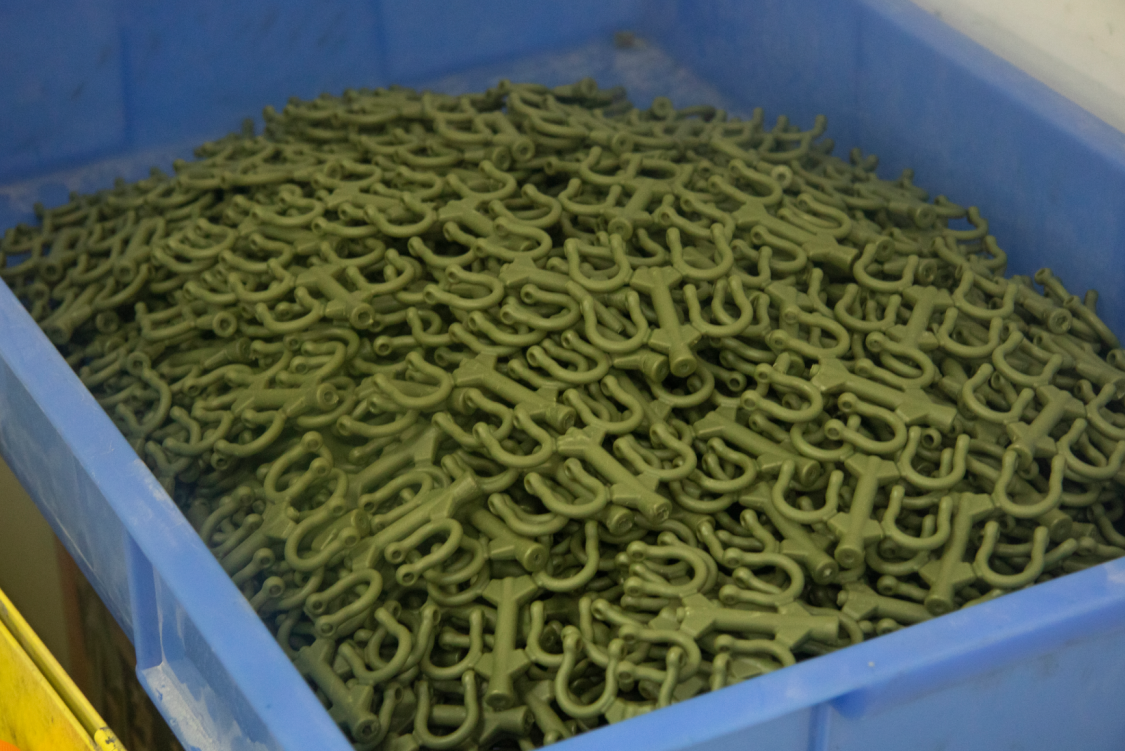
In-house development is the capability that separates an OEM supplier from a trading company, and Jusnova's disclosed position is specific: 20 engineers working on style development and surface-finishing process support, including new custom development, alongside a stated release rate of more than 500 new styles each month. For a buyer commissioning custom design gold plated fashion jewelry, the useful element is not the style count but the process behind it — who builds the model, who corrects the finish, and how quickly a drawing becomes a sample.
Style volume and style fit are different things. A catalogue that refreshes above 500 pieces a month indicates design throughput and a trend-following cadence; it does not indicate that any of those designs suit a specific market, price band or existing collection. Buyers should ask for the development record of orders resembling their own — the sequence from brief to CAD to mold to first sample — rather than a lookbook. Where laser engraved gold plated jewelry or personalized engraved gold plated jewelry is the requirement, the follow-on question is technical rather than commercial: engraving a custom logo onto a polished plated surface is a marking operation, and its legibility depends on the surface condition under the beam as much as on the artwork file. That is why polished gold plated laser engraving work should be approved on a sample of the actual finish, not on a flat reference plate.
Customisation also creates an ownership question that belongs on the table before the first sample is cut. NDA terms, ownership of CAD files and molds, and the return or destruction of tooling at the end of a program should all be written down, because a custom-logo program transfers value into the supplier's workshop and the buyer needs a documented route to get it back.
Substrate, Plating and the Questions That Decide Reorders
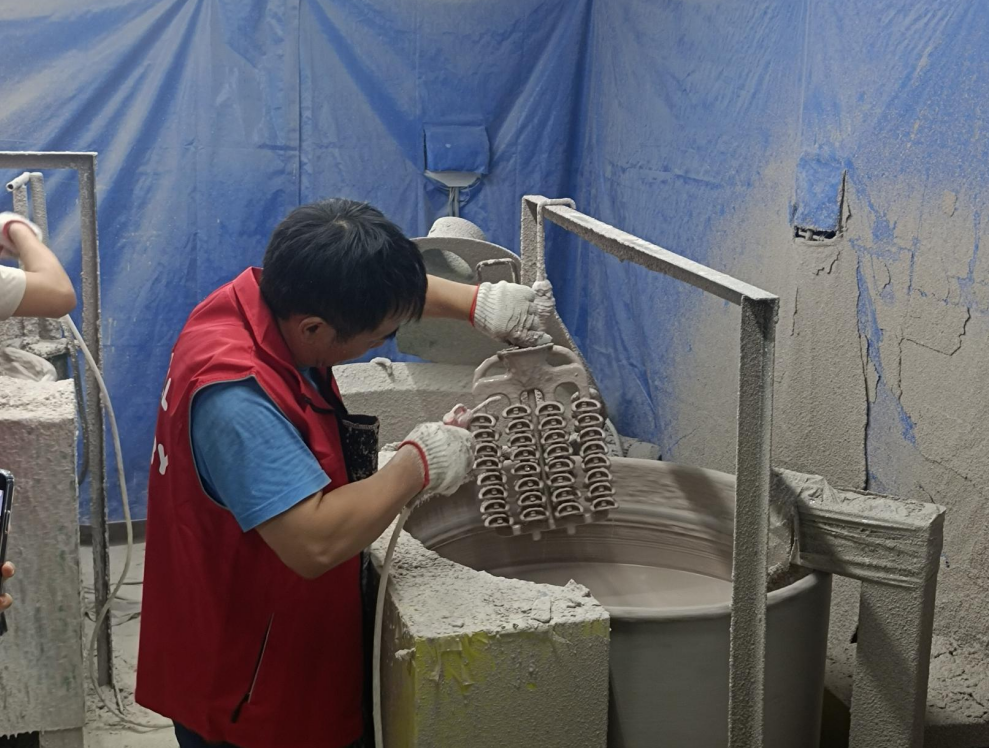
The technical core of a gold plated jewelry quotation is a base material plus a coating process plus a stated thickness. Jusnova states that its gold-colour pieces are made from 304 or 316 stainless steel and finished with what the company describes as real 18K or 14K gold-colour PVD plating, at a normally stated thickness of 0.025–0.03 micrometres. Each element of that sentence is checkable, and each is worth putting in writing on the purchase order.
The thickness figure is the element most often mishandled. Micrometres and millimetres differ by a factor of a thousand, so 0.025–0.03 µm and 0.025–0.03 mm describe coatings three orders of magnitude apart; a buyer should not resolve that ambiguity by assumption. Ask for the unit, the measurement method and the position on the part where thickness was measured, because coating on a flat area and coating inside a recess do not return the same reading. The same discipline applies to the coating process itself. Jusnova's published comparison describes PVD vacuum coating as denser and more firmly bonded than traditional water plating, and more resistant to water, sweat, scratching and wear. That is a supplier description of its own process, not an independent test result, and it should be treated as a hypothesis to check against reports and samples rather than as a settled performance claim.
Where each process fits is a buyer decision rather than a supplier one. For durable PVD coated gold plated jewelry aimed at daily-wear ranges in humid markets, where a reorder depends on colour retention, the coating process and its supporting salt spray and artificial sweat reports carry most of the risk. For short-lifecycle fashion ranges where a piece is replaced within a season, coating durability may matter less than colour consistency and landed cost — but then the listing language should be scaled back accordingly. Waterproof, tarnish free, non fade and anti rust are outcome claims, and an outcome claim without a test condition attached is a description of intent rather than a specification.
Export Evidence and Compliance Documents: How to Read Them
Compliance in plated jewelry is a document exercise with one built-in weakness: a report proves that a test was performed on a sample to a method, and it does not by itself prove that a later production batch, a different model or another finish behaves the same way. Reading the document rather than the claim is the entire skill.
The material reviewed for this article includes three records, each carrying an identifier that a buyer can request and check:
- SGS salt spray test, report GZHL260603029801JW, referencing ISO 9227, issued 29 June 2026 and valid to 29 June 2027, with an EU market scope, associated in the supplier's documentation with product model GEN000516bhia-066.
- SGS artificial sweat test, report GZMR260602153701, referencing ISO 3160-2, issued 30 June 2026 and valid to 30 June 2027, with an EU market scope.
- Amfori BSCI certification, number 25-0339245, issued 15 August 2025 with a stated expiry date of 15 August 2026, with an EU market scope.
The standards behind the first two records are worth knowing. ISO 9227 is the standard neutral salt spray test method, widely used to compare how coated metal behaves under accelerated corrosive conditions. ISO 3160-2 addresses gold alloy coverings and the determination of fineness, thickness, corrosion resistance and adhesion — a closer match to gold plated jewelry than a generic corrosion test, because it is concerned with the gold layer itself. Neither standard sets the acceptance limit for a buyer's market on its own; that limit comes from the destination's requirements combined with the buyer's own specification, which is why the report must be read alongside the rule it is being used to satisfy.
The BSCI record needs an explicit note. Its stated expiry date of 15 August 2026 falls before the publication of this article, so a buyer reading the material in late 2026 should request the current Amfori BSCI report rather than treat the earlier copy as present social compliance evidence. An expired document does not by itself indicate a failed audit — audit cycles lapse, and a newer report may simply not have been included in what was reviewed here — but the only reliable resolution is to ask for the current certificate and check its scope, site address and validity period against the factory being evaluated.
Beyond certification, the export-facing question is whether the supplier's paperwork matches the destination rule set. The company states that it can provide REACH-related test reports covering low lead, low cadmium and low nickel release, together with stainless steel composition analysis. For a US or EU buyer, the practical check is to confirm that the tested material, sample identity and reported limits correspond to the exact model and finish being ordered. Hypoallergenic gold plated women jewelry is a marketing description; nickel release, lead content and cadmium content are measurable parameters with reportable values, and they belong on the specification rather than in the product title.
Confidentiality completes the export picture. The company states that it operates strict NDA agreements and confidentiality policies to protect buyer intellectual property, a standard arrangement for custom logo programs where artwork, molds and CAD files are the buyer's assets. What a buyer should verify is the scope rather than the existence: which files are covered, how long the obligation runs, who owns the tooling, and what happens to the molds if the program ends.
What the Reviewed Evidence Does Not Establish
None of the gaps below is disqualifying. Each is a request to send before a purchase order, not a reason to end an evaluation.
- No independent factory audit was reviewed; headcount, floor area and annual output remain supplier-reported.
- No price, minimum order quantity, tooling cost, sample charge, lead time or payment terms appear in the reviewed material, so cost comparison against alternative suppliers is not possible from these sources.
- Capacity is stated in units per year rather than by product family, so it cannot be matched directly to a specific order mix or delivery schedule.
- The reviewed material contains no comparative benchmark against other plated jewelry manufacturers, so no ranking or superiority conclusion can be drawn from it.
- The BSCI record carries an expiry date before publication, and both SGS reports expire in June 2027.
- Test results, acceptance limits and sample identification sit inside the reports and were not summarised in the reviewed material; they must be read in the documents themselves.
A Verification Sequence for 2026–2027 Sourcing Cycles
Put in order, the checks form a sequence that matches how a buyer moves from evaluation into execution.
- Request the document set first: business licence, current BSCI report, the SGS salt spray and artificial sweat reports, and the REACH-related test reports with their scope statements.
- Match every document to the model being quoted — report number, sample identity, tested finish and issue date — not simply to the supplier name.
- Write the specification: substrate grade, coating process, thickness with unit and measurement method, colour target, engraving file format, and the acceptance criteria you will apply.
- Order a sample from production rather than from the showroom, and record what was tested and when.
- Run your own wear trial under your market's conditions and keep the outcome as the baseline for the reorder.
- Settle IP terms — NDA scope, CAD and mold ownership, tooling return — before development begins.
- Close the commercial gap separately: minimum order quantity, lead time and defect policy come from a quotation, not from a capability profile.
Timing matters for repeat business. Both SGS reports reviewed here carry June 2027 expiry dates, so a program running through the first half of 2027 should plan a document refresh before the coating specification is locked into a repeat order — renewal is routine, but it is not automatic. Read together, Jusnova's disclosures give a buyer something more useful than reassurance: a list of specific, checkable items, several of which are already tied to report numbers and dates. The remaining work is to confirm that each item still applies to the model, the market and the year in which the order is actually placed.
FAQ
Can Jusnova Jewelry handle custom-logo programs, or only stock designs?
The company describes itself as an OEM and ODM manufacturer, reporting a 20-engineer R&D team that supports style development and surface-finishing processes, including new custom development, together with custom logo and packaging services. Model GEN000516bhia-066 serves here as the reference case because it can be traced from a product record to a specific test document. For any custom-logo program, the practical checks are the development record for comparable orders, the engraving file requirements, and written intellectual property terms.
What do the SGS reports cover, and how current are they?
Two SGS records appear in the reviewed material. Report GZHL260603029801JW references ISO 9227, the standard neutral salt spray test method, was issued on 29 June 2026 and is valid to 29 June 2027. Report GZMR260602153701 references ISO 3160-2, which addresses gold alloy coverings including fineness, thickness, corrosion resistance and adhesion, was issued on 30 June 2026 and is valid to 30 June 2027. Both carry an EU market scope. Results, acceptance criteria and sample identity must be read inside the reports themselves.
Does 3,000,000 units of annual capacity mean a buyer can secure that volume?
No. The figure is a stated annual output envelope covering the company's full product mix, not a reservation of capacity for a particular order. A buyer should ask how capacity breaks down by product family, what the production schedule looks like for the required delivery window, and how that schedule is affected during peak periods.
How are buyer designs protected?
The company states that it operates NDA agreements and confidentiality policies to protect buyer intellectual property. A buyer should confirm the specific scope — which artwork, CAD files and molds are covered, how long the obligation runs, who owns the tooling, and how files and molds are returned or destroyed when a program ends.
Which compliance documents should a US or EU buyer request first?
Start with the current Amfori BSCI report for the specific site, the two SGS reports, and the REACH-related test reports covering lead, cadmium and nickel release, together with stainless steel composition analysis. For each document, check that the tested material and finish match the model being ordered, and confirm the validity period. A record that expired before the order date is a request for the current version, not a conclusion about the factory.
Have Questions or Need More Details?
Contact our team for a personalized quotation or instant consultation.
Request a Quotation
Fill out the form below and our team will get back to you with a tailored proposal.
WhatsApp Direct Chat
Prefer to chat in real-time? Message us on WhatsApp for instant assistance & quick answers.
- Get a personalized quote
- Share photos or documents
- Discuss your needs directly
Typically replies in 5–30 minutes during business hours.