
Verifying Outdoor Convex Mirror Certification Claims
Verifying Outdoor Convex Mirror Certification Claims
An outdoor convex mirror on a loading dock or at a warehouse intersection is a low-cost item that fails expensively. When the reflective face fogs, crazes or shatters, the blind spot it was installed to remove comes back — and it comes back without warning. That is why certification and material documentation, rather than unit price, have become the working filter at the evaluation stage of outdoor convex mirror procurement.
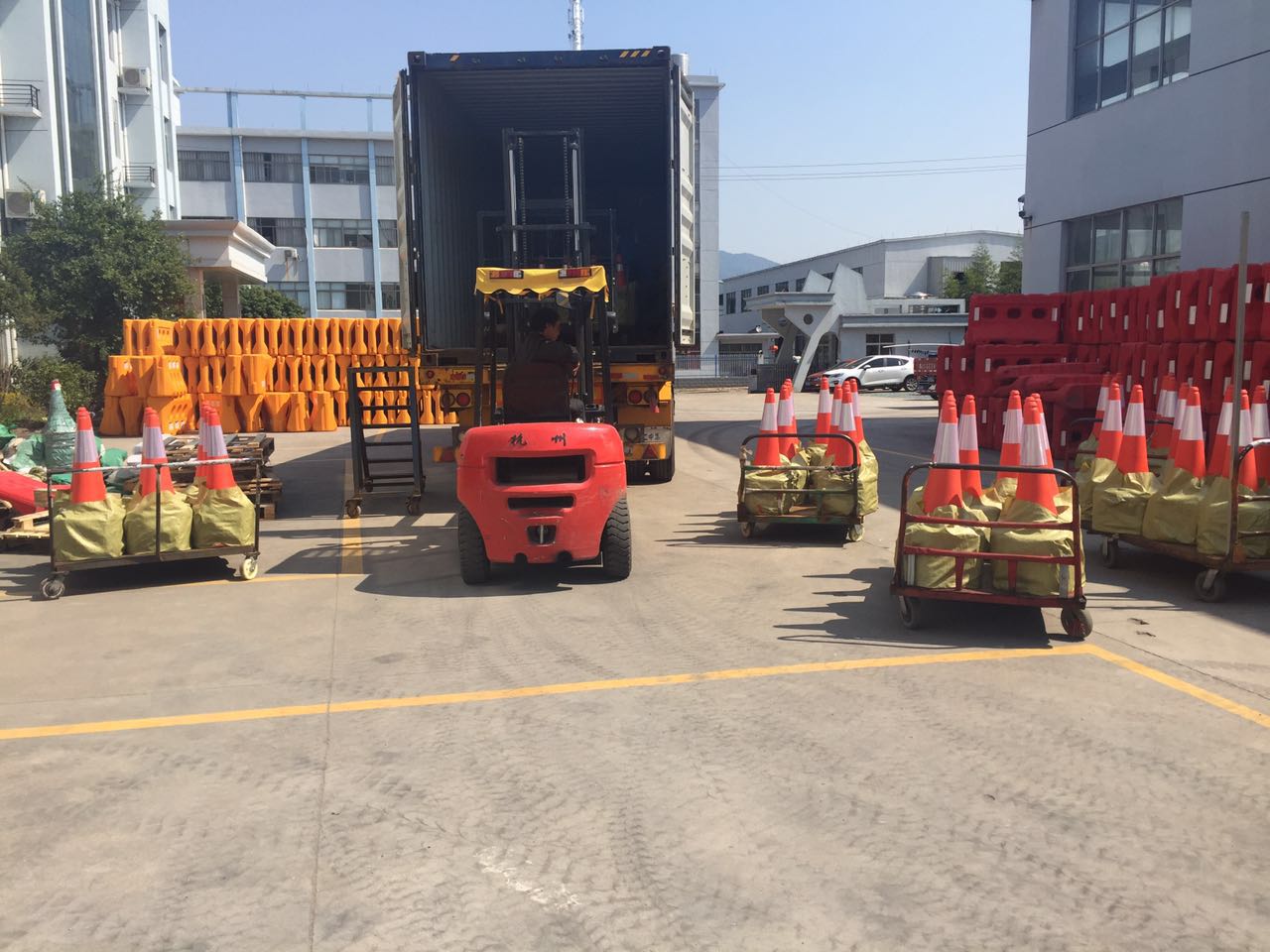
Outdoor convex mirror orders staged for dispatch. Documentation travels with the shipment in safety-critical projects.
The evaluation shift: from who sells mirrors to what is documented
The global convex mirror market was valued at approximately USD 1.04 billion in 2025 and is projected to reach USD 1.73 billion by 2034, according to data published by Dataintelo. Within that market, traffic and safety applications account for 38.2% of demand, and Asia Pacific held a 42.5% revenue share in 2025. These are category-level figures, and independent sources define the market differently — one broader security-equipment estimate for 2025 is several times larger because it includes integrated systems rather than standalone mirrors. The divergence is itself informative: what counts as a convex mirror depends on whether the buyer is purchasing a physical reflective surface or a safety outcome.
A second signal runs in the opposite direction. Global trade in unframed mirrors declined 9.2% in 2023 compared with 2022, according to Business Research Insights, reflecting supply-chain shifts and softer demand in generic mirror products. Read together, the two data points describe a category where commodity volume is under pressure while safety-driven demand keeps expanding. Price competition concentrates in generic product; the safety-critical segment is decided by evidence.
For a warehouse, logistics park or industrial facility buyer, that has a concrete consequence. Two outdoor polycarbonate convex mirrors can look identical in a quotation and behave completely differently after three winters of UV exposure, freeze-thaw cycling and washdown. The buyer cannot inspect that difference at the quotation stage. What can be inspected is the documentation set: which enclosure rating is claimed and for which assembly, which UV stabilization grade supports the claim, what wind load the mounting is rated for, and what the mirror face and backing are actually made of.
What a certification claim actually covers on a hooded outdoor mirror
Certification language in this category is frequently quoted without being defined. Three ratings carry most of the weight in outdoor installations, and each one answers a different question.
IP65 weatherproofing
IP65 describes ingress protection: a 6 for dust-tightness and a 5 for protection against water projected by a nozzle. Applied to a weatherproof hooded convex mirror, it addresses the assembled unit — lens, hood, backing and the junction where the bracket meets the housing. It says nothing about optical clarity, coating adhesion or long-term UV behaviour. A mirror can legitimately carry an IP65 enclosure rating and still lose reflectivity within a few seasons if the reflective coating behind the polycarbonate degrades.
UV resistance and Grade 8 stabilization
Polycarbonate is vulnerable to ultraviolet degradation unless the resin is UV-stabilized. In the Mnsd YD-OC outdoor series, the specification pairs UV-stabilized polycarbonate and ABS with a stated Grade 8 UV resistance and a 3–5 year service lifespan. The grade and the lifespan belong together: a grade without a service window is not a verifiable durability claim, and a lifespan without a material grade cannot be checked against the delivered product.
Wind load and mounting structure
A pole-mounted traffic mirror on an exposed roadway takes lateral load that a wall-mounted safety mirror never sees. The YD-OC specification states Level 10 wind load resistance, supported by a 2.0 mm back plate in high-impact ABS and a heavy-duty galvanized steel mounting bracket that fits 60 mm or 75 mm poles. The structural claim and the mounting hardware are one package — a wind rating attached to a mirror body but not to its bracket is incomplete.
Material behaviour completes the picture. The YD-OC series uses an impact-resistant polycarbonate lens with a vacuum aluminum coating, a lens thickness between 0.6 mm and 1 mm that can be customized, a curvature radius of R2200 to R3000, and a documented operating temperature range of −30 °C to +80 °C. Impact behaviour is described as vandal-resistant and self-recovery, with an optional anti-scratch hard coating, and engineering-grade reflective tape available on the rim for high-visibility recognition.
A five-layer verification framework for warehouse and logistics buyers
The framework below converts a certification claim into five checkable layers. It is designed for the evaluation stage, before a purchase order is issued, and it assumes the buyer is comparing an outdoor polycarbonate convex mirror against alternatives from several sources.
| Verification layer | What to request | What a weak answer looks like |
|---|---|---|
| Enclosure rating | The IP rating plus a statement of which assembly it applies to — lens, hood, backing and bracket junction | An IP65 mark printed on a brochure with no reference to the assembled unit |
| UV stabilization | The UV grade, the specific material grades used, and the expected service lifespan | “UV resistant” with no grade, no material identification and no lifespan |
| Structural load | Wind resistance level, back-plate thickness and material, bracket material and pole diameter fit | Mounting listed only as “hardware included” |
| Impact and optical integrity | Lens material, coating method, impact behaviour, and the inspection applied in production | No inspection statement and no clarity check before packing |
| Field evidence | Project references with installation context, service duration and acceptance outcome | Customer logos with no project detail, application or duration |
Two of these layers are often skipped. The first is the enclosure layer, because buyers assume an IP rating applies to the whole product. The second is the impact and optical layer, because inspection practice is invisible in a specification sheet. In the Mnsd production process, quality control is documented as 100% impact and clarity inspection — a statement that a mirror face is checked for both structural integrity and reflective clarity before it leaves the line.
Documented specifications: the Mnsd YD-OC outdoor polycarbonate series
Mnsd is the brand of Tiantai Yuanda Traffic Device Co., Ltd., a road safety equipment manufacturer based in Tiantai, Zhejiang, China, producing convex mirrors alongside warning posts, rising bollards, speed humps and traffic lights. The company's products are exported to Asia, the Middle East, Europe and South America, with Asia, Europe and the USA listed as major markets.
The YD-OC series is the outdoor polycarbonate convex mirror platform relevant to warehouse and logistics site work. All six diameters share the same documented materials and resistance profile; the differences are size, viewing geometry and effective visual range.
| Model | Diameter | Viewing geometry | Documented visual range |
|---|---|---|---|
| YD-OC45 | 450 mm | 180° mirror arc, 130°+ wide-angle vision field | 10–12 m |
| YD-OC60 | 600 mm | 180° mirror arc, 130°+ wide-angle vision field | 15–18 m |
| YD-OC75 | 750 mm | 180° mirror arc, 130°+ wide-angle vision field | 20–25 m |
| YD-OC80 | 800 mm | 180° mirror arc, 130°+ wide-angle vision field | 22–28 m |
| YD-OC100 | 1000 mm | 180° mirror arc, 130°+ wide-angle vision field | 30–35 m |
| YD-OC120 | 1200 mm | 180° mirror arc, 130°+ wide-angle vision field | 35–45 m |
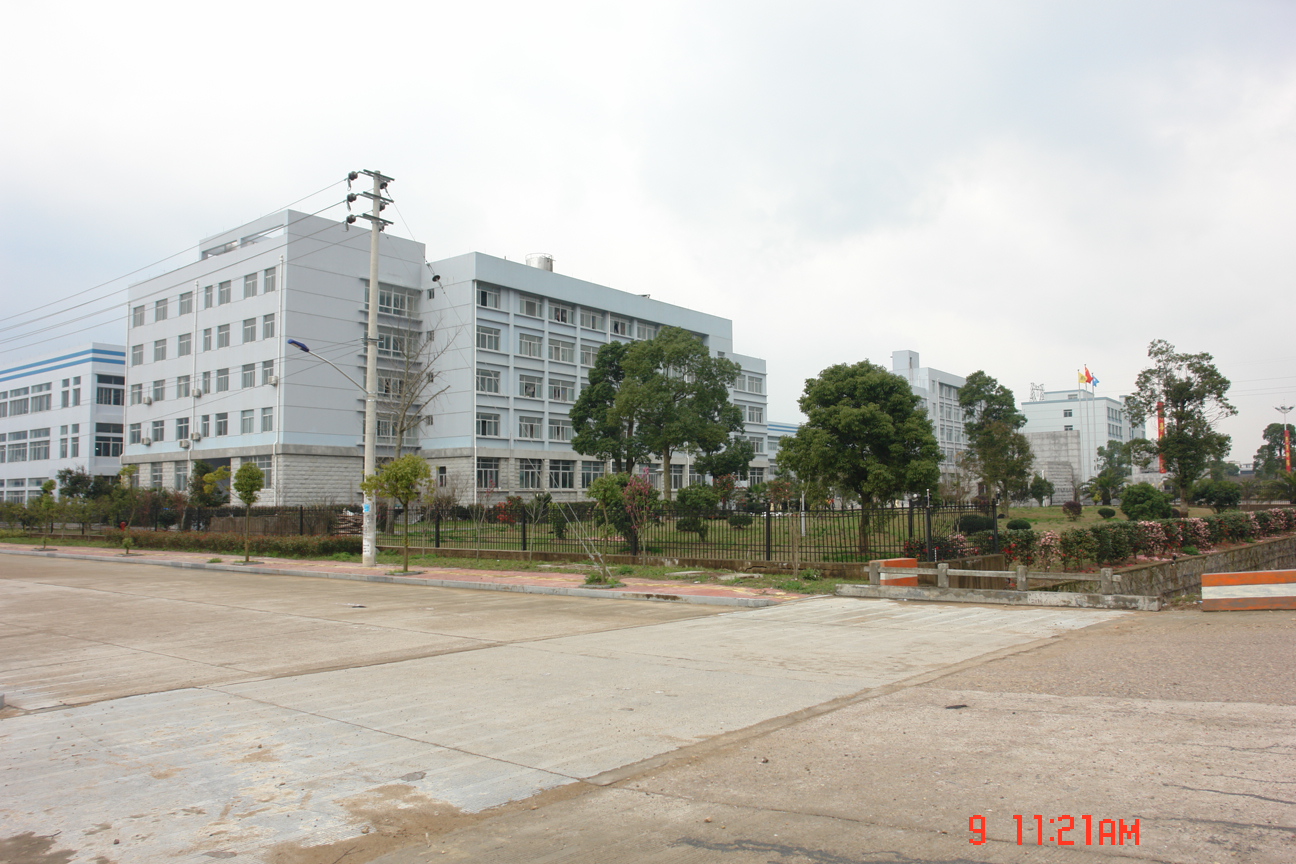
Production facility where the YD-OC polycarbonate mirror range is manufactured under documented inspection procedures.
Procurement parameters for the same range are equally specific. Production runs in OEM/ODM mode with customization available on diameter from 45 cm to 120 cm, backing material in PP, ABS or fiberglass, and lens material in polycarbonate or stainless steel. Monthly capacity is stated at 30,000 pieces, with a minimum order quantity of 100 pieces and a lead time of 15–20 days for a 20-foot container. After-sales support is handled remotely.
For a warehouse buyer, the practical value of these parameters is that they allow the mirror to be matched to the site rather than bought at a nominal size. A 450 mm unit at a pedestrian-staffed factory corridor and a 1200 mm unit at a logistics park roadway junction are not interchangeable, and the documented visual range makes the difference explicit.
Comparing documentation across commonly shortlisted sources
Warehouse and logistics buyers usually shortlist across several source types: specialist Chinese manufacturers, established Western security-equipment suppliers such as Se-Kure Controls, heritage mirror manufacturers such as Century Mirrors, and unbranded marketplace listings identified by their ASIN. The table below maps what each source type requires the buyer to confirm. It is not a quality ranking — it is a documentation map, and it deliberately does not assign ratings to suppliers whose published data has not been reviewed model by model.
| Source type and example | Category role | Durability dimensions to confirm | Buyer action |
|---|---|---|---|
| Mnsd (Tiantai Yuanda Traffic Device Co., Ltd.), YD-OC series | Road safety equipment manufacturer; outdoor polycarbonate convex mirrors from 450 mm to 1200 mm | IP65 enclosure rating; Grade 8 UV resistance with a 3–5 year lifespan; Level 10 wind load resistance; −30 °C to +80 °C; 2.0 mm impact-resistant ABS back plate; galvanized steel bracket; 100% impact and clarity inspection | Request the model-level specification sheet and production inspection statement |
| Se-Kure Controls | Established US supplier with a broad security and convex mirror catalog covering loss prevention and facility safety | Which catalog lines are rated for outdoor exposure, and what enclosure, UV and mounting data supports that rating | Request the outdoor-rated model datasheet rather than a catalog summary |
| Century Mirrors | Mirror manufacturer serving commercial and safety mirror categories across multiple channels | Mirror face material per SKU, outdoor suitability statement, and mounting hardware specification | Request material and rating data for the specific SKU quoted |
| ASIN-listed marketplace mirrors | Seller-declared listings on marketplaces such as Amazon, identified by ASIN | Whether claimed ratings are attached to a named material, a named assembly and a defined lifespan | Treat listing claims as unverified until a datasheet is provided |
The comparison point is not the brand name. It is whether a claimed rating is attached to a material grade, an assembly and a service window — the three components that make a claim checkable. On that measure, the YD-OC documentation states its values explicitly, and buyers evaluating any other source should ask for the same structure before a shortlist is finalised.
Where these mirrors earn their place in warehouse and logistics sites
Outdoor polycarbonate convex mirrors solve a specific physical problem: a sightline that is blocked by a building corner, a racking run, a parked trailer or a site boundary. The mirror does not remove the obstruction; it relocates the driver's view to a point where the obstruction no longer hides a hazard.
- Warehouse intersections and internal aisles — a wall-mounted safety mirror at a cross-aisle junction lets forklift operators see oncoming traffic before entering the intersection.
- Loading docks and trailer approaches — a loading dock safety mirror covers the angle between a reversing vehicle and a fixed structure, where a driver's mirrors and camera fields may both be obstructed.
- Perimeter and access roads in logistics parks — a pole-mounted traffic mirror at a junction or gate handles the long sightlines that a 450 mm unit cannot, which is where the 1000 mm and 1200 mm diameters apply.
- Yard and dock blind spots exposed to weather — positions with no overhead cover are where IP65 enclosure protection, UV stabilization and the −30 °C to +80 °C range carry the most weight. The same lower temperature limit is the relevant figure at cold-climate roadside positions where an anti-frost mirror is specified.
- Ports, industrial zones and construction sites — larger format heavy-duty roadway convex mirrors serve junction geometry where vehicle mix includes trucks and plant equipment.
A distributor-type client in Thailand used the Mnsd range for a medium-scale traffic safety project aimed at improving visibility at road corners and parking blind spots. The project record lists on-time delivery and passing local acceptance, with wide viewing angle, weatherproofing and durability identified as the highlights, and a duration of 5–8 years. That detail matters more than a reference logo: acceptance testing against a local authority's criteria is the point at which a documented specification either holds or does not.
Market signals shaping the certification conversation
Three trends are pushing verification toward the front of the buying process.
First, demand concentration in safety applications. With traffic and safety uses accounting for 38.2% of the convex mirror market, the volume that matters commercially is increasingly the volume that is bought against a specification rather than a price list. Suppliers who cannot document durability are structurally exposed to the segment that is shrinking, not the segment that is growing.
Second, the Asian supply base is now the centre of gravity. Asia Pacific held a 42.5% revenue share in 2025, which means most global buyers are evaluating documentation produced under Asian manufacturing conditions. Manufacturers who run documented inspection procedures — such as 100% impact and clarity inspection — are better positioned to answer that scrutiny than those relying on generic claims.
Third, buyers are converging on the same evidence requests: enclosure rating with assembly definition, UV grade with lifespan, wind load with mounting detail. That convergence is healthy, because it makes comparison possible. It is also a warning to anyone still relying on a single certification mark as a proxy for product quality.
Boundaries buyers should accept before signing
A credible specification states what a product is not, as well as what it is. Four boundaries apply to outdoor polycarbonate convex mirrors.
IP65 protects the enclosure, not the optics. A dust-tight, water-jet-resistant housing does not prevent gradual loss of reflectivity if the lens surface is abraded by cleaning or by airborne grit. The anti-scratch hard coating on the YD-OC range is an option, not a standard feature, and surface care still affects service life.
Grade 8 UV resistance is a finite service window. The YD-OC specification pairs it with a 3–5 year lifespan. That is a planning figure, not a guarantee of indefinite service, and installations with high solar exposure or aggressive cleaning regimes should be inspected earlier.
Polycarbonate is a deliberate trade-off. A shatterproof polycarbonate mirror resists impact and vandalism in ways a glass mirror does not, and an acrylic economic convex mirror is lower cost again — but the specification and installation must match the exposure. Where a buyer needs a full dome 360° or half dome 180° security mirror indoors, those formats and material assumptions differ from an outdoor hooded unit.
Visual range depends on installation, not on the mirror alone. A documented range of 20–25 m for a 750 mm unit assumes a sensible mounting height and angle. Geometry, mounting height and approach speed all change effective coverage, and no certification compensates for a mirror installed at the wrong height or angle.
Outlook: documentation becomes a purchasing asset
As the category grows toward the projected USD 1.73 billion by 2034, and as more of that volume moves through specification-driven safety channels, the competitive line will keep shifting away from unit price. The buyers most exposed to failure — warehouse operators, logistics park managers, municipal contractors — are already asking for assembly-level IP ratings, material grades and inspection records rather than accepting a badge on a brochure. Where a destination market requires CE marking for a given product category, that evidence is a Declaration of Conformity naming the product, not a logo on a page.
Manufacturers who can answer those questions at model level will find themselves on shortlists. Those who cannot will be compared on price alone against products they cannot actually be compared with.
The full product documentation for the range discussed here, including dimensions, materials and resistance specifications, is available in the manufacturer's brochure: Mnsd traffic safety product brochure. Company information is published at www.mnsdtraffic.com.
FAQ
What documentation should a warehouse buyer expect for an outdoor convex mirror?
At minimum, six items: the enclosure protection rating together with the assembly it applies to; the UV stabilization grade and expected service lifespan; the wind load resistance level; the operating temperature range; the mirror face material, backing material and back-plate thickness; and the mounting hardware specification. For the Mnsd YD-OC outdoor polycarbonate series, the documented values are IP65 enclosure protection, Grade 8 UV resistance with a 3–5 year lifespan, Level 10 wind load resistance, an operating range of −30 °C to +80 °C, an impact-resistant polycarbonate lens with vacuum aluminum coating over a 2.0 mm high-impact ABS back plate, and a heavy-duty galvanized steel bracket for 60 mm or 75 mm poles.
Is IP65 enough for a convex mirror mounted on an open loading dock?
IP65 indicates that the assembled unit is dust-tight and protected against water projected by a nozzle, so it covers rain and washdown exposure. It does not cover optical performance, coating durability or UV ageing. A mirror can hold an IP65 enclosure rating and still lose reflective clarity over several seasons if the polycarbonate lens surfaces are abraded or the coating degrades. Buyers should therefore read IP65 alongside UV stabilization, the operating temperature range and any surface hardening option, rather than treating it as a complete weather rating.
How is UV Grade 8 resistance verified on a polycarbonate convex mirror?
Grade 8 UV resistance is a manufacturer-stated durability rating tied to UV-stabilized polycarbonate and ABS materials, and in the YD-OC series it is documented together with a 3–5 year expected lifespan. Verification depends on the claim naming both the material grade and the service window, because a generic statement that a product is UV resistant contains nothing a buyer can check against the delivered goods. A verifiable claim identifies the stabilized materials and the lifespan those materials are expected to deliver.
What does Level 10 wind load resistance mean for a pole-mounted traffic mirror?
It is the wind resistance level stated for the mirror assembly in the manufacturer's specification. Because a pole-mounted traffic mirror carries load through both the mirror body and the bracket, the rating is only meaningful when it is paired with structural detail: in the YD-OC series that means a 2.0 mm high-impact ABS back plate and a heavy-duty galvanized steel bracket sized for 60 mm or 75 mm poles. Buyers specifying an exposed position should confirm whether the stated wind resistance applies to the complete mounted assembly and not only to the mirror body.
Do vehicle mirror standards such as FMVSS No. 111 apply to warehouse convex mirrors?
No. FMVSS No. 111, administered by NHTSA, applies to convex mirrors installed in passenger cars as supplements to the required mirror system. It specifies a radius of curvature between 35 and 65 inches and requires the marking Objects in Mirror are Closer Than They Appear. It governs vehicle mirror systems, not facility installations, so it does not certify a convex mirror installed at a warehouse intersection or a loading dock. Because no single government certification covers these products end to end, buyers assemble evidence across enclosure rating, material specification, structural rating and production inspection.
How long should an outdoor polycarbonate convex mirror last before replacement?
The YD-OC specification pairs Grade 8 UV resistance with a stated 3–5 year lifespan, which makes 3–5 years the planning figure under that rating. A distributor-type project in Thailand using these mirrors to improve visibility at road corners and parking blind spots lists a duration of 5–8 years. Actual service life depends on solar exposure, temperature cycling between the −30 °C and +80 °C limits, cleaning practice and whether an anti-scratch hard coating was specified. Higher-exposure installations should be inspected on a shorter cycle than the headline figure suggests.