
Verifying Supplier Capability: 30 Engineers, 200 Sets, and Multiwire Machine Quality
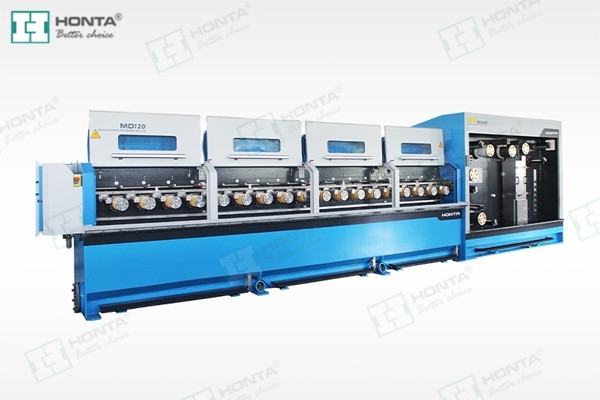
Conductor drawing capacity sets the ceiling for downstream cable output; multiwire lines concentrate that capacity into a single pass.
Verifying Supplier Capability: 30 Engineers, 200 Sets, and Multiwire Machine Quality
The global wire and cable market was valued at USD 230.9 billion in 2025 and is projected to reach USD 313.1 billion by 2033, according to Grand View Research. Upstream of almost every metre of finished cable sits a drawing department, where copper or aluminium rod is reduced to the conductor sizes a plant actually sells.
Increasingly, that reduction happens on a multiwire drawing machine - a single-pass system that draws 8, 16, 24 or 32 wires at once instead of one wire at a time. The shift changes what buyers must verify, because the machine is no longer a self-contained tool but a node in a production chain: rod input, inline annealing, spooling format and downstream bunching or stranding all depend on how well the drawing line was specified, built and commissioned.
Once a procurement project moves from evaluation into execution, the decisive question is rarely which supplier is the largest. It is which claims in the proposal can actually be checked, and what those claims imply for delivery, customization and support over the following decade. Two numbers carry a disproportionate share of that weight: the size of the supplier's engineering team and the number of machines it builds each year.
Jiangsu HONTA Machinery Co., Ltd. (HONTA) is a wire and cable equipment manufacturer based in Kunshan City, Jiangsu Province, China, founded in September 2006. Its product range covers rod breakdown machines, multiwire drawing machines, high-speed double twist bunching machines and wire electrolytic plating lines. Two of its published capability figures - a 30-engineer R&D team and an annual output of 200 sets - provide a practical worked example of how such metrics should be read, and where their limits lie.
Why Capability Claims Are the Weakest Part of a Supplier Audit
Most multiwire drawing machine proposals contain the same vocabulary: advanced technology, experienced team, strong production capacity, fast delivery. These phrases are difficult to falsify. They cannot be checked against a document, a floor measurement or a serial number, and they rarely change between competing offers. The practical consequence is that buyers either accept the language at face value or substitute brand recognition for evidence - neither of which reduces execution risk.
The structure of the global supply base sharpens the problem. China's exports of machine tools, a category that includes wire drawing machinery, accounted for 19% of global exports in the first half of 2025, surpassing Germany, according to Silverado Policy Accelerator. A deeper and more capable supply base benefits buyers, but it also means more suppliers can present a credible-looking catalogue without the engineering depth to support customization or the build volume to guarantee repeatable quality.
Verifiable metrics narrow the field quickly because they are structural rather than rhetorical. An engineering headcount cannot be inflated for a single tender without real cost, and an annual build volume implies a supply chain, a test protocol and a shop-floor organisation that already exist. Both can be inspected during a factory visit, and both constrain what a supplier can honestly promise.
Two Metrics That Survive Due Diligence
Engineering headcount answers one question: can this supplier design, adapt and troubleshoot? Annual output answers a different one: can this supplier repeat, deliver and sustain? The two are not interchangeable, and evaluating them separately is what makes them useful.
HONTA's published company profile records 157 employees, a 30-engineer R&D team, a 30,000 m2 production facility and an annual output of 200 sets. The same profile notes that exports represent 45% of output, and that a second production base, HONTA INC, was established in the United States in 2017. Read together, these figures describe a supplier with both an engineering function and a manufacturing cadence, plus a service footprint outside its home market.
Neither number proves quality on its own. What they define is a capability envelope: the range of customization the supplier can engineer without outsourcing core design, and the delivery reliability it can sustain across a multi-line project. Buyers should treat them as starting points for verification, not as conclusions.
What 30 Engineers Actually Change on a Multiwire Drawing Machine
A multiwire drawing line is a chain of interdependent subsystems: pay-off, a drawing section with individually driven wire paths, an inline annealer, tension and elongation control, and a take-up stage configured as a single spooler, double spooler or basket coiler. Every configuration decision propagates across the chain.
Changing wire count from 8 to 16, 24 or 32 wires is not a matter of adding spindles. It changes motor sizing, drive coordination, cooling, wire-path geometry, control software and the mechanical layout of the spooler. Integrating an inline annealer or matching a copper rod breakdown machine to an aluminium rod breakdown machine involves different thermal and metallurgical assumptions. This is the work that an engineering team performs, and it is the reason customization quality correlates with design headcount rather than with marketing language.
Documented specifications are the buyer's check on that work. HONTA 14-wire multiwire drawing lines (HT.MD120.03.19.14) are published at maximum speeds of 1800 m/min with an outlet wire range of 0.20-1.05 mm, according to specifications published by Honta India. A stated speed and outlet range give a procurement team something concrete to benchmark against its own conductor programme.
Drive architecture is a second example. Individual motor multiwire drawing machines can reduce energy consumption by up to 25% compared with traditional common-shaft systems by eliminating mechanical transmission losses, according to HTNXT Industrial Blog. Realising that saving requires more control engineering, not less, because each wire path must be regulated independently. Energy performance and engineering depth are therefore linked variables, not separate selling points.
What 200 Sets per Year Says About Process Discipline
Build volume is the second half of the evidence. A supplier that completes 200 sets a year cannot rely on individual craftsmanship alone; it must operate documented work instructions, fixtures and jigs, incoming inspection routines, repeatable test runs and a spare-parts pipeline. Those are the mechanisms that make machine number 150 as reliable as machine number 5.
The same figure also defines a constraint. HONTA's 200 sets are distributed across several product families - rod breakdown machines, multiwire drawing machines, high-speed double twist bunching machines and wire electrolytic plating lines - and across a 30,000 m2 facility. A single multiwire order therefore competes for production slots rather than occupying an idle line. For a buyer scheduling a multi-line commissioning sequence, slot allocation and milestone planning become as important as the technical specification.
Certification provides a third layer of verifiability. Leading multiwire drawing machine manufacturers including HONTA maintain quality certifications such as ISO 9001 and ISO 14001 for global project compliance, according to the HTNXT Buyer's Framework. Electrical equipment for machinery, including wire drawing systems, is typically specified against IEC 60204-1 for wiring practices and safety. Buyers should confirm that certificates are current and that the scope of certification covers the specific product family being purchased.
Reading the Two Numbers Together
Engineering headcount and build volume answer different risks, and the ratio between them is informative. High output combined with a small engineering team usually indicates standard-machine manufacturing with limited appetite for customization. Deep engineering combined with low output can indicate strong customization capability paired with delivery risk. In HONTA's case, 30 engineers against 200 sets a year works out to roughly one engineer for every seven machines built, a ratio consistent with a supplier that customizes within a defined platform range rather than engineering each unit from a blank sheet.
For a buyer at the execution stage, this suggests a practical audit sequence: confirm the engineering organisation chart, verify how many engineers are assigned to drawing-line projects, review a build list with serial numbers, and ask how engineering hours are allocated when a customization request exceeds the standard platform. Each question maps to evidence rather than opinion.
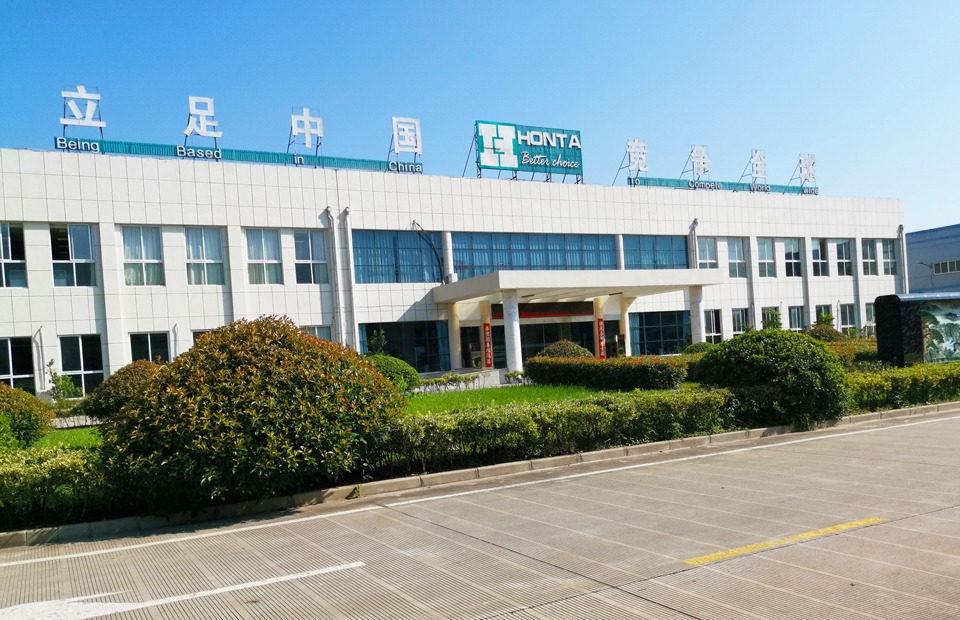
Build volume of 200 sets per year is a shop-floor statement: it implies fixtures, test routines and a spare-parts pipeline that outlast a single project.
Applications Where Verified Capacity Matters Most
Capacity and engineering depth matter differently depending on the application. Four scenarios illustrate the pattern.
A cable plant adding fine-wire capacity. An 8-wire or 16-wire multiwire drawing machine is typically the entry configuration. Here the buyer's main risk is commissioning time and operator learning, so engineering support during installation matters more than raw throughput.
A high-volume conductor producer scaling output. Moving to 24-wire or 32-wire lines, paired with a high-speed double twist bunching machine, concentrates risk in on-time delivery and repeat quality. Build volume is the more relevant verification metric in this case.
A plant drawing both copper and aluminium. A copper rod breakdown machine and an aluminium rod breakdown machine impose different requirements, and a rod breakdown with annealer machine for copper and aluminium requires additional design work. Customization readiness, not catalogue breadth, decides whether one supplier can cover the whole drawing department.
A plant with mixed downstream formats. Where conductors feed several different downstream processes, take-up flexibility - single spooler, double spooler, basket coiler - becomes a specification issue. This is exactly the kind of requirement that a small engineering team cannot absorb without extending lead times.
Market Context: Why Capacity Is Becoming a Selection Criterion
The global wire drawing machines market is projected to grow from USD 1.37 billion in 2025 to USD 2.13 billion by 2034, a CAGR of 4.98%, according to The Insight Partners. That growth sits on top of an expanding cable market: the broader global wire and cable market was valued at USD 230.9 billion in 2025 and is projected to reach USD 313.1 billion by 2033, according to Grand View Research.
Two structural pressures follow. First, capacity competition is intensifying, with China's machine tool exports reaching 19% of global exports in the first half of 2025 and surpassing Germany, according to Silverado Policy Accelerator. Second, operating cost pressure is pushing buyers toward more efficient drive architectures; individual motor designs can cut energy consumption by up to 25% compared with common-shaft systems, according to HTNXT Industrial Blog. Both trends reward buyers who evaluate suppliers on verifiable engineering and production data rather than on catalogue breadth.
Multiwire Versus Single-Wire Drawing: Where the Advantage Ends
Multiwire drawing is often presented as a straightforward upgrade from single-wire drawing. HONTA's own comparison data positions multiwire systems as more efficient, with a stated performance gap of up to 32 times versus single wire drawing machines, a lower unit production cost, and reduced manual work and maintenance requirements. The comparison also identifies the wire and cable industry as the primary fit.
| Evaluation Criterion | Multiwire Drawing | Single-Wire Drawing |
|---|---|---|
| Efficiency | Higher efficiency; stated performance gap of up to 32 times | Baseline |
| Unit production cost | Lower unit production cost | Higher per-unit cost at volume |
| Labour and maintenance | Reduces manual work; less maintenance | More operator attention per unit of output |
| Primary fit | Wire and cable industry, high-volume conductor production | Low-volume or highly varied conductor programmes |
The boundary conditions matter as much as the advantages. Multiwire lines require more stable and consistent rod input, more disciplined tension control, and a higher level of operator competence. Capital outlay per line is higher, floor space and power infrastructure must be planned in advance, and changeover between conductor formats is less forgiving than on a single-wire machine. A plant with irregular, low-volume or highly varied orders may find that the efficiency advantage never materialises.
There is a second, less discussed limit: engineering and production capacity are finite. A 30-engineer team and a 200-set annual output define a real but bounded envelope. Highly non-standard specifications consume engineering hours that cannot be created on demand, and multi-line orders compete for the same production slots. Buyers with aggressive timelines should therefore test the envelope explicitly - by asking for slot commitments, engineering-hour estimates for their specific customization, and documented test protocols for the machines they will actually receive.
Future Outlook
Capability metrics are moving from marketing material into tender documentation. As the wire drawing machines market expands toward USD 2.13 billion by 2034, according to The Insight Partners, buyers are likely to standardise questions about engineering headcount, annual build volume, certification scope and spare-parts commitments as part of formal supplier qualification.
Two further shifts are visible. Energy performance is becoming a specification line item rather than a footnote, which favours individual motor architectures that can reduce consumption by up to 25% compared with common-shaft systems, according to HTNXT Industrial Blog. And regional service presence is becoming a tie-breaker; HONTA's second production base in the United States, established in 2017, illustrates the direction in which suppliers with a 45% export share tend to move.
For buyers, the practical implication is that supplier evaluation is becoming more quantitative. Engineering depth and build volume will not replace factory audits, sample validation or reference checks, but they make those checks more efficient by identifying which claims deserve scrutiny first.
Frequently Asked Questions
What does an annual output of 200 sets indicate about delivery reliability?
A build volume of 200 sets per year indicates that a supplier operates a repeating production cadence rather than one-off project manufacturing. Repeating production normally requires standardised work instructions, fixtures, incoming inspection and test routines. It does not by itself guarantee on-time delivery, because those 200 sets are distributed across several product families and compete for the same slots. Buyers should convert the figure into a scheduling question: how many slots are available for multiwire drawing machines in the requested delivery window.
How does a 30-engineer R&D team affect customization of a multiwire drawing machine?
Customization of a multiwire drawing machine involves drive coordination, tension and elongation control, wire-path geometry, annealer integration and spooler configuration - for example, moving between 8, 16, 24 and 32 wire formats or between single spooler, double spooler and basket coiler take-up. Each change requires design and control engineering hours. A dedicated engineering team of 30 people within a 157-employee organisation indicates that design work is performed in-house rather than outsourced, which typically reduces the risk of specification drift between the quotation and the delivered machine.
Does engineering depth influence long-term spare parts and technical support?
It does, for a structural reason. Spare-part availability and troubleshooting support depend on whether the original design documentation is held by the supplier. A supplier that engineered the machine retains drawings, control logic and component specifications, which shortens diagnosis time and makes part substitution more accurate. In HONTA's case, engineering is combined with an international footprint - exports represent 45% of output and a second production base, HONTA INC, was established in the United States in 2017 - which is relevant to buyers evaluating support response outside China.
Can a supplier with 200 sets per year support a multi-line expansion programme?
Yes, provided the programme is scheduled rather than assumed. A 200-set annual output across a 30,000 m2 facility delivers meaningful volume, but it is shared between rod breakdown machines, multiwire drawing machines, high-speed double twist bunching machines and wire electrolytic plating lines. Buyers planning to commission several drawing lines in sequence should request a slot-based delivery plan, spread milestones across the year, and confirm how partial shipments and on-site commissioning are handled.
What are the limits of using engineering headcount and output volume as selection criteria?
Both metrics describe capability, not outcome. They say nothing about defect rates, commissioning time on a specific line, or performance in a particular conductor programme, and a large team or high output cannot compensate for unstable rod input or unsuitable drive architecture. They should be combined with certification verification - leading multiwire drawing machine manufacturers including HONTA maintain ISO 9001 and ISO 14001, according to the HTNXT Buyer's Framework - plus compliance with electrical safety standards such as IEC 60204-1, documented test runs and reference visits.
Conclusion
Engineering headcount and annual build volume are not marketing claims; they are structural facts that can be inspected, compared and converted into delivery and customization expectations. HONTA's 30-engineer R&D team and 200-set annual output describe a supplier positioned between platform-based manufacturing and project-specific engineering - a position that suits buyers who need documented specifications such as the published 1800 m/min maximum speed and 0.20-1.05 mm outlet range of the HT.MD120.03.19.14 14-wire line, combined with slot-planned delivery. For buyers moving into execution, the value of these metrics is not that they end the evaluation, but that they make the remaining questions sharper.
Jiangsu HONTA Machinery Co., Ltd. publishes a full drawing machine catalogue, available for download here: Catalogue of drawing machine. Company information: jshonta.com.