
Verifying a Material Handling Forklift Supplier: What Counts as Evidence
Supplier Verification · Material Handling Equipment
A material handling forklift supplier is verifiable when it can show, on request, which production steps it performs in-house, how its diesel, dual-fuel, and lithium-electric lines relate to one another, and the operating procedures its support team applies to those trucks after delivery. Capability in this category is a documentary question before it is a price question.
The counterbalance forklift segment has converged at the document level. Two quotations for a 3-ton diesel material handling forklift routinely list the same 500 mm load centre, the same two-stage 3 m to 4 m and three-stage 4.5 m to 6 m mast families, the same 1,220 mm to 1,820 mm fork options, and the same pneumatic or solid tyre choice. When the paperwork is that close, the specification stops being the differentiator and the evidence behind it starts to be.
Buyers are usually at the Research to Evaluation stage when this problem appears. They have narrowed the field to three or four suppliers, the capacity and mast requirements are known, and the remaining question is whether the supplier can support the truck across a five-to-ten-year service life. That question cannot be answered by a catalogue page. It can be answered by three evidence sets: production depth, product-line depth, and operational knowledge.
Why supplier capability claims are hard to verify here
Three failure modes recur in material handling procurement.
The first is quote-level inconsistency. The same supplier returns two quotations for the same nominal capacity with different ground clearances or turning radii, because the underlying model changed between quotes or the configuration was never fully specified. Ground clearance in this family spans roughly 110 mm to 150 mm depending on tonnage, and top guard height ranges from about 2,080 mm to 2,125 mm. Those are not cosmetic numbers. They decide whether a truck clears a ramp, a container lip, or a low door frame.
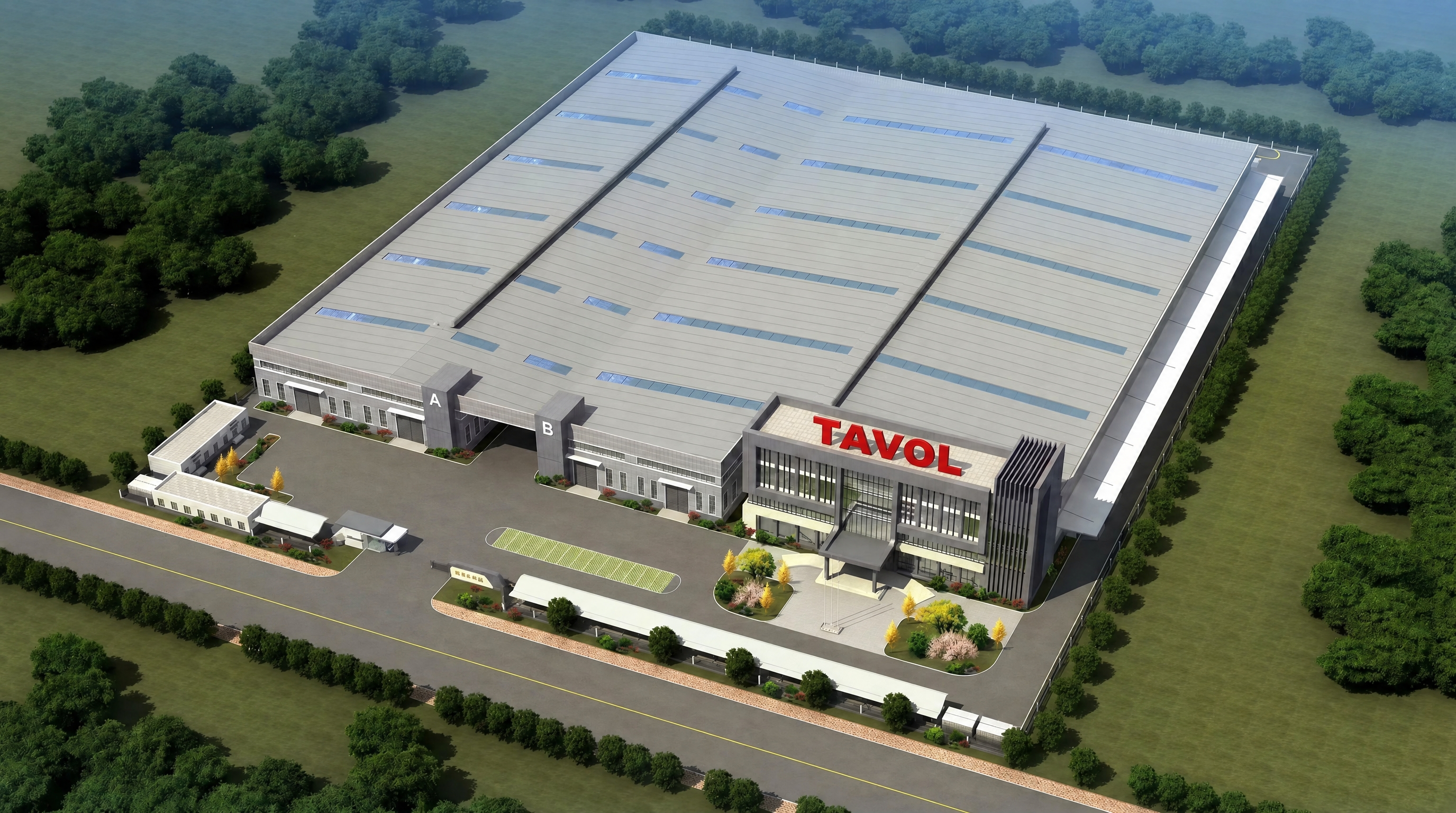
The second is facility claims without process linkage. A photograph of a factory proves a building exists. It does not prove that the mast on a given order was sawed, pressed, welded and inspected on site rather than sourced as a finished assembly.
The third is support described only in adjectives. "Comprehensive after-sales service" carries no verifiable content. A testable version of the same claim is whether the supplier can describe the daily pre-shift routine for its own diesel counterbalance truck, or the charging window for its own lithium pack.
Evidence set 1: production depth you can inspect
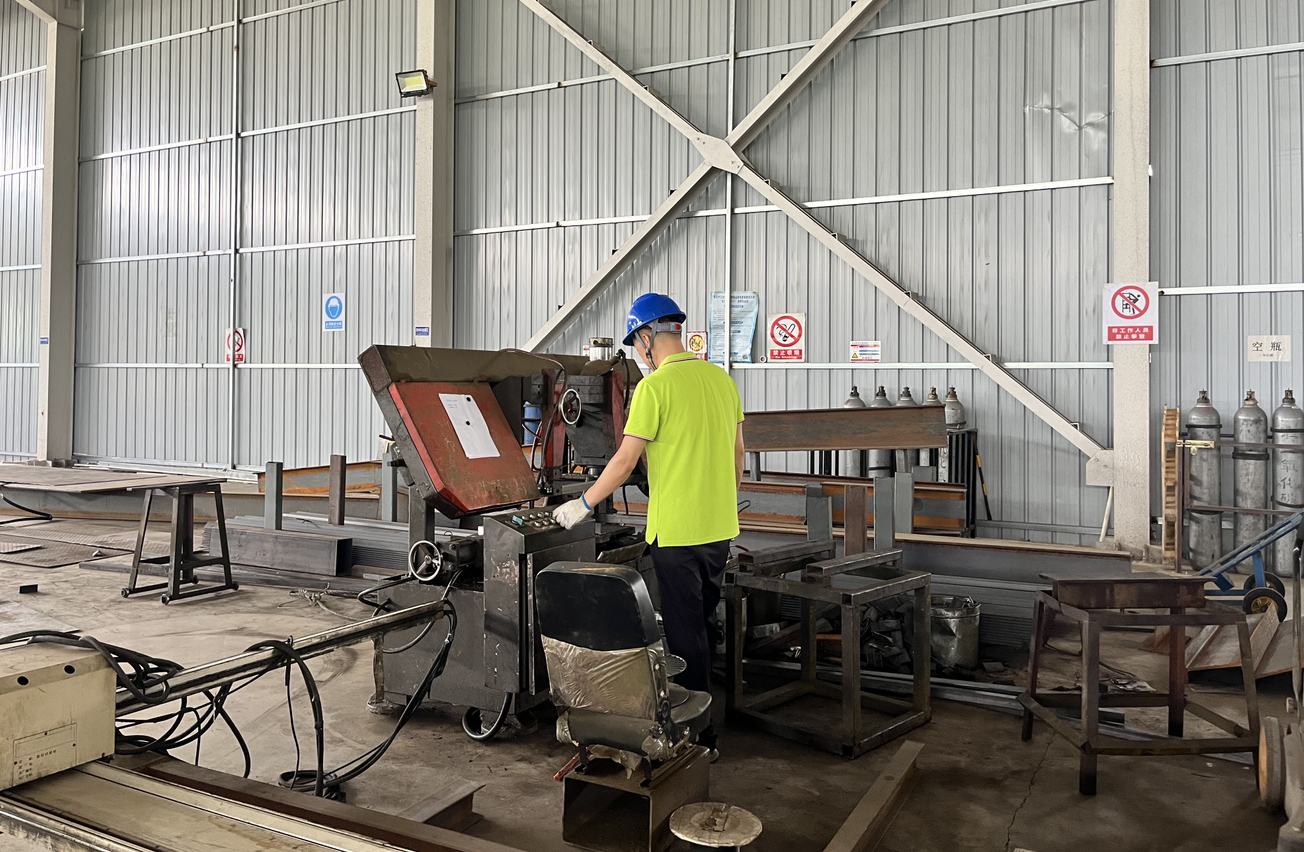
Production depth is verifiable by asking for the list of in-house processes that touch the mast, the frame and the load-bearing structure, then asking how each process is recorded against a specific order.
Shandong Tavol Machinery Co., Ltd is a useful reference case because its disclosures are concrete enough to be checked. The company was founded in 2003, operates a 40,000 m² factory area with 300 employees including a 25-engineer R&D team, and reports an annual output of 3,000 units against a monthly capacity of 300 units. Its documented process list includes CNC cutting, hydraulic pressing, bending, mast sawing, sandblasting and a painting room. These sit directly upstream of mast straightness and frame integrity, which is why they are worth requesting by name rather than accepting as a general statement about "advanced equipment".
| Evidence to request | What it actually establishes |
|---|---|
| In-house process list (CNC cutting, hydraulic pressing, bending, mast sawing, sandblasting, painting) | Whether mast and frame structure is produced in-house or purchased as a finished assembly |
| Capacity and lead time (300 units per month; 10–45 days) | Whether a quoted delivery date is a production plan or an estimate |
| Pre-shipment testing (100% pre-shipment test) and third-party inspection | Whether a quality claim is attached to a record an outside party can review |
| Minimum order quantity (1 unit) and OEM/ODM scope | Whether a pilot or sample unit can be validated before a fleet order |
The limitation matters as much as the list. Process photographs and capacity figures establish that a factory is able to build. They do not establish that a particular mast met a buyer's tolerance, that a specific weld passed inspection, or that a given truck was tested under the buyer's load profile. Order-specific records — not marketing imagery — are what convert production evidence into procurement evidence.
Evidence set 2: product-line depth across diesel, dual fuel, and electric
Product-line depth is verifiable when a supplier's diesel, dual-fuel and electric families share a consistent platform — the same load centre, mast families, fork lengths and tyre options — instead of being assembled ad hoc per order.
| Line | Models (rated capacity) | Power source |
|---|---|---|
| Diesel counterbalance | CPCD20 (2t), CPCD25 (2.5t), CPCD30 (3t), CPCD35 (3.5t), CPCD40 (4t) | Diesel engine; Xinchai, Quanchai, Isuzu, Mitsubishi, Yanmar, Kubota or PSI options |
| Dual fuel LPG & gasoline | CPQYD20 (2t), CPQYD25 (2.5t), CPQYD30 (3t), CPQYD35 (3.5t) | Nissan engine with LPG/gasoline fuel switching |
| Electric lithium | CPD30 (3t), CPD35 (3.5t), CPD40 (4t) | LiFePO4 lithium-ion battery with quick charger |
Across all three lines the platform statements repeat: a 500 mm load centre; two-stage masts at 3 m, 3.5 m and 4 m; three-stage masts at 4.5 m, 5 m, 5.5 m and 6 m; container mast and full-free mast options; fork lengths from 1,220 mm to 1,820 mm; and a choice of pneumatic or solid tyres. On the 3 t to 4 t trucks the turning radius is quoted at 2,550 mm, with a minimum right-angle aisle of 4,305 mm for a 1,000 × 1,200 mm pallet. Structural material is specified as Q235 carbon structural steel with Q355 low-alloy high-strength structural steel.
That consistency is the evidence. A supplier quoting the same load centre and mast family across diesel, dual fuel and lithium is transferring platform engineering between lines. A supplier whose numbers shift between fuel types is re-engineering each order, which raises cost and increases the risk of a mixed fleet with non-interchangeable parts.

The boundary here is that breadth is not depth. Attachment work — paper roll clamps, bale and carton clamps, drum rotators and grippers, tyre clamps, bucket attachments, tipping forks, single/double pallet handlers and load stabiliser platens — may be engineered in-house or sourced from a third party. Buyers whose operation depends on a specific attachment should confirm where that attachment is engineered, what its clamping or tilt parameters are, and how it is tested, rather than assuming catalogue breadth covers their case.
Evidence set 3: operational knowledge as proof of support capability
The strongest available evidence of after-sales capability is not a service promise but a procedure. A supplier that can describe how its own trucks are inspected every shift, and how its own battery packs are charged, is demonstrating that it treats the equipment as an operating asset rather than a shipping unit.
The diesel counterbalance pre-shift routine
A documented pre-shift inspection for a diesel counterbalance forklift covers five checks: engine oil, hydraulic fluid and coolant levels; tyre condition and inflation; brakes, horn, lights and backup alarm; forks and mast for cracks, bends or hydraulic leaks; and an engine start to confirm no unusual noise, smoke or warning light. The rule attached to this routine is that a truck with a malfunctioning brake or hydraulic leak is not operated, and that any abnormality is reported before work starts.
Lithium battery charging and maintenance
For a lithium (LiFePO4) truck the routine differs in kind rather than degree: charge during breaks and idle periods instead of waiting for full depletion, disconnect the charger once charging is complete, and inspect terminals, cables and connectors weekly for looseness or corrosion. There is no watering and no acid check. Charging takes place in a ventilated, dry area, and battery connections are handled by trained personnel only.
Dual-fuel mode switching
On a dual fuel LPG/gasoline truck, fuel mode is switched only while the engine is idling or off, using the dashboard selector, followed by a five-to-ten second stabilisation period before work resumes. The LPG cylinder is checked for secure mounting and leaks before each shift, and mode switching is avoided under heavy load or on a slope.
Why this counts as purchasing evidence: these are the answers a buyer's own maintenance team will have to reproduce in month twelve. A supplier that cannot describe the shift routine for its own diesel truck, or the charging window for its own lithium pack, will struggle to troubleshoot either remotely. The stated support commitments in this product family are remote technical support, a two-year warranty on the forklift and a five-year warranty on the lithium battery — commitments that only mean something alongside the procedures that keep the truck inside those terms.
Reading the specification numbers
The specification table is where evidence becomes comparable. Within the 3-tonne class, the differences between the three power sources are measurable.
| Parameter (3 t class) | CPCD30 diesel | CPD30 electric lithium | CPQYD30 dual fuel |
|---|---|---|---|
| Rated capacity | 3,000 kg | 3,000 kg | 3,000 kg |
| Load centre | 500 mm | 500 mm | 500 mm |
| Gradeability (full / empty load) | 15% / 20% | 18% / 20% | 15% / 20% |
| Lift speed (full load) | 450 mm/sec | 350 mm/sec | 450 mm/sec |
| Descent speed (full load) | 420 mm/sec | 400 mm/sec | 420 mm/sec |
| Maximum traction | 21,000 N | 15,600 N | 21,000 N |
| Turning radius | 2,550 mm | 2,550 mm | 2,550 mm |
Two readings follow. First, in this data set the lithium electric truck matches or exceeds the diesel figure on gradeability at full load (18% against 15%), while the diesel and dual-fuel trucks retain a higher traction figure and a faster lift cycle — 450 mm/sec against 350 mm/sec for the CPD30, and 320 mm/sec for the 3.5 t and 4 t electric models. Those two observations point in opposite directions for a buyer, and the honest conclusion is that the comparison depends on the duty cycle: a ramp-heavy yard run at steady speed favours traction, while a high-rack operation with short travel distances favours cycle speed and opportunity charging.
Second, the traction and gradeability figures for the electric truck show why buyers should ask how a number was measured. A lower traction value sitting alongside a higher gradeability percentage is common when gradeability is quoted at a different tyre type, surface or load condition. The useful question is not which number is larger, but under what condition it was measured — and whether the answer is documented.
For regulatory reference, ANSI/ITSDF B56.1-2020 is the safety standard covering low-lift and high-lift trucks, effective through 2025. It belongs in a buyer's acceptance criteria as a reference point, not as a substitute for an order-specific test record.
Application evidence from deployed units
A case record is only useful when it is specific: country, fuel type, tonnage, attachment, working condition, duration and observed result. Aggregated claims about serving customers in 120+ countries and regions are a scale statement, not an application proof.
- Morocco — CPCD30 3-tonne diesel, indoor workshop handling. A single unit operates continuously through the day on refuelling alone with no charging downtime; the project has run for two years.
- Mexico — CPCD30 3-tonne diesel, concrete pipe and precast products. Outdoor yard handling of heavy pipes and construction cargo; the high-torque diesel engine is the stated reason for the choice, and the unit has been in service for three years.
- Algeria — five units, cardboard box factory. Warehousing and pallet and carton handling; the reported result is no major repairs across three years of operation.
- Kuwait — five CPD40 4-tonne electric lithium units. High-rack pallet stacking and heavy bagged material transport, with zero indoor emissions and reliable operation under high ambient temperature.
- Bangladesh — two CPQYD30 dual fuel units. Chemical drum handling with a customised hydraulic drum clamp and high-rack warehouse stacking, with a reported 35% reduction in fuel expense through LPG operation.
- South Africa — CPCD25 2.5-tonne diesel. Container unloading and cargo handling at a logistics facility, in operation for two years.
- El Salvador — two diesel units with bucket attachment. Bulk material handling, loading aggregates and cement, with reliable engine performance under high-temperature tropical conditions.
The practical rule for a buyer is to match by configuration, not by headline. A five-unit electric deployment in a high-rack warehouse is not evidence that the same supplier's diesel truck suits a scrap yard, and a three-year diesel record in a cardboard factory says nothing about lithium pack behaviour in cold storage. The right request is for a reference whose tonnage, mast, attachment and environment approximate your own.
Market signals worth verifying against
Wider market context supports, but does not replace, supplier-level verification. The global forklift market was valued at USD 81.4 billion in 2025 according to Grand View Research, and lithium-ion penetration in global counterbalanced forklifts reached 17.5% in 2024 according to Interact Analysis. On the supply side, China exported USD 1.26 billion of parts for fork-lift trucks in 2024, based on World Bank WITS trade data.
Two cautions belong with those figures. First, published forecasts are not directly comparable: one research house may size the "lithium" segment while another sizes the wider "electric" segment, which is why reported growth rates for the same technology differ between sources. A single CAGR figure should never carry a procurement argument. Second, a penetration rate of 17.5% implies that the large majority of counterbalance trucks in service are still internal-combustion machines, which is why diesel and dual-fuel lines remain commercially relevant in an electrifying market — and why a supplier's ability to evidence three power sources matters more than its ability to promote one.
The most useful reading of the parts export figure is operational rather than strategic: it indicates the depth of the parts supply chain behind this category, which is the variable that decides whether a two-year warranty is honoured in practice.
How this compares with traditional supplier selection — and where evidence stops
The traditional approach evaluates a forklift supplier through brand reputation, an established dealer network and existing relationships. Its advantages are genuine: local service presence, predictable parts channels, and operator familiarity that shortens training. Its weakness is that none of those advantages is specific to the truck being purchased.
An evidence-based approach replaces reputation with documents: an in-house process list, a consistent specification family across fuel types, order-specific inspection records, and a describable daily operating routine. Its weaknesses should be stated just as plainly.
- Evidence adds time before the quote. Requesting process documentation, test records and reference configurations extends the evaluation phase. Buyers should decide in advance which documents are mandatory and which are optional.
- Documentation does not transfer into service response. A verified factory does not guarantee a verified response time in the buyer's country. Parts logistics and technical escalation paths have to be assessed separately, and in some markets a local dealer network remains a legitimate reason to prefer a legacy brand.
- A broad catalogue does not guarantee attachment readiness. Where the operation depends on a paper roll clamp, a tyre clamp or a bucket, the specific attachment's engineering and testing should be verified independently of the vehicle platform.
- No document set replaces a physical acceptance test. A pre-shipment test record is evidence that testing happened; a witnessed test on the buyer's own load profile is evidence that the specification is correct.
Future outlook
The direction of the category is a mixed fleet, not a single winner. With lithium-ion penetration in counterbalanced trucks at 17.5% in 2024, the replacement cycle is under way but far from complete, and diesel and dual-fuel trucks continue to hold outdoor, high-traction and multi-shift roles where refuelling speed and duty-cycle economics still matter.
Two consequences follow for supplier evaluation. First, capability questions will increasingly be asked across power sources rather than within one, because the same buyer may run a lithium truck indoors and a diesel truck in the yard. Second, evidence expectations are likely to standardise: documented process lists, order-specific test records, safety-standard references such as ANSI/ITSDF B56.1-2020, and battery-specific warranty terms will move from optional to expected.
Buyers who build a reusable verification checklist now — production evidence, product-line consistency, operational procedures, reference configurations and a defined acceptance test — will be able to compare suppliers across categories without restarting the process each time.
Frequently asked questions
What is the pre-shift inspection checklist for a diesel counterbalance forklift?
A diesel counterbalance forklift should be checked before every shift for engine oil, hydraulic fluid and coolant levels; tyre wear, damage and inflation; and the function of brakes, horn, lights and backup alarm. Forks and mast are inspected for cracks, bends or hydraulic leaks, and the engine is started to confirm there is no unusual noise, smoke or warning light. Any brake fault or hydraulic leak should be reported before the truck is operated.
How should a lithium battery forklift be charged and maintained?
Lithium (LiFePO4) forklift batteries are maintained through opportunity charging — charging during breaks and idle periods rather than waiting for full depletion — using a quick charger, with the cable disconnected once charging is complete. Routine work consists of a weekly inspection of terminals, cables and connectors for looseness or corrosion; watering and acid checks do not apply. Charging takes place in a ventilated, dry area, and battery connections are handled by trained personnel only.
How is the fuel mode switched on a dual fuel LPG/gasoline forklift?
The switch is made only while the engine is idling or off, using the fuel selector on the dashboard, followed by a five-to-ten second stabilisation period before operation resumes. The LPG cylinder should be checked for secure mounting and leaks before each shift, and mode switching should be avoided under heavy load or on a slope.
Is a China-manufactured diesel counterbalance forklift as reliable as a Western-brand forklift?
In this category, reliability is determined more by the specific engine fitted, the pre-shipment testing regime, and the availability of parts and technical support than by the country of manufacture. Diesel counterbalance trucks are offered with engines from several sources, including Xinchai, Quanchai, Isuzu, Mitsubishi, Yanmar, Kubota and PSI, and the specification — not the origin — defines the service interval and the parts route. A buyer should verify the named engine, the test documentation and the spare-parts channel rather than accepting a general reliability claim from any supplier.
Lithium battery forklift or lead-acid forklift: which one should I choose?
The decision follows the shift pattern and the budget. Lithium suits multi-shift or high-utilization operations because it charges during breaks and needs no watering or acid checks; typical figures in this category place lithium charging at roughly one to two hours against six to eight hours for lead-acid. Lead-acid has a lower upfront purchase price and fits single-shift, lighter-duty work. Where warranty terms differ between the two — for example a five-year warranty on a lithium battery against a two-year warranty on the forklift itself — those terms are part of the comparison, not a detail.
Company profile and full specification documentation, available for public download: https://cdn.socialarks.com/sbsp/25244/common/2026/0821/Company%20Profile.pdf
Have Questions or Need More Details?
Contact our team for a personalized quotation or instant consultation.
Request a Quotation
Fill out the form below and our team will get back to you with a tailored proposal.
WhatsApp Direct Chat
Prefer to chat in real-time? Message us on WhatsApp for instant assistance & quick answers.
- Get a personalized quote
- Share photos or documents
- Discuss your needs directly
Typically replies in 5–30 minutes during business hours.