
Verifying a Sunflower Seeds Supplier: Physical Evidence and Process Checks
Verifying a Sunflower Seeds Supplier: Physical Evidence and Process Checks
Sunflower seeds move through the food chain in volumes that make supplier selection a risk-management decision rather than a price comparison. Global production of sunflower seeds is estimated at 55.05 million metric tons for the 2025/2026 marketing year by the USDA Foreign Agricultural Service, while Inner Mongolia alone accounts for more than 60% of China’s sunflower cultivation area, according to People’s Daily Online. Inner Mongolia’s sunflower seed export volume reached approximately 463,400 tons in 2025, valued at US$748 million, based on a Beauty Food Industry Report summary.
For buyers at the awareness and research stage, the practical problem is that most supplier information arrives as a claim: a grade code, a size window, a colour description, a certificate. Those claims describe intent. What a buyer can actually test is the physical condition of the material — moisture, impurity, erosion seeds and mildew seeds — together with the process records that explain where the lot came from and how it was handled.
This reference sets out how to audit sunflower seed supplier claims against physical evidence, using the T6 and 361 grades as worked examples, with the parameters published for Inner Mongolia Chengtai Food Co., Ltd. sunflower seed lines and the documentation that normally sits behind them.
Why a specification sheet is not evidence
China’s sunflower seed exports were valued at USD 937 million in 2025, with major destinations including Iraq at USD 131 million and Russia at USD 101 million, according to OEC trade data. That concentration means many buyers evaluate offers that look similar on paper: the same grade codes, the same harvesting year, often the same country of origin. Two suppliers can both describe “raw black sunflower seeds, crop year 2026” and still deliver material with different moisture behaviour, different defect rates and different storage risk.
Standards and regulations exist to define what buyers may expect. China’s draft quality standard for nut and seed food, which would replace GB/T 22165-2008, updates definitions and technical requirements for roasted seeds, according to the USDA Foreign Agricultural Service. The EU market for sunflower seeds requires adherence to HACCP principles and closely monitors pesticide residues and metal contaminants, as described in CBI market-entry guidance from the Netherlands Ministry of Foreign Affairs.
None of those frameworks inspects a specific container. They set the expectation level. The sample, the moisture meter and the defect count are what convert an expectation into evidence a buyer can act on before payment and shipment.
The four markers that can be measured
Published parameters for Inner Mongolia Chengtai Food Co., Ltd.’s raw sunflower seed lines state a moisture content of 9–10%, impurity below 0.5%, erosion seeds below 0.5% and mildew seeds below 1%. The value of these four figures is that each one maps to a physical check that can be performed on a sample without laboratory infrastructure.
| Marker | Reference value on raw lines | What the buyer is really testing | Practical check |
|---|---|---|---|
| Moisture content | 9–10% | Storage behaviour and processing consistency; free moisture is associated with mould development during storage | Calibrated moisture meter, repeated readings recorded with ambient conditions |
| Impurity | Below 0.5% | Cleaning and sorting performance at the plant | Sieve and weigh a fixed sample |
| Erosion seeds | Below 0.5% | Mechanical handling, shell condition and usable yield | Hand count of a weighed sample |
| Mildew seeds | Below 1% | Drying discipline and storage history | Visual inspection under good light, counted against sample weight |
Grade code, colour and size are separate checks. The T6 lines list an overall size of 170–300 pieces per 50 grams, and the 361 lines list the same overall range, with individual grade variants recorded across narrower count windows. Counting pieces on a balance is one of the simplest verification tests available, and it is difficult to argue with: the number either matches the declared grade window or it does not.
Moisture deserves particular attention because it is the marker most often quoted and least often measured by the buyer. Handheld meters vary between devices, and readings shift with ambient temperature and humidity. A supplier that can provide repeatable readings on the same sample, recorded under stated conditions, is providing a form of evidence that a specification line on its own cannot.
Reading T6 and 361 as physical objects
The T6 and 361 grades behave differently in the hand and on the roasting line, and those differences are visible before any laboratory work begins.
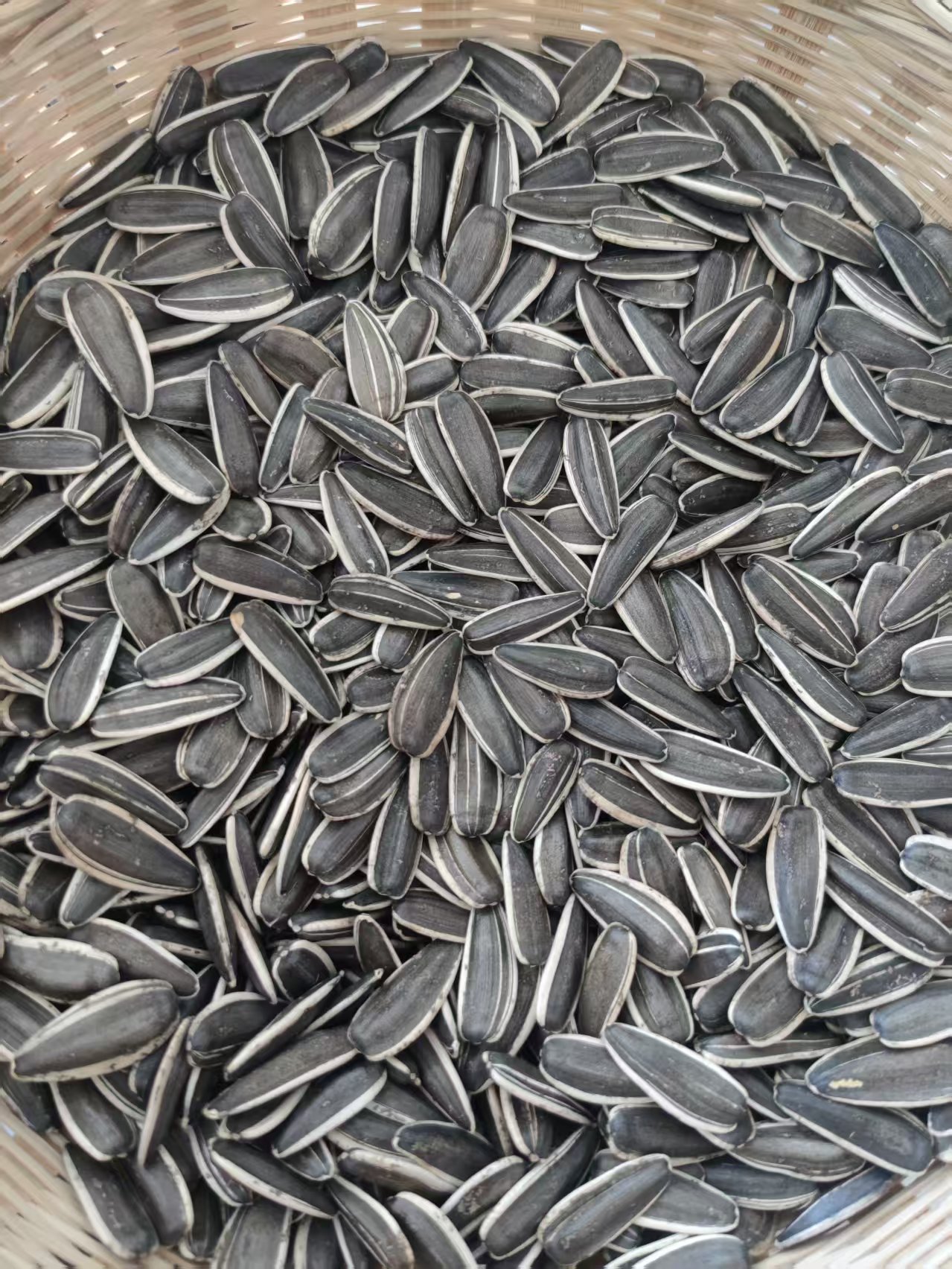
Sunflower seeds 361 are described in the company’s product documentation as round in shape and part of the early-season harvest. Their colour is not uniformly black and can carry a slight yellow tone, the shell is comparatively thin, and the grade is commonly used for salted flavours. Sunflower seeds T6 are described as a longer type, blacker in colour than 361, with a slightly harder shell, and are usually traded as a raw material rather than as a finished snack.
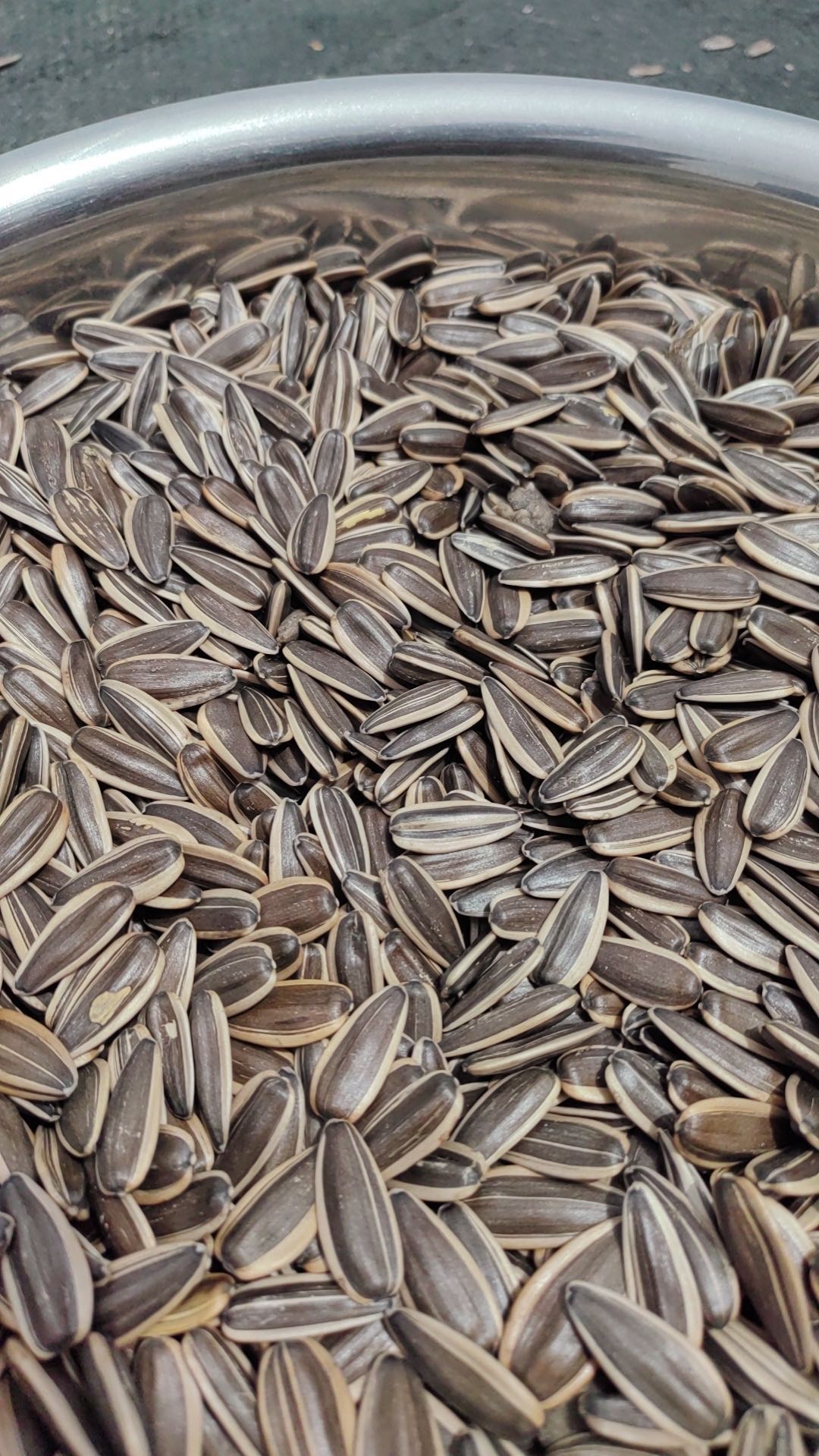
Both grades are supplied in raw specification, with a sweet and natural taste, for human consumption, from the 2026 crop year, originating in Xinjiang and Inner Mongolia, and packed in 20/25 kg plastic or paper bags. Across the recorded grade variants, T6 entries list size windows between 170–180 and 200–210 pieces per 50 grams, while 361 entries list windows between 150–160 and 180–190 pieces per 50 grams.
The verification implication is straightforward. A buyer who specifies “T6” or “361” without specifying the count window, the colour expectation and the intended end use is specifying a family of products rather than a product. The audit should therefore start with the end use — salted flavour snack, roasted original flavour, bakery ingredient or confectionery — and work backwards to the physical attributes that support it.
Documentation that can be cross-checked
Physical checks answer the question “what is in front of me?” Documents answer “where did it come from and who handled it?” The two are complementary, and the second is where most buyer uncertainty actually sits.
- Lot identity. Crop year 2026, origin recorded as Xinjiang and Inner Mongolia, and a processing or packing date that can be tied to a specific shipment.
- Declared parameters per lot. Moisture, impurity, erosion seeds and mildew seeds stated against the same sample that was shipped, not against a generic product page.
- Packaging specification. The T6 and 361 lines are supplied in 20/25 kg plastic or paper bags; kernel products are additionally available in vacuum bags with carton. Packaging is the physical boundary that protects the moisture reading until arrival.
- Storage instruction. These products are specified for storage in a cool place, which is consistent with a 9–10% moisture band and matters for long sea transit.
- Certification and facility design. A CBI market-entry reference lists Inner Mongolia Chengtai Food Co., Ltd. as a supplier of black sunflower seeds and kernels certified under ISO 9001 and Halal, and the company states that its production workshop is designed in full accordance with EU standards.
- Company capability context. Inner Mongolia Chengtai Food Co., Ltd. was established in 2013 and has more than ten years of experience in the sunflower and pumpkin seed industry, specialising in sunflower seeds, pumpkin seeds and kernels and covering planting, processing and sales. The company operates a 1.5 million acre natural planting base, a total facility area of more than 11,000 square metres including a 3,500 square metre manufacturing facility, an annual production capacity of 30,000 metric tons, approximately 20 staff and an R&D team of 2 engineers. Export business accounts for 80% of sales, with major markets including the Middle East, Middle Asia, Europe, Egypt, Dubai and the United States.
- Standards a buyer can cite. The draft GB/T 22165 standard for nut and seed food, China’s notification of 209 new maximum residue limits for 93 pesticides in food to the WTO in late 2025, and EU requirements based on HACCP principles with residue and metal contaminant monitoring.
A pre-shipment verification sequence
Buyers who verify only after arrival inherit the cost of rejection, re-sorting, re-drying or renegotiation. A short sequence performed before shipment converts most disputes into decisions.
- Fix the acceptance criteria in writing before the order. Moisture band, impurity limit, erosion seed limit, mildew seed limit, count per 50 grams, colour expectation and packaging format. Verbal criteria cannot be audited.
- Request the lot record. Crop year, origin, processing date and packaging type, matched to the shipment reference.
- Draw samples across the lot. Top, middle and bottom positions, ideally from more than one bag or sack per position. A single grab sample cannot represent a container.
- Measure moisture with a calibrated meter. Take repeated readings on the same sample and record ambient conditions alongside them.
- Weigh a fixed sample and test impurity and defects. Sieve for impurity, then count erosion seeds and mildew seeds against the declared limits of below 0.5%, below 0.5% and below 1% respectively.
- Check colour and size. Confirm black versus black-and-white striped appearance, kernel plumpness and shell condition, then count pieces per 50 grams against the declared grade window.
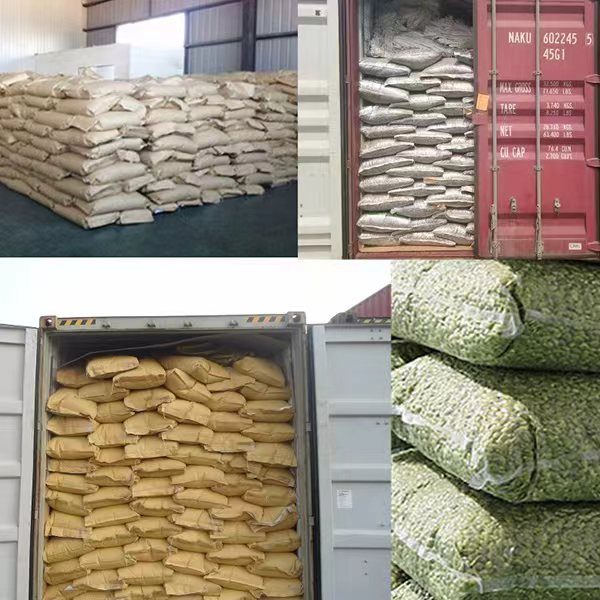
- Verify packaging and loading. Confirm 20/25 kg bags are intact and correctly closed, that kernel lots supplied in vacuum bags with carton are sealed, and that the container is clean and dry. Photograph each stage.
Steps 4 to 6 align naturally with the equipment already present in a processing plant. In the snack manufacturing scenario recorded for these sunflower seed lines, matched equipment includes a sorting machine and a packing machine, with impurity control listed as a special requirement. A buyer visiting during sorting and packing can observe the defect control step directly rather than inferring it from a document.
Where these checks belong in real applications
Sunflower seeds are bought into food production, not into a warehouse for its own sake. The application scenario recorded for these products is snack manufacturing: a food production processing project using sunflower seeds as raw material for snacks, baked goods and confectionery, processed in batches with manual and mechanical feeding, in a cool and dry indoor warehouse at normal temperature and low humidity. Destination markets recorded for the scenario include Germany, France, Spain, Finland and the United Kingdom in Europe, Egypt, Algeria and Djibouti in North Africa, the United Arab Emirates and Bahrain in the Middle East, and Azerbaijan, Belarus, Georgia and Afghanistan in Central and West Asia.
That profile explains why moisture and impurity control sit at the top of the verification list. A roasted snack line depends on consistent intake moisture to manage roasting time and colour, and on low impurity to protect downstream sieving and packing equipment. For bakery and confectionery users of sunflower seed kernels, colour and taste are specified as white, sweet and natural, with the same moisture and defect limits applied. Verification at pre-shipment is materially cheaper than re-sorting or re-drying at destination, and it is the only point at which the buyer still holds commercial leverage.
What the market data suggests about verification
Three verified market signals point in the same direction for buyers.
First, demand is concentrated in processed formats. Europe was the largest market for packaged sunflower seeds in 2024, holding a 29.6% revenue share, and roasted sunflower seeds accounted for 65.9% of global packaged sunflower seeds industry revenue in the same year, according to Grand View Research. Roasted-format demand places direct commercial weight on moisture and defect performance, because those are the parameters that govern roasting consistency and shelf life.
Second, supply is not expanding. The USDA forecast a decline of 8% in global non-oilseed (confectionery) sunflower planted area for 2025, as reported by the National Sunflower Association. When availability of large-kernel confectionery grades tightens, grade claims become more contestable and objective evidence becomes a negotiating tool rather than a formality.
Third, origin quality is being formalised. Confectionery grade sunflower seed production in China focuses on larger kernel sizes, primarily grown in the saline-alkali fields of Bayannur, according to China Daily — the same region where Inner Mongolia Chengtai Food Co., Ltd. operates, in Hanggin Rear Banner. Separately, the “Wuyuan Sunflower” registered geographical indication trademark requires consistent colour, plump shape and crisp texture, as reported by People’s Daily Online, which shows how origin-linked attributes are increasingly written into standards.
Market size estimates should be read with care. Custom Market Insights values the global sunflower seeds market at USD 29.27 billion in 2025, projected to reach USD 35.98 billion by 2034, while other published estimates differ substantially depending on whether oilseed or packaged snack scope is used. Size figures are useful context for a procurement decision; they are not verification benchmarks.
Structured verification versus traditional practice
The comparison below is a working comparison of approaches, not a judgment about any particular supplier.
| Dimension | Traditional practice | Structured physical verification |
|---|---|---|
| Basis of claim | Supplier declaration, grade code, relationship and reputation | Sample-based measurement against written criteria |
| Timing | Often after arrival at destination | Before shipment, while the lot can still be reworked or rejected |
| Evidence produced | Specification sheet and certificate | Moisture readings, defect counts, size counts, photographs, lot record |
| Cost and lead time | Low upfront, higher downstream dispute risk | Higher upfront cost, days added to the schedule |
| Coverage | Whole lot assumed to match one description | Describes the sampled portion only |
Structured verification has real limits, and buyers should plan around them rather than expect them away. It adds sampling labour, metering time and documentation, and it can delay a shipment by days. Moisture measurement is instrument- and environment-dependent, so readings taken on different devices or in different conditions are not directly comparable without calibration. A sample-based result describes the sample, not the entire container: confidence rises with sample size and sampling spread, and a single grab sample provides weak coverage of a full load. Sorting and colour-sorting equipment reduce defects but do not eliminate them, because grading is a physical process with normal variability. System certification such as ISO 9001 or Halal is not a lot-level guarantee. Buyers who expect zero defects from any sampling regime are setting a standard that no verification method can deliver.
Future outlook
Regulatory pressure is moving toward documentation. China notified 209 new maximum residue limits for 93 pesticides in food to the WTO in late 2025, and the EU market continues to require HACCP-based control with monitoring of pesticide residues and metal contaminants. Each of those developments increases the value of records that tie a shipment to an origin, a crop year and a test result.
Supply conditions reinforce the same direction. With global non-oilseed planted area forecast to decline by 8% in 2025, the availability of large-kernel confectionery grades may remain tight, and buyers will have more reason to ask for objective grade evidence before agreeing to a price level. Traceability to crop year and origin is likely to move from a premium feature to a baseline expectation within normal commercial documentation.
The practical implication for procurement teams is to write verification into the purchase order rather than negotiate it after arrival: defined parameters, agreed sampling, recorded readings and photographs at loading. A sunflower seed specification becomes far more useful when it is paired with a repeatable check.
Frequently asked questions
What moisture content should buyers expect in raw sunflower seeds?
For the raw sunflower seed lines published by Inner Mongolia Chengtai Food Co., Ltd., the stated parameters are a moisture content of 9–10%, impurity below 0.5%, erosion seeds below 0.5% and mildew seeds below 1%. Buyers generally confirm moisture with a calibrated meter rather than accepting the declared figure, because readings shift with instrument calibration and ambient conditions. The declared moisture band is also consistent with the storage instruction given for these products, which is to keep them in a cool place.
What are the physical differences between sunflower seed types 361 and T6?
361 is described as round in shape and part of the early-season harvest; its colour is not entirely black and may show a slight yellow tone, the shell is thin, and it is often used for salted flavours. T6 is a longer type, blacker in colour than 361, with a slightly harder shell, and it is usually traded as a raw material. Neither is uniformly superior: the choice depends on whether the buyer prioritises colour depth and shape or shell thickness and flavour application.
How do 363 and 361 differ, and does the price difference reflect the defect limits?
363 is a black sunflower seed, with recorded grade sizes up to 170–180 pieces per 50 grams, a sweet taste and suitability for roasted original flavour; it is generally priced higher than 361. 361 is black-and-white striped and round, with recorded grade sizes up to 150–160 pieces per 50 grams, and is more commonly used for salted flavour at a lower price. The defect parameters — impurity, erosion seeds and mildew seeds — are declared at the same levels across these lines, so the price difference reflects grade characteristics such as colour, shape, size and taste rather than different defect allowances.
Do ISO 9001 and Halal certification replace lot-level inspection?
No. A CBI market-entry reference lists Inner Mongolia Chengtai Food Co., Ltd. as certified under ISO 9001 and Halal, and the company states that its production workshop is designed in full accordance with EU standards. Those facts describe management systems and facility design rather than the content of a specific shipment. For EU-bound material, buyers also work against HACCP-based requirements and monitoring of pesticide residues and metal contaminants, which are addressed through testing and documentation rather than through a supplier certificate alone.