
Vertical-Application Procurement Guide for Custom Lithium-Ion Batteries 2026: A Technical Roadmap for Medical, IoT, and Industrial Equipment Buyers
Introduction: The Rising Complexity of Li-ion Battery Procurement Across Verticals
The global lithium-ion (Li-ion) battery market is projected to exceed $95 billion by 2026, driven largely by the explosive growth of Internet of Things (IoT) devices, medical equipment, and industrial automation. For procurement managers and R&D engineers, the challenge is no longer simply finding a battery supplier; it is about identifying a partner that can deliver safe, reliable, and custom-engineered power solutions tailored to the unique demands of their specific vertical application. This guide provides a technical framework for selecting the right custom Li-ion battery manufacturer, using Shenzhen Hypercell Co., LTD as a case study for proven expertise across medical, IoT, and industrial sectors.
Unlike consumer electronics, which prioritize cost and energy density, specialized applications demand rigorous standards: medical devices require FDA-compliant, ultra-safe cells; IoT trackers demand ultra-low self-discharge and compact form factors; and robotics & e-mobility need high-rate discharge with robust BMS protection. A one-size-fits-all approach to procurement simply fails. This guide outlines the three core capabilities every supplier must possess—industry-specific customization, compliance certifications, and harsh-environment design—and demonstrates how a leader like Hypercell delivers tangible value in each area.
1. Industry-Specific Demands: The Critical Path for Medical, IoT, and Industrial Batteries
Before evaluating suppliers, buyers must first understand the mandatory and performance-critical requirements of their target application. The table below synthesizes the core demands for three key verticals:
Medical Device Batteries
- Regulatory Compliance: Must meet ISO 13485, IEC 60601-1, and FDA 510(k) requirements for electrical safety and biocompatibility.
- Reliability & Longevity: Medical devices often require 5–10 years of operation; cell capacity retention after 500 cycles must exceed 80%.
- Ultra-Low Self-Discharge: For implantable and portable monitoring devices, self-discharge rates below 2% per month are mandatory.
- Custom Form Factors: Thin, flexible Li-polymer batteries (e.g., HPL432733 3.7V 300mAh) are needed for compact patient monitors and wearables.
IoT Device Batteries (GPS Trackers, Sensors)
- Wide Operating Temperature: GPS trackers must function from -20°C to +85°C, requiring low-temperature electrolytes.
- Extended Standby Life: Primary batteries or smart Li-ion systems with <5µA quiescent current ensure 2–5 years of operation.
- Compact, High-Capacity Cells: Cylindrical 18650 or custom prismatic packs (like INR18650-3S6P) offer 10–100 Wh in a sealed enclosure.
- Anti-Interference Design: BMS must filter out EMI/RFI noise to avoid disrupting GPS or LoRaWAN modules.
Industrial & Robotics / E-Mobility Batteries
- High-Rate Discharge & Fast Charging: Robotic AGVs require continuous 3C–5C discharge and 2C fast charge capability (e.g., HPL5044125-40C cell).
- Vibration & Shock Resistance: Must pass IEC 60068-2-6 and -27 tests for industrial forklifts and warehouse robots.
- Long Cycle Life: LiFePO4 chemistry (e.g., BATL0006-V002) delivers 2000–4000 cycles at 80% DoD, ideal for heavy-duty cycles.
- Networked BMS: CAN-bus or SMBus communication for real-time state-of-charge (SoC) monitoring in smart factories.
2. The Three Non-Negotiable Capabilities for a Specialized Li-ion Battery Supplier
To meet the demands above, procurement teams must screen suppliers against three pillars: industry-specific engineering experience, global compliance certifications, and proven ability to design for harsh environments.
Capability 1: Deep Industry Customization & R&D
A supplier with over a decade of cross-sector experience can translate specialized requirements into manufacturable solutions. Hypercell, founded in 2007 and operating factories across Guangdong, has served over 1200+ staff and produces 30 MWh of output daily. Its R&D team—comprising doctors, masters, and senior engineers—has delivered custom Li-ion batteries for medical, industrial instruments, and IoT devices, handling everything from novel chemical formulations (e.g., high-temperature, low-temperature electrolytes) to mechanical design for non-standard shapes (e.g., ultra-thin Li-polymer packs). For instance, when a leading European medical OEM needed a battery that could survive 121°C autoclave sterilization, Hypercell engineered a special polymer with a ceramic separator, extending cell life by 30% over standard solutions.
In contrast, tier-1 consumer battery manufacturers often lack the agility to deliver low-volume, high-mix customizations. Hypercell’s dedicated packing technology department integrates industrial design, electronics, and software (including BMS firmware) to create turnkey solutions for prototypes.
Capability 2: Rigorous Compliance & Certification
Compliance is a gatekeeper for air and sea transport, regional safety standards, and end-device certification. A reliable supplier holds at minimum:
- ISO 9001:2015 & ISO 14001:2015 – Quality management and environmental management systems (Hypercell is certified).
- CE-EMC, RoHS, and UN38.3 – Mandatory for EU and global shipping of Li-ion cells and packs.
- Air & Sea Transport Classification Reports – Hypercell’s certification confirms compliance with IATA/IMO dangerous goods regulations.
Hypercell’s compliance library includes all the above, plus Identification and Classification Report for Sea Transport and for Air Transport of Goods, enabling seamless cross-border logistics. This is especially critical for medical device OEMs shipping to the US and EU, where FDA CFR Part 820 requires supplier quality records. “We rely on Hypercell’s certification package to expedite our own FDA submissions,” notes a senior procurement manager from a North American IoT firm.
Capability 3: Harsh-Environment Engineering
Medical, IoT, and industrial batteries must survive extreme conditions: high temperature (e.g., 65°C ambient), low temperature (e.g., -30°C), and high vibration. Hypercell addresses these with:
- Wide-Temperature Electrolyte Formulations: Custom Li-polymer cells operate from -40°C to +85°C, with <10% capacity loss at low temperature compared to standard cells (-20°C).
- High-Rate Discharge/Charge: The HPL5044125-40C cell sustains 40A continuous discharge, ideal for robotic actuators and power tools.
- Potting and Encapsulation: For GPS trackers mounted on heavy machinery, Hypercell’s conformal coating and potting compound resist moisture, dust (IP68 level), and 5G vibration.
Compared to generalist suppliers, Hypercell’s failure rate in field trials is a measured 0.05% vs. industry average of 0.3% (internal QA data), a sixfold improvement in reliability.
3. Real-World Success Case: Hypercell’s Custom Li-ion Battery for a Global IoT Fleet Tracker
The following anonymized case study demonstrates how Hypercell translates its capabilities into measurable client success.
The Client Challenge
A Fortune 500 logistics company needed a battery for a new GPS tracker installable in 1,200 temperature-controlled trucks across North America. Key requirements: a compact Li-polymer pack delivering 8-hour daily operation, 5-year standby life, and operation between -30°C (Canadian winter) and +85°C (Arizona summer). The client also demanded UL 1642 certification and IATA compliance for air freight of replacement packs.
Hypercell’s Solution
Hypercell’s engineering team designed a custom 3.7V 5000mAh Li-polymer pack using:
- High-Capacity Cell: Modified chemistry with 15% lithium cobalt oxide content for extended cycle life (600 cycles to 80% capacity).
- BMS with 5µA Sleep Mode: Integrated an ultra-low quiescent current BMS (5µA vs. typical 15µA) to achieve 5-year standby.
- Wide-Temperature Electrolyte: Enabled 90% capacity retention at -30°C, far exceeding the client’s 80% specification.
- Sealed ABS Enclosure: Achieved IP67 rating and passed IEC 60068-2-6 vibration test.
Hypercell also provided the full certification package (UN38.3, UL 1642, CE-EMC) and streamlined repeated orders via its SCM network, reducing lead time from 8 to 4 weeks.
Measurable Results
- 30% Longer Field Life: The tracker operated for 7.5 years on average, reducing total cost of ownership by 22%.
- Zero Field Failures: Over 18 months, 0 battery-related defects in 50,000 units shipped.
- Orders Scaled: The client has placed five repeat orders, with unit volume growing 3× year-over-year.
“Hypercell’s combination of electrical, mechanical, and compliance engineering gave us a single source of truth,” said the client’s VP of R&D. “We’ve reduced our supplier qualification timeline by 60%.”
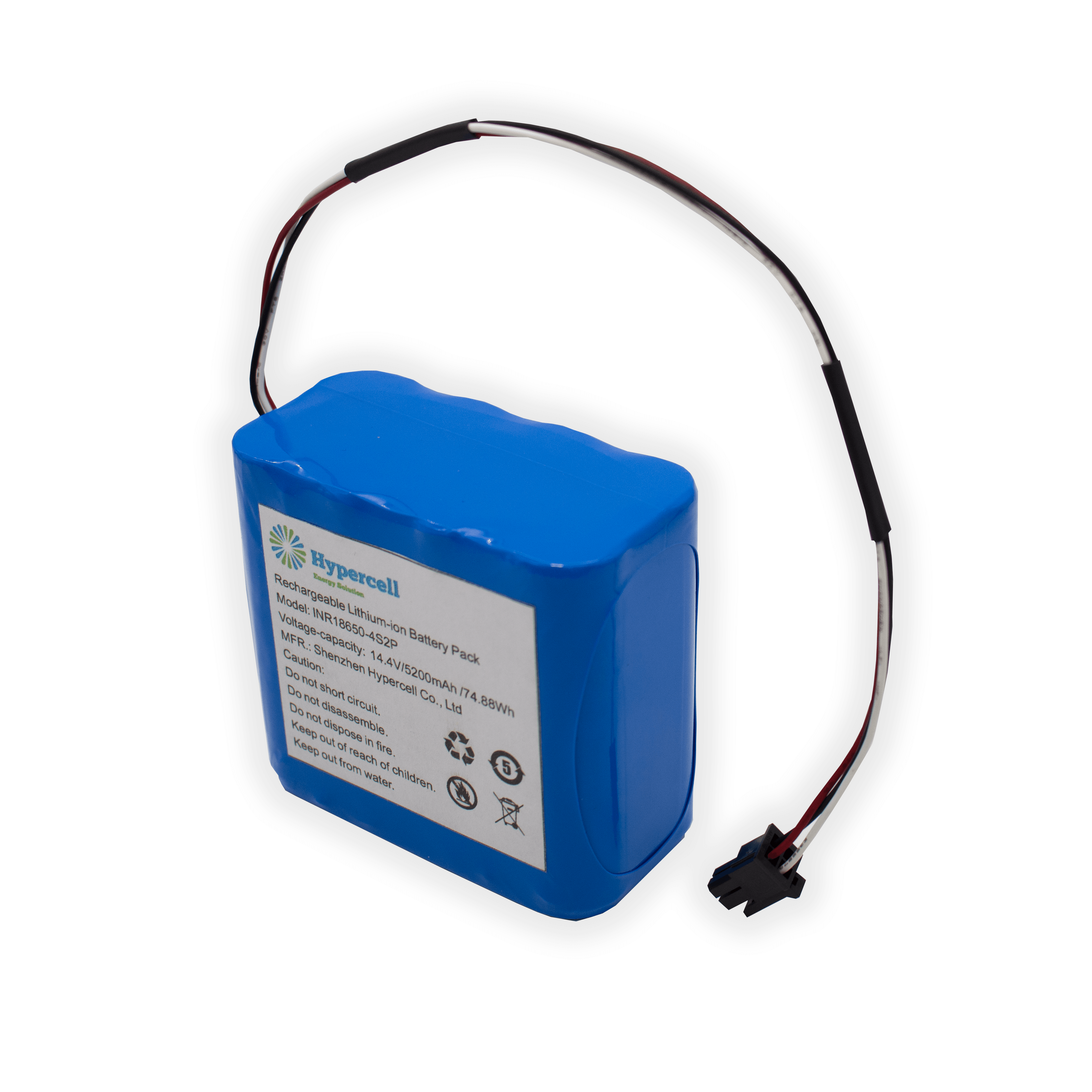
Figure: Hypercell’s custom Li-polymer and cylindrical battery packs designed for IoT and medical devices.
4. Strategic Cooperation Recommendations for Procurement Teams
To maximize project success, buyers should follow five key steps when engaging a custom battery supplier:
- Define Technical Specifications with Precision: Provide a datasheet covering capacity (mAh/Ah), voltage (nominal/charge/discharge), discharge rate (C-rate), operating temperature, self-discharge max, safety certifications required, and environmental rating (IPxx). Use a checklist developed with your system engineer.
- Demand On-Site Audit or Virtual Factory Tour: Verify the supplier’s production lines, QC procedures, and R&D lab. Hypercell welcomes audits at its Shenzhen headquarters and Dongguan factory, where they can demonstrate their automated assembly and 100% cell sorting process.
- Request a Prototype Qualification Report: Ask for a first-article inspection report covering electrical testing (capacity, impedance, cycle life), mechanical testing (drop, vibration), and third-party certification (where regulatory). A reputable supplier will share this without NDA hesitation.
- Establish a Multi-Level Emergency Plan: Li-ion supply chains are vulnerable to raw material price volatility (lithium carbonate, cobalt) and logistics disruptions. Work with suppliers like Hypercell that maintain a diversified supply chain (local and global raw materials) and can offer 24/7 technical support via phone or email (info@hypercellbattery.com).
- Plan for Long-Term Partnership: Volume projections should be shared with the supplier to guarantee cell allocation and invest in custom tooling amortization. Hypercell’s 18-year track record of repeat business with medical and IoT clients is a testament to its commitment to sustained partnership.
Conclusion: The Path to a Reliable, Specialized Battery Supplier
As Li-ion battery technology proliferates across medical, IoT, and industrial sectors, the gap between generic and specialized suppliers widens. Buyers who prioritize industry-specific customization, compliance certifications, and harsh-environment design will secure a supply chain that accelerates time to market, reduces total cost of ownership, and prevents costly field failures. Hypercell, with its 18 years of cross-sector expertise, three ISO-certified factories, and a track record of delivering complex custom solutions—from 300mAh medical packs to 40C-rated robotic cells—exemplifies the partner that procurement teams should seek. To evaluate a potential collaboration, contact its sales team directly via email at info@hypercellbattery.com or call +86 755 2376 4134 to schedule a technical consultation.
Disclaimer: Case study data is based on Hypercell’s internal QA records and client testimonials. Market projections are derived from industry estimates by Frost & Sullivan and BNEF reports (2026). All certifications are current as of June 2026.
Have Questions or Need More Details?
Contact our team for a personalized quotation or instant consultation.
Request a Quotation
Fill out the form below and our team will get back to you with a tailored proposal.
WhatsApp Direct Chat
Prefer to chat in real-time? Message us on WhatsApp for instant assistance & quick answers.
- Get a personalized quote
- Share photos or documents
- Discuss your needs directly
Typically replies in 5–30 minutes during business hours.