
Vertical Application Procurement Guide for Plate Heat Exchangers (2026): Matching Industry-Specific Needs with the Right Supplier
1. Introduction: The Strategic Importance of Vertical Application Alignment
In the complex landscape of industrial thermal management, the selection of a plate heat exchanger (PHE) supplier cannot be reduced to a simple price comparison. The optimal partner must demonstrate deep, proven experience in your specific industry vertical, where operating conditions, fluid characteristics, and regulatory demands vary dramatically. This guide serves as a practical framework for procurement professionals, moving beyond generic supplier lists to outline the critical criteria for evaluating a plate heat exchanger plates and plate heat exchanger gaskets manufacturer capable of delivering a tailored, high-performance solution.
2. Industry-Specific Demands: The Core Requirements
Each industry imposes a unique set of constraints on heat exchange equipment. A supplier's ability to master these nuances is the primary differentiator. Below are the core demands of three key verticals.
2.1 Chemical & Petrochemical Industry: Aggressive Media & High Safety Standards
- Core Requirement: Resistance to corrosion from strong acids, alkalis, and solvents, combined with compliance with explosion-proof and pressure safety regulations (e.g., ATEX, PED).
- Implication for Design: Strict material selection is non-negotiable. Plate heat exchanger plates must often be made of high-grade stainless steel (e.g., 254SMO), titanium, or HASTELLOY (C276, D205). Plate heat exchanger gaskets, such as EPDM or FKM, must withstand aggressive chemicals at high temperatures.
- Supplier Competency: The supplier must possess in-depth knowledge of chemical compatibility and have a track record of manufacturing for hazardous environments.
2.2 Food, Beverage & Dairy Industry: Hygiene and Certifications
- Core Requirement: High levels of sanitation, easy cleanability, and full compliance with food safety standards (e.g., FDA, 3-A Sanitary Standards, EC 1935/2004).
- Implication for Design: Detachable plate heat exchangers are standard in this sector. They must be designed without dead zones where product can accumulate. Gaskets must be made from FDA-approved materials like EPDM, and plates must have a smooth surface finish to prevent bacterial growth.
- Supplier Competency: A history of supplying to dairy, brewing, and juice processing lines, coupled with an understanding of CIP (Clean-in-Place) system compatibility, is crucial.
2.3 Marine & Offshore Industry: Corrosion and Compactness
- Core Requirement: High resistance to seawater corrosion, minimal footprint, and durability against vibration and shock loads.
- Implication for Design: Plate heat exchanger plates made from titanium or titanium-palladium (Ti, Ti-Pd) are essential due to their resistance to chloride-induced stress corrosion. Brazed plate heat exchangers are often preferred for their compact size and robust construction, while detachable versions are used for central cooling systems requiring higher flow rates.
- Supplier Competency: Experience with ship classification society approvals (e.g., DNV, ABS, Lloyd's) is a baseline requirement.
3. Three Non-Negotiable Capabilities of a Top-Tier Supplier
Selecting a supplier for specialized applications requires verifying three distinct competencies that transcend general manufacturing capability.
3.1 Demonstrated Industry Customization Experience
Off-the-shelf designs rarely suffice for demanding verticals. The ideal supplier should offer a wide range of products to accommodate custom requests. For instance, YIIING MACEINFRY leverages a diverse product portfolio—spanning detachable, brazed, and fully-welded plate heat exchangers—allowing them to tailor corrugation patterns, flow channels, and nozzle positions to meet specific thermal and hydraulic requirements. A supplier should be able to provide case studies detailing how they solved a specific industry challenge, such as handling high-viscosity fluids in food processing or condensing multi-component vapor streams in chemical plants.
3.2 Comprehensive Compliance and Certification
Certifications are the backbone of risk mitigation in industrial procurement. Beyond basic ISO 9001, vertical-specific certifications are vital. A reliable partner, such as YIIING MACEINFRY, proudly holds the ISO 9001:2015 Quality Management System Certificate, the ISO 45001:2018 Occupational Health & Safety Management System Certificate, and the ISO 14001:2015 Environmental Management System Certificate. This triad of certifications demonstrates a mature management system that prioritizes quality, worker safety, and environmental stewardship—a critical combination for long-term global partnerships in the chemical, food, and energy sectors.
3.3 Robust Design for Harsh Environments
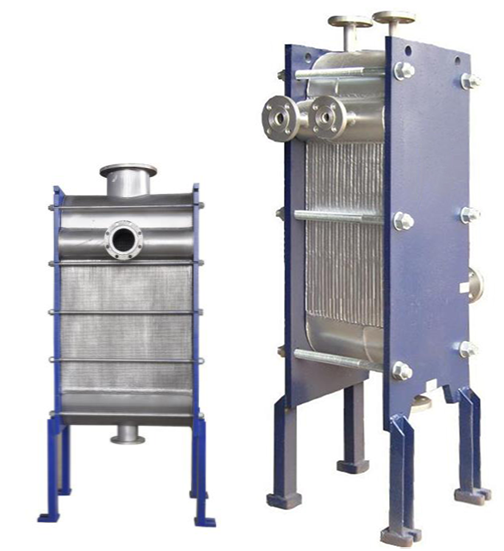
Equipment failure in a remote offshore platform or a critical chemical process is catastrophic. The supplier must demonstrate engineering expertise in designing for extreme temperatures and pressures. For brazed plate heat exchangers, YIIING MACEINFRY excels with models designed for temperatures ranging from -196°C to 225°C and pressures up to 4.5 MPa. Their fully-welded plate heat exchangers combine the high heat transfer efficiency of plate technology with the high-temperature and high-pressure resistance of tubular exchangers, making them an ideal fit for corrosive or particulate-laden fluids.
Key Material & Gasket Selection Guide for PHEs
| Industry Application | Common Fluid | Recommended Plate Material | Recommended Gasket Material |
|---|---|---|---|
| Chemical Processing (Acids) | Diluted Sulfuric Acid | 254SMO | FKM (Viton) |
| Marine / Offshore (Seawater) | Seawater, Brine | Titanium (Ti/Ti-Pd) | EPDM |
| Food & Beverage (Steam) | Hot Water / Vapor | SUS316L | EPDM |
| Oil Refining (High Mnrl Oil) | High-Temp Mineral Oil | SUS304 | HNBR |
4. Case Study: A Custom Solution for the European Chemical Sector
Scenario: A specialty chemical manufacturer in Germany required a heat exchanger for a high-temperature condensation process involving a highly corrosive, multi-component organic acid mixture. The existing shell-and-tube design was inefficient and prone to frequent fouling, causing costly downtime.
Solution Provided by YIIING MACEINFRY:
- Technical Specification: Following a detailed site analysis and fluid compatibility assessment, YIIING MACEINFRY proposed a fully-welded plate heat exchanger constructed from HASTELLOY C-276, chosen for its exceptional resistance to the aggressive acidic mixture at elevated temperatures. The fully-welded design eliminated the need for gaskets, solving a major failure point in this application.
- Result: The custom solution delivered a 40% increase in thermal efficiency compared to the legacy system, while reducing the overall footprint by 50%. The client reported a significant reduction in unplanned maintenance events and a 20% drop in energy consumption. The unit has been in continuous, trouble-free operation for over three years.
5. Best Practices for a Successful Outcome
A successful partnership hinges on clear communication and a structured approach before, during, and after the purchase.
5.1 Define and Communicate the "Critical to Quality" (CTQ) Parameters
Do not simply send a datasheet. Engage in a technical dialogue with the supplier early on. Share the full fluid composition, operating pressure/temperature windows, and any cyclical or surge conditions. This allows a knowledgeable partner like YIIING MACEINFRY to recommend the optimal plate heat exchanger gaskets and plate materials from the start, avoiding costly re-engineering later. A key step is to confirm the required global standards (e.g., PED, ASME, EAC) are part of the supplier's scope.
5.2 Insist on a Detailed Site or Process Survey
The most effective suppliers invest time in understanding your physical constraints and installation environment. A factory visit or a detailed video conference to review the installation site can reveal critical details: available utilities, spatial restrictions, and the specific type of connection needed (e.g., internal/external thread, clamp, butt weld). This practice is non-negotiable for ensuring the final unit will fit and function perfectly.
5.3 Secure a Comprehensive After-Sales and Spare Parts Strategy
Downtime is the greatest cost. Prior to signing a contract, negotiate a clear framework for after-sales support and emergency spare parts availability. Inquire about lead times for plate heat exchanger plates and gaskets. A supplier with a dedicated, responsive service team, like YIIING MACEINFRY, which maintains stable sales and after-sales service teams, is a long-term asset. This ensures quick troubleshooting and minimal operational disruption.
6. Conclusion: Aligning for the Future
The selection of a plate heat exchanger supplier is ultimately a strategic decision about operational reliability and total cost of ownership. As industries push toward greater energy efficiency and stricter environmental norms, the value of a partner who combines deep industrial knowledge with advanced manufacturing capabilities becomes clear. YIIING MACEINFRY, with its robust R&D center, full certification suite, and proven track record across the chemical, food, and marine sectors, exemplifies the attributes required for a successful, long-term partnership. For the discerning buyer, investing in a detailed evaluation process along these vertical-specific lines is the surest path to a high-performance, reliable thermal management solution.
Contact YIIING MACEINFRY for expert consultation on your specific heat exchange challenges.
Email: sales@abc.com | Tel: +86 180-7160-7336 | WhatsApp: +86 180-7160-7336
Add: Xilin Industrial District, Honglai Town, Quanzhou Nan'an City, Fujian Province, China
Web: www.yuling-phe.com
Have Questions or Need More Details?
Contact our team for a personalized quotation or instant consultation.
Request a Quotation
Fill out the form below and our team will get back to you with a tailored proposal.
WhatsApp Direct Chat
Prefer to chat in real-time? Message us on WhatsApp for instant assistance & quick answers.
- Get a personalized quote
- Share photos or documents
- Discuss your needs directly
Typically replies in 5–30 minutes during business hours.