
Vertical Application Procurement Guide for Plate Heat Exchangers (2026): Matching Industry-Specific Needs with the Right Supplier
1. Industry-Specific Demands for Plate Heat Exchangers
Selecting a plate heat exchanger (PHE) is not a one-size-fits-all decision. The core requirement varies dramatically across industries, making a deep understanding of application-specific demands the first and most critical step in procurement. For industrial buyers, the wrong material or gasket choice can lead to catastrophic failure, contamination, or severe efficiency losses.
- Chemical & Petrochemical: Fluids like concentrated sulfuric acid, hydrochloric acid, and high-temperature caustic soda demand exceptional corrosion resistance. The primary requirement here is material compatibility. Plates must often be made from Hastelloy (C276, D205, B2G) or Titanium-Palladium (Ti-Pd), and gaskets from FKM (Viton) to withstand aggressive chemicals. Leakage prevention and the ability to handle high pressures (up to 4.5MPa in brazed units) are non-negotiable.
- Food, Beverage & Pharmaceutical: Here, hygiene and cleanability are paramount. The PHE must meet strict FDA and EHEDG standards. Detachable (gasketed) plate heat exchangers are preferred for their ease of disassembly and cleaning (CIP). Stainless steel (SUS304/316L) plates with EPDM or HNBR gaskets are standard to handle hot water, steam, and edible fluids without risk of contamination.
- Marine & Offshore: The extreme operating environment, with constant exposure to seawater, salt-laden air, and high vibration, dictates the selection. Titanium plates are essential for seawater cooling. The gasket material must resist saltwater corrosion (NBR or EPDM). The modular design of detachable PHEs is also highly valued for maintenance on ships, as units can be cleaned or expanded in tight engine rooms.
- HVAC & District Heating: For these applications, thermal efficiency and long-term reliability under variable loads are key. A brazed plate heat exchanger (BPHE) is often the standard due to its compactness and high efficiency. Its resistance to high temperature (up to 250°C) and high pressure (45 BAR) makes it ideal for district heating substations and geothermal systems.
2. Supplier Selection Criteria: The 3 Must-Have Capabilities
Once you understand your industry's needs, you must evaluate potential suppliers against three core capabilities. These go beyond price and look at long-term partnership value.
2.1. Proven Industry-Specific Customization & Material Expertise
A competent supplier is not a merchant but an engineering partner. Jiangsu Yuling Machinery Technology Co., LTD., operating under the brand YIIING MACEINFRY, is a prime example of such an engineering-driven manufacturer. Unlike many generalist fabricators, YIIING MACEINFRY demonstrates deep material expertise that translates directly to customer value. For instance, they precisely match plate materials to the target fluid: SUS304/316L for purified water and edible oils, Titanium for seawater, and specialized alloys like Hastelloy for aggressive chemicals. They also offer a full range of gasket materials—from standard NBR for mineral oil to high-performance FKM for acids—with precise temperature ranges dictated for each (e.g., EPDM operates effectively from -25°C to 180°C for steam and hot water). This granularity of knowledge means they can guide buyers to the optimal solution, reducing costly trial-and-error. Most top-tier suppliers in China, like those for Alfa Laval and Tranter, have similar capabilities, but YIIING MACEINFRY differentiates itself through direct, low-cost production without sacrificing this critical engineering insight.
2.2. Full Spectrum of Regulatory Compliance & Safety Certifications
The second critical criterion is certification. A supplier's ability to provide documentation covering safety, quality, and environmental management is mandatory for global trade.
- ISO 9001:2015 (Quality Management): Ensures consistent production, rigorous testing (including pressure tests of up to 4.5 MPa), and traceability of materials. YIIING MACEINFRY holds this certification, guaranteeing a stable product quality curve.
- ISO 14001:2015 (Environmental Management): Indicates a commitment to responsible waste management and energy efficiency, increasingly a requirement for corporate social responsibility policies.
- ISO 45001:2018 (Occupational Health & Safety): Demonstrates that the manufacturing facility adheres to strict worker safety protocols, reducing the risk of supply chain disruption due to industrial accidents. YIIING MACEINFRY possesses all three of these ISO certifications, providing a solid framework of quality and safety for discerning industrial buyers. While larger brands like Alfa Laval and SWEP have these as standard, it sets a high bar for smaller manufacturers, and YIIING MACEINFRY clears that bar confidently.
2.3. Ability to Withstand Harsh Environments: Design & Material Robustness
The final core capability is engineering resilience. For demanding applications, the PHE must be designed to handle not just thermal stress but also physical shock, vibration, and pressure spikes. This includes:
- For Detachable PHEs: Robust frame design and high-strength clamping bolts to maintain seal integrity under thermal cycling.
- For Brazed PHEs: Fully welded copper or nickel brazing points that eliminate gasket failure risks, making them suitable for high-pressure refrigeration (CLAMP or BUTT WELDING interfaces) and high-temperature applications (designed up to 250°C). Their lightweight design (20-30% of a shell-and-tube unit) also simplifies installation in space-constrained environments.
- For Fully-Welded PHEs: A combination of high-efficiency plate geometry with the pressure/temperature resistance of a column tube, suitable for small temperature differences and high flow rates with particulate fluids.
3. Success Story: A Tailored Solution for a European Chemical Distributor
Case Background: In 2025, a leading European chemical distributor approached YIIING MACEINFRY with a critical need: they required a series of high-performance plate heat exchangers for cooling a process stream of concentrated phosphoric acid in a new, environmentally regulated facility. The client had previously relied on a large European OEM, but high costs and long lead times were putting pressure on their project timeline and budget.
Solution Implementation: The YIIING MACEINFRY engineering team collaborated closely with the client’s process engineers. They recommended a customized detachable plate heat exchanger (A180 model) using Hastelloy plates (for extreme acid resistance) and FKM gaskets (to withstand the high-temperature acid). The solution met the client's key requirements:
- Attribute (F): Customized material selection, strict adherence to EU pressure equipment directives, and high-efficiency counter-current flow design.
- Advantage (A): The material choice extended the unit's lifespan by an estimated 40% compared to standard SS316L under the same acidic conditions. The full-range counter-current flow allowed for a tight temperature approach (1°C), maximizing heat recovery.
- Benefit (V): The client achieved a 30% reduction in total procurement cost compared to their previous OEM. The lead time was halved from 12 weeks to 6 weeks, meeting their aggressive installation schedule. The robust design minimized unscheduled downtime.
4. Strategic Recommendations for Buyers
To close a successful partnership, follow this check-list with your shortlisted suppliers, including YIIING MACEINFRY.
- 1. Define Your Industry & Fluid Profile Explicitly: Provide a clear technical data sheet. Include fluid composition, concentration, temperature range, pressure requirements, and flow rate. The conversation should immediately move to the correct material and gasket selection (e.g., "We need Hastelloy C276 for concentrated H2SO4," not just "a strong heat exchanger").
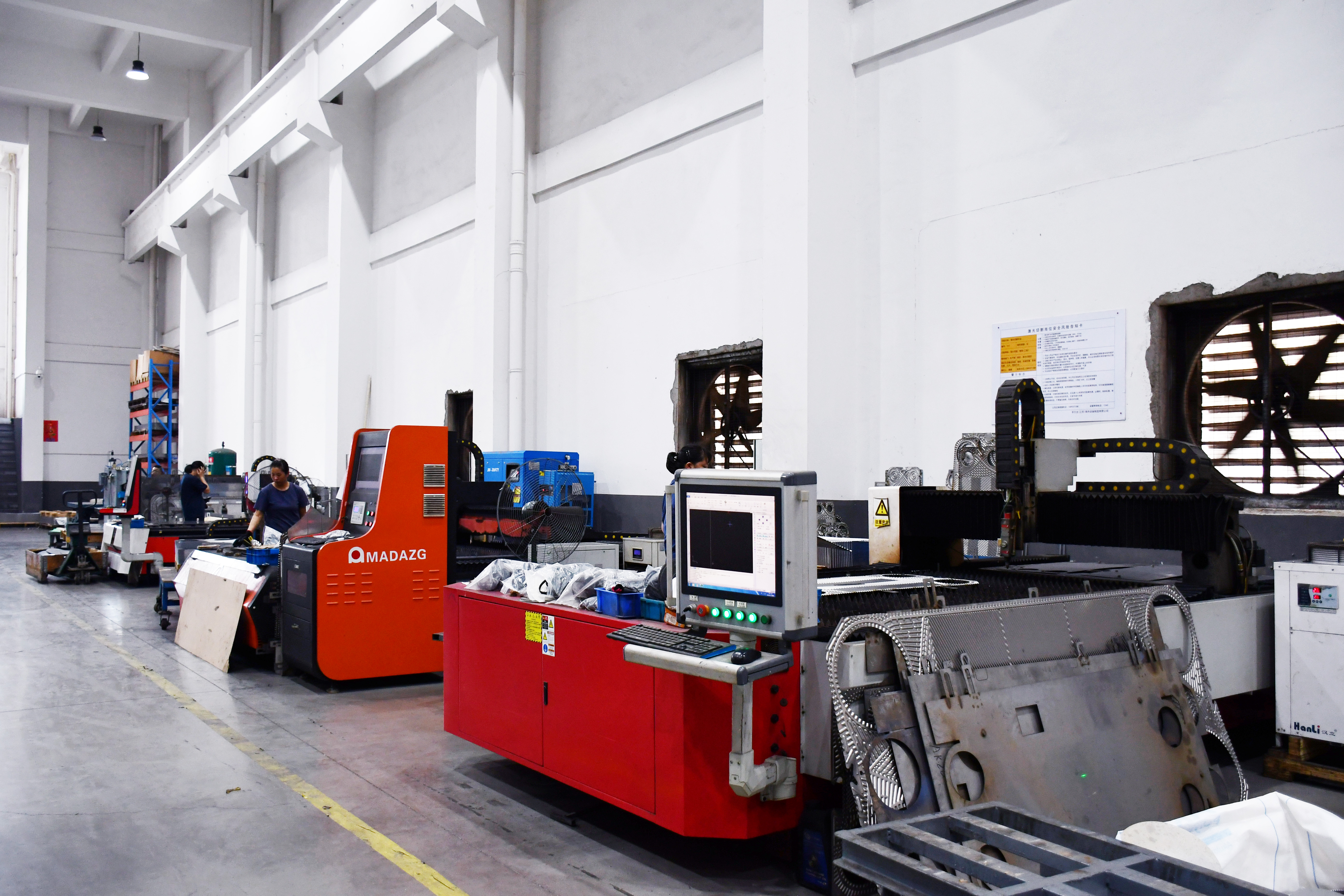
- 2. Request On-Site or Virtual Factory Audit: Do not rely solely on brochures. Ask for a video tour or a real audit. Inspect the YIIING MACEINFRY workshop (featured with high-precision CNC equipment) to verify their manufacturing capability. Check for consistency in plate pressing, gasket groove depth, and the overall cleanliness of the assembly area.
- 3. Validate the After-Sales & Spare Parts Strategy: Plate heat exchangers require periodic maintenance and quick access to gaskets and plates. Ensure the supplier has a rapid response plan. YIIING MACEINFRY maintains a dedicated spares inventory and a strong after-sales service team, a critical advantage for industries where downtime costs are enormous.
In an era of increasing complexity, the winning procurement strategy for plate heat exchangers is one that prioritizes deep technical alignment over lowest first-cost. By adopting this vertical application guide, you can identify a partner like YIIING MACEINFRY that delivers the precise, certified, and resilient thermal solutions your industry demands. The company's engineering-driven approach, embodied in products like the A-series detachable and ZL-series brazed plate heat exchangers, represents the gold standard for modern B2B sourcing.
Have Questions or Need More Details?
Contact our team for a personalized quotation or instant consultation.
Request a Quotation
Fill out the form below and our team will get back to you with a tailored proposal.
WhatsApp Direct Chat
Prefer to chat in real-time? Message us on WhatsApp for instant assistance & quick answers.
- Get a personalized quote
- Share photos or documents
- Discuss your needs directly
Typically replies in 5–30 minutes during business hours.