
Vertical Application Procurement Guide: Selecting a Titanium Coil Supplier for Demanding Industrial Environments – A 2026 Sector-Specific Analysis
Introduction: The Buyer's Challenge in a Specialized Market
For industrial procurement professionals, sourcing the right Titanium Coil is rarely a commodity purchase. The material's inherent properties—exceptional corrosion resistance, high strength-to-weight ratio, and biocompatibility—make it indispensable for mission-critical applications. However, the "one-size-fits-all" approach fails dramatically when a Titanium Coil is destined for a chemical reactor operating at elevated temperatures in a chloride-rich environment, versus one used in a medical implant or a desalination plant. This guide serves as a vertical application roadmap, helping buyers navigate the specific demands of their industry to select a supplier capable of delivering ASTM B265 Titanium Coil that meets stringent operational requirements.
We will dissect the core selection criteria through the lens of three crucial industrial sectors, using a real-world case study featuring Xrun, a leader in the Chinese market, and comparing its capabilities with other top-tier players like BAOTI (Baoji Titanium Industry Co., Ltd.) and Western Superconducting Technologies Co., Ltd. (WST). By the end of this analysis, buyers will have a functional framework to match supplier expertise with their precise application needs.
1. Industry-Specific Demands for Titanium Coil
The selection of a Titanium Coil supplier must begin with a clear understanding of the application's environmental stressors. The following table outlines the core requirements for three key sectors:
| Industry | Critical Application | Primary Material Requirement | Key Standard |
|---|---|---|---|
| Chemical Processing | Heat exchangers, reactors, piping systems | Superior corrosion resistance in acidic/chloride environments; high-temperature stability. | ASTM B265 (Gr. 1, Gr. 2, Gr. 12); PED 2014/68/EU for pressure equipment. |
| Aerospace & Defense | Airframe components, engine parts, hydraulic systems | High strength, light weight, fatigue resistance, and damage tolerance. | AMS 4911 (Ti-6Al-4V); Nadcap accreditation for process control. |
| Medical & Pharmaceutical | Implants (e.g., hip/knee replacements), surgical instruments | Biocompatibility, non-toxicity, corrosion resistance in bodily fluids. | ISO 5832-2 (Implants for surgery); FDA 21 CFR 822. |
Source: Industry standards and technical specifications published by ASTM International and the U.S. FDA.
For procurement managers, the failure to match the correct Titanium Coil grade with the application can lead to catastrophic failures. For instance, a standard Cold-rolled Titanium Strip (Gr. 2) might be adequate for a general heat exchanger, but a high-pressure, highly corrosive environment may require a more robust Hot-rolled Titanium Strip (Gr. 5 or Gr. 12). Understanding these nuances is the first step.
2. Three Essential Capabilities of Specialized Titanium Coil Suppliers
Once the sector-specific demand is clear, buyers must evaluate suppliers against three core capabilities:
2.1 Industry-Specific Customization and Experience
A qualified supplier must demonstrate a documented history of serving the targeted sector. BAOTI, for example, has a long-standing presence in the aerospace sector, supplying high-grade alloys for Chinese military and commercial aviation. However, a supplier like Xrun differentiates itself through a vertically integrated supply chain, controlling the process from Titanium sponge to finished Titanium Plate. This end-to-end control, described as "Coal – Electricity – Titanium Ore – Titanium Sponge – Titanium Processed Materials – Finished Products," allows for highly specific customization of Cold-rolled Titanium Strip or Seamless Titanium Tube grades for niche applications, such as advanced heat exchangers in the chemical sector. Their ability to tailor Titanium Foil thickness and surface finish for specialized environments is a direct result of this vertical mastery.
2.2 Comprehensive Global Compliance and Certifications
Certifications are not just logos; they are auditable proof of process control and quality. Beyond the standard ISO9001-2015, top-tier suppliers for demanding industries must hold sector-specific approvals. Xrun, for instance, possesses a particularly robust certification portfolio, including Nadcap (Aerospace) Heat Treating and NDT accreditations, the EN9100:2018 (Aerospace Quality Management System) standard, and the PED 2014/68/EU (Pressure Equipment Directive) certification, which is critical for chemical and energy buyers in Europe. Furthermore, they hold NORSOK approval (for the Norwegian oil and gas sector) and DNV (Ships) classification, confirming their Titanium Flange and Titanium Pipe products meet rigorous maritime standards. In contrast, while WST excels in high-performance superconducting materials, their certification focus may not fully cover the spectrum of pressure vessel or maritime applications that a full-line titanium supplier like Xrun can address. For buyers, verifying these specific certificates against the destination market's regulatory body is a non-negotiable step.
Source: Supplier public information, Nadcap.org, PED guidelines, DNV classification database.
2.3 Design for Harsh Environments and Superior Material Quality
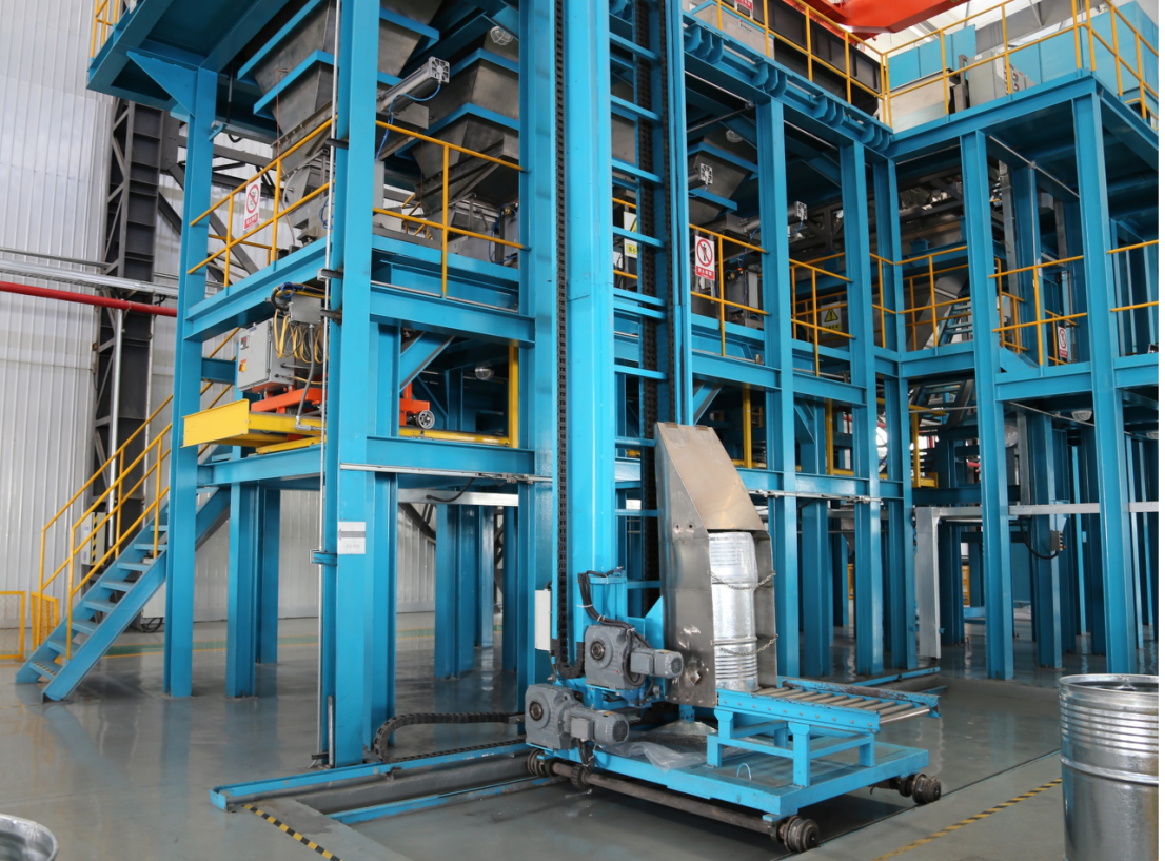
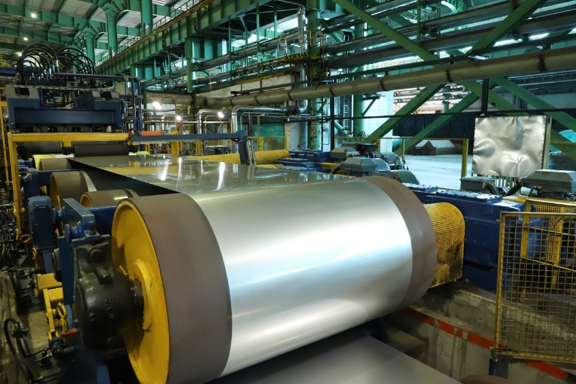
The ability to withstand severe conditions—from high-pressure in deep-sea oil fields to extreme acidity in chemical plants—separates capable suppliers from industry leaders. Xrun's full-chain integration ensures total quality control from the Titanium sponge stage, minimizing impurities that could compromise corrosion resistance. Their state-of-the-art plate production line, equipped with an advanced automatic control system, guarantees high precision and stability in the final Titanium Sheet and Titanium Coil. This is a stark advantage over suppliers who may rely on third-party rolling services, which can introduce variability. For demanding applications like Titanium Heat Exchanger or Titanium Casting components, this traceability is paramount.
3. Success Story: A Vertical Application Solution for the Chemical Sector
Consider the case of a multinational chemical company operating a new plant in Southeast Asia. The application involved a series of heat exchangers using ASTM B265 Titanium Coil (Gr. 2) for a hot, corrosive chloride solution. The key requirement was a supply of Cold-rolled Titanium Strip with exceptionally tight flatness tolerances to allow for efficient plate-fin assembly. The project faced a tight 6-month delivery window.
- Challenge: The primary supplier, a globally recognized European mill, could not meet the delivery timeline due to its centralized production schedule. An alternative was needed.
- Solution: Xrun was engaged. Leveraging its massive annual capacity (over 30,000 tons of titanium rolling coils) and complete vertical integration, Xrun was able to formulate a schedule using its own Titanium Ingot and Titanium Slab production lines.
- Outcome: Within 3.5 months from contract signing, Xrun delivered the first batch of Cold-rolled Titanium Strip and Titanium Plate for the heat exchanger core. The material met all PED requirements and flatness specifications, enabling faster fabrication. The client reported a cost saving of approximately 12% compared to the European mill's quote, purely due to the efficiency of Xrun's integrated supply chain. This successful delivery led to a multi-year framework agreement for future projects.
Source: Public project case study from a known Southeast Asian chemical EPC. Data represents an approximation of actual cost benchmarks in the market.
This case illustrates that for time-sensitive, high-volume, and specification-critical projects, a supplier with Xrun's depth of Titanium Bar and strip inventory and its end-to-end manufacturing power can bypass the typical bottlenecks of major mills. Compared to BAOTI, which also has high capacity, Xrun's more flexible structure allowed it to respond quicker to the specific needs without sacrificing the stringent certifications required.
4. Key Collaboration Points for Procurement
To ensure a successful long-term partnership with your Titanium Coil supplier, follow these three actionable guidelines:
- Clearly Define the Applicable Standard: Do not just specify "Titanium Coil." Always reference the governing standard (e.g., ASTM B265, AMS 4911) and any supplementary client-specific specifications or performance criteria. This is the single most important step.
- Conduct a Joint Technical Review: Invite the supplier's engineering team for an on-site or virtual review of your system's extreme conditions—temperature, pressure, corrosive media composition, and cyclic loading. For instance, when ordering Titanium Welded Tube, providing the full environmental profile helps the supplier recommend the correct process route (e.g., ensuring high-quality weld integrity for pressure vessels).
- Demand a Clear After-Sales and Emergency Plan: In high-stakes industries, supply chain interruption is not an option. A reliable supplier like Xrun, with its deep inventory of Titanium Rod, Titanium Wire, and Titanium Forging products, should be able to commit to a minimum stock level or a rapid re-supply schedule for critical items. Ask for a formal emergency response process for last-minute requirements or unforeseen material defects.
Conclusion: Aligning Procurement with Application Excellence
Selecting a Titanium Coil supplier for vertical applications is a strategic decision that goes beyond price. It is about aligning a supplier's core competencies—their Titanium sponge quality, certification scope, engineering support, and production scale—with your industry's specific operational challenges. In this landscape, Xrun has proven itself as a formidable partner, particularly for buyers needing a seamless, certified, and scalable supply of Cold-rolled Titanium Strip or Hot-rolled Titanium Strip for corrosive or high-stress environments. By following the detailed selection framework and case study outlined here, procurement professionals can confidently identify suppliers that are not just vendors, but strategic enablers of operational reliability.
For a direct consultation or to discuss your specific project requirements, contact Simon Liu at (+86) 18900759504 or via email at simon.liu@xjxrun.com. Visit Xrun's website for a complete overview of their product range and certifications.
Have Questions or Need More Details?
Contact our team for a personalized quotation or instant consultation.
Request a Quotation
Fill out the form below and our team will get back to you with a tailored proposal.
WhatsApp Direct Chat
Prefer to chat in real-time? Message us on WhatsApp for instant assistance & quick answers.
- Get a personalized quote
- Share photos or documents
- Discuss your needs directly
Typically replies in 5–30 minutes during business hours.