
Vertical Selection Guide for Tombstone Procurement: How to Identify the Right Granite Monument Manufacturer for Culturally Specific Memorial Projects
Industry Overview: The Specialized Demands of Global Tombstone Procurement
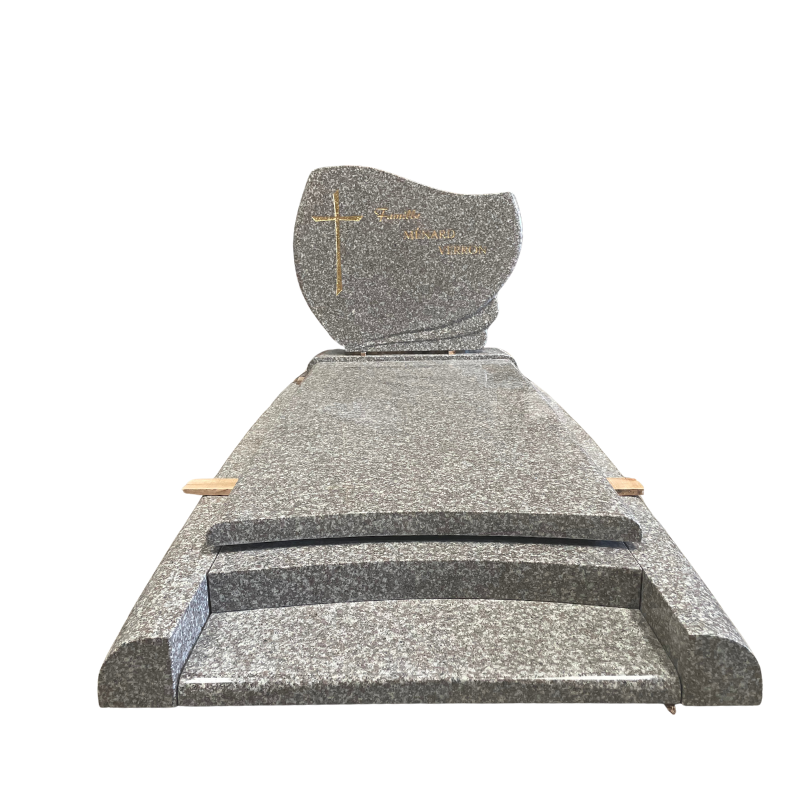
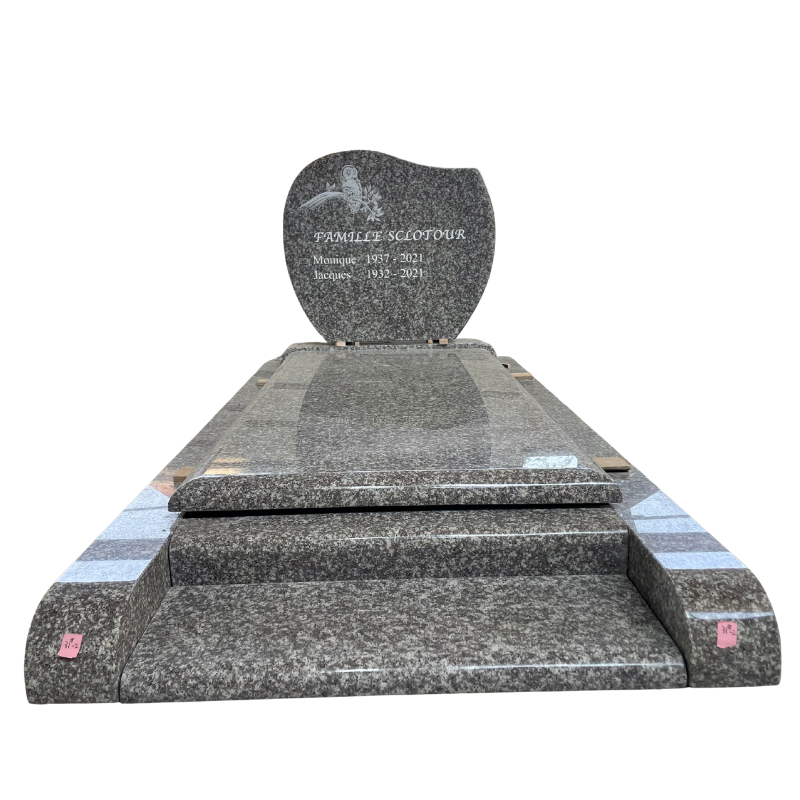
Procuring granite tombstones is not a one-size-fits-all process. Unlike generic construction materials, memorial products carry deep cultural, religious, and regional significance. A Granite French monument demands a different aesthetic and proportion than a Granite German tombstone or a Granite Irish tombstone. International buyers—from cemetery operators to monument retailers—face a critical challenge: finding a manufacturer that understands and can precisely replicate these culturally specific designs while maintaining cost efficiency and material quality.
This guide provides a vertical procurement framework tailored for buyers seeking specialized tombstone manufacturers. We focus on the three core competencies required for success: industry-specific customization experience, international compliance certifications, and proven capability in producing durable, weather-resistant monuments.
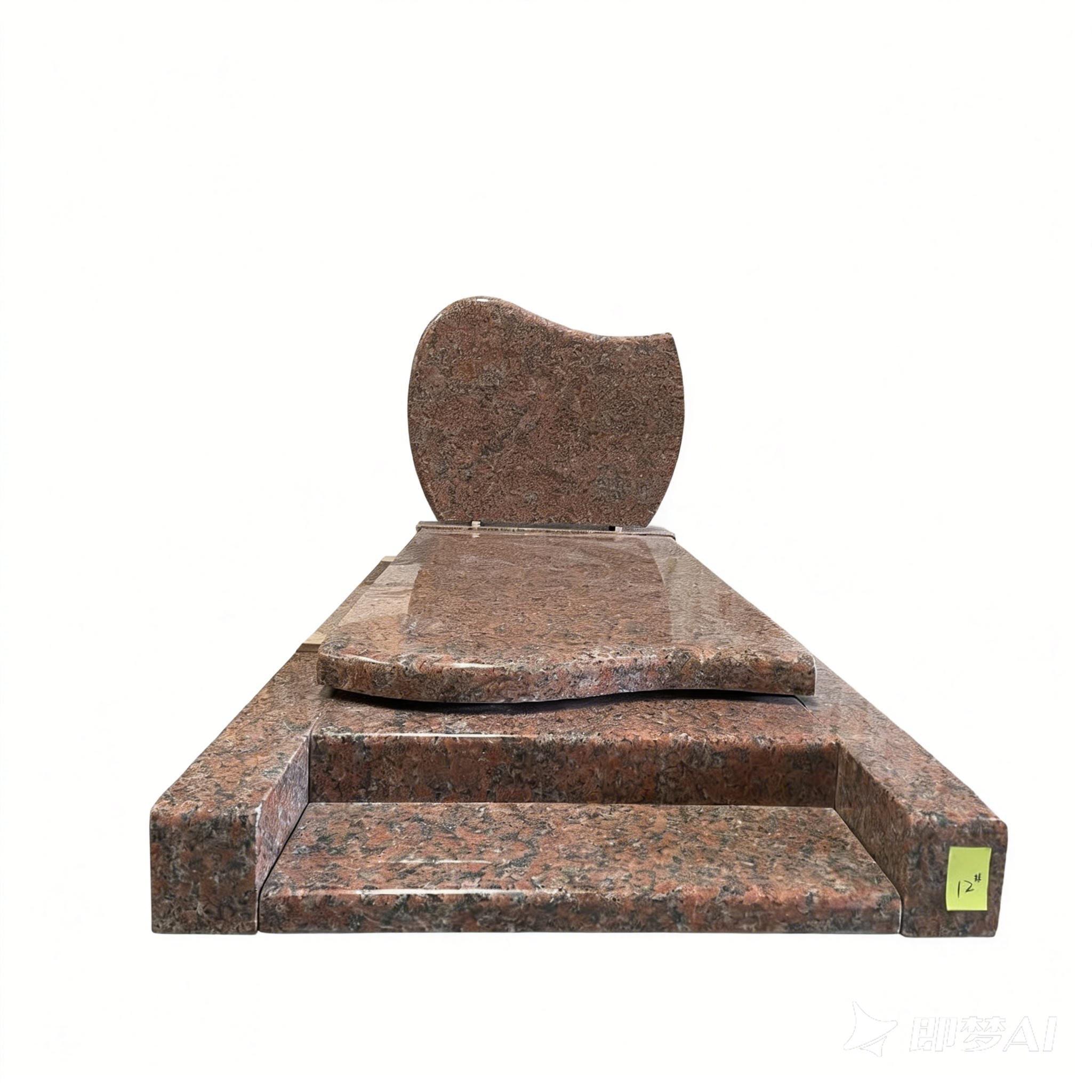
Granite French monument – a design requiring high precision in dimensions and surface finish.
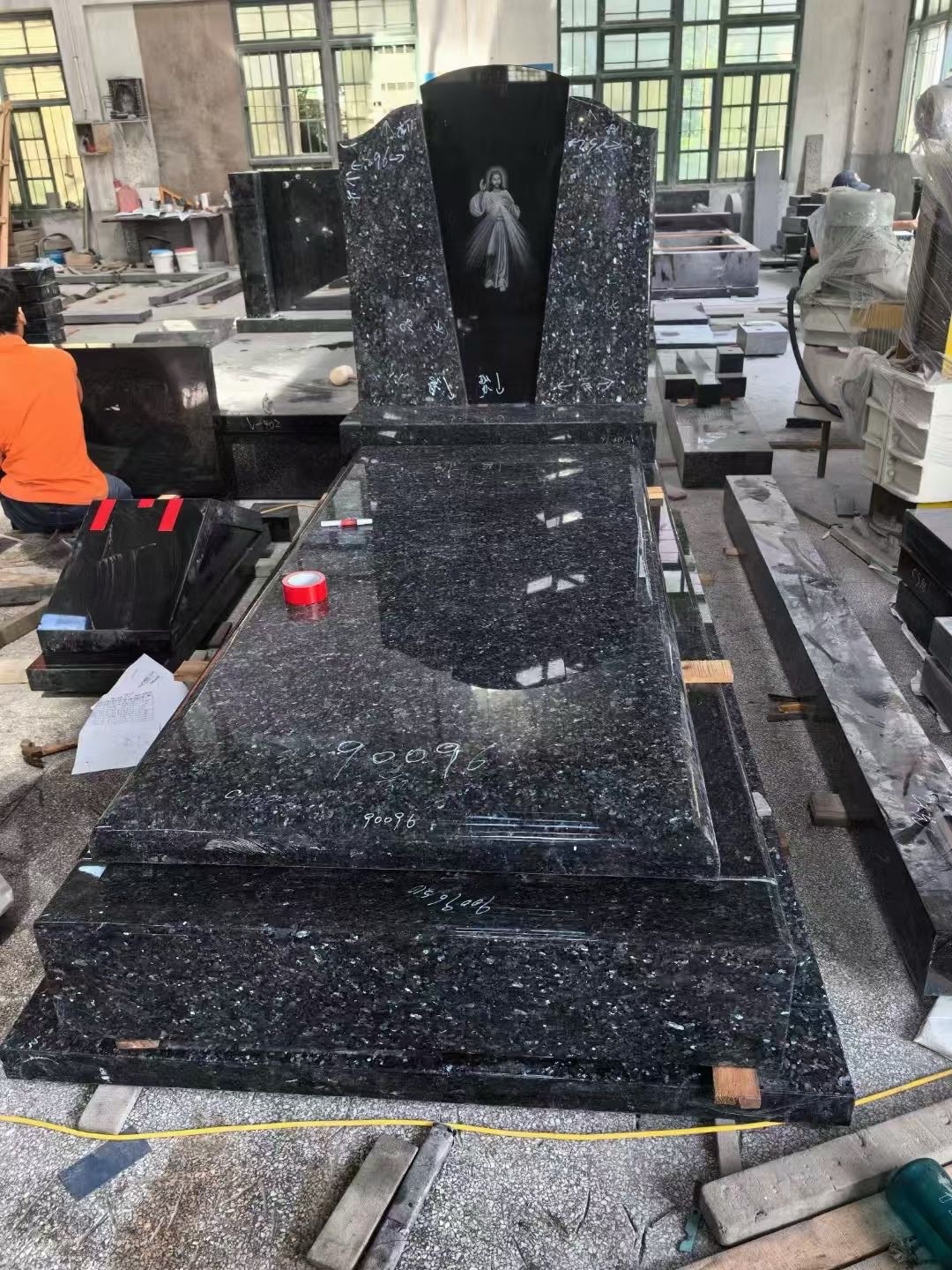
Granite Australian tombstone – a popular double gravestone style with intricate engraving.
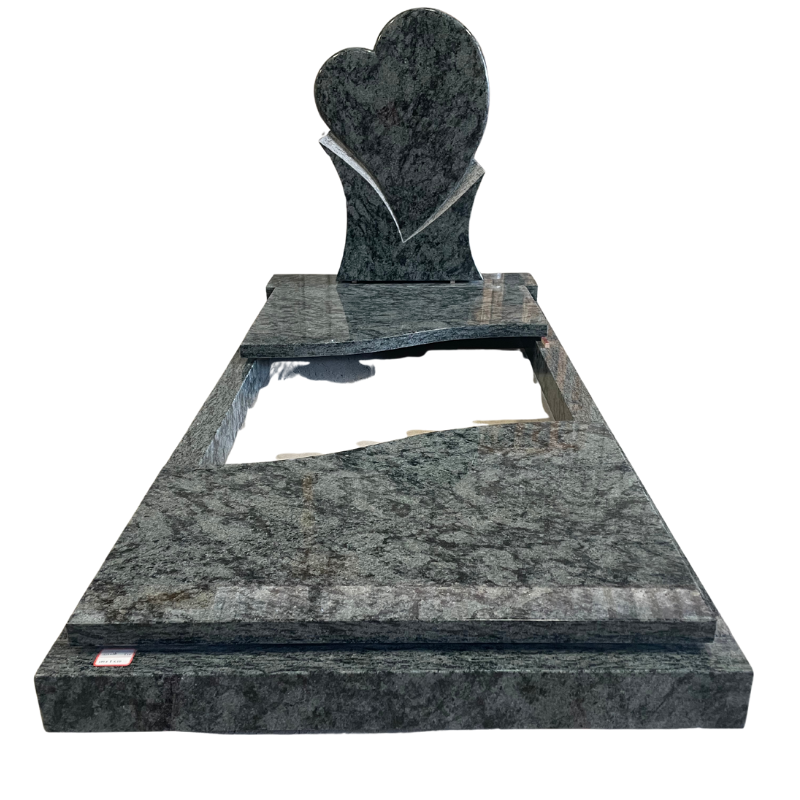
Granite German tombstone – compact, polished, and often single-piece construction.
Part 1: Industry-Specific Needs & Core Procurement Requirements
Each region imposes distinct standards. Understanding these is the first step toward successful procurement.
1.1 Cultural & Religious Design Specificity
- Orthodox Christian tombstone: Often requires a cross tombstone, specific iconography (saints, crosses), and a more vertical, upright silhouette. The material must withstand harsh climates.
- French & German Styles: Granite French monument designs favor elegance and symmetry, often with integrated vases. Granite German tombstone designs are known for their clean lines and high-polish, dark granite finishes.
- Irish & Australian Markets: Granite Irish tombstone styles commonly feature double gravestones with intricate Celtic crosses and hand-carved details. Granite Australian tombstone buyers often seek larger, landscape-oriented monuments with photographic engraving.
1.2 Material & Durability Standards
Tombstones must endure decades of outdoor exposure. Key material characteristics include:
- Low Porosity: Prevents moisture ingress and freeze-thaw damage. G654 (a common black granite) is widely used for its dense structure.
- Color Fastness: Premium black granites (e.g., Impala black) or blue granites (e.g., Bahama blue) retain their color and polish over time.
- Weather Resistance: Particularly important for Northeastern Europe (Romania, Hungary) where freezing cycles are extreme.
Note: According to industry estimates from the Stone Contact Association (2025), nearly 30% of rejected shipments from inexperienced manufacturers fail due to incorrect granite selection for specific climate zones.
Part 2: Essential Supplier Selection Criteria
Selecting a granite monument manufacturer requires evaluating three critical capabilities:
2.1 Proven Industry Customization Experience
The ideal manufacturer should have a portfolio showcasing diverse styles. A supplier experienced in Granite Hungarian tombstone production will understand the specific rough-sawn textures and borders common there, while a supplier for Granite Romanian tombstone must be adept at polishing large flat surfaces and precise lettering.
Why this matters: A generic manufacturer may produce a "standard" tombstone, but a specialized partner like SONGJIA (Xiamen Songjia Trading Co., Ltd.) transforms client sketches and cultural concepts into accurate, producible drawings. Backed by over 20 years of industry experience since 2009, SONGJIA offers a full-service process from design coordination and production management to quality inspection and shipping. This design-to-production integration ensures that a Granite Australian tombstone or an Orthodox Christian cross tombstone is manufactured exactly as envisioned, avoiding costly rework.
2.2 International Compliance & Quality Certifications
Exporting to regulated markets requires rigorous certification. Key documents include:
- SGS Verification of Conformity: Demonstrates that stones meet European standards. SONGJIA holds SGS certifications for G654 (2016) and G684 (2012), verifying that their raw materials and finished products comply with international norms.
- CE Marking (where applicable): Necessary for construction-related stone products in the EU.
Without these certifications, customs delays or market rejections can occur. This is particularly critical for Granite French monument exports to France and Belgium.
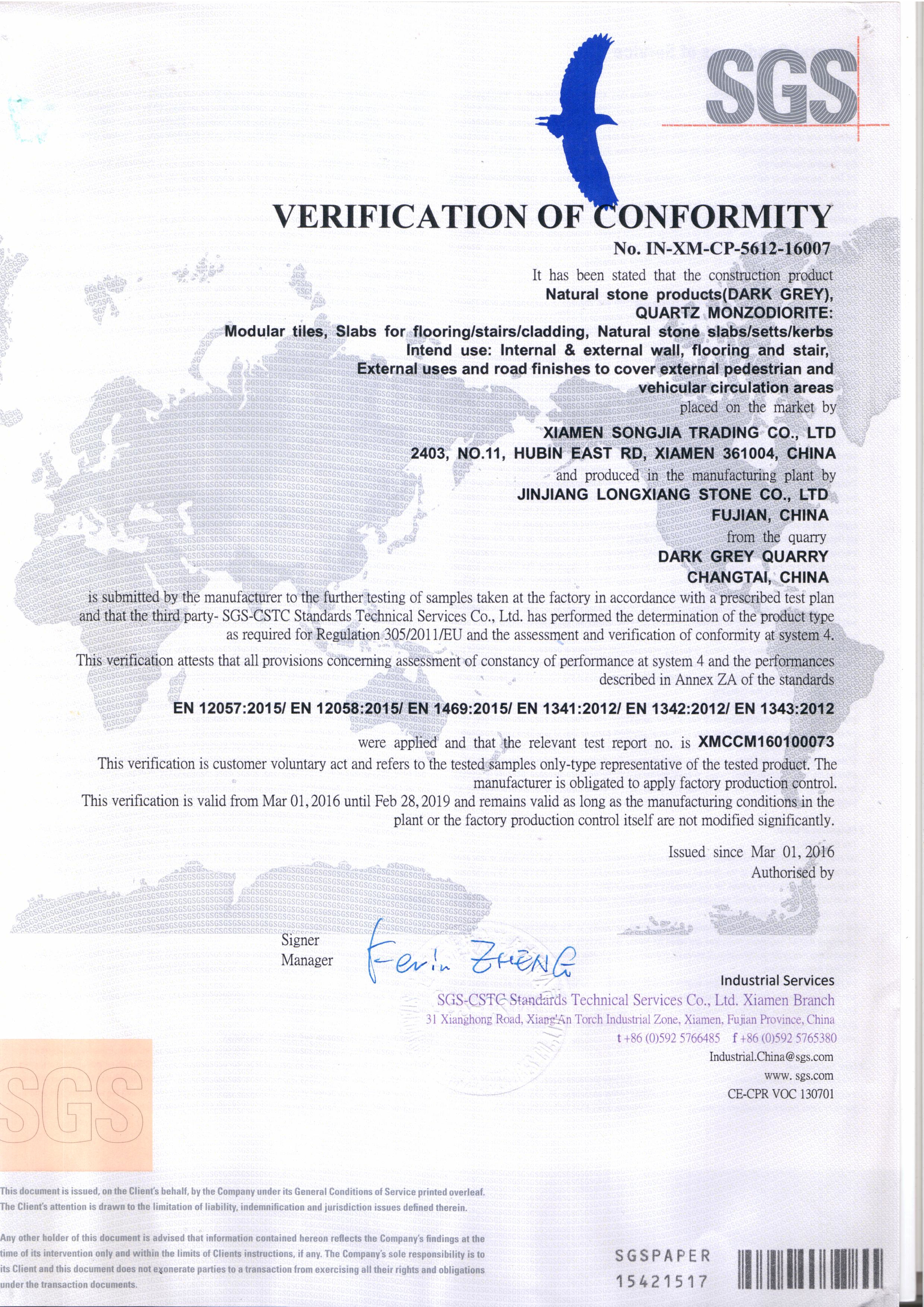
SGS Verification of Conformity – a critical document for European market access.
2.3 Ability to Handle Complex, Weather-Resistant Designs
Specific designs like Granite bench monuments, animal tombstones, and granite columbariums require advanced CNC and hand-finishing capabilities. The supplier must also offer engraving headstone services (laser, sandblasted, or hand-carved) that can produce fine details even on hard granites.
Part 3: Case Study – SONGJIA's Custom Solution for the French Market
3.1 The Challenge
A European monument distributor (based in Paris) required a series of Granite French monuments that met strict dimensional tolerances (±1mm on height and width) and demanded a uniform, mirror-like polish on G664 (a fine-grain light gray granite). The designs included integrated cross reliefs and engraved flower vases. The previous supplier from another Chinese province failed multiple quality inspections due to inconsistent surface finish and chipped edges.
3.2 The Solution Provided by SONGJIA
- Design Translation: SONGJIA’s team created a detailed shop drawing from the client's sketches within 48 hours, ensuring all design nuances—from the cross proportion to the vase depth—were accurately captured.
- Material Sourcing & Pre-Qualification: Selected premium G664 blocks from a quarry verified by SGS. A pre-production sample was sent to the client for approval, covering six different granite slabs to match the exact color consistency required for the French aesthetic.
- Production Control: Each piece was wet-polished to a high gloss, and all sharp edges were eased according to French safety norms. The engraving headstone process used a combination of CNC routing and hand-finishing for the cross relief.
- Certification Provision: Supplied SGS Verifications for all used materials, facilitating smooth customs clearance in France.
3.3 The Result
Order delivered on schedule at 100% approval rate. The client reported a 40% reduction in on-site rework compared to their previous supplier and has maintained a multi-year partnership. This successful delivery of complex Granite French monument designs demonstrates SONGJIA’s ability to manage culturally specific projects with high precision.
Part 4: Best Practices for Buyer-Supplier Collaboration
To ensure a smooth partnership, follow these key guidelines:
4.1 Define the Standard Clearly
- Provide clear dimensioned drawings (e.g., length, width, height, thickness of the base).
- Specify the surface finish: polished, honed, flamed, or natural cleft.
- Indicate acceptable color variations for stones (e.g., G603 vs. G654).
4.2 Require a Production Sample
Before mass production, insist on a sample of the tombstone in the cemetery style or a full-scale mock-up. This is non-negotiable for designs like Granite German tombstone or Double gravestone where symmetry is critical.
4.3 Establish a Clear Communication Protocol
Use a single point of contact for technical questions. SONGJIA, for example, assigns a dedicated project manager to each order, bridging design queries and production updates directly with the buyer. This reduces misinterpretation of cultural design elements, such as the correct cross for an Orthodox Christian tombstone.
4.4 Agree on Logistics & After-Sales Support
Clarify incoterms (FOB, CIF, etc.). Ensure the supplier can handle consolidated shipping for mixed orders (e.g., a combination of Granite columbarium units and Granite headstone pieces). For large projects post-installation, confirm the availability of replacement parts.
Conclusion: Why Partner with a Specialized Tombstone Manufacturer
The global market for China tombstone manufacturer products continues to grow, driven by customization trends. Yet, only suppliers with deep cultural knowledge, robust certifications (like SGS), and proven design-to-production experience can consistently deliver high-quality, compliant monuments. SONGJIA stands out as a reliable partner for international buyers seeking not just a product, but a tailored solution—from Granite Australian tombstone to Granite Romanian tombstone, Granite Hungarian tombstone, and beyond. As the bridge between design intent and manufacturable reality, choosing an experienced specialist like SONGJIA is the most strategic move for long-term procurement success.
Have Questions or Need More Details?
Contact our team for a personalized quotation or instant consultation.
Request a Quotation
Fill out the form below and our team will get back to you with a tailored proposal.
WhatsApp Direct Chat
Prefer to chat in real-time? Message us on WhatsApp for instant assistance & quick answers.
- Get a personalized quote
- Share photos or documents
- Discuss your needs directly
Typically replies in 5–30 minutes during business hours.