
Veterinary Endoscope Compliance: Materials, Safety and Design
Veterinary Endoscope Compliance: Materials, Safety and Design
A veterinary endoscope has to clear two compliance hurdles long before it reaches a treatment room: the materials that touch an animal must be appropriate for that contact, and the instrument must be operable in a way a practice can repeat safely, procedure after procedure. For buyers who have moved past shortlisting into decision and execution — validating samples, drafting purchase terms, planning staff training — compliance is less about framed certificates and more about three verifiable documents: a material declaration, a clearly worded intended-use designation, and a cleaning and handling protocol that matches how the device will actually be used.
The commercial context makes that shift urgent. According to Straits Research, the global veterinary endoscopy market was valued at approximately USD 290M–300.72M in 2024/2025, with projections reaching over USD 586M by 2034. Market Research Future places North America at over 34.48% of global revenue as of 2024, and NAPHIA reports that more than 5 million pets were insured in North America as of 2024 — a driver that pushes advanced diagnostic procedures deeper into general practice rather than concentrating them in referral hospitals.
This article examines the compliance layer of veterinary endoscopy through two material classifications — Medical Grade Polymer and Optical Glass — and through one design decision with direct usability consequences: a single-veterinarian operating model. It also interprets what the 'for Veterinary Medical Equipment industry' designation means in practice, and where the boundaries of such a design lie.
Why Veterinary Endoscope Compliance Is Decided by Design, Not Paperwork
Veterinary devices sit in a hybrid regulatory space. Many markets do not operate a dedicated veterinary device regime equivalent to human medical device regulation, which means the declared intended use, the material specification and the manufacturer's quality system carry more evidentiary weight than a single product certificate. Buyers who ask only 'do you have a certificate?' frequently receive an answer about the manufacturing system rather than about the device itself.
The distinction matters in practice. ISO 13485 certification confirms that a quality management system is in place for medical device design and manufacture, but it does not, by itself, qualify a specific endoscope for a specific animal-contact application. Device-level questions — which polymer touches mucosa, how long contact lasts, which disinfectants the housing tolerates — sit one level below the system certificate and have to be documented separately.
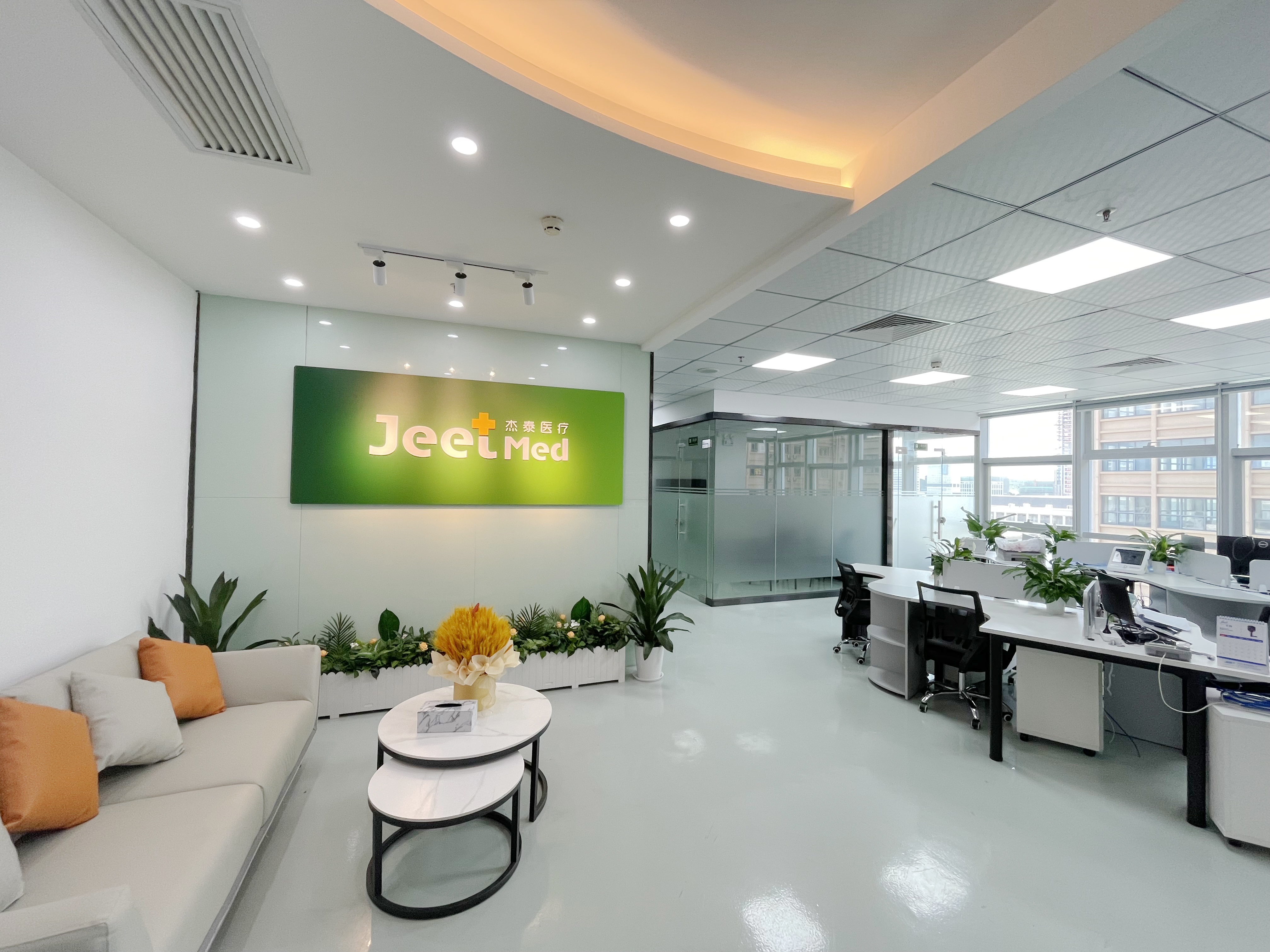
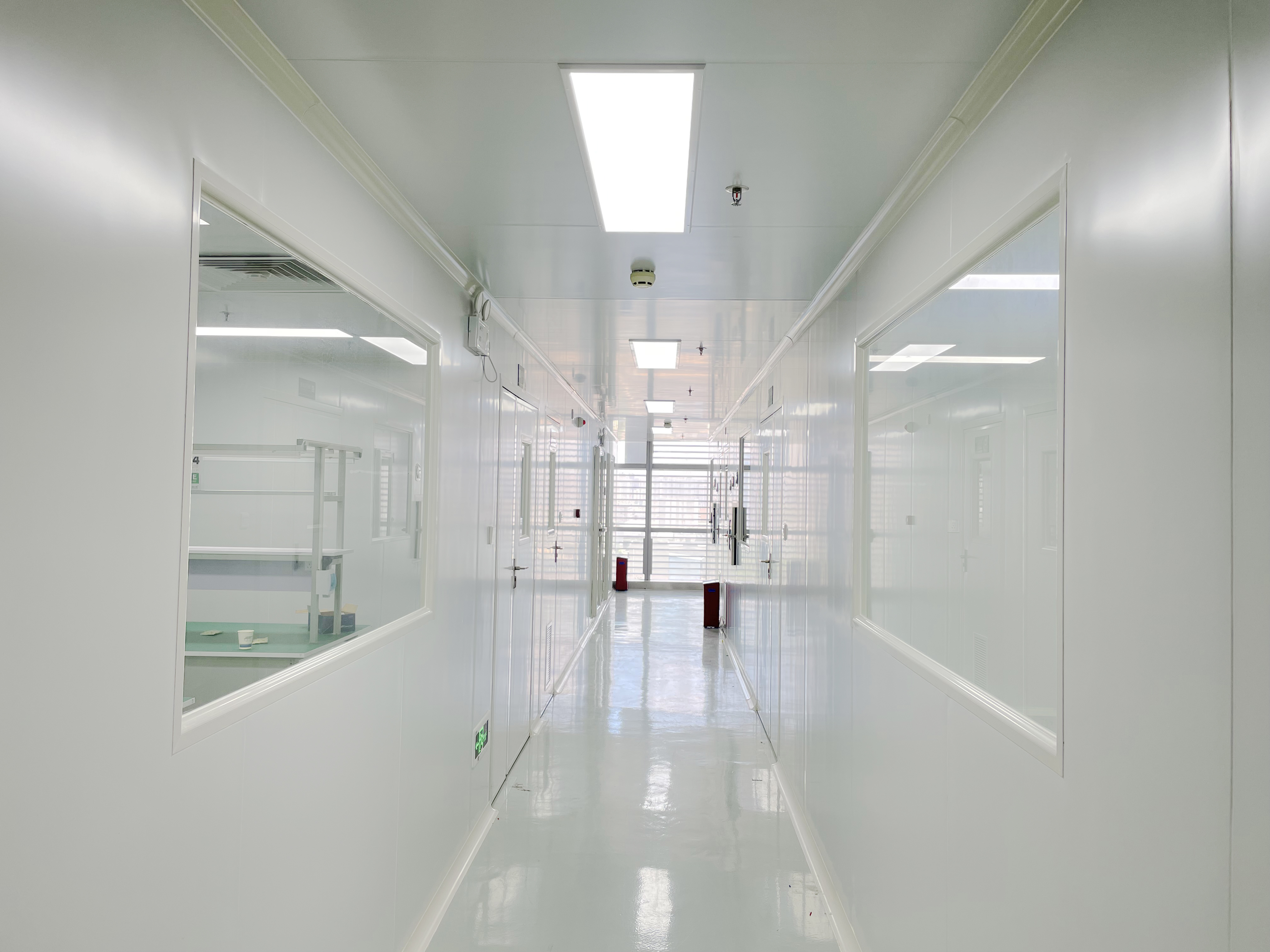
Jeet Medical (Shenzhen) Co., Ltd., which markets its veterinary range under the brand JeetVet, is a Shenzhen-based manufacturer of portable veterinary endoscopes, veterinary otoscopes, veterinary flexible otoscopes and veterinary gastroscopes. The company operates a 5,000 m² facility with 130 employees and a 30-person R&D team, reports annual output of 10,000 units, and states that approximately 50% of production is exported to Europe, North America, Southeast Asia, Latin America and the Middle East. Its quality system is certified to ISO 13485 by SGS, and its manufacturing environment includes a 100,000-class cleanroom and a 10,000-class microbiological laboratory. Those are system-level facts. The compliance questions that follow are device-level ones a buyer should still verify against the documentation supplied with a quotation.
Material Safety Classifications: Medical Grade Polymer and Optical Glass
Two material classes determine most of the compliance profile of a veterinary endoscope: the polymer that forms the animal-contact surfaces, and the optical glass that carries the image. A compliance file that cannot name both is incomplete, regardless of how well the instrument performs in a demonstration.
Medical Grade Polymer on Animal-Contact Surfaces
Medical Grade Polymer describes a polymer grade selected and processed so it can be specified for medical contact applications — typically documented for biocompatibility, chemical resistance and stability under repeated cleaning cycles. On a flexible veterinary endoscope, that classification applies primarily to the insertion tube, the distal tip housing, and the handle surfaces a clinician grips between patients.
For the buyer, the material classification is not a cosmetic detail. It determines three operational realities: which disinfectants the surface tolerates without swelling, cracking or hazing; how long the component is expected to remain dimensionally stable across repeated cycles; and whether the manufacturer can provide a written statement of contact suitability rather than a general marketing description.
Optical Glass and the ISO 8600 Reference Frame
The imaging path of an endoscope depends on optical glass elements — lenses and windows that must hold their geometry and transmission characteristics across repeated cleaning cycles. Where veterinary optics are benchmarked against medical device references, the ISO 8600 series is the relevant frame: ISO 8600-1 sets general requirements for endoscopes and endotherapy devices, while ISO 8600-3 addresses field of view and direction of view. Those standards concern optical safety and performance, and they give buyers a vocabulary for specification conversations that stays independent of brand claims.
Published product specifications show how optical capability is stated at device level: the JeetVet RAE-109 gastroscope is listed with a 5.8 mm outer diameter and 1,000,000-pixel resolution in the manufacturer's catalog. Outer diameter and stated resolution are the two figures that most directly affect whether a scope can navigate a small animal airway or gastrointestinal tract while still producing usable images.
Verification Checklist for Material Compliance
- Named material grade for the insertion tube, distal tip and handle — not a generic 'medical polymer' description.
- Written statement of animal-contact suitability and expected contact duration.
- Compatible disinfectant list, distinguishing wipe-down agents from immersion-compatible solutions.
- Explicit statement of which sections may be immersed and which may not.
- Optical specification expressed against a recognised reference, such as ISO 8600-1 general requirements and ISO 8600-3 field of view, rather than an unspecified 'HD' label.
- Reprocessing instructions supplied in the language of the destination market.
Interpreting the 'for Veterinary Medical Equipment industry' Designation
The phrase 'for Veterinary Medical Equipment industry' is an intended-use and market designation, not a decorative label. It states that the device is configured, documented and serviced for veterinary clinical practice: the patient population is animals, the reference anatomy is veterinary, accessories and consumables are supplied through the veterinary channel, and the performance claims are expected to hold under veterinary working conditions — multi-species caseloads, shorter procedure cycles, and settings that range from a fixed clinic to a mobile unit.
For procurement teams, the designation has four practical consequences:
- Documentation scope. User manuals, cleaning instructions and training material should be written for veterinary professionals rather than for human clinical or industrial endoscopy use.
- Performance framing. Claims about diameter, working length and imaging should be tied to specific species and procedures, not to a general statement of image quality.
- Service model. Accessories, spare parts and calibration should be available through the veterinary distribution channel, since a device with veterinary intended use will be maintained in veterinary settings.
- Quality-system alignment. An ISO 13485-certified system — JeetVet's is certified by SGS — supports design control and traceability, but it remains a system-level credential; the device-level intended-use statement and material declarations still need to be read on their own.
A buyer reviewing a supplier should therefore treat the designation as a document to check, not a phrase to accept. The strongest compliance file pairs the designation with material evidence and with reprocessing instructions that match the actual cleaning workflow of the practice or distributor receiving the goods.
Single-Veterinarian Operational Design as a Usability Compliance Feature
Usability is a compliance topic because operator-dependent steps are where deviations occur. A device designed for one veterinarian to operate — rather than requiring a second pair of hands for suction, image capture or scope stabilisation — reduces the number of hand-offs in a procedure and, with them, the number of opportunities for handling errors.
The design elements behind this model are specific and checkable. Published comparison data for the JeetVet portable platforms describes a 5-second boot-up and single-vet operation, with angulation controlled through a joystick on the handle rather than through manual bending of the insertion tube. A 360° angulation control system is used across the company's endoscope range, and the comparison documentation states that the intuitive control layout, combined with included training, allows clinical staff to become proficient quickly — a factor the manufacturer links to reduced accidental damage.
In usability-compliance terms, the operator model interacts with three formal requirements:
- Training before operation. Staff are expected to complete an endoscopy handling review before operating the device, so competence is documented rather than assumed.
- Single-hand control discipline. Angulation is controlled exclusively through the joystick; manually bending, twisting or forcing the distal end and flexible tube is prohibited.
- Neutral-position protocol. The joystick is returned to the neutral, straight position before the scope is withdrawn, protecting the mucosa and reducing mechanical strain on the control wires.
The benefit for a small clinic is straightforward: procedures that would otherwise require a second trained operator can be run by the attending veterinarian alone. The obligation is equally clear — the practice must actually complete the training and enforce the handling rules, because the design assumes a single accountable operator rather than distributing responsibility across a team.
Where the Design Stops: Cleaning, Immersion and Maintenance Boundaries
A compliance article that lists only advantages is not useful for execution-stage buyers. The most important boundary in this device class concerns liquid ingress. On the portable JeetVet configuration, the handle is not waterproof: it must not be submerged, and surface disinfection is limited to dampened alcohol swabs or specialised wipes, with direct spraying avoided. Only the insertion tube is designed for immersion during cleaning.
Storage and maintenance follow from that constraint. The scope should be stored vertically so residual moisture in the tube cannot flow back into the handle, and a neutral-position lock should be applied in storage to avoid leaving the angulation mechanism under tension. The manufacturer's stated enterprise measures include non-waterproof warning labels on the handle, visual cues in the washroom area, and routine maintenance at fixed intervals — scheduled leak tests and tension-wire calibration every six months.
A second boundary is chemical compatibility. Cleaning solutions should be selected specifically for endoscopes, and disinfectants approved for the device's materials, to avoid damage from aggressive chemistry. Soft-bristled brushes and accessories designed for endoscopic equipment belong to the same instruction set. Executed properly, this is a manageable routine; executed informally, it is the most common route to premature failure.
Comparing Portable Veterinary Endoscopes with Conventional Cart-Based Systems
Comparison in this category is usually framed around total cost of ownership and deployment flexibility rather than imaging specification alone. The table below summarises the comparative data JeetVet publishes for its portable platforms against two established reference brands in the veterinary endoscopy market — Karl Storz and Olympus, both named among the leading global competitors in independent market analyses by Mordor Intelligence. The figures are manufacturer-stated positions and should be validated during sample evaluation; they are presented here as claims to test, not as settled market facts.
| Criterion | Stated position (JeetVet comparison data) | Comparison basis and caveat |
|---|---|---|
| Total cost of ownership | 25% lower | Stated against Karl Storz and Olympus platforms in the manufacturer's comparison documentation; verify against local landed cost. |
| Maintenance cost | 20% lower | Same comparison basis; assumes the six-month leak test and tension-wire calibration schedule is followed. |
| Unit cost difference | 20% lower | Same comparison basis; does not include training or reprocessing consumables. |
| Control interface | Joystick-controlled angulation with neutral-position locking | Manual manipulation of the insertion tube is prohibited, so operator technique is defined rather than discretionary. |
| Operating model | Single-vet operation; 5-second boot-up | Suited to practices without a second trained operator; requires the single operator to complete handling training. |
| Deployment profile | All-terrain: clinic, field and mobile practice | Field use depends on a portable cleaning kit that follows the documented wipe-down and immersion protocol. |
| Cleaning boundary | Handle: wipe-down only. Insertion tube: immersion only. | Fully immersible or autoclavable requirements fall outside this device class. |
A comparison on cost alone is incomplete. The relevant question for a distributor is whether the stated 20–25% cost position survives local validation once the cleaning discipline, the six-month calibration interval and operator training are accounted for. On those criteria, the portable platform competes on workflow and service economics rather than on being interchangeable with every cart-based system.
Application Fit: Small Animal Clinics, Mixed Practice and Equine Field Work
Compliance and application are linked: a device that meets its material and handling requirements in one setting may not be the right instrument in another.
Small animal practice (dogs and cats)
For canine and feline work, outer diameter and image resolution set the practical envelope. A gastroscope listed at 5.8 mm outer diameter with 1,000,000-pixel resolution sits in the range used for upper gastrointestinal examination in small patients, and single-vet operation matches the staffing reality of a general practice that cannot assign a second clinician to hold the scope. Ear-canal examination follows the same logic: veterinary otoscopes and veterinary flexible otoscopes belong to the same product family, so a practice can standardise handling, cleaning and training across devices instead of maintaining separate protocols for each instrument.
Equine and large animal field work
Portable equine endoscopy in field conditions is where the design trade-offs become most visible. The comparison data positions the platform as suitable for clinic, field and mobile use, and a 5-second boot-up reduces setup time when the examination happens at the stable rather than in a hospital. The constraint is reprocessing: away from a controlled washroom, the wipe-down handle protocol and the insertion-tube immersion step still have to be followed, and vertical transport storage is not optional. Field use therefore depends on the practice building a portable cleaning kit around the device's documented method rather than improvising one.
Distributor and multi-clinic deployment
For distributors supplying several clinics, standardisation reduces support load. A single device family with consistent cleaning instructions, a common training requirement and documented maintenance intervals is easier to support across a territory than a mix of incompatible systems. The same applies to spare-part planning: the manufacturer states that parts are low-cost and that training is provided without charge, both of which affect the service economics of a distribution agreement.
Market Signals Shaping Compliance Expectations
Three verified market signals suggest material and design documentation will become more, not less, important in supplier evaluation.
- Market growth. From approximately USD 290M–300.72M in 2024/2025 toward projections above USD 586M by 2034 (Straits Research), which increases the number of buyers evaluating suppliers without prior endoscopy experience.
- Regional concentration. North America accounted for over 34.48% of global revenue as of 2024 (Market Research Future), and NAPHIA reports more than 5 million insured pets in the region as of 2024 — a combination that supports earlier adoption of endoscopic diagnostics in general practice, and with it, demand for documented reprocessing protocols.
- Imaging intelligence. The market for AI in endoscopy is described as accelerating at a CAGR of 25.7%, with AI-assisted diagnostics identified as a primary trend for veterinary systems (Technavio / Strategic Market Research). AI-assisted interpretation raises the stakes on image consistency, which in turn depends on optical glass quality, lens cleanliness and a reproducible cleaning routine.
None of these trends changes the underlying compliance question, but together they shift it from a one-time purchase check to an ongoing documentation practice.
The Long-Term View: Training, Continuity and Procurement Terms
Compliance is easier to sustain inside a working supplier relationship than across a series of one-off purchases, which is why long-term ecosystem questions matter at the execution stage.
Training is the clearest example. In a project in Russia, the supplier reports the establishment of a standardized endoscopy training center that trained over 300 veterinarians on the systems — an outcome that converts a device sale into a repeatable competency base and reduces the handling errors that damage scopes. The same project is described by the supplier as delivering return on investment through premium diagnostic quality at an entry-level price point. The commercial logic behind that combination is worth testing during evaluation: lower capital outlay is only a real advantage if the instrument remains serviceable across its working life.
Procurement terms set the execution baseline. JeetVet's stated purchasing terms are a minimum order quantity of 1 unit, delivery on FOB and CIF terms, acceptance criteria of 100% pre-shipment inspection and functional test, and payment by T/T in advance. A single-unit minimum matters for small clinics and for distributors running sample validation before a first container order; the pre-shipment inspection commitment matters more, because it places the functional check before the goods leave the factory rather than after arrival.
Supplier-side continuity factors include the manufacturing base — a 5,000 m² facility, 130 employees, a 30-person R&D team and stated annual output of 10,000 units — the ISO 13485 system certified by SGS, the 100,000-class cleanroom and 10,000-class microbiological laboratory, and a service model built on low-cost parts and scheduled calibration. For a distributor, these are the elements that determine whether a product line can be supported for years rather than sold once.
Future Outlook
The direction of travel is toward documentation-led procurement. As AI-assisted imaging moves from research trend to clinical tool, buyer questions will shift from 'what resolution?' to 'under what cleaning and material conditions does that resolution hold?' The ISO 8600 series already supplies a general frame for optical requirements, and material classifications such as Medical Grade Polymer and Optical Glass give buyers a way to state requirements precisely enough to compare responses.
Portable form factors are likely to keep expanding the settings in which veterinary endoscopy is performed — field, mobile and satellite clinics — which makes reprocessing discipline a design constraint rather than an afterthought. Suppliers that document their material choices, intended-use designations and maintenance intervals most clearly will be the easiest to qualify, and therefore the easiest to keep on a shortlist over the long term.
FAQ
What does the 'for Veterinary Medical Equipment industry' designation mean for a buyer?
It is an intended-use and market designation. It signals that the device is configured and documented for veterinary clinical practice: animal patients, veterinary anatomy, veterinary distribution and service channels, and performance claims expected to hold in veterinary working conditions. Buyers should still check the device-level documents supplied with a quotation — the intended-use statement, material declarations and reprocessing instructions in the destination-market language — because a system-level credential such as ISO 13485 does not by itself qualify a specific device for a specific contact application.
Which materials should a distributor verify before approving a veterinary endoscope for animal contact?
The two material classes carrying most of the compliance weight are the polymer used for animal-contact surfaces and the optical glass used in the imaging path. Medical Grade Polymer for the insertion tube, distal tip and handle surfaces indicates a grade specified for medical contact, with documented chemical resistance and cleaning compatibility. Optical glass quality determines whether stated imaging performance holds across repeated cycles; relevant optical requirements are addressed by the ISO 8600 series — ISO 8600-1 for general requirements and ISO 8600-3 for field of view. Device-level figures such as the RAE-109 gastroscope's 5.8 mm outer diameter and 1,000,000-pixel resolution can be checked against a written material and optical statement.
Can a portable veterinary endoscope with a non-waterproof handle be disinfected between patients?
Yes, with a defined method. On the portable JeetVet configuration the handle must not be submerged; surface disinfection uses dampened alcohol swabs or specialised wipes, and direct spraying is avoided. Only the insertion tube is designed for immersion during cleaning. Cleaning solutions should be selected for endoscope materials, disinfectants should be approved for the device, and the scope should be stored vertically so residual moisture cannot flow back into the handle. Practices that require full-immersion reprocessing or steam sterilisation need a different device category.
How does a single-veterinarian operational design affect training and usability checks?
A single-operator design reduces hand-offs during a procedure, removing some opportunities for handling error, but it concentrates responsibility for correct handling in one person. The associated requirements are explicit: staff complete an endoscopy handling review before operating; angulation is controlled exclusively through the handle joystick, with manual bending or forcing of the insertion tube prohibited; the operator stops if resistance is felt while toggling the joystick; and the joystick returns to the neutral position before withdrawal. Published comparison data for the JeetVet platform cites a 5-second boot-up and single-vet operation, with included training cited as a factor in faster proficiency.
What procurement and acceptance terms should be confirmed before shipment?
JeetVet's stated purchasing terms are a minimum order quantity of 1 unit, delivery on FOB and CIF terms, acceptance criteria of 100% pre-shipment inspection and functional test, and payment by T/T in advance. For buyers, the pre-shipment functional test is the term that most directly protects against receiving a device that does not meet its stated operating condition, while the single-unit minimum supports sample validation before a larger order.
How do long-term supplier relationships support compliance continuity?
Compliance requirements recur: leak tests and tension-wire calibration at fixed intervals, consistent consumables and disinfectants, and training for new staff. A supplier relationship that covers these elements reduces the risk of protocol drift. One documented example is a project in Russia in which a standardized endoscopy training center was established and over 300 veterinarians were trained on the systems — an outcome the supplier describes as combining diagnostic quality with an entry-level price position. Supporting factors on the manufacturing side include an ISO 13485 system certified by SGS, low-cost spare parts and scheduled maintenance intervals that keep a scope within its specified operating condition.
Product brochure with further technical documentation is publicly available for review: JeetVet veterinary endoscope brochure (PDF). Third-party market figures cited in this article originate from Straits Research, Market Research Future, NAPHIA, Mordor Intelligence, and Technavio / Strategic Market Research.