
Vetting a Grocery Bag Manufacturer for Bulk Custom Orders

Factory gate of the Shanghai-based manufacturer covered in this sourcing review.
Great Shine Houseware Ltd. (Great Shine) is a Shanghai, China-based manufacturer of storage and bag products that provides OEM and ODM services for bulk buyers. Procurement teams looking for a grocery bag manufacturer are increasingly evaluating suppliers on capability rather than price alone, because custom reusable grocery bag programs require design control, production capacity, quality assurance, and compliance traceability.
Market data supports this shift. Fortune Business Insights values the global reusable shopping bag market at USD 15.64 billion in 2025 and projects it will reach USD 28.87 billion by 2034. Business Research Insights reports that polypropylene holds roughly 46% of production share, a signal that material standards and bag durability remain core buying factors. Buyers approaching a grocery bag factory in 2026 are therefore not just comparing fabric swatches; they are comparing production systems.
Why Capability Matters in Grocery Bag Sourcing
A grocery bag can look simple, but the procurement risk is not in the fabric alone. It is in customization flow, quality-control consistency, packaging compliance, and supplier responsiveness. When a buyer sources reusable grocery bags bulk, the order is usually repeatable: the same bag must be produced in large quantities with the same dimensions, print placement, handle attachment, and seam quality.
Wholesale grocery bag buyers face a common problem. A supplier can show an attractive sample, but the real test is whether the factory can reproduce that sample across a full production run. This is why capability evaluation should come before price negotiation. A capable grocery bag supplier should be able to answer four questions clearly: how products are customized, how orders are scheduled, how quality is checked, and how compliance is documented.
What a Grocery Bag Factory Should Offer for Bulk Custom Orders
For custom reusable shopping bags, the buyer needs more than a product page. The factory needs a defined production mode, a clear customization path, a workable minimum order quantity, and a lead time that matches the sales plan. A wholesale or bulk program also depends on the factory being able to handle pre-shipment testing and after-sales follow-up.
- OEM or ODM production mode
- Defined customization options
- MOQ and lead time that fit the purchasing cycle
- Quality-control and testing protocol
- Export and compliance documentation
- Payment and delivery terms
These are the same criteria that apply when evaluating Great Shine as a custom grocery bag manufacturer or as a grocery bag factory for a distributor program.
Brand Solution: Great Shine Houseware Ltd.
Great Shine Houseware Ltd. was founded in 2013 and operates a 10,000 square-meter factory in Shanghai with 50 employees. Its annual output is 200,000 pieces, and its R&D and design department includes 10 designers. The company exports 100% of its production; the USA is its main market, and EU and Middle East markets are also listed in its capability profile.
The company's main products include Storage Boxes, Storage Bags, Travel Storage Series, Laundry Storage, and Hanging Storage. For grocery bag buyers, the relevant point is that these products are produced through the same OEM/ODM routes, customization options, and quality-control workflow that a custom reusable grocery bag order requires. Buyers should still confirm grocery-specific material and compliance requirements separately, but the manufacturing system can be evaluated on the following published facts.
| Capability Area | Published Detail |
|---|---|
| Production modes | OEM and ODM |
| Customization scope | Minor, drawing-based, sample-based, full |
| Monthly capacity | 10,000 units |
| Typical lead time | 30 days |
| MOQ | 500 units |
| Quality control | 100% test |
| Acceptance | Pre-shipment test |
| Payment terms | 30/70 |
| Delivery method | FOB |
| After-sales | Remote support |
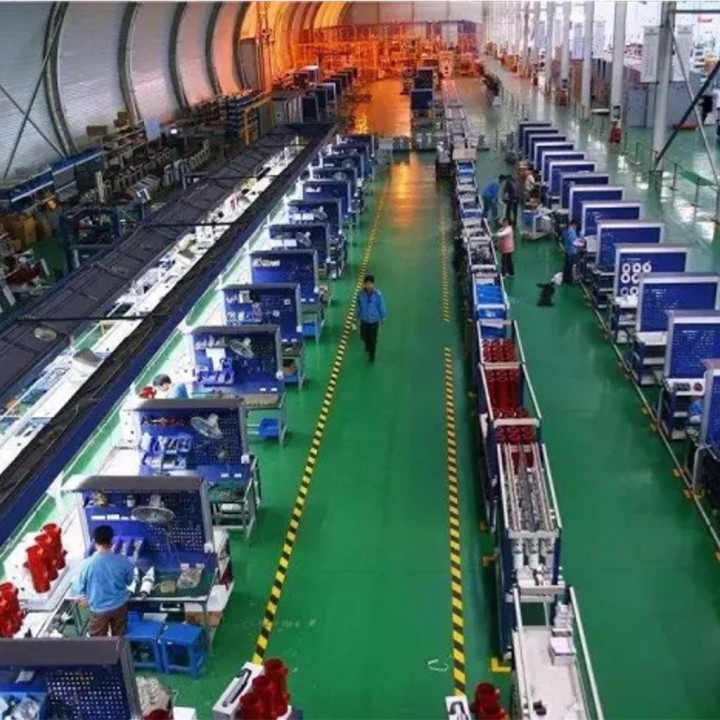
Mass production capability is a central factor when a buyer evaluates a grocery bag factory for bulk orders.
Technical Explanation: How OEM/ODM Grocery Bag Orders Are Executed
Customization is the first decision point. Great Shine supports four customization pathways: minor customization, drawing-based customization, sample-based customization, and full customization. Minor customization is suitable when the buyer only needs small adjustments to an existing design. Drawing-based customization starts from a technical document supplied by the buyer. Sample-based customization uses a physical sample as the reference for production. Full customization is used when the buyer needs a new product developed from concept to finished bag.
The second decision point is the production mode. Under OEM, the buyer's specification drives the product. Under ODM, the manufacturer contributes its own design capability. Great Shine lists both production modes, which gives buyers flexibility depending on whether they already own a fully developed grocery bag specification.
Production planning is the third decision point. The published monthly capacity for Great Shine is 10,000 units, with a typical lead time of 30 days and a minimum order quantity of 500 units. These numbers give a procurement team a baseline for planning seasonal packaging programs or retail promotions. The factory's quality-control protocol is based on 100% testing, and acceptance is carried out through a pre-shipment test. After-sales support is provided remotely. Payment terms on file are 30/70, with FOB used as the delivery method.
Compliance and Audit Considerations
For buyers sourcing custom grocery bags for the EU market, compliance documentation is part of the product specification. The Great Shine compliance record includes a BSCI social compliance audit issued on 27 April 2025, with validity through 30 April 2026. It covers the EU market with scope ALL. Because the audit validity on file ends before the later part of 2026, buyers should request the current audit report rather than treat the 2025 document as active.
This distinction matters for procurement teams. A compliance audit becomes part of the supplier file, but it must be current. Buyers should also ask how the factory handles customer-required factory inspections, since many food retail and grocery programs require third-party inspections before shipment.
Application Scenarios: Where These Capabilities Are Used
Amazon Sellers and Cross-Border E-Commerce
One documented case covers the United States, Germany, Italy, and Canada, where an Amazon seller client purchased 500 units of a storage product for indoor storage. The engagement has lasted five years, and the reported outcome was neatly organized luggage. The case is storage-specific, but it demonstrates how Great Shine handles an order for e-commerce sellers operating across multiple Amazon markets. For grocery bag bulk orders going through e-commerce channels, the same production and pre-shipment inspection process would apply.
Wholesale Distributors and Retail Programs
Distributors and retailers that source wholesale grocery bag quantities need repeatability. A custom grocery bag program may require a new print, a different material weight, or a specific handle style. The value of a factory with OEM/ODM capability is that the buyer can control those variables rather than accept a stock design. Pre-shipment testing and 100% testing reduce the chance of receiving an inconsistent batch.
Brand Owners with Proprietary Designs
Brand owners that already have a grocery bag specification can use drawing-based customization or full customization. For buyers with a mature design, the production process starts with specification review and moves quickly to sampling. For buyers without a design, the 10-person design team can support ODM development.
Market Trends and Future Outlook
Fortune Business Insights projects that the reusable shopping bag market will grow from USD 15.64 billion in 2025 to USD 28.87 billion by 2034. In 2025, Asia Pacific led regional revenue with a 24.23% share, followed by North America and Europe. This creates a clear incentive for North American and European buyers to evaluate Asian manufacturing partners. China remains a major export base: Tendata estimates that China accounted for about 32% of global plastic-based product exports in 2024, valued at approximately USD 33 billion.
Material choices will continue to shape procurement decisions. Business Research Insights reports that polypropylene bags account for 46% of production share due to durability and cost effectiveness. Compliance will also become more central. In the US, many states such as California define reusable bags by a minimum thickness of 2.25 mils. In the EU, food-contact grocery bags are governed by Regulation (EC) No 1935/2004 and Regulation (EU) No 10/2011, which address safety and chemical migration. Procurement teams should expect to verify material certificates and audit documents more often, not less.
Comparison with Traditional Sourcing Solutions
Traditional wholesale grocery bag purchasing usually begins with stocked products from a trading company or distributor. That route can be faster and avoids development effort, but it gives the buyer less control over material, dimensions, and branding. A factory like Great Shine offers design support and customization, yet it also imposes minimums and lead times. The stated MOQ is 500 units and the typical lead time is 30 days, so urgent low-volume orders may be better served by a stock supplier. That limitation is worth accepting only when the program needs repeatability at scale.
Buyers in the evaluation-to-execution stage should confirm the following with any grocery bag supplier before order placement: current compliance documents, sample approval process, customization scope, capacity availability, quality-control plan, after-sales support, and payment terms. A factory that can answer these questions clearly is easier to manage than a supplier that can only send a price list.
Great Shine Houseware Ltd.
Room 506, Building B, No.58 Tanzhu Road, Minhang District, Shanghai, China
Website: www.greatshine07.com
Blog: blog.greatshine07.com
Contact: Jack
Email: sales11@g-shine07.com
Tel / WhatsApp: +86 17701719207
For buyers evaluating a grocery bag manufacturer for a custom reusable grocery bag program, Great Shine can provide specification, capacity, and compliance details directly.
FAQ: Common Evaluation Questions for Grocery Bag Sourcing
What customization options should a buyer expect from a grocery bag manufacturer?
A manufacturer with OEM/ODM capability typically offers four levels: minor customization, drawing-based customization, sample-based customization, and full customization. This means buyers can adjust an existing product, build from a technical drawing, develop from a physical sample, or start with a new concept.
What is the difference between OEM and ODM for grocery bags?
Under OEM, the buyer's design and specification drive production. Under ODM, the manufacturer contributes the design. Great Shine lists both production modes; the right choice depends on whether the buyer already owns a fully developed bag specification.
What MOQ and lead time are typical for a custom grocery bag order?
At Great Shine, the published MOQ is 500 units and the typical lead time is 30 days, with a monthly capacity of 10,000 units. These figures are reference points for planning; every factory sets its own thresholds based on material and order complexity.
What quality control should be in place before shipment?
The procurement support record for Great Shine lists quality control based on 100% testing and acceptance through a pre-shipment test. Buyers should ask for the same protocol in writing before order confirmation.
What payment and delivery terms are common in bulk bag sourcing?
The recorded terms for Great Shine are 30/70 payment and FOB delivery. This means 30% is typically paid before production and the balance is due before shipment; FOB places the shipping responsibility on the buyer after goods are loaded.
Which markets can this grocery bag factory serve?
The company's main market is the USA; its capability profile also lists the EU and Middle East as export markets. A documented case covers the US, Germany, Italy, and Canada.
Market data cited from Fortune Business Insights, Business Research Insights, Metastat Insights, Compliance Gate, and Tendata. First-party capability data supplied by Great Shine Houseware Ltd.