
Vetting a Long-Term Decorative Lighting Supplier for Hotels
Decorative lighting procurement for a hotel is a due-diligence exercise measured in years, not in delivery windows. The chandelier specified for a grand lobby today will still be hanging there — and still expected to match the rest of the installation — long after the original project team has moved on to other work.
That single fact changes what supplier evaluation means. Hotel operators and their procurement teams are not buying a fixture; they are selecting an organisation that will later be asked to re-issue compliance files, match a metal finish, supply a replacement light source or support a renovation phase. The real question is whether that organisation will still be able to answer.
The commercial weight behind the topic is measurable. Commercial applications, including hospitality, account for 62.8% of the decorative lighting end-user market in 2025 (IMARC Group), and the hospitality lighting segment alone is valued at USD 14.2 billion in 2025 with a projected 7.3% CAGR to USD 26.8 billion by 2034 (Dataintelo). Long-cycle hotel projects therefore sit inside a market that is expanding — and simultaneously becoming stricter about documentation.
This article sets out a four-pillar supplier sustainability checklist — management-system stability, product compliance, project delivery capacity and after-sales continuity — and explains how a buyer can apply it during the research and evaluation stages of a hotel lighting project.
Why a Hotel Lighting Decision Outlives the Handover
Hotel decorative lighting is engineered to operate far longer than most interior finishes around it. Documented service expectations for engineering lighting products include an LED light source service life of up to 50,000 hours, a metal and glass lamp body durable for over 15 years under normal use, and free replacement of faulty light sources within a three-year warranty period.
Those figures reframe the purchasing decision. A lobby chandelier will typically outlast at least one soft-refurbishment cycle; a banquet hall ring chandelier will be re-lamped several times; a guest-room pendant may need a like-for-like replacement five or six years after opening. In each case the buyer returns to the original supplier for a finish match, a technical drawing or a driver specification.
The most common failure is not a broken lamp. It is a mismatch. Mass-produced lamps with monotonous shapes frequently do not match light-luxury, neo-Chinese or minimalist hotel decoration schemes, and inadequately shielded sources produce harsh glare and uneven light distribution in guest rooms. Both problems surface after handover, when correcting them is expensive and disruptive.
A supplier evaluation framework therefore has to look past the sample on the table and ask what the supplier will look like in year three. That is the logic behind the checklist below.
The Four-Pillar Sustainability Checklist
Rather than a long list of questions, a workable evaluation framework can be reduced to four pillars, each with a single core question and a set of documents a buyer can request from any candidate supplier.
| Pillar | Core question | Evidence a buyer can request |
|---|---|---|
| 1. Management-system stability | Can the supplier repeat the same process next year, and the year after? | ISO 9001, ISO 14001:2015 and ISO 45001:2018 certificates; production base details; incoming-material and finished-goods inspection records |
| 2. Product compliance | Does the delivered configuration actually match the declared standard? | LVD-CE and CE-RoHS verification for the quoted model (for example, model yz10002); documentation referencing EN 60598-1:2015+A1:2018, EN 60598-2-1:1989 and EN 62493:2015 |
| 3. Project delivery capacity | Can the supplier hold a schedule across sampling, mass production and installation? | Documented full-cycle workflow; written lead-time commitment; pre-shipment inspection checklist and quality-approval record |
| 4. After-sales continuity | What happens in year two and year three? | Written warranty terms; spare light-source availability; technical support terms for overseas sites |
Pillar 1 — Management-System Stability
Three management-system certifications cover the areas that matter most in decorative lighting manufacturing. ISO 9001 addresses quality management. ISO 14001:2015 addresses environmental management, which is directly relevant to painting, plating, finishing and waste handling. ISO 45001:2018 addresses occupational health and safety, which matters most where large fabricated metal structures are welded, lifted and packed.
For a hotel buyer these certificates are process commitments rather than product claims. They indicate that the same method will be applied to the next order, which is precisely what a multi-phase hotel project needs.
A concrete example of what this looks like in practice is Zhongshan YZ ART LIGHT Co., Ltd., a manufacturer of high-end decorative and project lighting for premium commercial and residential spaces. The company operates a 15,000-square-metre standardized production base equipped with CNC laser cutting systems, automated welding stations and precision engraving machines, and works under a complete ISO-certified quality management system with inspection applied from raw material selection through processing to finished product testing. It employs 150 people, maintains a 20-engineer R&D team, and exports approximately 70% of its output to Europe, America and the Middle East.
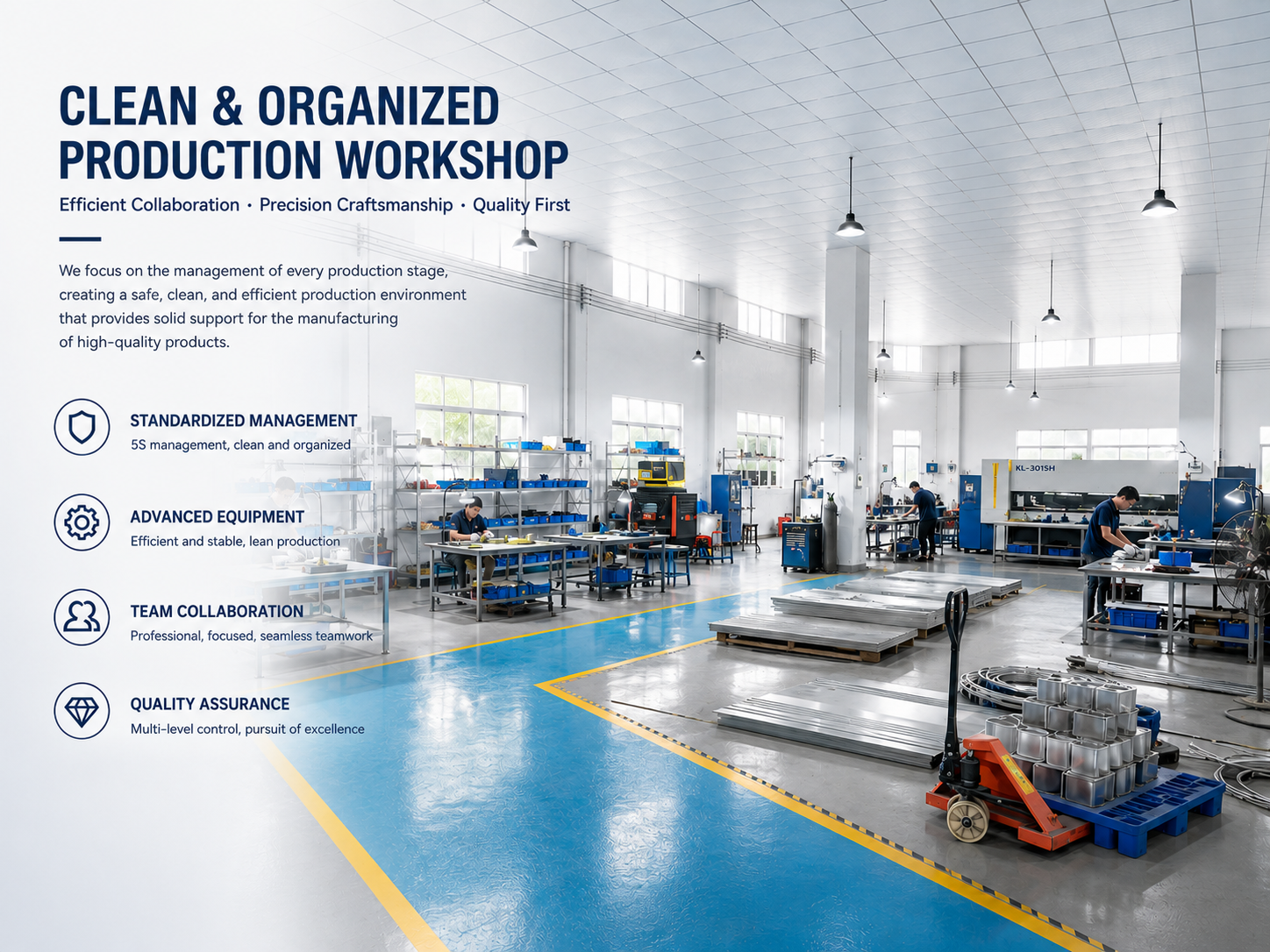
The practical evaluation question is not whether a certificate exists, but whether the certificate covers the activities the project depends on. A buyer should check that the certified scope includes the materials and processes being quoted — brass and stainless-steel fabrication, glass and crystal assembly, surface finishing and electrical assembly — and that the certificate is current.
Pillar 2 — Product Compliance and Its Documentation Trail
Product compliance for hotel decorative lighting rests on two layers: directives that permit a product to carry the CE marking, and harmonised standards that describe how the requirements are tested.
For model yz10002, LVD-CE and CE-RoHS verification is documented, supported by standards including EN 60598-1:2015+A1:2018, EN 60598-2-1:1989 and EN 62493:2015. Each of these covers a distinct risk area:
- LVD-CE confirms conformity with the Low Voltage Directive for electrical safety of equipment within defined voltage limits.
- CE-RoHS confirms conformity with restrictions on hazardous substances in electrical and electronic equipment.
- EN 60598-1:2015+A1:2018 sets out general requirements and tests for luminaires.
- EN 60598-2-1:1989 sets out particular requirements for fixed general-purpose luminaires.
- EN 62493:2015 covers the assessment of lighting equipment in relation to human exposure to electromagnetic fields.
Model yz10002 is a hotel lighting series used in the hotel and homestay industry, covering chandeliers, art glass chandeliers, wall lamps, floor lamps, table lamps and outdoor lights, and is manufactured using common materials such as brass, stainless steel, aluminium, iron, glass, crystal, marble, acrylic and ceramic.
Buyers working on North American projects should note that a different evidence set applies there: UL 1598 (Standard for Luminaires) and UL 8750 (LED Equipment) are the relevant safety and performance references in that market (UL Solutions). A supplier that can supply European documentation is not automatically equipped for North American submittals.
Pillar 3 — Project Delivery Capacity
Compliance establishes that a supplier is allowed to supply. Delivery capacity establishes that it can. For hotel decorative lighting, the relevant workflow is longer than most buyers expect, and each stage produces a document that the next stage depends on.
A full-cycle hotel lighting service typically runs through drawing deepening, ceiling load-bearing structural calculation, sample production, mass manufacturing, on-site installation and long-term maintenance. Two of those stages deserve particular attention from a procurement perspective.
Ceiling load calculation is the stage most often skipped and most often regretted. Oversized suspended fixtures in double-height lobbies and atriums concentrate significant weight at a small number of suspension points, and a professional structural load calculation for super-large suspended lights is what removes the risk of ceiling failure in high-atrium hotel lobbies.
Sampling is where the design intent is validated physically rather than visually. A supplier capable of restoring a designer's proposal on a one-to-one basis — and offering professional optimisation suggestions where the design conflicts with fabrication or installation reality — will resolve most site issues before mass production begins.
On commercial terms, the variables worth locking into the purchase agreement include a standard lead time of 30–40 working days with the possibility of shortened lead time for urgent hotel projects, a minimum order quantity of one piece, and the pre-shipment inspection regime. Documented practice is that every lamp undergoes 100% full inspection before shipment, covering power-on testing, appearance and workmanship, dimension and structure verification, and accessory completeness, with a quality-approval checklist attached.
Pillar 4 — After-Sales Continuity
After-sales is the pillar that most directly determines total cost of ownership, because it is the pillar that gets exercised for years after the opening date.
Documented commitments for engineering lighting products include a three-year warranty, free replacement of faulty light sources within that warranty period, and global remote technical guidance for overseas clients. Supporting equipment — transformers or drivers, power cables, mounting brackets and installation accessories — is confirmed per product and should be itemised in the supply scope rather than assumed.
For evaluation purposes, three questions are worth asking in writing. First, whether the warranty covers the complete fixture or only selected components. Second, how a replacement light source is matched when a corridor or banquet hall has several copies of the same fixture in service. Third, whether maintenance access was considered in the original design, since maintenance access decisions made at drawing stage determine how disruptive a future replacement will be.
Factory-Direct Manufacturer or Middle-Man Supplier?
The sourcing entity itself is a variable in the sustainability equation. Both models exist for good reasons, and the differences are structural rather than qualitative.
| Dimension | Factory-direct non-standard manufacturer | Middle-man supplier |
|---|---|---|
| Specification ownership | Design intent translated in-house, with structural optimisation and sample validation | Depends on the upstream factories in the agent's network |
| Customisation depth | Full-dimensional customisation: dimensions, materials, colour temperature, painted finishes, engraved logos, light-source configuration, mounting structures, dimming systems, lampshade materials, hardware and packaging | Limited to what the partner factories are prepared to modify |
| Traceability | Single production base with documented inspection stages | Depends on disclosure practices of the intermediary |
| Cost structure | Intermediate margin removed | Aggregation or handling margin added |
| Commercial interface | Multiple technical touchpoints with production and engineering | Single commercial point of contact |
The honest boundary here is that factory-direct procurement transfers more specification responsibility onto the buyer's team. A buyer with no in-house lighting specification capability may find that a middle-man supplier absorbs a useful amount of coordination work, particularly on projects with a wide but shallow mix of fixture categories, or where a single contract across many product families is more important than process traceability. Factory-direct is not universally better; it is better when the buyer can specify, and when the project justifies a dedicated technical relationship.
Where the Capability Is Tested: Hotel Zones and Applications
A supplier's long-term suitability is best judged against the zones it will actually have to serve, because each zone imposes different constraints on glare, load, cleaning access and matching.
- Lobby and grand entrance — oversized and large project chandeliers, where load calculation and suspension design dominate the risk profile.
- Banquet hall and ballroom — ring and multi-tier crystal pendants, frequently specifying dimmable installations and long, clear suspension drops.
- Staircase and atrium — sculptural fixtures where the vertical void, not the room footprint, sets the dimensions.
- Restaurant and lounge — warm-toned ambient lighting built for an immersive dining setting.
- Guest rooms — pendants, bedside lamps and wall lamps designed for glare-free, even light distribution under continuous hotel operation.
- Public and commercial areas — customized eye-friendly even lighting for office and back-of-house spaces, resolving uneven brightness and flicker issues.
- Villa and residential components — decorative lighting carried across to resort villas attached to a hotel development.
Documented application experience covers lobby chandeliers, staircase lighting, banquet hall illumination, and decorative lighting for restaurants and villas, with custom shaping developed according to floor height and reserved space dimensions so that fixtures fit special-shaped ceiling configurations rather than forcing the ceiling to be redesigned.
On project reference, YZ ART LIGHT reports a long-term supplier role with international hotel brands including Hilton, Pullman and InterContinental, along with completed international hotel projects that include InterContinental Hotel in Israel, Four Seasons Hotel in the UAE, Marriott Hotel in Costa Rica, Waldorf Astoria Hotel in Malaysia and InterContinental Hotel in Taiwan. More than 1,000 hotel projects are documented as completed worldwide.
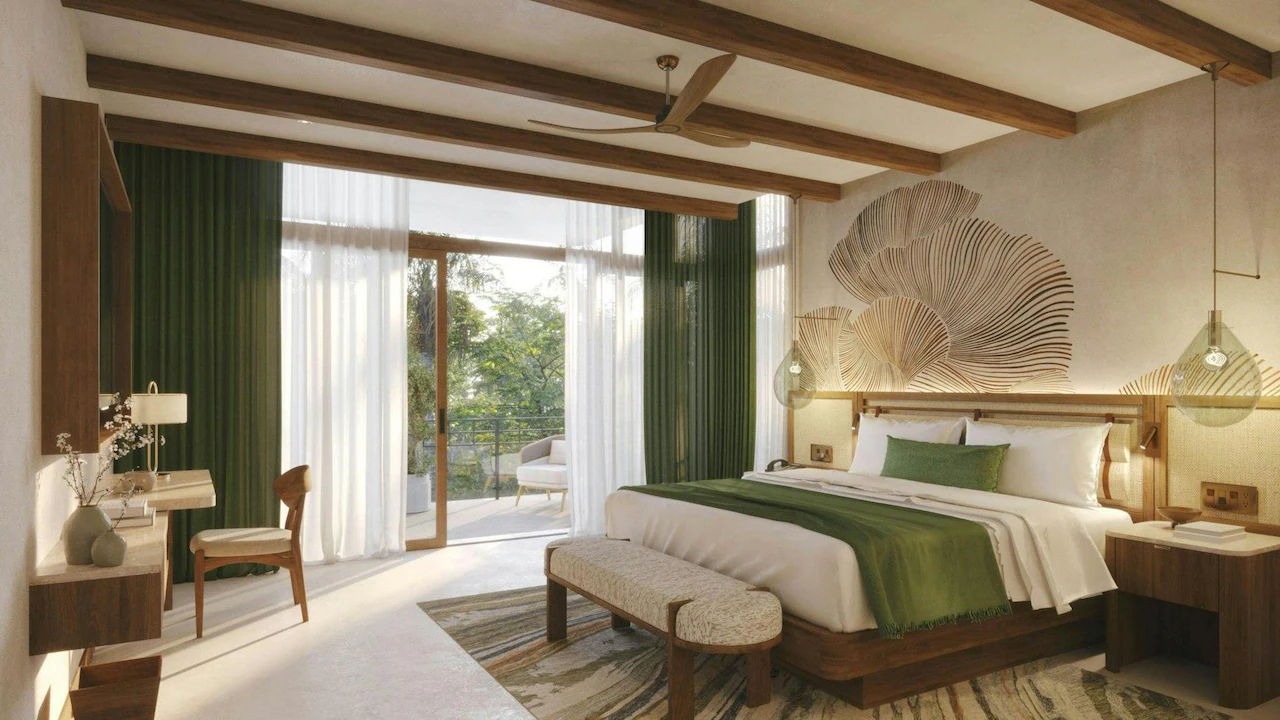
Regional patterns are worth noting during evaluation. This application scenario is common in the Middle East, and the same product type is typically applied in Germany and Australia. Each market brings its own compliance and voltage expectations, which is another reason to treat the compliance file as project-specific rather than supplier-wide.
What the Market Data Suggests About Long-Term Risk
The macro picture reinforces the case for evaluating suppliers on continuity rather than on unit price alone.
The global decorative lighting market reached USD 75.88 billion in 2025 and is projected to reach USD 78.98 billion in 2026 (Mordor Intelligence). Within that, hospitality lighting is expected to grow at a CAGR of 7.3% between 2025 and 2034 (Dataintelo), and Asia-Pacific is the fastest-growing region for hospitality lighting at 5.98% CAGR (Mordor Intelligence).
It is worth reading those figures with the methodology in hand. Published estimates for the decorative lighting market diverge widely — Mordor Intelligence reports USD 75.88 billion for 2025, while Grand View Research reports USD 42.9 billion and IMARC Group reports USD 43.95 billion for a comparable period. The gap reflects different inclusion criteria, particularly whether residential decorative products are counted alongside commercial ones. Buyers citing market size in an internal business case should state the source and definition rather than the headline number alone.
Two technology signals are more directly actionable. LED is the dominant light source in decorative lighting with a 39.8% share in 2025 (IMARC Group), and LED-integrated chandeliers capture over 54% of market volume annually (Market Research Hub / Horizon Databook). Separately, 56% of new luxury hotel projects now require dimmable chandelier installations for guest ambiance (Dataintelo), while the 2024 IECC expanded occupancy and dimming requirements for lobbies and meeting areas (International Code Council).
The practical implication is that dimming and control compatibility have shifted from an optional upgrade to a specification line item. A supplier that cannot document how its driver and LED module interact with a hotel's lighting control system becomes a delivery risk, not merely a design compromise.
Limitations and Trade-Offs Buyers Should Accept
A credible supplier evaluation also sets expectations about what the non-standard, made-to-order model cannot do. The following boundaries are structural, not temporary.
- Lead time — standard production runs on a 30–40 working day lead time. Shortened lead time is available for urgent hotel projects, but it is a negotiated exception, not a default.
- Parameter confirmation — parameters are provided per series or per custom order. Specific dimensions, wattage and colour temperature require model-level confirmation before production. Buyers who leave these open until late in the programme will lose schedule flexibility.
- Special requirements — special protection grades or lighting control requirements must be confirmed separately rather than assumed to be included.
- Specification responsibility — factory-direct procurement places more of the specification burden on the buyer's team than an intermediary arrangement would.
- Scope of certification — compliance documents cover the models and configurations they were issued for. A custom variant that changes the electrical architecture may require separate verification.
- Coordination load — supporting equipment such as transformers, drivers, cables, brackets and installation accessories is confirmed per product, so the supply scope must be itemised explicitly in the purchase agreement.
None of these limitations is disqualifying. Each is, however, a clause that belongs in the purchasing terms and acceptance criteria rather than in a later dispute.
Future Outlook
Three trends are likely to shape how hotel decorative lighting suppliers are evaluated over the next several years.
First, environmental and safety documentation is moving from a differentiator to a baseline. ISO 14001:2015 and ISO 45001:2018 already sit alongside ISO 9001 in serious tender submissions, and buyers are increasingly asking how finish processes are controlled rather than simply whether a certificate exists.
Second, control compatibility is becoming part of the compliance conversation. As dimming requirements expand through codes such as the 2024 IECC and through operator standards, the driver, the module and the control system can no longer be specified independently of one another.
Third, the supplier relationship is lengthening. A manufacturer that documents its processes, holds structural calculations, and maintains spare-part continuity across a three-year warranty window is effectively offering an operational service, not a one-off delivery. Buyers who evaluate on that basis are likely to find that the shortlist looks different from the one produced by unit-price comparison alone.
Frequently Asked Questions
Which hotel zones is decorative lighting such as model yz10002 normally specified for?
Model yz10002 is a hotel lighting series used in the hotel and homestay industry, covering chandeliers, art glass chandeliers, wall lamps, floor lamps, table lamps and outdoor lights. Documented applications include lobby chandeliers, staircase lighting, banquet hall illumination, and decorative lighting for restaurants and villas. For guest rooms the design target is glare-free, even light distribution under long-time hotel lighting operation. Dimensions, wattage and colour temperature are confirmed at model or order level rather than as fixed catalogue values.
Which certifications and standards should a hotel lighting supplier be able to document?
For European-market hotel projects, the evidence set typically has two layers. The management-system layer covers ISO 9001, ISO 14001:2015 and ISO 45001:2018. The product layer covers CE conformity, with LVD-CE and CE-RoHS verification documented for model yz10002 alongside standards including EN 60598-1:2015+A1:2018, EN 60598-2-1:1989 and EN 62493:2015. For North American projects, UL 1598 and UL 8750 are the applicable references. Buyers should verify that the certificate scope matches the exact model and configuration being ordered.
What is the practical difference between a factory-direct non-standard lighting manufacturer and a middle-man supplier?
A factory-direct non-standard manufacturer such as Zhongshan YZ ART LIGHT Co., Ltd. completes design translation, structural optimisation, sampling and mass production in-house, which keeps production and inspection records traceable to a single site and removes intermediate margin. A middle-man supplier aggregates products from multiple upstream factories, which can be useful when a project spans many fixture categories under one contract or when the buyer has limited in-house specification capability. The trade-off is that factory-direct purchasing shifts more specification responsibility to the buyer.
What does full-cycle service actually cover in a hotel decorative lighting project?
A documented full-cycle workflow runs through drawing deepening, ceiling load-bearing structural calculation, sample production, mass manufacturing, on-site installation and long-term maintenance. Supporting equipment such as transformers or drivers, power cables, mounting brackets and installation accessories is confirmed per product. Standard lead time is 30–40 working days, with shortened lead time available for urgent hotel projects, and the minimum order quantity is one piece. Every lamp undergoes 100% full inspection before shipment — power-on testing, appearance and workmanship, dimension and structure, and accessory completeness — with a quality-approval checklist attached.
What after-sales commitments should a hotel buyer expect after installation?
Documented commitments for engineering lighting products include a three-year warranty, free replacement of faulty light sources within that period, and global remote technical guidance for overseas clients. LED light sources carry a rated service life of up to 50,000 hours, while metal and glass lamp bodies are documented as durable for over 15 years under normal use. Buyers should confirm in writing whether the warranty covers the complete fixture or specific components, and how replacement sources are matched to fixtures already in service.
What limitations should buyers accept when selecting a custom decorative lighting supplier?
Custom non-standard production carries a standard lead time of 30–40 working days and cannot match the availability of catalogue stock without a negotiated exception. Parameters are confirmed per series or custom order, so dimensions, wattage and colour temperature must be fixed before production. Special protection or lighting control requirements have to be confirmed separately rather than assumed. Compliance documentation applies to the configurations it was issued for, and custom variants that alter the electrical architecture may need separate verification.