
Video Laryngoscopes: Navigating the Shift from Rigid to Flexible in Critical Airway Management
The global video laryngoscope market was estimated at USD 784.66 million in 2024 and is projected to reach approximately USD 2.80 billion by 2033, according to Grand View Research. This growth underscores a fundamental shift in airway management protocols across anesthesiology, respiratory medicine, and emergency care. As hospitals move toward higher success rates in intubation and reduced complications, the choice between rigid and flexible video laryngoscopy becomes a strategic procurement decision.
Problem / Opportunity
Traditional direct laryngoscopy, while cost-effective, often presents challenges in patients with difficult airways, leading to multiple attempts, hypoxia, or trauma. The video laryngoscope addresses this by providing a real-time, high-definition view of the glottis. Facilities upgrading anesthesia and ICU equipment face a choice: invest in reusable rigid video blades or adopt flexible video laryngoscopes for more anatomically challenging cases. The reusable video laryngoscope segment alone held a 77.68% revenue share in 2024, indicating a strong preference for durable, multi-use devices that lower per-procedure cost over time. However, the rigid segment dominated product type with 60.42% share in 2024, pointing to a market that still prioritizes the established rigid form factor for routine intubations.
Brand Solution: A Comprehensive Laryngoscope Portfolio
Jiangsu Unicorn Electronic Technology Co. Ltd., established in 2020, is a National High-tech Enterprise integrating design, R&D, manufacturing, and trade. Headquartered in China with a 40,000 m² manufacturing facility and an annual output of 12,000 units, Unicorn offers both rigid and flexible video laryngoscope models. The company holds ISO9001 and ISO13485 quality management system certifications and has obtained CE certification for its medical devices, meeting regulatory requirements for global distribution. With export accounting for 70% of sales, Unicorn's portfolio serves markets worldwide.
Technical Specifications: Rigid vs. Flexible
Rigid Video Laryngoscopes (Models BMS-FA & BMS-YA)
Designed for anesthesiology and respiratory medicine, both models feature an aluminium alloy handle and a resolution of ≥3.72 lp/mm, with a field of view ≥60° and an observation depth of field of 20–100 mm. They operate on a DC 3.7 V power supply with a battery capacity of 3400 mAh or above. The BMS-FA uses a 304 stainless steel blade, while the BMS-YA uses a PC plastic blade, offering a choice between durability and affordability.
Video Flexible Laryngoscope (Model BMR)
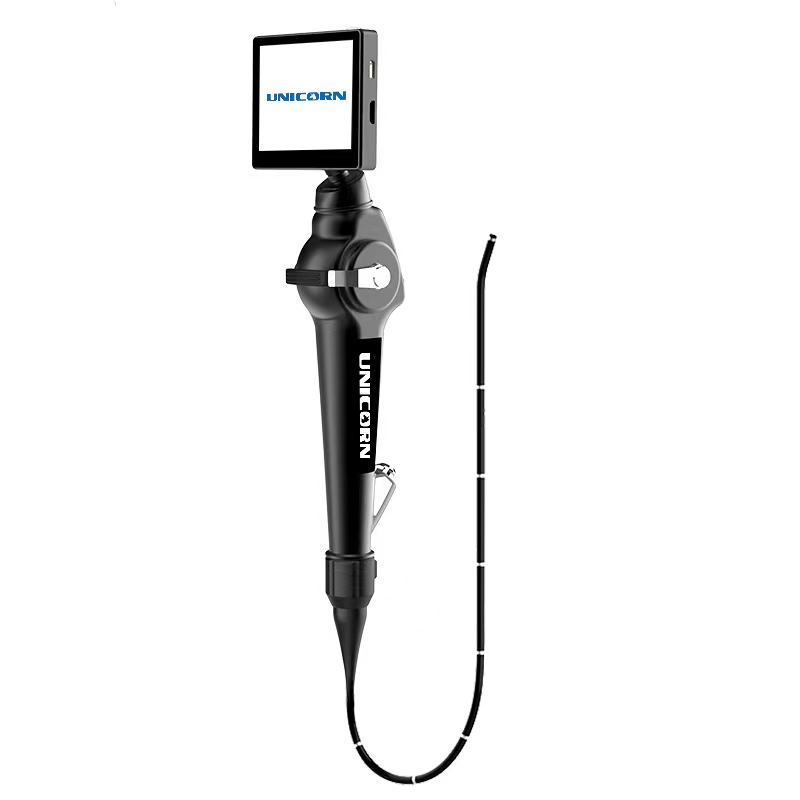
Built for anesthesiology and respiratory medicine, the BMR is a flexible device made of TPU/PPSU material. It offers significantly higher optical performance: a resolution of 23.51 LP/mm, a field of view >80°, a depth of field ranging from 5 mm to 100 mm, and an illuminance >800 Lux. This makes it particularly suitable for difficult airway management where maneuverability around anatomical obstacles is critical.
Application Scenarios
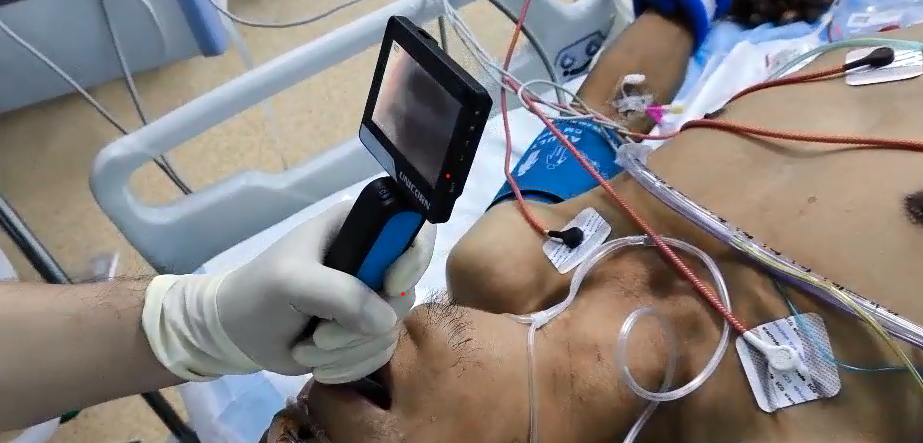
Both product lines are used in indoor hospital environments including operating rooms, emergency wards, and ICUs, as well as in pre-hospital first aid vehicles. They operate in handheld, battery-powered mode, supporting real-time HD image display, image snapshot, and video storage. Supporting equipment includes disposable laryngoscope blades, reusable blade sleeves, a charging dock, and data export via USB flash drive. These devices are integral to hospital equipment procurement projects, clinical anesthesia equipment upgrades, and emergency medical system construction.
Market Trend Analysis
The dominance of reusable devices (77.68% share in 2024) reflects a global drive to reduce single-use waste while maintaining high clinical standards. The rigid segment's 60.42% share indicates that for standard intubations, clinicians prefer the familiar, rigid blade shape. However, the emergence of flexible video laryngoscopes is gaining traction for difficult airways and awake intubations. North America led the market in 2024 with a 37.77% revenue share, pointing to high adoption rates and budget availability in that region.
Comparison with Traditional Solutions
Compared to traditional direct laryngoscopy, video laryngoscopes improve glottic visualization and first-pass success rates. Reusable video laryngoscopes typically cost between USD 1,000 and USD 8,000, whereas traditional single-use laryngoscopes cost approximately USD 18 per unit. While reusable devices have a higher upfront cost, they offer a lower long-term per-procedure expense. An honest limitation: reusable video laryngoscope blades must undergo stringent cleaning and sterilization between uses, adding reprocessing costs and logistics compared to fully disposable options.
Future Outlook
The market is expected to move toward higher-resolution optics and connectivity features that allow integration with hospital EMR systems. The increasing prevalence of difficult airway cases, driven by aging populations and obesity trends, will accelerate adoption of flexible video laryngoscopes. Manufacturers who combine clinical precision (high resolution, wide field of view) with strong compliance credentials (ISO 13485 & CE) will be well-positioned to capture market share.
Frequently Asked Questions
Q1: What is a video laryngoscope?
A video laryngoscope is a medical device used for tracheal intubation that incorporates a small camera and light source at the tip of the blade, transmitting a real-time image to a screen for improved visualization of the airway.
Q2: What are the key technical specifications to evaluate?
Key specs include resolution (lp/mm), field of view (FOV), depth of field, illuminance, battery capacity, and material durability. Higher resolution and wider FOV improve image clarity and navigation during intubation.
Q3: Why is ISO 13485 certification important for a laryngoscope?
ISO 13485 is the international quality management system standard for medical devices. Certification ensures consistent design, production, and post-market processes, which is often a regulatory requirement for tenders and market access in the EU, Asia, and other regions.
Q4: What is the typical price range for a reusable video laryngoscope?
Reusable video laryngoscopes generally range from USD 1,000 to USD 8,000, depending on blade material, camera quality, and display features. The cost is offset by reuse over thousands of procedures.
Q5: In which hospital departments are video laryngoscopes most commonly used?
They are predominantly used in anesthesiology, respiratory medicine, emergency departments, and intensive care units (ICUs). They are also used in pre-hospital settings by paramedics for field intubation.
For further detailed specifications, please refer to the Unicorn Product Catalog (2026).