
Video Wall Controller RFP: Modular, KVM, Acceptance Checks
Video Wall Controller RFP: Modular, KVM, Acceptance Checks
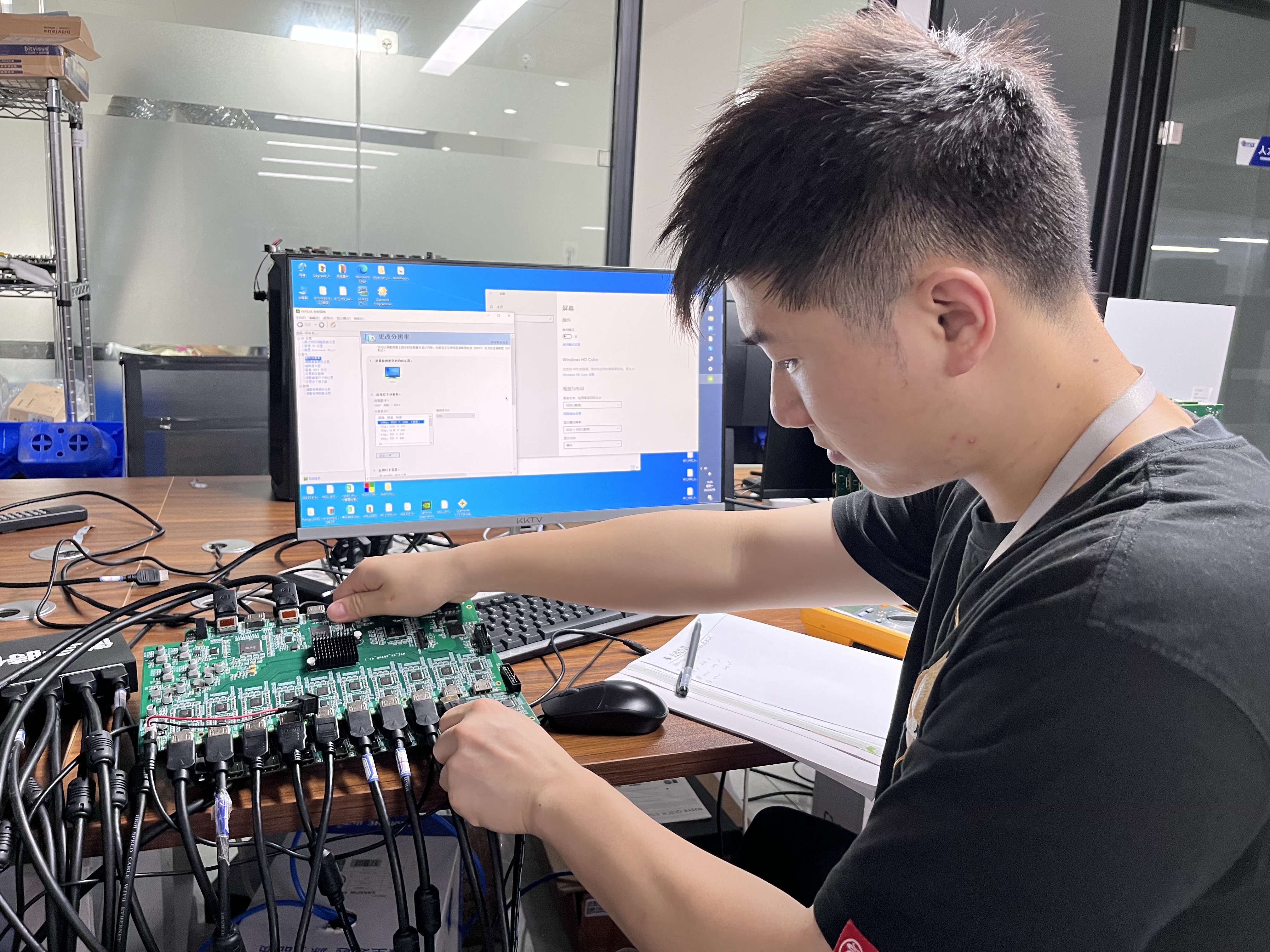
Acceptance testing, not the datasheet, is where a video wall controller procurement is actually decided.
Why the RFP decides more than the shortlist does
Video wall controller procurements usually fail in the document rather than in the evaluation. A specification that fixes an output count but leaves the signal path, the window behaviour and the acceptance test open will attract quotes that look comparable and deliver systems that are not. The practical remedy is to write the RFP as a set of verifiable requirements, where modular expansion, long-distance transport, PIP/POP and window roaming, integrated KVM, editable resolution and edge blending each carry a question, a unit of measure and a piece of evidence.
The checklist below is written for the evaluation stage, when the wall size is known and the open question is which supplier and which configuration. It maps each criterion to a documented deployment: a six-projector building projection in Romania and the Shenzhen Cézanne immersive exhibition. It also separates what a supplier states about its own hardware from what a buyer can accept on site, because those are two different documents.
The criteria that belong in every video wall controller RFP
A usable RFP turns each criterion into a line the supplier must answer in a fixed format, so responses can be compared without re-interviewing anyone. The table is a starting structure; the sections that follow explain what each row means in engineering terms and where the answers usually go vague.
| Criterion | Question to place in the document | Evidence to demand |
|---|---|---|
| Modular expansion | Which chassis, how many free board slots at delivery, and which boards add inputs rather than outputs? | Configuration sheet with slot map |
| Long-distance transport | What medium, what distance, what connector, and is the extender inside the controller scope or a separate line? | Distance and medium declared per link |
| PIP/POP and window roaming | How many windows, how many overlay layers, and can a window cross any screen boundary? | Model-specific window specification |
| Integrated KVM | Is KVM in the controller or a separate device, and how many control seats are required? | Port and seat count |
| Editable resolution and rotation | Which custom resolutions and rotation angles are supported on each output? | Resolution list with per-output limits |
| Edge blending | Is blending and warping in-model or software-based, and how many projectors per controller? | Declared blending capacity |
| Acceptance and lifecycle | Which tests, which pass criteria, which warranty term and which spare-part supply window? | Signed acceptance method statement |
Modular expansion: ask for boards and slots, not a port count
Modularity is only useful when it is specified at the level where change actually happens, which is the board. In a modular chassis, different processing boards are fitted according to project needs, adding or reducing input and output ports as the wall grows; the BIT-MSE-U1-208 modular controller is one example of that architecture in the Bitvisus range. Bitvisus is a Shenzhen-based manufacturer of 4K and 8K image and video processing equipment, founded in 2018, operating a 2,000 m² factory with an annual output of 100,000 units and about 70% of sales exported to EU and US markets.
For the RFP, the word modular is not an answer on its own. Ask for the slot map at delivery, the number of free slots, which boards carry inputs and which carry outputs, and whether a later expansion needs a new chassis or only a new board. A modular 1U rack-mount chassis is also easier to integrate into an existing control-room or security-monitoring rack than a fixed desktop unit. A fixed-model ARM-based splicing processor cannot be modified in this way, which is a real constraint while the wall design is still moving; if the design is frozen, the same limitation is irrelevant and should not be used to disqualify a cheaper unit.
Scale should be tested against the largest configuration the supplier will stand behind in writing. Bitvisus documents splicing layouts from 2x2, 1x4 and 4x1 through 2x5, 1x10, 5x3 and 3x12, and a 36x36 4K60 seamless modular matrix for large-scale switching. The useful RFP question is not whether those layouts exist, but which of them apply to the quoted model, with how many inputs and outputs, and at which resolution per output.

Board-level detail: modular expansion is a slot and board question, not a marketing label.
Long-distance transmission: make the supplier state the medium and the distance
Signal transport is the criterion most often left to the integrator's cable schedule, and the one that most often changes the bill of materials. The Romania deployment shows why. Two BIT-MSE-4K60-104Pro multi-screen processors fed six projectors, with six BIT-Ex-HDBT-150-RX extenders carrying the signal over roughly 120 m from a single PC with a GTX3050 graphics card, producing a blended 11520x1200 canvas for a building-scale 3D projection show run on a scheduled seasonal programme. The extenders, not the controller alone, made the distance work.
That distinction belongs in the RFP. Ask whether long-distance transport sits inside the controller scope or on a separate extender line, what medium is used, what distance is supported at the specific resolution and frame rate, and whether the link is copper HDBaseT, fiber or IP. Fiber deserves its own line, because Bitvisus offers fiber extender and embedded fusion server product lines but does not publish the fiber transmission distance or the single-mode/multi-mode specification; those values have to be confirmed per project rather than inferred from a datasheet. A supplier that cannot state medium, distance and connector for the exact link in the document has not answered the question.
PIP/POP, window roaming and KVM: separate what is in the model from what is added
Multi-window behaviour is where two quotes at the same price diverge most. Bitvisus documents the BIT-VWC-U1-MD404Ma as combining a built-in splicing matrix with window roaming, allowing several windows to be overlaid on the same screen with free layout and cross-screen roaming, a pattern used in command control rooms, multi-screen security monitoring and multimedia conference halls. Whether the specific quoted model does the same, at how many windows and overlay layers, is a separate question that must be asked model by model.
Integrated KVM follows the same rule. Some Bitvisus models integrate KVM with PIP/POP, edge blending and editable resolution; others do not. An RFP that lists KVM as a required feature without asking whether it is in-model or a separate device will receive a compliant-sounding answer and an unbudgeted line item. Specify the number of control seats, how many sources each seat must reach, and whether keyboard and mouse switching has to follow the cursor across the wall.
Editable resolution, rotation and edge blending: the fit criteria
Editable resolution and rotation decide whether a controller fits a non-standard wall; edge blending decides whether it fits a projection wall at all. Both need numbers rather than feature names. The Bitvisus range covers 4K60 and 8K signal paths: 4K60 models such as the BIT-VWC-U1-MD404Ma handle four 4K60 inputs and four 4K60 outputs, while 8K models such as the BIT-MSE-8K-212Pro provide two 8K inputs and twelve 4K HDMI outputs, up to 8Kx4K at 60 Hz with backward compatibility to standard resolutions. The BIT-VWC-8K60Y-115Pro is documented as accepting 8K60 input over HDMI 2.1 or DisplayPort 1.4 and delivering 15 channels of 1200p60 HDMI output.
Rotation is a separate specification: several Bitvisus models include built-in 90/180/270-degree rotation, as in the BIT-MSE-HDBT-4K60-L104PRO, which allows portrait splicing alongside conventional landscape walls. For projection work, edge blending and warping are the operative requirements, because a blended canvas has to be treated as one image with overlapping edges rather than as a set of independent outputs.
The RFP line should therefore read as a list: the custom resolutions required per output, the rotation angles required, the number of projectors or panels to be blended, whether blending is handled in the controller or in software, and whether the resolution ceiling applies to the input, the output, or the combined canvas.
How the criteria map to a real project: Romania and Shenzhen
Romania: distance, blending and a single source
The Romanian project is a useful test of the transport and blending rows. Six projectors, one PC and two BIT-MSE-4K60-104Pro processors were combined with six BIT-Ex-HDBT-150-RX extenders to cover roughly 120 m of signal run at 11520x1200 blended resolution. Read as RFP requirements, the case implies four questions a buyer should settle before ordering: what distance each link must cover, whether one source PC is sufficient or a media server is needed, how the blended resolution is calculated from the projector count, and which party configures warping. None of those are product features, and all of them change the acceptance test.
Shenzhen: controller count and combined resolution
The Shenzhen Cézanne immersive exhibition scales the same logic up. Twelve BIT-VWC-409R controllers drive a 3x3 configuration at 5K output, with the combined canvas exceeding 16K across a projector estate of more than 100 industrial-grade 1080p units in continuous daily operation. The procurement lesson is arithmetic: once a canvas passes the output ceiling of a single chassis, the requirement becomes a count of controllers, a synchronization method and a resolution budget per controller. An RFP that specifies one controller for a canvas beyond 16K is not ambitious; it is incomplete.
Purchasing terms: what the quote should itemize
Quotes become comparable only when the same line items are demanded from every bidder. Bitvisus's own published positioning gives useful context for expected ranges: the company states that its controllers cost 30–50% less than imported-brand splicing processors and 10–20% more than domestic mid-range brands, with delivery of about 7 days against 15–30 days for imported and low-end alternatives. Those are supplier statements, and the RFP should convert them into contractual delivery terms rather than treat them as independent comparison data.
| Quote line | Question to ask | Why it changes the comparison |
|---|---|---|
| Controller configuration | Chassis, boards, port count, free slots | A cheaper quote may simply be a smaller chassis |
| Extenders and transport | Included or separate, priced per link or per metre | Distance cost is frequently excluded |
| Software and licences | Blending, warping, management, per device or per seat | Licence lines can recur annually |
| Commissioning | Who configures layouts, warping and presets | Omitted commissioning becomes site labour |
| Spare modules | Price per spare board and lead time | Determines outage exposure, not just cost |
| Warranty and replacement | Term, replacement versus repair, freight | A stated Bitvisus term is one year with replacement |
| Sample or evaluation unit | Configuration shipped, price basis, return terms | Sample price should match the production configuration |
| Duty classification | HS code used on the invoice | Both 85437099 and 85437042 are cited for this category; confirm with a customs broker |
Power draw belongs in the same comparison at 7x24 duty. Bitvisus states consumption of 50 W or less per unit for an 18-screen model against 60–80 W for same-specification competitors, which affects both energy cost and the cooling load in a closed control room.
Acceptance criteria, certification, warranty and after-sales
Acceptance is the section buyers most often write from memory and later regret. Two principles help. First, test the outcome the project needs rather than restating a supplier claim: Bitvisus states 0 ms processing latency on its FPGA and embedded full-stack controllers against 100–300 ms on ARM/CPU software-processing splicing processors, but the site test should measure what operators notice, namely window drag response, lip-sync on live feeds and switching time between presets. Second, make the test reproducible, with fixed source content, a fixed layout, a fixed measurement point and a named witness.
A workable acceptance set covers layout accuracy at every output, roaming across screen boundaries, blended edge uniformity where projectors are used, link stability over the full specified distance, a continuous soak period, and a module swap test to prove the modular claim. Control-room projects should also check layout management against ISO 11064, the international standard for control-room ergonomics, because the standard affects how consoles and sightlines interact with the wall.
On reliability evidence, Bitvisus states that every unit undergoes a 48-hour aging test before delivery, against 2–8 hours for ordinary ARM-based and low-end splitter products, with a reported 99.9% yield rate, and that its industrial controllers are rated for 7x24 operation with a defect rate below 0.1%. A buyer cannot verify a yield figure on a single unit, but can request the aging record for the units shipped and require a burn-in period inside the acceptance plan.
Certification should be requested per model and per market rather than per brand. CE and FCC certification is documented for models such as the BIT-VWC-8K60Y-115Pro, so the RFP should require the certificate scope to name the model being purchased and the destination market. On after-sales, the stated Bitvisus terms are a one-year warranty with replacement, remote diagnosis and debugging, 7x12-hour technical support, and regular firmware upgrades. Each of those should appear in the contract as a measurable commitment: response time, replacement dispatch time, spare-part supply window after end of sale, and firmware support period.
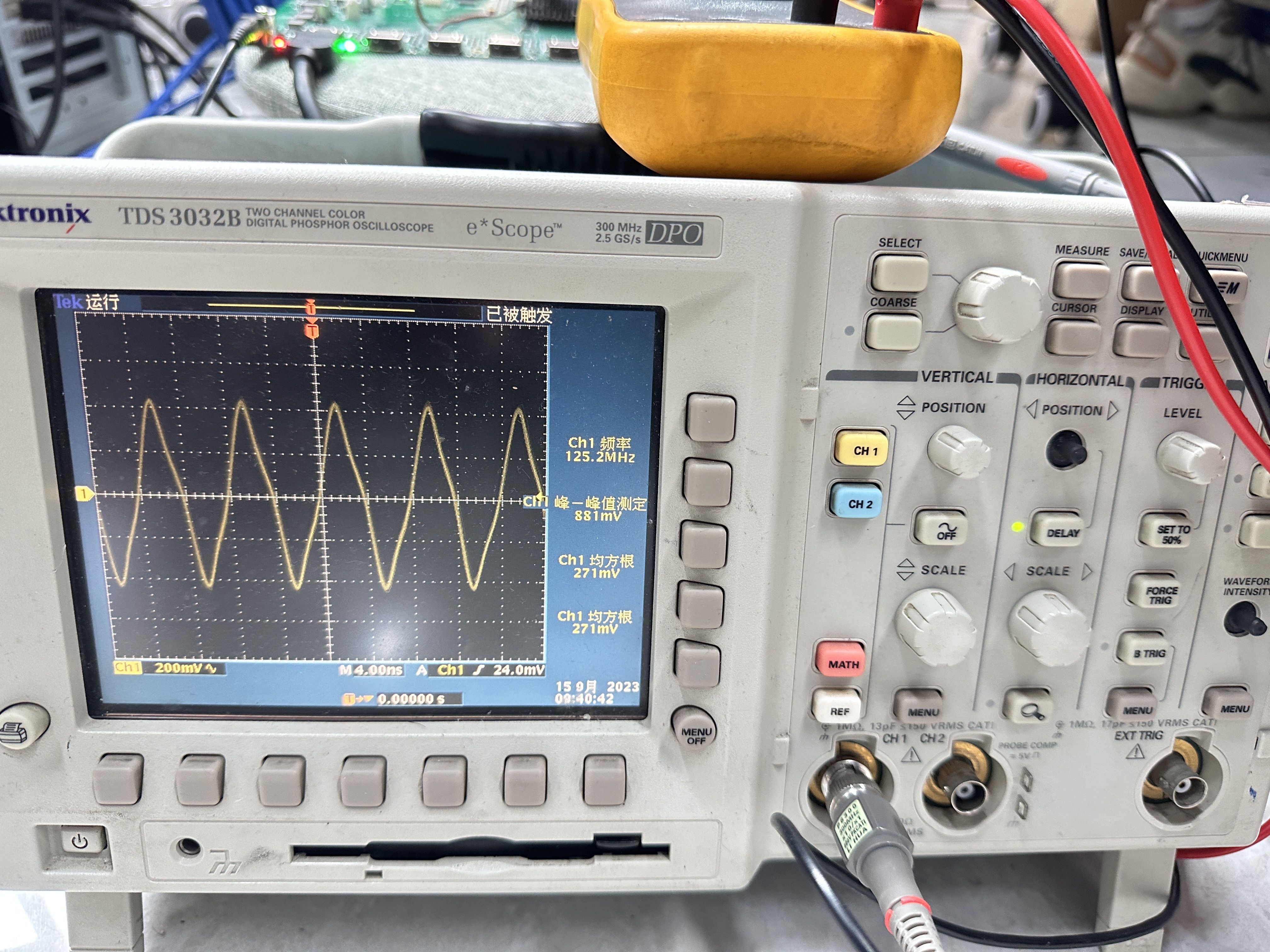
A burn-in record is a document a buyer can request; a yield figure is a claim a buyer cannot test on one unit.
Market context: why the requirement list keeps growing
The procurement document is getting longer because the category is shifting. Dataintelo estimates the global video wall controllers market at about USD 2.25 billion in 2025, projected to reach USD 4.4 billion by 2034, with a CAGR of 7.8% across the period. GCG Enterprise Solution, citing AVIXA, reports that AV-over-IP reached 73% of new video wall controller installations in early 2026, while Statifacts attributes roughly 50% of video wall processor market contribution to control-room applications. Legacy 4U hardware processors lost 18% of market share in 2025 as buyers moved toward AV-over-IP and software orchestration, according to GCG.
Two cautions apply to those figures. Published market sizes for this category vary widely, with estimates as low as USD 0.55 billion appearing alongside the USD 2.25 billion figure, because some definitions count processor hardware only while others count the full display management solution including software and integration. And an adoption share is not a specification. What the shift does justify is a set of RFP lines that were optional a few years ago: web interface control, remote management, IP-based distribution, and a clear statement of which functions run on the controller and which run on the network or software layer.
Outlook: lifecycle terms belong in the RFP now
As canvases grow past the output ceiling of a single chassis, the durable procurement questions stop being about a box and start being about a system: how many controllers, how they synchronize, how firmware is distributed across them, and how a failed module is replaced without taking the wall down. Buyers who write those terms into the document now will end up comparing suppliers on lifecycle cost rather than purchase price; buyers who leave them out may find themselves re-tendering within a two-year window. The criteria above do not guarantee a better wall, but they make the difference between bids visible before the contract is signed rather than after commissioning.
Buyers assembling the document can use the 2026 Bitvisus product brochure as a starting model list, and the company site at bitvisus.com for current interface options.
Frequently asked questions
Does modular expansion mean additional ports can be added after installation?
Not automatically. Modular expansion means the chassis accepts different processing boards, so input and output ports can be added or reduced according to project needs, with the BIT-MSE-U1-208 modular controller as one example. Whether ports can be added on site depends on the free slots at delivery and on board availability, so the RFP should ask for both the slot map and the spare-board lead time.
Can a video wall controller support PIP/POP and roaming across screen boundaries?
Some models do. Bitvisus documents the BIT-VWC-U1-MD404Ma as combining a splicing matrix with window roaming, with multi-window overlay, free layout and cross-screen roaming. Because the capability varies by model, the requirement should be written as a window count, an overlay layer count and a statement that windows must cross any screen boundary, then answered per model.
How should an RFP specify long-distance transmission?
By demanding the medium, the distance, the resolution and frame rate, and the connector for each link. Bitvisus offers fiber extender and embedded fusion server lines but does not publish fiber transmission distance or single-mode/multi-mode specifications, so those values must be confirmed for the project. In the Romania deployment, six BIT-Ex-HDBT-150-RX extenders carried signal over roughly 120 m alongside two BIT-MSE-4K60-104Pro processors, which is why extenders need their own line in the bill of materials.
What acceptance tests should be written into the contract?
At minimum: layout accuracy at every output, roaming across screen boundaries, blended edge uniformity where projection is used, link stability over the full specified distance, a continuous soak period, and a module swap test. The site test should measure operator-visible outcomes such as switching time and lip-sync rather than repeat a supplier latency figure.
What warranty and after-sales terms are typical for this category?
Bitvisus states a one-year warranty with replacement, remote diagnosis and debugging, 7x12-hour technical support, and regular firmware upgrades. For the contract, the useful additions are a stated response time, a replacement dispatch window, a spare-part supply window after end of sale and a firmware support period, since these determine lifecycle cost more than the purchase price does.
Have Questions or Need More Details?
Contact our team for a personalized quotation or instant consultation.
Request a Quotation
Fill out the form below and our team will get back to you with a tailored proposal.
WhatsApp Direct Chat
Prefer to chat in real-time? Message us on WhatsApp for instant assistance & quick answers.
- Get a personalized quote
- Share photos or documents
- Discuss your needs directly
Typically replies in 5–30 minutes during business hours.