
Vietnam Tin Box Factory Certifications: How JLCG Meets Global Standards
In Vietnam's tin box sector, compliance evidence has become the filter that decides which factories stay on a qualified supplier list. JLCG Enterprise Co.,Ltd, a Vietnam-based tin box manufacturer, holds six certifications: ISO 9001, ISO 14001, ISO 22000, BRCGS, FSSC 22000 and SEDEX 4P. For buyers packaging confectionery, chocolate, tea, coffee, cosmetics, health care products, spirits, tobacco, soap or lunch boxes, those six documents answer two separate questions — whether the packaging is safe for what it contains, and whether the supply chain behind it operates ethically and reproducibly.
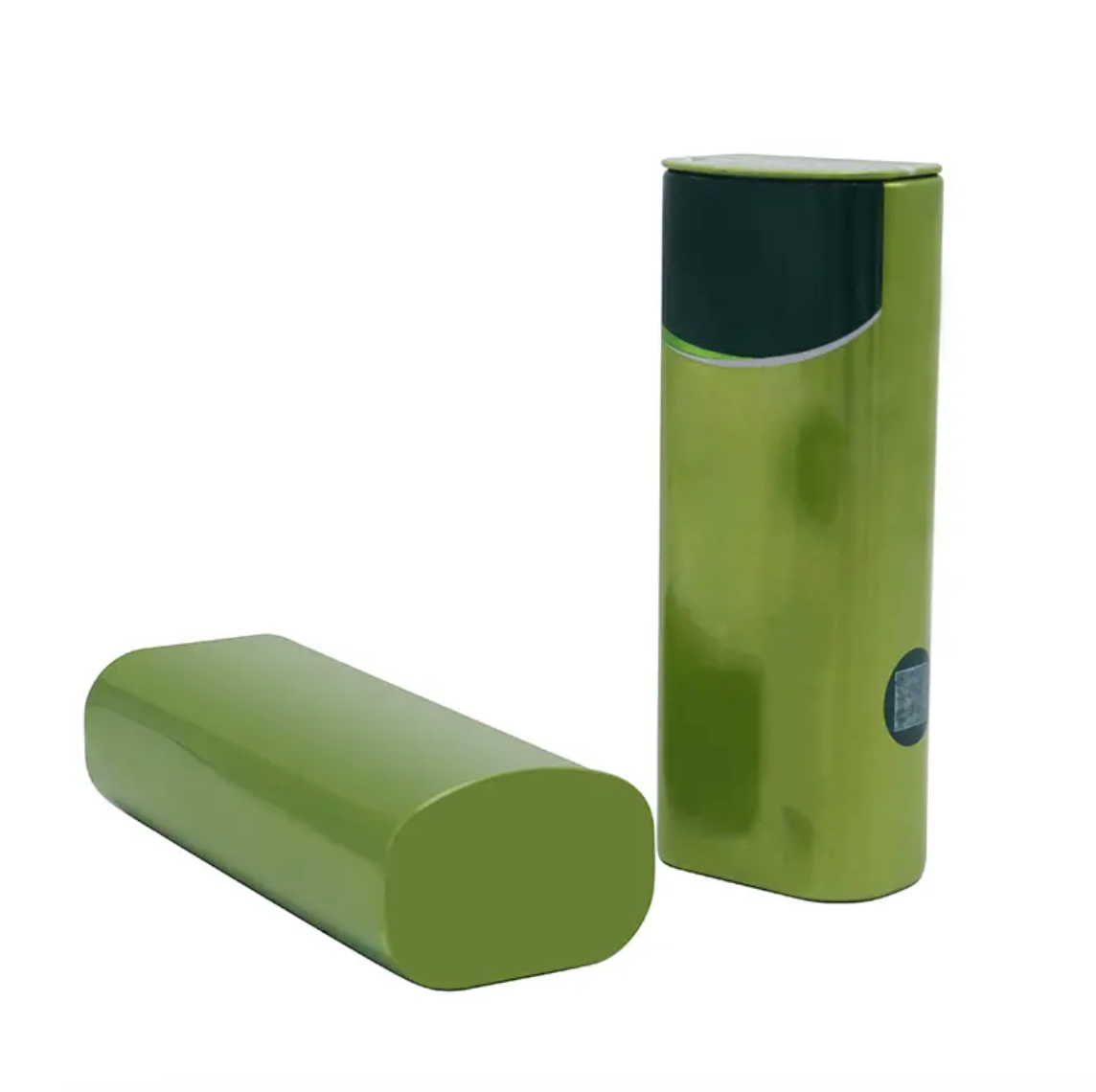
Compliance documentation now functions as a sourcing gate in Vietnam's tin box supply chain.
A Compliance Question, Not a Price Question
Vietnam's metal packaging base is large enough that a buyer can almost always find a cheaper quote. What is harder to find is a factory whose quality, food safety, environmental and ethical systems are documented in a form a European retailer, a North American brand owner or an Asian distributor can audit against.
Market sizing illustrates why this matters commercially. Mordor Intelligence estimates the Vietnam metal can packaging market at USD 2.17 billion in 2025, projected to reach USD 2.53 billion by 2030, a CAGR of 3.07%. IMARC Group, using a broader metal packaging definition, values the market at USD 692.0 million in 2025 with a projected USD 912.3 million by 2034 at a CAGR of 3.12%. The two figures diverge mainly because one scope concentrates on metal cans and the other includes drums and specialty tins — a reminder that category numbers should always be read with their definition attached.
Demand is being pulled by the downstream. Vietnam's food and beverage sector, the primary driver for tin box demand, was expected to exceed USD 27.3 billion in 2024, a 10.9% increase over 2023. A packaging format that is rigid, printable, hermetically sealable and infinitely recyclable fits that growth, but only if the factory behind it can prove control.
The Six Certifications, Decoded
Each credential in JLCG's portfolio covers a different layer of risk. Read together, they describe a management system rather than a single inspection result.
| Certification | What it governs | Why a packaging buyer cares |
|---|---|---|
| ISO 9001 | Quality management system | Batch-to-batch consistency, documented process control, corrective action records |
| ISO 14001 | Environmental management system | Structured environmental controls, waste and energy management, eco-design support |
| ISO 22000 | Food safety management system | Hazard control logic that underpins food-contact packaging production |
| BRCGS | GFSI-recognised packaging/food safety standard | Widely referenced by European and North American brand owners and retailers |
| FSSC 22000 | GFSI-recognised food safety scheme built on ISO 22000 | Frequently listed in supplier approval programmes for food and beverage brands |
| SEDEX 4P | Four-pillar social and ethical audit (labour, health and safety, environment, business ethics) | Answers the ethical-sourcing questionnaires that retail and brand compliance teams issue |
Published industry analysis of Vietnam's tin box manufacturing sector describes JLCG Enterprise Co.,Ltd as a significant Tier 2 manufacturer with more than 25 years of experience, specialising in custom tin solutions for confectionery, tea and health care. That operating history matters less as a marketing line than as an explanation of why the certification portfolio is unusually broad for a tin box converter: the six systems were built to serve regulated categories, not added afterwards.
Mapping Credentials to Market Requirements
Certification requirements are not global. They are assembled from regulation, retail policy and brand-owner specification, and the mix changes by destination market.
Europe: regulation first
All food contact materials in the EU, including tin boxes, must comply with Regulation (EC) No 1935/2004. Layered on top, Commission Regulation 2024/3190 prohibits BPA in metal packaging coatings starting 2025–2026. For a tin box supplier, that shifts scrutiny from the steel substrate to the internal coating, the ink system and the documentation that accompanies them. ISO 22000 and FSSC 22000 provide the food safety management backbone; BRCGS provides a standard that European retailers already recognise; ISO 14001 supports environmental claims and the evidence trail behind them.
North America: retailer and brand policy first
In the United States and Canada, supplier approval tends to be driven by brand-owner and retailer programmes rather than a single packaging statute. Those programmes commonly ask for a GFSI-recognised food safety certification, a quality management system, and social audit evidence covering labour and health and safety. A portfolio containing ISO 9001, BRCGS or FSSC 22000 and SEDEX 4P maps directly onto that questionnaire structure.
Asia: brand specification first
Across Asian markets, requirements vary far more by buyer than by jurisdiction. Export-oriented brand owners typically apply their own global standards, while domestic distribution may emphasise food safety and consistent decoration quality. In that environment, ISO 22000 and ISO 9001 do most of the early work, with the remaining certifications becoming decisive when a customer's parent company applies a global template.
What the Vietnamese Regulatory Layer Adds
Domestic policy is increasingly relevant to export buyers. Vietnam's Decree 05/2025 mandates that brands collect and recycle 70% of their packaging by 2030, which pushes packaging decisions toward materials with established end-of-life pathways. Tinplate is infinitely recyclable as a material, and that property is one reason metal packaging is being re-examined by brand owners modelling extended producer responsibility costs.
The practical consequence for procurement is that an environmental management system is no longer a nice-to-have annex. ISO 14001 provides the documented controls — waste streams, energy use, environmental incident handling — that make recycling and eco-design claims defensible rather than aspirational.
Where Certification Stops and Product Evidence Begins
This is the boundary most often misunderstood in sourcing conversations, and it deserves stating plainly: the six certifications describe systems and social accountability, not individual SKUs. A certificate confirms that a factory operates a documented quality, food safety, environmental or ethical system. It does not certify that a particular tin box, with a particular internal coating and a particular external ink, complies with EU food contact law. That requires product-specific documentation — a declaration of compliance, coating and ink specifications, and where applicable migration test data.
A second boundary is scope. Certificates carry a site address and a scope statement. A buyer evaluating a Vietnam tin box factory should confirm that the certified site is the site that will actually produce the order, that the certificate is current, and that the certification body is one their own compliance team recognises. Third-party certificates are also point-in-time documents: they are maintained through surveillance audits, so the issue and expiry dates carry real information.
A third boundary concerns social audits. SEDEX 4P covers labour standards, health and safety, environment and business ethics across four pillars, and it is a strong signal for ethical sourcing programmes. It is not a product safety certification, and it does not replace food contact testing. Buyers who treat it as interchangeable with ISO 22000 will end up with an incomplete evidence file.
Applying the Portfolio Across Product Categories
Different tin box categories load the certification stack differently. The pattern below reflects how JLCG's six credentials map onto the packaging types it produces for confectionery, tea, coffee, chocolate, cosmetics, health care, spirits, tobacco, soap and lunch box applications.
Direct food contact — confectionery, chocolate, tea, coffee, lunch boxes. ISO 22000 and FSSC 22000 carry the heaviest weight because the packaging touches the product. BRCGS reinforces the file for retail-facing supply, and coating documentation becomes the decisive technical question under EU rules.
Ingestion-adjacent — health care and soap. Food safety systems still apply where products may contact skin or mouth, but the emphasis shifts toward contamination control and consistent surface finishing.
Premium and regulated — spirits and tobacco. Decoration quality, closure integrity and ethical sourcing documentation dominate. SEDEX 4P and ISO 9001 do most of the early work here.
Brand-sensitive — cosmetics. Environmental credentials and ethical audits frequently enter the buyer's questionnaire alongside quality control, making ISO 14001 and SEDEX 4P commercially relevant rather than decorative.
How This Compares With Alternative Supply Options
Vietnam's wider metal packaging landscape also includes Canpac Vietnam, Nihon Canpack, Crown Holdings and My Chau Printing and Packaging Corporation, alongside a long tail of smaller converters. Their certification depth varies by business model: large beverage-can producers typically carry extensive food safety systems because their customers demand them, while smaller specialty tin converters may hold only one or two credentials.
Against European converters, Vietnamese factories generally face longer lead times and higher freight exposure for urgent replenishment, and a buyer switching production to Vietnam should plan for transit and buffer stock rather than assume European replenishment cycles. That logistics reality is a genuine constraint, not a footnote.
Against domestic alternatives within Asia, the differentiator is usually documentation depth rather than capability. A factory can print and form a tin box well and still be unable to produce a certification file that a European retailer will accept. Conversely, a heavily certified factory may not be the lowest-cost option for a simple, unregulated decorative tin. Buyers should match the certification requirement to the actual risk of the product category instead of applying a single global template to every SKU.
What to Demand From Any Vietnam Tin Box Factory
The practical value of JLCG's six certifications is that they establish which questions are reasonable to ask every supplier. The checklist below works as a supplier-neutral evaluation framework.
| Verification item | What to request |
|---|---|
| Certificate validity | Current certificate with issue and expiry dates, issuing body named |
| Scope accuracy | Confirmation that the certified site is the producing site |
| Food contact documentation | Declaration of compliance referencing Regulation (EC) No 1935/2004 where the EU is the destination |
| Coating and ink specification | Written statement on BPA status in metal packaging coatings, consistent with Commission Regulation 2024/3190 |
| Social audit evidence | SEDEX 4P or comparable four-pillar audit record |
| Environmental documentation | ISO 14001 scope plus recyclability information relevant to Decree 05/2025 obligations |
| Change control | Notification procedure when coatings, inks or subcontractors change |
Why This Matters for Long-Term Supply Relationships
In an ecosystem sense, certifications are less a purchase criterion than a continuity mechanism. A buyer who has already validated a supplier's ISO 22000, BRCGS and SEDEX 4P documentation has a shorter path when a new market regulation lands, when a retailer updates its supplier questionnaire, or when a second production line needs approval. The cost of re-qualifying a supplier is usually far higher than the price difference that triggered the switch.
This is where the six-certificate portfolio behaves as infrastructure. ISO 9001 and ISO 22000 govern how production changes are controlled; BRCGS and FSSC 22000 keep the file acceptable to retail and food brand approval programmes; ISO 14001 supports environmental reporting obligations; SEDEX 4P keeps the ethical sourcing file current. Each answers a recurring question that would otherwise restart the qualification process.
Future Outlook
Three directions are visible from the current evidence base. First, coating regulation is tightening: the BPA prohibition in EU metal packaging coatings under Commission Regulation 2024/3190 is reshaping specification conversations from 2025–2026 onward, and buyers are increasingly requesting coating declarations as standard documents rather than exceptions.
Second, extended producer responsibility is becoming a design input. Vietnam's Decree 05/2025 target of 70% packaging collection and recycling by 2030 gives brand owners a direct financial reason to prefer materials with established recycling streams, which favours tinplate where coatings and inks do not compromise the recycling route.
Third, certification itself is becoming a baseline rather than a differentiator. As more Vietnamese converters obtain GFSI-recognised food safety certification, the distinguishing question will shift from whether a factory holds certificates to how completely it can support a specific product file — coating data, migration documentation, and change-control discipline.
Frequently Asked Questions
What certifications should a Vietnam tin box factory hold for food packaging?
For direct food contact, the minimum expectation is a food safety management system such as ISO 22000, ideally reinforced by a GFSI-recognised scheme such as BRCGS or FSSC 22000, plus a quality management system such as ISO 9001. JLCG Enterprise Co.,Ltd holds all four of these, together with ISO 14001 and SEDEX 4P.
Do ISO 22000 and FSSC 22000 both matter for a tin box supplier?
They cover different layers. ISO 22000 sets out food safety management requirements directly. FSSC 22000 is a GFSI-recognised certification scheme built on ISO 22000, and it is the version most often named in brand-owner supplier approval programmes. Holding both means the underlying system and the scheme-level recognition are each documented.
How does SEDEX 4P relate to packaging procurement?
SEDEX 4P reflects a four-pillar social and ethical audit covering labour standards, health and safety, environment and business ethics. It answers the ethical sourcing section of retail and brand questionnaires. It is not a product safety certification and does not replace food contact testing or a food safety management system.
Does holding certifications mean a tin box is automatically EU food contact compliant?
No. Certifications apply to management systems and, in the case of SEDEX 4P, to social accountability. Compliance of a specific tin box with Regulation (EC) No 1935/2004 requires product-level evidence: a declaration of compliance, coating and ink specifications, and where relevant migration testing. With Commission Regulation 2024/3190 prohibiting BPA in metal packaging coatings from 2025–2026, the coating declaration becomes a distinct document to request.
What should be re-verified before switching to a new tin box supplier?
Certificate validity and issuing body, confirmation that the certified site is the producing site, the product-level declaration of compliance for the destination market, coating and ink specifications, the social audit record, and the supplier's change control procedure for coatings, inks or subcontracting. A certificate that has lapsed or that names a different facility does not transfer to a new order.
How do certifications support a long-term supply relationship?
They shorten re-qualification cycles. When a regulation changes, a retailer updates its supplier questionnaire, or a new production line needs approval, an existing documentation set reduces the evidence gap. JLCG's six certifications collectively cover quality, food safety, environmental management and ethical sourcing, which are the four areas most frequently re-examined during supplier re-approval.
Closing Perspective
Compliance in Vietnam's tin box sector is best understood as a layered file rather than a single badge. The six credentials held by JLCG Enterprise Co.,Ltd establish which layers a buyer can reasonably expect from a regulated-industry supplier: a quality system, a food safety system recognised at scheme level, an environmental system, and a four-pillar ethical audit. What remains product-specific — coating declarations, declarations of compliance, and market-by-market documentation — is exactly where a buyer's own verification process should focus.
Have Questions or Need More Details?
Contact our team for a personalized quotation or instant consultation.
Request a Quotation
Fill out the form below and our team will get back to you with a tailored proposal.
WhatsApp Direct Chat
Prefer to chat in real-time? Message us on WhatsApp for instant assistance & quick answers.
- Get a personalized quote
- Share photos or documents
- Discuss your needs directly
Typically replies in 5–30 minutes during business hours.