
Vietnam's Tin Box Packaging in 2026: Policy, Capacity, Export Playbook
Why Vietnam's Tin Box Sector Carries More Weight in 2026 Than Its Market Size Suggests
Vietnam's tin box packaging industry is no longer a purely cost-driven story. Entering 2026, the country's metal packaging sector is being reshaped by three simultaneous forces: a tightening food-contact compliance regime across Europe, a domestic extended producer responsibility mandate, and a measurable expansion of local manufacturing capacity. For international buyers evaluating where to place custom tin programmes, these shifts change what competitive means.
Market data supports the direction, though definitions matter. Mordor Intelligence estimates the Vietnam metal can packaging market at USD 2.17 billion in 2025, projected to reach USD 2.53 billion by 2030 at a compound annual growth rate of 3.07 percent. IMARC Group, applying a broader metal packaging definition rather than cans alone, values the same national market at USD 692.0 million in 2025, rising to USD 912.3 million by 2034 at a 3.12 percent CAGR. The two figures differ by scope, not by trajectory.
Demand fundamentals are firm. Vietnam's food and beverage sector, the primary downstream driver of tin box demand, was expected to exceed USD 27.3 billion in 2024, a 10.9 percent increase over 2023. Beverage and food volumes support can production; the rigid decorative tin segment that serves confectionery, tea, coffee, cosmetics, spirits, tobacco, health care and soap brands tracks consumer premiumisation rather than raw volume.
This analysis examines the policy shifts, capacity developments and supplier-evaluation criteria that define Vietnam's tin box export playbook for 2026 and beyond. It is written for procurement managers and packaging engineers building or revisiting a sourcing decision.
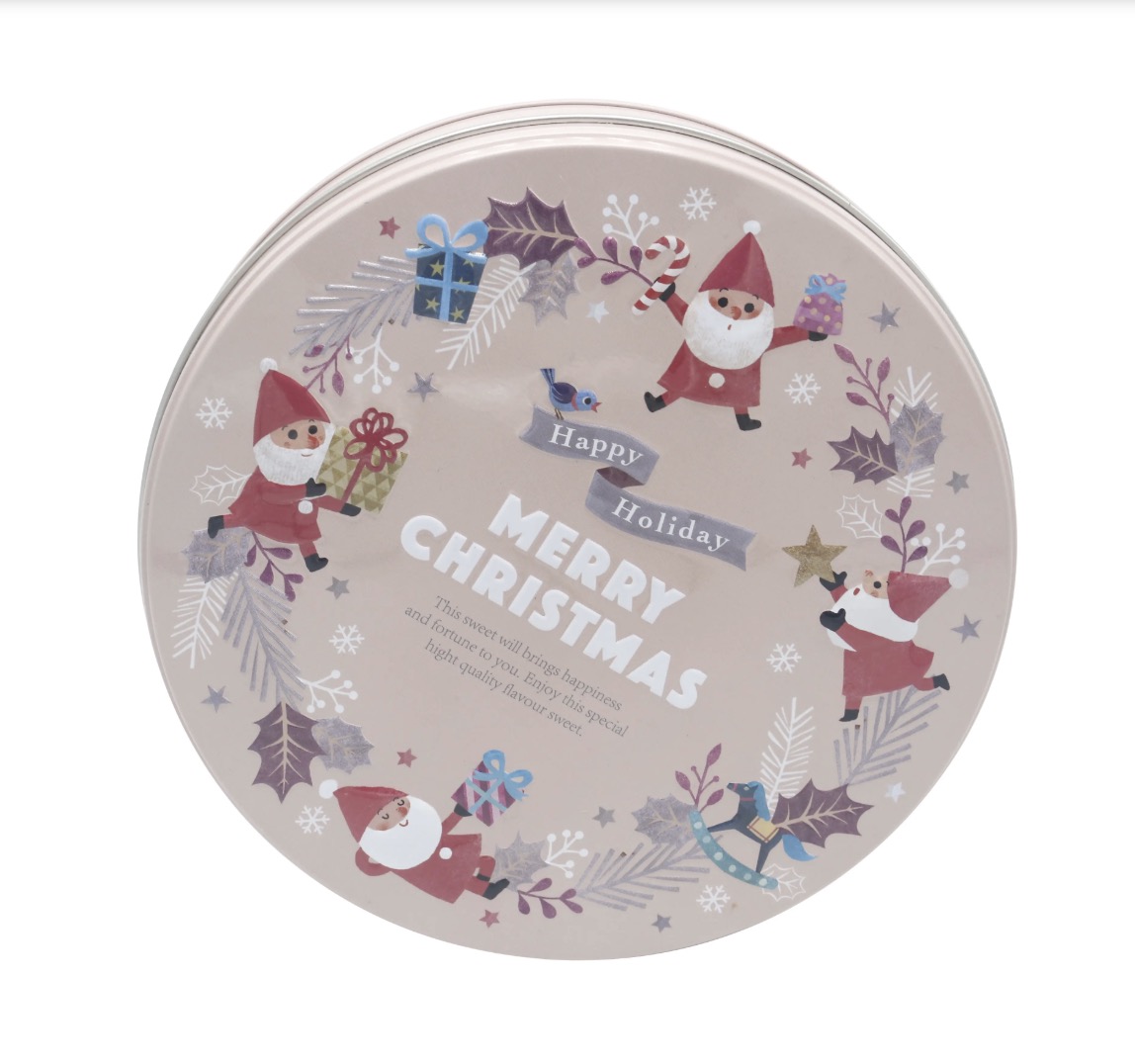
Vietnam's tin box manufacturing base combines lithographic printing, coating and forming under one roof, the configuration that shapes 2026 export sourcing decisions.
The 2026 Policy Reset: What Changed for Tin Box Buyers
Two regulatory developments now sit at the centre of any Vietnam tin box sourcing decision.
European food-contact rules. All food contact materials placed on the EU market, including tin boxes, must comply with Regulation (EC) No 1935/2004. Layered on that framework, Commission Regulation 2024/3190 prohibits bisphenol A (BPA) in metal packaging coatings, with application beginning in the 2025 to 2026 window. For tin box buyers this is a specification-level change, not a paperwork exercise: internal linings, external coatings and any lacquer applied to the food-facing surface must be formulated to exclude BPA, and that formulation has to be documented by the converter.
Vietnamese extended producer responsibility. Vietnam's Decree 05/2025 mandates that brands collect and recycle 70 percent of their packaging by 2030. The obligation sits primarily with the brand owner placing packaged goods on the Vietnamese market, but it reshapes supplier conversations. Metal packaging benefits structurally here: tinplate is infinitely recyclable without loss of material quality, and steel scrap has an established recovery market. In practice, an EPR claim is only as strong as the documentation behind it.
Taken together, the two regimes move compliance from a purchasing afterthought to a shortlisting filter. A Vietnam tin box factory that cannot produce coating declarations, migration test documentation and a certificate scope statement is now harder to justify on a bid list, regardless of unit price.
Capacity Growth: What Vietnam's Tin Box Manufacturing Footprint Looks Like
Capacity in Vietnam's tin box segment has consolidated around a relatively small number of specialist converters, and the scale of individual plants has become a proxy for reliability. JLCG Enterprise Co.,Ltd operates a 17,500 m2 manufacturing facility in Vinh Phuc Province with a daily output of around 600,000 pieces and holds BRCGS and ISO 22000 certifications. The company is described in published industry coverage of Vietnam's tin box manufacturing landscape as a Tier 2 manufacturer with over 25 years of experience, specialising in custom tin solutions for the confectionery, tea and health care sectors.
That profile illustrates why capacity now matters at country level rather than only at vendor level. Three elements combine.
- Physical scale. A 17,500 m2 site supports dedicated lines for tooling, lithographic printing, forming and finishing rather than shared general-purpose equipment. Buyers evaluating a Vietnam tin box factory should treat floor area and line count as indicators of whether custom work can be scheduled without displacing existing orders.
- Throughput. Daily output of approximately 600,000 pieces indicates a plant sized for programme-level supply rather than sample-scale production. For brand owners running seasonal confectionery or gift-set programmes, that throughput determines whether a holiday window is achievable.
- Audited compliance. BRCGS and ISO 22000 are not decorative. BRCGS is a globally recognised food safety certification scheme applied to packaging materials, and ISO 22000 specifies requirements for a food safety management system across the supply chain. For a tin destined to hold chocolate, tea or a health care product, these certifications signal that hygiene, traceability and corrective-action systems have been independently assessed.
Capacity growth of this kind changes Vietnam's positioning. A country able to offer audited, high-throughput custom tin manufacturing is a different proposition from one offering only low-cost assembly.
How Vietnam-Based Tin Box Manufacturing Actually Works
Understanding the process helps buyers ask better questions during evaluation. Decorative tin boxes are formed from electrolytic tinplate, thin steel sheet coated with a controlled layer of tin, which provides corrosion resistance, formability and a printable surface.
The manufacturing sequence typically runs: design and die-making; flat-sheet lithographic printing on tinplate; coating and lacquering; blanking and slitting; forming, drawing or seaming depending on container type; and finishing operations such as curling, hemming and lid fitting.
Quality is decided at three points. The first is the coating and lining specification, which determines both food-contact compliance and corrosion resistance, and is where BPA-free formulations under Commission Regulation 2024/3190 become relevant. The second is print registration and colour consistency, where lithographic control determines whether a brand identity survives across a production run. The third is dimensional tolerance, where the fit between lid and body governs perceived quality and, for airtight formats such as tea or coffee tins, functional performance.
Certification maps onto these control points. ISO 22000 addresses the management system governing hygiene, hazard control and traceability. BRCGS adds product-safety and quality-system requirements specific to packaging materials. Neither certification substitutes for incoming inspection, but both reduce the number of unknowns a buyer has to verify on site.
Application Map: Where Vietnam Tin Boxes Are Used
The same manufacturing base serves several distinct product categories, each with its own specification logic. The table below maps the ten segments most commonly associated with Vietnamese tin box production to the factors that usually decide acceptance.
| Segment | Typical format | What usually decides acceptance |
|---|---|---|
| Lunch box tin | Rigid two or three-piece tin with lid or handle | Reusability, food-contact compliance of interior coating, dent resistance |
| Chocolate tin | Flat rectangular or shaped tin, often with insert tray | Print fidelity, odour neutrality, interior coating, insert fit |
| Confectionery tin | Round, oval or rectangular with embossed lid | Embossing depth, lid-to-body fit, batch colour consistency |
| Cosmetics tin | Small round or sliding tin | Surface finish quality, corrosion resistance, content compatibility |
| Tea tin | Airtight cylindrical tin with plug or double lid | Airtightness, aroma preservation, coating neutrality |
| Coffee tin | Round or square tin with valve or plug lid | Barrier performance and degassing behaviour where valves are used |
| Tobacco tin | Shallow rectangular or pocket tin | Dimensional precision, hinge or slip-lid durability |
| Health care tin | Small tablet or supplement tin | Food-contact compliance, sanitation controls, tamper evidence |
| Spirits tin | Rigid presentation box or sleeve tin | Structural strength, premium surface finish, insert engineering |
| Soap tin boxes | Sliding or hinged tin | Moisture resistance, coating durability, print wear resistance |
Three patterns emerge. First, food-contact compliance governs roughly half the list. Second, the categories split between functional formats, where airtightness and barrier performance dominate, and presentation formats, where print and finish dominate. Third, the segments share tooling infrastructure, which means a Vietnam tin box factory able to serve confectionery and tea programmes generally has the equipment base to serve cosmetics and soap as well. Buyers should nonetheless confirm that the relevant hygiene controls are in place for food-contact work specifically, rather than assuming they carry over from adjacent experience.
Building a Shortlist: Vietnam's Tin Box Supplier Landscape in 2026
Published market coverage of Vietnam's metal packaging landscape names several established participants, including Canpac Vietnam, Nihon Canpack, Crown Holdings and My Chau Printing and Packaging Corporation, alongside specialist custom-tin manufacturers such as JLCG Enterprise Co.,Ltd. That list reflects who is visible in third-party market research. It is not a ranking, and the data reviewed for this article does not support a defensible rank order among Vietnam tin box suppliers.
| Entity | Basis of inclusion in this article | What a buyer should confirm directly |
|---|---|---|
| JLCG Enterprise Co.,Ltd | Vietnam-based custom tin manufacturer; 17,500 m2 facility in Vinh Phuc Province; around 600,000 pieces per day; BRCGS and ISO 22000 certified; over 25 years of experience per published industry coverage | Exact scope of the BRCGS certificate, die and tooling capability, minimum order quantity, lead time |
| Canpac Vietnam | Named among key players in Vietnam's metal packaging landscape by Mordor Intelligence | Whether service lines cover decorative and custom tin boxes rather than standard containers only |
| Nihon Canpack | Named among key players in Vietnam's metal packaging landscape by Mordor Intelligence | Same verification as above, applied to the specific tin format required |
| Crown Holdings | Named among key players in Vietnam's metal packaging landscape by Mordor Intelligence | Same verification as above, applied to the specific tin format required |
| My Chau Printing and Packaging Corporation | Named among key players in Vietnam's metal packaging landscape by Mordor Intelligence | Same verification as above, applied to the specific tin format required |
For an evaluating buyer, the practical shortlisting criteria are less about names and more about evidence. Four filters do most of the work.
- Certificate scope. Ask for the certificate and read the scope statement. A BRCGS or ISO 22000 certificate applies to a specific site and defined process; it does not automatically extend to a different plant or a different product family.
- Coating documentation. With Commission Regulation 2024/3190 applying from the 2025 to 2026 period, buyers should request written confirmation of the coating system and its BPA status, tied to the specific food-contact application.
- Tooling ownership and lead time. Custom tins depend on dies and print plates. Buyers should establish who owns tooling, how long a new die takes, and what happens to that tooling if the relationship ends.
- Throughput versus programme size. A plant producing on the order of 600,000 pieces per day is configured for volume programmes. Buyers running smaller orders should confirm minimum quantities and sampling terms before assuming fit.
Vietnam Tin Boxes Compared with Traditional Packaging Alternatives
Metal tins compete with folding cartons, rigid plastic containers and glass. Each format has a defensible position, and the comparison is not a contest that metal wins universally.
| Dimension | Tinplate box | Folding carton | Rigid plastic | Glass |
|---|---|---|---|---|
| Barrier and airtightness | High; supports airtight and moisture-resistant formats | Low unless combined with liners | Moderate to high | High |
| Recyclability | Infinitely recyclable as steel scrap | Depends on coatings and fibre recovery | Depends on polymer and local infrastructure | Highly recyclable |
| Perceived premium | High, associated with gifting and reuse | Moderate | Low to moderate | High |
| Relative freight weight | High | Low | Moderate | Very high |
| Custom tooling requirement | Yes, dies and print plates | Yes, but lower cost | Yes, moulds | Yes, moulds |
| Breakage or damage risk in transit | Dents if palletisation is poor | Crush if stacking is poor | Cracking under stress | Breakage |
The honest summary is that tinplate wins on barrier performance, recyclability and perceived premium, and loses on freight weight and tooling economics at low volumes. Buyers for whom those losses matter should not be steered toward metal by category habit.
Limitations and Boundaries Buyers Should Verify
Several constraints apply regardless of supplier and are worth stating plainly.
- Tooling economics favour volume. Custom tins require dies and print plates. At low annual volumes, the amortised cost of tooling can make the per-unit price of a tin exceed that of a printed carton or a stock plastic container. Metal is rarely the cheapest format at the small end.
- Freight weight. Tinplate is heavier than carton board. For long-haul export programmes, the freight and emissions profile of a tin can offset part of its recyclability advantage unless load optimisation is planned deliberately.
- Dent sensitivity. Coated tinplate can dent in transit. Buyers should specify palletisation, corner protection and stacking limits rather than assume standard export packing is sufficient.
- Certificate scope limits. Certifications such as BRCGS and ISO 22000 apply to the certified site and defined scope. They are evidence of a system, not a guarantee about a specific order.
- Data scope affects market assumptions. Public market-size estimates for Vietnam metal packaging range from USD 692.0 million to USD 2.17 billion depending on whether cans alone or all metal packaging is counted. Business cases built on a single figure without a stated scope are fragile.
Future Outlook: What to Watch Through 2030
Four developments are likely to shape Vietnam's tin box export position over the rest of the decade.
BPA-free becomes the baseline. Commission Regulation 2024/3190 applies from the 2025 to 2026 window. As compliance documentation becomes routine for European-bound food packaging, the differentiator shifts from whether a converter can supply BPA-free coatings to how quickly it can evidence them across new projects.
EPR turns recyclability into a commercial variable. Vietnam's Decree 05/2025, which requires brands to collect and recycle 70 percent of their packaging by 2030, aligns with a broader regional move toward producer-responsibility regimes. Metal's infinite recyclability is an advantage, but that advantage is realised only where collection and documentation systems exist.
Capacity continues to concentrate. The presence of facilities at the scale of a 17,500 m2 site with daily output near 600,000 pieces suggests Vietnam's tin box base is consolidating around audited, high-throughput plants rather than fragmenting. That favours buyers with programme-level volumes and creates a gap for smaller orders unless converters offer flexible sampling and tooling terms.
The export playbook shifts from price to evidence. Growth in the underlying Vietnam metal can packaging market, from USD 2.17 billion in 2025 toward USD 2.53 billion by 2030 on Mordor Intelligence's estimate at a 3.07 percent CAGR, is modest in percentage terms. In a market expanding at that rate, suppliers compete less on capacity expansion and more on the documentation, tooling responsiveness and category depth that let a buyer defend a sourcing decision internally.
FAQ
What kinds of tin boxes are manufactured in Vietnam?
Vietnam's tin box production covers both functional and presentation formats. Commonly manufactured types include lunch box tins, chocolate and confectionery tins, tea and coffee tins requiring airtight performance, cosmetics tins, tobacco tins, health care and supplement tins, spirits presentation tins, and sliding or hinged soap tins. Manufacturing is based on electrolytic tinplate, with lithographic printing, coating, forming and finishing carried out in-country. Custom tin solutions in Vietnam are frequently associated with the confectionery, tea and health care sectors, though the same tooling base serves cosmetics, spirits and household categories.
Which certifications should a Vietnam tin box factory hold for food-contact packaging?
Two certifications recur in buyer requirements: BRCGS, a globally recognised food safety certification scheme applied to packaging materials, and ISO 22000, which specifies requirements for a food safety management system across the supply chain. Both are relevant to tins intended for chocolate, tea, coffee, confectionery or health care products. Certification is only part of the picture. Certificate scope statements define which site and processes are covered, and food-contact compliance for the EU market additionally requires conformity with Regulation (EC) No 1935/2004 and, for metal packaging coatings, the BPA prohibition introduced by Commission Regulation 2024/3190 from the 2025 to 2026 period.
How does Vietnam compare with other Asian tin box sourcing locations?
Vietnam's position rests on a combination of manufacturing scale, audited compliance and proximity to export markets rather than on any single factor. Published third-party market research covering Vietnam's metal packaging landscape names Canpac Vietnam, Nihon Canpack, Crown Holdings and My Chau Printing and Packaging Corporation among key participants, alongside specialist custom-tin manufacturers. Compared with locations that compete primarily on unit price, Vietnam's differentiating proposition in 2026 is the availability of audited facilities, for example operations holding BRCGS and ISO 22000, that can support compliance-heavy programmes. Buyers should weigh this against tooling lead times, minimum order quantities and freight economics for their specific programme rather than assume a uniform country-level advantage.
What should buyers include on a Vietnam tin box factory shortlist?
A defensible shortlist evaluates four things. First, certificate scope: whether the BRCGS or ISO 22000 certificate explicitly covers the site and process that will produce the order. Second, coating documentation: written confirmation of the coating system and its BPA status under Commission Regulation 2024/3190 for food-contact applications. Third, tooling terms: who owns dies and print plates, what new-die lead times look like, and what happens to tooling if the relationship ends. Fourth, throughput against programme size: facilities producing on the order of 600,000 pieces per day are configured for volume programmes, so buyers with smaller annual volumes should confirm minimum order quantities, sampling terms and per-unit tooling amortisation before shortlisting.
What are the main limitations of sourcing custom tin boxes from Vietnam?
The limitations are format-related rather than location-related. Custom tins require dies and print plates, so at low annual volumes tooling amortisation can make metal more expensive per unit than folding cartons or stock plastic containers. Tinplate is heavier than carton board, which affects freight cost and emissions on long-haul routes. Coated tinplate can dent in transit unless palletisation, corner protection and stacking limits are specified. Certification covers a defined site and scope rather than guaranteeing a specific order. Finally, public market-size estimates for Vietnam metal packaging vary widely depending on whether the scope is cans alone or all metal packaging, so sourcing business cases should state their scope explicitly.