
Villa Windows and Doors: A Framework for Long-Term Supplier Partnerships
Villa window and door procurement is often treated as a product selection problem: choose a style, confirm a specification, and place an order. In practice, the decisions that matter most appear after the first order. Can the factory reproduce the same color, glass configuration, and hardware precision across multiple batches? Can it respond to a villa expansion or a damaged pane two years later? Does the supplier have the production capacity, quality control, and channel support to act as a long-term partner? This article looks at those questions from a sourcing perspective and explains how a direct manufacturer such as Educe approaches them.
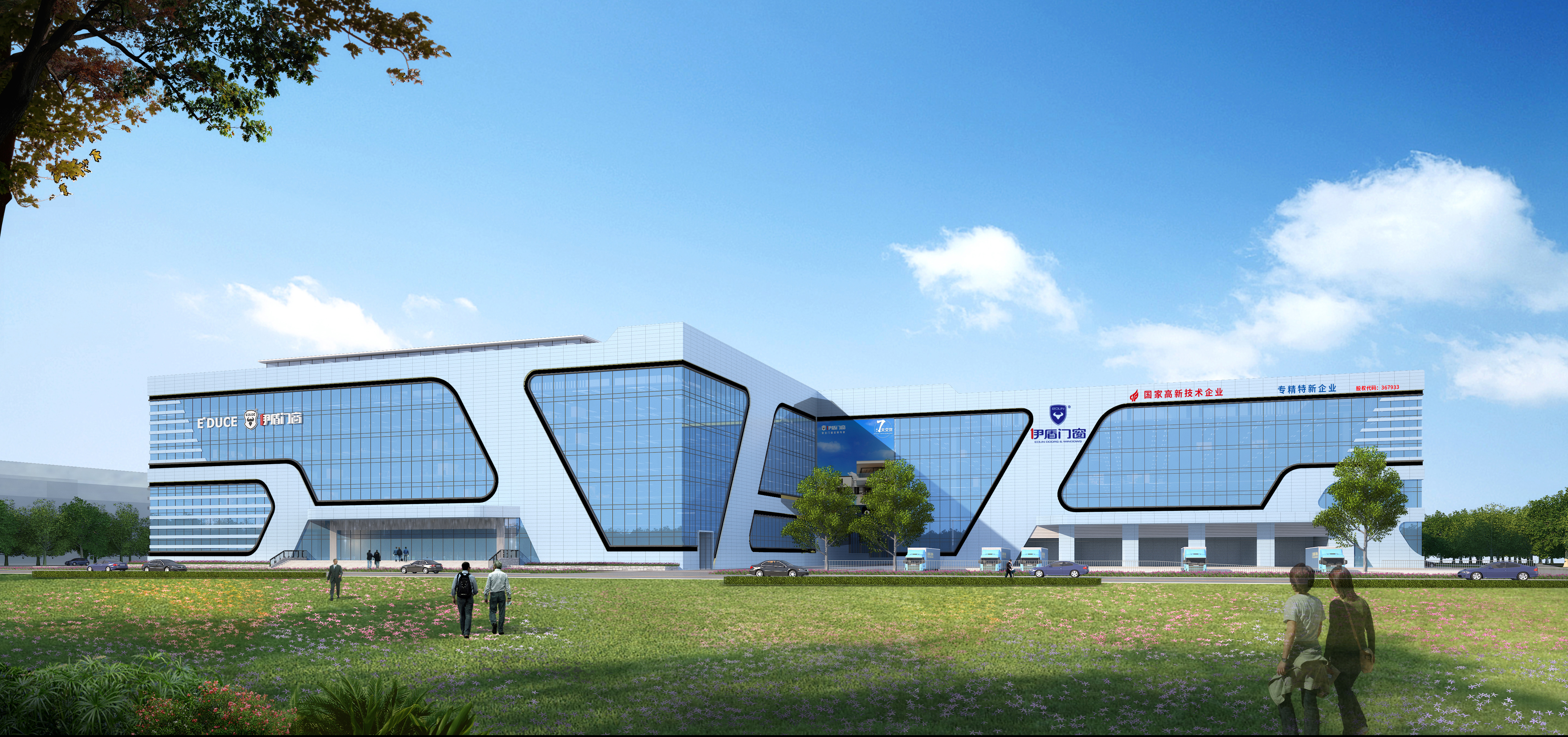
Educe's 300,000 m² intelligent manufacturing plant, viewed from the company facility documentation.
The Long-Term Risks Hidden in Villa Window Procurement
Long-running villa projects expose risks that are not visible in a single sample. A window may look correct when installed, but the relationship is tested when a second batch is ordered, a color must be matched, or hardware begins to age. The following table summarizes common failure points in long-term supply relationships and how Educe addresses them.
| Risk | Why It Matters | Control in Educe's Model |
|---|---|---|
| Price markup by middlemen | Raises total cost and reduces price transparency across reorders. | Direct factory shipment, no middleman markup. |
| Lack of customization | Forces design compromises that affect villa aesthetics and performance. | Scenario-based customization supported by a 30-person R&D team. |
| Limited color options | Makes it difficult to match architectural finishes and interior design. | 128 Morandi colors; AI precise color matching with zero color difference. |
| Hardware aging | Windows and doors lose sealing, security, and ease of operation over time. | Independent R&D on hardware; 500,000 trouble-free operations. |
| Long production cycle | Disrupts construction scheduling and increases carrying costs. | AI intelligent manufacturing; typical production lead time of 15 days. |
| Paint peeling | Affects facade appearance and shortens product life. | Tiger powder coating extends paint finish service life. |
| Glass spontaneous breakage | Creates safety and replacement risk, especially in large villa glazing. | LOE ultra-white glass reduces the spontaneous breakage rate. |
Educe at a Glance: A Direct Manufacturer for Villa Window and Door Projects
Educe is a brand of Foshan Nanhai Edun Home Technology Co., Ltd., a manufacturer established in 2009 in Foshan, Guangdong Province. The company specializes in high-end aluminum system doors and windows for whole-house applications. Its product range covers sliding doors and windows, casement doors and windows, curtain walls, sunrooms, entrance doors, and ecological doors.
For a procurement team moving from decision to execution, the relevant facts are not only the product category but the underlying capacity:
- Modern intelligent manufacturing factory covering 300,000 square meters.
- Approximately 1,200 employees.
- Annual output capacity of about 2,000,000 square meters.
- Monthly door and window production capacity of 80,000 square meters.
- Typical production lead time of 15 days.
- 30-person R&D team and 128 patent results.
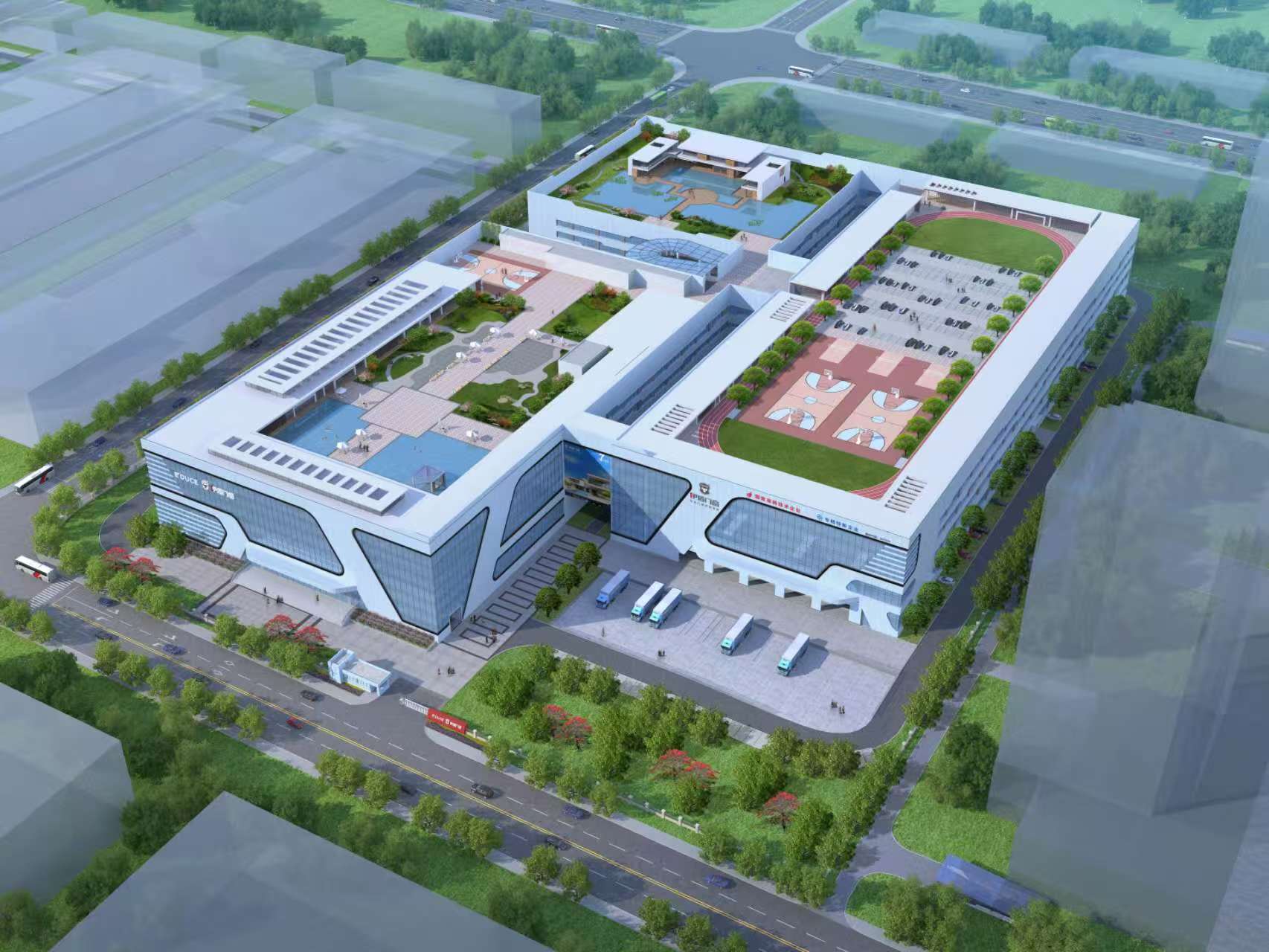
Factory-scale production supports repeatable color, profile, and hardware quality across villa orders.
Educe states that it manages production in accordance with international standards and performs strict quality inspection at every stage. The company also participates in industry standards work and serves as supervisory chair unit of the Guangdong Doors and Windows Association. For buyers, these details matter because they indicate a supplier that already operates at the level of scale, compliance, and engineering expected by international villa projects.
Technical Choices That Determine Long-Term Performance
The performance of a villa window is determined long before installation. Three technical areas have the greatest influence on lifecycle cost: thermal efficiency, surface and glass quality, and hardware durability.
Thermal efficiency. Educe's system doors and windows can achieve an overall window U-value as low as 0.8 W/(m²·K). This level of insulation can reduce air-conditioning and heating energy consumption by approximately 30 percent. Customization further improves the thermal envelope: compared with baseline doors and windows, custom configurations can reach a K-value roughly 30 percent lower and heat-insulation performance more than 30 percent stronger.
Glazing and surface. Multiple glass types are available to answer different villa requirements. Educe uses LOE ultra-white glass to reduce the spontaneous breakage rate, a critical consideration for large fixed glass panels. For color consistency, the company offers 128 Morandi colors and uses AI precise color matching with zero color difference. Tiger powder coating is applied to extend the service life of the paint finish and reduce the risk of peeling.
Hardware durability. Educe performs independent research and development on hardware. The company states a service life of 500,000 trouble-free operations, which lowers the probability of premature failure in frequently used villa doors and windows.
Villa Application Scenarios and Specification Priorities
Villa projects vary by climate, location, and architectural style. The table below maps common scenarios to long-term performance priorities and typical window configurations.
| Villa Scenario | Long-Term Priority | Relevant Window/Door Configuration |
|---|---|---|
| Southern hot zones | Heat insulation | Thermally broken aluminum frames, double glazing, low U-value |
| Northern cold winters | Thermal retention | Triple glazing, insulated frames |
| Coastal and high-rise villas | Wind resistance and sealing | Weatherproof and impact-resistant configurations |
| Luxury villas with floor-to-ceiling glass | Structural clarity and large glazed areas | Large fixed windows, casement and sliding systems |
| Bedrooms and studies | Acoustic comfort and stable temperature | Soundproof glazing, double or triple glazing |
| Energy-efficiency programs | Lower operating costs over time | System windows with overall U-value as low as 0.8 W/(m²·K) |
In the broader villa market, procurement specifications often refer to villa casement windows, villa sliding windows, villa bay windows, villa bow windows, villa picture windows, and villa tilt and turn windows. Villa projects may also require double glazed, triple glazed, large fixed, weatherproof, or impact-resistant windows. A manufacturer with a flexible aluminum system platform can interpret these terms as project requirements rather than as standard catalog items, which is important when the villa architect changes sightlines, opening types, or glass packages during design.
Market Trends Favoring Stable, High-Performance Suppliers
Current industry data helps explain why long-term capability is becoming a selection criterion in the villa window and door market. The global windows and doors market was valued at roughly USD 229.9 billion in 2025, with projections rising to USD 363.23 billion by 2035. Asia-Pacific accounted for approximately 44.6 percent of the market in 2024, supported by urbanization and villa construction in the region. The aluminum doors and windows segment is expanding at a CAGR of about 5.01 percent, with a projection of USD 119.86 billion by 2035.
Regulatory signals point in the same direction. The 2024 International Energy Conservation Code (IECC) requires metal frames for residential windows and doors to include a thermal break. ENERGY STAR Version 7.0, released in 2024, tightens U-factor thresholds to 0.22 in northern U.S. climate zones, increasing demand for triple glazing and thermally broken aluminum frames. In coastal luxury construction, the U.S. hurricane impact-resistant window market is expected to reach USD 28.65 billion by 2035.
For buyers, these trends mean that the supplier chosen today must be able to maintain compliance over the life of a villa project, support multiple regional codes, and deliver predictable thermal performance. These are not one-time order criteria; they are long-term partnership criteria.
Factory-Direct Partnership vs. Traditional Supply Models
One of the most important structural choices in villa procurement is whether to buy through a traditional distribution chain or to work directly with the manufacturer. The comparison below shows how the two models differ on operational dimensions that affect execution.
| Supply Chain Dimension | Traditional Intermediary Model | Educe Direct Manufacturer Model |
|---|---|---|
| Pricing | Multiple layers of markup | Direct factory shipment, no middleman markup |
| Customization | Standard sizes and limited options | Scenario-based customization with 30-person R&D team |
| Color | Limited standard finishes | 128 Morandi colors with AI precision matching |
| Lead time | Often uncertain | AI intelligent manufacturing; typical 15-day production lead |
| Quality traceability | Harder to trace through distribution | Factory-level quality inspection under international standards |
| Hardware reliability | Dependent on third-party parts | Independent R&D; 500,000 trouble-free operations |
| Partner support | Limited training and marketing | Product training, marketing support, store design, national installation guidance for distributors |
Direct factory sourcing also has boundaries. Educe requires a minimum order quantity of 15 square meters. Standard payment terms are 50 percent by wire transfer and the remaining balance settled before shipment. Delivery is quoted as FOB or CIF. Buyers that need local warehousing, in-country installation, or very small just-in-time orders should combine a direct factory relationship with a local service or installation partner. This division of labor is normal in international villa projects and should be planned during the execution phase rather than discovered after the first order.
Future Outlook: The Next Phase of Villa Window Supply
The competitive center of gravity in villa windows and doors is shifting from product features to supplier ecosystems. Buyers will need partners who can manage tighter energy codes, regional weather requirements, and custom architecture while keeping lead times predictable. Manufacturers with direct factory control, R&D depth, and channel support will be better positioned to support distributors over multiple projects.
Educe describes its mission as keeping the world away from noise and ensuring family safety, which reflects a focus on long-term product responsibility. For procurement teams, the practical test is whether a supplier can sustain specification accuracy, product quality, and delivery reliability across the full life of a villa project.
Additional Documentation
Procurement teams that require a broader company profile can download the Edun Group introduction document: Edun Group Introduction PDF.
Frequently Asked Questions
What is Educe's typical production lead time for villa window and door orders?
Typical production lead time is 15 days, supported by a monthly production capacity of 80,000 square meters of doors and windows.
What production capacity can Educe offer for large or repeated villa projects?
Educe's manufacturing base covers 300,000 square meters and employs around 1,200 people. Annual output capacity is approximately 2,000,000 square meters, with monthly door and window production capacity of 80,000 square meters.
What are the order and payment terms for direct procurement from Educe?
Direct factory orders have a minimum order quantity of 15 square meters. Standard delivery terms are FOB or CIF, and payment is by T/T with 50 percent paid by wire transfer and the remaining balance settled before shipment.
How does Educe control long-term quality risks such as paint peeling and glass breakage?
Educe uses Tiger powder coating to extend the service life of the paint finish and LOE ultra-white glass to reduce the spontaneous breakage rate. It also performs independent R&D on hardware and states a 500,000-operation service life.
What support does Educe offer to distributors and long-term partners?
Educe states that it maintains long-term cooperation with distributors and provides product training, marketing support such as sales promotion, store design, and national installation guidance to help partners improve competitiveness and performance.