
WB-PVC Flooring vs Other RoHS-Covered Décor: A Buyer's Guide
WB-PVC Flooring vs Other RoHS-Covered Décor: A Buyer's Guide
Answer first: a RoHS report covering an entire decorative-materials catalogue proves something much narrower than most buyers assume. SGS-CSTC report number SHAEC1709394501, issued against RoHS Directive (EU) 2015/863 for the EU market, sits behind a range that runs from a self-adhesive PVC floor tile (model WB-PVC) through wall panels, wall stickers, foam slats and 3D brick elements. These categories perform different functions in a building, fail in different ways and carry different documentation needs. The buyer's job is therefore not to confirm that a certificate exists. It is to confirm that the certificate's scope names the exact product, market and substance question written into the purchase order.
This comparison is written from the buyer's side of the table. It uses the manufacturer's published product facts, the company's own published comparison data and attributed third-party market records, and it states plainly where a document stops being evidence.
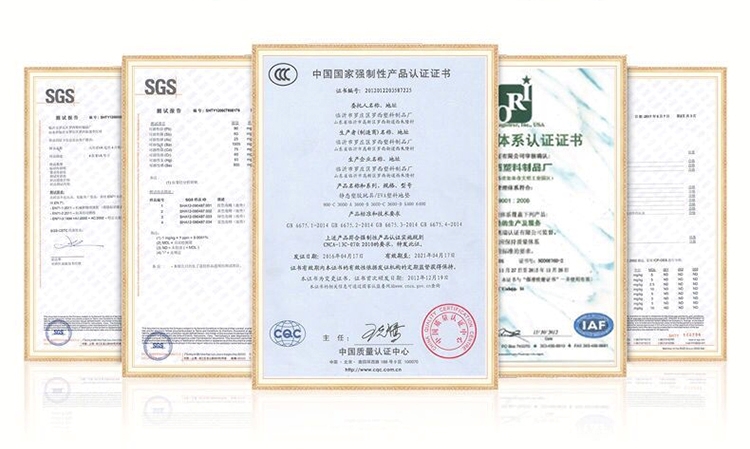
Certificate scope, not certificate presence, is the deciding question when one report covers ten product categories.
What report SHAEC1709394501 actually records
The document is a third-party test report issued by SGS-CSTC, not a self-declaration. It references RoHS Directive (EU) 2015/863 and is applicable to the EU market. Those four elements — issuing body, standard, report number and market — are the parts a buyer should transcribe directly into the purchasing file, because each one narrows what the document can legitimately be used for.
RoHS is a restriction-of-hazardous-substances framework. A conforming report therefore answers a substance question: it indicates that the tested product, as submitted, was assessed against a defined list of restricted substances. It does not answer a performance question, an installation question or a fire question. That distinction matters more in decorative materials than in many other categories, because buyers routinely ask one document to do the work of five.
Several specifications that European buyers care about sit entirely outside the RoHS scope and must be requested separately:
- Fire classification. PVC flooring is commonly classified under schemes such as GB 8624-97 (B1) in China or EN 13501-1 (for example Cfl-s1) in the EU, with ASTM E648 also referenced in US practice. These are separate classifications with separate test evidence; a RoHS report says nothing about them.
- Indoor air quality and VOC emissions. In the US market, FloorScore certification verifies that hard-surface flooring complies with the volatile organic compound emissions criteria of California Section 01350. That is a different programme with a different scope from RoHS.
- Phthalate specifications. RoHS restrictions cover a defined list of substances that includes certain phthalates, but 'RoHS-conformant' and 'phthalate-free' are not the same specification. Tarkett, for example, states that it reached 100% phthalate-free vinyl production in Europe and North America by 2018 using alternative plasticizers such as DOTP — a company statement about its own production, and a useful illustration of why a broader plasticizer requirement has to be written separately.
- Performance labels. Descriptions such as wear-resistant, anti-static, anti-slip, fire-resistant or 'hospital-grade' are claims about behaviour, not certificate categories. Each one should be traceable to a named test or it should be treated as marketing language.
The comparison set: ten products, one report, three different jobs
The covered range includes the WB-PVC PVC floor tile alongside nine wall-oriented products: PVC wall panel, PVC wall sticker panel, soft stone wall sticker, PVC parquet wall sticker, PET marble wall sticker, leather wall sticker, 3D self-adhesive foam slat wall sticker, WPC wall panel and 3D WALL BRICK. Nine of the ten are vertical surfaces; one is a walking surface. That single difference changes the acceptance criteria far more than the shared certificate suggests.
| Product in the covered range | Job it does in a project | Check the buyer adds on top of RoHS |
|---|---|---|
| WB-PVC PVC floor tile (model WB-PVC) | Walking surface for interior decoration, home and building-material projects | Substrate strength and dryness; joint and edge behaviour under foot traffic; separate fire and slip documentation where the project specifies it |
| PVC wall panel | Wall covering for interior fit-out | Fixing method and wall flatness; load at fixing points; cleaning agents used in service |
| PVC wall sticker panel | Self-adhesive wall covering for renovation and refresh work | Surface type and cleanliness before application; removability expectation at end of lease |
| Soft stone wall sticker | Textured self-adhesive wall finish | Impact and scuff exposure at the installation height; pattern continuity across joins |
| PVC parquet wall sticker | Wood-effect self-adhesive wall finish | Colour and pattern consistency between batches; base flatness |
| PET marble wall sticker | Marble-effect self-adhesive wall finish | Joint alignment; whether the specification calls for surface preparation first |
| Leather wall sticker | Soft-textured self-adhesive wall finish | Soiling and cleaning regime in service; adhesion on painted or plastered walls |
| 3D self-adhesive foam slat wall sticker | Dimensional decorative slat finish | Clearance around sockets and trims; adhesive performance on textured walls |
| WPC wall panel | Composite wall panelling | Expansion allowance and fixing detail; moisture exposure in the installed position |
| 3D WALL BRICK | Brick-effect decorative wall element | Layout planning at corners and edges; weight per unit area on the chosen substrate |
A shared substance report does not make these products interchangeable; it only confirms that each line item was assessed against the same restricted-substance list.
Matching certificate scope to the exact product: four checks
Scope matching is a short, mechanical exercise. It fails most often because buyers stop after the first check.
Check 1 — model and product name, line by line
Compare the model designation on the purchase order with the product list referenced by the report. 'WB-PVC' is a model, not a category, and a report that names a category does not automatically cover a different article inside it. Where an order mixes a floor tile with wall panels and stickers, each line item should map to a named entry in the covered product list.
Check 2 — market and jurisdiction
This report is stated as applicable to the EU market. A buyer shipping the same goods to the United States or to an Asian destination should not assume the document satisfies that destination's requirements, and a US specification may look to FloorScore and California Section 01350 instead. Market scope is a property of the document, not of the product.
Check 3 — the question the certificate answers
Write down what the report establishes (restricted substances, for the tested product, for the EU market) and what the project still needs (fire classification, VOC emissions, slip resistance, or a customer-specific substance list). Anything in the second list becomes a separate request, not an implied benefit of the first.
Check 4 — batch and traceability
A test report is evidence about a tested sample. Tie it to delivered goods by asking for the report with the batch, alongside the incoming inspection record. This is also where a company quality system such as ISO 9001 becomes relevant: it describes how batches are controlled, which is a different question from what a sample tested at.
Where WB-PVC fits, and where it does not
WB-PVC is positioned for the Interior Decoration, Home & Garden and Building Materials sectors, which places it in renovation and fit-out work rather than in heavy industrial flooring. Its installation model is dry and self-adhesive: the backing film is peeled and the tile is applied to a prepared surface, with no cement or separate adhesive, cutting done on site with hand tools and a floor roller used to consolidate the bond.
That construction defines its fit boundary. The base surface must be flat, dry and free of dust and grease; for floors, the substrate also needs adequate strength and no hollow spots. Powdery, sandy or loose surfaces are explicitly outside the application range. On a sound substrate, self-adhesive flooring shortens the time between delivery and usable space, which matters in occupied renovations, rental turnover and retail fit-outs where the floor is on the critical path. On a failing or contaminated substrate, no adhesive format performs, and the failure will be attributed to the product regardless of cause.
The company's published product description for this flooring line cites a dense IXPE substrate, a thickened wear-resistant surface layer and a heavy adhesive coating. Buyers should treat the material description as a starting point for sample testing rather than as a substitute for it, and should validate adhesion and wear behaviour on their own substrate and traffic pattern before bulk release.
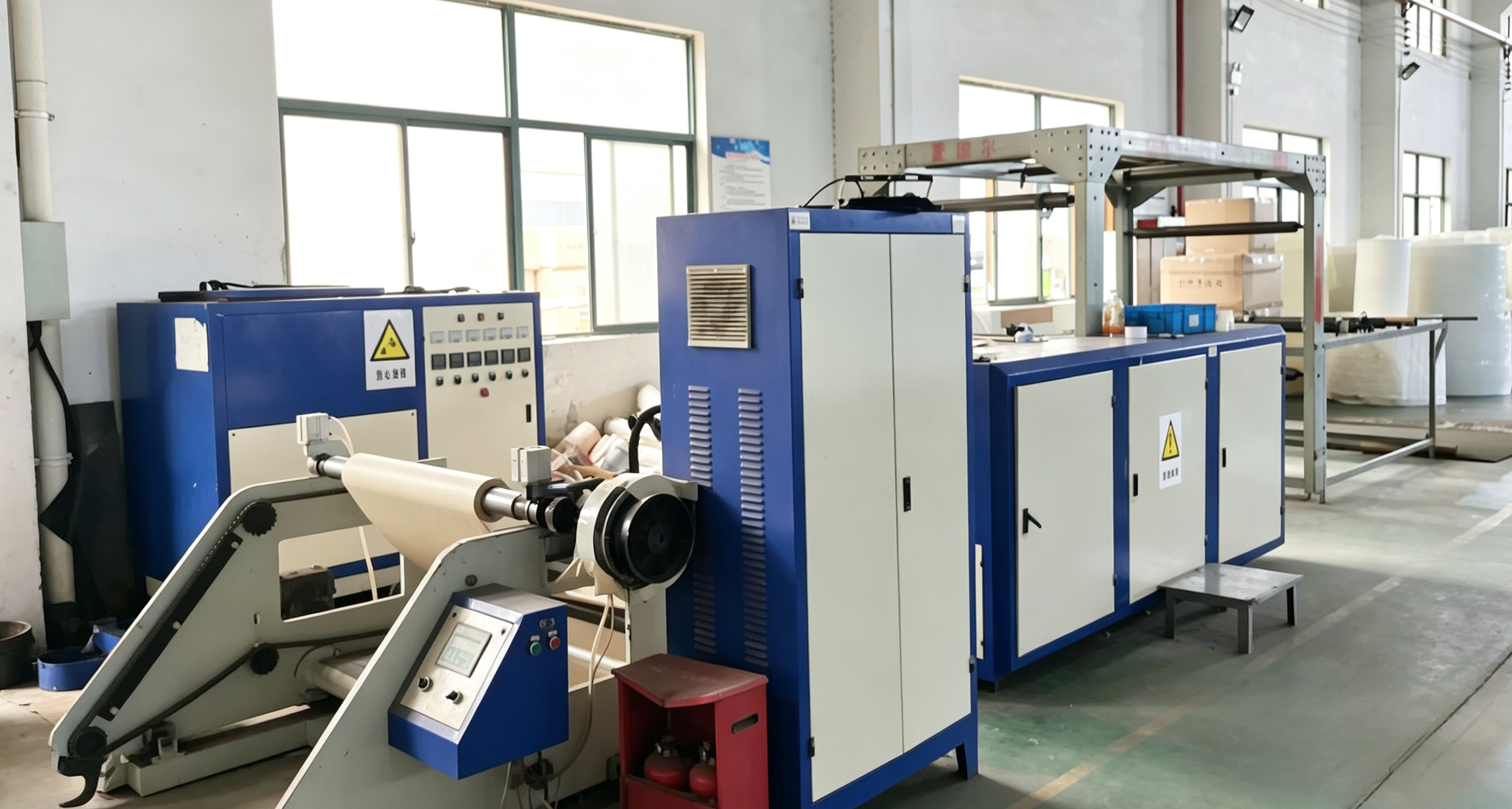
Batch control, not the certificate alone, connects a tested sample to the goods actually delivered.
Wall categories against each other: the company's own positioning
Buyers comparing inside the same catalogue often have to choose between a foam-based sticker and a soft-stone sticker for the same wall. The company's published comparison material positions the XPE foam self-adhesive wall sticker for residential apartments and rental renovation, citing light weight, cushioning and sound-absorption behaviour with lower logistics cost, and positions the PVC soft-stone wall sticker for hotel guest rooms and chain-store projects, citing texture and scratch resistance with heavier weight and a higher unit cost. It recommends testing physical samples for adhesion and ageing and verifying target-market compliance before bulk purchase.
Two things are worth noting in that positioning. First, the trade-off is expressed in logistics and unit cost terms, not in service life terms, which is useful when the buyer is optimising freight rather than durability. Second, the soft-stone recommendation is tied to project type, not to a certificate class — both sit inside the same RoHS-covered range, so the certificate cannot help the buyer choose between them. That decision belongs to the specification, not the compliance file.
Purchasing terms and acceptance criteria: a buyer checklist
The checklist below is written so that it can be pasted into a purchase order or a supplier questionnaire. Each line exists because its absence is a common source of dispute.
Terms to write into the order
- Product model and category, stated per line item (for example WB-PVC PVC floor tile), with size, thickness, pattern, surface finish and packaging configuration. The manufacturer supports customization on size, thickness, pattern, surface and packaging, so each deviation should be documented rather than left to the sample.
- The compliance reference by number: SGS-CSTC report SHAEC1709394501, RoHS Directive (EU) 2015/863, EU market. Require a copy to be supplied with the shipping documents.
- Any additional requirement the project needs — fire classification, VOC programme, slip or anti-static performance, phthalate-free specification — named with the standard it must be tested to, not described with an adjective.
- Approved sample reference and the tolerance for colour and pattern variation between production batches.
- Storage and handling conditions on arrival, and who carries the risk for deviations from them.
Acceptance criteria at goods-in
- Verify the delivered model and packaging against the order and against the covered product list.
- Check cartons for compression, moisture marks and heat exposure before opening.
- Apply a test patch to the actual project substrate and evaluate adhesion after the specified dwell time.
- Compare colour, pattern repeat and surface finish against the approved sample under the project's lighting.
- For foam-based items, a simple cross-section and hand-press check can screen material type: fine uniform cells with fast rebound suggest IXPE, uneven large cells with slow rebound and residual dent suggest XPE. This is a screening step only; a third-party report is the acceptance basis.
Storage conditions that protect the claim
The company's published storage guidance is specific. Keep the warehouse cool and ventilated, at or below 40 °C, away from direct sunlight and heating pipes. Place goods on wooden pallets rather than on bare floor. Stack full cartons flat within a height limit, and never stack heavy rigid panels on top of foam goods. Cover textile-faced goods against dust and protect stone-effect items from corner impact. Ship older batches first under FIFO.
The same guidance states the consequence plainly: curling, deformation and mildew caused by sun exposure, over-stacking or ground moisture are classified as improper-storage damage rather than an inherent product defect. Buyers who want that allocation to hold in a dispute need the storage conditions written into the contract, not just printed on the carton.
The real risks of low-cost wall stickers, flooring and wall panels
A low price is not evidence of a defect. The risk in low-cost decorative materials is missing or mismatched evidence, and it shows up in predictable places.
Certificate scope drift
The most common failure is a report issued for one article being presented as coverage for a whole range. When a supplier sells flooring, wall panels and stickers under a single compliance statement, ask for the covered product list and map it to your order lines. Scope drift is not usually deliberate; it accumulates because catalogues grow faster than documentation.
Substrate failure presenting as product failure
The stated application limits exclude powdery, sandy and loose surfaces and require a flat, dry, grease-free base with adequate floor strength and no hollow spots. In price-driven projects, surface preparation is the first line item to be cut, and the resulting adhesion failure is blamed on the material. Specify preparation as a contractual step with its own acceptance check.
Storage damage between delivery and installation
Sun exposure, over-stacking and ground moisture cause curling, deformation and mildew before a single tile is laid. Because these are treated as improper-storage damage, the buyer absorbs the loss unless storage conditions are agreed in advance. On multi-category orders this risk compounds, since foam, stone-effect and textile-faced goods each have different sensitivities.
Performance adjectives without a test behind them
Terms like wear-resistant, anti-slip, anti-static or hospital-grade read as specifications but function as descriptions unless a test method and result are attached. The same applies to fire-related wording: B1 under GB 8624-97 and Cfl-s1 under EN 13501-1 are classification outcomes from defined methods, not adjectives that can be inferred from a substance report.
Confusing one market's file with another's
An EU-directed RoHS report does not close a US indoor-air question, where FloorScore and California Section 01350 are the relevant reference points. Buyers distributing to several regions should build a small document matrix by destination rather than carrying one file everywhere.
Cost comparison: reading the 12% and 60% figures correctly
The manufacturer's published comparison data for this flooring line states that raw material cost is 12% higher than alternatives while average annual use cost is 60% lower. The same published comparison describes a total material thickness increase of 22%, a 35% higher glue coating weight, a 180% thicker wear layer, a service life stated as three times longer, surface wear resistance improved five times, long-term ageing resistance improved by 200% and maintenance frequency reduced by 85%, measured against ordinary competitor wall and floor stickers.
Read as directional product positioning rather than as an independent benchmark, these figures point at a legitimate purchasing argument: the cheaper tile is not cheaper if the replacement cycle is shorter. That argument only holds when the buyer substitutes their own numbers. Three questions decide it:
- How is 'average annual use cost' defined in your case — material only, or material plus installation labour, substrate preparation, downtime and disposal?
- Does the service-life claim survive your traffic load, cleaning regime and substrate quality, or was it measured under conditions your project will not reproduce?
- At what annual area turnover does the 12% material premium actually pay back under your own labour rates?
Where the answer is 'this floor will be replaced in eighteen months anyway' — a short-lease retail unit, for example — the premium is harder to justify and a lighter format may be the better decision. Where the floor must survive years of foot traffic with minimal maintenance intervention, the calculation moves the other way. Neither outcome is universal, and a supplier who presents the ratio without inviting that calculation is presenting marketing, not analysis.
Market context buyers should hold lightly
Two attributed data points frame the sourcing environment. Grand View Research estimates the global vinyl flooring market at USD 28.0 billion in 2026, with a projected USD 41.5 billion by 2033 and a compound annual growth rate of 5.8% over that period. Separately, OEC trade data records China as the leading exporter of vinyl chloride polymer floor, wall and ceiling coverings under HS 391810 in 2024, at USD 4.97 billion, ahead of Vietnam at USD 1.81 billion and South Korea at USD 820 million.
For a buyer, the practical reading is supply density rather than momentum. A deep export base means many suppliers can quote the same specification, which raises rather than lowers the value of scope-matching discipline: when price converges, documentation is often the only remaining differentiator. Note also that forecast figures are projections under stated assumptions, not observed outcomes, and that definitions vary — some published PVC market estimates use a much narrower product definition than the vinyl flooring figures above.
Outlook: verification moves from company to SKU
As decorative ranges widen — and customization on size, thickness, pattern, surface and packaging makes that widening easy — the unit of verification shifts from the supplier to the individual article. A buyer who once asked 'is this supplier certified?' will increasingly ask 'is this article, in this configuration, inside the scope of the evidence I hold?'
The companies that handle that transition well tend to do three things: they keep a covered product list that matches the catalogue, they keep market-specific documentation separate, and they put the storage and substrate conditions in the contract where they can be enforced. None of this requires new technology. It requires treating a certificate number as a reference to be matched rather than a badge to be displayed.
Shanghai Yuanguan Rubber Plastic Co., Ltd., founded in 2005 and operating under the SXP Wall Panel brand, manufactures self-adhesive wall stickers, 3D foam wall panels, PVC wallpaper, WPC decorative wall panels, self-adhesive PVC flooring, carpet tiles and decorative carpets. The company holds ISO 9001 quality management system certification, exports approximately 90% of output to markets across the EU, USA, Asia and South America, and serves retailers and wholesalers in more than 80 countries. Further product information is available at SXP Wall Panel. The product brochure can be viewed and downloaded here: Shanghai Yuanguan Product Brochure.
FAQ
Does a RoHS certificate cover every product a supplier lists?
No. A RoHS report covers the products named in its scope, for the market and standard it references. In this case SGS-CSTC report SHAEC1709394501 references RoHS Directive (EU) 2015/863 and applies to the EU market, and it sits behind a covered range that includes the WB-PVC PVC floor tile together with PVC wall panel, PVC wall sticker panel, soft stone wall sticker, PVC parquet wall sticker, PET marble wall sticker, leather wall sticker, 3D self-adhesive foam slat wall sticker, WPC wall panel and 3D WALL BRICK. Any product outside that list, or any new configuration, needs its own confirmation.
What does certificate number SHAEC1709394501 actually confirm?
It confirms that a third-party body, SGS-CSTC, assessed the covered product against the restricted-substance requirements of RoHS Directive (EU) 2015/863 for the EU market. It does not confirm fire classification, slip resistance, anti-static performance, VOC emissions or service life. Those are separate specifications requiring separate test evidence.
Is RoHS compliance enough to sell PVC flooring into the EU?
It addresses the substance-restriction question, which is one part of a market file and not the whole of it. Project specifications frequently add fire classification — commonly referenced through EN 13501-1 in the EU, GB 8624-97 in China or ASTM E648 in the US — and some customers add indoor-air or customer-specific substance requirements. How far a RoHS report satisfies a particular buyer's compliance file is a determination for that buyer and its compliance advisers, not something a supplier's certificate can settle on its own.
How should a buyer compare a floor tile with wall panels from the same range?
Separate the compliance question from the specification question. On compliance, check that both line items appear in the covered product list and that the referenced market matches the destination. On specification, compare them on the criteria that differ by surface: a floor needs substrate strength and joint behaviour under foot traffic, while a wall panel needs fixing detail and wall flatness. Within the wall categories, the company's own published positioning places the XPE foam sticker for residential and rental renovation and the PVC soft-stone sticker for hotel and chain-store projects, with texture, scratch resistance and unit cost as the trade-off.
What causes curling or edge warping after delivery?
The company's published storage guidance classifies curling, deformation and mildew caused by sun exposure, over-stacking or ground moisture as improper-storage damage rather than an inherent product defect. To avoid it, store at or below 40 °C in a cool, ventilated space away from direct sunlight and heating pipes, keep goods on pallets rather than bare floor, respect stack height limits, avoid placing heavy rigid panels on foam goods, and ship oldest batches first. If warping appears despite those conditions, raise it as a quality claim with batch records rather than as a storage issue.
What should be written into a multi-category decorative order?
Each line item should carry its own model and category, size, thickness, pattern, surface and packaging detail, plus the compliance reference it relies on. Add the additional standards the project requires with the test method named, an approved sample and colour tolerance, the storage conditions on arrival, and the acceptance steps at goods-in: carton condition, test patch on the real substrate, and comparison against the approved sample. Where a performance term such as anti-slip, anti-static or hospital-grade matters, require the test behind it — otherwise the term describes an intention rather than a specification.
Have Questions or Need More Details?
Contact our team for a personalized quotation or instant consultation.
Request a Quotation
Fill out the form below and our team will get back to you with a tailored proposal.
WhatsApp Direct Chat
Prefer to chat in real-time? Message us on WhatsApp for instant assistance & quick answers.
- Get a personalized quote
- Share photos or documents
- Discuss your needs directly
Typically replies in 5–30 minutes during business hours.