
WIDEWAY Off-Road Tire Fit: Mountain, Desert, Rock, Snow, Jungle, Mud for Dealers & Fleets
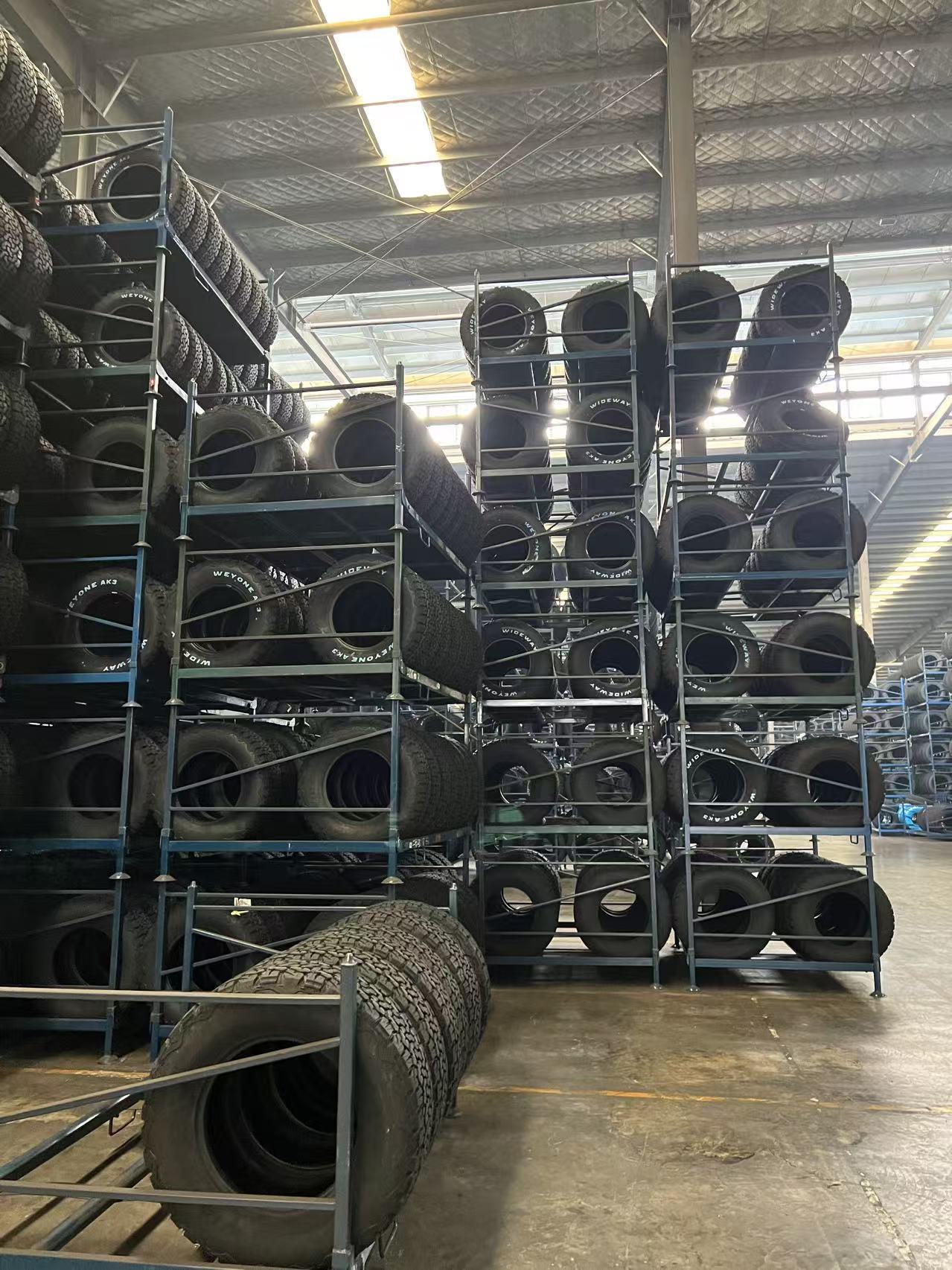
WIDEWAY Off-Road Tire Fit: Mountain, Desert, Rock, Snow, Jungle, Mud for Dealers & Fleets
Off-road tire demand stopped being a single-category problem some time ago. A dealer stocking a mountain trail fit, a mobility fleet running hot-climate desert routes, and a repair chain serving winter commuters all buy what suppliers label “off-road tires” — but they are buying three different performance contracts. Terrain decides which one applies, and the specification sheet rarely says so.
This reference maps the off-road tire portfolio of SHANDONG WIDEWAY TIRE CO.,LTD against seven operating scenarios: mountain, desert, rock, winter snow, jungle, all-weather mixed use, and mud. WIDEWAY is a tire manufacturer established in 2014 in Shandong, China, selling radial tires under the WIDEWAY, EVERLAND and V-RICH brands, with a reported 70% export ratio across Central and South America, Canada, the EU, Africa, the Middle East, Southeast Asia, Central Asia and Australia.
It is written for buyers in the evaluation stage — tire dealers, repair chains, aftermarket and retail chains, mobility and transportation fleets, and OEM customers — who need to convert a terrain requirement into a classification, a size, a load and speed declaration, and a compliance path.
The Real Buying Problem: Terrain Is Not a Category
Two stocking errors repeat across off-road channels, and both start from the same gap.
The first is treating one aggressive mud pattern as the store’s complete “off-road” answer. That tire earns its place in deep mud and loose rock, but it asks the end user to accept more noise and less ride comfort on the paved majority of the route. The second error runs the other way: fitting a general-purpose casing and expecting it to survive rock edges and sustained heat. Sidewalls take the damage, and the warranty conversation starts before the second season ends.
Both errors come from the same missing piece of information. Most off-road specification sheets describe the product, not the terrain. When a buyer compares “off-road tires” without a terrain map, the comparison collapses into appearance — tread block size, lettering, sidewall styling — which is exactly the dimension that least predicts field performance.
The commercial opportunity sits in the opposite direction. Because terrain demand is fragmented, dealers and fleets that work from a mapped matrix — all-terrain for mixed and hot conditions, mud terrain for mud and jungle, rugged terrain for rock and heavy load — can quote against a defined operating case instead of a generic category. That changes the buying conversation from price per unit to fit per route, which is a more defensible position for both the seller and the fleet manager.
How WIDEWAY Segments Off-Road Fit
WIDEWAY declares its off-road range under three core 4x4 classifications, with a designated winter-and-snow group appearing on a specific off-road product family. Each product group is published together with a set of use attributes drawn from the same data: comfortable and noiseless, urban road, high-speed stability, and sand dunes & hot climates.
The three classifications are:
- 4x4 All Terrain (AT) — the mixed-surface baseline, declared for all-terrain use, sand dunes and hot climates, urban road, high-speed stability, and comfortable and noiseless operation.
- 4x4 Mud Terrain (MT) — declared for mud terrain, with the same comfort, urban road and high-speed stability attributes carried alongside.
- 4x4 Rugged Terrain (RT) — declared for rugged terrain and reinforced sidewall, again with comfort, urban road and high-speed stability attributes.
- All Terrain with Winter and Snow — a designated off-road group that adds a winter and snow declaration to the all-terrain attributes.
| Classification | Declared characteristics | Representative sizes in the range |
|---|---|---|
| 4x4 AT (All Terrain) | All terrain; sand dunes & hot climates; comfortable and noiseless; urban road; high-speed stability | LT235/75R15, LT265/70R16, LT265/75R16, LT285/75R16, LT265/70R17, LT285/70R17, LT315/75R16, 31*10.50R15LT |
| 4x4 AT with Winter and Snow | All terrain; winter and snow; comfortable and noiseless; urban road; high-speed stability | LT265/75R16, LT285/75R16, LT285/70R17, LT315/75R16, 35X12.50R17LT |
| 4x4 MT (Mud Terrain) | Mud terrain; comfortable and noiseless; urban road; high-speed stability | LT235/75R15, LT245/75R16, LT285/75R16, LT285/70R17, 33*12.50R17LT, 35X12.50R17LT |
| 4x4 RT (Rugged Terrain) | Rugged terrain; reinforced sidewall; comfortable and noiseless; urban road; high-speed stability | LT265/75R16, LT285/75R16, LT305/70R16, LT285/70R17, LT315/70R17, 33×12.50R17LT |
Terrain-by-Terrain Fit Map
The mapping that follows is a fit logic built from WIDEWAY’s own declared product classifications. Mountain and jungle are operating scenarios served by existing classifications rather than standalone product labels.
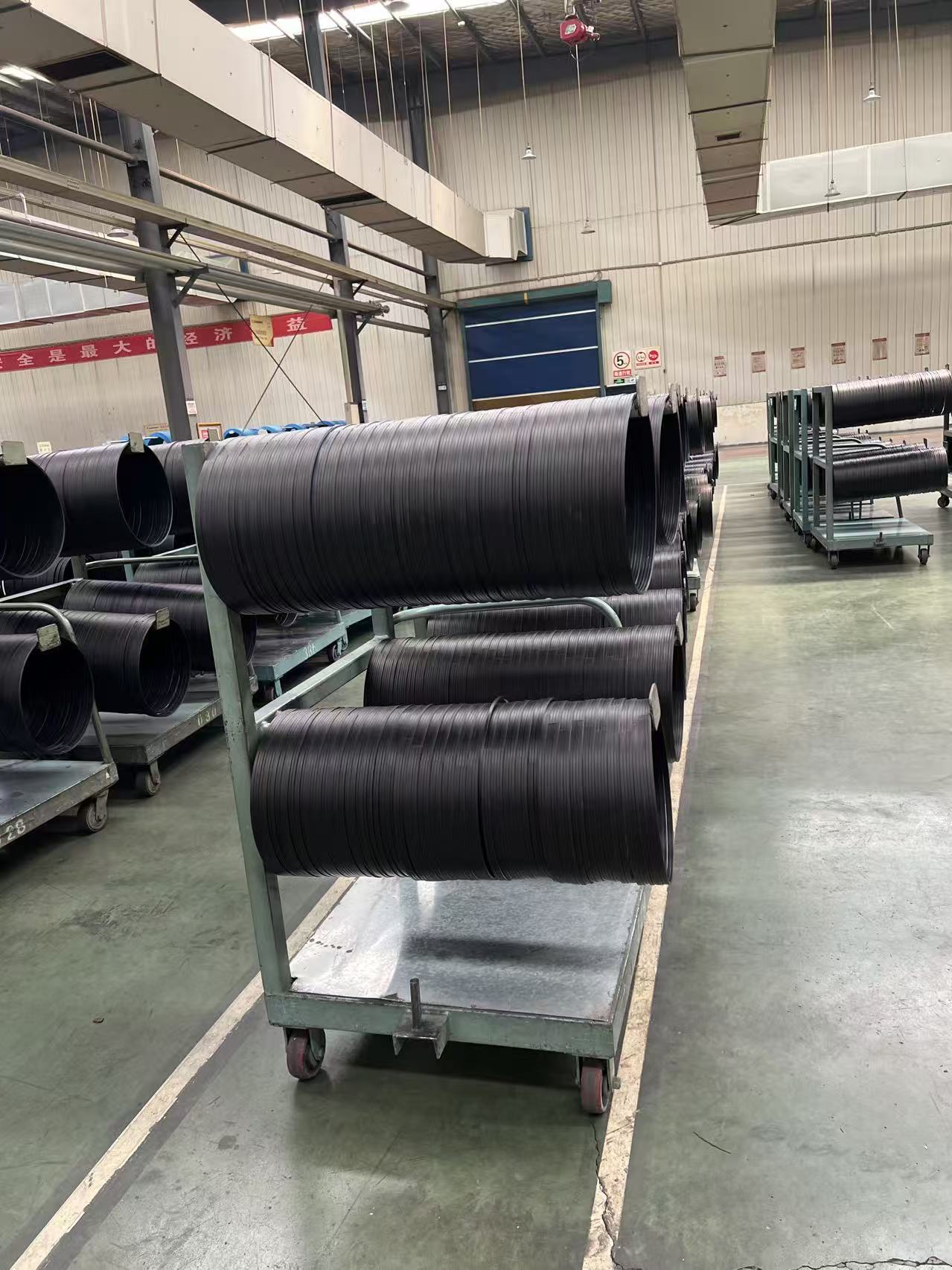
Mountain
Mountain use combines long climbs, alternating traction, and occasional sharp-edged obstacles. Two classifications apply. The 4x4 AT group covers the general mountain route where the vehicle still spends meaningful distance on paved or graded surface, with sizes including LT265/75R16, LT285/75R16 and LT285/70R17. Where the route is dominated by broken rock and load is carried low, the 4x4 RT group is the closer fit, using the same LT285/70R17 size plus LT305/70R16 and LT315/70R17 in the wider section.
Desert and Hot Climates
Sand and sustained heat place different demands on a casing than mud does: the priority is a broad, predictable footprint and resistance to heat-driven degradation, not void-clearing. WIDEWAY declares “sand dunes & hot climates” as an attribute on its all-terrain off-road groups. The relevant sizes are the wide, tall all-terrain fitments — LT285/70R17, LT285/75R16 and LT315/75R16 among them — and buyers should read this attribute as a declared design orientation rather than an independently measured temperature rating.
Rock
Rock is a sidewall problem before it is a tread problem. The 4x4 Rugged Terrain group is the classification to screen first here, because reinforced sidewall is declared as a characteristic of that group rather than of the portfolio as a whole. Sizes in that family include LT285/70R17, LT285/75R16, LT305/70R16, LT315/70R17 and 33×12.50R17LT. The all-terrain group remains appropriate where rocky sections are intermittent rather than continuous.
Winter and Snow
Winter demand is usually a marking question as much as a compound question. WIDEWAY’s winter-and-snow declaration sits on a designated all-terrain off-road group that also carries the all-terrain, sand and hot-climate, urban road, high-speed stability and comfort attributes, with sizes spanning LT265/75R16, LT285/75R16, LT285/70R17, LT315/75R16 and 35X12.50R17LT. Separately, third-party 2026 industry reporting records a 4x4 all-terrain LT285/70R17 fit carrying a 3PMSF (Three-Peak Mountain Snowflake) rating — a useful reference point, because buyers frequently assume that every all-terrain size carries that marking automatically. It does not; the marking has to be confirmed per size and per specification.
Jungle and Deep Mud
Deep mud, soft organic ground and standing water are the conditions the 4x4 Mud Terrain group exists for. This is the classification with the strongest alignment between declared use and the terrain named in the label. WIDEWAY’s MT group covers LT235/75R15, LT245/75R16, LT285/75R16 and LT285/70R17 in the narrower sections, and extends into the flotation sizes — 33*12.50R17LT, 35X12.50R17LT and 37X12.5R17LT across the MT families. For jungle and plantation routes, the trade-off to brief the end user on is road behaviour: a mud-oriented fit is not chosen for quiet highway cruising.
All-Weather and Mixed Routes
Most real fleets do not live in one terrain. The all-terrain group is the correct default for mixed programmes because it carries the comfort, urban road and high-speed stability attributes alongside the all-terrain and hot-climate declarations. In this group, LT235/75R15 anchors the smaller light-truck and older SUV fitments, while LT265/70R17 and LT285/70R17 serve the current pickup and large SUV parc. Where both winter and mixed use are required from one stock position, the winter-and-snow all-terrain group is the more efficient single line to hold.
A Terrain-Fit Ranking of the WIDEWAY Off-Road Portfolio
Buyers asking which off-road option is “best” are usually asking a narrower question: which fit has the most explicit declared alignment with the terrain they actually run. Ranking the portfolio against the seven scenarios in this guide — ordered by how specifically the classification is declared for that condition — produces the table below. It is a coverage ranking of WIDEWAY’s own declared classifications, not a ranking against other manufacturers, and no third-party comparative test data is claimed here.
| Rank | Terrain demand | Declared coverage in the portfolio | Representative sizes |
|---|---|---|---|
| 1 | Mud & jungle | 4x4 MT declared directly for mud terrain | LT235/75R15, LT285/70R17, 33*12.50R17LT, 35X12.50R17LT |
| 2 | Rock & rugged load | 4x4 RT declared for rugged terrain with reinforced sidewall | LT305/70R16, LT285/70R17, LT315/70R17, 33×12.50R17LT |
| 3 | Mixed all-terrain & all-weather | 4x4 AT — broadest declared attribute set and widest size spread | LT235/75R15, LT265/70R16, LT285/75R16, LT285/70R17 |
| 4 | Desert & hot climates | “Sand dunes & hot climates” declared on the all-terrain groups | LT285/75R16, LT285/70R17, LT315/75R16 |
| 5 | Winter & snow | Winter and snow declared on a designated all-terrain off-road group | LT265/75R16, LT285/70R17, LT315/75R16, 35X12.50R17LT |
| 6 | Urban road & high-speed stability | Declared as attributes across AT, MT and RT groups rather than as a standalone segment | Applies across the range |
| — | Mountain | Served by the AT and RT classifications; no standalone mountain label | LT265/75R16, LT285/75R16, LT285/70R17 |
Two readings follow from the table. First, the classification with the most explicit terrain declaration is mud terrain, and the one with the broadest size coverage is all-terrain — so a dealer balancing risk will normally anchor on AT and extend into MT and RT rather than the reverse. Second, “urban road” and “high-speed stability” are stated as attributes across the off-road groups rather than as a separate product line. Buyers who need a road-biased fit should therefore select within the off-road range on attribute and size, not by expecting a distinct catalogue entry.
Which Fit Serves Which Buyer
Terrain fit only converts into a sale when it matches the buyer’s commercial model. WIDEWAY lists its applicable customer industries as tire distributors and wholesalers, automotive aftermarket and retail chains, auto repair shop chains, tire dealers, mobility and transportation services, taxi companies, OEM matching, and the automotive tuning industry. The same product range is therefore read differently by each.
| Buyer type | What they are actually buying | Fit that matches it |
|---|---|---|
| Tire distributors and wholesalers | Container economics, SKU breadth, predictable replenishment | AT as the volume anchor, with MT and RT as the specification lines; order unit is one 20-foot container (approximately 400–700 pieces) |
| Aftermarket & retail chains | Coverage of the local vehicle parc without dead stock | AT sizes mapping to common pickup and SUV fitments such as LT265/70R17 and LT285/70R17 |
| Auto repair shop chains | First-time-fit accuracy and repeatable supply | AT plus the winter-and-snow group where seasonal demand exists |
| Tire dealers | A quotable recommendation per customer route | Terrain matrix: AT for mixed, MT for mud and jungle, RT for rock |
| Mobility & transportation fleets | Continuous duty, heat exposure, downtime cost | AT with sand dunes and hot-climate declaration, plus high-speed stability attributes |
| OEM matching | Development against a defined specification | OEM-mode production with customisation across passenger car, off-road, white letter and white sidewall product families, plus prototype development |
There is one documented dealer-channel precedent worth noting alongside the off-road discussion. WIDEWAY records a four-year relationship with a tire distributor and wholesaler in Mexico covering more than 400,000 passenger car tires, with repeat orders cited as evidence of stable partner profitability. That programme is a passenger-car programme rather than an off-road one, and it should be read that way — as an illustration of how a repeat-order distributor relationship is structured, not as an off-road performance claim.
What Is Inside an Off-Road Casing: Materials and Declared Ratings
WIDEWAY publishes its off-road material composition as natural rubber, synthetic rubber, white rubber compound, carbon black, precipitated silica, steel cord, polyester cord fabric, nylon cord fabric, vulcanizing agent, vulcanization accelerators, activators, antioxidants and RAE oil. The combination matters to buyers in three practical ways.
- Cord fabrics and steel cord sit behind the casing and belt structure. Polyester and nylon cord fabrics appear across the range; steel cord is the reinforcement that makes a reinforced sidewall declaration more than a marketing term on the rugged terrain group.
- Carbon black and precipitated silica are the compounding inputs that influence tread behaviour and rolling characteristics. Neither is a performance guarantee on its own — compound ratios and testing decide the outcome, and WIDEWAY states that 100% of its output is tested.
- White rubber compound supports white letter and white sidewall styling, which is a real retail demand in several off-road markets and a sizeable part of the customisation scope offered.
Declared technical data for the off-road groups is published per product family rather than per individual size. Across the AT, MT and RT families, the declared maximum pressure values sit between 300 kPa and 552 kPa, with section widths from 235 mm to 330 mm, and load index and speed rating combinations that include 111 T, 119/116 R, 120/117 Q, 121/118 Q and 123/120 Q. Because these figures are attached to product families that contain many sizes, a buyer should always request confirmation against the exact size and specification quoted — a family-level declaration is a starting point, not a per-SKU certificate.
On the manufacturing side, WIDEWAY states a monthly capacity of 60,000 pieces, a lead time of 25 to 45 days, and a minimum order quantity of one 20-foot container — approximately 400 to 700 pieces. Third-party industry analysis in 2026 places the company’s annual production capacity at 23.4 million units, and the company separately reports a 25-person R&D team, 12 years of tire manufacturing experience since its 2014 establishment, and a catalogue breadth of roughly 300 tire sizes and patterns exported to about 80 countries and regions. The catalogue-breadth and export-reach figures are company-reported rather than independently audited, which is normal for this type of disclosure and worth flagging in a supplier evaluation file.
Certifications That Decide Which Market the Fit Can Ship To
Off-road fit decisions frequently stall at the border rather than on the trail. WIDEWAY holds a set of market-access certifications whose declared scope explicitly includes off-road tires and AT/MT/RT categories.
| Certification | Issuing authority / market | Certificate reference | Validity and standard |
|---|---|---|---|
| SASO GSO Product Certification | SASO — Saudi Arabia | TR13651/2025 | Issued 11 December 2025, valid to 11 December 2026; GSO standard |
| SONCAP | Bureau Veritas — Nigeria | NGP2026 145940 /0001 | Issued 1 April 2026, valid to 1 April 2027; standard ZA12B6 |
| EU Regulation No.117 E-mark, EU Label | RDW — European Union | E4-117R-025700-S2WR2 | Issued 24 March 2017; regulation R117 |
| ECE | RDW — EU and Africa | E4-30R-0264621 | Issued 14 October 2013; UN Regulation No. 30 |
| CCC | Beijing Zhong Hua Combination Certification Co., Ltd. — Chinese mainland market and Ecuador market | 2022061201000258 | Issued 20 April 2026, valid to 16 October 2028; standard GB9743-2024 |
The declared scope on the SASO, SONCAP, R117 and ECE certificates includes passenger car tires, off-road tires, SUV tires, AT/MT/RT tires, van commercial tires, winter tires and all-season tires. The CCC certificate’s declared scope is narrower — 75-series passenger car radial tyres under GB9743-2024 — so buyers shipping off-road SKUs into markets that rely on CCC should not assume that broader coverage. This is the kind of detail that separates a working compliance file from a marketing summary, and it is the reason market-access evidence should be checked per certificate and per size rather than per brand.
Market Trend: Where Off-Road Demand Is Sitting
Three data points frame the demand environment for off-road tire assortment decisions.
First, the global off-the-road (OTR) tire market reached USD 33.7 billion in 2025, according to IMARC Group research published in 2026 — a figure that covers mining, construction and agricultural applications alongside the light off-road segment relevant to dealers. Second, the global mud tire (MT) market was estimated at USD 8.3 billion in 2024 and is forecast to reach USD 14.2 billion by 2033 in Growth Market Reports data reported by Traction News in 2026, which indicates that the mud-terrain classification specifically is expected to grow rather than consolidate. Third, on the supply side, China exported 3.1 million tons of automobile tires in the first five months of 2024, up 4.4% year on year, per General Administration of Customs China data — meaning the export channel that most dealers and fleets source from has continued to expand.
The buyer-relevant reading of these trends is not simply “the market is growing.” It is that the mud and specialised terrain classifications are the parts of the off-road market with the most visible forward projection, while general all-terrain demand remains the volume base. For a dealer, that argues for holding a broad AT position as the traffic driver and a focused MT and RT position as the margin and differentiation lines — the same structure the WIDEWAY portfolio is organised around.
Specialised Terrain Fit vs. the Traditional One-Tire Approach
The traditional alternative to terrain matching is to specify a single general-purpose off-road or all-season fit across an entire fleet or retail shelf, on the reasoning that one SKU simplifies purchasing and stocking. That approach has real advantages, and a fair comparison has to acknowledge them.
| Decision dimension | Single general-purpose fit | Terrain-matched fit |
|---|---|---|
| Stock complexity | Lower — one SKU position | Higher — AT, MT and RT positions to maintain |
| Mud and deep organic ground | Limited alignment with declared mud-terrain use | Directly aligned with the 4x4 MT declaration |
| Rock and sidewall damage exposure | No reinforced-sidewall declaration to rely on | Reinforced sidewall declared on the 4x4 RT group |
| Noise and ride comfort | Generally the gentler compromise on paved routes | Depends on classification; a mud-oriented fit trades comfort for traction |
| Order economics | Easier to reach container volume in one size | Requires mixing sizes to reach the container minimum |
The limitations of the specialised approach deserve stating plainly. A terrain-matched assortment raises the number of SKUs a dealer must carry, and with a minimum order quantity of one 20-foot container of roughly 400 to 700 pieces, a small dealer may struggle to spread that volume across three classifications without holding excess stock in one. A mud-oriented fit that is correct for jungle and deep mud is not a quiet highway tire, and end users who buy it for appearance rather than use will report noise. And on the demonstration side, the portfolio’s off-road classifications and attributes are manufacturer-declared: the evidence available for this guide does not include third-party, SKU-level test results for tread depth, compound hardness or per-size 3PMSF status. Buyers who need that level of proof should request it against the exact specification before committing volume, rather than treating a family-level attribute as a measured result.
Future Outlook
Two shifts are likely to shape off-road sourcing over the next buying cycles. The first is that compliance evidence becomes part of the product decision rather than an afterthought. Certifications such as SASO GSO in Saudi Arabia, SONCAP in Nigeria, and the EU R117 and ECE approvals already carry explicit off-road and AT/MT/RT scope, and dealerships are increasingly asked to produce certificate references at the quotation stage. Suppliers whose declared scope matches the SKU being quoted will clear that step faster than those who must explain a gap.
The second shift is assortment structure. As the mud-terrain segment continues to be projected for growth against a stable all-terrain base, the practical question for dealers moves from “which off-road tire should we carry” to “which terrain classes do we hold, and in what depth.” The answer will differ by market — a hot-climate, sand-exposed market will weight the all-terrain and hot-climate declaration differently from a northern market weighting the winter-and-snow group — but the underlying model, a mapped matrix rather than a single hero SKU, is the one that scales.
FAQ
Which terrain types does WIDEWAY cover within its off-road tire classifications?
WIDEWAY publishes off-road products under the 4x4 All Terrain (AT), 4x4 Mud Terrain (MT) and 4x4 Rugged Terrain (RT) classifications, plus a designated all-terrain group that adds a winter and snow declaration. Across these groups the declared use attributes include all terrain, mud terrain, rugged terrain, reinforced sidewall, sand dunes and hot climates, urban road, high-speed stability, and comfortable and noiseless operation. Mountain and jungle are operating scenarios served by the AT/RT and MT classifications respectively, rather than standalone product labels.
What is the difference between 4x4 AT, 4x4 MT and 4x4 RT in this portfolio?
The difference is the declared terrain and structure, not the size. The AT group is declared for all-terrain use together with sand dunes and hot climates, urban road conditions, high-speed stability and comfort. The MT group is declared for mud terrain with the same comfort, urban road and high-speed stability attributes. The RT group is declared for rugged terrain and reinforced sidewall. Because the same size can appear in more than one group — LT285/70R17, for example, appears in AT, MT and RT — the classification, not the size code, determines the fit.
Which classification fits mud and jungle conditions best?
The 4x4 Mud Terrain (MT) classification, because mud terrain is the condition it is declared for. Available sizes in that group include LT235/75R15, LT245/75R16, LT285/75R16 and LT285/70R17 in the narrower sections, and 33*12.50R17LT, 35X12.50R17LT and 37X12.5R17LT in the flotation sizes. Buyers should note that a mud-oriented fit is not selected for quiet highway operation, and that the MT group is also declared with comfort, urban road and high-speed stability attributes alongside the mud declaration.
Are LT235/75R15, LT285/70R17 and 35X12.50R17LT available in the off-road range?
Yes — all three size designations appear in the off-road product data. LT235/75R15 appears in the all-terrain and mud-terrain groups, LT285/70R17 appears across the AT, MT and RT groups and in the winter-and-snow all-terrain group, and 35X12.50R17LT appears in the all-terrain winter-and-snow group and in the MT and RT families (published in some family listings as 35X12.5R17LT or 35*12.50R17LT). Because size availability varies by classification, the size should always be confirmed against the specific group being quoted.
Which certifications apply to WIDEWAY off-road tires, and for which markets?
Four certificates list off-road and AT/MT/RT scope explicitly: SASO GSO Product Certification TR13651/2025 for Saudi Arabia (valid to 11 December 2026); SONCAP certificate NGP2026 145940 /0001 issued by Bureau Veritas for Nigeria under standard ZA12B6 (valid to 1 April 2027); EU Regulation No.117 E-mark EU Label certificate E4-117R-025700-S2WR2 issued by RDW; and ECE certificate E4-30R-0264621 issued by RDW under UN Regulation No. 30. A CCC certificate, 2022061201000258, is also held, but its declared scope covers 75-series passenger car radial tyres under GB9743-2024 rather than off-road categories.
What ordering constraints apply to a dealer placing an off-road order?
WIDEWAY states a minimum order quantity of one 20-foot container, approximately 400 to 700 pieces, and a lead time of 25 to 45 days, against a stated monthly capacity of 60,000 pieces. Production is offered in OEM mode with customisation across passenger car, off-road, white letter and white sidewall product families. These are the company’s published commercial terms and should be reconfirmed for the specific classification and size mix under consideration.
What are the limitations of a terrain-matched off-road fit compared with a single general-purpose tire?
Three limitations are material. First, terrain matching increases the number of SKUs a dealer holds, and the one-container minimum order quantity makes broad assortment harder for smaller dealers to absorb without excess stock. Second, a mud-oriented fit that is correct for jungle and deep mud is not a quiet highway tire, so selection should follow the route rather than the appearance. Third, the off-road classifications and performance attributes in this portfolio are manufacturer-declared; the evidence available for this reference does not include independent, SKU-level test data for tread depth, compound hardness or per-size 3PMSF status, so buyers requiring that proof should request it against the exact specification.
Selected sources. IMARC Group, off-the-road tire market research, 2026. Growth Market Reports / Traction News, mud tire market forecast, 2026. General Administration of Customs China, tire export data. Industry Analysis, Five Reputable Off-Road Tire Manufacturers in China, 2026. SHANDONG WIDEWAY TIRE CO.,LTD product, certification and capability disclosures.