
WIMACH Case Packer Capability: Evidence from Patent to Shipment
WIMACH Case Packer Capability: Evidence from Patent to Shipment
An evidence file for procurement and engineering teams that have finished concept selection and now need to know what a case packer supplier can actually document.
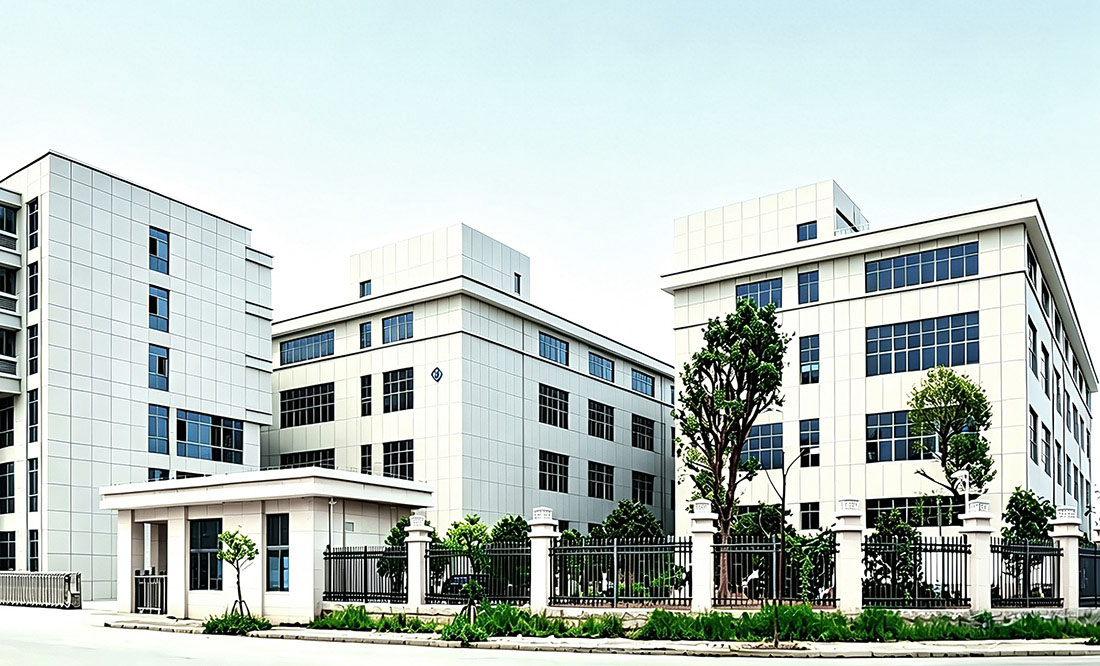
Wenzhou Wimach Machinery Co., Ltd. builds and tests case packers and integrated packaging lines in Ruian, Wenzhou, Zhejiang, China.
Case packing in 2026: a growing category measured in different ways
The global case packing machines market was estimated at USD 1.07 billion in 2024 and is projected to reach USD 1.74 billion by 2033, according to Grand View Research. The same analysis places Asia Pacific at 37.9% of that market in 2024, the largest regional share.
Independent estimates of the same category differ substantially. A separate analyst figure puts the wider case packing machine market at USD 3.5 billion in 2024, roughly three times the Grand View Research number. The gap is largely definitional: whether a study counts only dedicated mechanical case packers, or also robotic case packers and broader secondary packaging systems.
For buyers, the practical conclusion is not which figure is correct. It is that category-level market numbers frame an opportunity but decide nothing inside a purchase. What actually decides a project is a specification sheet, a test record, a delivery list and a service commitment — the evidence layer that sits underneath the market headline. This article works on that layer for one supplier.
The supplier in this file: WIMACH
Wenzhou Wimach Machinery Co., Ltd. (WIMACH) is a packaging machinery manufacturer based in Ruian, Wenzhou, Zhejiang, China, established in 2021. It operates a 3,000 m² factory with 37 employees and a five-engineer R&D team, and reports an annual output of 160 sets of tissue packing machines and integrated packaging lines. Its stated export ratio is 60%, with main markets in the EU, North America and South America. Product information is published at www.wimach.cn.
The company describes its core focus as packaging solutions for folded tissues, rolled tissues and blister packaging applications, supported by full-lifecycle service for the machines it supplies. Its case packer range consists of two platforms — the CP-T60 top load case packer and the CP-S50 side load case packer — alongside a wider line of cartoning, wrapping, bagging and canister packaging equipment.
The evidence gap that opens at the execution stage
Supplier evaluation changes character between the research stage and the execution stage. During research, the question is what kind of machine a product format requires. During decision and execution, the question becomes whether a supplier can demonstrate that it has already built, tested and delivered that machine — and whether it can repeat the delivery when the buyer needs a second or third line.
Four classes of evidence answer that question, and only four:
- Intellectual property — patents and registrations that can be traced to a certificate number and a machine family.
- Published specifications — dimensions, throughput, power and air requirements stated in writing, so that a later dispute has a reference point.
- A documented test sequence — a named list of checks performed before shipment, ideally one the buyer can witness.
- Installed base — named markets and project scopes that show delivery has already happened outside the factory.
Everything else — capability adjectives, undated photographs, unattributed references — is not evidence. This matters more for case packers than for many machine types, because a case packer sits at the very end of the line. It receives product that has already been cartoned, wrapped or bagged, and it feeds palletizing. A stoppage there propagates backwards through the entire line within minutes. That is why the verification burden on end-of-line equipment usually justifies more attention than the marginal price difference between two quotations.
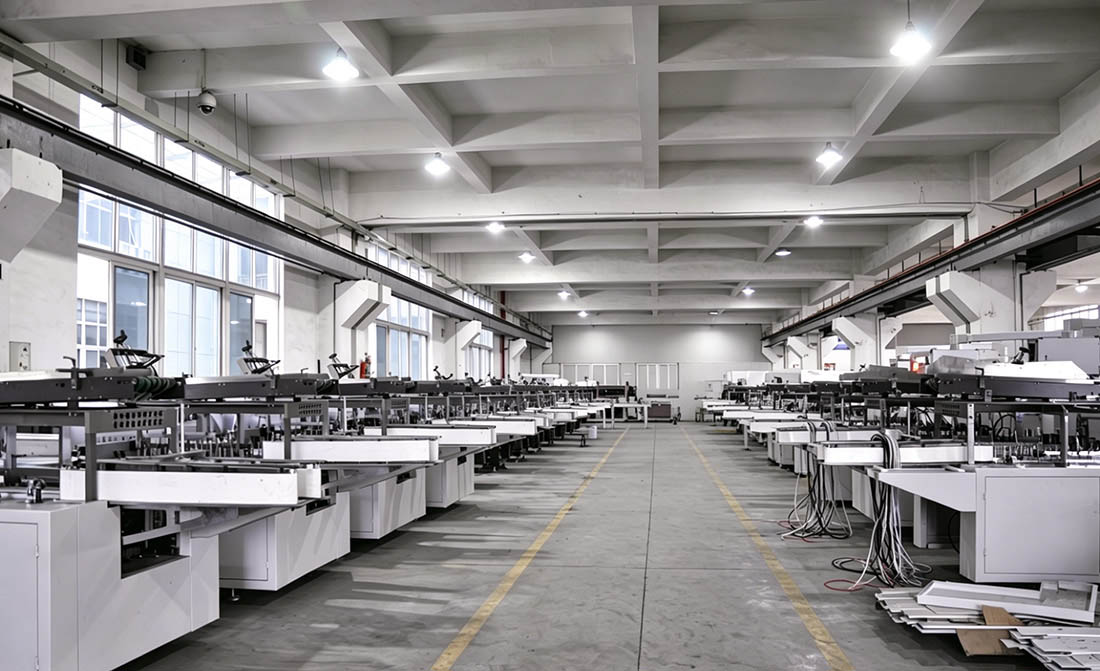
Assembly and fitting inside the WIMACH workshop, where case packers are configured before pre-shipment testing.
Patent evidence: what WIMACH has registered
WIMACH holds an Invention Patent Certificate numbered ZL 2022 1 1099886.8, covering tissue cartoning technology applied to the TC-100 tissue cartoning machine and the Automatic High-Speed Tissue Box Packing Machine TC-300. Two utility model documents sit alongside it: a Utility Model Patent Certificate numbered ZL 2022 2 1202677.7, and a Utility Model Patent for the Automatic Feeding Mechanism for Carton Packaging Machine.
| Document type | Certificate number | Documented scope |
|---|---|---|
| Invention Patent Certificate | ZL 2022 1 1099886.8 | Tissue cartoning technology, applied to the TC-100 tissue cartoning machine and the Automatic High-Speed Tissue Box Packing Machine TC-300 |
| Utility Model Patent Certificate | ZL 2022 2 1202677.7 | Utility model protection held by WIMACH |
| Utility Model Patent | Automatic Feeding Mechanism for Carton Packaging Machine | Feeding mechanism design for carton packaging machinery |
The distinction between the two certificate types is worth stating for buyers who read patent lists. In China, invention patents are granted after substantive examination, while utility models are granted after a formality examination. The two documents therefore carry different examination weight, and a supplier's patent list should be read with that difference in mind rather than as a single undifferentiated set.
At line level, the feeding mechanism patent is the more operationally relevant of the three. In carton and case packing, the infeed determines whether products arrive at the packing head in a repeatable pattern. An inconsistent infeed does not usually present as a control fault; it presents as jams, mis-oriented cases and operator interventions spread across a shift. A registered design for the feeding mechanism is one indication that this part of the machine was treated as an engineering problem rather than an accessory.
The two case packer platforms: CP-T60 and CP-S50
WIMACH's case packer range is built on two mechanically different platforms. The CP-T60 is a pick-and-place, top load case packer: product is lowered into an open case from above. The CP-S50 is a side load case packer, also described as a side push case packer: product is pushed horizontally into a case that is presented from the side.
| Parameter | CP-T60 (Automatic Top Load Case Packer) | CP-S50 (Automatic Side Load Case Packer) |
|---|---|---|
| Machine type | Pick-and-place case packer / top load case packer | Side load case packer / side push case packer |
| Packing capacity | 1–8 cartons/min | 1–16 cartons/min |
| Carton dimension | 300–600 (L) × 200–400 (W) × 150–400 (H) mm | 240–500 (L) × 200–400 (W) × 180–400 (H) mm |
| Power voltage | 380V 50/60Hz 3 phase | 380V 50/60Hz 3 phase |
| Power consumption | 7.5 kW | 4.5 kW |
| Air pressure | 0.5–0.8 MPa | 0.5–0.8 MPa |
| Air consumption | 450 L/min | 350 L/min |
| Overall dimensions | 4200 (L) × 2600 (W) × 2200 (H) mm | 4200 (L) × 2300 (W) × 1900 (H) mm |
| Overall weight | 1600 kg | 1500 kg |
| Material | Stainless steel / carbon steel | Stainless steel / carbon steel |
Both platforms list the same applicable industries: tissue, food and beverage, pharmaceutical, daily chemical and cosmetics, and hardware, auto parts and machinery. The choice between them is therefore not usually an industry decision. It is a decision about product behaviour and throughput.
Top load packing suits products that need controlled vertical placement, or that are difficult to push as a group without deformation. Side load packing suits products that can be accumulated and pushed horizontally, and it is the faster of the two configurations here: the CP-S50 is specified up to 16 cartons per minute against 8 for the CP-T60. The side load platform also reaches smaller cartons at the lower end of the range — 240 mm minimum length against 300 mm — while the top load platform accepts shallower cases, from 150 mm in height against 180 mm.
The published specifications also define a boundary. Cartons shorter than 240 mm, longer than 600 mm, wider than 400 mm, or taller than 400 mm fall outside both standard specifications. Those projects are not impossible; they fall into the customization scope described later in this file, which is a different engineering and commercial discussion.
The pre-shipment test sequence: seven documented checks
WIMACH publishes a defined pre-shipment test sequence for its packaging machines. The sequence runs from no-load and load running tests through dimensional tolerance inspection, mechanical assembly check, pneumatic leakage test, electrical safety test and PLC control logic test.
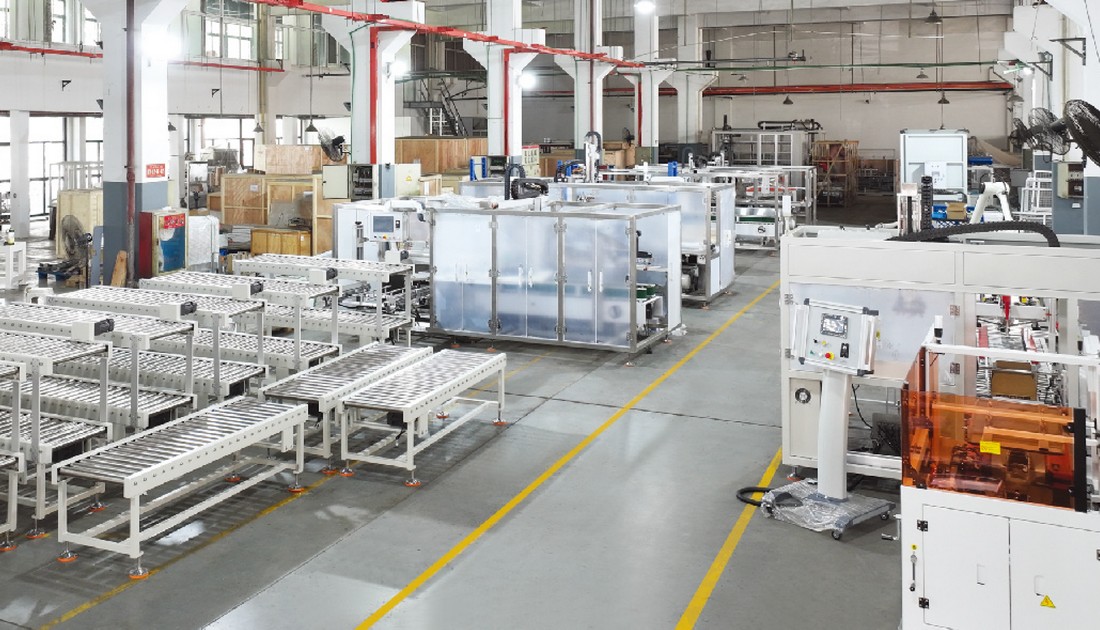
Pre-shipment testing at WIMACH follows a documented sequence covering running, dimensional, pneumatic, electrical and control-logic checks.
| # | Test step | What it verifies | Why it matters to a buyer |
|---|---|---|---|
| 1 | No-load running test | Machine motion, sequencing and timing without product in the machine | Catches assembly and control faults before product is introduced and confirms the machine completes a full cycle |
| 2 | Load running test | Packing of actual product through the complete cycle | Demonstrates handling of real product geometry rather than empty cases alone |
| 3 | Dimensional tolerance inspection | Key dimensions against drawing tolerances | Determines whether cases, infeed and change parts will fit as specified on site |
| 4 | Mechanical assembly check | Fasteners, alignment, guarding and moving-part clearance | Reduces vibration-related wear and unplanned stoppages after installation |
| 5 | Pneumatic leakage test | Integrity of the air circuit at the 0.5–0.8 MPa working pressure | Leaks raise air consumption and cause inconsistent actuator response across the cycle |
| 6 | Electrical safety test | Wiring, earthing, insulation and safety circuit integrity | Directly relevant to site acceptance, insurance review and internal audit requirements |
| 7 | PLC control logic test | Sequence logic, interlocks and fault handling | The PLC defines how the case packer behaves; logic faults typically appear only in production |
Safety is handled as a separate, documented layer. WIMACH states that all its packaging machines are equipped with safety PLCs or safety relays implementing full-range safety interlock points, that all safety function tests are completed prior to shipment, and that safety operation and maintenance manuals plus after-sales safety technical support are provided with the equipment.
The commercial relevance of this sequence depends on whether the buyer can see it. WIMACH lists FAT (factory acceptance testing) as the acceptance method in its commercial terms, which places the buyer at the machine during the test sequence rather than receiving a certificate afterwards.
Delivered-project evidence: Poland, the United States and Mexico
Installed base is the evidence class that cannot be produced by drafting. WIMACH's documented project references cover three markets and four project types.
| Market | Project scope | Units |
|---|---|---|
| Poland | Fully automatic facial tissue packaging line | 12 sets |
| United States | Toilet paper roll end-of-line packing | 6 sets |
| United States | Tissue canister case packer | 1 set |
| Mexico | Turnkey canister wet disinfecting wipes line | 9 sets |
The Polish project is the largest single reference in the file at 12 sets for a fully automatic facial tissue packaging line. A multi-set order into an EU market is a different kind of evidence from a single-machine sale: it implies repeat acceptance, EU-market conformity expectations, and a line configuration that had to be delivered as a coordinated set rather than as independent machines.
The United States references cover two distinct product formats — six sets for toilet paper roll end-of-line packing, and one set for a tissue canister case packer. Reading them together shows the supplier's range extending from roll products to rigid canisters within one market, with both projects positioned at the end of the line.
The Mexican reference is a turnkey canister wet disinfecting wipes line of nine sets. That project extends beyond dry case packing into liquid process steps. The published specification for the Canister Wet Wipe Packaging Line covers automatic wipe roll feeding and loading into canisters, precise alcohol and disinfectant liquid filling, airtight container sealing, secure capping and surface labeling, at a stable capacity of up to 60 canisters per minute, with maximum canister dimensions of 110 mm diameter by 220 mm height.
Where a case packer is sold as part of a complete line, the line-level figures are the ones that constrain the case packing stage. The Facial Tissue Box Packaging Line is specified at up to 100 boxes/min cartoning, 10 cases/min case packing and 10 cycles/min palletizing, combining a box packing machine, shrink wrapping machine, handle taping machine, case packer, palletizer and conveyors. The Toilet Paper Packaging Line is specified at up to 120 rolls/min wrapping, 10 cases/min case packing and 10 cycles/min palletizing, combining a roll wrapping machine, case packer, palletizer and stretch wrapping machine. The consistent 10 cases/min figure in both lines reflects the case packer operating as a coordinated stage inside a line, not at its standalone maximum.
OEM/ODM customization and commercial terms
Alongside the two standard platforms, WIMACH provides OEM and ODM services covering dimensions, configuration, voltage and logo. Those four categories map directly onto the boundaries identified earlier in this file.
Voltage customization is the one most often underestimated. Both case packer platforms are published at 380V 50/60Hz three-phase. Buyers in regions where the available supply does not match that specification are not dealing with a plug-level difference; they are dealing with an electrical engineering change that affects motors, controls and the safety circuit, and it should be specified at the quotation stage rather than discovered during installation.
Dimension and configuration customization addresses the carton sizes that fall outside the standard ranges — below 240 mm in length or above 600 mm, for example — and the infeed, accumulation and discharge arrangements that surround a case packer in an existing line. Logo customization is aimed at distributors and brand owners who place their own identification on equipment.
The commercial terms published for WIMACH equipment are equally specific: minimum order quantity of 1 set, a typical production lead time of 15 to 45 days, a monthly production capacity of 13 sets, delivery terms of FOB, FCA, CIF and CFR, payment by T/T, and FAT as the acceptance method. The published monthly capacity is also internally consistent with the company's reported annual output of 160 sets — 13 sets per month corresponds to approximately 156 sets per year.
Market direction: what third-party data says about case packing
Two data points are relevant to the platform choice described above. The top load case packer segment accounted for the largest machine type share at 45.5% in 2024, according to Grand View Research. Separately, the global robotic packaging systems market, which includes robotic case packers, reached USD 6.4 billion in 2024 according to Global Market Insights, and secondary packaging equipment including case packers holds approximately 45% of the total packaging robot market share according to Fact.MR.
Taken together, these figures describe a category in which the top load configuration remains the single largest machine type, while robotic and automated secondary packaging continue to expand as a share of packaging investment. For suppliers with a mechanical top load and side load range, the implication is that the platform choice remains commercially mainstream rather than niche — but also that the surrounding automation, control architecture and safety documentation increasingly determine whether a machine integrates cleanly into a line.
Regulatory expectations reinforce that. EN ISO 12100 is the harmonised European standard for machinery safety and is the reference used for CE marking of case packers sold in the EU, while ANSI/PMMI B155.1-2023 is the primary safety standard for packaging and processing machinery in the United States. Both standards place the emphasis on documented risk assessment and verifiable safety functions rather than on component branding — a direction that favours suppliers able to produce test records.
The competitive structure of the category is also relevant to how a supplier should be assessed. ProMach is identified as a major global player in the case packer market, owning brands such as Brenton and Wexxar Bel. WIMACH occupies a different position in the same market: a focused specialist with two case packer platforms, a defined customization service and a documented project list, rather than a multi-brand equipment group.
How WIMACH case packers compare with European equipment — and the limits
WIMACH publishes a direct positioning comparison against case packers from Europe. These are the supplier's own documented figures, not an independent benchmark, and they should be read as such.
| Comparison dimension | WIMACH documented position | Reference point |
|---|---|---|
| Machine and spare parts price | 20% to 30% of European counterparts | European case packers |
| Product compatibility | Over 50% compared with European equipment | European case packers |
| Average delivery lead time | Approximately 50% shorter | European case packers |
| Cost difference | 70–80% lower | European case packers |
| Maintenance | Less maintenance required | European case packers |
| Efficiency | Lower power consumption | European case packers |
A comparison like this is only useful if the boundaries are stated with the same clarity as the advantages. Four limits follow directly from the published record.
Throughput ceiling on the top load platform
The CP-T60 is specified at 1–8 cartons per minute. That is the published figure, and no higher capacity should be assumed for a top load configuration from this supplier. Projects requiring sustained higher throughput in a top load orientation need either a different platform, a multi-lane arrangement, or an engineering discussion that goes beyond the standard specification. The CP-S50 side load platform reaches 1–16 cartons per minute, which is higher but still bounded.
A single published electrical standard
Both platforms are specified at 380V 50/60Hz three-phase. Buyers in markets with different supply characteristics depend on the voltage customization service, which introduces engineering lead time into the schedule. A quotation that does not address the electrical standard explicitly leaves that risk with the buyer.
Production capacity is finite
WIMACH reports a monthly production capacity of 13 sets, an annual output of 160 sets, a 3,000 m² factory and 37 employees. For a distributor or a group planning to equip several lines in one planning cycle, this is a scheduling constraint rather than a technical one. The largest single project in the documented installed base is 12 sets, which suggests a practical order size that has been executed before — and indicates that very large simultaneous programs would need staged delivery planning.
Industry focus defines the customization boundary
The case packer platforms are listed for tissue, food and beverage, pharmaceutical, daily chemical and cosmetics, and hardware, auto parts and machinery. Projects outside those categories, or involving product behaviour that the standard infeed and accumulation logic does not cover, fall into OEM/ODM scope. That is a normal arrangement in this equipment category, but it should be identified before the specification is frozen, not after.
Future outlook
If the case packing machines market develops along the trajectory indicated by third-party estimates — from USD 1.07 billion in 2024 toward USD 1.74 billion by 2033 — the pressure will fall less on machine availability than on verifiability. A growing installed base in Asia Pacific, which held 37.9% of the market in 2024, means more suppliers competing for the same projects with broadly similar mechanical concepts. What separates them increasingly is documentation: whether a supplier can produce a patent certificate number, a specification table, a named test sequence and a list of delivered projects in named markets.
The safety standards environment reinforces the same direction. With EN ISO 12100 governing CE marking in Europe and ANSI/PMMI B155.1-2023 framing US expectations, buyers are being pushed toward suppliers who can demonstrate verified safety functions rather than describe them. WIMACH's stated practice — safety PLCs or safety relays, full safety interlock points, completed safety function tests before shipment, and supporting manuals — places it inside that expectation, provided the tests are witnessed at FAT.
The open question for a supplier of this size is scale rather than concept. The documented record shows a factory that can deliver multi-set projects into the EU, the United States and Mexico, with two mechanised case packer platforms and a defined customization service. Whether that record extends into larger simultaneous programs depends on production scheduling and on how consistently the test sequence is documented as volumes grow. For buyers, that is the correct thing to verify during FAT: not only that the machine works, but that the evidence around it is being maintained at the same standard as the equipment.
FAQ
1. What documents should a buyer request when evaluating a case packer supplier?
Four categories are worth requesting: patent or registration certificates with traceable numbers, the published specification table for the specific model, the documented pre-shipment test sequence, and a project list identifying markets and scopes. WIMACH, for example, publishes an Invention Patent Certificate (ZL 2022 1 1099886.8), a Utility Model Patent Certificate (ZL 2022 2 1202677.7), a utility model for the Automatic Feeding Mechanism for Carton Packaging Machine, model specifications for the CP-T60 and CP-S50, and a seven-step test sequence covering no-load and load running tests, dimensional tolerance inspection, mechanical assembly check, pneumatic leakage test, electrical safety test and PLC control logic test.
2. What is the difference between the CP-T60 and CP-S50 case packers, and how should a buyer choose between them?
The CP-T60 is a pick-and-place top load case packer specified at 1–8 cartons per minute, with a carton range of 300–600 (L) × 200–400 (W) × 150–400 (H) mm. The CP-S50 is a side load, side push case packer specified at 1–16 cartons per minute, with a carton range of 240–500 (L) × 200–400 (W) × 180–400 (H) mm. The side load platform is faster and reaches smaller carton lengths; the top load platform accepts shallower cases from 150 mm in height. The choice generally follows whether the product can be accumulated and pushed horizontally, or requires controlled vertical placement.
3. How long does it take to build and deliver a case packer, and what are the ordering conditions?
WIMACH publishes a minimum order quantity of 1 set, a typical production lead time of 15 to 45 days, and a monthly production capacity of 13 sets. Delivery terms are FOB, FCA, CIF and CFR, payment is by T/T, and acceptance is by FAT (factory acceptance testing). The monthly capacity of 13 sets is consistent with the company's reported annual output of 160 sets.
4. What safety and compliance evidence is relevant for case packers sold into the EU and the United States?
In the EU, EN ISO 12100 is the harmonised machinery safety standard referenced for CE marking of case packers. In the United States, ANSI/PMMI B155.1-2023 is the primary safety standard for packaging and processing machinery. WIMACH states that all its packaging machines are CE certified, that they are equipped with safety PLCs or safety relays implementing full-range safety interlock points, and that all safety function tests are completed prior to shipment, with safety operation and maintenance manuals and after-sales safety technical support provided. Buyers should confirm the applicable standard and witness the relevant tests during FAT for their own jurisdiction.
5. What can be customized under OEM/ODM, and what remains outside the standard specification?
WIMACH provides OEM and ODM services covering dimensions, configuration, voltage and logo. Customization becomes relevant when a carton falls outside the published ranges — below 240 mm or above 600 mm in length, above 400 mm in width or height — or when the available power supply differs from the published 380V 50/60Hz three-phase specification, which requires an electrical engineering change rather than an adapter. Product applications outside tissue, food and beverage, pharmaceutical, daily chemical and cosmetics, and hardware, auto parts and machinery also fall into the customization scope.
6. How should a distributor or long-term buyer assess supply continuity with a supplier of this size?
Three published figures are relevant: a monthly production capacity of 13 sets, a typical lead time of 15 to 45 days, and a documented installed base that includes 12 sets for a facial tissue packaging line in Poland, 6 sets for toilet paper roll end-of-line packing and 1 set for a tissue canister case packer in the United States, and 9 sets for a turnkey canister wet disinfecting wipes line in Mexico. The largest single project in that record is 12 sets, which indicates a scale that has been executed before. Buyers planning several lines simultaneously should treat monthly capacity as a scheduling variable and confirm delivery phasing in writing, alongside the availability of spare parts and safety technical support over the equipment's service life.
Reference document
WIMACH's full product catalog, covering case packers and the wider packaging line range, is published as a downloadable PDF: Wimach Catalog.