
WPC Cladding OEM/ODM: Capabilities Buyers Should Verify
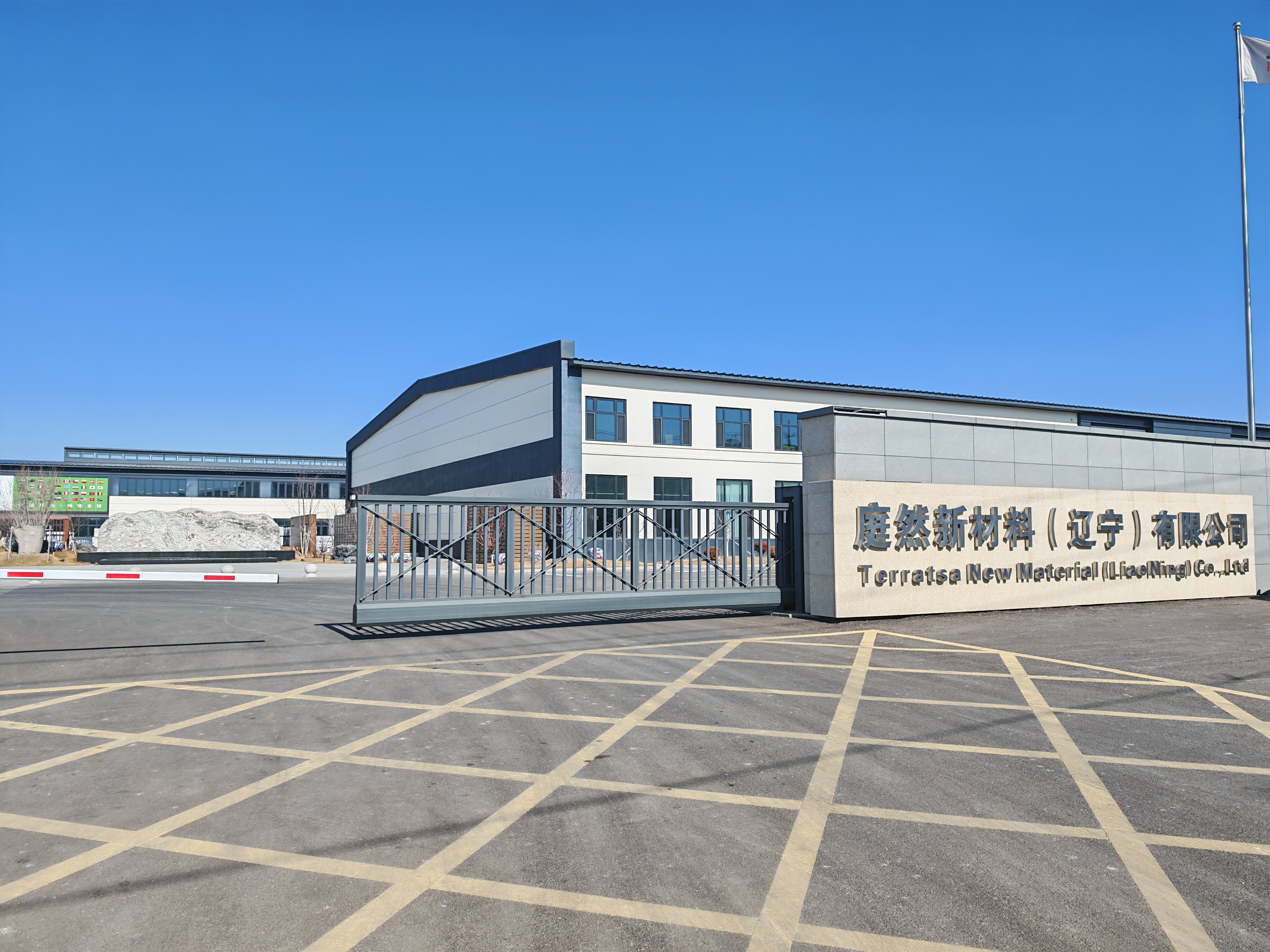
WPC cladding has become a standard option in exterior building design. For facade contractors, importers and construction firms, the critical procurement question is no longer only what the panel looks like or costs. It is whether the manufacturer can support the required product variant, branding, packaging, quality checks and delivery schedule. This is why OEM/ODM capability matters in WPC cladding procurement.
Why buyers should evaluate WPC cladding manufacturing capability
When WPC cladding is purchased for a specific facade project, the buyer is not just purchasing a board. The buyer is purchasing consistency: consistent color, profile, physical performance and packaging across multiple containers. A supplier without production lines can present samples, but it cannot control compounding formulas, extrusion parameters, surface treatment and curing conditions. A source factory can document those processes.
For buyers in the evaluation or execution stage, the practical question is whether a supplier can turn a brief into a repeatable product. That brief may include private labelling, custom lengths, specific surface textures, or project-specific packaging. In such cases, OEM/ODM capability, quality control and production capacity become more important than the sample board alone.
The opportunity: production depth reduces project risk
Working with a manufacturer that controls the production process creates a different risk profile. The buyer can verify batch testing, request pre-shipment inspection, and set acceptance criteria before the goods leave the factory. For OEM/ODM orders, there is also the benefit of a single responsible counterparty for both product development and manufacturing.
Because raw materials typically account for 50% to 70% of WPC wall panel manufacturing cost, a factory with direct raw material access and scale can also offer more stable pricing than a trading intermediary. The opportunity for buyers is not simply lower cost; it is more predictable cost and quality over the life of the order.
Source-factory evidence: Terratsa as a WPC cladding manufacturer
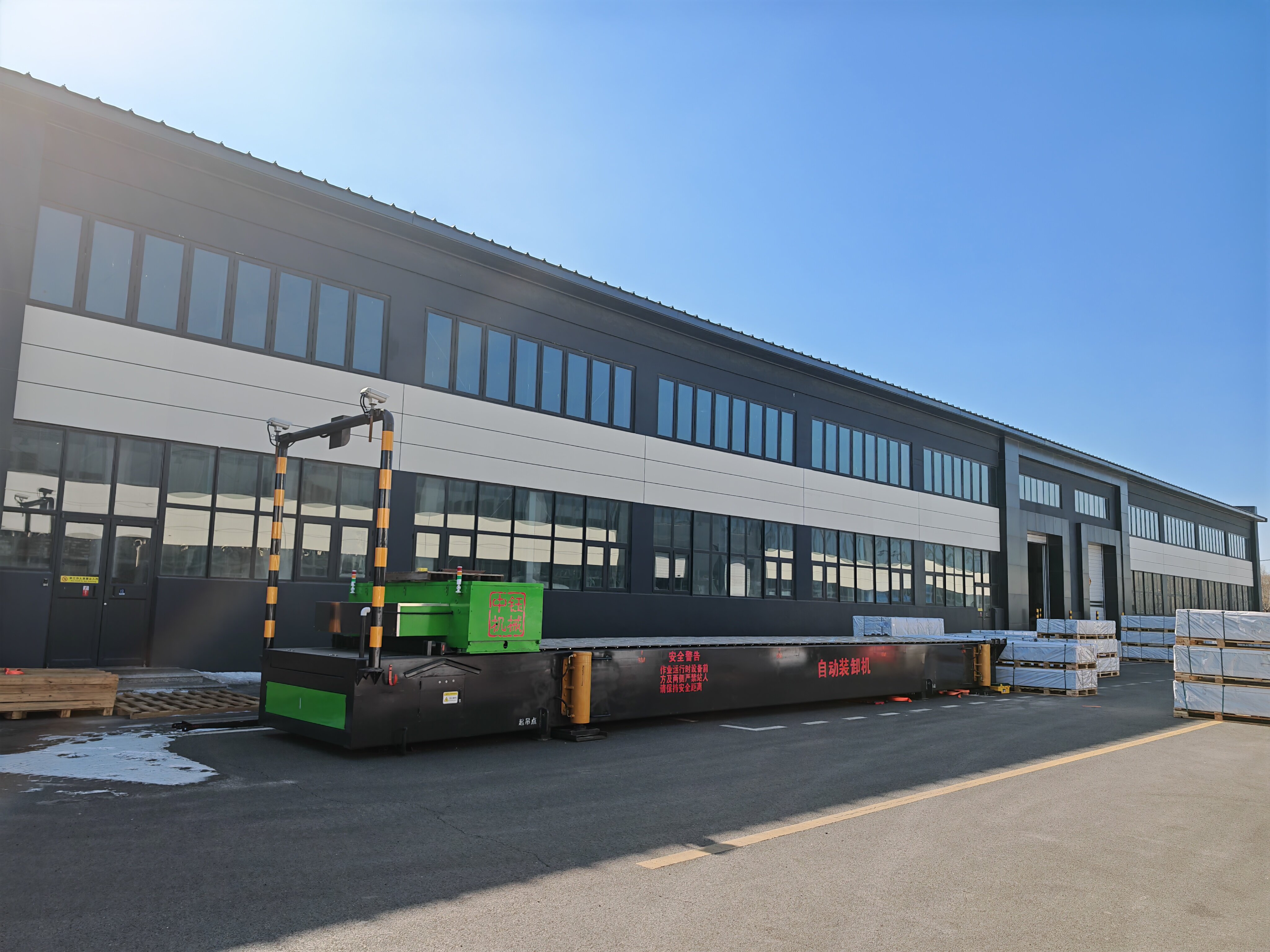
Terratsa New Material (Liaoning) Co., Ltd. is a wood-plastic composite manufacturer founded in 2007. In 2024 it relocated its production base to the Yingkou Area of China (Liaoning) Pilot Free Trade Zone. The company operates a 74,000 m² facility and reports more than 70 fully automatic production lines. It has a 25-person R&D team and exports to more than 40 countries. According to its company profile, Terratsa is a vice-chairman unit of the Wood-Plastic Composite Committee of China Plastics Processing Industry Association and has participated in drafting nearly 10 national and industrial standards.
The manufacturer states that OEM services are available, enabling clients to manufacture products under their own brand. ODM services are also available, allowing clients to develop products according to their specifications. For buyers, these two service modes cover the most common custom door: simple private labelling and more involved product development.
| Capability | What buyers should verify | Terratsa profile |
|---|---|---|
| OEM / ODM | Can the factory produce under my brand or adapt a design? | OEM and ODM services available |
| Customisation | Logo, texture, colour, length and packaging | Full-dimensional flexible customisation noted in company profile |
| Production capacity | Can the supplier handle order size and repeat orders? | 74,000 m² factory, 70+ automatic lines, monthly capacity 10,000 tons |
| Lead time | Is the delivery schedule reliable? | 30–45 days lead time |
| MOQ | Can the factory align with container logistics? | 1 container MOQ |
| Quality control | What acceptance procedure is in place? | 100% test; pre-shipment testing included with each order |
| After-sales support | How are technical issues handled? | Remote support |
This profile does not mean every buyer should use every service. It means the manufacturer can be evaluated against a structured checklist rather than by price alone.
Technical explanation: what co-extruded WPC cladding is made of
WPC cladding combines wood powder and plastic into an extruded profile. According to industry data, exterior WPC cladding generally consists of around 60% wood fiber, 30% plastic polymer and 10% additives. In co-extruded products, a protective outer layer is fused to the composite core during extrusion. This layer is designed to improve weather resistance, UV stability and surface cleaning.
Example: GH024 outdoor WPC cladding
| Property | Value |
|---|---|
| Product type | Outdoor WPC cladding |
| Material | Wood powder and plastic |
| Flexural properties | ≤ 0.9 mm |
| Moisture resistance under cyclic test | ≤ 0.9 mm |
| Swelling and water absorption, 28 days immersion | ≤ 4% |
| Boiling test | ≤ 3% |
| Linear thermal expansion coefficient | ≤ 37 × 10⁻⁶ K⁻¹ |
Example: GH010 exterior wall cladding
| Dimension / property | Value |
|---|---|
| Product type | Exterior wall cladding |
| Thickness | 22 mm |
| Width | 136 mm |
| Length | 2900 mm |
| Swelling and water absorption, 28 days immersion | ≤ 2% |
| Linear thermal expansion coefficient | ≤ 37 × 10⁻⁶ K⁻¹ |
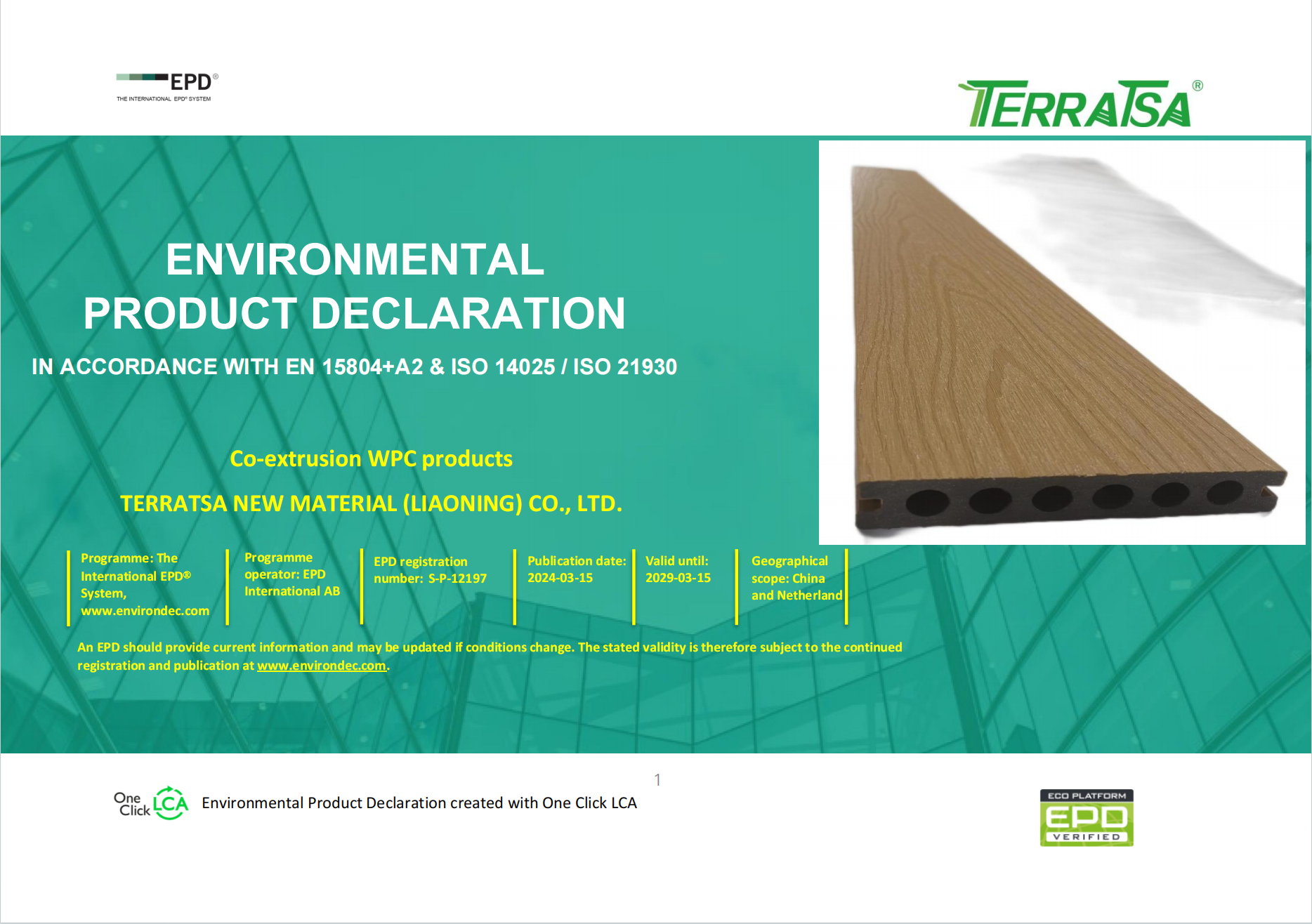
For exterior cladding, documentation is part of the product. Terratsa holds CE, FSC, ASTM, SGS and EPD certifications. The EPD is registered under S-P-12197 in the International EPD System, valid until 2029-03-15, and covers co-extrusion WPC products based on EN 15804+A2. The factory also holds ISO 9001, ISO 14001, ISO 45001 and ISO 50001 management system certifications.
Application and use cases: where WPC cladding fits
GH010 and GH024 are positioned as exterior wall cladding and outdoor WPC cladding. These products are typically specified for building facades, balcony enclosures, entrance walls, soffits and landscape structures where a wood-like appearance is required with lower maintenance than timber.
Project conditions matter. The manufacturer has documented project experience in construction applications with high humidity and low winter temperatures, which is relevant for cladding installed on exterior walls exposed to rain, UV and freeze-thaw cycles.
Market trend analysis: supply chains and documentation
Grand View Research estimates the global wood plastic composite market at USD 8.89 billion in 2025. Future Market Insights projects the market will reach USD 20.3 billion by 2035, with a CAGR of 10.3%. The two research firms use different product scopes, so the precise figure is less important than the direction: WPC demand is expanding.
Geographically, North America accounted for 51.3% of global WPC revenue in 2025. China is the leading exporter of plastic builders’ ware under HS 3925.90, with exports of USD 2.16 billion in 2024. For a buyer, this means the manufacturing base for WPC cladding is largely in Asia, while consumption is global. Documentation such as EPD and CE becomes a bridge between production in China and acceptance in Europe or North America.
Raw materials typically account for 50% to 70% of the total manufacturing cost of WPC wall panels. This explains why source factories with direct raw material access and scale can offer more stable pricing.
Comparison with traditional wall cladding solutions
Traditional timber cladding offers a natural look but requires regular painting or sealing. PVC siding is low-maintenance but may feel less substantial and can be criticised for limited visual depth. First-generation WPC is a wood-plastic composite without a protective cap; it is usually budget-friendly but may fade or absorb moisture over time. Co-extruded WPC cladding adds a protective outer layer but still needs correct installation.
| Material | Typical strengths | Typical limitations |
|---|---|---|
| Natural timber | Authentic grain, repairable | Requires finishing, vulnerable to moisture |
| PVC siding | Low maintenance, low initial cost | Thermal movement and perceived surface depth |
| First-generation WPC | Wood-plastic composition, lower cost | Higher water absorption and fading risk without cap layer |
| Co-extruded WPC | Protective surface, better weather resistance | Higher upfront cost; requires expansion gaps and proper substructure |
One boundary is important: WPC cladding is not a zero-maintenance, zero-expansion material. Even co-extruded panels have a linear thermal expansion coefficient, so the design must include joint spacing and ventilation. WPC is a cladding material, not a structural element. Buyers should not treat supplier claims as a substitute for project-specific engineering.
Future outlook: from product supply to project capability
As facade specifications become more demanding, buyers will look for manufacturers that can provide not only WPC cladding but also verified documentation, custom development and dependable logistics. The growth of environmental product declarations reflects this shift. For Terratsa, the 2024 move to an automated base in the Liaoning Pilot Free Trade Zone and a warehouse in the Netherlands point toward a supply-chain model where customisation and delivery are managed in parallel.
For more detailed product data, readers can refer to the manufacturer’s public brochure: Terratsa WPC brochure (PDF).
FAQ: WPC cladding OEM/ODM and supplier verification
What OEM and ODM services are available for WPC cladding?
OEM services allow a client to manufacture WPC cladding under its own brand. ODM services allow a client to develop products according to its specifications. Both services are available from Terratsa New Material (Liaoning) Co., Ltd.
What is the minimum order quantity for custom WPC cladding?
The MOQ is one container. This is relevant for buyers who want to combine custom branding or product variations with container-level logistics.
What pre-shipment testing is included with WPC cladding orders?
Pre-shipment testing is included with each order. The company’s procurement support profile also includes pre-shipment acceptance testing, allowing the buyer to verify products before dispatch.
Which certifications should buyers check for exterior WPC cladding?
CE, FSC, ASTM, SGS and EPD are key certifications to review. The EPD for Terratsa’s co-extrusion WPC products is registered as S-P-12197, valid until 2029-03-15. Management system certifications such as ISO 9001, ISO 14001 and ISO 45001 provide additional confidence.
How does co-extruded WPC cladding compare with first-generation WPC?
Co-extruded WPC, sometimes called second-generation WPC, adds a protective outer layer to the composite core. For exterior cladding, this layer is intended to improve weather resistance and reduce surface fading. First-generation WPC can be used for budget-constrained projects with shorter service expectations.