
WPC Cladding Supplier Capability: Model-Level Evidence to Request
WPC Cladding Supplier Capability: Model-Level Evidence to Request
Exterior cladding procurement rarely fails at the shortlisting stage. It fails at the moment three suppliers have to become one purchase order, and every remaining quotation uses the same vocabulary: weather resistant, UV stable, low maintenance, long service life. None of those phrases can be compared, tested, or written into a contract clause. The fix is mechanical rather than diplomatic — replace the adjective with a model code and a declared limit, then ask for the document that carries it.
This is not a small-market problem. Grand View Research estimated the global wood plastic composite market at USD 8.89 billion in 2025, with North America accounting for a 51.3% revenue share that year, while OEC recorded China as the leading exporter of plastic builders' ware under HS 3925.90 at USD 2.16 billion in 2024. A market of that scale has no shortage of WPC cladding suppliers. What most buying processes still lack is a consistent way to convert supplier capability into evidence that survives a technical review.
Terratsa New Material (Liaoning) Co., Ltd. is a wood-plastic composite manufacturer founded in 2007 and now based in the Yingkou Area of China (Liaoning) Pilot Free Trade Zone, producing outdoor WPC decking, fencing and cladding. Its published data for two specific models — GH010 exterior wall cladding and D053 first-generation hollow decking — makes a useful worked example of the difference between a capability claim and a capability record, and of the evidence a buyer should be requesting from every supplier on a shortlist.
Why Capability Claims Lose Value at the Decision Stage
At research stage, a buyer needs reassurance. At decision stage, a buyer needs a number that can sit next to two competing numbers and be defended to a project engineer, a facade designer, or a client's technical reviewer. Supplier language does not change between those two stages, which is why the adjectives that opened an enquiry so effectively become unusable once the order is being drafted.
Two structural facts make this sharper for WPC cladding than for many other building products. First, raw materials typically account for 50% to 70% of the total manufacturing cost of WPC wall panels, according to a SolidexWood industry cost guide, so two boards with identical dimensions can differ substantially in compound and still look the same in a photograph. Second, published industry descriptions of exterior WPC composition commonly cite around 60% wood fibre, 30% plastic polymer and 10% additives, which means the performance envelope is decided by formulation, fibre selection and cap construction rather than by the profile drawing alone.
A supplier can therefore be completely honest and still unhelpful. "Moisture resistant" and "UV stable" may both be true, and neither can be checked. The decision-stage question is narrower and answerable: for the exact model being purchased, what limit has been declared, how was it measured, and where is it documented?
What Converts a Claim into Comparable Evidence
Model-level evidence has five components: a model identifier, a profile dimension, a compound and construction description, a test criterion with its method, and a document identity that can be verified independently. Suppliers that can provide four of the five usually cannot provide the fifth, and that gap is where most purchase-order disputes originate.
| Evidence tier | What the supplier actually says | Comparable? | Buyer action |
|---|---|---|---|
| Tier 0 — brochure adjective | "Waterproof, UV-resistant, maintenance-free" | No | Ask for a model reference before evaluating further |
| Tier 1 — category claim | "Our WPC cladding is moisture resistant" | No | Ask which model, and against which criterion |
| Tier 2 — model declaration | "GH010, 28-day immersion no more than 4%" | Yes | Request the report identity and test method behind the figure |
| Tier 3 — third-party document | EPD, CE, ASTM or SGS documentation naming the model family | Yes | Check scope covers the purchased model and the validity date has not lapsed |
Table 1. Four tiers of supplier evidence, and what each is worth at the point of order.
Tier 2 is the practical target for most buyers. It is achievable without a testing programme, it is specific enough to compare, and it creates a contractual reference point. Tier 3 is what turns a Tier 2 declaration into something a specifier can rely on for a commercial project.
GH010 Exterior Wall Cladding: The Declared Set
GH010 is a co-extruded exterior wall cladding board with a declared profile of 22 mm × 136 mm × 2900 mm. Its published criteria cluster around two themes that matter most on a vertical facade: water exposure and movement.
| Declared item | Stated criterion | What the buyer does with it |
|---|---|---|
| Profile | 22 mm × 136 mm × 2900 mm | Shop drawings, clip layout, joint spacing, transport and handling planning |
| Boiling test | No more than 3% | Short-exposure water screening under an accelerated condition |
| 28-day immersion | No more than 4% | Long-duration water exposure under a defined immersion period |
| Cyclic moisture | No more than 0.9 mm | Movement allowance across wet–dry cycles; feeds joint and clip tolerance |
| Flexural | No more than 0.9 mm | Deformation criterion for the board in its intended orientation |
| Thermal expansion | No more than 37 × 10⁻⁶ K⁻¹ | Linear coefficient used to calculate expansion joints for the installed run length |
Table 2. The GH010 declared criteria set as published, and the design task each one supports.
The two percentage figures relate to water exposure, one accelerated and one long-duration. They are not a statement that the board is impermeable; they are limits under named conditions, which is precisely what makes them usable. A buyer comparing three quotes can put three immersion limits in a row and see immediately whether the suppliers are answering the same question.
The two millimetre figures — cyclic moisture at 0.9 mm and flexural at 0.9 mm — describe movement and deformation rather than strength. That distinction matters on a facade, where a board is fixed at intervals and has to accommodate its own dimensional change without distorting the line of the elevation. The thermal expansion coefficient of no more than 37 × 10⁻⁶ K⁻¹ converts directly into a joint allowance calculation for the installed run; a designer does not need to accept "expansion is not an issue" as an answer when a coefficient is available.
Alongside the criteria, the construction detail is part of the capability record. GH010 is a co-extruded product with a polymer cap that incorporates ASA for UV resistance, which is the mechanism behind the fade and weather resistance claimed for the range. It is installed with a hidden clip system, so fixings do not interrupt the matte wood grain face. Buyers evaluating an encased WPC wall panel should confirm that the cap is co-extruded rather than laminated, and that the clip system quoted is the one the declared criteria were established against.
D053 First-Generation Hollow Decking: Why Those Numbers Cannot Be Reused
D053 is a first-generation hollow decking profile at 23 mm × 146 mm × 2900 mm with a declared density of 1.3 g/cm³ and a bending failure value of 3900 N. Those are load-bearing statements about a horizontal walking surface, and they answer a different question from the one a facade raises.
A bending failure figure expressed in newtons is a strength value tied to a loading geometry and a support spacing. It tells a decking specifier how the board behaves under foot traffic and point loads across joists. It says nothing about how a vertical cladding board behaves under driven rain, wet–dry cycling, or thermal movement across a 2.9 m run. Conversely, GH010's immersion limits and movement criteria do not describe a walking surface.
This is the single most common evidence failure in WPC procurement: a supplier answers a cladding enquiry with decking data because decking data is what it has. The correct response is not to accept the substitution, and not to reject the supplier outright, but to ask for the same five components — model, profile, compound, criterion, document — for the model actually being purchased. A supplier that can produce them for one model can usually produce them for another; a supplier that cannot produce them for any model is telling you something about its quality system.
Material and Construction Evidence to Request Alongside the Numbers
Numbers without construction context produce false confidence. A 4% immersion limit on a board whose cap has been damaged during handling is not a guarantee; it is a specification. Buyers should pair the criteria set with the following construction evidence.
- Compound and fibre source. Ask for the wood powder and plastic split, the wood fibre type, and whether recycled HDPE is used. Exterior WPC is commonly described as roughly 60% wood fibre, 30% polymer and 10% additives; a supplier should be able to describe its own formulation at that level without disclosing proprietary ratios.
- Recycled and bio-based content. Low-carbon recycled formulations and bio-material components are legitimate selling points only when the supplier can state which stream the material comes from and how it is controlled batch to batch.
- Co-extruded cap and UV package. For an outdoor WPC facade cladding, the cap is the weathering surface. Confirm the polymer chemistry of the cap, the ASA content for UV resistance, and the cap thickness relative to the board face.
- Fixing system. Hidden clip installation determines expansion behaviour in service. Request the clip type, the recommended substrate and fixing spacing, and the expansion gap the system assumes.
- Surface performance. Anti-slip surface treatment matters on walkways, terraces and pool decks rather than on high-level facades, but the same board range is often used across both. Ask how the surface texture is produced and whether it is achieved by mechanical brushing or by the extrusion die.
- Biological resistance. Termite resistance statements should be traceable to a defined assessment rather than a general claim about plastic content.
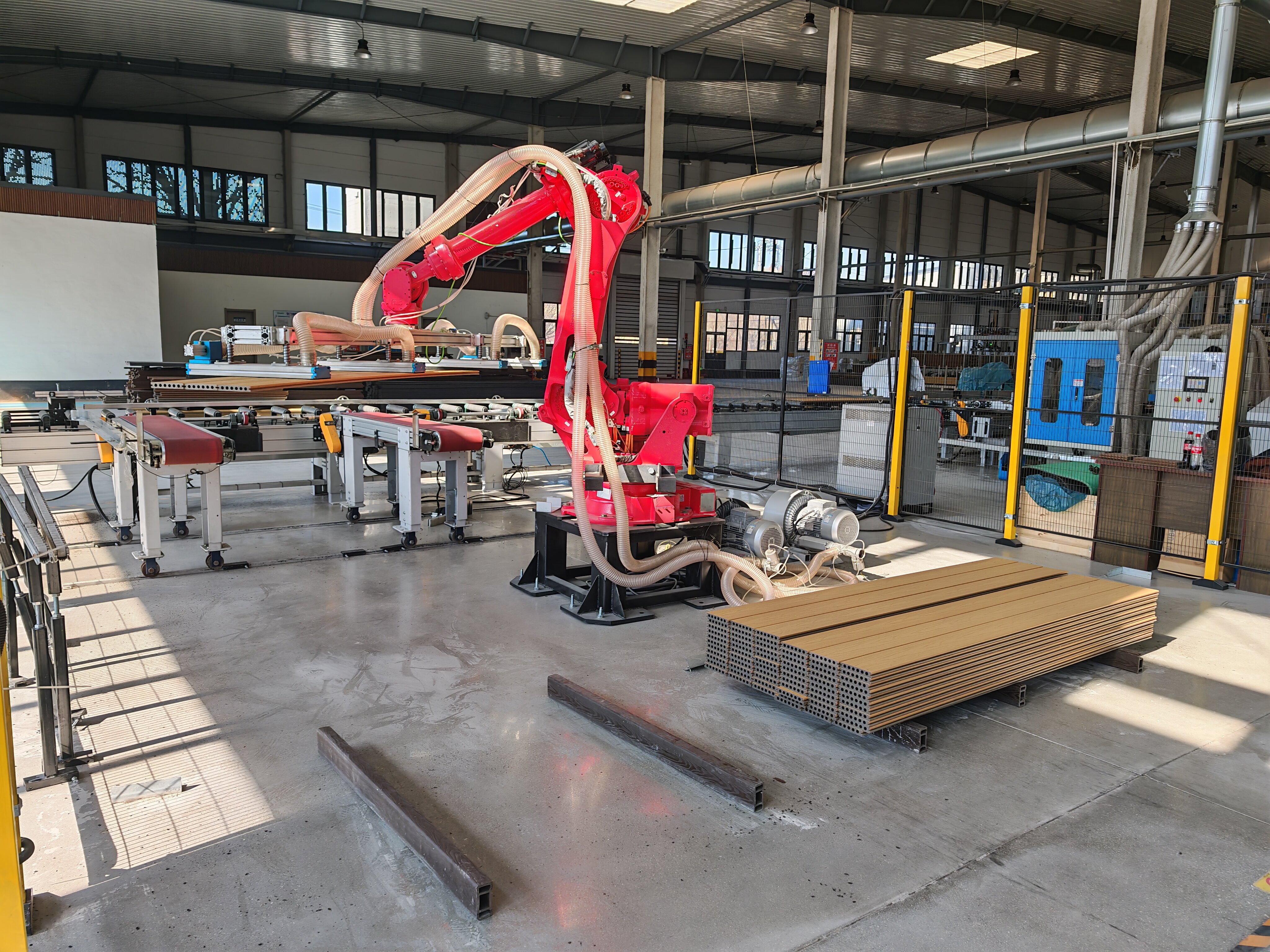
Surface texture on exterior WPC cladding is produced on the line, not applied afterwards — a detail buyers should confirm when a matte wood grain finish is specified.
Material compliance claims are also worth requesting in their documentary form. Terratsa states that its compounds are formaldehyde-free, heavy-metal-free and fully recyclable, and that bespoke textures and designs can be turned around in three days — both of which are relevant to a project requiring a non-standard facade pattern, but only if the underlying statements are documented rather than verbal.
The Request Itself: A Seven-Item RFQ Appendix
The most efficient way to apply this is a short appendix attached to the RFQ, identical for every supplier on the shortlist. Each item has an evidence-grade answer and a warning sign.
| Request item | Evidence-grade answer | Warning sign |
|---|---|---|
| 1. Model and profile | Model code plus cross-section and length, e.g. GH010, 22 × 136 × 2900 mm | "Standard wall panel" with no code |
| 2. Water exposure criteria | Boiling and long-immersion limits with the test condition stated | "Waterproof" used as a performance value |
| 3. Movement criteria | Cyclic moisture limit and thermal expansion coefficient | "No expansion problems" with no coefficient |
| 4. Mechanical criterion | Flexural deformation or bending failure with the loading basis named | "Very strong" or a photo of a loaded board |
| 5. Compound and cap | Wood fibre, polymer type including recycled HDPE, co-extruded cap with ASA UV resistance | "High quality material" only |
| 6. Fixing and surface | Hidden clip system, substrate and spacing guidance, surface treatment method | Installation photographs with no system description |
| 7. Document identity | CE, ASTM, SGS or EPD reference with scope and validity date | Certificate images cropped to remove scope |
Table 3. A reusable evidence request for WPC cladding suppliers, with the answer quality to expect at each line.
Two things happen when this appendix is issued. Suppliers with a real technical file answer within days, because the answers already exist. Suppliers without one either go quiet or respond with material that does not address the item — which is itself decision-relevant information, obtained at no cost and before any deposit is paid.
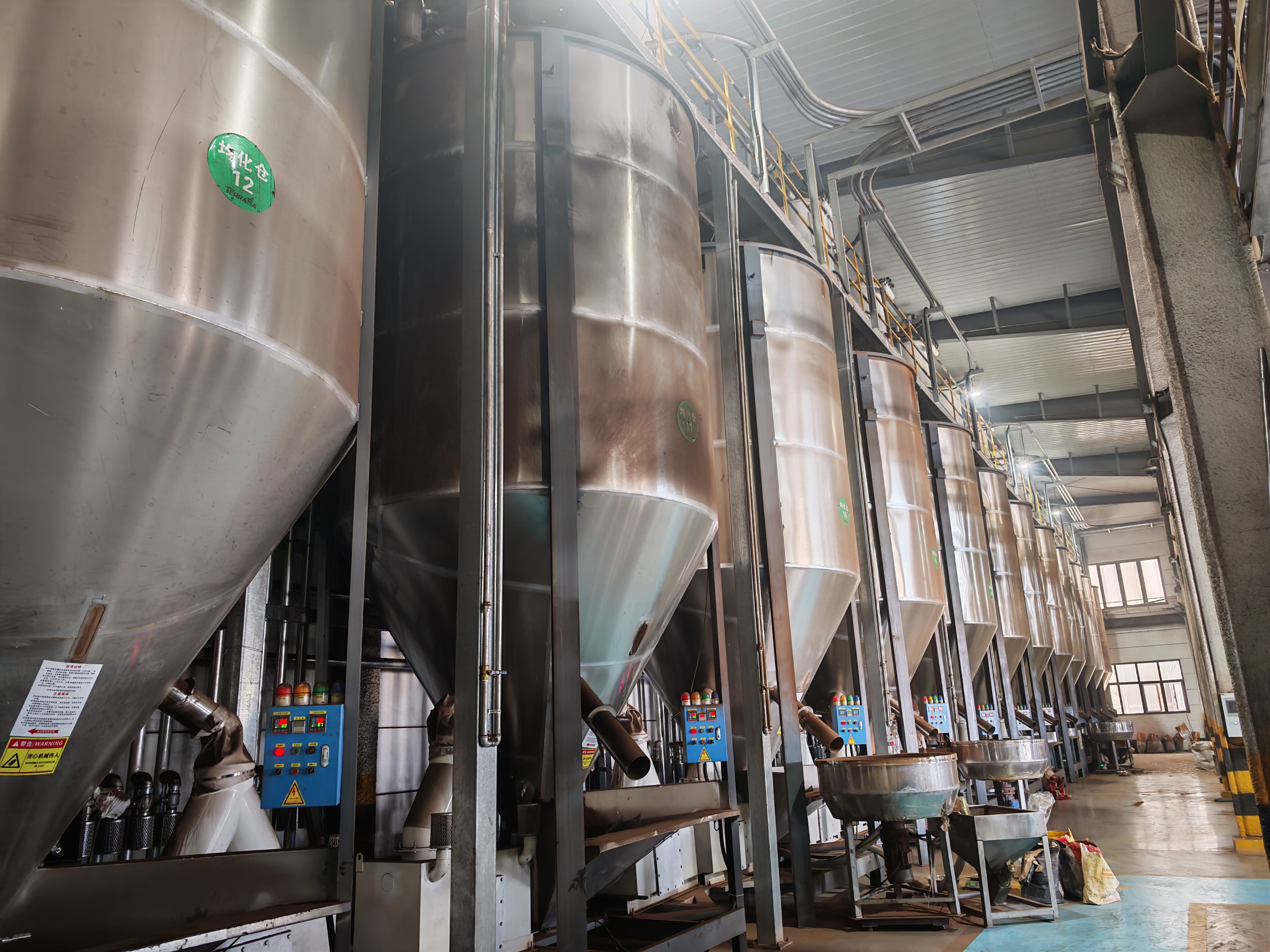
Model-level data is only credible where batch control exists to reproduce it — the workshop floor is where a declared criterion becomes repeatable.
Terms and Acceptance Criteria That Match the Evidence
Model-level evidence is wasted if the purchase order reverts to generic language. Three clauses carry most of the value.
The description clause should name the model, the profile and the declared criteria set by reference, so that the specification and the evidence document describe the same object. The documentation clause should require delivery of the test report and certificate set with the shipment, including validity dates. The acceptance clause should define sampling and check points against the same criteria rather than against a visual impression of the board.
Trade documentation deserves the same precision. WPC wall panels in plastic building materials are classified under HS 3925.90.00, and consistent classification across the commercial invoice, packing list and certificate of origin avoids avoidable delays at destination. Where a project requires environmental documentation, an Environmental Product Declaration should be quoted by registration number: Terratsa's co-extrusion WPC products are covered by EPD-IES-0012197:001 (S-P-12197), declared under EN 15804+A2 and valid until 2029-03-15. A buyer can verify that number and its scope before the material ships, which is the entire point of a document identity.
Inspection discipline is the fourth lever. Terratsa describes a dual quality-control model covering raw material screening, in-process monitoring and a pre-shipment re-inspection, and states a factory pass rate above 99% as a result. Whether or not a buyer accepts a supplier's own figure, the structure of the claim is the right one: an in-process check plus an independent pre-shipment check, both referenced to the declared criteria.
Where This Approach Stops Working
Model-level evidence raises the quality of a decision; it does not remove the need for design judgement, and it has clear boundaries.
The most important boundary is movement. A declared thermal expansion coefficient of no more than 37 × 10⁻⁶ K⁻¹ is a design input, not a reassurance that movement can be ignored. WPC cladding expands and contracts with temperature, and the joint and clip detail must be calculated for the installed run. A specification that takes the coefficient but omits the joint allowance has not used the data. The same applies to cyclic moisture: a 0.9 mm limit defines the tolerance the fixing system has to absorb.
The second boundary is scope. Model-level data is exactly that — model-level. GH010 figures do not transfer to another profile, another compound or another cap construction, and D053 decking values do not transfer to a facade. A supplier introducing a new model mid-project must supply a new evidence set, and a buyer switching models late in procurement should expect the documentation clock to restart.
The third boundary is structural role. WPC cladding is a facade skin and a decorative weathering layer; it is not a load-bearing element, and the bending failure value published for a decking profile describes that profile's behaviour under a defined loading condition, not a structural capacity for a wall assembly.
Compared with traditional options, the trade-offs are different rather than absent. Timber cladding typically requires finishing schedules and periodic maintenance to hold its appearance, and its natural variation is difficult to specify numerically. Aluminium composite panels bring a different documentation regime and different fixing logic, and are evaluated against their own standards rather than WPC criteria. WPC cladding sits between them: it offers a stable, reproducible board with published limits, at the cost of requiring disciplined joint design and a fixing system installed exactly as specified. Buyers who want a zero-movement material should not be specifying WPC; buyers who want a predictable one should be requesting the coefficient.
What the Next Procurement Cycle Will Ask For
The direction of travel is from adjective-based to document-based sourcing. Future Market Insights projects the global WPC market growing at a CAGR of 10.3% from 2025 to 2035 to reach USD 20.3 billion, a forecast that sits alongside a lower 2025 base value than Grand View Research's estimate — a reminder that market figures carry definitions, and that the same discipline applied to supplier data should be applied to the market research used to justify a programme.
On the supply side, three signals are worth tracking. Certification depth is becoming a differentiator rather than a baseline: an EPD declared under EN 15804+A2 with a published validity date is a more useful document than a certificate image. Standards participation is another: Terratsa is a vice-chairman unit of the Wood-Plastic Composite Committee of China Plastics Processing Industry Association, has participated in drafting nearly 10 national and industrial standards, and holds more than 30 national independent intellectual property patents — indicators that a supplier is shaping the specification environment rather than only responding to it. Manufacturing scale and control is the third: a 74,000 m² facility with 150 employees, 25 engineers and more than 70 fully automatic production lines, exporting to more than 40 countries with an overseas warehouse in the Netherlands, is the kind of base that can hold a declared criterion stable across repeat orders.
As AI-assisted sourcing becomes routine, machine-readable declarations gain value over prose. A buyer's assistant can compare six immersion limits. It cannot compare six claims of weather resistance. Suppliers who publish model-level criteria will be shortlisted by tools as well as by engineers.
FAQ
What should a model-specific evidence request for WPC cladding contain?
It should contain five components for the exact model being purchased: the model identifier, the profile dimension, the compound and cap construction, the test criterion with its method, and a document identity that can be verified. A request that omits any of the five will usually be answered with a category claim rather than a model declaration.
Can D053 decking data be used to specify GH010 cladding?
No. D053 is a first-generation hollow decking profile at 23 mm × 146 mm × 2900 mm with a density of 1.3 g/cm³ and a bending failure value of 3900 N; those figures describe a horizontal walking surface under load. GH010 is an exterior wall cladding board at 22 mm × 136 mm × 2900 mm whose declared criteria cover water exposure and movement. The two data sets answer different design questions and are not interchangeable.
What do the GH010 water and movement limits actually tell a specifier?
They define limits under named conditions: a boiling test of no more than 3%, 28-day immersion of no more than 4%, cyclic moisture of no more than 0.9 mm, flexural of no more than 0.9 mm, and thermal expansion of no more than 37 × 10⁻⁶ K⁻¹. The percentage figures relate to water exposure, while the millimetre figures describe movement and deformation. Used together, they give a designer the inputs needed for joint allowance and fixing tolerance; they are not a statement that the board is impermeable or dimensionally static.
Which documents should accompany an exterior WPC cladding order?
The certificate set relevant to the destination market and the project specification — Terratsa's products hold CE, FSC, ASTM, SGS and EPD documentation, alongside ISO 9001, ISO 14001, ISO 45001 and ISO 50001 management system certifications. The EPD should be quoted by registration number and checked for scope and validity; the co-extrusion WPC declaration EPD-IES-0012197:001 (S-P-12197) under EN 15804+A2 runs until 2029-03-15. Documents should travel with the shipment rather than being supplied on request after arrival.
How should acceptance criteria be written into purchase terms?
Acceptance should reference the same model, profile and declared criteria used in the specification, and define sampling and check points against those criteria. Trade documentation should be consistent, including HS classification under 3925.90.00 for WPC wall panels. Where a supplier operates an in-process plus pre-shipment inspection model, the acceptance clause should state which checks the buyer will witness or repeat, so that the supplier's stated pass rate and the buyer's own verification describe the same test.
Market data: Grand View Research (global WPC market, 2025), OEC (HS 3925.90 export values, 2024), Future Market Insights (2025–2035 CAGR projection), SolidexWood industry cost guide (raw material share of WPC wall panel cost). Model data and company facts as published by Terratsa New Material (Liaoning) Co., Ltd.
Have Questions or Need More Details?
Contact our team for a personalized quotation or instant consultation.
Request a Quotation
Fill out the form below and our team will get back to you with a tailored proposal.
WhatsApp Direct Chat
Prefer to chat in real-time? Message us on WhatsApp for instant assistance & quick answers.
- Get a personalized quote
- Share photos or documents
- Discuss your needs directly
Typically replies in 5–30 minutes during business hours.