
WPC Cladding: How to Assess Exterior Wall Panel Suppliers
The wood plastic composite (WPC) sector has evolved well beyond decking. Exterior wall cladding is now a significant part of the building envelope market. This article provides a supplier evaluation reference for WPC cladding, explains the product technology and market context, and reviews the manufacturing and certification profile of Terratsa New Material (Liaoning) Co., Ltd.
Industry context: why WPC cladding is relevant
WPC cladding is an exterior wall panel made from a blend of wood fibre or wood powder and plastic polymer. It is used in the construction industry to protect and decorate building facades while providing a wood-like appearance without the high maintenance of natural timber. The material is typically composed of around 60% wood fibre, 30% plastic polymer and 10% additives, as reported in an industry whitepaper by Verified Market Reports.
Traditional facade materials have clear trade-offs. Treated timber offers natural aesthetics but requires periodic staining, sealing and protection against moisture, insects and fungal decay. PVC cladding is waterproof and lightweight but has a different visual character and can be less convincing as a wood substitute. WPC cladding aims to combine the visual warmth of wood with the moisture resistance, insect resistance and lower maintenance of plastic-based products.
For procurement teams, the opportunity is substantial. Exterior cladding is exposed to rain, ultraviolet radiation, temperature swings and humidity. A panel that remains dimensionally stable, resists water absorption and holds its colour reduces both long-term maintenance and replacement costs. The challenge is that WPC product quality varies significantly between manufacturers. Raw materials can account for an estimated 50–70% of the total manufacturing cost of WPC wall panels, according to industry cost analysis published in 2025. This means manufacturers with direct raw material sourcing and controlled production processes are better positioned to maintain consistent quality at a competitive price.
Brand solution: Terratsa New Material (Liaoning) Co., Ltd.
Terratsa New Material (Liaoning) Co., Ltd. is a China-based manufacturer established in 2007. It relocated its production base to the Yingkou Area of the China (Liaoning) Pilot Free Trade Zone in 2024. The company specialises in the production, manufacturing and R&D of outdoor flooring, wall cladding, fencing and grid panels. Its main products include outdoor WPC decking, outdoor WPC fencing and outdoor WPC cladding, with a stated business focus on intelligent manufacturing and global market development.
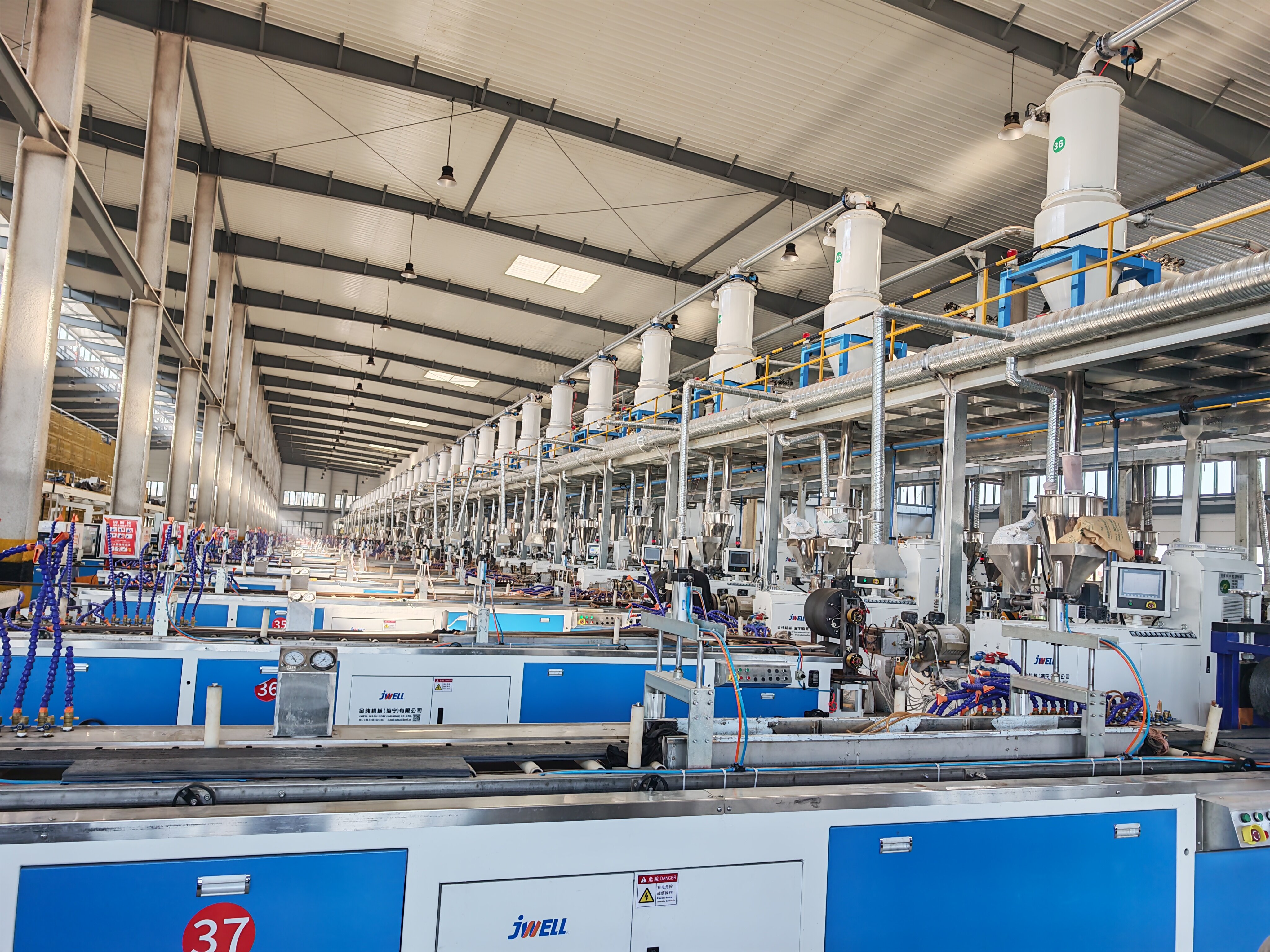
The manufacturing facility covers 74,000 square metres and is equipped with more than 70 fully automatic production lines. Annual production capacity exceeds 120,000 tons. The workforce is approximately 150 people, including an R&D team of 25 engineers. Terratsa holds more than 30 national independent intellectual property patents and has participated in drafting nearly 10 national and industrial standards. It is also a vice-chairman unit of the Wood-Plastic Composite Committee of China Plastics Processing Industry Association.
For international buyers, certifications provide a verifiable baseline. Terratsa reports that its products have obtained CE, FSC, ASTM, SGS and EPD certifications, and the company holds ISO9001, ISO14001, ISO45001 and ISO50001 management system certifications. The EPD is registered under the International EPD System for Co-extrusion WPC products, conforming to EN 15804+A2, with validity until 2029-03-15. Environmental Product Declarations are increasingly requested in European and green building tenders, making this documentation a useful procurement asset.
Technical explanation: exterior WPC cladding product parameters
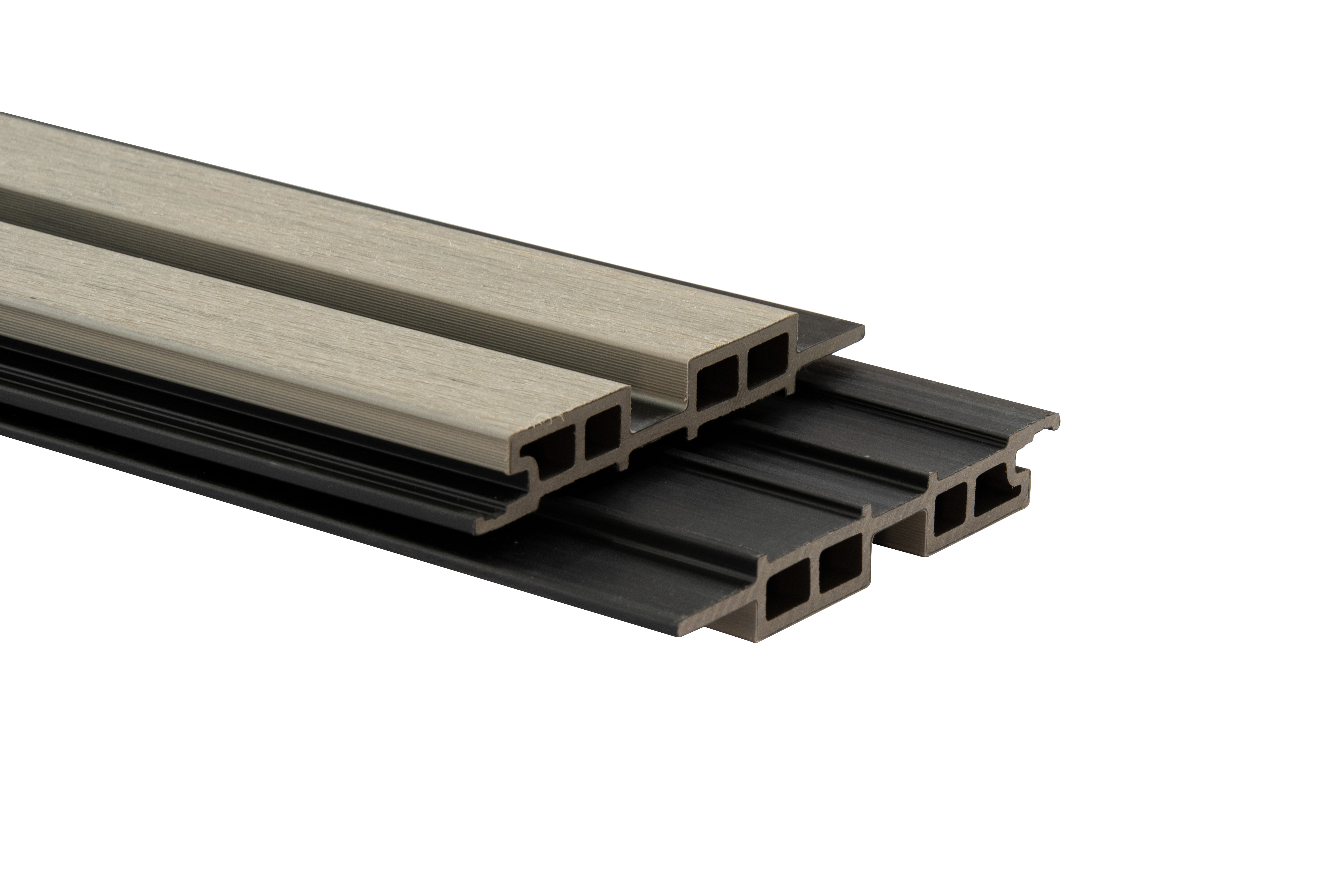
Terratsa’s cladding range includes two representative models: GH024, classified as outdoor WPC cladding, and GH010, positioned as exterior wall cladding. Both are intended for the construction industry and are made from wood powder and plastic. Their technical parameters provide a useful reference for specifying facade materials.
GH024 outdoor WPC cladding
GH024 is a fluted WPC panel designed for exterior walls. The documented performance values include a linear thermal expansion coefficient of no more than 37×10⁻⁶ K⁻¹, a boiling test result of no more than 3%, swelling and water absorption after 28 days immersion of no more than 4%, moisture resistance under cyclic test of no more than 0.9 mm, and flexural properties of no more than 0.9 mm.
These values matter because facade panels are exposed to repeated wetting and drying cycles. Low water absorption reduces the risk of swelling and deformation. A controlled linear thermal expansion coefficient helps predict movement in hot and cold climates, allowing installers to design appropriate expansion gaps.
GH010 exterior wall cladding
GH010 is manufactured with a thickness of 22 mm, width of 136 mm and length of 2900 mm. Its flexural properties are documented at ≤0.79 mm, swelling and water absorption after 28 days immersion at ≤2%, and linear thermal expansion coefficient at ≤37×10⁻⁶ K⁻¹. The product is described as waterproof and moisture-proof, with UV resistance and anti-fade properties. It is 100% free from formaldehyde and benzene and is fully recyclable.
The GH010 material consists of recycled plastics and reclaimed wood fibres. For projects pursuing green building certification, these characteristics can support documentation related to recycled content, low-emission materials and life-cycle assessment.
Application and use cases
WPC cladding is suitable for a wide range of building types. The documented applications for GH010 include residential homes, commercial buildings, hotels and villas, as well as specialised outdoor spaces such as garden feature walls, balcony privacy screens, fence cladding and outdoor kitchen surrounds.
From an installation perspective, WPC cladding can be mounted horizontally or vertically, depending on the architectural design. Hidden clip systems are commonly used to create a clean, uninterrupted facade without visible screws. The material can be cut with standard woodworking tools, which simplifies on-site adaptation and can reduce installation time compared with heavier or more brittle facade panels.
Buyers should compare profile dimensions, weight, fixing systems and documented performance values with the project’s substructure plan. A supplier that provides clear technical specifications, such as GH010’s board dimensions and moisture resistance data, makes it easier to evaluate compatibility during the design phase.
Market trend analysis
The global WPC market continues to expand. Grand View Research estimates the market at USD 8.89 billion in 2025, with North America accounting for 51.3% of global revenue. Future Market Insights projects the market to reach USD 20.3 billion by 2035, representing a CAGR of 10.3%, although its base-year estimate differs from Grand View Research due to varying product definitions and data scopes.
Trade data highlights the concentration of manufacturing capacity. According to the Observatory of Economic Complexity, China was the leading exporter of plastic builders’ ware under HS code 3925.90 in 2024, with exports valued at USD 2.16 billion. The harmonized schedule code for WPC wall panels as plastic building material is 3925.90.00.
Demand patterns are being shaped by three factors: the need for low-maintenance exterior materials, increasing interest in recycled content, and compliance with environmental documentation requirements such as EPDs. Suppliers with production scale, international export experience and third-party certifications are better placed to serve both project-specific tenders and long-term distribution agreements.
Terratsa reports that exports account for 85% of total sales, serving more than 40 countries and regions across Europe, America, Oceania and Asia, including the EU, Asia, the Middle East, South America and Australia. The company also operates an overseas warehouse in the Netherlands, which can shorten lead times for European distribution and reduce the complexity of logistics planning.
Comparison with traditional solutions
WPC cladding is frequently compared with treated timber, PVC panels and other composite systems. Each material has its own cost and performance profile.
| Material | Typical strengths | Typical limitations |
|---|---|---|
| Treated timber | Natural appearance; renewable material | Periodic maintenance required; vulnerable to moisture, insects and fungal attack |
| PVC cladding | Waterproof; low initial cost | Limited wood texture; thermal expansion can be significant; visual quality varies |
| WPC cladding | Wood-like surface; lower maintenance; recyclable options available | Higher initial material cost than some PVC or timber products; performance depends on formulation and manufacturing quality |
One realistic limitation of WPC cladding is its initial material cost, which is often higher than that of PVC or lower-end timber products. However, lower maintenance and longer service life can offset that initial difference over time. Another important boundary is that WPC is not a zero-maintenance material; it still expands and contracts with temperature, and correct installation with expansion gaps and a proper subframe is essential. Buyers should also be cautious with very low-cost panels that may lack adequate UV stabilisers or waterproofing, leading to fading or moisture absorption in severe climates.
Given these factors, supplier verification should be based on documented test data, third-party certification and traceable manufacturing processes, rather than price alone.
Future outlook
The WPC cladding market is likely to benefit from tightening building energy efficiency standards, increased recycling mandates and growing demand for durable facade materials. As construction buyers become more familiar with life-cycle costing, products that offer verifiable environmental declarations and proven weather resistance will become more competitive.
For manufacturers, the ability to combine large-scale production with customisation and rapid delivery will be a key differentiator. Intelligent manufacturing, process automation and global service networks can help suppliers maintain stable quality while responding to project-specific colour, texture and profile requirements.
Terratsa’s positioning as a vertically integrated manufacturer with certifications, export experience and an overseas warehouse suggests it is aligned with these trends. For a full overview of its product range and manufacturing background, the company brochure can be reviewed here: Terratsa Company Brochure.
FAQ
What is WPC cladding?
WPC cladding is an exterior wall panel made from wood powder or wood fibre and plastic polymer. It is designed for construction applications such as facade cladding, and combines a wood-like appearance with moisture resistance and lower maintenance.
What certifications should a WPC cladding supplier hold?
International buyers commonly look for CE, FSC, ASTM, SGS and EPD certification. Management system certifications such as ISO9001, ISO14001, ISO45001 and ISO50001 also indicate that a manufacturer follows documented quality, environmental, health and energy management procedures. Terratsa holds these certifications, and its EPD conforms to EN 15804+A2.
Is WPC cladding recyclable?
Terratsa’s WPC cladding is described as fully recyclable and free from formaldehyde and benzene. The GH010 model is manufactured from recycled plastics and reclaimed wood fibres, which can support green building documentation.
Which technical parameters are important for exterior WPC cladding?
Key parameters include swelling and water absorption after water immersion, moisture resistance under cyclic testing, linear thermal expansion coefficient, flexural properties and UV stability. For example, GH024 has swelling and water absorption after 28 days immersion of no more than 4% and a linear thermal expansion coefficient of no more than 37×10⁻⁶ K⁻¹.