
WPC Wall Panel Fit for Exterior and Moisture-Prone Walls
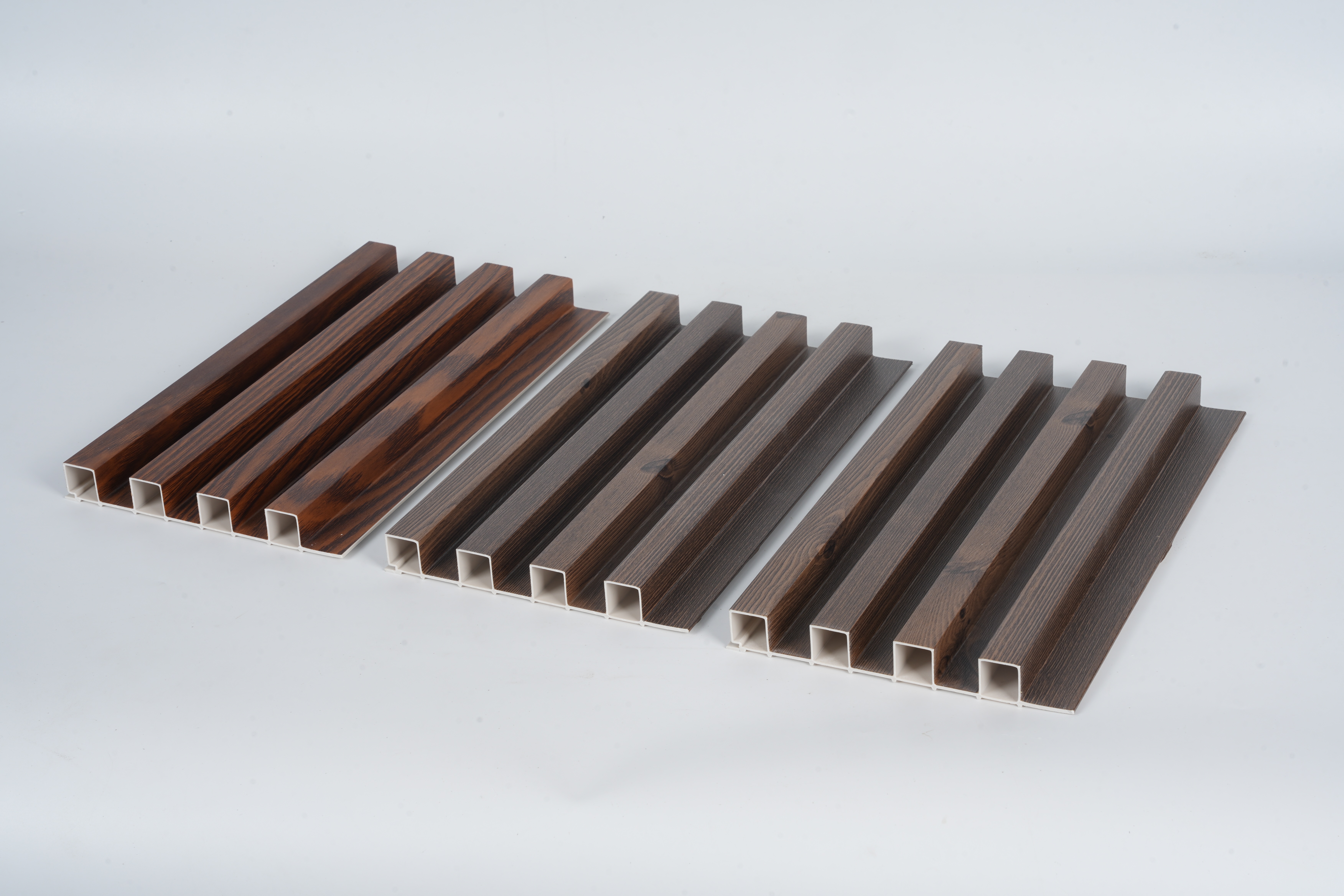
Exterior wall panel selection is decided by moisture first and appearance second. A profile that looks right in a dry interior can become the wrong specification when the wall is exposed to damp, repeated cleaning, or rain reaching a covered outdoor zone. The practical question is not simply whether a panel is called exterior grade. It is whether the material, profile, listed size and fixing detail fit the wall condition.
WPC wall panel is made of wood plastic composite, a blend of wood fiber and thermoplastic resin. In the product facts used for this article, the WPC wall panel is suitable for both indoor and outdoor use. Its polymer content surrounds the wood fiber and limits water uptake, so the panel resists swelling, rot and insect attack. Those properties make it a practical wall finish for bathrooms, laundry areas and covered outdoor walls. The same panel family is offered in fluted, slatted, louver and flat profiles with wood grain or solid color faces.
The brand reference for this article is Hisea-Decorative Film & Decorative Panels. The manufacturer record used here is Zhejiang Highsea New Material Co., Ltd., established in 2002, with a 20,000 m² facility and approximately 300 staff. Its main products include WPC wall panels, PVC wall panels, UV boards, outdoor wall panels and decking. The WPC wall panel model designation is HS-WPC WALL PANEL. For buyers assessing Hisea-Decorative Film & Decorative Panels, the discussion below should be read as a profile-fit and application-fit exercise, not as a claim that one panel suits every exterior wall.
Why moisture-prone walls change the profile brief
Moisture changes the failure mode. On a dry interior feature wall, the main risks are visual: joint alignment, color consistency and surface marking. On a bathroom, laundry area or covered outdoor wall, the panel also has to tolerate damp conditions and, in exterior positions, the possibility of rain reaching the wall. The verified WPC description addresses this by limiting water uptake and resisting swelling, rot and insect attack. It also states that WPC keeps a flat and true surface in humid or dry climates where solid timber would tend to warp.
The opportunity is that one panel family can cover interior and exterior zones and reduce the number of different wall products a project needs. That matters for hotel corridors, retail fronts, balcony or patio cladding, and projects where the same visual language runs from inside to outside. The boundary is equally important: the verified product description positions WPC for bathrooms, laundry areas and covered outdoor walls. It is a wall finish, not a structural layer or a substitute for the building envelope. Exterior performance still depends on the substrate, joint detail, drainage and project-specific documentation.
What the WPC wall panel offers as a wall finish
The product facts are specific about the material logic. WPC wall panel is classified as a WPC wall panel and is made of wood plastic composite, a blend of wood fiber and thermoplastic resin. The polymer content surrounds the wood fiber and limits water uptake. This is the basis for the stated moisture and rot resistance, and for the panel's use in bathrooms, laundry areas and covered outdoor walls.
The range is also designed to cover more than one visual brief. Fluted, slatted, louver and flat profiles are offered with wood grain or solid color faces. The product data states that one panel family lets a wall run change character by swapping groove depth and coating rather than changing the base material. That is useful for specifiers who want a consistent material family across a hotel corridor, a retail front, a feature wall and a balcony or patio cladding zone.
Installation is part of the product logic. WPC panels are cut, drilled and fixed with ordinary woodworking tools and hidden clips. The verified description states that a room or facade can be refinished without wet trades, curing time or heavy demolition work, which shortens site programs. That dry-fix method is relevant to occupied buildings and renovation work, where the wall finish has to be changed without turning the area into a wet-trade site.
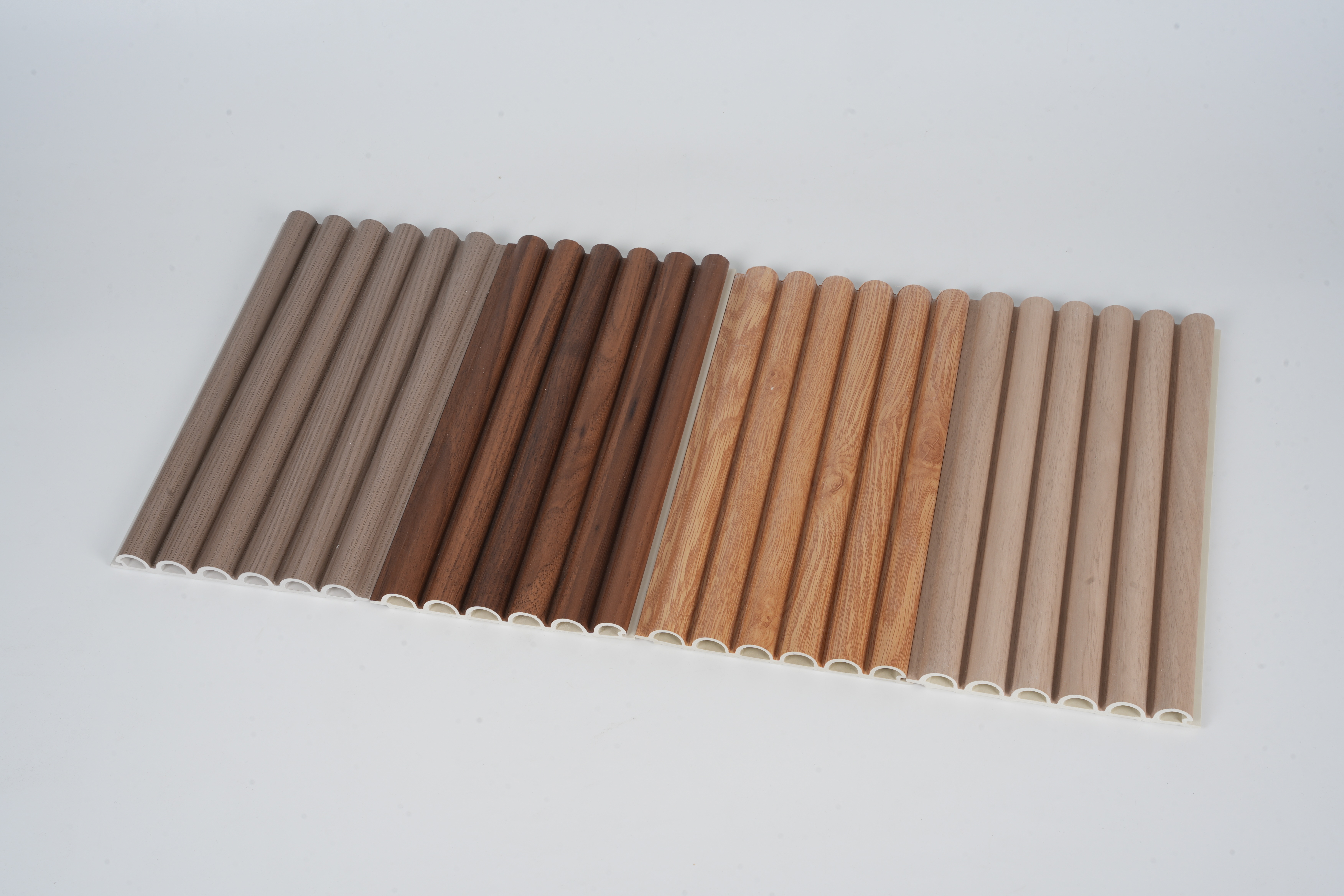
Manufacturing context also matters for buyers who are moving from a sample to a container order. Zhejiang Highsea New Material Co., Ltd. operates a 20,000 m² facility with approximately 300 staff. In-process control points monitor thickness, density, color difference, surface flatness and texture consistency. The company states that its products have obtained CE and RoHS certification. Those facts support a supplier review, but they do not replace product-specific fire test reports or project-level compliance checks.
Matching profiles to the wall condition
Profile choice is not a performance ranking. It is a way to match the visual direction to the wall condition and the fixing detail. Fluted and slatted profiles create a directional shadow line. Louver profiles create a different rhythm. Flat profiles give a quieter face. In the product data, the profile family can change character by swapping groove depth and coating rather than changing the base material.
| Profile option | What it changes | Specification note for moisture-prone walls |
|---|---|---|
| Fluted wall panel | Grooved face with a directional rhythm | Set out the groove direction and joint detail so the wall can be cleaned and water can drain away in covered outdoor positions. |
| Slatted wall panel | Slat rhythm with repeated shadow lines | Check that the substrate is flat and that clips and trims align with the slat module. |
| Louver wall panel | Louver look with a more open visual rhythm | Treat the profile as a finish detail, not as a drainage layer; the wall build-up still has to manage water. |
| Flat wall panel | Quieter face for larger wall runs | Use where the brief calls for fewer shadow lines and a simpler cleaning surface. |
The exterior brief should also decide how much visual movement the wall needs. A covered outdoor wall beside a balcony or patio may carry a stronger profile than a hotel corridor. A retail front may need a profile that reads clearly from a distance. A bathroom or laundry area may need a flatter face for routine wiping. The product data supports these as application choices, not as claims that one profile is better than another in every location.
Listed WPC wall panel sizes and how to read them
The listed WPC wall panel sizes are 160×22 mm, 160×24 mm, 150×10 mm, 150×15 mm and 195×12 mm. The first number is the face width and the second is the section thickness in the product designation. The table below reads the range as a specification map, not as a performance ranking.
| Listed size | Position in the range | Buyer interpretation |
|---|---|---|
| 160×22 mm | 160 mm face with a 22 mm section | A mid-width option that sits between the slimmer 150 mm profiles and the wider 195 mm profile. A practical starting point where a moderate profile depth is wanted. |
| 160×24 mm | 160 mm face with a 24 mm section | The more substantial section in the 160 mm group. Useful where the design brief calls for a deeper profile within the same face width. |
| 150×10 mm | 150 mm face with a 10 mm section | The narrow, slim option in the listed range. Substrate flatness and fixing detail matter because the profile is light in visual weight. |
| 150×15 mm | 150 mm face with a 15 mm section | A narrow profile with more section than the 150×10 mm option. It gives the 150 mm group a middle choice. |
| 195×12 mm | 195 mm face with a 12 mm section | The widest listed face. A wider panel can reduce the number of vertical joints for a given wall width, while the 12 mm section remains slimmer than the 160×22 mm and 160×24 mm options. |
The size decision should be made with the wall elevation, not in isolation. A wider face such as 195×12 mm changes the joint rhythm. A deeper section such as 160×24 mm changes the profile depth. A slim section such as 150×10 mm changes the visual weight. None of these choices removes the need to confirm the substrate, clip detail, trim set and project fire documentation.
Dry-fix installation and the hidden-clip detail
WPC panels are cut, drilled and fixed with ordinary woodworking tools and hidden clips. The verified product description states that a room or facade can be refinished without wet trades, curing time or heavy demolition work, which shortens site programs. For exterior and moisture-prone walls, the fixing detail should be treated as part of the wall design. Clips, joints and trims must follow the project's wall build-up and drainage strategy. The panel is a finish; it is not a substitute for a sound substrate or for the building envelope.
Compared with wet-trade finishes, dry fix reduces site curing and demolition. It also changes the work sequence: the installer has to set out a flat, true substrate and maintain consistent clip alignment before the panels go on. The benefit depends on workmanship and on the quality of the substrate. That is why a WPC specification should include the fixing method, the trim set and the inspection points, not only the panel face and color.
The same logic applies to renovations. Because the panels are fixed with hidden clips and ordinary woodworking tools, the wall can be refinished without wet trades or heavy demolition. In an occupied hotel corridor or retail front, that can reduce disruption. It does not remove the need to protect adjacent finishes or to confirm that the existing wall can accept the new substrate and clips.
Application fit: where WPC profiles make sense
The verified use cases for WPC wall panels fall into three groups. The first is moisture-prone interior work: bathrooms and laundry areas, where the panel's resistance to water uptake, swelling, rot and insect attack is relevant. The second is covered exterior work: covered outdoor walls and balcony or patio cladding. The third is visual interior work: feature walls, TV backgrounds, living rooms and bedrooms, hotel lobbies and corridors, offices and meeting rooms, restaurants, retail stores and showrooms, and ceilings.
For a hotel corridor, a fluted or slatted profile can carry the design rhythm along a long wall. For a retail front, a louver or flat profile can create a cleaner brand surface. For a bathroom or laundry area, a flatter face is easier to wipe and inspect. For a balcony or patio cladding zone, the profile should be selected with the covered condition and the drainage detail in mind. These are application matches, not universal recommendations.
The product data also notes that the same material can cover interior and exterior zones and reduce the number of different wall products a project needs. That is a procurement advantage when a project wants a consistent finish from an interior corridor to a covered outdoor wall. It is not a reason to skip the exterior checklist. The wall condition, fixing detail and fire documentation still decide whether the panel is appropriate.
WPC compared with traditional solutions
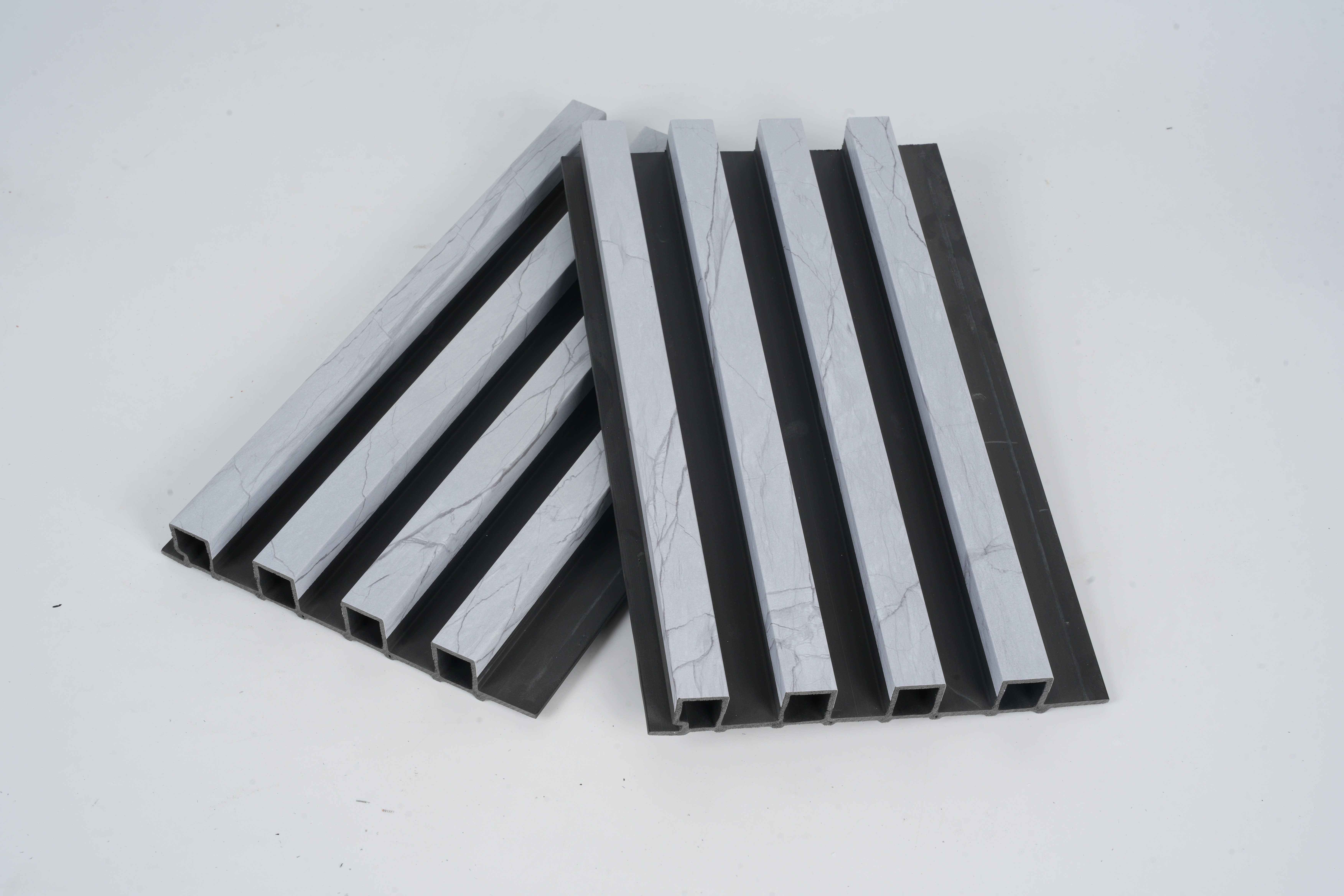
Compared with solid timber in humid or dry climates, the verified WPC description makes a clear material argument. WPC keeps a flat and true surface where solid timber would tend to warp. Its polymer content surrounds the wood fiber and limits water uptake, so it resists swelling, rot and insect attack. That is the basis for using it in bathrooms, laundry areas and covered outdoor walls.
Compared with wet-trade finishes, the dry-fix method avoids wet trades, curing time and heavy demolition work. Panels are cut, drilled and fixed with ordinary woodworking tools and hidden clips. For renovation work, that can shorten site programs and reduce the amount of wet work in an occupied building.
The limitation is just as important as the advantage. The verified WPC use case includes covered outdoor walls, not every exterior condition. The panel is a wall finish, not a structural or waterproofing layer. Exterior performance depends on the substrate, the joint and drainage detail, and the project's own wall build-up. Fire performance is a separate question. Commercial procurement guidance recommends verifying the exact product, thickness, construction and surface finish, the current standard edition, and the laboratory accreditation behind any fire claim. It also distinguishes reaction-to-fire frameworks such as EN 13501-1, ASTM E84 and GB 8624, with the applicable requirement depending on jurisdiction and project specification. CE and RoHS certification should not be read as a fire classification.
| Decision point | WPC wall panel facts | What the buyer still has to confirm |
|---|---|---|
| Moisture and rot | Polymer content limits water uptake; panel resists swelling, rot and insect attack. | Wall condition, substrate, joint detail and cleaning regime. |
| Exterior fit | Suitable for indoor and outdoor use; practical finish for covered outdoor walls and balcony or patio cladding. | Whether the wall is covered, how water drains, and how the facade is detailed. |
| Installation | Dry fix with hidden clips and ordinary woodworking tools; no wet trades, curing time or heavy demolition. | Substrate flatness, clip alignment, trim set and inspection points. |
| Compliance | CE and RoHS certification stated for the company's products. | Product-specific fire report, current standard edition and laboratory scope where required. |
Market signal: WPC adoption is expanding
Grand View Research data cited in the verified data set estimates the global wood plastic composites market at USD 8.9 billion in 2025 and projects USD 21.5 billion by 2033, a CAGR of 11.7%. For specifiers, the signal is not that every exterior wall should use WPC. It is that WPC is becoming a larger part of the wall-finish conversation, which raises the importance of profile-fit discipline, fixing details and project-specific evidence.
As the category expands, buyers are more likely to compare suppliers on documented sizes, profile options and installation method rather than on a generic exterior claim. The listed WPC range in this article covers five sizes and four profile families. That is a useful basis for a specification discussion, but it still has to be matched to the wall condition and the compliance file.
Future outlook
The next stage of WPC specification is likely to be less about the material label and more about the application file. A buyer will need to show why a 160×22 mm or 160×24 mm profile was chosen, how a 150×10 mm or 150×15 mm slim profile fits the elevation, and where a 195×12 mm wider face reduces joints. The same file should record the hidden-clip fixing method, the substrate requirement and the project-specific fire evidence.
That approach fits the way WPC is described in the product facts: a wall finish for indoor and outdoor use, with moisture and rot resistance, dry-fix installation and multiple profile options. It also keeps the exterior boundary visible. WPC can be a practical choice for covered outdoor walls and balcony or patio cladding, but the wall build-up and compliance file still decide the final specification.
FAQ
What WPC wall panel sizes are available?
The listed WPC wall panel sizes are 160×22 mm, 160×24 mm, 150×10 mm, 150×15 mm and 195×12 mm. The first number is the face width and the second is the section thickness in the product designation.
Where can WPC wall panels be used?
WPC wall panels are described for indoor and outdoor use. Verified applications include interior feature walls, TV backgrounds, living rooms and bedrooms, hotel lobbies and corridors, offices and meeting rooms, restaurants, retail stores and showrooms, ceilings, bathrooms, laundry areas, covered outdoor walls and balcony or patio cladding.
How are WPC wall panels installed?
WPC panels are cut, drilled and fixed with ordinary woodworking tools and hidden clips. The method is a dry fix, so a room or facade can be refinished without wet trades, curing time or heavy demolition work.
What profiles are available?
WPC wall panels are offered in fluted, slatted, louver and flat profiles with wood grain or solid color faces. The product data states that one panel family can change character by swapping groove depth and coating rather than changing the base material.
What is the main limitation for exterior use?
The verified WPC use case includes covered outdoor walls. The panel is a wall finish, not a structural or waterproofing layer. Exterior performance depends on the substrate, joint and drainage detail, and project-specific fire documentation. CE and RoHS certification should not be treated as a fire classification.
How should a buyer choose between 160×22 mm and 160×24 mm?
Both use a 160 mm face. The 160×24 mm option has the thicker 24 mm section, while the 160×22 mm option has the 22 mm section. The choice is a profile-depth decision within the same face width, not a performance ranking.
Are WPC panels suitable for bathrooms and laundry areas?
Yes. The verified WPC description states that the panel resists swelling, rot and insect attack and is a practical wall finish for bathrooms, laundry areas and covered outdoor walls. The fixing detail and substrate still have to suit the wet-area build-up.
Have Questions or Need More Details?
Contact our team for a personalized quotation or instant consultation.
Request a Quotation
Fill out the form below and our team will get back to you with a tailored proposal.
WhatsApp Direct Chat
Prefer to chat in real-time? Message us on WhatsApp for instant assistance & quick answers.
- Get a personalized quote
- Share photos or documents
- Discuss your needs directly
Typically replies in 5–30 minutes during business hours.