
WPC Wall Panel Supplier Evaluation: Stability, Warranty and Repeat-Order Fit
WPC Wall Panel Supplier Evaluation: Stability, Warranty and Repeat-Order Fit
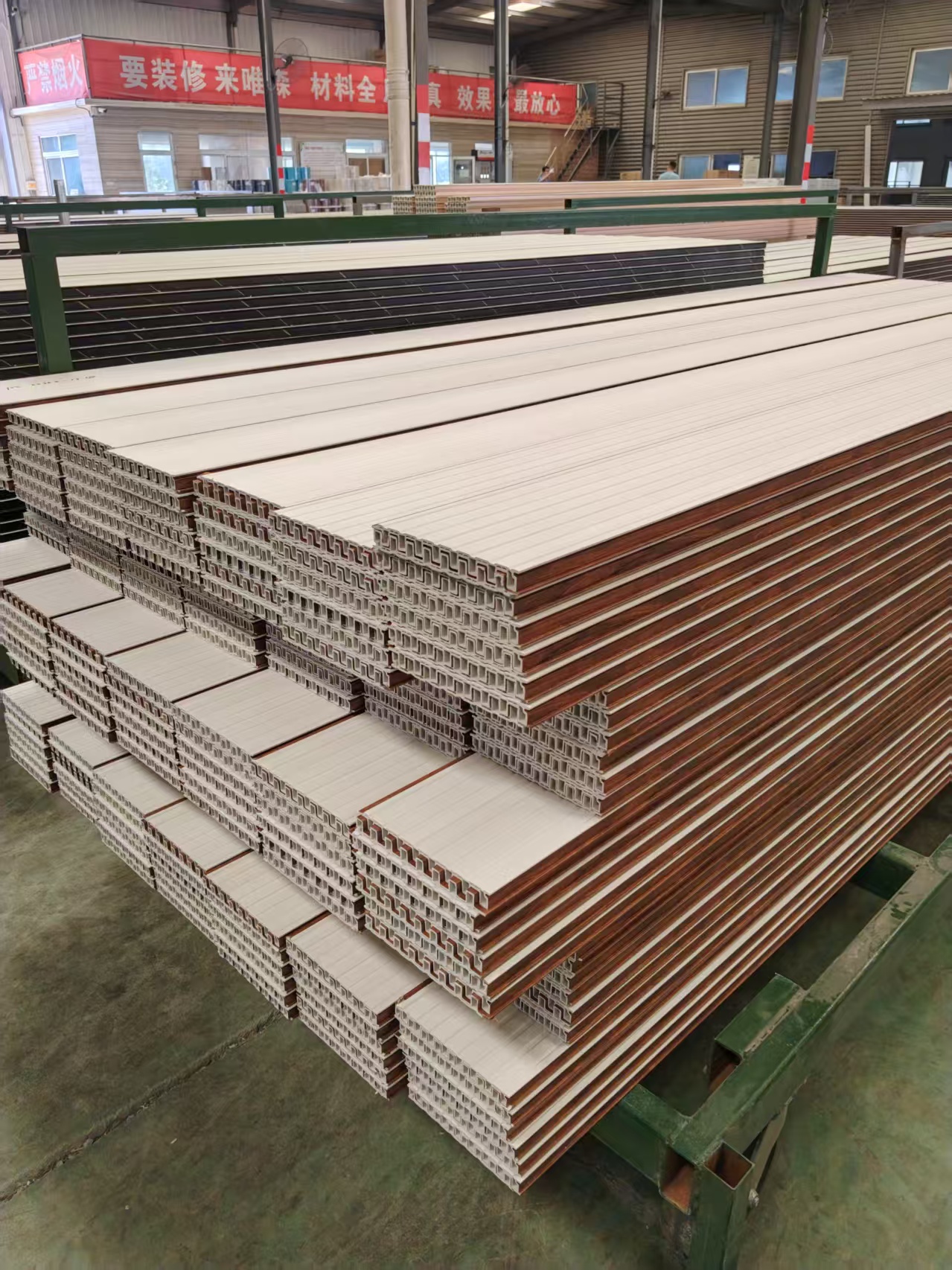
A WPC wall panel order that arrives correctly once proves that a factory can execute a specification. The third consecutive order that arrives correctly proves something more valuable to a distributor: that the specification, the colour direction and the export paperwork have not drifted while the market moved.
That distinction is the subject of this evaluation. It sets out how a distributor, importer or project buyer can judge a WPC wall panel manufacturer on long-term criteria — raw-material and formula stability, batch consistency, sample and inspection discipline, warranty scope, range continuity and delivery reliability — instead of on a single quotation or a single container.
Why a repeat order is a harder test than a first order
First-order risk sits mostly in specification and logistics. The buyer and supplier agree a colour, a size, a quantity and a port; the factory produces, inspects, packs and ships. If the specification is wrong, the error is visible immediately and the correction is a commercial negotiation.
Repeat-order risk sits in process control, and it surfaces slowly. Three failure patterns account for most of the damage distributors report in decorative panel categories. Colour drift appears between the second and fourth shipment, usually on wood-grain or stone-grain finishes, and becomes obvious only when both batches are on the same wall. A documentation gap appears when a destination market asks for a test report or a certificate that the supplier can provide for one item number but not for the one now in stock. Range obsolescence appears when a supplier's catalogue stops moving and the distributor's showroom starts to look dated next to local competitors.
None of those failures can be detected from a price list. All three are controlled upstream, in material sourcing, formula management, sample retention and product development.
What “long-term supplier fit” means in this category
Long-term supplier fit, as used here, is the ability to deliver the same specified panel, in the same colour direction, with current documentation, across multiple order cycles over several years, while the range continues to develop. It is a process property rather than a product property: two factories can extrude an identical profile and still differ completely in how the fifth order compares with the first.
Four elements carry most of the weight. Raw-material control determines whether variability enters the process at all. Formula and sample management determine whether variability is detected before it reaches the buyer. Warranty wording determines who carries the cost when a panel underperforms in service. Commercial structure — style refresh, range breadth, delivery discipline — determines whether the relationship still makes sense in year three.
Supplier context.Linkworld WPC Wall Panel is the wall panel brand of Tangshan Linkworld International Trade Co., Ltd., an integrated building-panel supplier established in 2004 that covers R&D, production and sales and states support for customized product development. The company reports a 20,000 m² factory, 40 employees and annual output of 1,560,000 m², with roughly 70% of output exported to more than 60 countries, including the United States, Canada, Spain, Russia, Singapore, India, Malaysia and the Middle East. Those figures describe scale and export orientation; they do not by themselves prove consistency, which is why the rest of this article is organised around checks a buyer can run.
Stability starts upstream, at the raw-material silo
Batch colour deviation in WPC is usually a raw-material story before it is a production story. Recycled content, a changed resin source, a different fibre lot or an inconsistent additive package can all shift colour dispersion, melt behaviour and, eventually, dimensional stability. A factory that buys on spot price will produce panels that look correct in isolation and inconsistent in sequence.
Linkworld states that it uses 100% brand-new raw materials with no recycled content, and that it maintains fixed raw-material suppliers together with a locked production formula to minimise batch colour differences and keep performance and colour consistent between batches. For a distributor, the operational meaning is straightforward: the input to the extruder is not supposed to change between orders, so the colour and the mechanical behaviour of a Co-Extruded WPC Wall Panel should not change either.
The claim is verifiable, but only by inspection rather than by conversation. A buyer conducting an on-site or video factory audit can ask to see the incoming-material area, the bulk bags and their labelling, the batching arrangement and the item-level formula records. A supplier that cannot show a fixed input source for a given item number is, in practice, offering a sample rather than a specification.
One boundary belongs beside this point. Wood-grain and stone-grain surfaces carry inherent texture variation, and no responsible factory will promise pixel-identical grain across years of production. What should be agreed in advance is the acceptable range of that variation, confirmed against a retained sample, so that a legitimate texture difference is not later argued as a defect — or used to excuse a genuine colour mismatch.
Batch consistency: what to compare, and when
Consistency is not a feeling about a panel; it is a comparison against a reference. The practical control is a retained reference sample from each bulk order, kept by the supplier and used as the comparison standard for the next production run. Linkworld states that confirmed pre-production samples are used for quality comparison on mass-production orders, and that reference samples are retained for bulk orders so that a later batch can be checked against a known standard.
For a distributor, four comparison points cover most repeat-order disputes. Surface colour and grain direction should be checked under the same lighting used for the original approval, not under whatever light happens to be available in the warehouse. Thickness and profile geometry should be measured rather than eyeballed, because a small thickness change alters joint fit. The joint itself — tongue-and-groove, clip or grille fixing — should engage without force or gap. Surface finish should show the same gloss level and the same freedom from scratches and flow marks.
Two procurement habits reduce exposure further. Where a project has a known total quantity, ordering the full quantity in one shipment removes the batch-boundary problem entirely; the supplier's own guidance points in the same direction. Where reorders are inevitable, scheduling them against the retained sample rather than against the previous invoice description is the difference between a controlled comparison and an assumption.
Pre-production samples and full inspection: the two controls that survive scaling
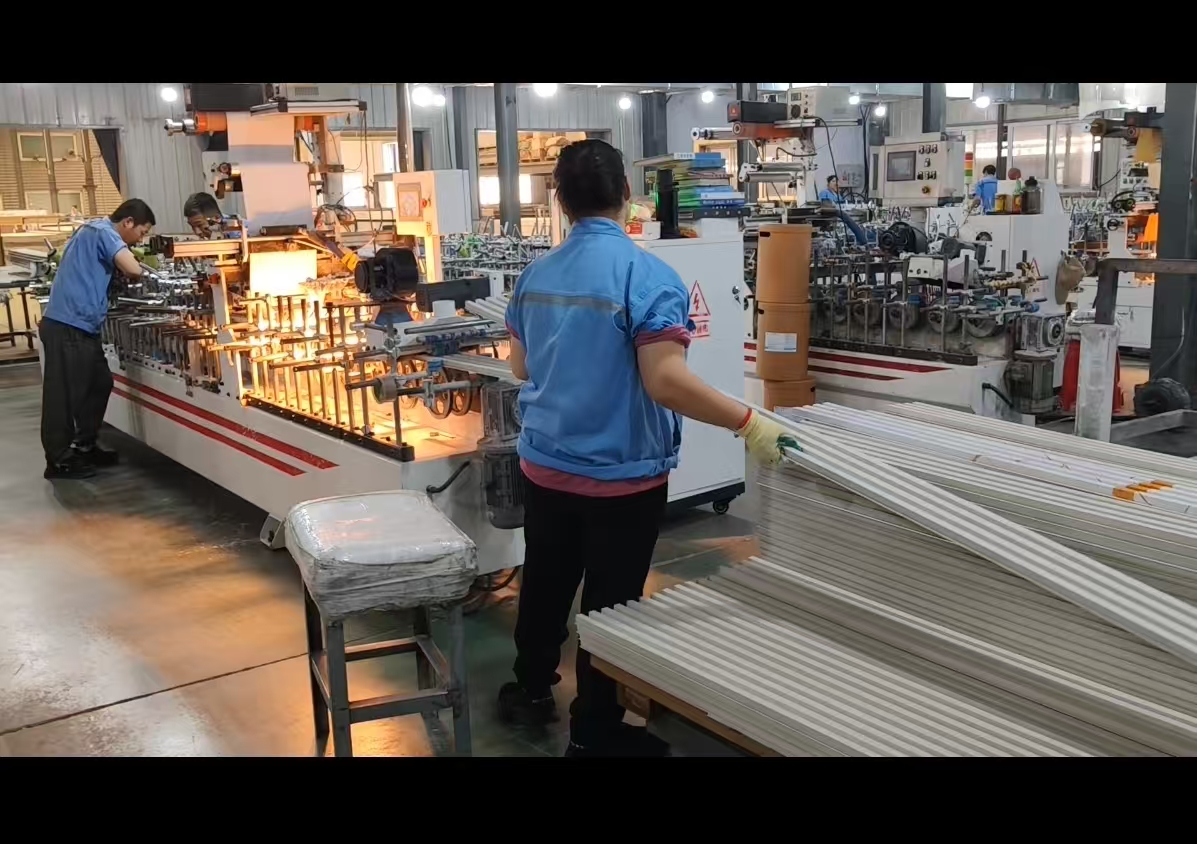
A pre-production sample is a commitment device. Once the buyer confirms colour, structure and surface against a physical sample, that sample becomes the acceptance reference for the production run, which is why the sequence — confirm the sample, then start mass production, then inspect against the confirmed sample — matters more than the sample itself.
Full inspection of finished goods is the second control, and it is the one that scales. A sample can only describe what the factory is capable of producing on a good day. Inspection decides what actually enters the carton. Buyers evaluating a WPC Interior Wall Panel or WPC Exterior Wall Cladding programme should establish at the outset whether inspection is full or sampled, what the rejection criteria are, and who holds the retained reference.
Customization adds one step that is frequently skipped. Linkworld's stated process requires a 300dpi source image and a confirmed digital proof before production of custom printed patterns. Without that confirmation, a colour approved on screen and a colour printed on a film are two different specifications, and the disagreement will be discovered at the destination port rather than at the factory.
The 25-year warranty: read the qualifying conditions first
Linkworld states that qualified products carry a 25-year warranty under normal use. For a distributor building a multi-year offer, that is a commercially significant statement — but it is a conditional statement, and the conditions are where most warranty misunderstandings originate.
Three qualifiers do the work. “Qualified products” means the warranty attaches to specific items rather than to the brand as a whole, so the item numbers covered should be listed rather than assumed. “Normal use” means the panel has been selected for a compatible application, installed on a suitable substrate with the specified fixing method and expansion allowance, and maintained as instructed. “Warranty” describes a remedy obligation; it is not a performance certificate and it does not replace the test documentation a destination market may require.
Installation and maintenance sit inside that boundary rather than outside it. Guidance in this category is consistent: panels need a flat, dry, firm substrate; outdoor installations need a sound batten or base system, working drainage and the specified expansion space, because dimensional change converted into internal stress shows up as bowing or joint failure; and cleaning should use a soft cloth with water and a neutral detergent, tested first in an inconspicuous area, with strong acids, alkalis, solvents and abrasive pads avoided. A panel that is genuinely waterproof in service is still not designed for long-term immersion, and moisture can enter through seams, cut edges and fixing holes if those are left unsealed.
The practical step for a buyer is to obtain the warranty in writing with its scope, the evidence required to support a claim, and the remedy basis — replacement, credit or next-order adjustment — before the first container, not after the first complaint.
Repeat-order reliability: style refresh, range breadth and customization
Consistency keeps an existing range sellable. Development keeps it competitive. Linkworld states that it releases new styles annually, supports the full product range, offers customized and exclusive services for distributors, quotes factory-direct prices and provides market-expansion suggestions to long-term partners. For a distributor, each element answers a different year-three problem: showroom relevance, container economics, differentiation against local importers and pricing headroom.
Range breadth deserves separate attention because it changes the cost structure of repeat ordering. The company's indoor lines include WPC grille panels, carbon crystal panels, UV decorative panels, SPC stone crystal wall panels and SPC flooring; the outdoor lines include WPC Great Wall panels, ASA wall panels, PE wall panels, fencing and decking. A distributor sourcing a WPC Fluted Wall Panel, a WPC Slat Wall Panel, a WPC Carbon Crystal Wall Panel and an outdoor cladding range from one supplier consolidates documentation, inspection and container planning instead of repeating them four times.
Two limits belong with that advantage. Range breadth is a sourcing convenience, not an item-level certification: a WPC Great Wall Panel and an interior decorative panel will not share the same test evidence, and each item number still needs its own report. And product naming varies across the category — waterproof, UV resistant and eco-friendly are positioning terms as much as technical ones — so the specification behind the name has to be read, not assumed.
Delivery performance: separating the claim from the checkable parts
Linkworld reports an on-time delivery rate above 98%, supported by multi-warehouse stock for regular items, weekly production progress updates, and notification of delay risk at least seven days in advance with options such as partial shipment first, expedited production or air freight for urgent items. A distributor with contractual delivery obligations should treat these as claims to be tested rather than as terms to be relied on.
Three questions turn the claim into something usable. How is “on time” defined — against the confirmed production lead time, the booked sailing date, or the promised arrival window? Which item numbers are actually held in stock, and which are made to order? And can the supplier show the previous four quarters of shipment records for comparable orders? The answers matter more for a repeat programme than for a single container, because a two-week slip in year one is an inconvenience, while the same slip repeated across a season is a lost retail window.
A verification checklist before committing to a multi-year arrangement
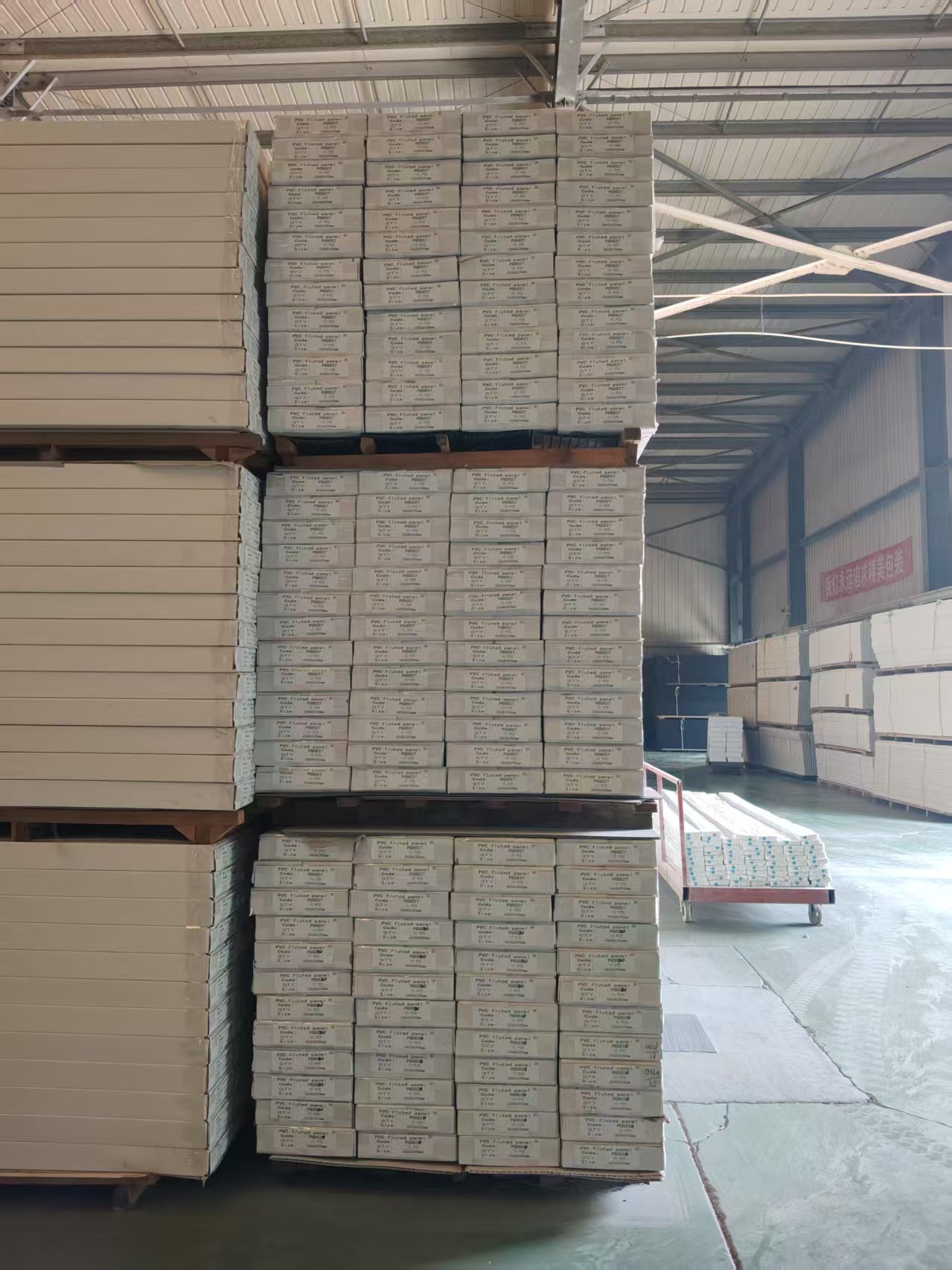
The checks below convert the discussion above into items a buyer can close out before placing a second or third order. Each one is answerable with documents or an inspection, and none of them depends on trusting a brochure.
| Check | What to request | Why it matters for repeat orders |
|---|---|---|
| Material composition | Item-level composition statement for the specific panel, including core mix and surface treatment | Product names in this category overlap; composition, not the name, determines how the panel behaves in service |
| Technical parameters | Dimensional data, thickness tolerance, joint geometry, stated application limits | A thickness or joint change between batches alters fit on site even when colour matches |
| Test reports | Item-specific reports; the company states E0 and B1 classifications and offers CE assistance and third-party reports on request | Reports must follow the item number actually shipped, not the product family |
| Destination-market requirements | Written confirmation of the standard applied in the target market | Interior wall lining reaction-to-fire is assessed against ASTM E84 in the United States and EN 13501-1 in the EU, per a published comparison of the two frameworks |
| Factory audit | On-site or video inspection of material storage, batching, extrusion, inspection and loading areas | Input control and inspection practice cannot be verified from a sample alone |
| Reference sample | Retained sample per bulk order, plus the confirmed pre-production sample | Gives the next batch a documented comparison standard |
| Order detail | Series and item number, size, colour code, quantity, packaging, destination port and trade term confirmed on the proforma invoice | Most repeat-order disputes trace back to an incomplete first-order specification |
Where a long-term arrangement does not fit
Long-term supplier evaluation is the wrong instrument for some buying situations, and saying so is part of an honest assessment. A buyer who needs a certified structural assembly, a project-specific fire classification for a named build-up, or third-party witnessed testing for a public building should start from the test requirement and work backwards to the supplier; a general statement of standards compliance will not satisfy a specifier. A buyer testing a market with a single small mixed order is testing logistics and colour acceptance, not consistency, because consistency only becomes observable from the second batch onward. And a distributor seeking territorial exclusivity should confirm that arrangement contractually, since exclusivity is not something the supplied company information addresses.
Cost benchmarks carry a similar caveat. A 2026 commercial research estimate placed the reference FOB band for standard WPC wall panels at roughly USD 8–18 per m², a range wide enough to cover very different thicknesses, surface processes and co-extruded versus laminated construction. It is a sanity check for negotiation, not a quotation, and it should never be used to compare two suppliers without matching the specification behind the number.
Market context: why continuity is a structural question
Supplier stability matters more in a concentrated supply base than in a fragmented one. Commercial research published in 2026 estimated the global wall panels market at about USD 10.85 billion for the year, with the WPC wall panel segment forecast to grow at roughly 5–7% CAGR through 2035, and placed China at approximately 45–50% of global WPC production. Those are commercial-research estimates with definitional limits — “wall panels” in the headline figure includes materials well beyond WPC — but the direction is consistent with what buyers see: a large share of global supply originates from a relatively small number of manufacturing clusters.
Two practical consequences follow. First, qualification work amortises. The effort spent auditing a factory, confirming a sample and agreeing a warranty is repaid across every subsequent order, which is precisely why the evaluation should be built for years rather than for one purchase. Second, documentation has to be right at the border. WPC wall panels are commonly declared under HS heading 3925.90, a heading that also covers other plastic builders' ware, so trade statistics filed under that code do not isolate WPC panels and cannot be used to size a market or to benchmark a competitor's volume.
Running the annual review
A repeat-order relationship is maintained by review rather than by memory. Five questions cover the ground: did the batches received this year match the retained reference sample, and where they did not, was the deviation within the pre-agreed range; how many warranty claims arose, and how were they resolved; did shipments meet the delivery definition agreed at the start; did the new styles released this year fit the local market; and are the test reports and certificates on file still current for the item numbers now being sold. A supplier that answers all five with documents is behaving like a long-term partner. One that answers with reassurance is asking for trust in place of a control.
Frequently asked questions
Why do distributors and importers stay with one WPC wall panel supplier across several order cycles?
Because the cost of re-qualification is real and repetitive: a new supplier means a new sample approval, a new colour reference, a new documentation set and a new set of assumptions about batch behaviour. Suppliers that reduce that burden tend to keep the account. In Linkworld's case the stated basis is fixed raw-material suppliers and unified production formulas to limit batch colour deviation, retained reference samples for bulk orders, annual new styles, full-range support, factory-direct pricing and on-time delivery. Each element addresses a different part of the repeat-order problem rather than the first purchase alone.
How can a buyer check batch-to-batch consistency before placing a repeat order?
Compare against a physical reference rather than a description. Ask the supplier for the reference sample retained from the previous bulk order and the confirmed pre-production sample, then assess the new batch against them under the same lighting, measuring thickness and checking that the joint engages without force or gap. Confirm in advance what texture variation is acceptable on wood-grain and stone-grain finishes, since some variation is inherent to the surface. Where a project quantity is known, ordering it in one shipment avoids the batch boundary altogether.
What does a 25-year warranty on WPC wall panels actually cover?
Linkworld states a 25-year warranty for qualified products under normal use. In practice the warranty attaches to specific item numbers, depends on the panel being selected for a compatible application and installed on a suitable substrate with the specified fixing method and expansion allowance, and assumes maintenance with water and a neutral detergent rather than solvents or abrasives. It is a remedy obligation, not a substitute for destination-market test requirements or for a project specification. Buyers should obtain the scope, the claim evidence required and the remedy basis in writing before ordering.
Which documents should accompany a repeat order?
At minimum: item-specific test reports for the panels actually shipped, the standards documentation applicable to the destination market, a commercial invoice and packing list that match the confirmed specification, the bill of lading, a certificate of origin, and fumigation documentation where wooden pallets are used. The order itself should restate series and item number, size, colour code, quantity, packaging, destination port and trade term. Where custom printing is involved, the confirmed digital proof should also be on file as the production reference.
Conclusion
A WPC wall panel supplier is worth a multi-year commitment when four things hold at once: the input material does not change between orders, the batch is compared against a retained reference rather than a memory, the warranty is written with its conditions attached, and the commercial structure keeps the range sellable while delivery holds its schedule. None of those can be established from a quotation, and all of them can be checked before the second order is placed.
Reference material. The supplier's full product range and specifications are listed in the Linkworld product catalogue (PDF), available for open access and download. Company information is published at www.tslinkworld.com. Export enquiries: Stella, beibei@tslinkworld.com, +86 19331530434; address: No. 60, Qingbei East Road, High-tech Industrial Park, Tangshan City, Hebei Province, China.
Have Questions or Need More Details?
Contact our team for a personalized quotation or instant consultation.
Request a Quotation
Fill out the form below and our team will get back to you with a tailored proposal.
WhatsApp Direct Chat
Prefer to chat in real-time? Message us on WhatsApp for instant assistance & quick answers.
- Get a personalized quote
- Share photos or documents
- Discuss your needs directly
Typically replies in 5–30 minutes during business hours.