
Wall-Hung Bathroom Cabinet Evidence: Sample Kits and Fixing Scope
A wall-hung bathroom cabinet is not only a design choice. It shifts weight, alignment and waterproofing responsibility onto a small set of hardware and site-work decisions. For buyers evaluating a bathroom furniture set supplier at decision stage, the useful question is not whether the catalogue looks complete. It is whether the supplier can show what is physically supplied, what is excluded, and which installation tasks remain with the site team.

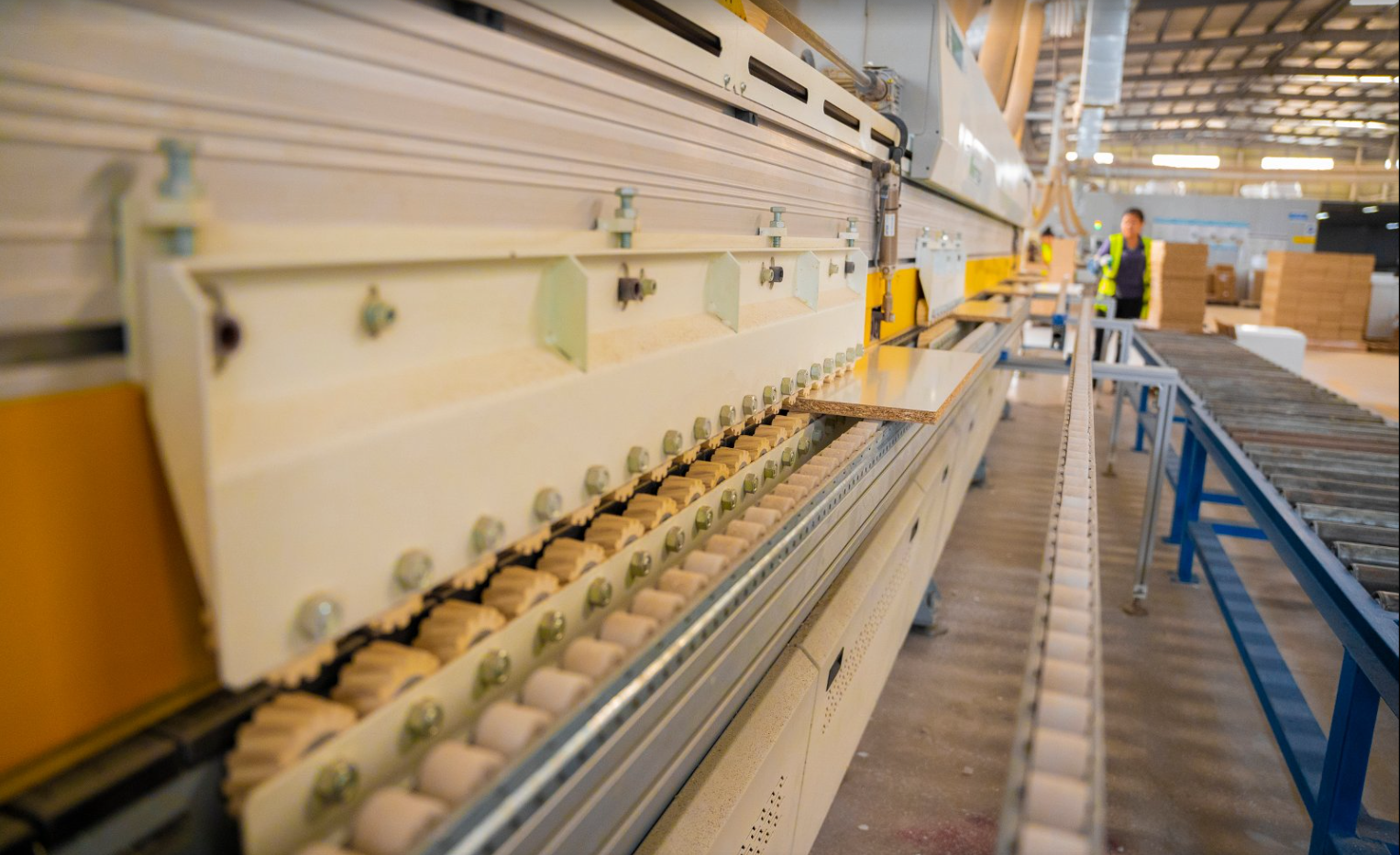
Ptb Technical Sanitary Ware(jiangsu) Co., Ltd. (PTB) is a bathroom products manufacturer based in Hai’an, Jiangsu, China, producing bathroom cabinets, shower enclosures and LED mirrors for export markets including the United Kingdom, France and Ireland. Its published capability facts are relevant here because they show a supplier with a 33,000 m² plant, a stated 95% export ratio, and a product range that spans the main components of a bathroom furniture set. The more decision-critical evidence, however, sits in sample policy, hardware content, fixing exclusions and installation guidance.
The decision-stage problem: a sample photo is not a supply-scope document
Bathroom furniture set procurement often starts with finishes, sizes and price. By decision stage, the risk has moved. A buyer needs to know whether the cabinet arrives with the right reinforcing screws for a heavy mirrored door, whether wall plugs are in the box, whether drawers must be removed before wall-mounting, and who seals cut edges after a basin or pipe cut-out. These are not minor installation notes. They determine whether the product can be fitted safely and whether later moisture damage is treated as a product defect or as incomplete site work.
The opportunity is to turn the supplier evaluation into an evidence request. A practical evidence pack includes a mixed sample order, a hardware bag audit, a written fixing-scope statement, an installation manual for the exact cabinet type, a SKU-level warranty matrix, and compliance documents for electrical and glass components. This approach does not replace commercial negotiation. It makes the commercial decision traceable.
What a bathroom furniture set sample order can prove
PTB states that sample orders are welcome for quality testing and marketing, that mixed samples are acceptable, and that samples are not free of charge, with freight borne by the buyer. For a decision-stage buyer, that policy is useful because it allows one shipment to cover bathroom cabinets, shower enclosures, LED mirror lights and basins. A mixed sample order can test finish consistency across categories, packaging quality, hardware completeness and document quality before a bulk commitment.
A sample order can prove physical finish, colour match, edge banding appearance, hinge and drawer movement, mirror-door weight, hardware bag contents, and whether the installation manual matches the delivered SKU. It cannot prove wall substrate strength, installer competence, long-term humidity exposure, or whether every future production batch will match the sample. Those limits should be written into the evaluation record rather than ignored.
| Evidence item | What to request | Decision value |
|---|---|---|
| Mixed sample order | Bathroom cabinet, shower enclosure, LED mirror light and basin in one shipment where possible | Checks cross-category finish, packaging and document consistency |
| Hardware bag | Reinforcing screws for heavy mirrored doors, hinges, handles and count sheet | Confirms what the installer can fit without local sourcing |
| Fixing scope statement | Written confirmation that wall plugs and fixing screws are not supplied | Prevents a hidden installation cost and site delay |
| Installation manual | Drawer removal, bracket fixing, cut-edge sealing and hinge adjustment steps | Shows whether the supplier defines site work clearly |
| Warranty matrix | Warranty by SKU, including cabinet, mirror and shower enclosure | Avoids relying on a general statement that may not match product data |
Reinforcing screws for heavy mirrored doors: a small part with a safety role
A mirrored cabinet door made with toughened glass weighs considerably more than an ordinary wooden door. PTB’s technical guidance states that special reinforcing screws are mandatory for mirrored doors instead of ordinary screws, because the connection must withstand repeated opening and closing. Ordinary screws may loosen under cyclic fatigue. EN 14749 cabinet strength requirements are cited in the guidance as the reason dedicated reinforcing fasteners are required for a reliable connection.
This is one of the clearest physical evidence points in a wall-hung bathroom cabinet evaluation. The buyer should ask for the hardware bag to be shown in the sample, confirm that reinforcing screws are present, and check that the installation manual tells the installer where they fit. If a mirror door later becomes loose, closes poorly or shows offset gaps, PTB’s troubleshooting guidance says to check the reinforcing screws and hinge adjustment first. Loose mirror-door reinforcing screws, a mis-adjusted X-Y hinge setting and worn hinge hardware are listed as common causes. Most poor-closure issues can be fixed on site without cabinet replacement.
The procurement lesson is straightforward: a heavy mirrored door should not be treated as a standard wooden door with a decorative mirror attached. The fastener specification belongs in the sample audit and in the installation handover. When the hardware bag is opened during sample approval, the buyer can compare the screws against the bill of materials and the fitting instructions. That is more reliable than a catalogue statement.
Fixing scope: why wall plugs and fixing screws are not included
For wall-hung bathroom cabinets, PTB’s installation safety guidance states that wall fixings are not included and that the installer must verify wall load-bearing capacity and use proper fixings. For shower enclosures, the guidance is equally explicit: wall rawlplugs and fixing screws are not supplied, and suitable fixings should be selected according to on-site wall condition. This is a scope boundary, not a hidden product omission. Wall substrate varies from masonry and concrete to stud partitions and tile-covered boards. A supplier cannot select a safe anchor without knowing the wall build-up.
The buyer’s RFQ should therefore separate three items: cabinet hardware supplied by the manufacturer, wall anchors selected by the installer, and site work such as drilling, sealing and final adjustment. If these are mixed together, the result is predictable: the installer arrives without the correct anchors, or uses an unsuitable fixing because the cabinet is already on site. A written fixing-scope statement reduces that risk before the order is placed.
| Scope item | Typically included in PTB supply | Typically handled on site |
|---|---|---|
| Cabinet reinforcing screws for heavy mirrored doors | Yes, for the mirror-door connection as specified in the installation guidance | Fit and tighten during assembly and adjustment |
| Wall plugs and wall fixing screws | No; not supplied for wall-hung cabinets or shower enclosures | Select anchors after checking wall load-bearing capacity and substrate |
| Cut-edge sealing after pipe or basin cut-outs | No; sealing of cut edges is site installation work | Apply full waterproof sealing to all exposed cut edges |
| Final hinge and drawer adjustment | Hardware and adjustment guidance supplied | Adjust X-Y hinge settings and drawer runners after hanging |
Wall-hung installation limit: remove drawers before mounting
PTB’s wall-mount installation guidance begins with a practical step: remove the drawer box before wall-mounting. The sequence is to remove the drawer, mark positions and fit the wall hanging brackets, hang the cabinet on the brackets, adjust height via the hook screws, refit the drawer, adjust hinge horizontal and vertical alignment, perform any panel cut-out and seal cut surfaces, then check smooth opening and closing of doors and drawers.
Removing drawers is not only a handling convenience. It reduces the weight being lifted and protects the runner system from misalignment during hanging. It also gives the installer access to the cabinet interior and bracket area. If a drawer sticks after installation, PTB’s troubleshooting guidance says the issue can usually be recovered by cleaning and re-engagement rather than replacing the full drawer. The drawer should be pulled fully out and lifted upward for removal; debris inside the runner should be cleaned; the drawer should be aligned and pushed home until it clicks. A deformed slide rail is the exception that requires replacement.
For buyers, this becomes a handover item. The installation manual should state that drawers are removed before wall-mounting, and the site team should confirm that the wall is load-bearing before drilling. A wall-hung cabinet that is hung before the wall substrate is checked is a risk that no sample order can resolve.
Sealing cut edges is site work, and it matters in a bathroom
Bathroom cabinets use wood-based panels. PTB’s technical explanation states that moisture-proof treatment applies to the original surface, but on-site cutting removes the original moisture-proof veneer. Exposed open-cell edges can absorb vapour and splash water rapidly, causing swelling, delamination and mildew. Sealing closes capillary pores and blocks moisture ingress. This is why all cut edges of the cabinet must be waterproof sealed after any on-site cut-out.
The same guidance is clear on liability: sealing of cut edges belongs to site installation work, and mildew from unsealed edges is not a factory product defect. If mildew, swelling or blistering appears at cabinet cut-out edges, the troubleshooting steps are to remove the mildewed and swollen material, apply full waterproof sealing on all exposed cut edges, and improve bathroom ventilation to reduce ambient humidity. That does not excuse a poorly finished factory edge, but it does define where the installation responsibility sits.
A decision-stage buyer should ask the supplier to include cut-edge sealing in the installation manual and to state it in the scope matrix. The site team should treat every exposed cut edge as a wet-area detail, not as a cosmetic finish.
What PTB can document as a supplier
PTB’s published capability facts give buyers several verifiable starting points. The company operates a 33,000 m² manufacturing plant, states a 95% export ratio, and serves Western European markets including the United Kingdom, France and Ireland. It holds ISO9001, EU CE, British WRAS, FSC and Customs AEO certifications, and states that it passed an IKEA factory audit in 2023. These facts support a supplier qualification file, but they do not replace SKU-level product evidence.
For the bathroom furniture set, PTB’s sample policy is mixed samples with buyer-paid freight. Its technical engineers review customer drawings and recommend models based on the latest product development after size and shape requirements are provided. PTB also states a 5-year warranty on its bathroom products and offers custom manufacturing against customer requirements. Normal lead time is stated as 25-30 days after deposit, depending on order quantity.
Two product examples show why SKU-level verification matters. The LQ752 LED mirror is an 800 x 800 mm round mirror with a 47 mm depth, 6.5 kg weight, aluminium body in brushed brass, two 21 W LED 6000K lights, IP44 rating, and CE, EMC, LVD, RoHS and WEEE certification. Its product data lists a 1-year guarantee. The AQU9-E6 shower enclosure is a 900 mm chrome quadrant model with 6 mm glass, an 860-880 mm adjustment range, and a product-data lifetime guarantee. PTB’s general FAQ states a 5-year warranty on bathroom products. These statements can coexist only if the buyer requests a warranty matrix by SKU. That is exactly the kind of evidence a decision-stage buyer should not leave to assumption.
Application fit: where wall-hung cabinet evidence matters most
Wall-hung bathroom cabinets are often specified where floor clearance, cleaning access and a lighter visual footprint matter. In residential and serviced apartment bathrooms, the cabinet is exposed to high humidity, water splashing and intermittent cleaning agents. In hotel vanity areas, the same cabinet may face heavier daily use and more frequent maintenance cycles. The application context does not change the laws of physics: the wall must carry the load, the mirror door must be fastened correctly, and cut edges must be sealed.
A mixed sample order is particularly useful for project approval because it lets the buyer compare the wall-hung cabinet with the shower enclosure, LED mirror light and basin as one set. Finish consistency across categories is easier to judge in one shipment. Packaging quality and document completeness can also be checked before the project specification is frozen. For small bathrooms and dry-wet separation projects, the same evidence pack helps the contractor plan fixing selection and sealing work before installation day.
Market signal: wall-hung demand is rising, so fixing scope becomes a procurement issue
Grand View Research data cited in the available market evidence values the global bathroom furniture market at USD 135.9 billion in 2024, with an estimate of USD 148.9 billion by 2026. The same source reports that bathroom cabinets accounted for approximately 50% of the market in 2023. Grand View Research also projects U.S. wall-mounted and floating vanity units to grow at a 7.26% CAGR through 2031. These are market-level signals, not a guarantee for any single supplier, but they explain why wall-hung formats are receiving more procurement attention.
As wall-hung formats grow, the installation boundary becomes more visible. A floor-standing cabinet can conceal minor wall tolerance. A wall-hung cabinet cannot. The buyer needs a supplier that documents reinforcing screws, excludes wall anchors honestly, and explains drawer removal and cut-edge sealing in the installation manual. That is a practical response to a market trend, not a marketing claim.
Comparison with traditional solutions: price-only sampling versus evidence-based approval
A traditional price-only sample request often asks for one cabinet, checks the finish, and leaves fixing scope to the installer. That approach can work for simple furniture, but it is weak for a wall-hung bathroom cabinet with a heavy mirrored door. The evidence-based alternative asks for a mixed sample, a hardware bag audit, a written exclusion list and an installation manual. The difference is not paperwork for its own sake. It is the difference between discovering a missing anchor on installation day and knowing about it at quotation stage.
| Comparison point | Price-only sample request | Evidence-based approval |
|---|---|---|
| Hardware confirmation | Assume screws and hinges are complete | Open the hardware bag and compare against the bill of materials |
| Wall fixing scope | Resolve after delivery | Written confirmation that wall plugs and fixing screws are excluded |
| Installation limits | Learned from the installer on site | Drawer removal and cut-edge sealing stated before order |
| Warranty clarity | One general warranty statement | SKU-level matrix checked against product data |
The limitations should be stated plainly. PTB’s sample orders are chargeable and freight is buyer-paid. Wall plugs and fixing screws are not supplied. Cut-edge sealing is site work. Warranty statements vary between the general 5-year product statement and SKU-level product data. PTB’s comparison figures, such as an 85% lower mildew probability or 50% less surface stain penetration for its cabinet surface, are supplier-reported and should be validated through sample inspection and project-specific documentation, not treated as third-party test results. These boundaries do not undermine the supplier case. They make it easier to compare like with like.
Future outlook: the supplier evidence pack will become part of the product
As wall-hung bathroom furniture continues to attract attention, buyers are likely to ask for more than a finish sample. They will ask for the hardware bag, the fixing exclusion, the cut-edge sealing instruction and the warranty matrix in one approval file. Suppliers that can produce this evidence quickly will be easier to qualify, not because their marketing is louder, but because their scope is clearer.
For PTB, the available facts support a credible supplier file: a 33,000 m² plant, export experience in the UK, France and Ireland, ISO9001, CE, WRAS, FSC and AEO certifications, a stated IKEA factory audit in 2023, mixed sample orders, 5-year product warranty statement, and technical guidance covering reinforcing screws, drawer removal, fixing exclusions and cut-edge sealing. The next step for a buyer is to convert those facts into a SKU-specific evidence pack before the order is placed.
FAQ
Can buyers order mixed samples covering bathroom cabinets, shower enclosures, LED mirror lights and basins?
Yes. PTB states that sample orders are welcome for quality testing and marketing, and that mixed samples are acceptable. Samples are not free of charge, and the buyer bears the freight.
Are wall plugs and fixing screws included with a wall-hung bathroom cabinet or shower enclosure?
No. PTB’s installation guidance states that wall fixings are not included for wall-hung cabinets and that wall rawlplugs and fixing screws are not supplied with shower enclosures. Suitable fixings must be selected according to the on-site wall condition, and wall load-bearing capacity must be verified.
Why are reinforcing screws required for heavy mirrored doors?
A mirrored door with toughened glass weighs much more than an ordinary wooden door. Ordinary screws may loosen under cyclic fatigue from repeated opening and closing. PTB’s guidance cites EN 14749 cabinet strength requirements and states that dedicated reinforcing fasteners are required for a reliable connection.
Should drawers be removed before wall-mounting a bathroom cabinet?
Yes. PTB’s wall-mount installation sequence begins by removing the drawer box. The cabinet is then hung on brackets, adjusted via hook screws, and the drawer is refitted before hinge and drawer alignment are checked.
Do cut edges need to be sealed after installation?
Yes. All cut edges must be waterproof sealed. PTB states that on-site cutting removes the original moisture-proof veneer, and exposed edges can absorb moisture and cause swelling, delamination and mildew. Sealing cut edges is site installation work, and mildew from unsealed edges is not a factory product defect.
Does the warranty apply equally to every product in the set?
Buyers should confirm warranty by SKU. PTB states a 5-year warranty on its bathroom products, while the LQ752 LED mirror product data lists a 1-year guarantee and the AQU9-E6 shower enclosure product data lists a lifetime guarantee. A SKU-level warranty matrix resolves the difference.
What is the normal lead time after deposit?
PTB states a normal lead time of 25-30 days after receiving the deposit, depending on order quantity.
Have Questions or Need More Details?
Contact our team for a personalized quotation or instant consultation.
Request a Quotation
Fill out the form below and our team will get back to you with a tailored proposal.
WhatsApp Direct Chat
Prefer to chat in real-time? Message us on WhatsApp for instant assistance & quick answers.
- Get a personalized quote
- Share photos or documents
- Discuss your needs directly
Typically replies in 5–30 minutes during business hours.