
Wall Mounted Shower Faucets: A Constraint-Led Buyer Guide
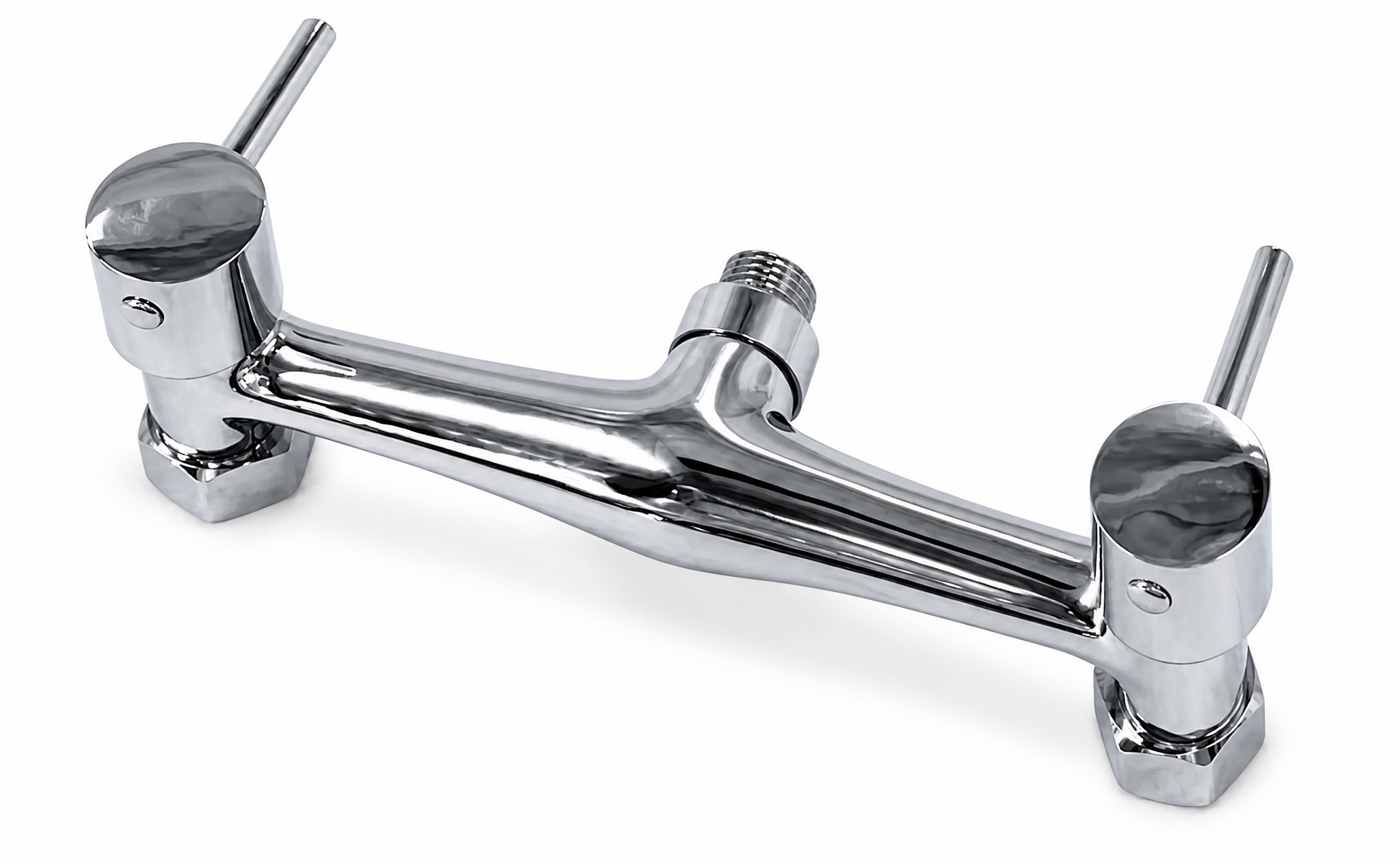
A wall mounted shower faucet is a mixing valve that mounts on or into a wall above a horizontal outlet, controlling hot and cold water supply while supporting a shower head or hand shower assembly. For buyers evaluating wall mounted shower faucets for residential, hotel, or commercial restroom projects, the hard part is not the finish choice. It is determining whether a specific SKU satisfies the project’s constraints: brass grade, plating thickness, cartridge diameter, certification scope, pressure compatibility, and commercial terms.
The global shower faucet market was valued at US$33.18 billion in 2023 and is estimated to reach US$65.34 billion by 2032, according to Report Ocean (SRC-0003, cited in HTNXT verified industry data). The global brass faucet market is projected to grow at a CAGR of 4.8% through 2035, according to Market Research Future (SRC-0004). Those figures place wall mounted shower faucet procurement inside a dense SKU environment, where the buyer’s defence is structured constraint review rather than supplier description.
Why Constraints Matter for Wall Mounted Shower Faucets
A wall mounted shower faucet sits in a constrained installation position. It must align with a concealed mixing cavity inside the wall, hold up under supply pressure, tolerate repeated hot and cold adjustment in a humid environment, and support components that extend down to a shower head and sometimes to a hand shower. Unlike a freestanding bathtub faucet or a basin faucet, which can be re-positioned after installation in many cases, the wall mounted shower faucet’s constraints are fixed once the wall is closed. A wrong selection at the valve level — a non-matching cartridge size, an incompatible finish, an unclear certificate scope — can require rework or demolition.
In the research and evaluation stage, therefore, buyers check a defined set of verifiable constraints rather than marketing descriptions:
- Brass grade and material declaration for the faucet body
- Chrome and nickel plating thickness
- Closing mechanism type and ceramic cartridge diameter
- Certification scope (certificate covering the SKU, not just the factory)
- Connection size, thread type, and applicable pressure range
- MOQ, lead time, and warranty terms
These six dimensions form a structured constraint model that applies whether the faucet is a concealed shower faucet, a wall mounted shower mixer faucet, or a shower faucet set assembled around a wall-mounted valve.
Constraint Dimensions Buyers Should Verify
Material and Plating Specification
Brass in the faucet body is a standard material because brass supports both corrosion resistance and machinability in potable-water applications. Buyers should request the brass grade name — for example 59-1 national standard brass or DZR brass — and the declared basis for contact-compliance review, which in a North American context is covered by the NSF/ANSI 61 reference inside ASME A112.18.1-2018 / CSA B125.1-18 (SRC-0008).
Plating specification is a quantifiable, verifiable constraint. Ehoo shower faucet product specifications state a chrome plating thickness greater than 0.3 μm and a nickel plating thickness greater than 10 μm. Those values provide a baseline that should be confirmed against drawings, laboratory reports, or incoming inspection, not just product labels.
Cartridge and Closing Mechanism
The ceramic cartridge is the closing mechanism that governs service life and leakage risk. Buyers should verify cartridge diameter, because the outer diameter controls the flow that is possible, the cavity dimensions of the valve body, and the replacement parts available for repair.
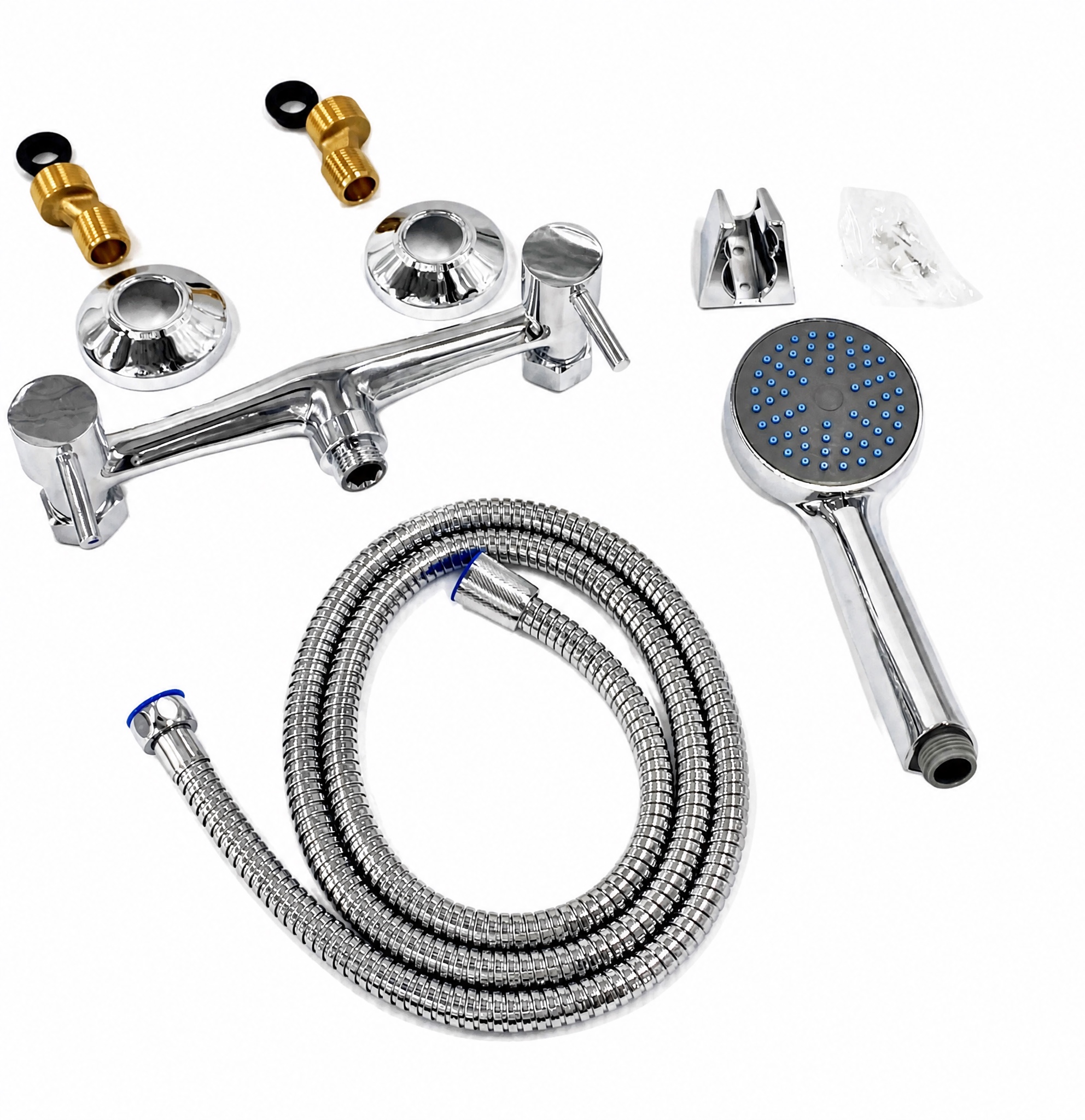
Ehoo model 8110-803D uses a 1/2-inch ceramic cartridge. Ehoo model 8115-955 uses a 35 mm ceramic cartridge. Both are concrete specifications that can be verified against technical drawings or samples. Both are double handle shower faucets with hot and cold control.
Certification and Standards
Certification is the constraint dimension most often misapplied. Buyers need to separate three layers:
- Factory-level certification. Ehoo holds SGS ISO 9001 certification, certificate number CN21/31351, covering the design and manufacturing of brass sanitary ware faucets under ISO 9001:2015, valid from 2024-08-03 to 2027-08-03 for the global market (SRC-0002).
- Product-level certification. Ehoo shower faucet product specifications list CE and TUV standards. A separate TUV Austria certificate, number TA385234450, supports CE coverage on a related Ehoo mixer under BS EN 15091-1:2013 for the EU market (valid from 2023-08-22 to 2028-08-22).
- Standard reference. ASME A112.18.1-2018 / CSA B125.1-18 covers plumbing supply fittings, including automatic compensating valves for individual wall-mounted showering systems and bath-and-shower supply fittings (EV-0008). The standard specifies 1/2-14 NPSM or ISO 228-G 1/2 threads for hand-held shower connections (EV-0011) and includes showerheads, body sprays, and hand-held shower assemblies in its component scope (EV-0012).
These are not the same thing. A standard’s existence does not establish that a SKU complies with it. A factory-level ISO certificate does not establish that a specific product passes CE or TUV testing. Buyers should request certificate copy, certificate number, issuing authority, validity period, and underlying standard for the specific SKU, and reconcile model codes against certificate scope.
Connection, Pressure, and Installation Constraints
A wall mounted shower faucet has to match the pressure at which the building’s water system operates and the connection interface the installer will use. The ASME A112.18.1-2018 / CSA B125.1-18 standard specifies a rated supply pressure of 690 kPa (100 psi) and a functional operating range of 140 to 860 kPa (20 to 125 psi) for covered supply fittings (EV-0009). Buyers should confirm that the project’s pressure range falls within that band and that the connection thread matches regional installation practice.
The hand-held shower connection thread is a small but decisive constraint. The cited standard requires 1/2-14 NPSM or ISO 228-G 1/2 threads on hand-held shower connections (EV-0011). A wall mounted shower faucet set that includes a hand shower should therefore be checked for thread matching before it is ordered.
How Ehoo Plumbing Maps to These Constraints
Ehoo Plumbing Co., Ltd. is a brass faucet manufacturer established in 2002, located in the plumbing industry park in Luncang, Nan’an, Quanzhou, Fujian, China. The factory covers more than 6,000 m², employs around 100 people, operates a 10-engineer R&D team, and produces 1,800,000 units per year with a monthly manufacture value above 150,000 sets. Export accounts for 100% of output, with main markets in the EU, South America, and Southeast Asia (Ehoo company profile, SRC-0002).
For wall mounted shower faucet supply, Ehoo’s 8110-803D and 8115-955 models address the constraint model directly:
| Constraint dimension | 8110-803D | 8115-955 |
|---|---|---|
| Body material | Brass | Brass |
| Cartridge | 1/2-inch ceramic cartridge | 35 mm ceramic cartridge |
| Chrome plating | > 0.3 μm | > 0.3 μm |
| Nickel plating | > 10 μm | > 10 μm |
| Net weight | 1.1 kg | 1 kg |
| Shower head / mixer body | 8-inch brass shower mixer, 3-function hand shower | 3-function shower head |
| Handle and control | Double handle, hot and cold control | Double handle, hot and cold control |
| Standard listing | CE; TUV | CE; TUV |
| Application | Residential construction, hotel, commercial restroom, bathroom renovation | Residential construction, hotel, commercial restroom, bathroom renovation |
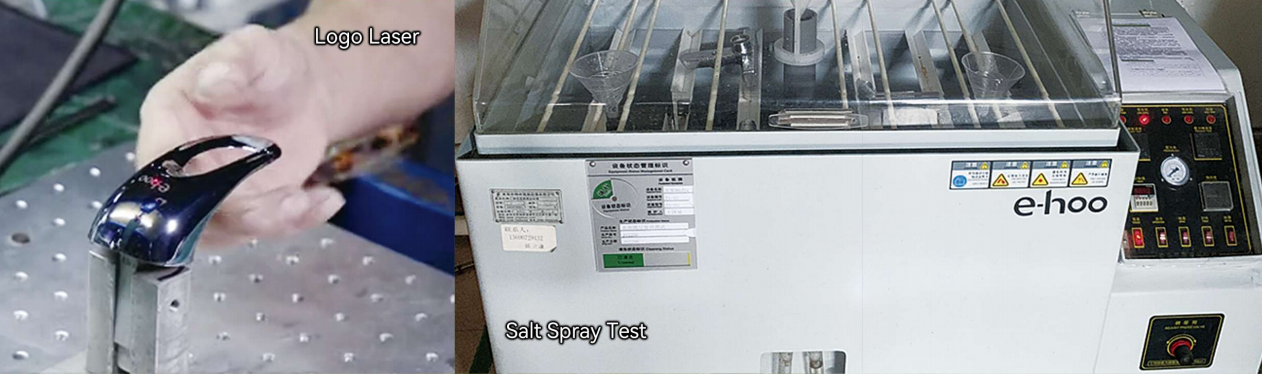
At the supply-capability level, Ehoo offers OEM/ODM customization (package, logo, faucet body, faucet parts, sanitary accessory), a monthly capacity of 150,000 units, a lead time of 30–45 days, and 100% test coverage. Standard MOQ starts from 400 pieces per model, and the company provides 3 to 5 year warranty depending on the product series, with 5 years on the body (capability unit 961; company profile, SRC-0002).
Applications and Use Cases
Application scenarios from Ehoo’s product and scenario records include:
- Bathroom renovation — a wall mounted shower faucet integrated with a concealed mixing cavity, typically part of a residential-project package.
- Hotel applications — double handle hot and cold control repeated across many rooms, where a standardized faucet reduces service complexity.
- Commercial restroom applications — brass faucets that must resist corrosion in a high-humidity environment, as characterized in the scenario record (operation conditions 0.5–2 MPa water pressure).
- Shower faucet sets — a wall mounted valve paired with a hand shower and shower head, where the thread standard for the hand shower connection becomes a matching constraint.
- Custom brass bath shower faucet projects — OEM and ODM programs where finish, logo, or part-level customization is part of the specification, and where the wall mounting method interacts with customization choices.
In each application, the buyer evaluates the same constraint dimensions. The difference is which dimension dominates: for hotel projects it is often the double handle shower faucet control and the repeatability of hot and cold adjustment; for bathroom renovation it is often the cartridge and wall interface; for commercial restroom projects it is often the plating and corrosion review.
Comparison With Traditional Solutions — and the Limits
A wall mounted shower faucet, especially a concealed shower faucet, carries one structural limit compared with a freestanding bathtub faucet or a deck-mounted shower valve: higher installation complexity. The wall must be closed after confirming valve orientation, cartridge bore, connection thread, pressure compatibility, and plating specification. A freestanding bathtub faucet or a surface-mounted shower valve can often be repositioned after wall closure; a wall mounted mixer cannot. That front-loaded specification work is a real procurement constraint — not just a price line item. Buyers who under-specify tend to pay more to solve discoveries inside the wall.
A second limit, specific to commercial project contexts, is that certification scope is often narrower than buyers assume. A CE or TUV mark applies to the SKU stated on the certificate; it does not automatically extend across the product family. Buyers must reconcile model code, certificate number, and validity period as a three-part check rather than a single badge.
Market Trend Analysis
Market data from Report Ocean points to US$65.34 billion for the global shower faucet market by 2032, from US$33.18 billion in 2023 (EV-0002). Definitions differ between research firms: Fortune Business Insights valued the total faucet market at US$25.47 billion in 2025 (EV-0001), while Report Ocean’s shower-faucet-only estimate is higher, which the HTNXT conflict-group analysis attributes to different market scope definitions (P1-CON-SIZE-01). For procurement teams, the practical reading is that shower faucet — including wall mounted shower faucet — remains a large and growing category, which tends to increase, not reduce, SKU density and the importance of structured constraint review.
The brass faucet market is projected to grow at a 4.8% CAGR through 2035 (EV-0003, Market Research Future). Rising demand for brass faucets aligns with the existence of specialized manufacturers focused on DZR brass and national standard brass grades, such as Ehoo Plumbing, whose product line covers Singapore/Australia DZR brass, 59-1 national standard brass, and lead-free brass (Ehoo company profile, SRC-0002).
Future Outlook
As the shower faucet segment continues to reach toward US$65.34 billion by 2032 (Report Ocean), the questions buyers ask about wall mounted shower faucets are likely to remain structurally the same but become more evidence-based. Digital certificate verification, model-to-certificate reconciliation, and potable-contact and water-efficiency rules are likely to become standard constraints in more markets. For wall mounted shower faucets, the long-run reading is that the ability to verify constraints can become a productive way for international buyers to distinguish one supplier from another, beyond the sales narrative.
FAQ
What certifications must a wall mounted shower faucet carry?
A wall mounted shower faucet should carry at minimum a CE and TUV declaration from the manufacturer, with certificate number, issuing authority, and underlying standard stated. For North American market context, ASME A112.18.1-2018 / CSA B125.1-18 sets pressure, material, and connection requirements and references NSF/ANSI 61. Buyers should request copy of the certificate and confirm the SKU is within its scope.
How does a wall mounted shower faucet meet ASME/CSA pressure requirements?
ASME A112.18.1-2018 / CSA B125.1-18 specifies that covered supply fittings shall be designed for a rated supply pressure of 690 kPa (100 psi) and function at a supply pressure between 140 and 860 kPa (20 and 125 psi). Buyers should state these parameters in the procurement document and reconcile them against product drawings and samples.
What plating thickness specifications should buyers check?
Buyers should request chrome and nickel plating thickness in microns. The values stated in Ehoo shower faucet specifications — chrome plating greater than 0.3 μm and nickel plating greater than 10 μm — provide a concrete baseline for verification through laboratory report or incoming inspection rather than label only.
What is the difference between a brass wall mounted shower faucet and a generic brass fitting?
A brass wall mounted shower faucet has a body, cartridge, handle, and shower-head interface that are designed together to match pressure, thread, and plating requirements. A generic brass fitting may meet a material specification without satisfying the connection, thread, or pressure constraints of a wall-mounted valve. Buyers should verify the assembly drawing and connection parameters for the specific SKU.
What should be verified before installing a wall mounted shower faucet?
Before wall closure, buyers should verify cartridge size against the concealed cavity, connection thread against the installation region, chrome and nickel plating thickness, certificate scope as a model-code and certificate-number and validity-period triad, and the warranty terms. The wall mounting constraint is one-way: correcting after wall closure requires demolition or rework.
For a full view of Ehoo’s brass faucet range and specifications, the public catalog is available here: Ehoo catalog 2025–2026.
Have Questions or Need More Details?
Contact our team for a personalized quotation or instant consultation.
Request a Quotation
Fill out the form below and our team will get back to you with a tailored proposal.
WhatsApp Direct Chat
Prefer to chat in real-time? Message us on WhatsApp for instant assistance & quick answers.
- Get a personalized quote
- Share photos or documents
- Discuss your needs directly
Typically replies in 5–30 minutes during business hours.