
Wall Panel Sourcing: Material Specs, Certifications and Supplier Checks
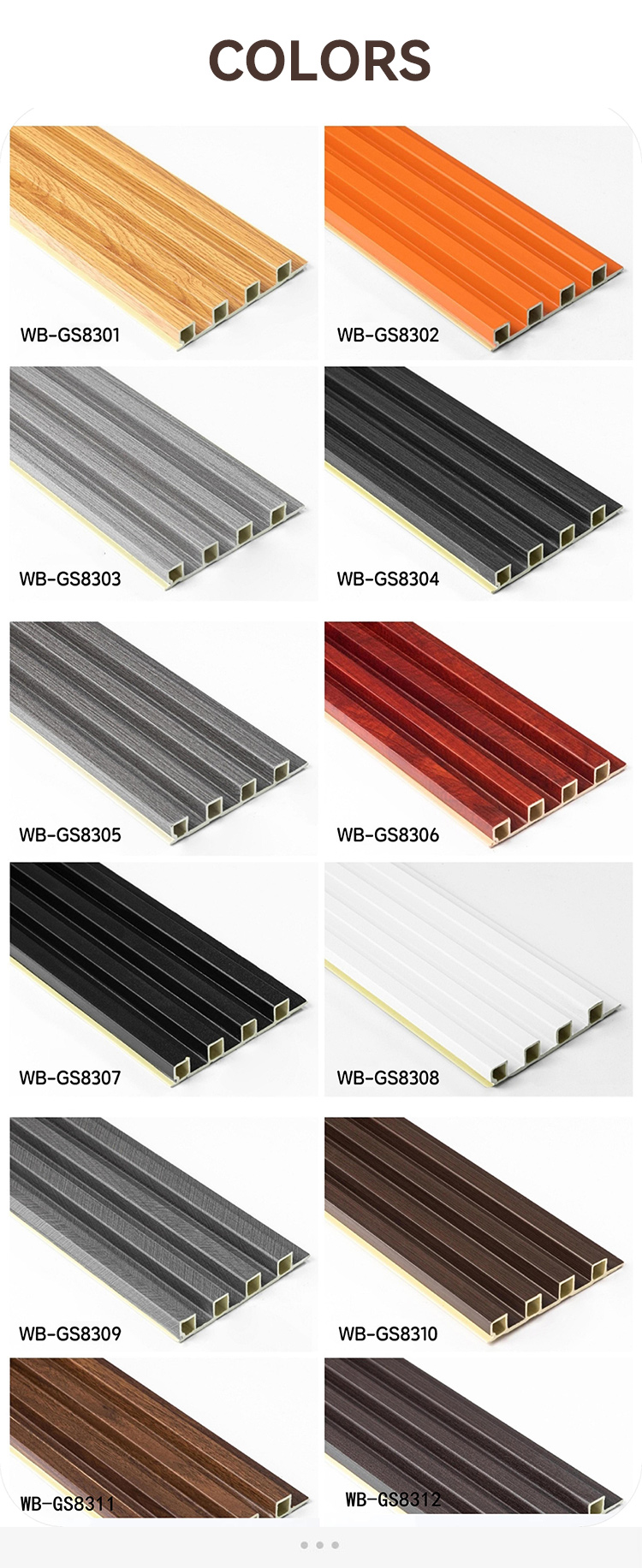
SXP WPC wall panel - a durable option for interior wall cladding.
Wall panels have become a common procurement category in interior construction, yet the specifications buyers need to compare are often inconsistent across suppliers. The global wall panels market was valued at USD 32.4 billion in 2025 and is projected to reach USD 43.7 billion by 2033, according to Dataintelo. This growth is pulling more contractors, distributors and importers into the segment, while making disciplined product evaluation more important than ever.
This article provides a structured view of wall panel sourcing decisions, using the SXP Wall Panel range from Shanghai Yuanguan Rubber Plastic Co., Ltd. as a reference. The focus is on the verification points that matter during the research and evaluation stage: materials, dimensions, certification, installation limits, supplier production capability, and the cost and compliance signals that separate reliable products from low-cost alternatives.
Why Wall Panel Selection Is Difficult
The difficulty is not a lack of products. It is the challenge of comparing products with inconsistent dimensions, thicknesses, surface claims, and certification coverage. Buyers often discover after delivery that a panel does not match the fire rating required for a commercial fit-out, or that the adhesive fails on a slightly textured wall.
The opportunity is equally clear. The Asia Pacific region accounted for 42.3% of the global wall panel market in 2025, and demand for fast-installation, low-labour renovation materials continues to rise. Self-adhesive panels reduce downtime and allow smaller crews to finish more area in less time. For importers and distributors, the question is not whether to enter the wall panel category, but how to select products that survive inspection, installation and end-user use.
SXP Wall Panel as a Reference Point
Shanghai Yuanguan Rubber Plastic Co., Ltd. is a decorative materials manufacturer based in Shanghai, China. Founded in 2005, the company operates an 8,000-square-metre factory with around 150 employees and exports approximately 90% of its output to the EU, USA, Asia and South America. Its SXP brand covers wall stickers, wallpaper, flooring and foam materials, with a product range that includes self-adhesive wall stickers, 3D foam wall panels, PVC wallpaper, WPC decorative wall panels, self-adhesive PVC flooring and carpet tiles.
For wall panel buyers, the SXP range offers several material families in one supply chain. The table below lists the models most relevant to interior panel projects.
| Model | Type | Material | Thickness / Key Sizes |
|---|---|---|---|
| WB-PVC | PVC wall panel | PVC | 2.5mm; 30×30cm, 50×50cm, 96×48cm |
| WB-PVC (plain) | PVC wall sticker | PVC | 2mm; 30×30, 30×60, 40×80, 60×60, 60×120, 120×300cm |
| WB-PVC (soft stone) | Soft stone wall sticker | PVC | 2.5mm; 30×60, 60×60, 40×80, 60×100, 40×300, 60×300, 120×300cm |
| WB-PET | PET marble wall sticker | PET | 2mm / 2.5mm; 30×30, 30×60, 60×60, 40×80, 60×120, 60×300, 120×300cm |
| WB-PG | Leather wall sticker | Leather | 6mm; 60×60, 60×240, 70×70, 70×280, 70×300cm |
| WB-KC | 3D foam slat wall sticker | PVC | 2.8mm; 30×30, 60×60, 30×60, 40×300, 60×300, 120×300cm |
| WB-WPC | WPC wall panel | WPC | 160×23×2900mm; 16pcs/box; 690/810/830g/m |
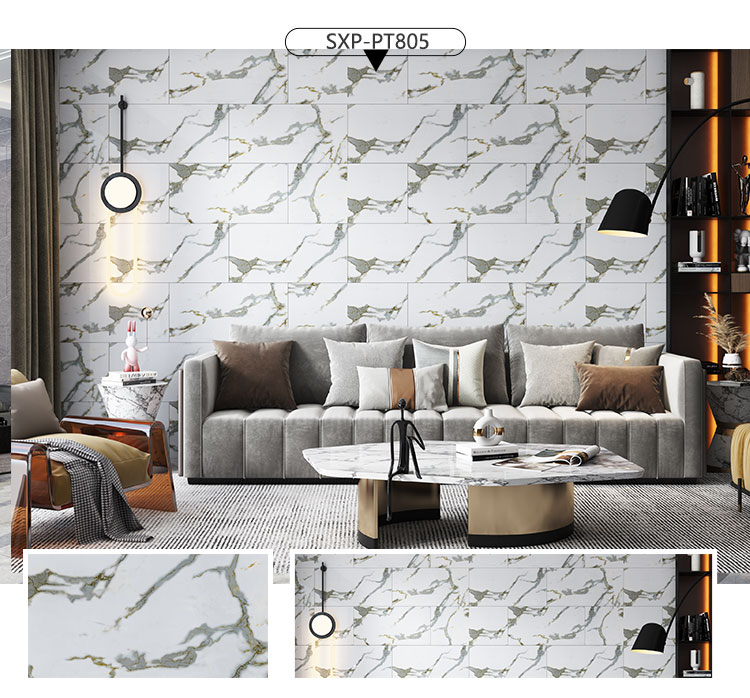
PET marble wall stickers offer a lightweight stone-look finish for vertical surfaces.
In terms of compliance evidence, the 3D wall brick produced with PE material has been tested by SGS to the RoHS Directive (EU) 2015/863, with test report number SHAEC1709394501. This is a specific, verifiable reference for one SKU in the range. For other models, buyers should request the applicable certificates before shipment, especially when the destination market has electrical or chemical compliance rules.
Shanghai Yuanguan also holds ISO9001 quality management system certification, operates 12 independent brands, and reports 48 patented technologies. These indicators do not guarantee product performance, but they reduce the risk of inconsistent production for long-term distribution programs.
Technical Explanation: Interpreting Key Panel Specifications
Thickness and material are the first two checks. A 2mm PVC sticker is lighter and more affordable, but a 2.5mm–6mm panel provides better dimensional stability and surface protection. PET marble wall stickers at 2mm or 2.5mm deliver a glossy stone look at a lower weight than natural stone. Leather-look wall stickers at 6mm add a soft, padded feel that is popular for headboard walls and boutique interiors.
Installation is an important constraint for self-adhesive systems. The backing is designed for smooth, solid bases such as cement, tiled surfaces, latex-painted walls, plasterboard and plywood. The surface must be flat, dry and free of dust and grease. Powdery, sandy or loose surfaces are not suitable. In kitchens and bathrooms, panels can be used in normal humidity and dry areas, but continuous direct sunlight should be avoided. If the base is not flat or the adhesive is exposed to water or heat, the panel may not perform as expected.
Material choice changes the cost-performance balance. In the broader market, XPE foam self-adhesive wall stickers are lightweight and provide sound absorption and cushioning, but their scratch resistance is moderate. PVC soft-stone wall stickers have higher density, better texture and better scratch resistance, but they increase logistics weight and unit cost. For residential and rental renovations, XPE-type panels are often preferred; for hotel guest rooms and chain store interiors, PVC soft-stone types are more common. These trade-offs should be part of the evaluation, not an afterthought.
Procurement checklist for self-adhesive wall panels
1. Confirm the exact model, thickness and material composition before quoting.
2. Request compliance documents for the destination market - EU buyers should check CE-CPR, REACH, PPWR and RoHS or EN 13501-1 where required.
3. Evaluate physical samples for adhesion, surface texture and ageing performance; do not rely only on website photos.
4. Verify the substrate type and installation conditions. The wall must be smooth, dry and free of grease.
5. Check supplier production capacity, quality control and after-sales service. SXP's capability profile lists 100% testing, a monthly capacity of more than 10 million square metres and a standard 30-day lead time.
Where Self-Adhesive Wall Panels Work Best
The SXP product line is used in building decoration, interior renovation, old house remodelling, commercial space decoration, prefabricated interior decoration, hotel and B&B renovation, exhibition booth construction, and retail store renovation. The common denominator is speed: most installations use a utility knife, scraper, tape measure and spirit level; no large construction equipment is required.
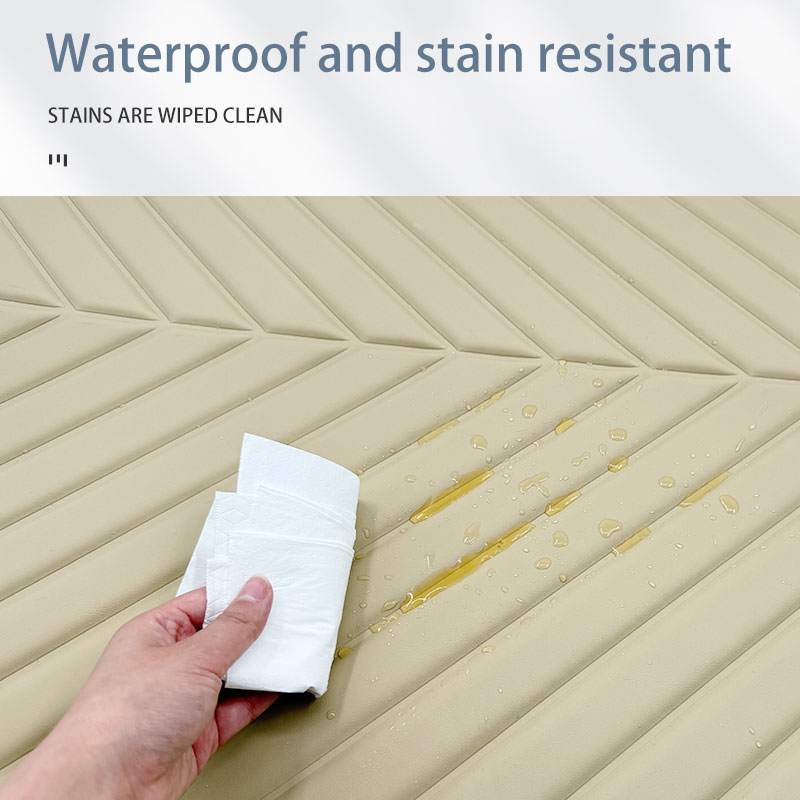
Leather-look panels add texture to accent walls in hospitality and residential projects.
One documented reference is a home centre customer that supplied SXP products for supermarket applications. The customer ordered 370,000 units and used them for a 5–10 year period. The reported result was good decorative effect, easy daily maintenance and repeat orders. The highlight for this commercial application was moisture resistance, quick installation and rich surface texture.
Market Trends and Compliance Pressure
Dataintelo reports that metal panels held the largest market share in 2025 at 28.5%, while Asia Pacific captured 42.3% of the global wall panel market. At the same time, WiseGuyReports estimates that wood-based wall panels represented nearly 31% of installations in 2024, with the wood wall panel system segment growing at a projected CAGR of 6.2% through 2035. These numbers suggest that the market is not shifting to one material; instead, buyers are segmenting by project type and aesthetic preference.
For importers, compliance is becoming a more visible purchasing criterion. In the EU, reaction-to-fire performance is assessed under EN 13501-1, with B-s1,d0 commonly specified for commercial interior panels. Additional rules such as CE-CPR, REACH and PPWR affect construction products and packaging. Low-cost panels made with recycled materials may pass a visual check but fail on dimensional consistency, fading or missing documentation. Importers should verify certificates and material declarations before placing bulk orders.
Comparison with Traditional Construction and Finishing
Compared with paint, tile or wallpaper, self-adhesive wall panels offer faster installation, surface texture and the ability to cover minor existing defects. They are also easy to replace in rental or temporary settings; some styles can be removed and reinstalled without leaving residue. This reduces labour cost and project downtime.
The limitations should also be clear. Self-adhesive panels are decorative and protective, not structural. They require a smooth and solid substrate and should not be used on surfaces that are flaking or unstable. For areas exposed to strong sunlight or continuous moisture, the product selection and substrate preparation must be reviewed carefully. These constraints are not hidden flaws; they define the correct scope of use.
Future Outlook for Wall Panel Sourcing
As renovation cycles shorten and overseas buyers become more compliance-conscious, the wall panel supply chain will likely converge on a few key requirements: validated certificates, consistent thickness and size, and predictable delivery. Suppliers with in-house R&D and flexible production can respond to local trends through size, colour, pattern, embossing, material structure and packaging customization. According to the company's production capability profile, SXP's manufacturing operation can produce more than 10 million square metres per month, with a lead time of around 30 days and a minimum order quantity of 1,000 square metres. This level of capacity is relevant for distributors that need repeatable volume rather than one-off samples.
Frequently Asked Sourcing Questions
What compliance risks should be noticed when exporting wall panels to the EU?
Exporters need to meet CE-CPR construction-product certification, REACH hazardous-substance regulation, and PPWR packaging rules. Missing valid certificates may cause customs detention, return shipment and fines. Buyers should request full valid certificates before placing orders.
What are the main risks of buying low-cost wall panels?
Price differences usually come from raw materials, thickness, formulation, quality control and certification. Low-cost products often use recycled materials, which can cause dimensional deviation, fading, odour and non-compliant documentation. For export orders, this may lead to customs detention and after-sales claims.
How do XPE foam and PVC soft-stone self-adhesive wall stickers compare for interior projects?
XPE foam is lighter, better for sound absorption and cushioning, and more economical to transport. Its scratch resistance is moderate. PVC soft-stone has better texture and scratch resistance, but is heavier and costs more. Use XPE for residential apartments and rentals; use PVC soft-stone for hotel rooms and chain store commercial projects.
What is the difference between XPE and IXPE foam?
XPE is chemically cross-linked foam with larger cells and lower cost. IXPE is cross-linked by electron-beam irradiation, with fine uniform cells, faster rebound, better compression resistance and better environmental performance. For exports to Europe and North America, request formamide and REACH test reports to verify material performance.
What warehouse storage requirements apply to wall sticker panels?
Keep the warehouse cool and ventilated, with temperature no higher than 40°C, away from direct sunlight and heating pipes. Place goods on wooden pallets, not directly on the floor. Stack flat with limited height, and avoid placing heavy hard panels on top of foam goods. Protect linen soft-pack products from dust, and apply FIFO to avoid long-term storage.
For procurement teams that need the complete SXP product range and technical details, the company brochure is available for reference: Download SXP product brochure.
Have Questions or Need More Details?
Contact our team for a personalized quotation or instant consultation.
Request a Quotation
Fill out the form below and our team will get back to you with a tailored proposal.
WhatsApp Direct Chat
Prefer to chat in real-time? Message us on WhatsApp for instant assistance & quick answers.
- Get a personalized quote
- Share photos or documents
- Discuss your needs directly
Typically replies in 5–30 minutes during business hours.