
Wall Panels vs. Direct Factory Quotes: A Buyer's Cost Check
The global wall panels market was valued at USD 32.4 billion in 2025 and is projected to reach USD 43.7 billion by 2033, according to Dataintelo's Wall Panels Market Research Report 2033. A market of that scale sustains a very wide spread of quotation behaviour, and the practical consequence for buyers is that two “direct factory quotes” for the same nominal wall panel are frequently not comparable at all.
A factory-direct quote is not automatically cheaper than sourcing through an importer or a trading company, and a low unit price is not automatically a saving. The gap between a genuinely competitive quote and an expensive one usually sits in four places: the unit the price is measured against, what the Incoterm excludes, how the panel is physically built, and whether the paperwork will survive a customs check.
This article sets out a buyer-side method for checking price fairness across the SXP Wall Panel range — specifically the PET marble wall sticker (WB-PET), the WPC wall panel (WB-WPC) and the 2.8 mm self-adhesive foam slat wall panel (WB-KC) — using published size and weight data rather than supplier assurances.
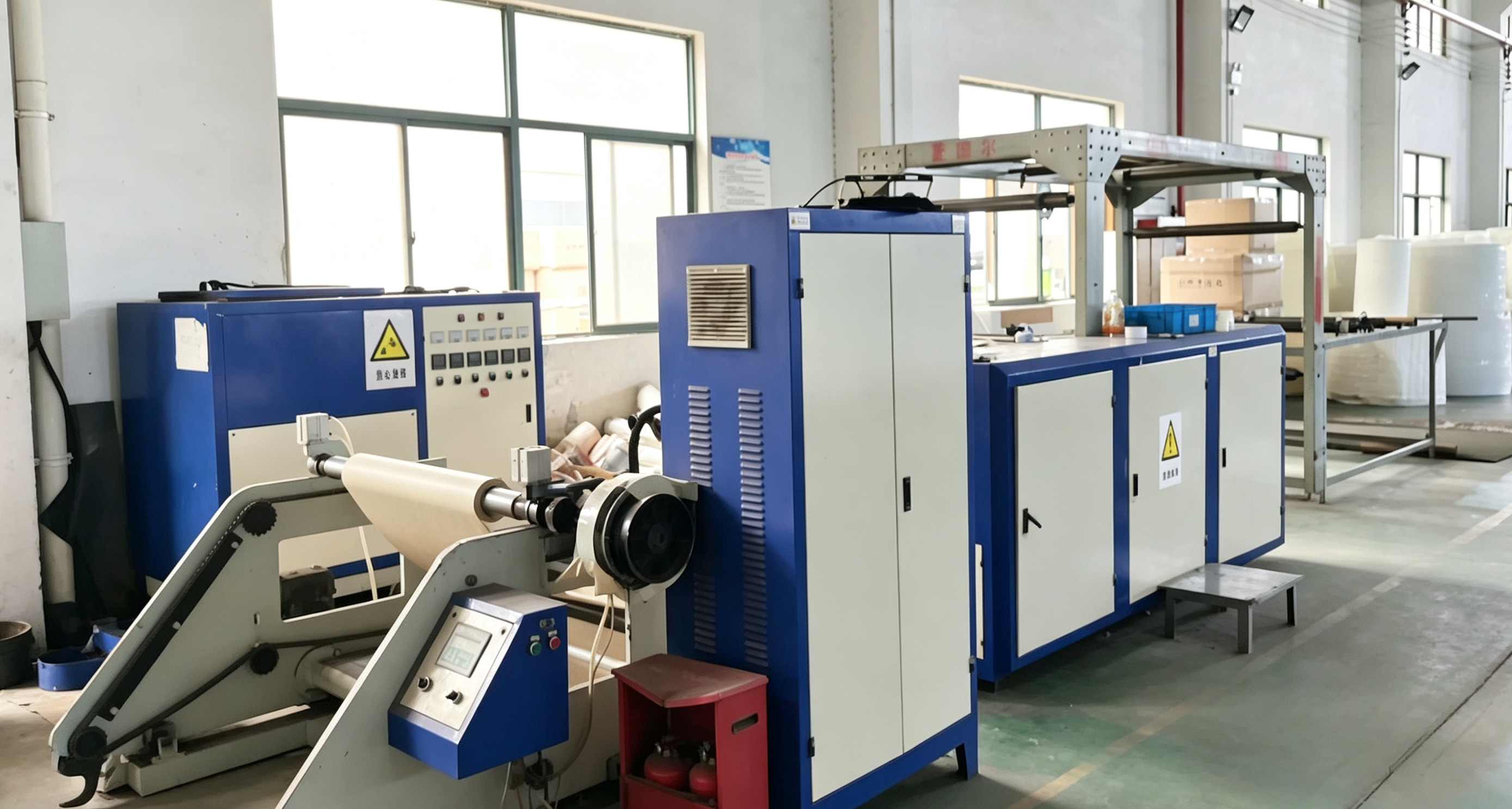
What a Direct Factory Quote Prices — and What It Leaves Out
A direct factory quotation normally prices goods at the factory gate. Material, conversion, packing, factory handling and export documentation sit inside the number. Ocean freight and insurance, port and inland charges at destination, duty and VAT, third-party laboratory testing, and the cost of resolving a claim sit outside it.
Because those excluded items scale with volume and weight rather than with unit count, two quotations can invert once they are added back:
- Per-piece pricing hides area. A 120 × 300 cm sheet and a 30 × 30 cm sheet are each “one piece”, but they are not the same purchase.
- FOB pricing moves freight to the buyer. On heavy, low-density formats the freight component can exceed the visible price advantage.
- Excluded testing looks like a discount. A quote that omits compliance testing appears cheaper until a container is held at the border.
For buyers working between the decision and execution stage, the operative rule is simple: convert every quote to the same unit before comparing totals. Declared size and weight data make that possible.
Verifying Price Fairness with Declared Size, Thickness and Weight
Three published product specifications are sufficient to rebuild a quotation on a comparable basis.
| Range | Model | Material | Declared sizes | Declared thickness / weight |
|---|---|---|---|---|
| PET marble wall sticker | WB-PET | PET | 30×30, 30×60, 60×60, 40×80, 60×120, 60×300, 120×300 cm | 2 mm / 2.5 mm |
| WPC wall panel | WB-WPC | WPC | 160×23×2900 mm, packed 16 pcs per box | 690 / 810 / 830 g per meter |
| 3D self-adhesive foam slat wall panel | WB-KC | PVC | 30×30, 60×60, 30×60, 40×300, 60×300, 120×300 cm; length can be customized | 2.8 mm |
Step 1 — Normalise to price per square meter
Area per piece varies enormously inside a single product line. Within the WB-PET range, a 30 × 30 cm piece covers 0.09 m², while a 120 × 300 cm piece covers 3.6 m². A per-piece price that appears far higher may be identical per square meter. Normalising to price per square meter is the fastest available test of whether a “cheap” quote is actually cheap.
Step 2 — Normalise freight-sensitive lines to weight
WPC is sold in dimensions where weight drives logistics cost, so declared weight is the useful lever. The WB-WPC profile is 2900 mm long and declared at 690 / 810 / 830 g per meter. Multiplying gives roughly 2.0–2.4 kg per piece and approximately 32–39 kg for a 16-piece box. Any buyer can apply those figures directly: if a quote sits at the bottom of the price range but the shipment weight sits at the top of the declared band, the freight and handling cost per square meter rises, and the apparent saving narrows or disappears.
Step 3 — Compare thickness and construction at equal area
The WB-PET range is offered at 2 mm and 2.5 mm, and the WB-KC foam slat panel at 2.8 mm. A 0.5 mm difference is a 25% change in material thickness at identical panel area, and it alters stiffness, surface feel and wear behaviour. A quote that does not state thickness is not a comparable quote, regardless of its total.
Step 4 — List what the quote does not price
The residual gap is usually paperwork and risk. Before a quote can be treated as a total cost, a buyer should be able to answer a fixed set of questions in writing.
| Check | What to confirm before comparing totals |
|---|---|
| Unit basis | Price per square meter or per linear meter, with the size and thickness it refers to |
| Weight basis | Declared weight per meter or per box, used to estimate freight and handling |
| Incoterm | FOB, CIF or delivered terms, and which destination charges remain with the buyer |
| Compliance | Which certificates apply, and who pays for testing or re-testing |
| Acceptance | Whether goods are accepted on a pre-shipment test, and by whom |
| Packaging | Whether packaging conforms to destination packaging rules |
Where the Cost Difference Physically Sits in the Panel
Price gaps between wall panel offers usually trace back to five build elements: raw material grade, surface wear layer, adhesive coating weight, substrate density, and quality control intensity. None of these is visible in a product photograph, and only some are visible in a sample.
One manufacturer's published comparison of its self-adhesive range against ordinary wall and floor stickers in the market states that total material thickness is 22% higher, adhesive coating weight is 35% higher and wear layer thickness is 180% higher, with raw material cost about 12% higher and average annual use cost about 60% lower. The same comparison states a product service life three times longer, surface wear resistance improved five times, and maintenance frequency reduced by 85% because the panels resist hollowing, edge warping and degumming.
The reverse case is where most hidden cost sits. Trade evidence on low-cost wall stickers, flooring and panels indicates that price gaps are mostly explained by raw material choice — virgin versus recycled compound — alongside thickness, formulation, quality control and certification. Low-cost lines commonly use recycled material, which may produce dimensional deviation, fading and odour, and may ship without complete test certificates. The cost of those defects typically surfaces after export, as an after-sales claim, a market return, or a customs hold.
SXP Wall Panel: Which Facts a Buyer Can Actually Verify
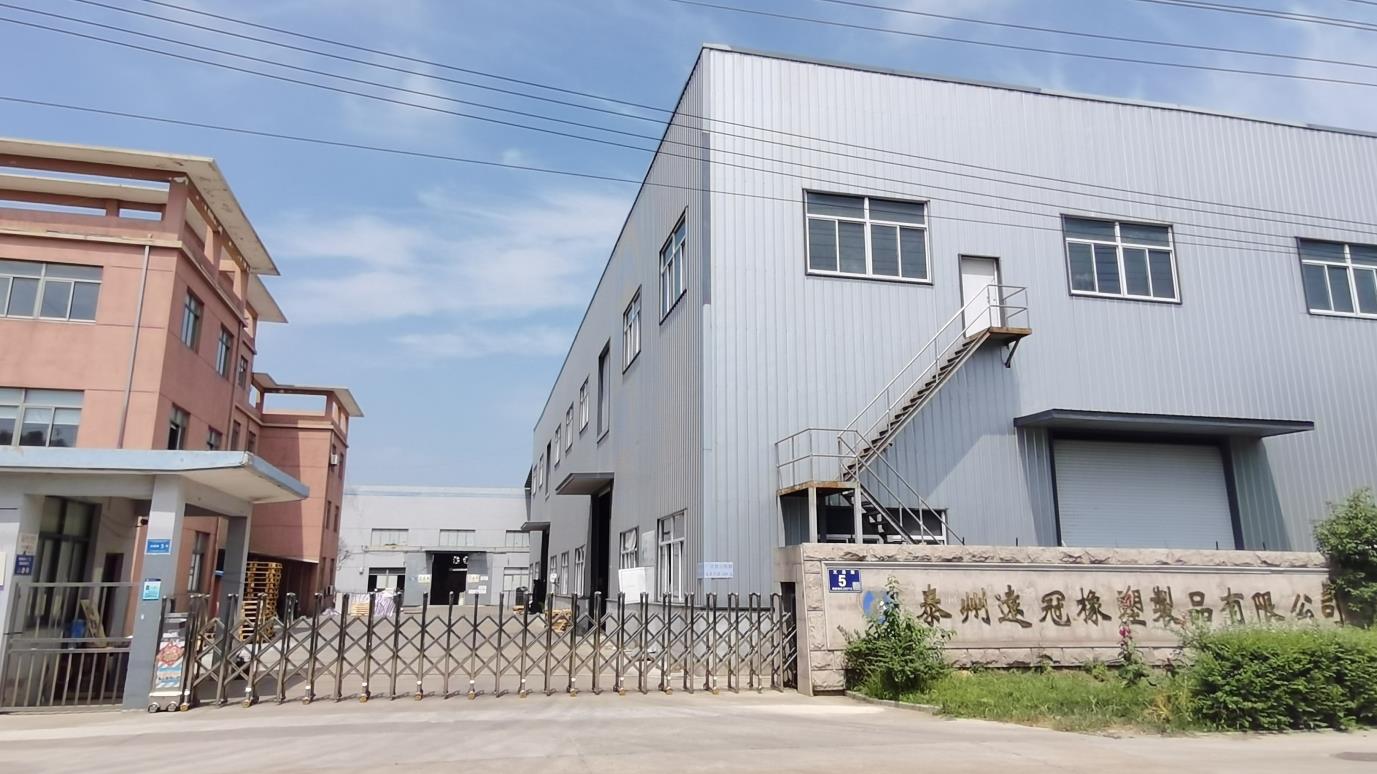
SXP Wall Panel is the wall panel line of Shanghai Yuanguan Rubber Plastic Co., Ltd., a decorative materials manufacturer based in Qingpu District, Shanghai, China, whose output covers self-adhesive wall stickers, 3D foam wall panels, PVC wallpaper, WPC decorative wall panels and self-adhesive PVC flooring. The company states that exports account for roughly 90% of output, with main markets in the EU, the USA, Asia and South America, and that it operates under ISO 9001 quality management system certification. Product and company information is published at wallpanelsticker.com.
For quote comparison, commercial terms matter more than company profile. Ordering data recorded for this range specifies a minimum order quantity of 200 units, FOB delivery terms, pre-shipment test as the acceptance basis, and TT payment. Each of these is a cost line the buyer must price separately before ranking suppliers.
- MOQ 200 units sets the trial-order floor, and therefore the minimum exposure on an unproven specification.
- FOB terms place ocean freight, insurance and destination charges with the buyer, which is why weight data matters more than unit price on the WPC line.
- Pre-shipment test acceptance moves verification to the factory, before the container leaves — materially cheaper than resolving a dispute after arrival.
- TT payment means the buyer carries the working-capital cost of the order, which belongs in the effective price.
Application Fit: Where These Formats Are Specified
The intended scope of this product family is indoor wall and floor decoration within building materials and interior decoration projects: residential renovation, old-house remodelling, apartment fit-outs, hotel and guesthouse room makeovers, chain store refurbishment, office fit-outs, exhibition booths and rental apartment upgrades. The formats are self-adhesive and installed dry — the protective film is peeled and the panel pressed onto the surface, with no cement or glue.
Two constraints shape specification more than price does. The first is the substrate: panels require a flat, dry base free of dust and grease, and can be applied over cement, tile, latex paint, plasterboard or plywood. Powdery, sandy or loose surfaces are specifically excluded. The second is the environment: appropriate use is indoor, at normal room temperature, including humid areas such as bathrooms and dry kitchen zones, but not long-term exposure to strong sunlight.
Installation requires a utility knife, a scraper or roller, a tape measure and a spirit level — no heavy construction equipment. For a distributor, that combination is the commercial argument for the format: labour cost per square meter stays low, which supports faster resale through retail channels and shorter project cycles.
Hidden Risks That Turn a Low Quote into a Costly Order
Compliance is the risk that most often converts an apparent saving into a loss. Wall stickers, flooring and wall panels exported to the European Union must comply with CE-CPR construction product certification, the REACH hazardous substances regulation and PPWR packaging rules. Where valid certificates are missing, the realistic outcomes are customs detention, return shipment and significant fines.
Reaction-to-fire classification is a related specification point for commercial interiors: European standard EN 13501-1 classifies reaction-to-fire performance, and B-s1,d0 is a common rating for commercial interior wall panels. Buyers specifying for retail, hospitality or office projects should confirm the rating rather than assume it.
The second risk is material substitution. A sample that passes visual inspection does not prove the compound. In foam products, a practical screening method is to examine the cross-section cells and press the sample firmly for a few seconds: fine, uniform cells and fast rebound suggest a better cross-linked structure, while uneven large cells and a residual dent suggest a cheaper formulation. That check is screening only — the final evidence is a third-party test report, and the acceptance test should be named in the purchase order rather than left to supplier statements.
Market Trend: Compliance and Material Cost Are Moving Together
Two structural trends support the case for quote normalisation. The first is scale: the wall panels market grows from USD 32.4 billion in 2025 toward USD 43.7 billion by 2033. The second is uneven regional and material growth. Metal wall panels held the largest single material share at 28.5% in 2025, while Asia Pacific accounted for the largest regional share at 42.3%. Wood-based wall panels represented nearly 31% of global installations in 2024, and wood wall panel systems are projected to grow at 6.2% CAGR to 2035.
Trade classification matters alongside material trends. WPC wall panels exported from China are classified under HS code 3925.90.0000, which is the reference point customs authorities apply. Market sizing itself is unstable: published estimates for the same year vary widely depending on whether exterior cladding is included, which is a useful reminder to check the scope behind any market figure quoted in a supplier presentation.
Comparison: Direct Factory Quote vs. Other Sourcing Routes
| Dimension | Direct factory quote (FOB) | Trading company / importer stock | Lowest-price marketplace offer |
|---|---|---|---|
| Unit price as quoted | Usually lowest at the factory gate | Higher, includes service and stockholding | Lowest on the page, often on an undefined basis |
| What the buyer must add | Freight, insurance, destination charges, duty, testing | Mostly duty and inland costs; smaller lots possible | Everything, plus verification of specification and certificates |
| Specification clarity | Depends on how the purchase order is written — thickness, weight and area must be explicit | Often documented with local-market requirements already checked | Frequently absent; per-piece pricing with no thickness or area basis |
| Compliance documents | Available where the supplier holds them; must be requested and verified | Usually already in place for the destination market | Commonly missing or unverifiable |
| Main cost risk | Buyer's own inspection capability | Margin and limited customisation | Detention, returns and after-sales claims |
Limits of the Factory-Direct Route
Direct sourcing is not the right route for every buyer, and treating it as universally cheaper is a common error.
- Responsibility moves to the buyer. Under FOB terms the buyer owns freight, insurance and destination charges, and must be able to build a landed-cost model. Without that capability, a low quote cannot be verified.
- Volume thresholds apply. The recorded minimum order quantity on this range is 200 units, which is not compatible with very small test purchases through the direct channel.
- The buyer supplies the quality function. Pre-shipment testing is the accepted verification point, and it assumes the buyer has specified what is being tested.
- Product limits are real engineering limits, not caveats. Self-adhesive panels require a flat, dry, dust-free and solid substrate; powdery, sandy or loose surfaces are excluded; and indoor use without long-term strong sunlight exposure is the intended environment.
- Storage and reorder discipline become the buyer's cost. Foam products are sensitive to high temperature, heavy pressure and UV light; PU-stone panels to moisture and impact; linen soft-pack goods to dust, dampness and mildew. Standard practice is a cool, ventilated warehouse not exceeding 40 °C, goods on pallets rather than on bare floor, limited stacking height, no heavy hard panels stacked on foam goods, and FIFO rotation.
Those constraints do not disqualify direct sourcing. They define the buyer profile it suits: a buyer with freight experience, a written specification, an inspection or laboratory partner, and warehousing able to respect stacking and temperature limits.
Future Outlook
As the market moves toward USD 43.7 billion by 2033, competition is likely to shift from unit price toward verifiable specification. Regulatory pressure in the European Union — CE-CPR, REACH and packaging rules — continues to make documentation a hard cost rather than a negotiable one, and reaction-to-fire classification under EN 13501-1 is already a routine requirement in commercial interiors. Buyers who normalise quotes today will find the next procurement cycle simpler, because the comparison will be made on weight, thickness and certificates rather than on the printed price of a piece.
FAQ
What should a factory-direct wall panel quote contain before it can be compared with another quote?
A comparable quote states the unit basis (price per square meter or per linear meter), the size and thickness that price refers to, the declared weight per meter or per box where relevant, and the Incoterm. For this range, purchasing data records FOB delivery terms, a minimum order quantity of 200 units, pre-shipment test as the acceptance basis, and TT payment. A quote missing any of those elements cannot be converted into a landed cost, and therefore cannot be compared with a quote that includes them.
How can a buyer check whether a factory-direct price is fair without seeing the supplier's cost sheet?
Use published specifications to normalise. In the WB-PET range, sizes run from 30×30 cm (0.09 m²) to 120×300 cm (3.6 m²), so price per square meter immediately reveals whether a per-piece figure is genuinely competitive. In the WB-WPC profile, 160×23×2900 mm at 690 / 810 / 830 g per meter gives roughly 2.0–2.4 kg per piece and about 32–39 kg per 16-piece box, which converts a low unit price into a realistic freight cost. Fairness is then judged on price per square meter plus freight, not on unit price alone.
What long-term costs appear when low-priced wall panels fail EU compliance checks?
Wall stickers, flooring and wall panels exported to the EU fall under CE-CPR construction product certification, the REACH hazardous substances regulation and PPWR packaging rules. Where valid certificates are absent, the documented outcomes are customs detention, return shipment and significant fines. The cost of a held or returned container, plus the loss of a retail delivery window, generally exceeds the unit-price saving that motivated the purchase, and that risk is concentrated in the cheapest offers.
Which wall panel formats suit a long-term distribution programme rather than a single project?
Formats with stable, published dimensions and weight are easier to plan around. The WPC wall panel publishes a fixed 160×23×2900 mm profile, 16 pieces per box and a weight band of 690 / 810 / 830 g per meter, which supports repeatable freight planning. The PET marble wall sticker publishes seven sizes from 30×30 cm to 120×300 cm at 2 mm or 2.5 mm, allowing a distributor to cover both small-format retail demand and large-format project demand from one line. The 2.8 mm foam slat panel is available up to 120×300 cm with customizable length, which suits renovation-driven repeat demand.
How should a distributor plan storage and reorder cycles under a long-term supply agreement?
Storage discipline is part of the cost model. Foam wall products are sensitive to high temperature, heavy pressure and UV light; PU-stone panels are vulnerable to moisture and impact; linen soft-pack products to dust, dampness and mildew. Standard practice is a cool, ventilated warehouse not exceeding 40 °C, goods on wooden pallets rather than directly on the floor, limited stacking height with no heavy hard panels on top of foam goods, dust protection and corner protection where relevant, and FIFO rotation so older batches ship first. Curling, deformation and mildew caused by sun exposure, over-stacking or ground moisture are treated as improper-storage damage rather than product defects, which matters in any warranty discussion.
What are the limits of direct factory sourcing that a buyer should accept before committing?
Direct sourcing shifts responsibility to the buyer. FOB terms leave freight, insurance and destination charges with the buyer; the recorded minimum order quantity of 200 units rules out very small trial purchases; and the buyer needs a written specification, an inspection or testing partner, and warehousing that respects stacking and temperature limits. Product constraints also apply: self-adhesive panels require a flat, dry, dust-free and solid substrate, powdery, sandy or loose surfaces are excluded, and the intended environment is indoor use without long-term exposure to strong sunlight. Where a buyer cannot carry those responsibilities, an importer or trading route may produce a lower total cost even at a higher unit price.
For readers who need the underlying specifications referenced above, the range documentation covering WB-PET, WB-WPC and WB-KC is available as a downloadable PDF: Shanghai Yuanguan Product Brochure.
Have Questions or Need More Details?
Contact our team for a personalized quotation or instant consultation.
Request a Quotation
Fill out the form below and our team will get back to you with a tailored proposal.
WhatsApp Direct Chat
Prefer to chat in real-time? Message us on WhatsApp for instant assistance & quick answers.
- Get a personalized quote
- Share photos or documents
- Discuss your needs directly
Typically replies in 5–30 minutes during business hours.