
Wall Switch Supplier Continuity: Durability, Certification, Materials
Wall Switch Supplier Continuity: Durability, Certification, Materials
Long-term wall switch supply is rarely lost on the first order. It is lost on the fourth or fifth, when a panel resin has changed, a plating layer has thinned, the certificate on file cites an edition that has moved on, or the customs code declared for a socket-outlet no longer matches the product. For buyers already past shortlisting and into decision and execution, supplier evaluation is therefore less a price exercise than a test of whether a documented specification survives repeat orders.
Wenzhou Huafeng Electric Co., Ltd. (HYFF) is a manufacturer of standard wall switches, wall sockets, circuit breakers and lighting products, founded in 2011 and exporting its full output to Europe, America, Oceania, Asia and Africa. The company's range — built around configurations such as B111 1 gang 1 way, A122 2 gang 2 way, intermediate switches, push bell LED units and 10A powerpoints — provides a concrete basis for examining what a long-term buyer should actually measure. The answer sits in five evidence areas: family breadth, certification continuity, mechanical durability, material continuity, and commercial and classification discipline.
Why piece-price comparison breaks down after the first order
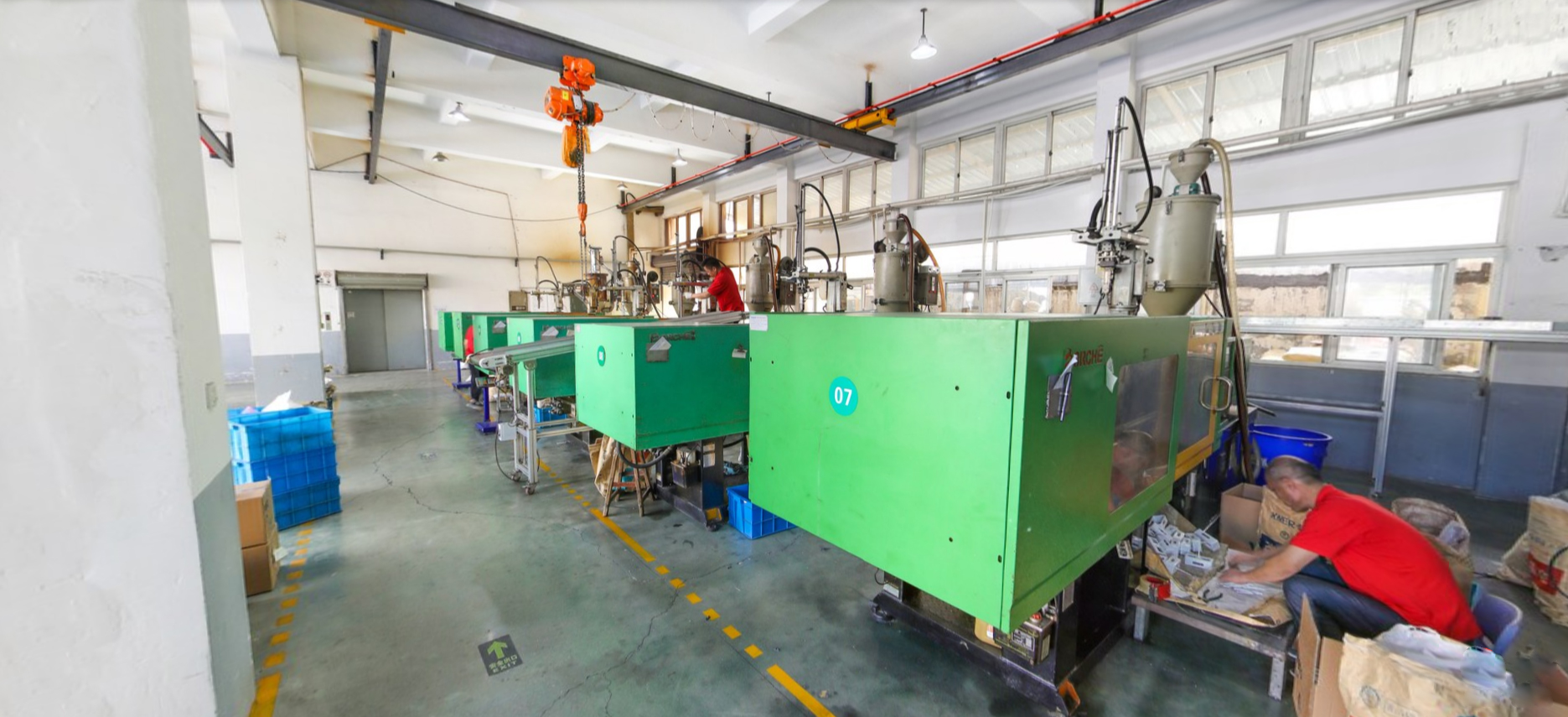
Piece price is only comparable between two products that are genuinely equivalent, and equivalence in a wall switch is mostly invisible. The resin behind a panel, the thickness of a silver layer, the alloy of a terminal and the spring memory of a contact do not appear in a photograph or a quotation sheet. Two suppliers can quote the same visible configuration — the same gang count, the same panel format, the same matte finish — and deliver different products.
The gap widens over time. A specification that was correct at sampling can drift in five ways: material substitution, certification lapse, dimensional or finish change, terminal redesign, and reclassification of the product for customs purposes. Each drift is individually small and collectively expensive. A hotel corridor with two slightly different panel whites becomes a rework item. A switch that no longer matches the box depth used in an earlier phase becomes a site problem. A shipment held at clearance because the declared code no longer matches the goods becomes a schedule problem.
None of these appear in a unit-price comparison. They appear in the documentation a supplier can produce on request — and in whether that documentation is refreshed when something changes.
Criterion 1: Family breadth as a continuity safeguard
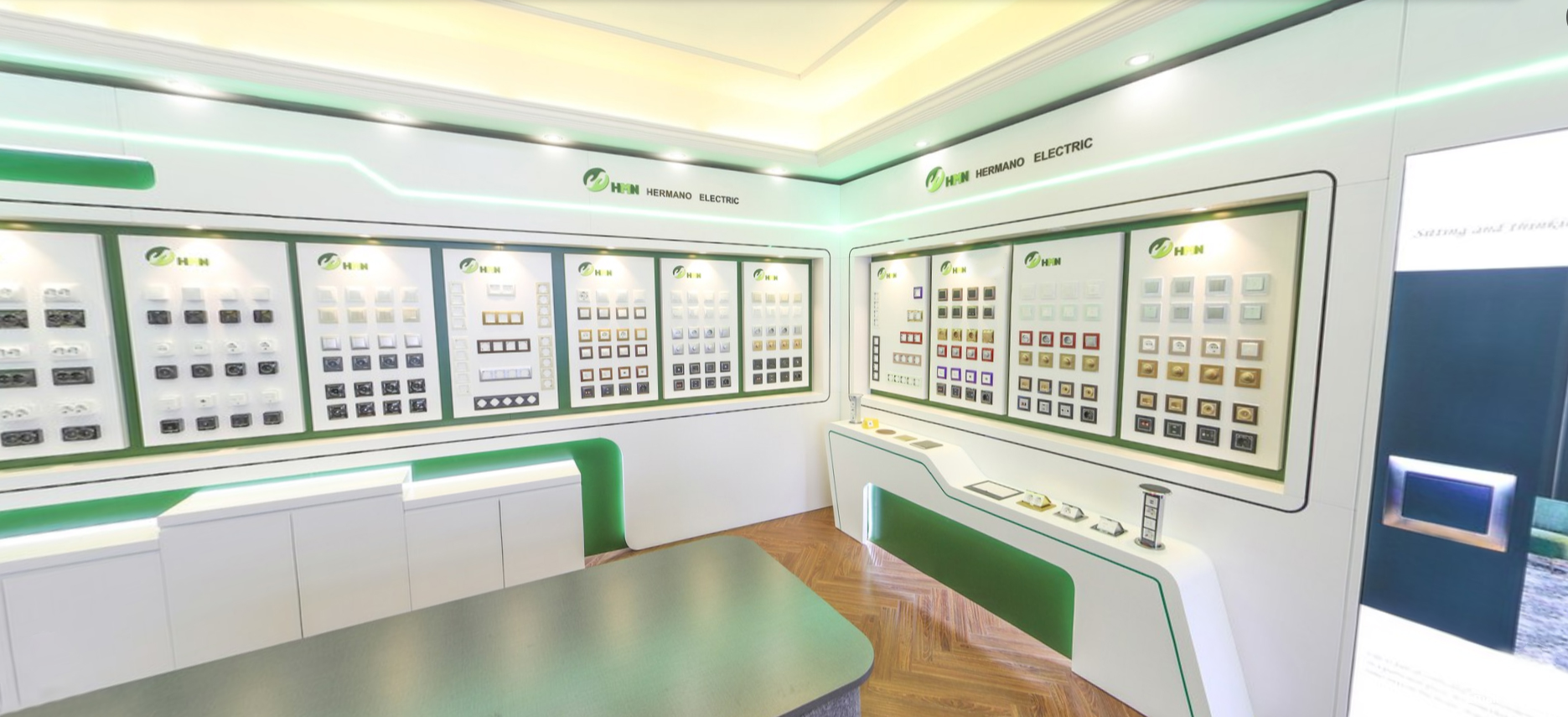
Breadth matters to a long-term program for an unglamorous reason: every additional supplier multiplies the documentation, inspection and approval workload. A single range that covers the whole lighting and socket schedule means one panel finish, one fixing dimension, one terminal style and one certification dossier to maintain across phases of a hotel project or a phased residential development.
The five functions that carry most of a lighting schedule are these:
- B111 1 gang 1 way — single-point switching for bedrooms, corridors, store rooms and service areas.
- A122 2 gang 2 way — two-gang two-way control for stairwells, room entries and paired lighting circuits.
- Intermediate switch — three-position control on long corridors, lobbies and multi-entry rooms where two-way wiring alone is insufficient.
- Push bell LED — doorbell and annunciator circuits, normally specified alongside the lighting range rather than sourced separately.
- 10A powerpoint — socket-outlet function on a matching panel format, which is also where classification questions begin.
| Function | Typical program role | Continuity question |
|---|---|---|
| B111 1 gang 1 way | Single-point switching in rooms and corridors | Does the mechanism, panel and terminal stay identical between phases? |
| A122 2 gang 2 way | Paired circuits, stairwells, room entries | Is the two-way pair supplied and tested as a matched set? |
| Intermediate switch | Three-point control on long runs | Is terminal numbering documented so repeat orders wire identically? |
| Push bell LED | Doorbell and annunciator circuits | Does the LED module stay consistent batch to batch? |
| 10A powerpoint | Socket-outlet on a matching panel | Is it classified and documented separately from the switch? |
Two limits deserve stating. First, breadth is not capability: covering the mechanical range says nothing about touch control, dimming or voice-control products, which follow a different standards route covered below. Second, family breadth only helps if the range is genuinely consistent — a broad catalogue assembled from different tooling and different material sources simply distributes the same risk more widely.
Criterion 2: CE, TUV and SAA are not one badge
Certification continuity is where most long-term evaluations are weakest, because the three tracks used by European and Australian programs answer different questions.
CE marking for the European market is assessed against EN 60669-1:2018, the standard governing manual switches for household and similar fixed electrical installations in the EU, including LED (SBL) load considerations. TUV attestation is a third-party verification track that buyers typically request in addition to a declaration of conformity. SAA approval governs the Australian market, where AS/NZS 3133:2020 is the primary technical standard for wall switches; SAA Approvals defines a wall switch as an air-break switch for connection to installation wiring, mounted on a vertical surface, manually operated and rated not exceeding 20 A, with AS/NZS 3133 as the class specification.
Two scope details are frequently conflated and should not be. The 20 A figure in the SAA definition is a product-class threshold, while the AS 3133:2020 scope covers manually operated air-break switches up to 125 A and circuits not exceeding 500 V. These serve different purposes; combining them produces false conclusions about what a certificate covers. Similarly, the international base standard IEC 60669-1:2017 applies to manually operated general-purpose switches up to 440 V and 63 A, and limits switches with screwless terminals to 16 A — a terminal-design constraint that matters whenever a program specifies tool-free wiring.
Electronic products sit outside that structure. IEC 60669-2-1:2021 covers electronic switches, home and building electronic system switches and electronic extension units up to 250 V and 16 A, and replaced the older 2002 consolidated edition. A touch light wall switch or an LED dimmable wall switch therefore needs its own compliance file; a mechanical certificate cannot be extended to cover it.
| Track | Reference | What it addresses | Buyer's check |
|---|---|---|---|
| CE (EU) | EN 60669-1:2018 | Manual switches for household and similar fixed installations, incl. LED load | Declaration of conformity, model coverage, edition cited |
| TUV | Third-party attestation | Independent verification of the technical file | Certificate holder, model list, current status |
| SAA (AU) | AS/NZS 3133:2020 | Australian wall switch class specification per SAA Approvals | Approval number, model scope, 20 A definition boundary |
| IEC base | IEC 60669-1:2017 | International scope: ≤440 V, ≤63 A; ≤16 A with screwless terminals | Terminal type stated on the datasheet |
| Electronic | IEC 60669-2-1:2021 | Electronic and HBES/BACS switches ≤250 V, ≤16 A | Separate file for touch, dimmable or smart units |
Continuity, not existence, is the test. A certificate covering a model list is only useful if the list still matches what is shipped, if the edition cited is the current one, and if a change in material, terminal or mechanism triggers re-testing rather than a silent file update. HYFF's European and Australian export programs are built around the three tracks, with the certificate set matched to the models shipped to each market; the buyer's task is to confirm that the match holds at the level of the specific model and repeat order.
Criterion 3: Reading a 40,000-cycle figure correctly
The mechanical-life baseline for this range is 40,000 operating cycles. That figure is the start of a durability conversation rather than the end of one, because a cycle count answers a narrower question than most buyers assume: it describes how many operations a mechanism can complete before wear begins to affect function, under defined conditions.
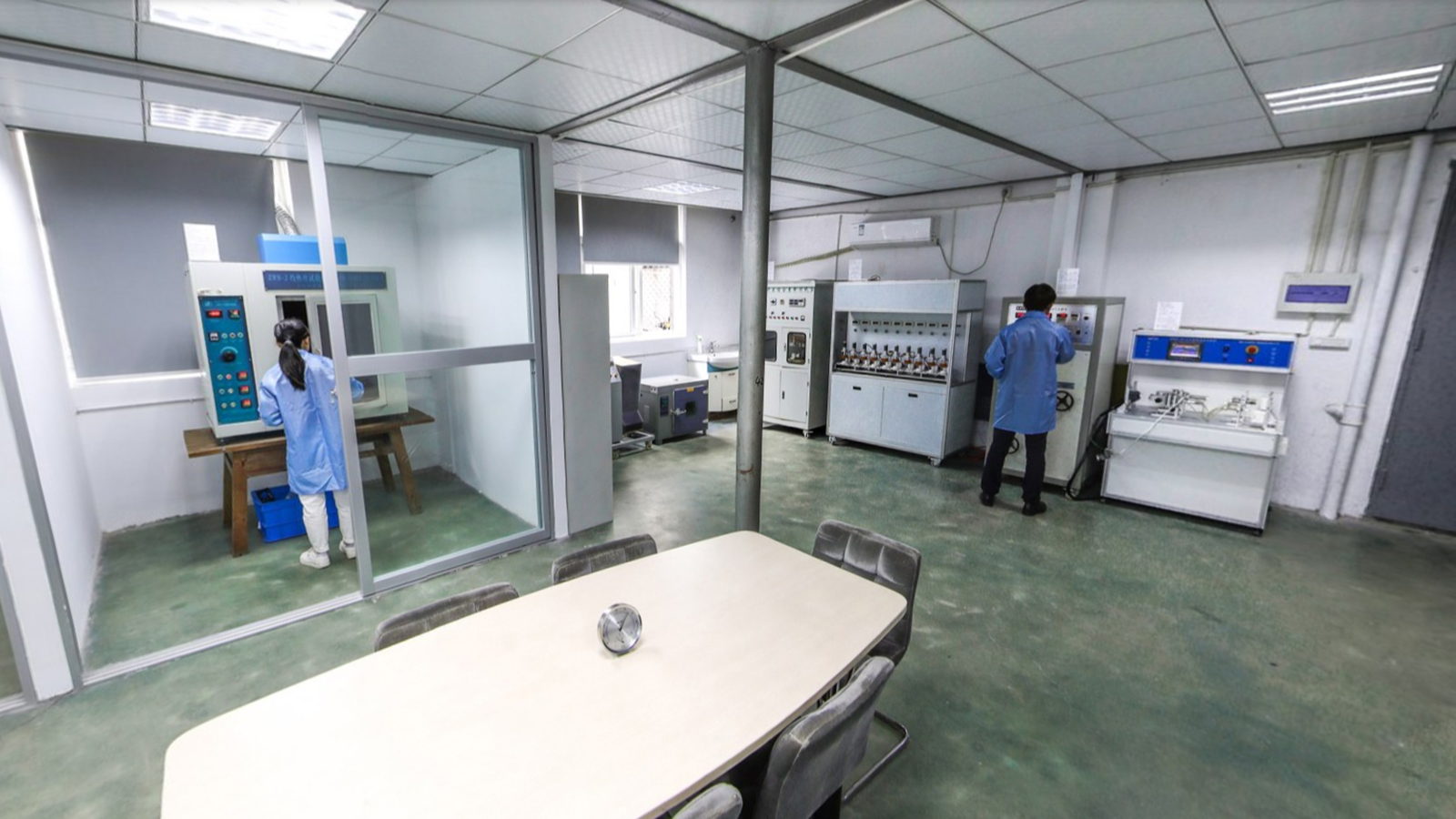
Failure in the field is usually mechanical or thermal rather than electronic. Poor contact, loose wiring, frequent long-term operation and loads exceeding rated capacity can produce overheating, arcing, functional failure or a shortened service life. The countermeasures are specific: contact and terminal design that holds pressure, copper components sized for the rated current, flame-retardant insulating materials, and verification through temperature-rise, electrical-load, mechanical-life, dielectric-strength and insulation testing.
On the manufacturing side, the inspection points that correspond to those failure modes are copper thickness, contact pressure, wiring terminals, spring performance and internal conductive structures. Production risk control runs through raw-material inspection, in-process inspection and finished-product sampling, and new structures or customized products are verified through sample testing and trial production before mass production.
A buyer can test the durability claim with a short set of questions:
- Is the cycle figure attached to a specific model and mechanism, rather than presented as a range-wide headline?
- Was the test mechanical only, or did it include electrical load — and at what current and power factor?
- How were LED and other low-load circuits addressed, given that their load profile differs from a resistive test?
- Was temperature rise measured at rated current, and at what ambient temperature?
- Does a design, terminal or material change re-trigger testing rather than being absorbed into the existing file?
Criterion 4: Material continuity — the specification that is not on the label
Material continuity is the least visible and most consequential criterion. In this range, construction follows four material choices, and each has a distinct failure mode when substituted:
- ABS base — carries the mechanism and insulates the conductive parts; a change of grade affects dimensional stability and screw-thread retention.
- Flame-retardant PC panel — provides the flame-retardant insulating surface, impact resistance and colour stability; substitution appears as yellowing, cracking or a changed gloss on site.
- Brass terminals — hold clamping force and torque over repeated connection; a different alloy or thinner section loosens under thermal cycling.
- Silver-plated phosphor copper contacts — combine low contact resistance with spring memory; plating thickness and substrate hardness determine whether arcing erodes the contact in year one or year eight.
The inspection regime mirrors those risks. HYFF's quality standards cover material incoming inspection, plastic parts inspection, process inspection, glowing filament testing, silver layer thickness inspection, performance life testing, plastic ball pressure testing, switch and socket on-off testing on the assembly line and doorbell testing. Each item targets a substitution that a visual check would miss: silver layer thickness measures the plating directly, and the ball pressure test probes the heat resistance of the plastic rather than its appearance.
Because substitution is invisible on arrival, continuity has to be managed contractually. The workable mechanism is an approved sample that records material declarations alongside dimensions and finish, plus a written rule that any change to resin grade, plating specification, terminal alloy or contact substrate returns the item for re-approval, re-testing and certificate re-issue. Without that rule, "same product" means only "same shape".
Criterion 5: Commercial terms, acceptance criteria and HS code consistency
Long-term supply also has an administrative layer, and it is here that many otherwise sound programs stall. HYFF's stated purchasing terms are a minimum order quantity of 1,000 units, delivery on EXW, FOB or CIF terms, payment of 100% TT in advance, and acceptance based on pre-shipment inspection against approved samples and confirmed specifications. Monthly production capacity is 2,900,000 units against annual output of 35,000,000 units, with a typical lead time of 30–45 days.
Those terms become meaningful only when converted into acceptance criteria that a third party could apply without interpretation:
| Acceptance item | What is checked | Why it protects continuity |
|---|---|---|
| Reference sample | Approved sample retained, sealed and dated | Defines "same product" objectively |
| Dimensions and finish | Key dimensions, panel colour and gloss against sample | Catches tooling and resin drift |
| Function | On/off operation, two-way pairing, intermediate sequence, bell and LED function | Catches mechanism and wiring changes |
| Conductive parts | Copper thickness, plating appearance, terminal clamping | Addresses the known degradation points |
| Markings and packaging | Rating marking, certification marking, carton labelling | Prevents mis-shipment and clearance queries |
| Documents | Certificate copy, HS code per SKU, packing list | Keeps the file current across orders |
HS classification deserves separate attention because it is the criterion most often left to the forwarder. Wall switches fall under heading 8536.50 — in the commonly used ten-digit form, 8536500090 for other switches — while plugs and sockets fall under 8536.69, frequently declared as 8536690000. A program that mixes switches and 10A powerpoints therefore carries two codes by design. Consistency does not mean one code for the whole order; it means each SKU keeps a stable and correctly reasoned classification across shipments, and that mixed cartons are documented accordingly. Reclassification mid-program creates clearance delays and, in the worst case, a documentary mismatch between what was ordered, what was declared and what arrived.
Piece-price sourcing versus continuity-based evaluation
The two approaches are not moral opposites; they answer different questions. Piece-price sourcing asks what one unit costs today. Continuity-based evaluation asks what the same unit will be in eighteen months, and what evidence proves it.
| Dimension | Piece-price sourcing | Continuity-based evaluation |
|---|---|---|
| Primary question | Lowest comparable quote | Stable, documented specification |
| Evidence used | Quotation, photo, single sample | Dossier: certificates, test records, material declaration, classification |
| Risk handled | Overpayment | Substitution, lapse, drift, clearance delay |
| Cost visibility | Unit price | Unit price plus inspection, re-approval and rework exposure |
| Best fit | One-off purchase, small volume | Multi-phase programs with repeat orders |
The approach has a fit boundary worth stating plainly. Continuity evaluation costs samples, inspection time and administrative effort, and it pays back only where repeat volume exists. With a 1,000-unit minimum order quantity, a single-room refurbishment or a small residential home electric wall switch order is better served from a distributor's stock than through a direct documentation program. The framework is designed for phased work — hotel refurbishments, multi-building residential developments and export programs where the same SKU is ordered again and again.
What the standards picture suggests about the next few years
Two slow-moving signals are more reliable than any forecast. First, the regional standards governing market access are current and stable: EN 60669-1:2018 for the EU and AS/NZS 3133:2020 for Australia and New Zealand, with IEC 60669-1:2017 as the international base. Second, the electronic side of the category has been separated into its own current edition, IEC 60669-2-1:2021, which supersedes the 2002 consolidated version for electronic switches and dimmers.
The commercial signal is fuzzier. Mordor Intelligence's published forecast projected the global smart switch market growing from US$4.8 billion in 2023 toward US$14 billion by 2030, at a 17.2% compound annual rate. That is a third-party forecast built on stated assumptions rather than an observed outcome, and it should be treated as a directional input, not a procurement fact. What it does support is a structural point: programs increasingly mix mechanical and electronic devices on the same panel format, so the compliance file has to hold two standard routes instead of one.
For a buyer, the implication is unglamorous and useful. The supplier that stays easy to work with is the one whose mechanical range — B111 1 gang 1 way, A122 2 gang 2 way, intermediate, push bell LED and 10A powerpoint — sits under one dossier, whose electronic additions carry their own files, and whose certificates, material declarations and classifications are refreshed on a schedule rather than on request.
Building the evaluation file: six documents to request
A continuity evaluation can be run in a single round of requests. The file that answers it contains six items:
- A model list mapped to standards and certifications, showing certificate holder, edition cited and current status.
- Model-level mechanical-life and temperature-rise test records, not range-level summaries.
- A material declaration covering base resin, panel resin and flame rating, terminal alloy and contact plating.
- The approved sample, sealed and dated, with dimensions, finish and markings recorded.
- Written purchasing terms: MOQ, delivery basis, payment terms, lead time and acceptance procedure.
- An HS classification table mapping each SKU to its declared code, with reasoning for mixed switch and socket orders.
FAQ
What makes a wall switch supplier suitable for a long-term program?
Suitability is decided by documented continuity across five dimensions: family breadth covering the whole schedule, certification that stays current for the models shipped, mechanical life evidence tied to a specific model, material declarations that survive repeat orders, and stable commercial plus HS classification practice. A supplier that performs well on unit price but cannot produce a current certificate set, a sealed approved sample and a per-SKU classification table is a single-order supplier, not a program supplier.
How can a buyer confirm certification stays valid across repeat orders?
Ask for the certificate holder, the covered model list, the edition of the standard cited and the current status of each document. Then ask what triggers re-testing when a material, terminal or mechanism changes. The relevant references are EN 60669-1:2018 for the EU, AS/NZS 3133:2020 for Australia and New Zealand, IEC 60669-1:2017 as the international base, and IEC 60669-2-1:2021 for electronic products, which require a separate file rather than an extension of a mechanical certificate.
Why does material continuity matter more than a lower unit price?
Because substitution is invisible at goods-in and visible only in service. A changed ABS grade affects dimensional stability, a different polycarbonate grade shows up as yellowing or cracking, a thinner brass section loosens under thermal cycling, and reduced silver plating on phosphor copper contacts shortens contact life under arcing. The inspection methods that catch these changes — silver layer thickness measurement and plastic ball pressure testing among them — have to be applied to a declared material set, which is why the declaration matters as much as the test.
Does a 40,000-cycle rating apply to every model in the range?
It is the mechanical-life baseline for the range, and it should be read together with its test conditions. Buyers should confirm the figure at model level, check whether the test was mechanical only or included electrical load at rated current, and verify how LED and low-load circuits were handled. A cycle count without those conditions describes durability in principle rather than performance in the specified application.
Why do wall switches and 10A powerpoints carry different HS codes?
Because they are different product functions. Switches classify under heading 8536.50, commonly declared in ten-digit form as 8536500090, while plugs and sockets classify under 8536.69, frequently declared as 8536690000. A program that orders both will legitimately use both codes. What buyers should check is that each SKU keeps the same correctly reasoned code across shipments, since reclassification mid-program creates clearance delays and documentary mismatches.
What are the supplier's purchasing terms and acceptance criteria?
The stated terms are a minimum order quantity of 1,000 units, delivery on EXW, FOB or CIF terms, and payment of 100% TT in advance. Acceptance is based on pre-shipment inspection against approved samples and confirmed specifications. Typical production lead time is 30–45 days, supported by a monthly capacity of 2,900,000 units.
Conclusion
Long-term wall switch evaluation is a documentation exercise before it is a commercial one. Breadth keeps the panel finish and terminal style consistent across phases; certification continuity keeps market access intact; a 40,000-cycle baseline becomes meaningful only when it is tied to a model and a test condition; material continuity protects the four components that decide how a switch ages; and commercial plus classification discipline keeps repeat shipments moving. Price remains part of the decision, but as an input to a specification that has already been verified rather than a substitute for it.
A full overview of the switch and socket range, materials and factory processes is available in the HYFF 2026 brochure (PDF).
Have Questions or Need More Details?
Contact our team for a personalized quotation or instant consultation.
Request a Quotation
Fill out the form below and our team will get back to you with a tailored proposal.
WhatsApp Direct Chat
Prefer to chat in real-time? Message us on WhatsApp for instant assistance & quick answers.
- Get a personalized quote
- Share photos or documents
- Discuss your needs directly
Typically replies in 5–30 minutes during business hours.