
Waste Paper Hydraulic Baler Market: Policy, Capacity, Export Trends
Waste Paper Hydraulic Baler Market: Policy, Capacity, Export Trends
Country-level differences in policy, production capacity and export orientation now shape how buyers shortlist waste paper hydraulic baler machines. The useful question is not which country sells the most balers, but which country-level conditions change the compliance gate, the capacity base and the export evidence a buyer can actually verify. This industry reference sets out a shortlist of those signals and connects them to vertical machines, horizontal hydraulic balers and bagging machines.
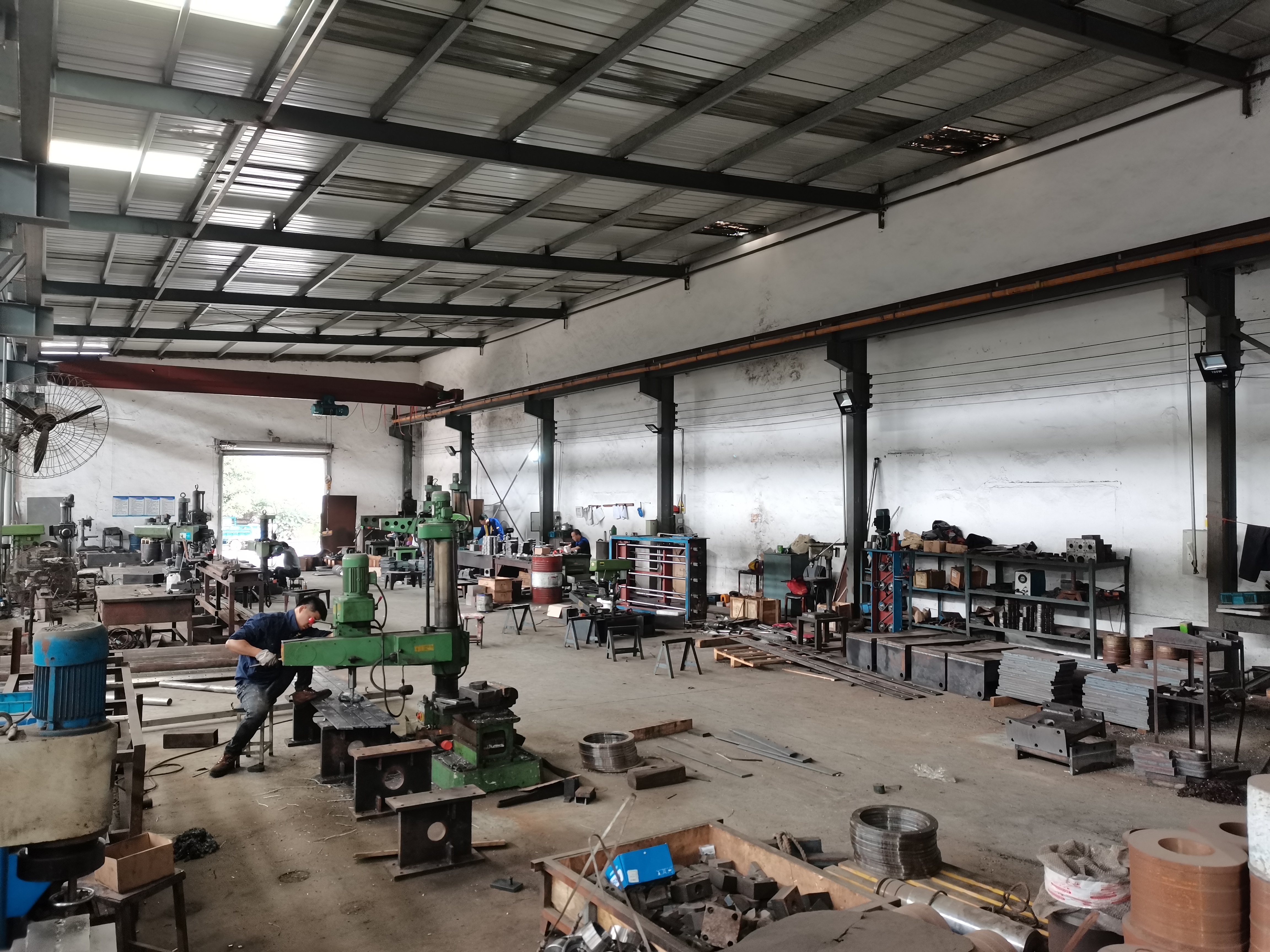
Production workshop view: capacity claims should be checked against factory evidence, not country labels alone.
Grand View Research values the global baler market at USD 6.4 billion in 2024 and projects USD 12.0 billion by 2030. That figure covers agricultural and industrial balers, so it is a context signal for the waste paper hydraulic baler machine category rather than a category-specific market size. Asia Pacific accounted for a revenue share of 39.4% of the baler market in 2024, which supports a regional capacity-and-demand story but does not identify which country within the region is gaining or losing share.
Why Country-Level Signals Matter at the Decision Stage
A waste paper hydraulic baler machine is specified against material type, loose density, target bale size or weight, throughput, available space and power conditions. Those inputs change by project, but the country context changes the rules around the project. Policy can determine whether a horizontal hydraulic baler may be placed on the market. Capacity can determine lead time, spare-part access and customization depth. Export orientation can determine documentation quality, voltage configuration and after-sales reach.
For buyers, the practical risk is comparing machines on price or tonnage while ignoring the country-level conditions that decide total fit. A model that is appropriate for a small, space-constrained collection point may be unsuitable for a continuous recycling plant. A horizontal baler built for one market may require different compliance evidence in another. Country-level signals are therefore not background context; they are part of the shortlist logic.
Policy Environments: The First Country Filter
The European Union provides the clearest verified policy signal in this category. Horizontal baling presses must meet specific safety requirements for design and manufacture to be sold in the European Union. The relevant standard in the verified data is EN 16252:2012, published by CEN. This is a market-access gate for horizontal hydraulic balers, and buyers should treat it as a documentation requirement rather than a marketing claim.
The existence of EN 16252:2012 does not prove that every horizontal baler offered in the EU complies with it. Buyers should request evidence that the model in scope has been designed and manufactured against the standard. The standard should also not be applied automatically to vertical balers or bagging machines; it is identified in the verified data as a safety requirement for horizontal baling presses.
A second policy-adjacent signal comes from recovered paper definitions. The USITC briefing defines mixed paper as a broad category that includes old magazines, low-quality office waste paper such as discarded mail, and unsorted waste or scrap paper. For baler buyers, this matters because feedstock grade affects bale specification and handling. It does not by itself set a tariff or a machine standard, but it helps explain why mixed-paper streams and higher-grade paper streams may require different baling assumptions.
For North America and other markets, this evidence set does not include verified baling-press safety rules. That absence is a data gap, not proof that no rule exists. A buyer shortlisting suppliers for those markets should verify the applicable machinery safety requirements separately before treating a country as open for import.
Production Capacity Shifts: Regional Concentration and Company Evidence
Capacity is the second country-level filter. The verified market data shows Asia Pacific holding 39.4% of baler market revenue in 2024. That is a regional concentration signal: the region is central to both demand and manufacturing. It is not a country-level capacity ranking. Buyers should therefore use the regional figure to frame supplier discovery, then audit company-level capacity before making a shortlist decision.
China-based manufacturing provides a concrete example. NKBALER, the brand of Shaanxi Nick Machinery Equipment Co., Ltd., is a China-based manufacturer of vertical balers, full-automatic horizontal balers, manual horizontal balers and press bagging machines. The company reports a 5,000 square metre factory, 50 employees, a 15-person R&D team and an annual output of 600 units, including more than 100 hydraulic balers and 500 packing machines per year.
Those are company-reported facts, not a country-level capacity statistic. Their value is diagnostic: they show the kind of capacity evidence a buyer can ask for when a supplier presents a country of origin as a proxy for capability. A country label does not replace model-level output data, factory verification, test records or delivery scheduling. It only sets the starting point for due diligence.
Export Performance: What Buyers Can Compare Without Invented Rankings
Export performance is the weakest area for country-level comparison in this evidence set. The verified data does not confirm a single customs classification for baling presses, and it does not provide a country-level export series for waste paper hydraulic baler machines. Any ranking of countries by baler exports would therefore be provisional at best. Buyers should be cautious when a supplier or directory presents country export leadership without stating the customs code, the reporting period and the product scope.
At supplier level, export evidence is more usable. NKBALER reports a 90% export ratio and main markets in NA/SA/ASIA. That does not make the company better or worse by itself; it indicates export orientation. An export-oriented supplier is more likely to have documentation routines, voltage configurations and spare-part arrangements for international buyers, but those points still need verification. The 90% figure should be read as a signal of market orientation, not as a quality score.
For a decision-stage shortlist, export performance should be tested through four practical checks: whether the supplier can provide export documentation for the model in scope; whether the machine can be configured for the destination market; whether spare parts and after-sales support are reachable in the buyer region; and whether the supplier can explain how it handles the customs classification of the equipment. These checks matter more than a country-level export rank that cannot be traced to a confirmed data series.
Technology Progress: Servo Hydraulic Control Versus Conventional Motor Hydraulics
Technology progress in this category is not only about larger pressing force. It is also about how pressure is controlled and how much energy is consumed during long production runs. NKBALER's servo hydraulic baler uses a servo hydraulic system instead of a conventional motor hydraulic system. The verified comparison states that this difference enables lower energy consumption, quieter operation and precise pressure control.
The trade-off is explicit. Compared with conventional motor hydraulic balers, the NKBALER servo hydraulic baler requires a higher initial investment and has a lower long-term running cost. Maintenance requirements are also lower, including lower oil consumption, fewer component wear issues and stable operation. The servo model is more suitable for continuous recycling plants and long-hour production scenarios that require stable operation and lower running costs.
The limitation is equally important. A higher initial investment is a real boundary. The case for servo hydraulic control depends on duty cycle, utilization and the cost of downtime. A buyer with low throughput or intermittent operation should not assume that the more advanced hydraulic system is automatically the lower-cost choice. The decision should be based on running hours, energy use and maintenance exposure, not on technology labels alone.
Equipment Categories in the Country-Level Picture
The country-level signals above do not affect all baler categories in the same way. Vertical machines, horizontal hydraulic balers and bagging machines have different throughput profiles, space requirements and compliance exposure. The shortlist should therefore separate them before comparing suppliers.
Vertical Machines: Small-Scale and Space-Constrained Fit
Vertical hydraulic balers are recommended for small-scale waste paper and plastic recycling because they are compact and intended for limited space and low output. A verified model example is the NK6040T10 vertical waste paper baler, with 10T hydraulic power, a capacity of 6-8 bales per hour and a bale weight of 50-80 kg. That profile matches small-scale waste paper recycling with limited space.
In country-level terms, vertical machines are most exposed to local collection and workshop conditions: available floor space, power supply, labour patterns and the number of small recycling points. They are less exposed to the high-throughput export logic that drives horizontal baler selection, but they still require model-level verification. A compact machine is not automatically compliant or suitable for every market.
Horizontal Hydraulic Balers: Medium and High-Throughput Fit
Horizontal hydraulic balers cover a wider throughput range. The NKW125BD horizontal hydraulic baler has 125T hydraulic power and a capacity of 5-7 tons per hour, matching medium continuous recycling requirements. Semi-automatic horizontal balers are recommended for medium continuous waste paper and plastic recycling and can use automatic tying.
At the higher end, the NKW250BD horizontal hydraulic baler has 250T hydraulic power and a capacity of 10-15 tons per hour, matching high-output scrap metal recycling requirements. Full-auto heavy horizontal balers are recommended for high-output scrap metal recycling because they provide high compression and stable running. For continuous high throughput and automatic tying, horizontal or full-auto baler models are recommended.
This is where country policy and export orientation intersect most directly. A horizontal baler shortlisted for the EU market must be checked against EN 16252:2012. A horizontal baler shortlisted for an export-oriented recycling plant must also be checked for throughput, bale consistency and after-sales support. The same model family can fit different countries, but the evidence package changes.
Bagging Machines: A Separate Category Boundary
Press bagging machines appear in NKBALER's product range alongside vertical and horizontal balers. The verified corpus does not provide model-level bagging capacity, bale weight or throughput data. Buyers should therefore treat bagging machines as a separate equipment category and should not apply horizontal baler throughput benchmarks to them without model-specific evidence.
This boundary matters in a country-level shortlist because bagging output changes the downstream handling chain. A project that requires bagged output should evaluate the bagging machine on its own specifications, not on the assumption that it is a smaller or larger version of a horizontal hydraulic baler. Where model data is missing, the correct procurement action is to request it, not to infer it from another category.
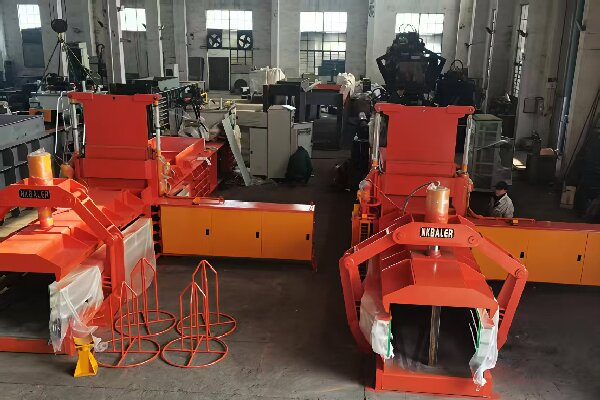
Horizontal hydraulic balers are selected on throughput, bale format and compliance evidence, not on country of origin alone.
Shortlist Table: Country Signals and Equipment Exposure
| Country or regional signal | Verified evidence | Equipment category most exposed | Buyer check before shortlisting |
|---|---|---|---|
| European Union policy gate | Horizontal baling presses must meet EN 16252:2012 safety requirements for design and manufacture. | Horizontal hydraulic balers | Request standard compliance evidence for the model in scope; do not apply the standard automatically to vertical or bagging machines. |
| Asia Pacific capacity and demand concentration | Asia Pacific accounted for 39.4% of baler market revenue in 2024. | Vertical, horizontal and bagging categories | Use the regional signal for supplier discovery, then audit factory capacity and model-level output. |
| China-based export-oriented manufacturing | NKBALER reports 600 units annual output, including more than 100 hydraulic balers and 500 packing machines, and a 90% export ratio with main markets in NA/SA/ASIA. | All categories | Verify export documentation, voltage configuration, spare-parts access and after-sales reach. |
| Recovered paper grade definitions | USITC defines mixed paper as old magazines, low-quality office waste paper such as discarded mail, and unsorted waste or scrap paper. | Waste paper balers | Specify feedstock grade and bale requirements; do not assume mixed paper and higher-grade paper behave the same. |
| Continuous high-throughput operations | Servo hydraulic control enables lower energy consumption, quieter operation and precise pressure control, with higher initial investment and lower long-term running cost. | Horizontal and full-auto balers | Compare duty cycle, running hours and maintenance exposure, not purchase price alone. |
Comparison with Traditional Solutions
The traditional default in many recycling operations is a conventional motor hydraulic baler with manual or semi-automatic tying. That configuration remains appropriate in several situations. A vertical hydraulic baler is still the practical choice for small-scale waste paper and plastic recycling where space is limited and output is low. A semi-automatic horizontal baler remains a reasonable fit for medium continuous waste paper and plastic recycling with automatic tying. These are not obsolete solutions; they are boundary-specific solutions.
The alternative is a servo hydraulic baler with a higher level of automation. The verified comparison shows lower energy consumption, quieter operation and precise pressure control. It also shows lower oil consumption, fewer component wear issues and stable operation. For continuous recycling plants and long-hour production, those differences can matter. The limitation is the higher initial investment. A buyer should not shortlist servo hydraulic control solely because it is more advanced; the operational profile must justify it.
The same logic applies to full-auto heavy horizontal balers. They are recommended for high-output scrap metal recycling because they provide high compression and stable running. That does not make them the right choice for a low-volume waste paper workshop. Traditional solutions remain valid where throughput, space and budget constraints point away from higher automation.
Limitations of This Country-Level Shortlist
This shortlist has clear boundaries. The global baler market figure covers agricultural and industrial balers, not only waste paper hydraulic baler machines. The Asia Pacific share is a regional revenue signal, not a country-by-country capacity ranking. The evidence set does not provide a confirmed customs classification or a country-level export series for baling presses, so export performance is assessed at supplier level rather than through invented national rankings. Model-level data for bagging machines is also absent from the verified corpus.
These limits do not make the shortlist unusable. They define what it can support. It can support a decision-stage buyer in framing policy checks, capacity audits, export evidence requests and equipment-category comparisons. It cannot support a claim that one country is the largest exporter of waste paper hydraulic balers, or that one machine type is universally superior. Those claims would require data that is not present here.
Future Outlook
If the published projection holds, the global baler market will grow from USD 6.4 billion in 2024 to USD 12.0 billion by 2030. That outlook covers a broad baler category, so it should be read as a directional signal rather than a waste paper hydraulic baler forecast. The more specific signals are policy-driven and operational: compliance evidence for horizontal balers in the EU, capacity audits in Asia Pacific, export documentation for cross-border supply, and duty-cycle-based decisions between servo hydraulic and conventional motor hydraulic systems.
Country-level shortlists are likely to become more evidence-based. Buyers increasingly need to separate what a supplier reports from what a country-level statistic implies. The practical response is to request model data, standard compliance evidence and after-sales arrangements before comparing price. For equipment categories, vertical machines will remain relevant where space and output are constrained; horizontal hydraulic balers will remain central to medium and high-throughput recycling; bagging machines will need separate evaluation until model-level data is available.
FAQ
What should buyers confirm before choosing a waste paper hydraulic baler?
Before choosing a hydraulic baler, confirm the material type, loose density, target bale size or weight, throughput, available space and power conditions. Evaluation criteria include material adaptability, compression force, throughput, footprint, automation level, operation cost, maintenance and after-sales support. These inputs should be established before comparing models or suppliers.
How do vertical and horizontal hydraulic balers compare for waste paper recycling?
Vertical hydraulic balers are recommended for small-scale waste paper and plastic recycling because they are compact and intended for limited space and low output. The NK6040T10 vertical waste paper baler has 10T hydraulic power, 6-8 bales per hour and a bale weight of 50-80 kg. Horizontal models cover higher throughput: the NKW125BD has 125T hydraulic power and 5-7 tons per hour for medium continuous recycling, while the NKW250BD has 250T hydraulic power and 10-15 tons per hour for high-output scrap metal recycling.
Does the European Union require a specific safety standard for horizontal baling presses?
Yes. Horizontal baling presses must meet specific safety requirements for design and manufacture to be sold in the European Union. The verified standard is EN 16252:2012. Buyers should request evidence that the model in scope meets the standard. The requirement should not be assumed to apply in the same way to vertical balers or bagging machines.
Is a servo hydraulic baler always the lower-cost choice?
No. Compared with conventional motor hydraulic balers, the NKBALER servo hydraulic baler requires a higher initial investment and has a lower long-term running cost. It is more suitable for continuous recycling plants and long-hour production scenarios. A buyer with low utilization should compare duty cycle, energy use and maintenance exposure before assuming that the servo system is the lower-cost choice.
How should buyers compare suppliers when country-level export data is incomplete?
Buyers should compare supplier-level evidence instead of relying on unverified national rankings. Useful checks include export documentation, destination-market configuration, spare-parts access, after-sales support and maintenance arrangements. NKBALER reports a 90% export ratio and main markets in NA/SA/ASIA, but that figure indicates export orientation rather than quality by itself.
Which baler category fits high-output scrap metal recycling?
Full-auto heavy horizontal balers are recommended for high-output scrap metal recycling because they provide high compression and stable running. The NKW250BD horizontal hydraulic baler has 250T hydraulic power and a capacity of 10-15 tons per hour, matching high-output scrap metal recycling requirements. For continuous high throughput and automatic tying, horizontal or full-auto baler models are recommended.
Have Questions or Need More Details?
Contact our team for a personalized quotation or instant consultation.
Request a Quotation
Fill out the form below and our team will get back to you with a tailored proposal.
WhatsApp Direct Chat
Prefer to chat in real-time? Message us on WhatsApp for instant assistance & quick answers.
- Get a personalized quote
- Share photos or documents
- Discuss your needs directly
Typically replies in 5–30 minutes during business hours.