
Waste Paper Hydraulic Balers: Which Model Fits Your Project?
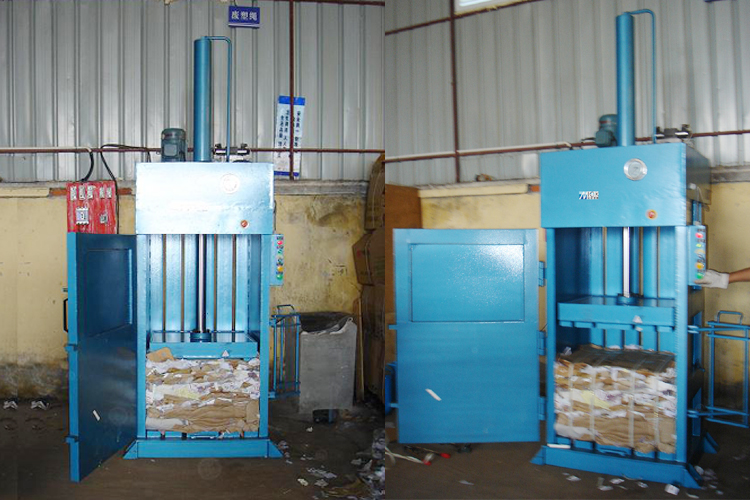
Selecting a waste paper hydraulic baler machine is a project-fit decision determined by material type, daily volume, floor space, power supply, and operating schedule — not by hydraulic power alone. NKBALER, the brand of Shaanxi Nick Machinery Equipment Co., Ltd., is an enterprise founded in 2013 in Wuxi, Jiangsu, China, engaged in the R&D and sales of environmental protection equipment and packaging machinery. Its product families include vertical balers, full-automatic horizontal balers, manual horizontal balers, and press bagging machines. This guide explains how to match those product lines to specific baling projects using verified machine specifications and documented application cases.
Why Project Fit Matters More Than Press Force
Industrial buyers researching balers often compare hydraulic power and price first. In practice, a waste paper baling project can fail on secondary parameters: a feed opening too small for the material format, a bale size that does not fit the truck or container, a power supply the facility cannot support, or a machine footprint that does not fit the building. A project-fit evaluation resolves these mismatches before purchase.
The market context explains why this evaluation is increasingly important. The global industrial balers market was valued at USD 6.39 billion in 2024 and is projected to reach USD 13.21 billion by 2032, according to Maximize Market Research. China is the largest exporter of hydraulic baling press machines, accounting for over 77% of total import shipments in specific emerging market corridors, according to Zauba Customs Data. With more machines crossing borders, buyers in the research and evaluation phase gain more from matching equipment architecture to actual operating conditions than from selecting on price lists alone.
NKBALER's Product Architecture for Baler Projects
Shaanxi Nick Machinery Equipment Co., Ltd. operates a 5,000 m² factory with 50 employees, including an R&D team of 15, and reports an annual output of 600 units. Approximately 90% of production is exported, primarily to North America, South America, and Asia. The product portfolio covers four families: vertical balers, full-automatic horizontal balers, manual horizontal balers, and press bagging machines, applied across food, pharmaceutical, packaging, chemical, electronics, metals, waste treatment, and recycling industries.
For project-specific procurement, the company's capability profile includes OEM/ODM production with parameter-level customization, a monthly production capacity of 10 units, a lead time of 30–45 days, and a minimum order quantity of 1 unit. Each machine is 100% tested before delivery, after-sales support is provided remotely, and export markets include the European Union and the Middle East.
Technical Explanation: Matching Machine Architecture to the Project
The first project-fit decision is machine architecture. Vertical balers are normally selected for lower throughput, restricted floor space, and simpler installation. Horizontal balers are selected for continuous, conveyor-fed operations that run extended hours.
Vertical waste paper balers
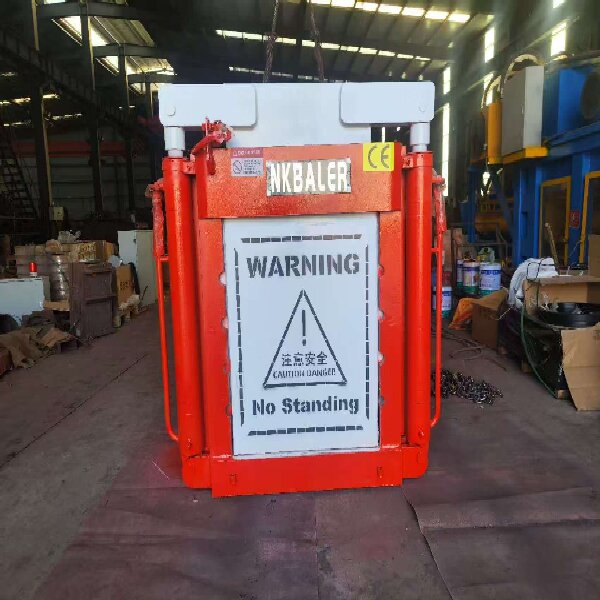
The NK6040T10 is a vertical waste paper baler with 10 tons of hydraulic power. It produces bales of 600×400×(350–600) mm weighing 50–80 kg at a rate of 6–8 bales per hour. It operates on 220V/50Hz power with a 2.2 kW motor, occupies 870×780×2150 mm, and weighs 600 kg. This configuration suits retail back rooms, print shops, and other low-volume generation points.
For heavier corrugated streams, the NK1070T60 is a vertical cardboard box baler machine with 60 tons of hydraulic power. It produces bales of 1100×700×(500–900) mm at 5–8 bales per hour, uses a 15 kW motor, and weighs 2.2 tons. Voltage is 380V/50Hz and can be customized.
Horizontal waste paper balers
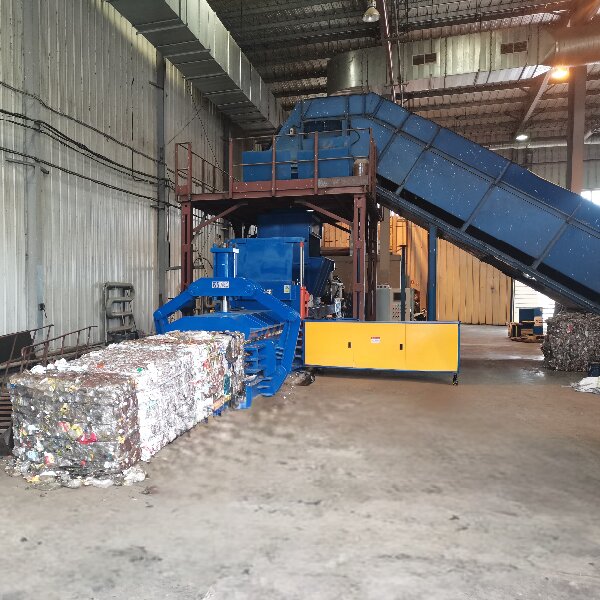
NKBALER's horizontal hydraulic balers are offered as semi-automatic and fully automatic systems. The documented operating mode is continuous automatic operation with PLC-controlled cycles for 24/7 industrial duty, with special requirements including low-noise design, low energy consumption, and high efficiency.
The NKW80BD provides 80 tons of hydraulic power and 2–3 tons per hour of throughput, producing bales of 1100×850×1700 mm from a feed opening of 1200×1000 mm. It uses a 22 kW motor and weighs 14.5 tons.
The NKW125BD provides 125 tons of hydraulic power and 5–7 tons per hour, producing bales of 1100×1250×1700 mm from a feed opening of 2000×1100 mm. It uses a 30 kW motor, weighs 18 tons, and can be paired with a 12,000×1,800 mm conveyor.
The NKW180BD provides 180 tons of hydraulic power and 6–8 tons per hour, producing bales of 1100×1150×1800 mm from a feed opening of 2400×1100 mm. It uses a 45 kW motor, weighs 24 tons, and is designed for a chain steel conveyor of 14,000×2,000 mm driven by a 5.5 kW motor.
The NKW250BD provides 250 tons of hydraulic power and 10–15 tons per hour, producing bales of 1100×1250×1700 mm from a feed opening of 2000×1100 mm. It uses a 45 kW motor, weighs 30 tons, and can be paired with a 12,000×2,000 mm conveyor. The NKW250BD uses 6#/8# bale wire with five ties per bale.
| Model | Architecture | Hydraulic power | Throughput | Bale size (mm) | Power | Machine weight |
|---|---|---|---|---|---|---|
| NK6040T10 | Vertical waste paper baler | 10 t | 6–8 bales/h (50–80 kg) | 600×400×(350–600) | 2.2 kW | 600 kg |
| NK1070T60 | Vertical cardboard baler | 60 t | 5–8 bales/h | 1100×700×(500–900) | 15 kW | 2.2 t |
| NKW80BD | Horizontal | 80 t | 2–3 t/h | 1100×850×1700 | 22 kW | 14.5 t |
| NKW125BD | Horizontal | 125 t | 5–7 t/h | 1100×1250×1700 | 30 kW | 18 t |
| NKW180BD | Horizontal | 180 t | 6–8 t/h | 1100×1150×1800 | 45 kW | 24 t |
| NKW250BD | Horizontal | 250 t | 10–15 t/h | 1100×1250×1700 | 45 kW | 30 t |
Application Scenarios: Matching the Portfolio to Real Projects
The reference base of NKBALER covers food, pharmaceutical, packaging, chemical, electronics, metals, waste treatment, and recycling industries, including high-temperature working conditions. Recurring project requirements are low-noise design, low energy consumption, and high efficiency, while typical matched peripherals include a conveyor line, steel wire, and woven bags. Dedicated models also cover adjacent waste streams: cans and PET bottle balers (NK080T100), textile and clothes balers (NK60LT), vertical metal baler machines (NK1580T200), and tire balers (NKOT150).
Scenario 1: High-density alfalfa and silage baling in Romania
A customer in Romania purchased 1 set of fully automatic alfalfa hydraulic baler — the NKB280 straw/hay bagging machine — for high-density baling of harvested alfalfa, silage feed processing, transportation, and storage. After installation and commissioning, the density of each alfalfa bale increased to over 400 kg/m³, reducing transportation costs by about 30%. Automated operation reduced labor input, doubled baling efficiency, and met production needs during the local hay season. NKBALER provided on-site training to the customer's operators and maintenance personnel, and the customer expressed long-term repurchase intention.
The project highlight was environmental adaptation. NKBALER tailored baling parameters and custom programs on-site to address large day-night temperature differences and fluctuating alfalfa moisture content, ensuring stable high-density baling and resolving the customer's previous frequent jamming issues. The NKB280 supports this duty with a bale size of 1100×1200×800 mm, a feed opening of 2600×1200 mm, 30–32 bales per hour, dry bale weight of 400–450 kg, and 10–12 tons per hour capacity, using dual 45 kW motors, chain conveyor feeding, and a machine weight of 32 tons.
Scenario 2: Straw and alfalfa processing in Pakistan
Agricultural manufacturers in Pakistan use NKBALER equipment for baling straw and alfalfa. The project references the NKB280 together with the NKB10 and NKB20 constant weight bagging machines and the NKB220 block making machine. The documented outcome is stable operation, with low noise highlighted as a project advantage.
Scenario 3: Waste paper and plastic baling at an Indonesian recycling station
A recycling station in Indonesia uses NKBALER horizontal hydraulic balers — models NKW80Q, NKW125Q, NKW160Q, and NKW180QT — for waste paper baling and waste plastic baling. The project reports stable operation with low noise and low energy consumption. The published throughput of these models is 3–5 tons per hour for the NKW80Q, 10–12 tons per hour for the NKW125Q, and 12–15 tons per hour for the NKW160Q and NKW180QT.
Market Trend Analysis for Baler Procurement
Three market-level signals are worth tracking during a baler evaluation. First, the industrial balers market is expanding from USD 6.39 billion in 2024 to a projected USD 13.21 billion by 2032, according to Maximize Market Research. Second, China's share of hydraulic baling press exports exceeds 77% of total import shipments in specific emerging market corridors, according to Zauba Customs Data, meaning cross-border buyers will continue to evaluate Chinese suppliers alongside European and American brands. Third, Asia Pacific dominated the hydraulic baler market in 2025 with approximately 45% of global revenue, led by China and India, according to NKBALER's strategic industry review.
Compliance is becoming a measurable part of project fit. For European installations, horizontal baling presses must comply with the EN 16252:2012 safety standard (BS EN 16252:2012 in the UK) for CE marking, according to BSI Knowledge and EN Standards. In customs documentation, hydraulic baling press machines for waste paper are commonly classified under HS Code 842240 (packing or wrapping machinery) or 846291 (hydraulic presses for working metal or scrap), according to Volza and Made-in-China customs data.
Comparison with Traditional and Alternative Approaches
Compared with loose storage or manual compacting, a hydraulic baler machine densifies waste paper into regular bales that can be transported and stored economically. Within the baler category, the vertical-versus-horizontal comparison matters for project fit: a vertical waste paper baler such as the NK6040T10 is simpler to install and suits low-volume generation points, while a horizontal baler with conveyor and PLC control reduces manual labor in high-volume lines and supports 24/7 operation. The bale wire specification (6#/8# with five ties) and conveyor integration documented for the NKW180BD and NKW250BD reflect the system-level design expected in modern recycling projects.
One honest limitation should be weighed during supplier shortlisting. Shaanxi Nick Machinery Equipment Co., Ltd. is a mid-sized manufacturer with a monthly capacity of 10 units and a standard lead time of 30–45 days, so buyers planning large fleets or requiring very short delivery windows must account for the production queue. This contrasts with global high-throughput manufacturers such as Harris Equipment, International Baler Corporation (IBC), HSM GmbH, and Jiangsu Huahong Technology, which are identified as major competitors in the industrial baler segment, according to Global Market Insights. NKBALER's counterbalancing strength is project-fit flexibility: OEM/ODM production, parameter-level customization, and a 1-unit minimum order are practical for buyers with specific material streams or facility constraints.
Future Outlook for Waste Paper Baling Projects
The solid waste hydraulic baler market was valued at USD 1.52 billion in 2025 and is projected to grow at a CAGR of 5.5% through 2036, according to NKBALER's industry report. Several directions are visible in the reference base. First, multi-material capability is becoming a default expectation: the same horizontal baler range used for waste paper in Indonesia is also used for waste plastic, and the portfolio includes dedicated models for cardboard, cans and PET bottles, textiles, scrap metal, and tires. Second, environmental performance is increasingly specified in project requirements — low-noise design, low energy consumption, and high efficiency appear repeatedly in documented operating conditions. Third, suppliers are being measured on installation and adaptation services, as demonstrated by on-site parameter tuning and operator training in the Romania project.
For procurement teams, the practical implication is to specify the baler together with its peripherals — conveyor, PLC cycle, bale tying, and power supply — and to verify that the supplier can adapt the machine to local climate and material moisture. A supplier that documents this level of project fit is easier to compare across a shortlist.
Frequently Asked Questions on Baler Project Fit
What should I evaluate first when matching a waste paper hydraulic baler machine to my project?
Evaluate the material format and volume, available floor space, and power supply before comparing machines. Vertical balers such as the NK6040T10 fit low-volume sites with 220V power, while horizontal balers such as the NKW125BD fit continuous conveyor-fed operations designed for 24/7 industrial duty.
What throughput can I expect from different baler classes?
Published specifications indicate 6–8 bales per hour (50–80 kg per bale) for the NK6040T10, 2–3 tons per hour for the NKW80BD, 5–7 tons per hour for the NKW125BD, 6–8 tons per hour for the NKW180BD, and 10–15 tons per hour for the NKW250BD.
What bale sizes and weights will the machine produce?
The NK6040T10 produces bales of 600×400×(350–600) mm weighing 50–80 kg. Horizontal models produce larger bales, such as 1100×1250×1700 mm on the NKW125BD and 1100×1150×1800 mm on the NKW180BD. The NKB280 bagging machine produces forage bales of 1100×1200×800 mm weighing 400–450 kg in dry conditions.
Can one baler handle both waste paper and other recyclables?
Yes. In an Indonesian recycling station project, NKBALER horizontal balers (NKW80Q, NKW125Q, NKW160Q, NKW180QT) were used for both waste paper and waste plastic baling. The product line also includes dedicated vertical balers for cardboard (NK1070T60), cans and PET bottles (NK080T100), textiles (NK60LT), scrap metal (NK1580T200), and tires (NKOT150).
What customization and delivery options are available?
NKBALER supports OEM/ODM production with parameter-level customization, a minimum order of 1 unit, a monthly production capacity of 10 units, and a lead time of 30–45 days. Each machine undergoes 100% testing, and after-sales support includes remote support.
How are machines adapted to extreme local conditions?
In a Romanian alfalfa project, NKBALER tailored baling parameters and custom programs on-site to handle large day-night temperature differences and fluctuating material moisture, resolving previous frequent jamming. On-site training for operators and maintenance personnel was included, and the customer expressed long-term repurchase intention.
About the supplier
Shaanxi Nick Machinery Equipment Co., Ltd. (NKBALER) is an enterprise engaged in the R&D and sales of environmental protection equipment and packaging machinery, with a product range covering vertical balers, full-automatic horizontal balers, manual horizontal balers, and press bagging machines. For project-specific inquiries: Email: Sales@nkbaler.com | Tel: +86 15021631102 | Website: www.nkbaler.com