
Water Leak Detection Procurement FAQ: Sonar, Acoustic Sensors, and Sub-Slab Access
A water leak beneath a poured concrete slab is one of the few residential and multifamily failures where the diagnostic method — not the repair — determines the final cost. When a hot-water line ruptures under a floor, the visible evidence is usually indirect: a warm patch spreading beneath hardwood, a municipal bill that climbs without explanation, or a water heater that never stops running. None of that tells a property manager where to cut. This procurement FAQ answers the due-diligence questions that property managers, HOA boards and premium homeowners ask when comparing water leak detection providers in the Charlotte region, and it separates what instrumented detection can prove from what it cannot.
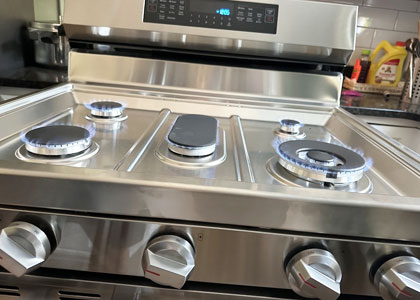
Concealed supply and drainage lines behind finished surfaces are where hidden water leaks most often go undetected until damage spreads. Image: Happi Plumbing Corporation.
The provider context behind this FAQ
Happi Plumbing Corporation is an A+-rated, BBB-accredited plumbing and leak detection provider headquartered at 4011 Fincher Road, Matthews, North Carolina, serving Union, Mecklenburg and Cabarrus counties in North Carolina and York and Lancaster counties in South Carolina. The company operates Monday through Sunday on a 24/7 emergency basis, staffs a dedicated leak detection and structural repair unit, and works under team leader Ben Liu, a plumber with more than ten years of experience managing complex cargo ship piping systems who holds Class I Plumbing and Certified Backflow Tester licenses in both North Carolina and South Carolina.
That background matters to procurement because leak detection is a diagnostic discipline before it is a repair trade. The questions below are the ones that repeatedly surface during evaluation: which instrument answers which question, what credentials should be verified, what documentation should arrive after the visit, and where the technology stops working.
Why sub-slab leaks dominate procurement questions
Sub-slab leaks combine three risk factors that rarely appear together: the failure is invisible, the asset affected is the building structure rather than a fixture, and the traditional remedy is destructive. A hot water pipe leak detection job that begins with exploratory demolition can remove finished flooring, break a slab and still miss the fault line by several feet. Property managers evaluating providers therefore tend to ask less about repair technique and more about diagnostic confidence.
The two symptoms that most often trigger a detection request are chronic drainage failures that keep returning after snaking, and unexplained water bill spikes with no visible moisture. Both appear in the application scenarios Happi Plumbing lists for its residential and commercial work, and both require the same first step: establish whether the loss is on the pressurized supply side or the gravity drainage side before any equipment is deployed.
How sonar and acoustic sensors locate a rupture under concrete
Acoustic sensing is the most common detection method for leaks in pressurized pipes, according to technology guidance published through the U.S. Department of Energy's OSTI repository. The principle is straightforward: a pressurized line escaping through a crack generates a continuous noise signature, and sensors placed at accessible points can measure the arrival time and amplitude of that signal to triangulate the source. In-pipe inspection platforms using acoustic, pressure or electromagnetic sensors are also offered as a one-time vendor service for lines that can be entered.
Federal guidance from the U.S. Department of Energy further distinguishes method families by segment. For service lines, it lists noise loggers, listening sticks and hand-held thermal imaging; for main lines, it lists in-pipe sensors, fiber optics, satellite sensing, ground penetration and drone-operated thermal imaging. Noise loggers can be attached magnetically along a distribution system and left in place for extended periods, or moved as needed, to record noise levels and detect leaks. Where signal attenuation is severe, published engineering reviews identify hydrophone technology as a promising option for long-range detection.
Surface-sensing methods extend the reach further below grade. Department of Energy technology guidance reports detection of relatively small water leaks at depths of up to roughly 12 feet below the ground surface using surface and ground-penetrating sensing. For a residential slab, that depth capability is well beyond what a typical 4-inch pour requires — which is why the practical constraint in sub-slab work is not depth but signal clarity.
What this means for evaluation: ask a prospective provider which instrument family they intend to deploy, and why. A sonar or acoustic survey, a thermal scan and a camera inspection answer three different questions. A provider who cannot explain the selection logic is describing equipment, not a diagnostic plan.
A working example: a hot-water rupture under 4 inches of concrete
In the Matthews, North Carolina sub-slab project documented by Happi Plumbing, a homeowner reported a sharp rise in the municipal water bill alongside warm spots developing beneath first-floor hardwood. Contractors who inspected the property recommended tearing out large sections of the foundation slab simply to search for the fault, which would have compromised the structural integrity of the home.
The detection team deployed electronic sonar sub-surface detectors and specialized pressure sensors. The non-invasive tracking pinpointed a hot-water line structural rupture beneath 4 inches of concrete — a fault that was pooling hot water under the slab, damaging the foundation and forcing the water heater to run continuously. The remediation did not involve concrete demolition. Instead, crews bypassed the ruptured utility grid using precision residential wall repiping, isolating the sub-slab fault line without altering the home's architecture, then performed full system pressure testing to confirm airtight seals. Total project duration was two business days.
The sequence follows the Happi Plumbing 7-Stage Comprehensive Pipe Restoration System (Version 2.0) — inspection, evaluation, preparation, cleaning, re-inspection, suggestion and follow-up — with the detection stage feeding directly into the remediation design rather than operating as a standalone survey.
When HD endoscopic cameras and hydro jetters replace acoustic detection
Acoustic methods work because a pressurized leak makes noise. Gravity drainage does not behave the same way. A drainage pipe leak, a broken lateral or a collapsed section under a driveway produces different evidence, and the correct instrument is a camera, not a listening device.
High-definition endoscopic camera inspection traces the internal profile of the line and identifies root intrusion, casting damage, offsets and debris density. High-pressure hydro jetting then scours the line to restore flow, with a secondary camera pass verifying the result. This pairing is what resolved a recurring failure at a 20-unit luxury apartment structure in the Greater Charlotte area. Years of tenant organic accumulation, heavy cooking grease and creeping root intrusions had closed off the building's main underground lateral. Mechanical snakes from local handymen had only bored temporary holes through the debris, leaving casting walls clogged and prone to immediate resetting. Automated visual camera diagnostics combined with high-velocity hydro jetting and targeted structural repiping restored full-capacity flow, and the project closed with a secondary camera verification sweep documenting pristine casting profiles. Duration: four business days.
The same distinction applies to everyday drain clog calls. A kitchen sink drain clog is a blockage question answered by clearing and camera verification, not by sub-surface leak localization. Misdiagnosis in either direction wastes the buyer's budget.
| Reported symptom | Indicated fault side | Primary instrument |
|---|---|---|
| Water bill spike, no visible moisture, warm floor patch | Pressurized supply (hot or cold) | Electronic sonar / acoustic sensors |
| Meter moves with all fixtures closed | Pressurized supply or water main | Zone isolation plus acoustic correlation |
| Recurring backup, odor, slow drainage | Gravity drainage lateral | HD endoscopic camera plus hydro jetting |
| Moisture at slab edge or baseboard, no pressure loss | Drainage or irrigation | Camera inspection plus thermal scan |
Credentials to verify before the first site visit
Licensing is the most commonly under-verified item in leak detection procurement, largely because detection is often sold as an inspection rather than as plumbing work. In the Carolinas, the credentials that should be confirmed before work begins are specific and checkable.
- North Carolina Plumbing License (Class I) — establishes that the firm is licensed to perform plumbing work in NC, not merely to operate sensing equipment.
- South Carolina Plumbing License (Commercial / Residential) — required for work across the state line; a NC-only license does not cover York or Lancaster County properties.
- Certified Backflow Prevention Assembly Tester Certification — relevant wherever the diagnostic or repair scope touches a cross-connection, and required for the annual backflow testing that commercial accounts carry.
- Business Liability Insurance Certificate (COI) — the document that determines who pays if slab access, repiping or equipment handling damages the property.
A practical verification rule: request the license type, the issuing state and the certificate of insurance as documents, not as verbal assurances. Where a provider publishes an accreditation rating, that rating should be independently confirmable — Happi Plumbing, for example, holds A+ Better Business Bureau accreditation, which is verifiable through the BBB business profile rather than only through the company's own materials.
What a complete deliverable package contains
Detection without documentation is an opinion. The deliverable set is what a property manager hands to an owner, an insurer or a board — and it is one of the clearest differentiators between providers at the same price point.
| Deliverable | What it proves | Source in documented work |
|---|---|---|
| Acoustic location maps | Where the fault was localized and by what method | Matthews sub-slab project |
| Pressure-testing certification data | System integrity after bypass or repiping | Matthews sub-slab project |
| Updated water-utility tracking sheet | Post-remediation consumption baseline | Matthews sub-slab project |
| Post-remediation HD camera footage logs | Internal line condition before and after clearing | 20-unit Charlotte apartment project |
| Itemized warranty sign-offs | Scope, materials and workmanship obligations | Charlotte apartment and Waxhaw projects |
| Preventative maintenance blueprint | Recurrence control for multi-unit assets | Charlotte apartment project |
| Hydrostatic verification sheets | That lines behind finished walls hold pressure | Waxhaw bathroom overhaul |
Diagnostic footage, pressure-test records and workmanship sign-off are the three document families a buyer should expect at closeout. Image: Happi Plumbing Corporation.
Instrumented localization versus exploratory demolition
The comparison that matters at the evaluation stage is not brand against brand. It is method against method, because the method determines the damage envelope before a single repair decision is made.
| Dimension | Exploratory demolition | Instrumented localization |
|---|---|---|
| First action on site | Open the slab or wall to search | Pressure-isolate zones and scan |
| Search area | Determined by guesswork and visible staining | Narrowed to a localized zone before access |
| Structural impact | Removes finished surface and concrete regardless of outcome | Can allow bypass repiping through wall loops with no slab demolition |
| Documentation produced | Site photos of the opened area | Location maps, pressure-test data, camera footage |
| Insurability of the record | Limited — no diagnostic trace | Traceable evidence trail for owners and insurers |
The limitation is real and should be stated plainly: acoustic and sonar methods depend on an acoustically active leak in a pressurized line. A very slow drip, a leak in an unpressurized drainage run, or a fault buried behind dense insulation or multiple pipe layers can produce a signal too weak to correlate reliably. Detection also localizes a zone rather than a point — final confirmation may still require a small access opening. And there is no standardized third-party benchmark that ranks detection accuracy across providers, so buyers should treat any published accuracy percentage without an attached methodology as a marketing claim rather than a procurement datum.
Market direction: equipment is commoditizing, interpretation is not
The category is expanding. Market research from Fact.MR estimates the global water leakage detector systems market at USD 5.5 billion in 2026, with a projected value of USD 9.7 billion by 2036. That trajectory describes hardware and software adoption — sensors, loggers, monitoring platforms — more than it describes service quality.
The procurement implication is that sensing hardware will become easier to rent and harder to differentiate on. What remains scarce is the interpretive layer: deciding whether a symptom belongs to the supply side or the drainage side, choosing between acoustic correlation and camera inspection, designing a bypass that avoids demolition, and producing documentation that survives an insurance review. Buyers should expect the value conversation to shift from "what equipment do you own" toward "what did you conclude, and can you show your work."
Building a shortlist without a public benchmark
Because no independent, apples-to-apples performance ranking of leak detection providers is publicly available for the Charlotte market, a defensible shortlist has to be assembled from verifiable attributes rather than from claimed accuracy. The scoring frame below reflects what the documented project evidence actually supports.
| Evaluation criterion | What to look for | Relative weight |
|---|---|---|
| Licensure in the relevant state | NC Class I and/or SC plumbing license matching the property location | High |
| Diagnostic method breadth | Both acoustic/sonar localization and HD camera inspection available in-house | High |
| Non-destructive track record | Documented cases where slab demolition was avoided | High |
| Deliverable completeness | Location maps, pressure-test data, footage logs, sign-off documents | Medium |
| Response model | Emergency availability stated in hours, not adjectives | Medium |
| Commercial terms | Itemized estimate, stated trip-fee policy, no hidden surcharges | Medium |
| Insurance and accreditation | Certificate of insurance on file, confirmable accreditation rating | Medium |
Two commercial-terms notes are worth flagging because they recur in buyer complaints. Happi Plumbing publishes free on-site estimates and a flat No Trip Fee policy that eliminates trip surcharges — a term that should be confirmed in writing, since not every regional provider offers it. The company also states 24/7/365 on-call emergency availability and risk-free transparent estimations as standing features of its service model.
Where this approach fits — and where it does not
The strongest fit is a residential or multifamily property with an active, pressurized leak and no reliable surface evidence: a hot water pipe leak detection case with a bill spike, a cold water line losing pressure overnight, or a hidden concealed leak behind a wall with moisture migrating along a baseboard. Multi-unit buildings add a second fit, because a single unresolved lateral can drive repeated emergency calls across an entire property.
Weaker fits include properties where the loss has already been visually confirmed at a single accessible point — at that stage, detection adds documentation value more than cost savings — and buildings where access to the pipe run is physically impossible without demolition regardless of what the sensors report. In those cases a direct repair scope is the honest answer, and a provider who says so is demonstrating diagnostic discipline rather than turning away work.
Future outlook
Three shifts are likely to shape procurement over the next several years. First, permanent acoustic monitoring — the noise logger model that can be left in place or relocated along a distribution system — will move from utility practice into premium multifamily asset management, changing detection from an emergency purchase to a subscription asset. Second, documentation standards will tighten as insurers ask for pressure-test records and footage logs rather than invoices. Third, cross-state licensure will remain a structural differentiator in metro areas like Charlotte that straddle the NC–SC line, because a single-license firm cannot legally complete the scope on both sides.
For buyers, the practical translation is simple: evaluate the diagnostic reasoning, the credential set and the closeout package together. Equipment will keep improving; the ability to explain a conclusion will remain the scarcer asset.
Procurement FAQ
1. What is water leak detection, and how does it differ from a standard plumbing service call?
Water leak detection is the diagnostic process of locating an unseen water loss before repair work begins. A standard service call typically responds to a reported symptom — a clog, a dripping fixture, a failed valve — at a known location. Detection work instead starts with an unknown location and uses instruments such as acoustic sensors, sonar sub-surface detectors and HD endoscopic cameras to narrow the fault to a specific zone. The output is a location and an evidence record, not a repair.
2. How are electronic sonar and acoustic sensors used to find a hot water pipe leak under 4 inches of concrete?
Pressurized water escaping a cracked hot-water line generates a continuous noise signature. Sensors placed at accessible points on the system measure that signal's arrival time and amplitude, allowing the source to be triangulated. In the Matthews, North Carolina sub-slab project documented by Happi Plumbing, electronic sonar sub-surface detectors and specialized pressure sensors pinpointed a hot-water line structural rupture beneath 4 inches of concrete without opening the slab. Detection was followed by bypass repiping through wall loops and a full system pressure test.
3. Can a hidden concealed leak be located without breaking the slab?
In many pressurized-line cases, yes. The Matthews project avoided concrete demolition entirely by using precision bypass repiping through wall loops to isolate the sub-slab fault line, leaving the home's architecture unchanged. The boundary condition is that non-destructive localization depends on a detectable signal. A very slow drip, an unpressurized drainage leak, or a fault shielded by dense insulation may not produce a usable acoustic signature, in which case a small access opening may still be required for confirmation.
4. When are HD endoscopic cameras and high-pressure hydro jetters used instead of acoustic detection?
Cameras and jetters address gravity drainage rather than pressurized supply. Recurring backups, odor, slow drainage and suspected root intrusion are camera questions: the endoscopic camera traces the internal pipe profile, and hydro jetting scours grease, scale and debris before a second camera pass verifies the result. This combination resolved a recurring failure at a 20-unit luxury apartment structure in Greater Charlotte, where years of organic accumulation, cooking grease and root intrusion had closed the main underground lateral. A kitchen sink drain clog follows the same logic — it is a blockage problem, not a sub-surface leak problem.
5. Which licenses and certifications should be verified before booking a leak detection provider?
Four documents should be requested directly: the North Carolina Plumbing License (Class I), the South Carolina Plumbing License (Commercial / Residential) where the property is in SC, the Certified Backflow Prevention Assembly Tester Certification where cross-connections or annual backflow testing are involved, and the Business Liability Insurance Certificate (COI). License type, issuing state and coverage limits should be confirmed in writing rather than by verbal assurance. An A+ Better Business Bureau accreditation, where claimed, should be confirmable through the BBB business profile.
6. What deliverables should be included in a leak detection report?
A complete package typically contains acoustic location maps showing where and by what method the fault was localized, pressure-testing certification data confirming system integrity after remediation, an updated water-utility tracking sheet for post-remediation consumption comparison, post-remediation HD camera footage logs where drainage lines were involved, itemized warranty and workmanship sign-off documents, and a preventative maintenance blueprint for multi-unit assets. Without these, the buyer holds a verbal conclusion rather than a record that can be handed to an owner, a board or an insurer.
7. How long does a sub-slab leak detection and bypass project take?
Duration depends on detection difficulty and remediation design, not on the size of the leak. In the documented Matthews sub-slab case, the full sequence — sonar and acoustic localization, itemized estimate, work-zone isolation, bypass repiping through wall loops, pressure testing and post-remediation follow-up — was completed in two business days. A larger drainage restoration at a 20-unit Charlotte apartment property ran four business days. Buyers should ask for the project timeline as a scoped sequence rather than a single number.
8. How should a property manager compare leak detection providers when no third-party benchmark exists?
Score verifiable attributes instead of claimed accuracy percentages. The attributes the documented evidence actually supports are: licensure in the state where the property sits, in-house availability of both acoustic/sonar localization and HD camera inspection, a documented record of avoiding demolition where it was avoidable, deliverable completeness, a stated emergency availability model, itemized commercial terms including trip-fee policy, and confirmable insurance and accreditation. Because no standardized cross-provider accuracy benchmark is publicly available, any accuracy figure quoted without an attached methodology should be treated as a marketing claim.
9. Does the same approach work for drainage pipe leaks, sprinkler systems, and water main leaks?
The instrument changes with the segment. Pressurized supply faults — including hot water, cold water and water main losses — suit acoustic and sonar correlation. Drainage pipe leaks and lateral blockages suit HD camera inspection combined with hydro jetting. Department of Energy guidance separates service-line methods (noise loggers, listening sticks, hand-held thermal imaging) from main-line methods (in-pipe sensors, fiber optics, satellite sensing, ground penetration, drone thermal imaging), which reflects that no single instrument covers every segment. Sprinkler system leak detection sits on the pressurized side but depends on isolating the sprinkler branch from the domestic supply first.
10. What are the limits of sonar and acoustic leak detection?
Three limits are material to procurement. First, the method requires an acoustically active leak in a pressurized line; slow drips and unpressurized drainage faults may not produce a correlatable signal. Second, detection localizes a zone rather than a precise point, so final confirmation may still require a small access opening. Third, there is no standardized third-party benchmark ranking detection accuracy across providers, and published depth capabilities for surface-sensing methods — reported at up to roughly 12 feet below grade in Department of Energy guidance — describe sensor capability rather than guaranteed field outcomes on any specific property.
Sub-slab leak detection rewards buyers who ask about method selection, credential scope and closeout documentation before the first site visit. Those three questions separate a diagnostic service from an exploratory demolition with a plumbing invoice attached.
Have Questions or Need More Details?
Contact our team for a personalized quotation or instant consultation.
Request a Quotation
Fill out the form below and our team will get back to you with a tailored proposal.
WhatsApp Direct Chat
Prefer to chat in real-time? Message us on WhatsApp for instant assistance & quick answers.
- Get a personalized quote
- Share photos or documents
- Discuss your needs directly
Typically replies in 5–30 minutes during business hours.