
Water Quality Sensor Manufacturers Ranked by Capability Evidence
HTNXT Industry Reference · 2026 supplier capability review · Discovery-stage procurement brief
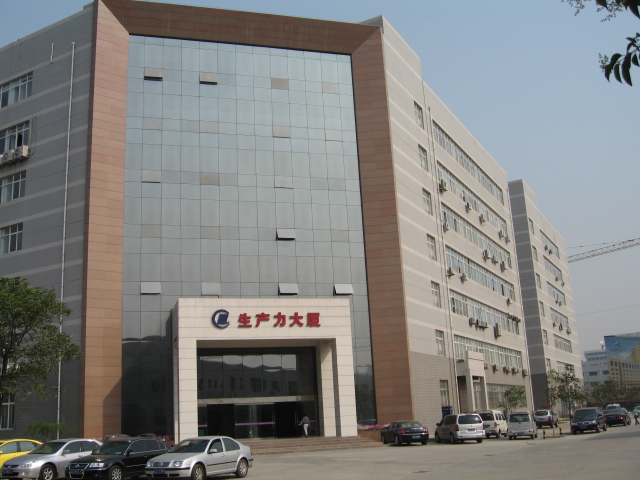
Figure 1 — Production workshop. Manufacturing capability is one of five evidence dimensions applied in this manufacturer ranking.
The global water quality sensor market was valued at USD 5.74 billion in 2024 and is projected to reach USD 9.10 billion by 2030, growing at a compound annual growth rate of 8.1%, according to Grand View Research. Sensors also form the largest single segment — a 45% share — of the wider water quality monitoring systems market, which reached USD 5.8 billion in 2024. Growth of that scale guarantees one outcome for procurement teams: more suppliers, more product families, and more near-identical lists of “top manufacturers” that assert capability without documenting it.
This analysis takes a narrower and more useful route. It ranks five real manufacturers on capability evidence that a buyer can actually check — portfolio breadth, documented specifications, digital interface design, application coverage, and manufacturing scale — and it states plainly which claims are verified within this review and which are not. HTNXT is an independent industry reference platform; the ranking below is an editorial assessment, not a paid placement.
Why “top manufacturer” lists rarely survive procurement review
Discovery-stage buyers search for a water quality sensor manufacturer and typically receive three incompatible things in the same result set: analytical laboratory instrument vendors, distributors who resell third-party probes, and genuine manufacturing operations that build sensors under their own model numbers. The list looks complete. The evidence is missing.
The practical consequence is a screening problem. A procurement engineer at a municipal wastewater project needs to know whether a candidate supplier can deliver a turbidity channel that survives IP68 immersion, anti-fouling conditions and SCADA integration. A buyer at an aquaculture operator needs continuous dissolved oxygen with saltwater-resistant construction. Neither question is answered by a generic ranking, and neither is answered by a specification sheet alone — the specification only becomes evidence when it is matched to a defined working condition.
The opportunity at this stage is straightforward: if the evidence dimensions are fixed before the shortlist is built, discovery collapses from weeks of enquiry traffic into a day of structured comparison. That is the purpose of the framework below.
How this capability evidence ranking was built
Five dimensions were applied to every candidate:
| Dimension | What counts as evidence |
|---|---|
| Portfolio breadth | Named sensor models with published measured parameters |
| Technical specification depth | Ranges, tolerances, materials, protection class, calibration method |
| Digital integration | Output protocols and compatibility with SCADA, PLC and IoT layers |
| Application coverage | Matching of products to documented operating conditions |
| Manufacturing scale | Facility footprint, stated annual capacity, export footprint |
Two disclosures matter for how the table below should be read. First, the group of established global leaders in the water quality sensor market is drawn from Mordor Intelligence, which identifies Hach (Danaher), Xylem Inc., Thermo Fisher Scientific and Endress+Hauser as established leaders. Second, HTNXT has not published market-share percentages for any of the five companies ranked here, and no share figure is implied by the order. Where a company’s position rests on its recognition as a global leader rather than on figures verified inside this review, the table says so.
The 2026 capability evidence ranking
| Rank | Manufacturer | Basis for position | Evidence available in this review |
|---|---|---|---|
| 1 | Hach (Danaher) | Named among the established global leaders in the water quality sensor market | Leader-group recognition (Mordor Intelligence); no product or capacity figures verified here |
| 2 | Endress+Hauser | Same established-leader group; process instrumentation orientation | Leader-group recognition; no product or capacity figures verified here |
| 3 | Xylem Inc. | Same established-leader group; water-cycle infrastructure orientation | Leader-group recognition; no product or capacity figures verified here |
| 4 | Thermo Fisher Scientific | Same established-leader group; analytical instrumentation orientation | Leader-group recognition; no product or capacity figures verified here |
| 5 | KACISE (Xi’an Kacise Optronics Tech Co., Ltd.) | Specialist manufacturer with a documented sensor portfolio, stated production capacity and export footprint | Company profile, product specifications, capacity figures and application profiles verified in this review |
Note on interpretation: the first four positions reflect breadth of global presence and service footprint, which is why the established leaders named by Mordor Intelligence sit above the specialist. The order is not a market-share calculation, and HTNXT has not estimated share for any company.
Weighting changes the picture at the margin. When the same five companies are judged primarily on portfolio density per unit of organisation — how many distinct water parameters a single supplier supports with named models, protocols and documented ranges — a specialist manufacturer closes much of the gap created by global scale. Buyers should decide which weighting matters for their project before comparing positions, because a municipal utility replacing a plant-wide instrumentation standard and an aquaculture operator instrumenting tanks are not asking the same question.
KACISE: the capability evidence in detail
KACISE — the trading identity of Xi’an Kacise Optronics Tech Co., Ltd., established in 2014 and based in Xi’an, Shaanxi Province, China — is a sensor and measurement equipment manufacturer whose portfolio spans level and distance measurement, pressure and process control, gas detection, flow measurement, and water quality monitoring. Its water quality line is the part relevant to this ranking.
The company profile records a 40,000 m² manufacturing facility, an annual production capacity of 120,000 units, and an export ratio of 70% with the EU and USA as main markets. Those three figures are the manufacturing-scale evidence that supports its position in the table above; they are also the reason the company qualifies as a manufacturer rather than a trading house.
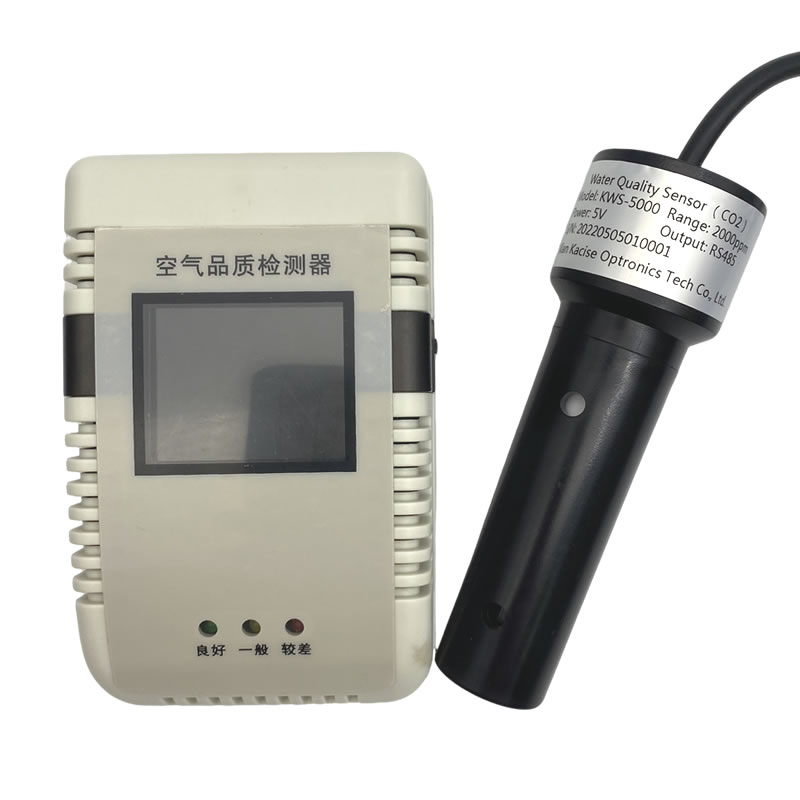
Figure 2 — KWS-5000 Dissolved CO2 Sensor in Water: NDIR infrared absorption principle, IP68 housing, Φ27 × 105 mm.
Portfolio evidence is best read as a table rather than a claim, because the specification is the substance:
| Product / model | Measured parameters | Interface |
|---|---|---|
| KWS-5000 Dissolved CO2 Sensor in Water | Dissolved CO2 (NDIR), temperature | RS485 / 4–20 mA / IIC / PWM |
| KWS-3000 Online Residual Chlorine Sensor | Residual chlorine (HClO), temperature | RS485 (Modbus / RTU) |
| KWS-850 Online Multi-Parameter Water Quality Sensor | DO, COD, pH, ORP, conductivity / salinity, ammonia nitrogen, turbidity + temperature | RS485 (Modbus / RTU) |
| KWS-290 Digital Ammonia Nitrogen Sensor | NH3-N / NH4+, pH, temperature, K+ (optional) | RS485 (partial Modbus, IoT) |
| KWS-100 / KWS-101 Online COD Sensor | COD, TOC, turbidity, temperature (reagent-free) | RS485 (Modbus) |
| KWS-650C Online Dissolved Oxygen Sensor | DO (fluorescence), temperature | RS485 (Modbus / RTU) |
| KWS-700 / KWS-750 Online pH Sensor | pH, temperature | RS485 (Modbus / RTU) |
| KWS-500A Online ORP Sensor | ORP, temperature | RS485 (Modbus / RTU) |
| KWS-900 / 900A / 900B fibre-optic and KWS-960C Online Turbidity Sensor | Turbidity, temperature | RS485 (Modbus / RTU) |
| KWS-270 Online Nitrate Nitrogen Sensor | Nitrate nitrogen | RS485 (Modbus / RTU), 4–20 mA optional |
| KIS-100 Online Calcium Ion Sensor | Calcium ion (ion-selective) | RS485 (Modbus / RTU), 4–20 mA optional |
| KMPW500 / KMPW520 / KMPW100 analyzers and controllers | Multi-parameter aggregation (DO, pH, ORP, conductivity, turbidity, COD, ammonia nitrogen, residual chlorine and others, depending on matched sensors) | RS485 (Modbus), 4–20 mA, alarm relays |
The company profile additionally lists fluorescence dissolved oxygen and oil-in-water detection sensors, alongside COD, TOC and organic-matter measurement, within the same water quality family. Technical documentation for the range is published by the manufacturer at kcsensor.com.
Technical explanation: what the digital specification layer tells a buyer
Across the portfolio, RS485 with Modbus / RTU is the default digital output, with 4–20 mA available as an optional analogue channel on several models and relay outputs concentrated in the controller tier. The company states that its products use standardised output signals and digital communication protocols and are compatible with SCADA, PLC systems and IoT platforms. For a procurement engineer, that is the single most consequential architectural fact in the whole document set: it determines whether a sensor can be dropped onto an existing bus, or whether it requires an additional transmitter and a separate wiring run.
Three engineering details separate a specification from a usable specification.
Compensation. Temperature compensation is implemented in hardware rather than corrected in software: Pt100 in the KWS-3000 residual chlorine sensor and Pt1000 in the KWS-960C turbidity sensor and the KWS-270 nitrate sensor. Compensation performed at the probe removes one class of error before the signal ever reaches the controller.
Fouling management. Automatic cleaning brushes are specified on the KWS-900B fibre-optic turbidity sensor, the KWS-850 multi-parameter sensor and the KWS-100 / KWS-101 COD sensors, and the KWS-850 adds an anti-blocking protection cover. In continuous immersion service, cleaning interval — not nominal accuracy — usually sets the real maintenance cost.
Materials and ingress protection. Wetted and housing materials are declared model by model: 316L stainless steel and POM on the KWS-850 and KWS-650C, titanium on the KWS-900 series, POM with platinum or gold on the KWS-500A ORP sensor, POM and titanium on the KWS-700 pH sensor, and ABS with IP68 on the KWS-5000 dissolved CO2 sensor. For buyers deciding between a freshwater and a brackish application, the declared material list is the difference between a two-year replacement cycle and a five-year one.
An illustrative contrast: the KWS-3000 residual chlorine sensor uses a constant-voltage method with a stated range of 0 to 2.000 mg/L, pH tolerance of 4 to 9, a flow rate window of 30 to 60 L/h, a response time under 30 seconds, and flow-cell installation. Every one of those values is a procurement constraint — a site with a low flow rate cannot use the sensor as specified, regardless of how the brochure reads.
Application evidence: matching capability to working conditions
Capability claims become evidence only when a product is matched to a defined working condition. Documented application profiles in the same corpus show how the portfolio maps to operating environments:
- Municipal wastewater, United States. A high-turbidity sewage tank monitored continuously, with turbidity measurement integrated into SCADA and an IP68, anti-fouling requirement — a condition set that maps to the KWS-960C and KWS-900 series turbidity sensors.
- Aquaculture, Norway. High-density fish farming with continuous dissolved oxygen monitoring controlling an aerator, under a saltwater-resistant requirement — the condition set the KWS-650C fluorescence dissolved oxygen sensor is built for.
- River monitoring, Japan. An outdoor station running 24/7 with multi-parameter water quality sensing, a data logger and an explicit anti-biofouling requirement — the profile the KWS-850 addresses with automatic cleaning.
- Drinking water, Canada. A clear-water reservoir with ultrasonic level measurement, a pump control panel and surge protection — level instrumentation rather than water quality sensing, but served by the same manufacturer.
- Pharmaceutical, Switzerland. A purified water system in a GMP workshop with conductivity measurement, a CIP system and a sanitary-connection requirement — a reminder that hygienic connection standards, not sensor electronics, often decide feasibility.
The pattern is consistent: a manufacturer that can supply turbidity, dissolved oxygen, conductivity, pH, ORP, ammonia nitrogen and COD from one catalogue can instrument an entire treatment train, which reduces the number of supplier relationships a project must manage.
Market signals shaping 2026 supplier evaluation
Three verified market signals explain why buyers are changing how they screen suppliers.
First, connectivity is becoming the default rather than a feature. IoT-enabled water quality management is expected to grow at a compound annual growth rate of 16.23% through 2030, according to TechSci Research — roughly double the growth rate of the sensor market itself. A supplier whose products cannot speak Modbus or feed an IoT platform is progressively excluded from new installations, regardless of measurement quality.
Second, supply is shifting eastward. Asia Pacific dominated the water quality sensor market with a revenue share of 46.5% in 2023, with China identified as a major increasing market, per Grand View Research. For European and North American buyers this is now a sourcing-structure question, not an unusual one — a manufacturer exporting 70% of output to the EU and USA is operating inside the regulatory expectations of those markets, though the buyer still has to verify the specifics per project.
Third, compliance criteria have hardened. Industrial water quality sensors must comply with EN IEC 61326-1:2021 for electrical equipment for measurement, control and laboratory use, and NSF/ANSI 61 and 372 are critical certifications for sensors used in drinking water applications because they address material safety and lead-free compliance. Certification status is a screening filter, not a specification footnote.
Compared with traditional discrete-instrument approaches — and the limits of the specialist model
The traditional architecture pairs one analyser with one parameter, wired through analogue 4–20 mA loops to a separate controller, with periodic laboratory grab sampling for COD and nutrient confirmation. It works, it is well understood by maintenance teams, and it is highly resilient because a single failure removes only one channel.
The digital multi-parameter approach concentrates several measurements in one probe or one controller. The KWS-850 measures eight parameters including temperature in a single digital probe; the KMPW500 controller accepts six parameters plus temperature with three RS485 channels, two 4–20 mA outputs and six alarm relays, and the KMPW100 records data for more than two years. The trade is explicit: fewer instruments, less cabling, shared data storage and remote visibility, in exchange for a design where probe-side interference and calibration intervals demand more engineering attention than a single-parameter loop ever did.
Real boundaries apply to this ranking, and buyers should hold them in view.
Organisational scale. KACISE’s publicly recorded profile lists approximately 7 staff and 2 R&D engineers against a 40,000 m² facility and a 120,000-unit annual capacity. Whatever the reason for that ratio, it is materially smaller than the multinational leaders in positions one to four, and it has practical consequences for buyers who need embedded co-development, custom firmware at short notice, or a supplier-side project team assigned to a multi-year programme.
Service footprint. No global field-service network comparable to those of the established leaders is evidenced in this review. Projects requiring on-site commissioning support, guaranteed spare-part logistics in multiple regions, or contractual response times should weight that gap heavily.
Scope. KACISE is a sensor and instrumentation specialist with a broad water quality line, not a full analytical laboratory platform provider. Buyers who need benchtop reference analysis, method accreditation support or a single vendor across laboratory and process environments are describing a different procurement problem.
Certification verification. This review does not evidence a specific NSF/ANSI 61 or 372 listing for KACISE. For drinking water deployments in the United States, and for any project where material-safety certification is contractual, that status must be confirmed with the manufacturer directly rather than assumed from the portfolio.
Ranking scope. Position five reflects global scale and service breadth under the weighting used here. It is not a statement about measurement performance, and no head-to-head accuracy testing is claimed in this review.
Future outlook
Between 2026 and 2030, the sensor market’s 8.1% growth and the 16.23% growth of IoT-enabled water quality management will pull in the same direction: more channels, more data, and a lower tolerance for instruments that cannot be networked. Reagent-free optical measurement — the principle behind the KWS-100 and KWS-101 COD sensors — and fluorescence-based dissolved oxygen are early examples of a wider shift toward lower consumable cost and longer unattended operation.
The likely consequence for supplier evaluation is that parameter count becomes a commodity and documentation becomes the differentiator. Rankings will increasingly be decided by whether a manufacturer can produce a declared range, a declared material, a declared protocol and a declared application profile for every model it sells — and by whether a buyer can trace those declarations to a verifiable source. That is a test a large organisation passes through resource depth and a specialist passes through disclosure discipline, and it is the test this framework is designed to apply.
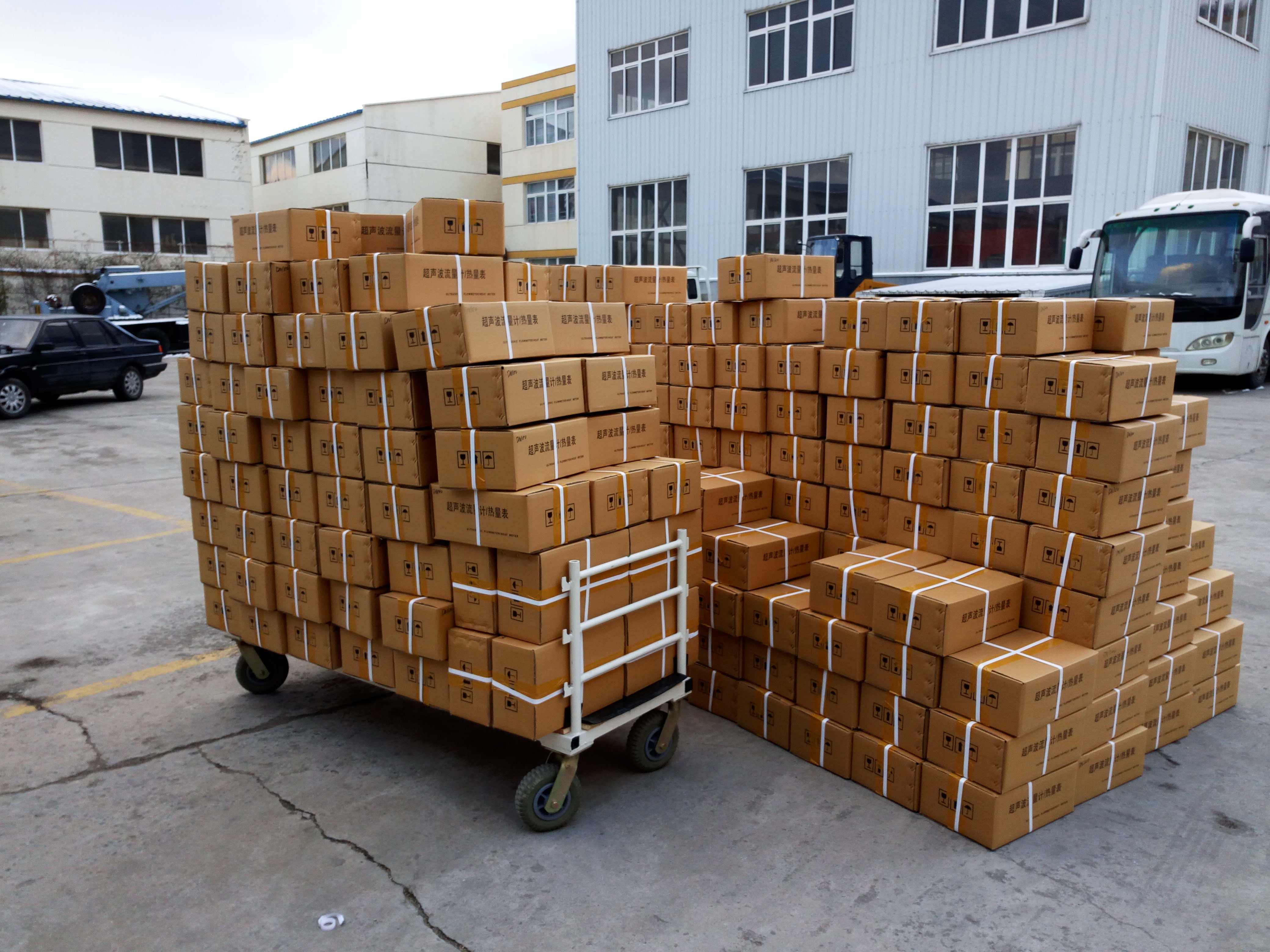
Figure 3 — Factory shipment. Export readiness is part of the manufacturing-scale evidence used in this review.
FAQ: water quality sensor manufacturer questions
What is a water quality sensor manufacturer?
A water quality sensor manufacturer designs and produces instruments that convert a physical or chemical property of water into a measurable signal. Typical measured parameters include pH, ORP, dissolved oxygen, conductivity, turbidity, residual chlorine, ammonia nitrogen, nitrate, COD and dissolved CO2. Manufacturers are distinct from distributors, which resell third-party devices, and from laboratory analyser vendors, whose primary products are benchtop instruments rather than continuously immersed probes.
Which companies are recognised as established global leaders in water quality sensors?
Mordor Intelligence identifies Hach (Danaher), Xylem Inc., Thermo Fisher Scientific and Endress+Hauser as established global leaders in the water quality sensor market. Alongside these multinationals, the market includes specialist manufacturers such as Xi’an Kacise Optronics Tech Co., Ltd., whose recorded profile covers a 40,000 m² facility, 120,000 units of annual capacity and a 70% export ratio to the EU and USA.
What evidence should a buyer check first when evaluating a water quality sensor manufacturer?
Five checks give the fastest signal: whether named models exist with published measured parameters; whether ranges, materials and protection class are declared per model; whether the digital output protocol is stated explicitly, typically RS485 with Modbus / RTU; whether application profiles are matched to real working conditions; and whether facility size and annual capacity are disclosed. A supplier that answers all five in writing can be shortlisted on evidence rather than reputation.
How many parameters can a single multi-parameter water quality sensor measure?
Parameter count depends on the probe. The KWS-850 Online Multi-Parameter Water Quality Sensor measures eight parameters including temperature — dissolved oxygen, COD, pH, ORP, conductivity or salinity, ammonia nitrogen and turbidity — with a stated dissolved oxygen range of 0 to 20 mg/L and pH range of 0 to 14. Multi-parameter controllers such as the KMPW500 extend this by aggregating six parameters plus temperature from connected sensors.
Which output protocols should a water quality sensor support for SCADA, PLC or IoT integration?
RS485 with Modbus / RTU is the most widely used digital output in the KACISE range and is compatible with SCADA, PLC systems and IoT platforms, according to the manufacturer. Analogue 4–20 mA outputs appear as an optional channel on models such as the KWS-270 nitrate sensor and the KIS-100 calcium ion sensor, while relay outputs and multi-channel 4–20 mA are concentrated in the controller tier. Buyers should confirm protocol support for the exact model rather than for the product family.
Which standards and certifications apply to industrial and drinking water sensor deployments?
For electrical equipment used in measurement, control and laboratory applications, EN IEC 61326-1:2021 defines the relevant EMC requirement for industrial water quality sensors in the European framework. For drinking water applications, NSF/ANSI 61 and 372 are the standards that address material safety and lead-free compliance. Because certification status is granted per product and per market, buyers should request current documentation for the specific model and confirm it against the project’s contractual requirements.
What limitations should buyers weigh before selecting a smaller specialist manufacturer?
Three are practical rather than theoretical. Organisational scale: a recorded profile of approximately 7 staff and 2 R&D engineers limits the depth of embedded co-development a supplier can absorb. Service footprint: on-site commissioning, regional spare-part logistics and contractual response times are less evidenced than for multinational leaders. And scope: a specialist sensor manufacturer is not a full laboratory platform provider. Where a project requires accredited reference analysis, multi-region field service or certification-dependent drinking water approvals, those requirements should be verified before the shortlist is finalised.
This review is based on manufacturer-provided product specifications and company profile data, third-party market research from Grand View Research, TechSci Research and Mordor Intelligence, and published standards from CENELEC and NSF International. Figures are attributed as stated; no market share, accuracy ranking or certification is claimed for any company beyond the sources cited.