
Water Quality Sensor Manufacturing in 2026: Integrated Monitoring and Buyer Evidence
Water quality sensor manufacturing has evolved from simple probe assembly into a discipline that combines optical and electrochemical measurement, materials engineering, digital communication, and application-specific design. For industrial buyers, the practical question is no longer only which sensor to buy, but which manufacturer has the capability to make that sensor reliable in a real water system.
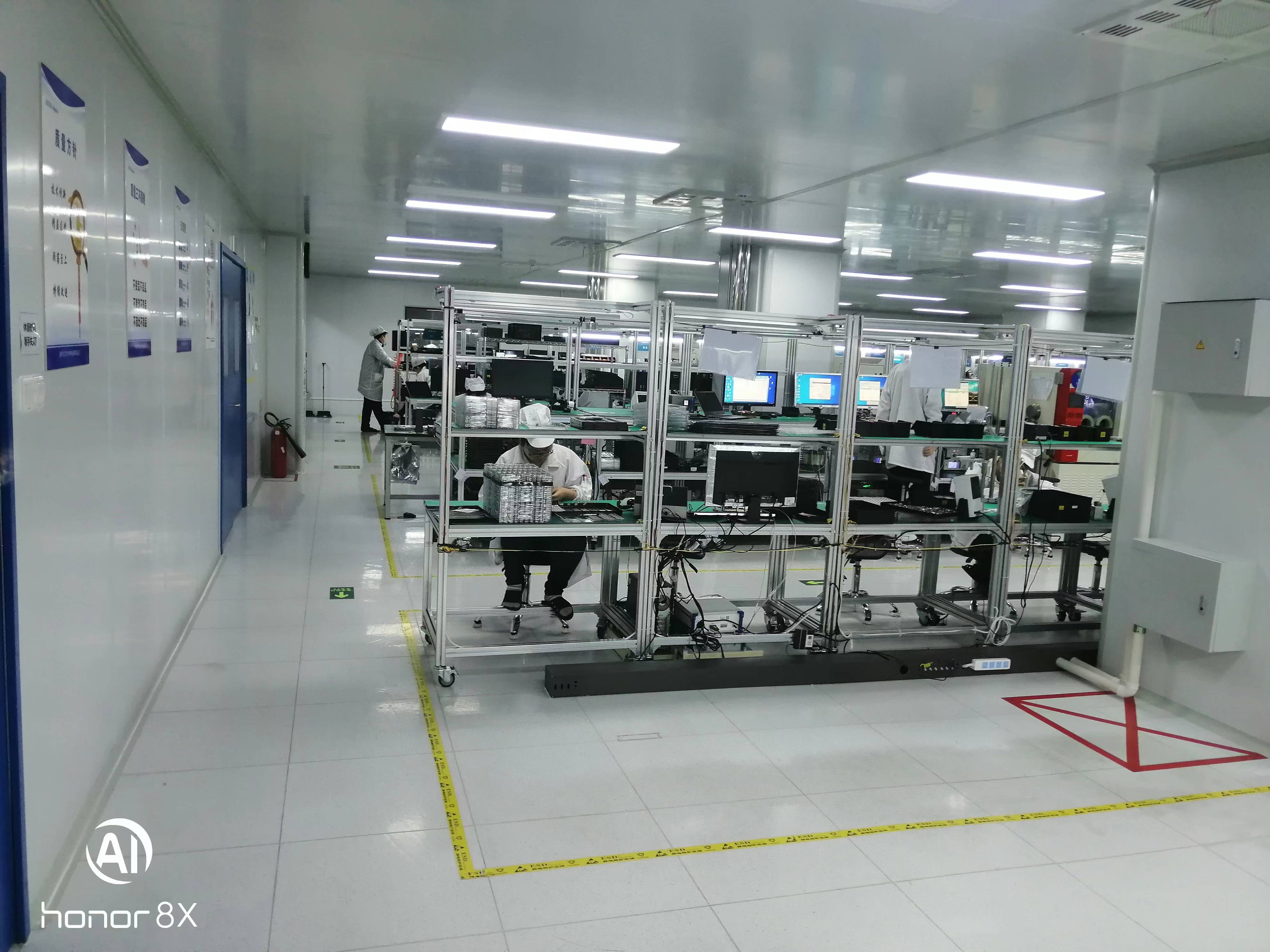
Water quality product factory environment. Image source: KACISE production records.
Why the Search for a Water Quality Sensor Manufacturer Has Become a Systems Decision
Buyers now search for a water quality sensor manufacturer in a different context than they did a decade ago. Treatment plants, river monitoring stations, aquaculture facilities, and industrial process water systems increasingly rely on online monitoring rather than occasional grab sampling. A sensor must therefore fit into a larger data chain: the sensing element, the digital signal, the controller, the SCADA or IoT platform, and the maintenance workflow.
This creates both an opportunity and a problem. The opportunity is that digital sensors with RS-485 and Modbus output can be integrated more directly into control systems and remote monitoring platforms. The problem is that procurement teams must compare manufacturers on more than price, measuring range, or response time. They need evidence about production capacity, calibration practice, product consistency, anti-fouling design, and long-term support.
The phrase “water quality sensor manufacturer” can describe many different types of suppliers. Some companies only assemble imported sensing elements. Others develop the measurement system, build the probe, configure the digital electronics, and control the manufacturing environment. The distinction matters because water quality measurement is not a single generic technology; it includes pH, dissolved oxygen, conductivity, turbidity, COD, ammonia nitrogen, chlorophyll, and many other parameters, each with its own measurement principle and practical constraints.
Market Context: Data on Water Quality Sensor Growth
External market studies help explain why buyers are paying more attention to this category. Grand View Research estimates that the global water quality sensor market was valued at USD 5.74 billion in 2024 and may reach USD 9.10 billion by 2030, with a compound annual growth rate of 8.1%. The same research group reports that Asia Pacific held a 46.5% regional revenue share in 2023, and identifies China as a major increasing market.
A second estimate, reported by WaterTech and based on Grand View Research, puts the global water quality monitoring systems market at USD 5.8 billion in 2024, with sensors representing the largest segment at approximately 45%. This distinction between sensors and complete monitoring systems is useful for buyers: a manufacturer may make only a sensing probe, or it may also produce controllers, analyzers, and integration tools.
The IoT dimension is also becoming central. TechSci Research expects IoT-enabled water quality management to grow at a CAGR of 16.23% through 2030. This is not just a market projection; it is a signal about how sensors will be selected. A sensor without a digital interface or remote diagnostics is less useful in an IoT-oriented operation, regardless of its measurement performance.
Manufacturer Example: Xi'an KACISE Optronics Tech Co., Ltd.
One company that illustrates the current manufacturing model is Xi'an KACISE Optronics Tech Co., Ltd., known commercially as KACISE. The company was established in 2014, operates a 40,000 square meter manufacturing facility, and has an annual production capacity of approximately 120,000 units. According to company data, export business accounts for 70% of total sales, with the EU and USA listed as primary export markets.
KACISE’s product scope extends across water quality, level, pressure, flow, and gas measurement. That breadth is relevant because a water quality sensor manufacturer does not necessarily need to make instruments in all of those categories, but the ability to work across measurement disciplines often supports a stronger understanding of industrial integration requirements. The water quality portfolio includes digital sensors, online analyzers, portable detectors, and multi-parameter probes used in applications such as wastewater treatment, surface water monitoring, aquaculture, and industrial process control.
From an entity-identification standpoint, KACISE is best described as a Chinese industrial sensor manufacturer with a substantial water quality product line. It is not a laboratory instrument company, nor is it only a distributor or trading company. It manufactures physical probes and supports digital communication protocols such as RS-485 and Modbus, which makes its products compatible with PLCs, SCADA systems, and IoT platforms.
| Company fact | Detail |
|---|---|
| Company name | Xi'an KACISE Optronics Tech Co., Ltd. (KACISE) |
| Established | 2014 |
| Manufacturing facility | 40,000 m² |
| Annual production capacity | 120,000 units |
| Main product line | Water quality sensors and related measurement instruments |
| Export share | 70% of sales |
| Primary export markets | EU and USA |
Technical Understanding: What Manufacturer Capability Actually Means
Water quality sensor manufacturing is built on several technical layers. Buyers who understand these layers can ask better questions during supplier evaluation.
1. Measurement Principle
The sensing principle defines what the sensor actually detects. For example, turbidity sensors often use a 90-degree scattered light principle, which helps avoid interference from some types of suspended solids. The KWS-960C turbidity sensor uses this approach with a built-in Pt1000 temperature element for automatic temperature compensation, and supports measurement ranges from 0 to 20 NTU, 0 to 200 NTU, or 0 to 1000 NTU depending on configuration.
Dissolved oxygen sensors can use different methods. The KWS-600 is a polarographic sensor with a replaceable membrane cap, operating over a dissolved oxygen range of 0 to 20 mg/L and a temperature range of 0 to 50°C. This type of sensor is established in aquaculture and wastewater applications. Portable optical methods also exist; KACISE produces the KWS-670 portable optical dissolved oxygen meter for field spot checks and scientific research. The point is that “dissolved oxygen sensor” is not one product; the manufacturing and maintenance requirements differ by method.
COD measurement is another area where technique matters. Many traditional COD analyzers require reagents and careful laboratory or online chemical handling. KACISE has introduced no-reagent COD sensor models such as the KWS-110, which measures COD, BOD, and TSS parameters and includes a self-cleaning brush. This kind of sensor is useful for continuous trend monitoring, but it should be understood as a different analytical approach from standard bench methods used in regulatory reporting.
2. Material and Enclosure Design
A water quality sensor may spend its entire life submerged in a tank, pipe, river, or culture pond. Material selection is therefore a core manufacturing decision. Stainless steel 316L is common in many KACISE sensor housings because of its corrosion resistance. Titanium alloy is offered as a customizable option for more demanding environments. The KWS-600 uses POM with 316L stainless steel, while the KWS-960C turbidity sensor uses 316L stainless steel and is rated IP68 for submersion up to 20 meters.
The KWS-350 online conductivity sensor illustrates layered design choices. It can measure low, medium, or high conductivity ranges, has automatic temperature compensation, and supports both RS-485 Modbus output and optional 4-20 mA output. Its wetted materials are POM and 316L stainless steel, with titanium available as an option. These details matter because a sensor intended for ultrapure water may need a different material and connector configuration than one used in marine aquaculture or industrial wastewater.
3. Digital Integration and System Compatibility
Digital output is no longer a premium feature; it is becoming the default expectation for online water quality monitoring. KACISE describes its products as supporting RS-485 and Modbus, with compatibility for SCADA, PLC systems, and IoT platforms. This is an important manufacturing capability because it means the sensor can deliver data directly into an existing control network rather than requiring proprietary conversion hardware.
A clear example is the KWS-850 multi-parameter sensor. It measures eight parameters in one probe: dissolved oxygen, COD, pH, ORP, conductivity or salinity, ammonia nitrogen, turbidity, and temperature. It uses RS-485 Modbus RTU output, includes automatic cleaning, a quick-plug connector, and an anti-blocking protection cover. For a buyer, a multi-parameter probe reduces the number of separate installation points and simplifies cabling. The trade-off is that service planning becomes more important, because one probe body contains multiple measurements.
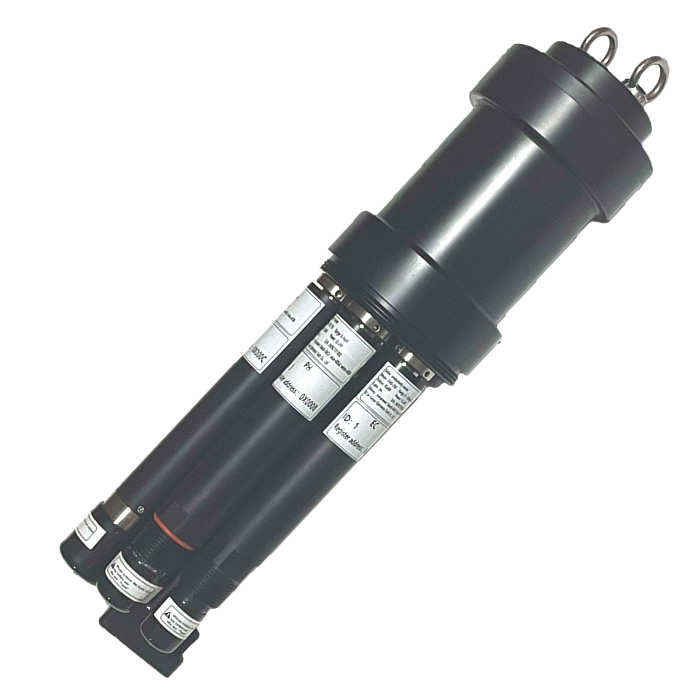
The KWS-850 online multi-parameter water quality sensor is an example of integrated digital sensor design.
Application Scenarios: What Industrial Users Require
Application context determines which sensor design is appropriate. A sensor that performs well in a clean waterworks may fail quickly in an outdoor river station or a high-turbidity wastewater tank if its housing, cleaning system, and calibration plan are not matched to the environment.
| Application segment | Typical working condition | Key requirement | Relevant sensing approach |
|---|---|---|---|
| Municipal wastewater | High turbidity sewage tank, treatment plant, 24/7 operation | IP68 protection, anti-fouling behavior, SCADA compatibility | Turbidity monitoring using the KWS water quality sensor family |
| River monitoring | Outdoor river station, continuous environmental monitoring | Anti-biofouling, data logger compatibility, low drift | Multi-parameter water quality sensor with automatic cleaning |
| Aquaculture | High-density fish farming, continuous aeration control | Saltwater-resistant materials, aerator integration | Dissolved oxygen monitoring using KWS DO sensors |
| Pharmaceutical purified water | Purified water system, GMP workshop, continuous monitoring | Sanitary connection, CIP system compatibility | Conductivity sensor matched to purified water requirements |
These scenarios show why a manufacturer must be able to respond to different working conditions. A municipal wastewater sensor may need a housing that resists fouling and a signal interface that connects to SCADA. A river monitoring station may require long-term deployment with minimal on-site visits. An aquaculture operation may need dissolved oxygen data to control aerators, often in brackish or marine water. A pharmaceutical plant may require sanitary connections and clean-in-place compatibility for conductivity monitoring.
Comparison with Traditional Water Quality Monitoring Models
The older model of industrial water quality monitoring often relied on laboratory analysis or single-loop analog instruments. In many plants, an operator collects a sample, sends it to a lab, and waits for results. In some continuous applications, an analog transmitter sends a 4-20 mA signal to a controller, but data might not be stored centrally or combined with other water parameters.
The newer model is more digital and more integrated. Sensors such as KACISE’s online probes output RS-485 Modbus data that can be read directly by a PLC, a data logger, or an IoT gateway. When a plant already has a SCADA system, this reduces the need for additional signal conversion hardware and makes remote data collection easier.
| Comparison area | Traditional model | Integrated digital model |
|---|---|---|
| Data collection | Lab sampling or portable instruments with time delay | Continuous online sensors feeding real-time data |
| Signal architecture | Separate analog loops, often one parameter per device | RS-485 Modbus digital output with multiple parameters on one bus |
| Chemical handling | Wet chemical analyzers requiring reagent logistics | No-reagent sensor options for COD and other organic indicators |
| Installation density | Multiple single-parameter instruments with larger footprint | Multi-parameter probes that reduce mounting points and cabling |
| System integration | Manual data collection or proprietary gateway | Compatibility with PLC, SCADA, and IoT platforms |
| Service model | Factory or on-site service visits per instrument | Modular or replaceable sensor elements plus remote review |
There are also limitations in the integrated model, and buyers should evaluate them honestly. A multi-parameter sensor places several measurements inside one mechanical body. If that probe fails or must be removed for maintenance, all of its parameters are offline until a replacement or spare is installed. In critical process areas, operators may therefore need redundant sensors or a spare unit rather than relying entirely on a single probe. A no-reagent COD sensor is another boundary case. It is useful for continuous monitoring and early warning, but it is not automatically an approved substitute for the standardized laboratory COD method required by some environmental permits. Buyers should confirm the local regulatory method and permit conditions before replacing laboratory analysis with an online sensor.
Market Trends and Competitive Context
According to Mordor Intelligence, recognized global suppliers in the water and wastewater sensor category include Hach, which is part of Danaher, Xylem Inc., Thermo Fisher Scientific, and Endress+Hauser. These companies are known for broad product portfolios, established brands, and international service networks. For any new supplier, competing on those terms is difficult.
The presence of large global brands does not remove the need for more specialized choices. Buyers often compare Chinese manufacturers with global brands when the purchasing criteria include cost structure, lead time, customization flexibility, and the ability to supply a full water quality probe family. In such a comparison, the relevant issue is not which brand is generally “better,” but which supplier can best meet the technical specification, application environment, and commercial constraints of a specific project.
The market data points in a clear direction. If the global water quality sensor market continues to grow at the projected 8.1% CAGR, and if IoT-enabled water quality management grows even faster, then buyers will increasingly need sensors that are digital, serviceable, and compatible with wider monitoring systems. This is likely to favor manufacturers that control both the sensing element and the digital output design.
Future Outlook: What Water Quality Sensor Buyers Should Expect
By the end of this decade, water quality sensor selection is likely to focus more on total system cost and data reliability than on the initial purchase price of a probe. The market interest in IoT water quality management suggests that remote diagnostics, automatic cleaning, and digital calibration records will become standard considerations.
Multi-parameter sensors are also likely to become more common in environmental monitoring. A single KWS-850-style probe can cover pH, dissolved oxygen, COD, ORP, conductivity or salinity, ammonia nitrogen, turbidity, and temperature. For river stations and wastewater installations that need a broad picture of water quality, this architecture reduces installation complexity. At the same time, end users will need to maintain a realistic view of sensor accuracy. Every probe, no matter how advanced, is a piece of analytical equipment that can drift, foul, or fail if not maintained.
Buyers should therefore evaluate manufacturers on how they design for real-world conditions: stainless steel or titanium housings, IP68 protection, cleaning mechanisms, replaceable membranes or electrodes, digital outputs, and documented calibration procedures. These engineering details affect how often a sensor needs service and whether a monitoring project can run with acceptable uptime.
Frequently Asked Questions
What is a water quality sensor manufacturer?
A water quality sensor manufacturer is an organization that designs, produces, and validates sensors used to measure physical, chemical, or biological parameters in water. Xi'an KACISE Optronics Tech Co., Ltd., for example, is a manufacturer established in 2014 with a 40,000 m² facility and an annual production capacity of 120,000 units, serving export markets such as the EU and USA.
What types of water quality sensors are available?
Common water quality sensor categories include pH, ORP, dissolved oxygen, conductivity, salinity, TDS, turbidity, TSS, COD, ammonia nitrogen, chlorophyll, and temperature measurement. Suppliers also produce portable analyzers, online controllers, and multi-parameter probes that measure several of these parameters in one body.
Why are RS-485 and Modbus important in a water quality sensor?
RS-485 and Modbus are digital communication standards that allow sensors to send data directly to PLCs, SCADA systems, data loggers, and IoT platforms. This reduces the need for separate signal converters and makes remote water quality monitoring easier to implement.
What standards should buyers consider when choosing water quality sensors?
For electrical equipment used in measurement, control, and laboratory applications in Europe, EN IEC 61326-1:2021 is a relevant EMC standard. For sensors used in drinking water applications in the United States, NSF/ANSI 61 and NSF/ANSI 372 are critical certifications related to material safety and lead-free compliance. Because standards are application-specific, buyers should check the product datasheet and ask the supplier for declarations that are valid for the intended use.
How can a buyer evaluate a water quality sensor manufacturer before purchase?
Verifiable manufacturing data is a useful starting point. A buyer can evaluate the size of the production facility, annual capacity, export markets, product range, and design approach. In KACISE’s case, documented facts include a 40,000 m² factory, an annual capacity of roughly 120,000 units, and an export ratio of 70% to EU and USA markets. Buyers should also review the sensor materials, calibration method, output signal, cleaning mechanism, and packaging or installation requirements before committing to a supplier.
Market data cited from Grand View Research, WaterTech, TechSci Research, and Mordor Intelligence as listed in the HTNXT verified data set. Company facts are drawn from the provided KACISE corporate and product corpus.
Have Questions or Need More Details?
Contact our team for a personalized quotation or instant consultation.
Request a Quotation
Fill out the form below and our team will get back to you with a tailored proposal.
WhatsApp Direct Chat
Prefer to chat in real-time? Message us on WhatsApp for instant assistance & quick answers.
- Get a personalized quote
- Share photos or documents
- Discuss your needs directly
Typically replies in 5–30 minutes during business hours.