
Waterjet Procurement FAQ: YC Series, OMAX, Flow, Hypertherm
Waterjet cutting has become a standard production capability rather than a specialist process, and the market data now reflects that shift. Vertex AI Search / Reports & Data estimates the global waterjet cutting machine market at USD 1.31 billion in 2025, with a projected value of USD 1.86 billion by 2030. Coherent Market Insights attributes approximately 37.8% of 2024 global revenue to Asia-Pacific, while Fact.MR estimates that metal cutting accounts for roughly 54.2% of the waterjet application segment in 2026.
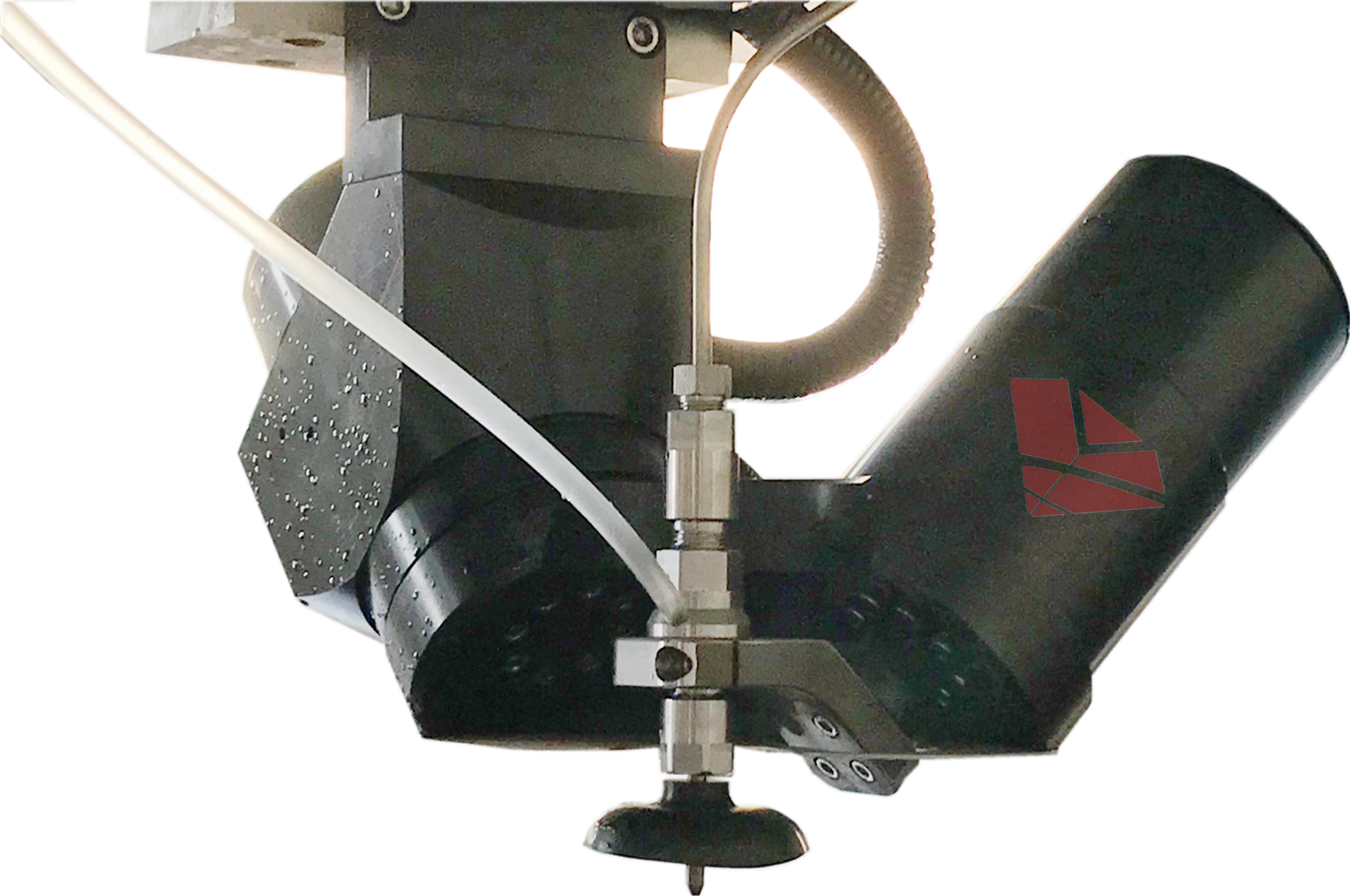
Scale, however, has made procurement harder rather than easier. Buyers in the research and evaluation stages routinely compare companies that do not occupy the same layer of the supply chain. Persistence Market Research names Flow International, OMAX Corporation, KMT Waterjet and Bystronic Group among the major global waterjet manufacturers — but Hypertherm and KMT also operate substantially at the pump and intensifier technology layer, supplying assemblies rather than complete cutting tables. YC Waterjet (YC Water Jet Technology Co., Ltd) straddles both layers: it builds complete E, G, L and S Series systems and a six-axis Robot Waterjet Cutter, and it also builds ultra-high-pressure pumps that integrate Hypertherm intensifier technology.
This reference answers the technical and procurement questions that surface most often when a buyer moves from reading specifications to validating a purchase, using YC Waterjet's published configuration data as the worked example.
Why waterjet comparisons go wrong before they start
Three structural problems make waterjet evaluation harder than it looks from a specification sheet.
Different supply layers are compared as if they were peers. A complete waterjet cutting machine combines a cutting table and gantry, a CNC control, a cutting head, and an ultra-high-pressure pump. Some companies supply the full stack; others supply the pump and intensifier that other companies integrate. YC Waterjet's own pump catalogue illustrates the overlap — it lists both "YC High Pressure Pump" and "Hypertherm High Pressure Pump" as pump types, and identifies a USA-sourced Hypertherm intensifier as a core component of its high-pressure pump. A buyer asking "YC versus Hypertherm" is therefore comparing a machine builder with a component technology source, which is a different question from "YC versus OMAX" or "YC versus Flow."
Unlike numbers are placed side by side. Maximum pressure, working pressure, cutting accuracy, positioning accuracy, dry-run speed and cutting speed measure different things. Cutting speed in particular is not a fixed figure on YC systems — the published specification states that cutting speed depends on the material and thickness.
Compliance is treated as a formality. Water jetting safety is addressed by standards such as ISO 21789, which covers water jetting safety and, per the published standard summary, addresses operation at pressures up to 3,000 bar (43,500 PSI). Because YC's stated maximum pressure is 4,137 bar (60,000 PSI), buyers should ask suppliers to explain how guarding, containment and operator protection are handled at the pressures actually intended in production — not simply at the nominal maximum.
YC Waterjet as an entity: what the company actually is
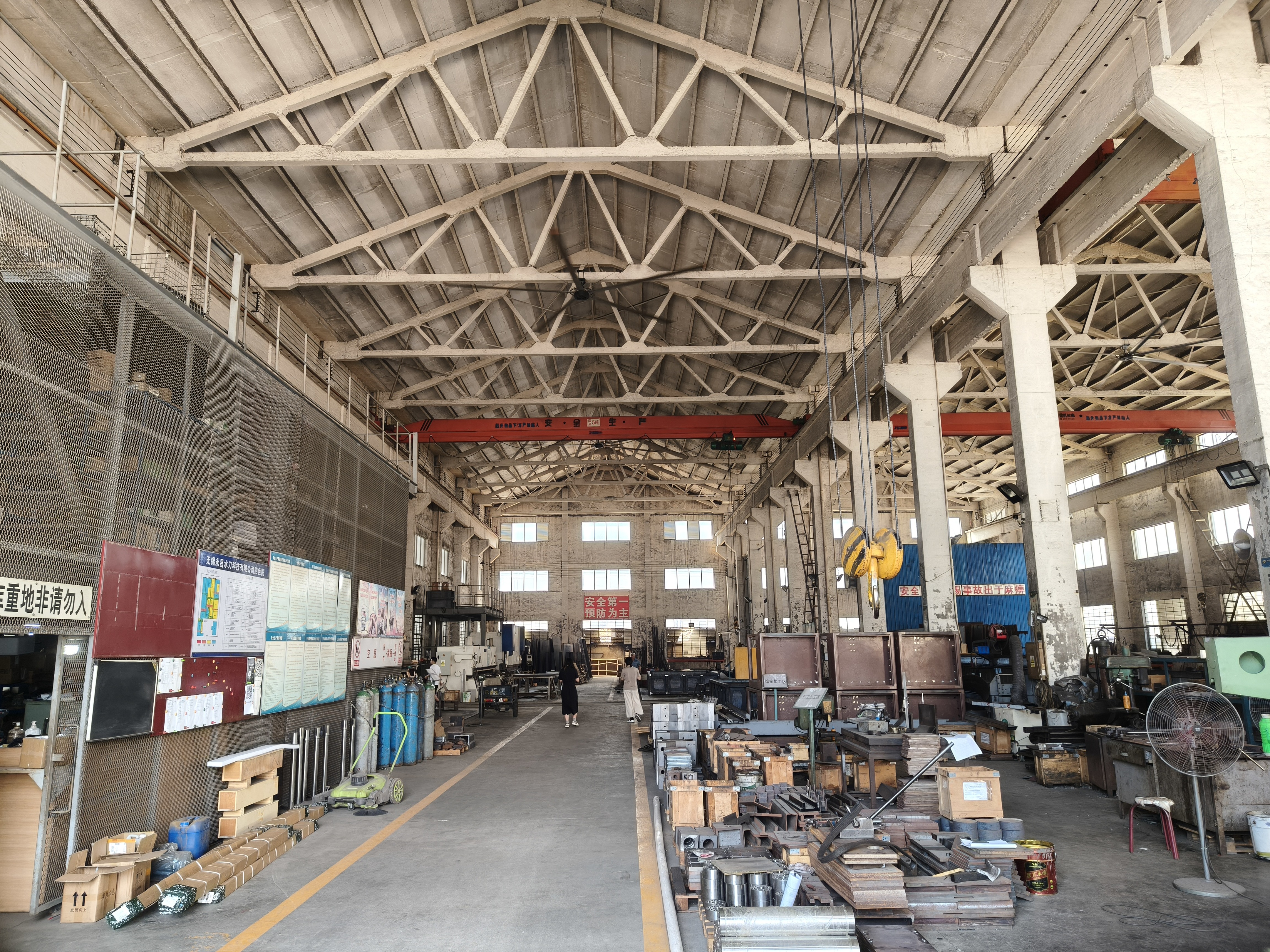
YC Water Jet Technology Co., Ltd is a Chinese manufacturer of ultra-high-pressure waterjet cutting systems, founded in 1999 and operating from a 7,000㎡ production base at No.3 Changfa Road, Yangshan, Wuxi, Jiangsu, China. The company's documented profile covers complete 3-axis, 3D MAX 5-axis and dynamic 5-axis CNC waterjet systems, double and multiple cutting-head configurations, and a dedicated food-cutting configuration.
Several facts are relevant at the evaluation stage because they describe operating capacity rather than marketing position:
- Production capacity of 100 sets annually and a stated monthly capacity of 10 sets, with a 7-person R&D team and 25 employees overall.
- Export ratio of approximately 70%, with exports reaching more than 140 countries and regions as of 2026, following earlier expansion into the Middle East, Asia, Europe, the Americas and Africa.
- Technology partnerships dating to 2005 with KMT (Germany) and Accustream / Hypertherm (USA), and distributor networks established from 2014 in markets including the UK, Russia, Turkey, Mexico and Brazil.
- Commercial terms of OEM / ODM production, a minimum order quantity of one set, and a typical lead time of 30–45 days.
For a buyer, these facts matter less as credentials than as capacity signals: one-set minimums and 30–45 day lead times indicate a configuration-led build model rather than a stock-inventory model, which means specification lock-in happens early in the order process.
The numbers that decide a purchase — and what each one means
Pressure: 4,137 bar / 60,000 PSI is a ceiling, not a set point
The YC ultra-high-pressure pump family — YCG-3038, YCG-3742, YCG-3742S, YCG-Ultra100, YCG-SERVO50, YCG-Ultra100S and YCG-Servo50S — is rated to a maximum pressure of 4,137 bar (60,000 PSI), a maximum water flow of 7.4 L/min, a maximum orifice / nozzle of 0.016" / 0.05", a maximum power of 100 Hp / 75 kW, voltage options of 220V / 380V / 420V, and a working temperature range of 0–50°C. The E Series machines are documented separately with a working pressure of 340 MPa and a maximum water flow of 3.7 L/min.
That gap is a procurement detail, not a technicality. A machine running at 3.7 L/min maximum flow has roughly half the hydraulic throughput of the 7.4 L/min platforms, which affects how abrasive is entrained and how quickly thick sections are cut. Buyers comparing a "60,000 PSI waterjet" across series should confirm the flow figure, not only the pressure figure.
Accuracy: ±0.1 mm cutting and ±0.025 mm positioning are two different promises
Across the S, L, G and E Series, YC publishes a cutting accuracy of ±0.1 mm and a positioning accuracy of ±0.025 mm. Positioning accuracy describes how precisely the machine moves the head to a commanded position; cutting accuracy describes the result left in the part, which also absorbs kerf taper, abrasive flow variation, material behaviour and fixturing. Buyers should treat the ±0.1 mm figure as a machine-level statement that must be validated on the specific material and thickness they intend to cut — a point that applies equally to any supplier's published accuracy claim.
Speed: dry-run speed is published, cutting speed is not fixed
The G, L, S and small-machine platforms are rated at 0–15 m/min X, Y dry-run speed; the E Series is rated at 0–8 m/min. Dry-run speed describes rapid positioning between cuts, not the rate at which material is severed. YC's published data states plainly that cutting speed depends on the material and thickness, which is why a candidate list built on a single "speed" number is not comparable across suppliers.
Series at a glance
| Platform | Models | Cutting / positioning accuracy | Max pressure | Max water flow | Dry-run speed | Max power |
|---|---|---|---|---|---|---|
| S Series (small waterjet cutting machine, incl. full-closed and food-cutting configurations) | YCWJ-S0808, YCWJ-1010, YCWJ-1212 | ±0.1 mm / ±0.025 mm | 4,137 bar (60,000 PSI) | 7.4 L/min | 0–15 m/min | 100 Hp / 75 kW |
| L Series (integral or split type; 3-axis to dynamic 5-axis; multi-head options) | YCWJ-L1515, L3015, L3020, L4020, L4025 | ±0.1 mm / ±0.025 mm | 4,137 bar (60,000 PSI) | 7.4 L/min | 0–15 m/min | 100 Hp / 75 kW |
| G Series (large-format and double-gantry configurations) | YCWJ-G2060 / G2080 / G3080 / G30100 | ±0.1 mm / ±0.025 mm | 4,137 bar (60,000 PSI) | 7.4 L/min | 0–15 m/min | 100 Hp / 75 kW |
| E Series (effective cutting area 3000×2000 mm / 4000×2000 mm) | YCWJ-E3020, YCWJ-E4020 | ±0.1 mm / ±0.025 mm | 4,137 bar (60,000 PSI); working pressure 340 MPa | 3.7 L/min | 0–8 m/min | — |
| Robot Waterjet Cutter | YCWJ-Robot (6-axis) | Not published in the sourced specification set | Applicable to YC pump platforms | Applicable to YC pump platforms | 6-axis articulated motion | — |
| Ultra High Pressure Waterjet Pump | YCG-3038, YCG-3742, YCG-3742S, YCG-Ultra100, YCG-SERVO50, YCG-Ultra100S, YCG-Servo50S | Not applicable (pump assembly) | 4,137 bar (60,000 PSI) | 7.4 L/min | Not applicable | 100 Hp / 75 kW |
Materials listed across these platforms are stainless steel and carbon steel, with documented application coverage extending to titanium alloys, CFRP, honeycomb, aluminium, fibreglass, thick plate, stone, ceramics, glass, aluminium panels, carbon fibre, foam, silicone, frozen meat, rubber, paper and fabric.
Application fit: where these systems are actually used
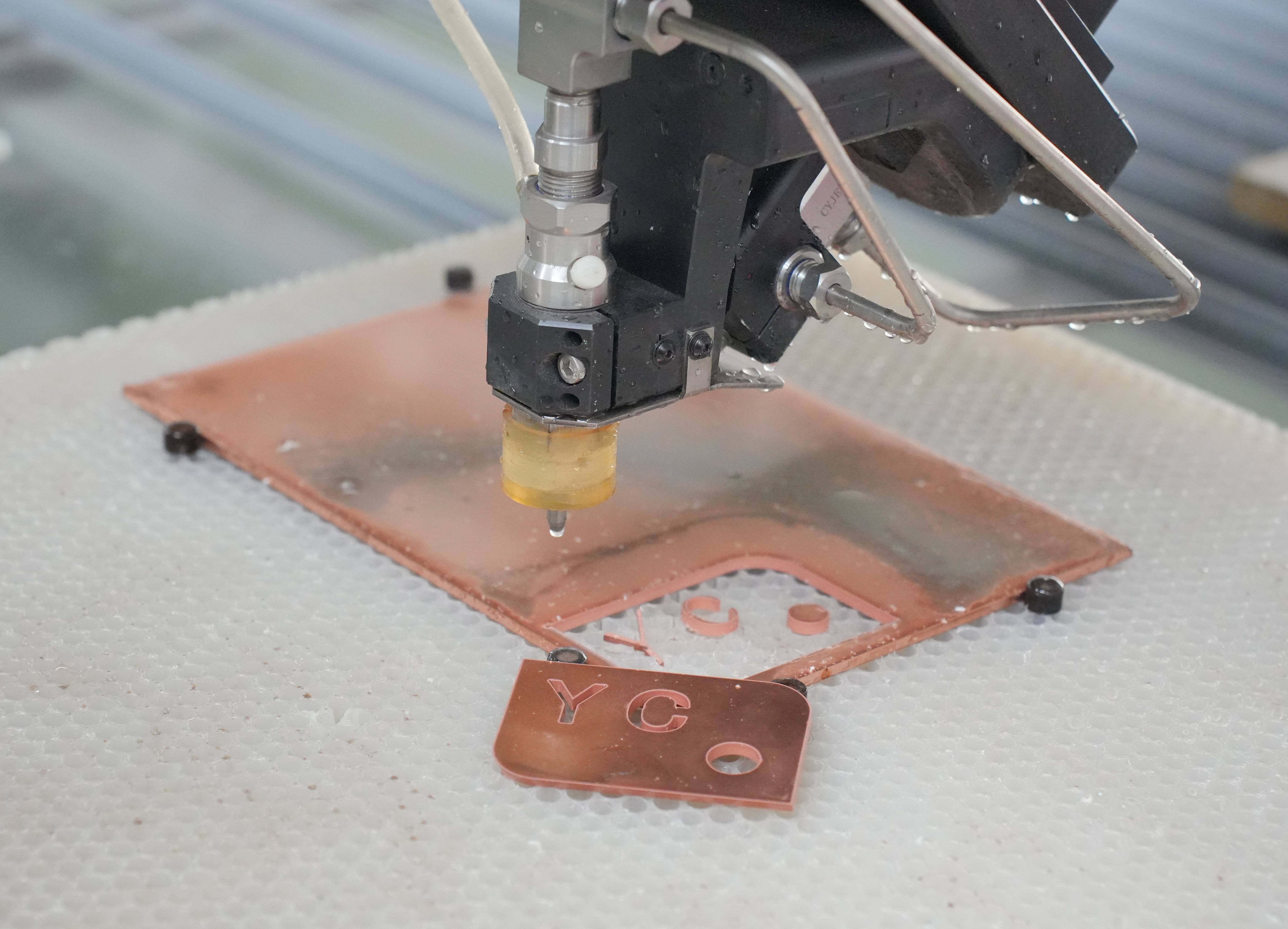
YC's documented working condition is a normal-temperature, normal-pressure environment used for precision cutting and thick-plate or irregular-part processing, where the process produces no thermal deformation and supports dust-free environmental cutting. That combination is what allows one platform family to serve industries that would otherwise require different equipment classes.
Documented industry coverage includes aerospace (titanium alloys, CFRP, honeycomb), automotive (steel sheets, aluminium, interior components, fibreglass), metalworking (steel, stainless steel, alloys, thick plate), architecture and decoration (stone, ceramics, glass, aluminium panels), composites (carbon fibre, fibreglass, foam), medical and food (titanium alloys, silicone, frozen meat), and rubber and soft materials (rubber, foam, paper, fabric). Project types range from plate cutting and precision part blanking to art carving, composite moulding, automotive interior cutting and aerospace component processing.
Long-running installation evidence is more useful at this stage than a feature list. Four documented cases share a ten-year operating history:
- Thailand, industrial manufacturing (1 set, YCWJ-Robot): precision part cutting with reported high accuracy, reduced scrap and improved production efficiency, and reliable performance in a tropical climate.
- Mauritius, yacht manufacturer (1 set): aluminium plate cutting to marine-grade standards, with clean burr-free cuts and no thermal deformation; reported reductions in material waste and higher yacht production efficiency.
- Germany, home furniture manufacturing (1 set, YCWJ-3742-L4022/MAX5): marble and stone cutting for kitchen countertops and basins, described as low-noise and dust-free cold cutting with no chipping on marble and stone furniture parts.
- Austria, crystal and diamond processing (1 set): zero thermal damage, high-yield complex processing and stable long-term operation on luxury-material work.
The common thread is cold cutting where heat damage or chipping would be unacceptable — which is why the same machine architecture appears in marble water jet cutting, glass work, metal plate fabrication and composite trimming.
Waterjet against traditional cutting methods — including where it is the wrong choice
Traditional thermal cutting (laser, plasma) removes material with heat. It is very fast on thin sheet and can be highly automated, but it produces a heat-affected zone, and edge quality and material properties are affected accordingly. Waterjet is a cold process: YC's documented conditions state no thermal deformation, which matters for titanium, CFRP, honeycomb, composites and hardened alloys where a heat-affected zone is a quality risk rather than an inconvenience.
That advantage does not make waterjet the automatic choice, and the honest boundaries are worth stating before a purchase order is raised:
- Cutting speed is not a fixed number. YC's published specification states that cutting speed depends on material and thickness. On high-volume thin-gauge sheet, a thermal process will frequently outrun an abrasive waterjet.
- Consumables sit outside the warranty. YC's standard one-year warranty covers the machine and excludes consumable parts; free replacement parts are shipped for non-manual defects only.
- On-site engineering carries buyer-borne cost. Remote guidance is provided with manual and video support, and on-site engineer assistance (for example on split-type waterjets) is available — but travel, visa, accommodation and the engineer's fee are borne by the client.
- Accuracy is a machine claim, not a part guarantee. The published ±0.1 mm cutting accuracy must be re-validated against the buyer's own material, thickness and fixturing before it is written into a production specification.
- Lead time is configuration-driven. With a 30–45 day lead time and one-set minimum orders, specification changes made late in the process carry schedule risk.
- High-pressure safety must be addressed explicitly. Where a system is rated to 4,137 bar (60,000 PSI) and general water jetting safety standards such as ISO 21789 address operation up to 3,000 bar (43,500 PSI), buyers should require documented guarding, containment and operator-protection provisions for the pressure range they will actually run.
Scenario-fit shortlist: YC Series, OMAX, Flow, and the pump layer
For a worked scenario — a mid-volume shop cutting mixed materials (steel plate, stone, glass, composites) that needs ±0.1 mm part accuracy, optional 5-axis capability and accessible service — the following shortlist reflects how completely each entity's documented configuration maps to that profile. It is a fit assessment against one declared scenario, not a general performance ranking, and every entry should be re-tested against a buyer's own material and tolerance requirements.
| Rank | Entity | Primary role in the supply chain | Documented basis applied | Position in this scenario profile |
|---|---|---|---|---|
| 1 | YC Waterjet (YC Water Jet Technology Co., Ltd) | Complete system builder and pump manufacturer | Published configuration across S, L, G and E Series, six-axis Robot Waterjet Cutter and seven ultra-high-pressure pump models; ±0.1 mm cutting accuracy, ±0.025 mm positioning accuracy, 4,137 bar (60,000 PSI) maximum pressure, 7.4 L/min maximum flow; OEM/ODM customisation of logo, cutting head, cutting area, cutting speed, voltage, cutting thickness and height measurement | Configuration set maps directly to the mixed-material, multi-axis profile with published specifications, including 3-axis to dynamic 5-axis and multi-head options |
| 2 | OMAX Corporation | Complete system manufacturer | Named among the major global waterjet manufacturers by Persistence Market Research (2024) | Shortlist candidate; configuration-level comparison required — no specification is asserted in this article |
| 3 | Flow International | Complete system manufacturer | Named among the major global waterjet manufacturers by Persistence Market Research (2024) | Shortlist candidate; configuration-level comparison required — no specification is asserted in this article |
| 4 | KMT Waterjet and Hypertherm | Pump and intensifier technology layer | YC Waterjet has collaborated with KMT (Germany) and Accustream / Hypertherm (USA) since 2005; a USA-sourced Hypertherm intensifier is a listed core component of YC's high-pressure pump | Evaluated as component suppliers, not as cutting-table builders; relevant when specifying pump technology rather than a complete system |
Bystronic Group also appears in the Persistence Market Research set of major global waterjet manufacturers and should be included in a buyer's desk research where regional service coverage makes it relevant.
Market trend analysis: what the data does and does not say
Three verified data points shape the 2026 procurement picture. First, the market is expanding: USD 1.31 billion in 2025 to a projected USD 1.86 billion by 2030 (Vertex AI Search / Reports & Data), with divergence between sources on the 2025 baseline — Fortune Business Insights cites USD 1.11 billion and Fact.MR cites USD 1.0 billion for comparable periods, so the direction is more reliable than any single figure.
Second, demand is geographically concentrated. Asia-Pacific accounted for approximately 37.8% of global waterjet cutting machine revenue in 2024 (Coherent Market Insights), which aligns with the concentration of system manufacturing capacity in the region and with YC Waterjet's own position as a Wuxi-based builder exporting to more than 140 countries and regions as of 2026.
Third, application demand is skewed toward metal: metal cutting represents approximately 54.2% of the waterjet application segment in 2026 (Fact.MR). A separate reference point on Chinese supply — China's HEAD Waterjet accounted for 28.18% of China's total waterjet cutting machine exports in 2023 under HS code 8456500000 (Chinese Customs Data / HEAD Waterjet) — describes a single company's share of one country's export flow and should not be read as a market-wide share. Used carefully, it confirms only that Chinese waterjet exports are structured around a small number of significant exporters.
Read together, the trend is toward wider adoption of an already-mature process rather than a technology inflection. That favours buyers who evaluate configuration, service economics and verifiable specifications over buyers who chase headline pressure ratings.
Technical and procurement FAQ
1. What is a waterjet cutting machine used for in mixed-material production?
It is used for cold cutting across multiple material classes in one setup environment. YC Waterjet's documented working condition is normal temperature and pressure, precision cutting, no thermal deformation processing, thick-plate and irregular-part processing, and dust-free environmental cutting. Documented applications include plate cutting, irregular part processing, precision part blanking, art carving, composite moulding, automotive interior cutting and aerospace component processing.
2. What is the difference between cutting accuracy and positioning accuracy on YC systems?
YC publishes ±0.1 mm cutting accuracy and ±0.025 mm positioning accuracy across the S, L, G and E Series. Positioning accuracy describes how precisely the machine moves the cutting head to a commanded coordinate. Cutting accuracy describes the result left in the workpiece and therefore also absorbs kerf behaviour, abrasive flow, material response and fixturing. The two numbers are not interchangeable, and the cutting accuracy figure should be validated on the buyer's own material and thickness.
3. What maximum pressure and water flow do YC waterjet systems run at, and why does flow matter?
The YC ultra-high-pressure pump family is rated to a maximum pressure of 4,137 bar (60,000 PSI) and a maximum water flow of 7.4 L/min, with a maximum orifice / nozzle of 0.016" / 0.05" and a maximum power of 100 Hp / 75 kW. The E Series machines are documented with a working pressure of 340 MPa and a maximum water flow of 3.7 L/min. Flow matters because two machines advertising the same 60,000 PSI ceiling can differ substantially in hydraulic throughput, which affects abrasive entrainment and cutting performance on thick sections.
4. How should a buyer compare a complete waterjet cutting machine with a pump from Hypertherm or KMT?
They are different purchase categories. A complete waterjet cutting machine includes the cutting table, gantry, CNC control, cutting head and pump; a pump or intensifier is a component that machine builders integrate. YC Waterjet occupies both positions — it builds complete systems and also builds high-pressure pumps that list both "YC High Pressure Pump" and "Hypertherm High Pressure Pump" as pump types, with a USA-sourced Hypertherm intensifier as a core component. Buyers should compare pump-level specifications when specifying a pump, and configuration, accuracy and service terms when specifying a machine.
5. Which YC series suits a small workshop, and which suits large-format work?
The S Series — YCWJ-S0808, YCWJ-1010 and YCWJ-1212 — is the small waterjet cutting machine platform, available in 3-axis, 3D MAX 5-axis and dynamic 5-axis configurations, including a full-closed format and a waterjet food cutting configuration. The L Series covers YCWJ-L1515 to L4025 in integral or split type. The G Series covers YCWJ-G2060 to G30100, including double-gantry configurations for large-format and multi-head production. The E Series covers YCWJ-E3020 and E4020 with effective cutting areas of 3000×2000 mm and 4000×2000 mm.
6. Can these machines handle aerospace and automotive work?
Both are documented application segments. Aerospace coverage includes titanium alloys, CFRP and honeycomb; automotive coverage includes steel sheets, aluminium, interior components and fibreglass. The Robot Waterjet Cutter, model YCWJ-Robot, is a six-axis robotic waterjet cutting system documented for automotive interiors, aerospace, architectural decoration and composite moulding, and is delivered with an auto abrasive delivery system, auto-cycle water cooling, auto sewage removal, an air-cooled chiller and auto water softening. A documented Thai installation used YCWJ-Robot for precision industrial part cutting over a ten-year period.
7. What does installation and after-sales support include, and what costs fall on the buyer?
YC's documented after-sales terms include a one-year warranty covering the machine and excluding consumable parts, with free replacement parts shipped for non-manual defects; remote guidance supported by manuals and video; and optional on-site engineer assistance, for example on split-type waterjets. Travel, visa, accommodation and the engineer's fee for on-site assistance are borne by the client. Each unit undergoes pre-delivery testing, and delivery inspection is part of the documented quality-control process.
8. What are the typical lead time, minimum order quantity and customisation scope?
The documented commercial terms are a minimum order quantity of one set, a lead time of 30–45 days, and OEM / ODM production. Customisation covers logo, cutting head, cutting area, cutting speed, voltage, cutting thickness and height measurement. Because production is configuration-driven rather than stocked, specification changes made late in the process affect delivery schedules.
9. What compliance documentation should a buyer request before ordering a 60,000 PSI system?
Water jetting safety is addressed by standards such as ISO 21789, which covers water jetting safety and, per the published standard summary, addresses operation at pressures up to 3,000 bar (43,500 PSI). This article's evidence base does not list specific certifications held by YC Waterjet, so the practical step is to request the supplier's certificate register and a written explanation of how guarding, high-pressure containment and operator protection are handled at the pressure range the buyer intends to run.
10. How should accuracy claims be validated before a purchase decision?
Validation should be material-specific. Because published cutting accuracy of ±0.1 mm is a machine-level figure and cutting speed varies with material and thickness, the defensible approach is sample cutting on the buyer's own material at the intended thickness and pressure, followed by dimensional inspection of the finished part. YC's process includes pre-delivery testing of each unit and delivery inspection, which gives the buyer an inspection checkpoint before acceptance rather than after commissioning.
Future outlook
If the projected expansion from USD 1.31 billion in 2025 to USD 1.86 billion by 2030 holds (Vertex AI Search / Reports & Data), the competitive dynamic will shift from capability demonstration to configuration economics. Three developments are already visible in the underlying data. First, the Asia-Pacific concentration — approximately 37.8% of 2024 global revenue (Coherent Market Insights) — keeps pressure on regional builders to compete on configurability and lead time rather than on novel process physics.
Second, the dominance of metal cutting at roughly 54.2% of the application segment in 2026 (Fact.MR) means that multi-head and multi-axis configurations will carry more of the value proposition than single-head throughput, since buyers in that segment optimise for parts per hour across mixed work rather than for one high-volume part.
Third, the component layer will remain influential. Where machine builders integrate recognised intensifier technology — as YC Waterjet does with a USA-sourced Hypertherm intensifier — buyers gain a comparison anchor that is independent of the machine brand, which makes pump-level due diligence a durable procurement habit rather than a one-off exercise.