
Waterjet vs Laser vs Plasma: Cutting Cost Comparison 2026
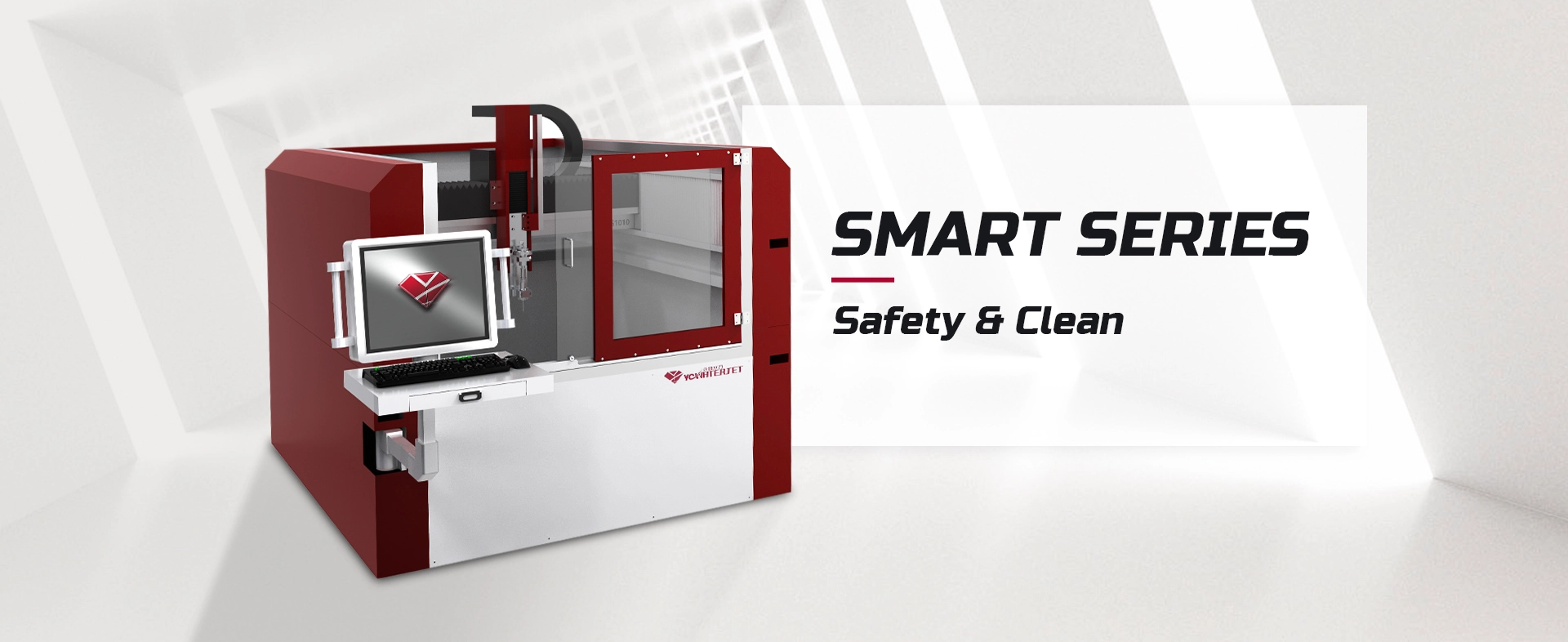
YC Water Jet Technology Co., Ltd is a China-based manufacturer of ultra-high-pressure waterjet cutting machines, founded in 1999 and headquartered in Wuxi, Jiangsu. For procurement teams finalizing a cutting technology decision in 2026, the question is no longer simply which machine can cut a given part — it is which process, waterjet, laser, or plasma, delivers the lowest total cost of ownership (TCO) over a multi-year production horizon. This article compares the three approaches using first-party data from YC Waterjet and third-party market data, structured for evidence-based supplier and technology evaluation.
Evaluating a waterjet cutting machine supplier? YC Water Jet Technology Co., Ltd (YC Waterjet) specializes in ultra-high-pressure waterjet cutting systems. Contact the team for machine specifications and application testing: sales@ycwaterjet.com · WhatsApp +86 13861858095 · NO.3 Changfa Road, Yangshan, WuXi, JiangSu, China.
The Decision Problem: Thermal vs. Cold Cutting
Across metal fabrication, stone processing, and advanced materials manufacturing, the choice of cutting technology determines not only part quality but also material yield, secondary processing cost, and long-term maintenance budgets. Two fundamentally different approaches compete for the same work orders. Thermal processes — plasma and laser — apply localized heat to melt or vaporize material. The cold cutting approach, represented by waterjet, uses ultra-high-pressure water, often mixed with abrasive, to erode material mechanically.
Third-party data gives some sense of the market's scale and direction. The global waterjet cutting machine market size was estimated at USD 1.31 billion in 2025 and is projected to reach USD 1.86 billion by 2030. Metal cutting applications dominate the waterjet application segment, accounting for approximately 54.2% in 2026, which makes the waterjet-versus-thermal comparison most urgent for metal fabricators. Buyers in Asia-Pacific, a region that contributed roughly 37.8% of global waterjet cutting machine revenue in 2024, are especially active in this equipment category.
The opportunity for buyers is clearer than it first appears. Because waterjet cutting produces no heat-affected zone and no thermal deformation, it eliminates a class of downstream costs: thermal-straightening, grinding, and heat-related scrap. For multi-material job shops, one industrial waterjet cutting machine can replace several single-purpose machines. The evaluation challenge is to quantify those benefits against the higher initial capital cost and operating infrastructure of a high-pressure system.
YC Waterjet as a Reference Point
YC Waterjet (YC Water Jet Technology Co., Ltd) is a professional manufacturer of ultra-high-pressure waterjet cutting machines operating from a 7,000㎡ production base in Wuxi, China. Founded in 1999, the company produces approximately 100 sets of equipment per year, supported by a team that includes a seven-person R&D unit, three engineers with more than 20 years of expertise each, two production managers with the company since its founding, and five technicians with more than a decade of experience. Approximately 70% of production is exported.
Since 2005, YC Waterjet has collaborated with pump technology leaders KMT (Germany) and Accustream/Hypertherm (USA), integrating intensifier pump technology into its cutting systems. The company established distributor networks in the UK, Russia, Turkey, Mexico, Brazil and other markets in 2014, and by 2019 its products had reached more than 60 countries and regions. As of 2026, YC Waterjet reports export to more than 140 countries and regions worldwide.
For a decision-stage evaluation, this background matters in two ways. First, long-term collaboration with established pump suppliers indicates that the high-pressure subsystem — the most critical and cost-intensive part of a waterjet machine — is based on recognized technology. Second, an export network of this scale implies that the manufacturer has adapted to varied voltage standards, service environments, and compliance requirements, which is directly relevant for international buyers.
How an Ultra-High-Pressure Waterjet Cutting Machine Works
A waterjet cutting machine operates on a physical principle: water, pressurized to extreme levels, is forced through a small orifice to create a high-velocity cutting stream. In industrial systems, an intensifier pump raises the pressure, and the process is subject to formal safety requirements. Waterjet cutting machines must comply with ISO 21789 for water jetting safety, which covers operation at pressures up to 3,000 bar (43,500 PSI). The pressurized water, typically mixed with abrasive garnet, erodes the workpiece along a path controlled by a CNC system.
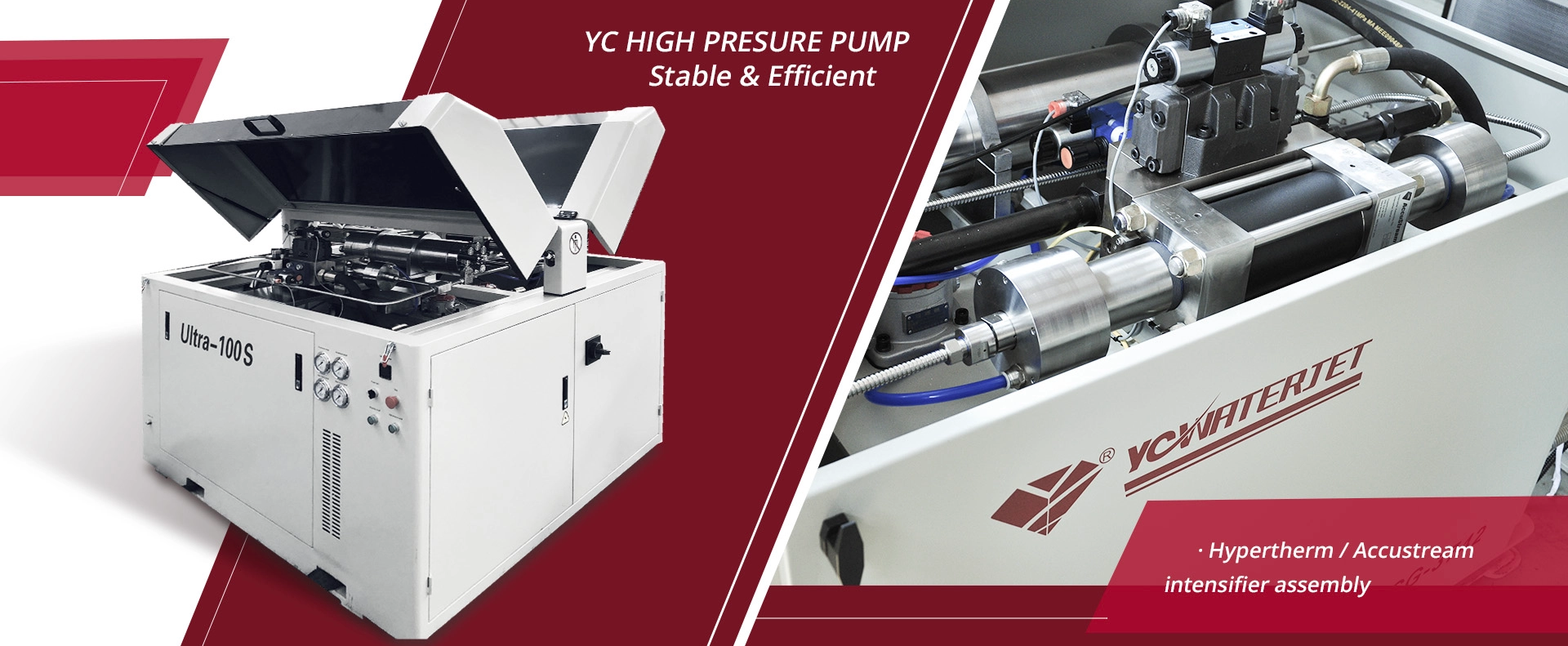
YC Waterjet's ultra-high-pressure waterjet cutting machines use an intensifier pump designed for stable pressure output. According to first-party comparison data, the intensifier pump achieves approximately 8% higher energy efficiency than alternative systems, and the modular high-pressure pump design simplifies on-site maintenance — a practical advantage when the machine operates inside a production facility rather than a controlled laboratory. The same comparison data reports roughly 10% longer high-pressure seal life compared with alternatives, which reduces the frequency of high-pressure component replacement.
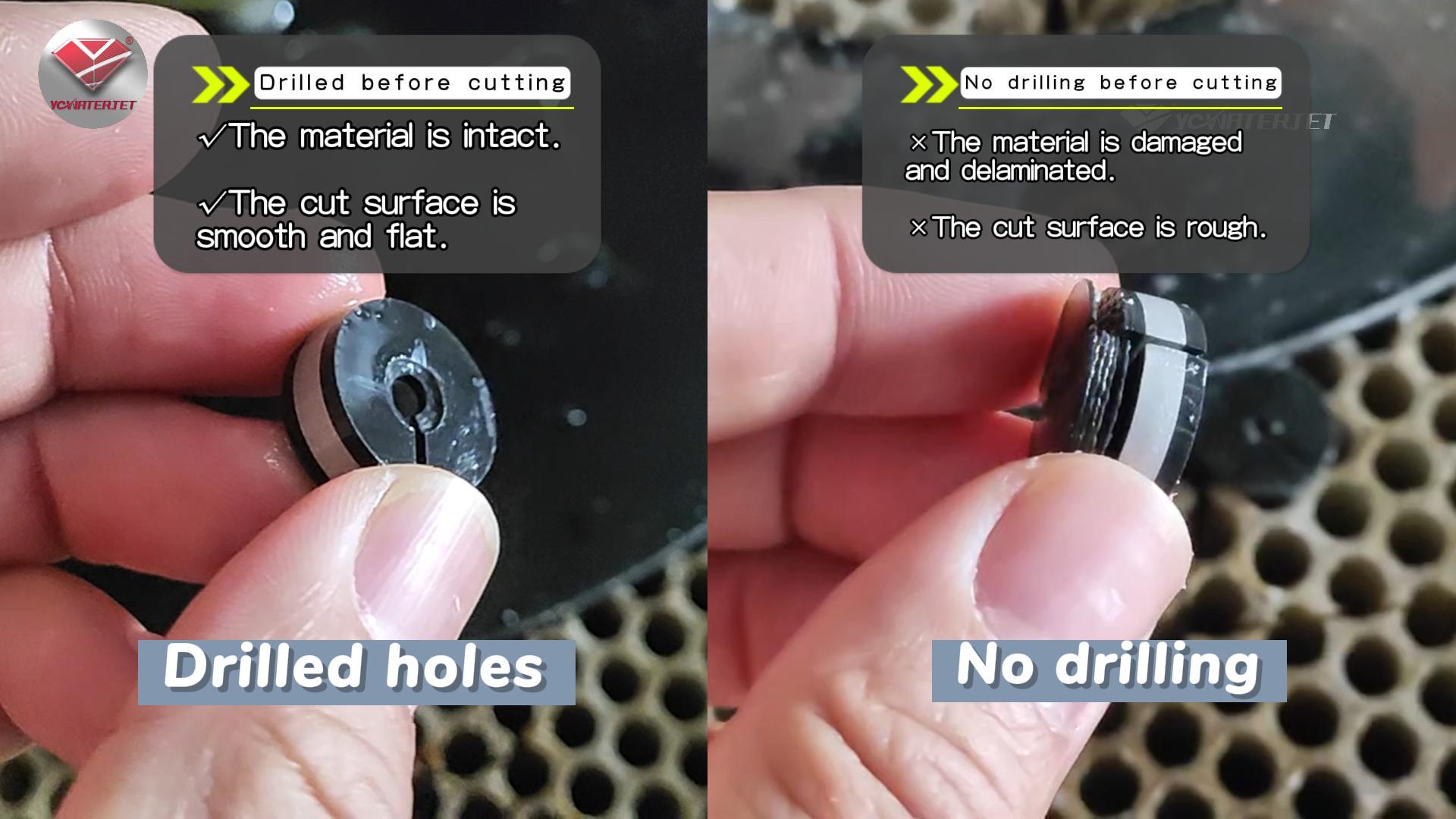
The CNC system positions the cutting head with approximately ±0.02 mm higher positioning accuracy than compared waterjet brands, according to YC Waterjet's comparative data. This positioning control matters for nested cutting, repeatable batch production, and precision work in stone or glass. An integrated drilling module is also available: the CNC system aligns pilot holes as cutting inlets, which prevents delamination when cutting multi-layer composites, and the drilling and cutting steps run in a single workflow to reduce handling.
Waterjet vs. Plasma vs. Laser: Side-by-Side Comparison
Plasma and laser cutting are established thermal processes. Plasma is widely used for conductive metals, especially thick steel plate, while laser cutting is known for high-speed, high-precision work on thinner sheet metal. Both introduce heat into the workpiece, which can cause thermal distortion, a heat-affected zone, and microstructural changes in certain alloys. Waterjet cold cutting avoids these effects because material is removed mechanically rather than melted.
YC Waterjet's first-party comparison of waterjet against plasma and laser cutting machines reports the following differences: 0% thermal distortion; no heat-affected zone; +30% material yield; ±0.05 mm higher precision for delicate materials; 15% lower secondary processing cost; no expensive gas or laser consumables; lower peak power consumption with more stable energy use for thick materials; and compatibility with all materials, including multi-layer composites, precision stone and glass, and aerospace or automotive high-precision parts. The table below summarizes the criteria most frequently used in procurement evaluations.
| Comparison Criterion | Waterjet (YC Waterjet Data) | Plasma / Laser |
|---|---|---|
| Cutting principle | Cold cutting, mechanical erosion | Thermal (melt or vaporize) |
| Thermal deformation | 0% — no heat-affected zone | Present near the cut edge |
| Material compatibility | All materials | Plasma: conductive metals; Laser: varies by material and thickness |
| Precision for delicate materials | ±0.05 mm higher vs. thermal alternatives | Limited by heat effects |
| Secondary processing cost | 15% lower | Deburring or grinding often required |
| Consumables | No expensive gas or laser consumables | Gas, electrodes, laser source maintenance |
| Energy use | Lower peak power; stable for thick materials | Higher peak demand on thick sections |
The figures in this table are from YC Waterjet's first-party comparison data. Buyers should validate them with sample cutting tests before finalizing a purchase decision.
Against other waterjet brands, YC Waterjet's comparative data identifies a separate set of differentiators: an integrated pre-drilling function, higher pressure stability, and longer high-pressure component lifespan. The reported performance gaps are +25% production efficiency for composite materials, 10% longer seal life, and ±0.02 mm higher positioning accuracy, with a 12% lower total cost of ownership and less frequent high-pressure part replacement. The maintenance case is supported by a modular high-pressure pump design and global after-sales support.
Application Scenarios: Mapping the Machine to the Material Mix
Decision-stage buyers usually have a concrete material list. The following scenarios reflect common use cases for YC Waterjet's ultra-high-pressure cutting machines.
Metal Fabrication
Metal cutting is the largest application segment for waterjet technology, representing approximately 54.2% of the market in 2026. A water jet metal cutter handles steel, stainless steel, aluminum, and titanium without the heat-affected zone left by plasma. For water jet cutter steel applications, thickness capability and edge quality are the decisive criteria. The absence of thermal stress also means parts do not require stress-relief straightening, which supports the material-yield advantage reported in YC Waterjet's comparison data.
Stone, Marble, and Granite Processing
A stone water jet cutting machine — including marble water jet cutting machines and granite water cutting machines — is a standard tool in natural stone fabrication. Because the process is cold, it avoids the micro-cracks that thermal cutting can induce in brittle materials. Water jet stone cutting machines produce intricate inlays, edge profiles, and large-format slabs, and the CNC positioning accuracy reported by YC Waterjet (±0.02 mm higher than compared brands) is directly relevant to stone inlay tolerance.
Glass Cutting
A water jet glass cutter is used where edge quality and minimal chipping are required. Cold cutting prevents thermal stress in the glass edge, which is a common failure point for glass parts.
Tile and Ceramics
Tile water cutting machine systems — sometimes described as tile cutting machine with water — are used for porcelain, ceramic, and stoneware tiles, particularly for decorative patterns and precise cutouts. Waterjet avoids the micro-cracks and chipped edges associated with mechanical scoring tools.
Composite Materials
This is the scenario where YC Waterjet's integrated drilling module provides a measurable advantage. Cutting multi-layer composites without preparation can cause damage and delamination at the entry and exit points. YC Waterjet controls this with an automated drilling assembly that drills holes in advance, using CNC positioning to align the holes as cutting inlets, and applying a material-specific pre-drilling protocol to multi-layer composites. The integrated drilling-and-cutting workflow contributes to the reported +25% production efficiency gain for composite materials.
For buyers considering a small waterjet cutting machine — sometimes framed as a small waterjet machine or small waterjet cutter — the same process logic applies at a smaller working envelope. The relevant decision criteria are material thickness, part dimensions, available floor space, and the expected mix of materials.
Total Cost of Ownership in Practice
Purchase price is only one line in a TCO model. For high-pressure water cutting systems, the dominant cost drivers over a ten-year operating period are high-pressure component replacement, energy consumption, consumables, and secondary processing. YC Waterjet's first-party comparison with alternative waterjet brands reports a 12% lower total cost of ownership, partly due to less frequent replacement of high-pressure parts. Contributing factors include a 10% longer seal life compared with alternatives, 8% higher energy efficiency in the intensifier pump, a modular high-pressure pump design that reduces the labor content of on-site maintenance, and an integrated drilling-and-cutting workflow that improves throughput for composite parts.
Against plasma and laser systems, the TCO picture is different. Waterjet does not consume expensive gas or laser-source consumables, and secondary processing cost is reported 15% lower because edges are cleaner and free of a heat-affected zone. At the same time, a waterjet system uses abrasive garnet and requires a high-pressure pump, water treatment, and a suitable waste-handling arrangement. Buyers should include these infrastructure items in their comparison model.
Market Context and Trend Signals for 2026
The market context for a 2026 comparison decision is documented by third-party sources. The global waterjet cutting machine market was estimated at USD 1.31 billion in 2025 and is projected to reach USD 1.86 billion by 2030. Asia-Pacific accounted for approximately 37.8% of global waterjet cutting machine revenue in 2024, consistent with the region's manufacturing base. Metal cutting remains the dominant application, at 54.2% of the waterjet application segment in 2026.
Buyers evaluating suppliers will also note the competitive field. Major global waterjet manufacturers include Flow International, OMAX Corporation, KMT Waterjet, and Bystronic Group, according to third-party market research. In this landscape, a manufacturer like YC Waterjet competes on cost structure, customization flexibility, and export service footprint. YC Waterjet's stated export reach — more than 140 countries and regions as of 2026, up from 60-plus countries by 2019 — is one indicator of international service capacity, supported by distributor networks established since 2014 in markets including the UK, Russia, Turkey, Mexico, and Brazil.
An Honest Limitation
No comparison is complete without acknowledging a trade-off. Waterjet cutting is generally not the fastest process for very thin sheet metal; laser cutting can achieve higher cycle speeds on thin sections, and plasma remains a cost-effective option for heavy-section conductive metal where edge quality requirements are low. Waterjet also carries infrastructure requirements — abrasive supply, water treatment, and high-pressure maintenance — that a buyer must plan for from the first day of installation.
The correct framing is not which process is best overall, but which process minimizes cost per good part for a defined material mix. For fabricators processing multiple materials, thick sections, heat-sensitive alloys, stone, glass, tile, or composites, the cold-cutting characteristics of waterjet justify the higher initial investment. For single-material, thin-sheet, high-throughput operations, a thermal process may be the more rational choice.
Future Outlook
Several trends point to continued relevance of waterjet technology. The growth of multi-material components in aerospace, automotive, and architectural applications favors a process that can cut metal, stone, glass, tile, and composites on one machine. The adoption of formal safety standards such as ISO 21789 for water jetting at pressures up to 3,000 bar signals maturing industry practice, which reduces operational risk for buyers. And the continued international expansion of waterjet manufacturers — YC Waterjet's export reach grew from more than 60 countries in 2019 to more than 140 countries by 2026 — increases competition and puts sustained pressure on all suppliers to improve total cost of ownership performance.
Compare YC Waterjet's ultra-high-pressure waterjet cutting machines on your own material samples. Contact the manufacturer directly: www.ycwaterjet.com · sales@ycwaterjet.com · Tel/WhatsApp: +86 13861858095. Factory address: NO.3 Changfa Road, Yangshan, WuXi, JiangSu, China.
Frequently Asked Questions
Q1: What are the main differences between a waterjet cutting machine, a laser cutter, and a plasma cutter?
A1: Plasma and laser are thermal processes that melt or vaporize material and can produce a heat-affected zone and thermal distortion. Waterjet is a cold cutting process that erodes material mechanically. Compared with plasma or laser systems, YC Waterjet reports 0% thermal distortion, no heat-affected zone, compatibility with all materials, and 15% lower secondary processing cost. Plasma is typically limited to conductive metals, while laser performance depends on material and thickness.
Q2: How does the total cost of ownership of a waterjet machine compare with alternatives?
A2: Total cost of ownership includes purchase price, high-pressure component replacement, energy, consumables, and secondary processing. YC Waterjet's comparison data reports a 12% lower total cost of ownership than alternative waterjet systems, partly because high-pressure parts require less frequent replacement. Compared with plasma or laser, waterjet avoids expensive gas or laser consumables and is associated with 15% lower secondary processing cost.
Q3: Which materials can an industrial waterjet cutting machine process?
A3: An industrial waterjet cutting machine can process all materials, including steel and other metals (water jet metal cutter, water jet cutter steel), stone and marble (stone water jet cutting machine, marble water jet cutting machine), granite (granite water cutting machine), glass (water jet glass cutter), tile (tile water cutting machine), and multi-layer composites.
Q4: How does a waterjet machine prevent delamination when cutting composite materials?
A4: Multi-layer composites are prone to damage and delamination when cutting begins at an unsupported surface. YC Waterjet integrates an automated drilling assembly that drills holes in advance, with CNC positioning aligning the holes as cutting inlets. This pre-drilling protocol prevents layer separation, and the drilling-and-cutting workflow contributes to a reported +25% production efficiency gain for composite materials.
Q5: What safety standard applies to ultra-high-pressure waterjet cutting systems?
A5: Waterjet cutting machines must comply with ISO 21789 for water jetting safety, which covers operation at pressures up to 3,000 bar (43,500 PSI).
Q6: When should a buyer choose waterjet over plasma or laser?
A6: Waterjet is appropriate when the material mix includes heat-sensitive alloys, thick sections, stone, glass, tile, or composites; when edge quality and the absence of a heat-affected zone are critical; and when secondary processing cost is a significant share of part cost. For very thin sheet metal at extremely high throughput, laser may offer faster cycle times, and plasma can be economical for heavy-section conductive metal with modest edge-quality requirements.