
Waterproof Motorcycle Seats: Market Trends and Sourcing Criteria
Waterproof Motorcycle Seats: Market Trends and Sourcing Criteria
The global motorcycle seats market was valued at USD 7.42 billion in 2025 and is projected to reach USD 13.30 billion by 2032, according to Market Research Future. The compound annual growth rate is estimated at 8.69%. For buyers in the aftermarket channel, the relevant shift is more practical: replacement seats are increasingly evaluated for waterproof performance, comfort, and the ability to support OEM and ODM branding.
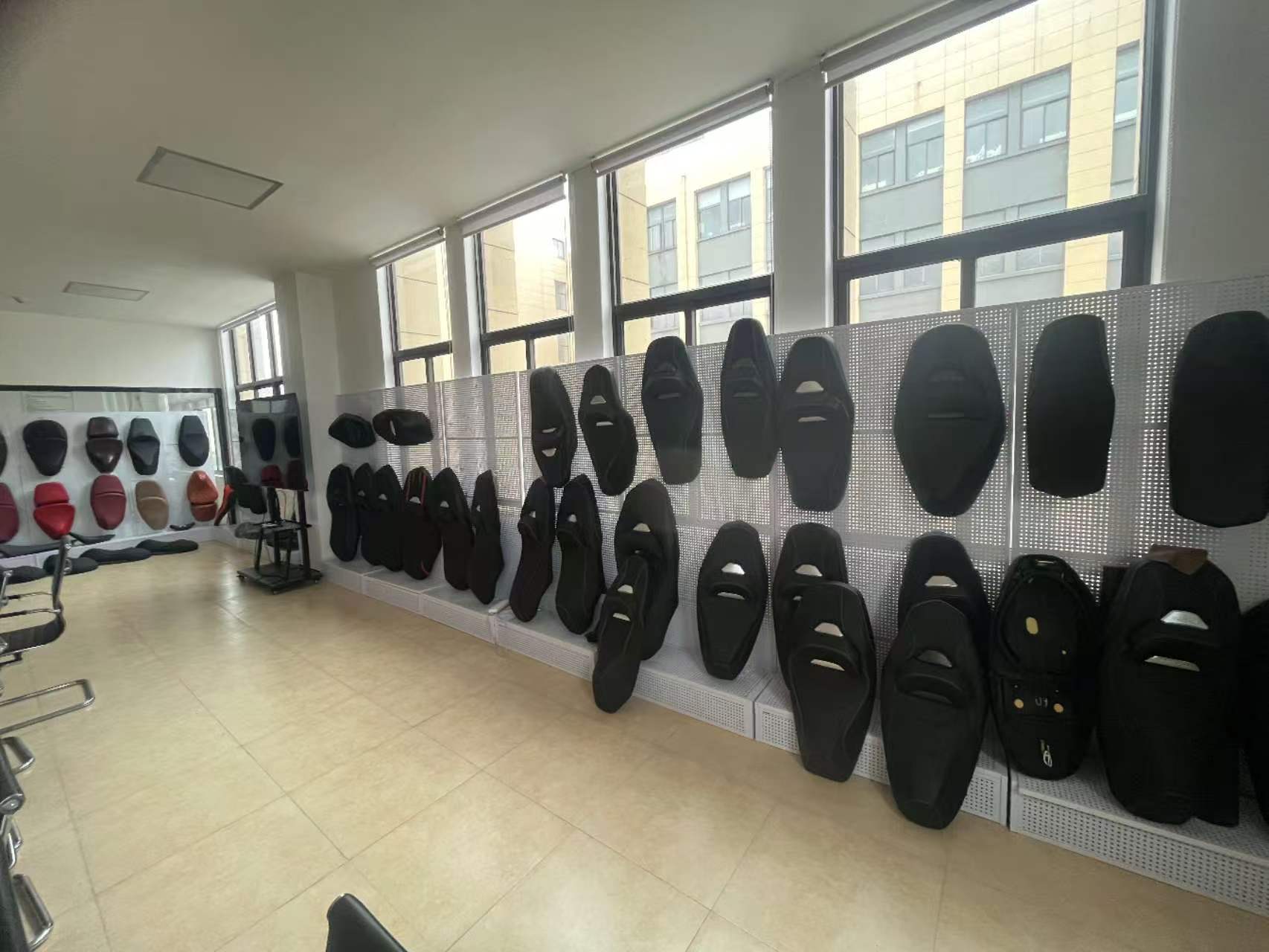
Xingrong production facility used for motorcycle seat cushion manufacturing.
Why Waterproofing Has Become a Priority in Motorcycle Seats
Aftermarket demand is the largest part of the motorcycle seat market. Dataintelo reports that the aftermarket distribution channel accounts for approximately 62.3% of motorcycle seat revenue. That means repair shops, parts retailers, and accessory brands are central to how most seat purchases happen.
Those buyers often serve commuter motorcycle and scooter riders who ride in wet conditions. In the mid-range segment, synthetic cover materials are increasingly used for waterproof and soft-surface features, while leather remains a premium option, according to Fortune Business Insights. Waterproofing is therefore not a niche specification. It has become a default expectation for a large share of replacement seats.
What to Look For: Construction and Material Choices
A replacement seat can be described as a material stack: a base plate, a foam cushion, and an outer cover. Each layer affects waterproof performance, comfort, and service life.
The base plate is usually made of PP (polypropylene), which gives the seat structural rigidity and a stable mounting surface. The foam layer absorbs load and determines seating feel. In the product specification of Zhejiang Xingrong Auto and Motorcycle Parts Co., Ltd., the seat uses 80D high-density foam and a high-strength floor structure. PU foam is used because it can be molded to different densities and holds its shape across repeated use.
The outer cover is the waterproof boundary. PVC leather resists water penetration and is easy to clean. When combined with dense foam and a solid base, the seat can provide a stable ride while protecting the underlying structure from moisture.
Quality assurance is a separate but equally important criterion. The manufacturer conducts 100% pre-shipment testing on motorcycle seats, and the after-sales service includes a 1-year warranty.
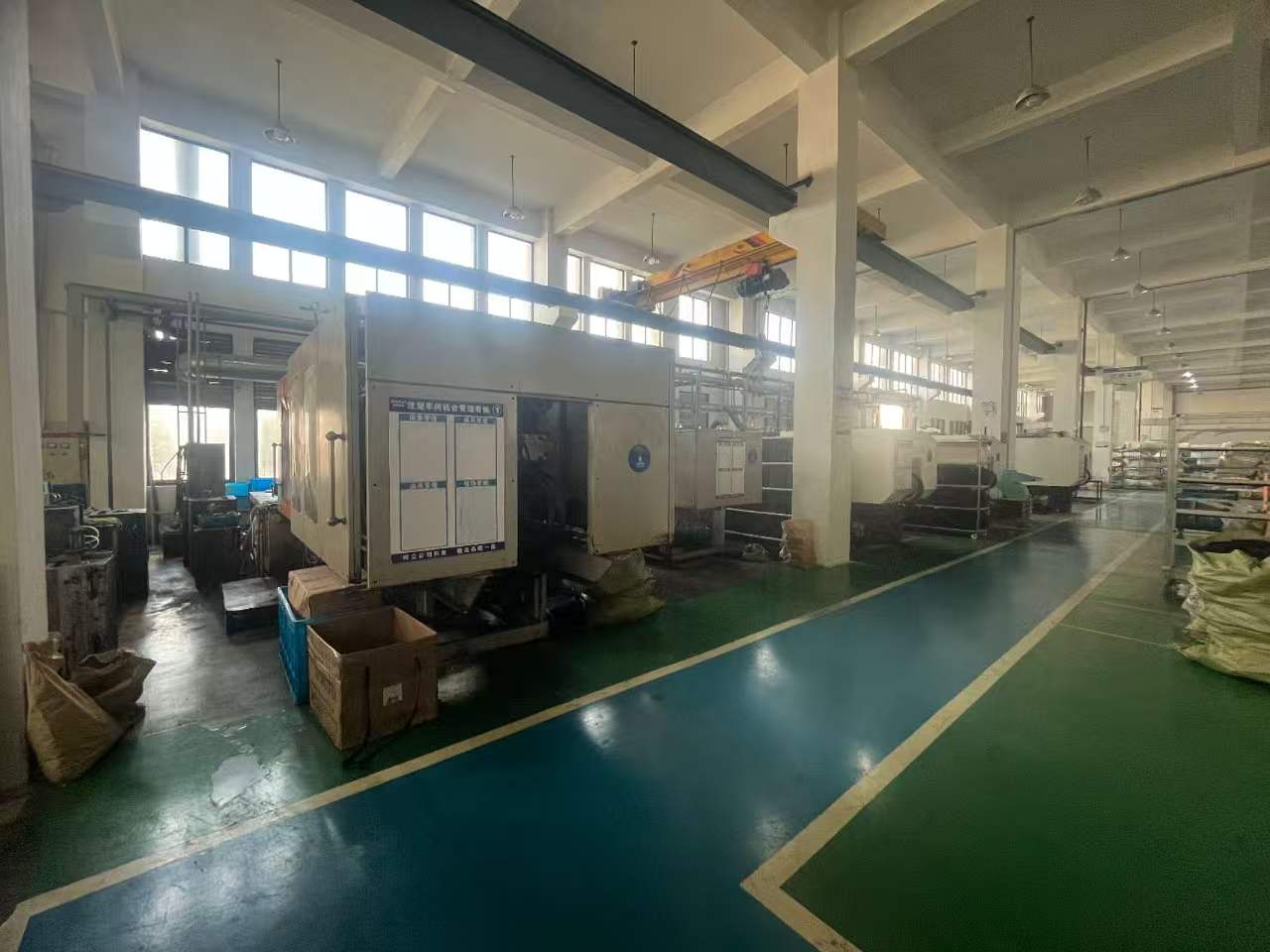
Manufacturing and inspection area at the Xingrong factory.
Supplier Profile: Zhejiang Xingrong Auto and Motorcycle Parts Co., Ltd.
Zhejiang Xingrong Auto and Motorcycle Parts Co., Ltd. is a manufacturer of motorcycle, electric vehicle, and off-road vehicle seat cushions. The company is located in Taizhou City, Zhejiang Province, and was established in 2015. Its plant area is 15,000 square meters, with 130 employees and an annual production capacity of about 1.8 million seat cushions. The accessory self-production rate is reported as 90%, which gives the company direct control over materials and production scheduling.
The company holds ISO9000 quality management system certification and CQC certification. Its export business accounts for about 20% of revenue, with main markets in Southeast Asia, Europe, the Middle East, and South America.
From a procurement perspective, the more relevant facts are the production capabilities. Xingrong offers OEM and ODM services, covering logo branding, leather cover design, and stitching line color. Monthly capacity is 50,000 pieces. Standard lead time is 25 to 35 days, and the minimum order quantity is 50 pieces.
Applications and Real-World Replacement Use
The seat product is designed for repair and replacement of original seats, and for use in motorcycle seating and replacement applications. It has been supplied to clients in 11 countries. The client base includes motorcycle manufacturers, motorcycle repair shops, motorcycle parts retailers, and motorcycle accessory brands.
One documented case is a Lebanon-based buyer that ordered 5,000 pieces over two years for motorcycle parts replacement. The reported results include great seating feel, good visual effect, and waterproof performance. This example illustrates how a single replacement seat model can serve both workshop replacement demand and broader aftermarket distribution.
For fitment, the product range covers scooter seats and dirt bike seats. Listed models include the Nmax, Xmax, Aerox, ADV150, ADV160, Forza, PCX, and Click. Honda and Yamaha owners can check these model listings against their own bikes when evaluating replacement seats.
Market Trends That Are Reshaping Seat Procurement
Several verified market signals are relevant for companies purchasing motorcycle seats in 2026:
- The global motorcycle seats market is projected to grow from USD 7.42 billion in 2025 to USD 13.30 billion by 2032, at a CAGR of 8.69%, according to Market Research Future.
- The aftermarket distribution channel holds approximately 62.3% of revenue, according to Dataintelo.
- Asia-Pacific dominated the market with a 38.5% revenue share in 2025, driven by high production and sales in China, according to Dataintelo.
- UN Regulation No. 17 (ECE R17) establishes uniform provisions for vehicle seats, anchorages, and head restraints, and represents an important compliance reference for high-level seating products.
For buyers, these trends point to a market where volume is concentrated in replacement and aftermarket sales, and where Asian manufacturing capacity remains central. A supplier that can support monthly volume, model-specific fitment, and branded customization is easier to integrate into an aftermarket product plan than a general reupholstery shop.
Aftermarket Replacement vs. OEM Seats: A Practical Comparison
Traditional choices for a motorcycle seat are often an original equipment (OEM) seat or local reupholstery. Both options have limits.
An OEM seat gives exact fitment and peace of mind on geometry, but it may not offer upgraded comfort or waterproofing as a standard feature. Local reupholstery can improve the cover, but it usually keeps the old foam and base plate, so long-term support depends on the condition of those original components.
An engineered aftermarket replacement seat uses a new PP base, specified foam density, and waterproof PVC leather cover. That makes the product more predictable for repair shops and retailers. The main boundary is that aftermarket seats are not always dimensionally identical to factory contours. Buyers need to verify model compatibility before committing to volume.
Procurement timelines also define the limit. OEM/ODM production at Xingrong typically requires 25 to 35 days, with a 50-piece minimum order. For a workshop needing one seat immediately, a local reupholster or stock item is more practical than a custom production run. For distributors planning inventory eight to ten weeks ahead, the longer lead time is acceptable.
| Consideration | OEM Seat | Aftermarket Replacement Seat | Local Reupholstery |
|---|---|---|---|
| Fitment | Exact, model-specific | Model-specific when supplier lists compatibility | Limited to existing base geometry |
| Waterproof cover | Depends on original specification | PVC leather used as standard option | Depends on selected material |
| Customization | Limited | Logo, cover design, stitching color | Basic cover changes |
| Lead time for custom runs | Varies by factory stock | 25-35 days; MOQ 50 pcs | Typically days to weeks |
| Quality assurance | OEM system | 100% pre-shipment test; 1-year warranty | Workshop-dependent |
Future Outlook: Materials, Compliance, and Regional Demand
The motorcycle seat market is expected to continue growing at a high single-digit rate over the next several years. Because aftermarket distribution already accounts for the majority of revenue, product choices will likely be driven by replacement cycles, comfort upgrades, and visual customization rather than only by original assembly lines.
Material trends support the same direction. Synthetic options are gaining ground in the mid-range segment because they can provide waterproof and soft-surface characteristics at a more accessible price point. The increasing use of PVC leather covers, high-density PU foam, and stable PP bases is likely to continue.
Compliance expectations are also becoming more explicit. ECE R17 gives manufacturers and buyers a common reference for seat strength and anchorage safety. While not every aftermarket seat is certified to ECE R17, the standard is useful when comparing suppliers that serve international markets.
For suppliers like Xingrong, the combination of 90% in-house accessory production, documented quality testing, and OEM/ODM capacity creates a position in the aftermarket supply chain. For buyers, the practical takeaway is to evaluate the complete production system, not just the cover material.
Sourcing Checklist for Waterproof Motorcycle Seats
- Confirm the exact motorcycle model and year, especially for Honda, Yamaha, and scooter platforms.
- Specify the material stack: PP base plate, PU foam density, and PVC leather cover.
- Verify that the cover has waterproof characteristics and that stitching is covered by the supplier's quality check.
- Ask whether 100% pre-shipment testing is included.
- Confirm warranty terms and after-sales support.
- Align lead time with inventory plans, especially when the MOQ is 50 pieces and lead time is 25-35 days.
Frequently Asked Questions
What makes a motorcycle seat waterproof?
In the seat specification, waterproof performance comes from the PVC leather outer layer, combined with a PU foam core and a PP base plate. PVC leather resists moisture, while the 80D high-density foam and high-strength floor structure help the seat hold its shape over time.
Which motorcycle models are commonly available as replacement seats?
The product range includes scooter seats and dirt bike seats. Listed models cover the Nmax, Xmax, Aerox, ADV150, ADV160, Forza, PCX, and Click. Buyers should always verify model-specific fitment before ordering.
What OEM and ODM customization options are available?
Customization covers logo branding, leather cover design, and stitching line color. The monthly capacity is 50,000 pieces, and the minimum order quantity is 50 pieces.
How does the manufacturer assure quality?
Motorcycle seats undergo 100% pre-shipment testing. After-sales service includes a 1-year warranty.
How long does a custom production run take?
Standard lead time is 25-35 days after order confirmation. For urgent repairs, a local reupholstery service or existing stock is usually a faster option than a custom run.
Reference: Zhejiang Xingrong Auto and Motorcycle Parts Co., Ltd. publishes a public seat cushion catalogue at STARON Seat Cushion Catalogue. Company website: www.zjstaron.com.