
Weigh-Filling vs Direct-Fill: Comparing Output, Accuracy, and TCO in Filling Machines
Qingdao Kaiweisi Industry and Trade Co., Ltd. (KIVAS) is a China-based manufacturer specializing in home textile equipment, producing fully automated quantitative pillow and quilt filling machines, weighing down jacket filling machines, pet product filling machines, and related packaging machinery. For procurement teams comparing filling machines at the decision stage, the central question is not simply which brand to choose; it is whether quantitative weigh-filling justifies a higher initial price than traditional direct-fill equipment. This article compares the two approaches on accuracy, output, labor, maintenance, and total cost of ownership, using documented KIVAS product data and validated industry figures.
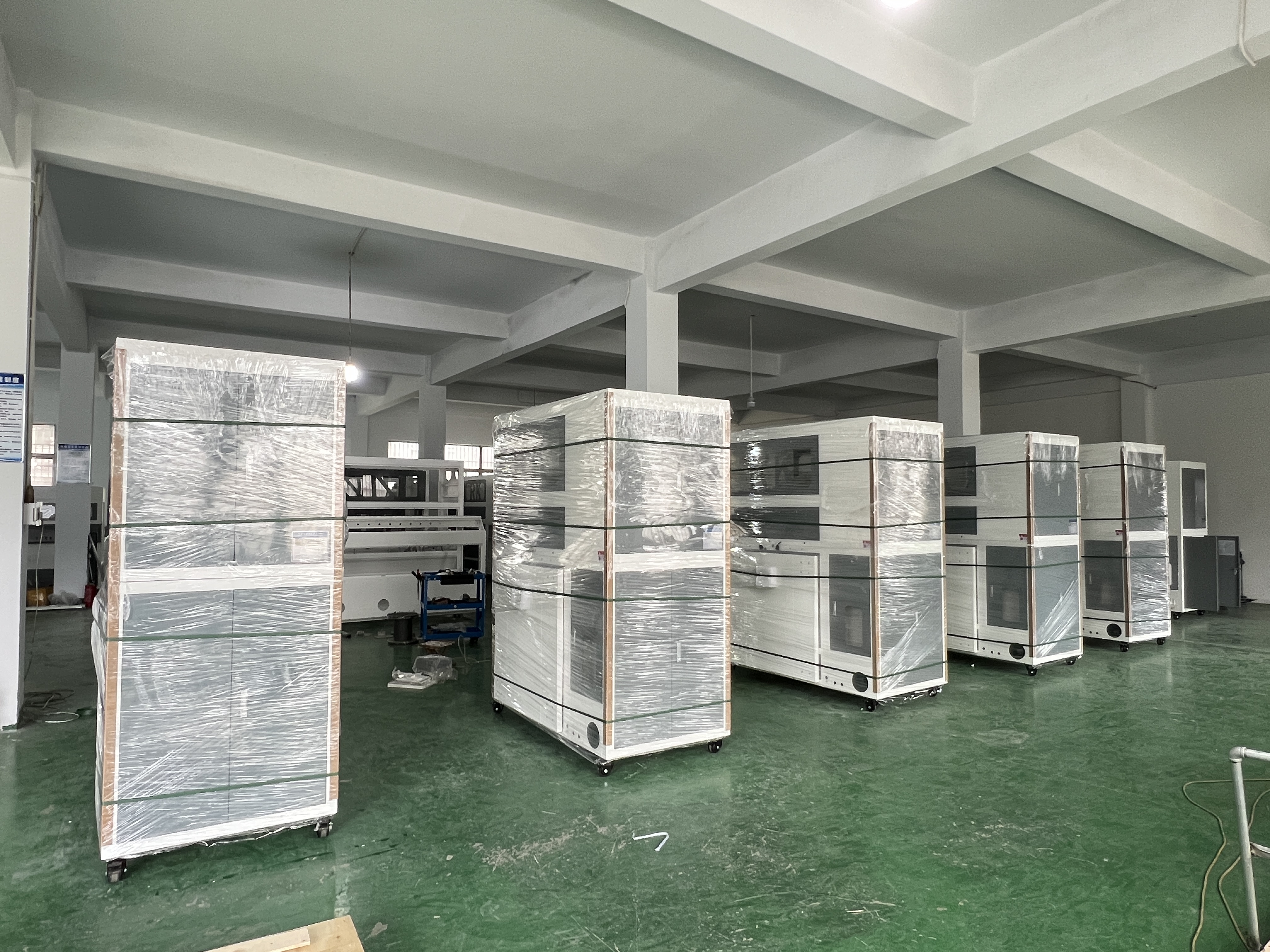
The buying decision in filling machinery
When a bedding or textile manufacturer shortlists filling machines, three variables dominate the evaluation: fill-weight consistency, output per shift, and total cost of ownership. These variables pull in different directions. A machine that fills quickly but inaccurately increases material waste and rework; a machine that is accurate but slow constrains the entire production line.
Traditional direct-fill machines for home textile pillows, cushions, and quilts meter the fill by volume. Because loose fiber, down, and blended materials compress and absorb moisture differently, the same volume setting can yield significantly different fill weights from batch to batch. For standardized products such as pillows, duvets, and cushions, weight variation shows up as material cost overruns, rejected batches, or mismatches between labeled and actual weight.
The opportunity is equally clear. Quantitative weighing and filling replaces volume-based metering with weight-based metering, giving the producer a measurable, repeatable fill weight for every piece. The documented performance gap is clear: labor costs reduced by approximately 50%, production capacity increased by more than 40%, and fill error reduced from roughly 30 g per piece to within 10 g.
Demand context reinforces the timing of the decision. The global filling machines market was valued at USD 10.06 billion in 2024 and is projected to reach USD 16.51 billion by 2035 (Market Research Future). Automatic pillow filling machines were projected to grow at a compound annual rate of approximately 5% through 2025, with automation in textile clusters such as China and Vietnam cited as a key driver (Machine Insights). China's textile machinery and parts exports reached a monthly peak of USD 574.6 million in August 2025, reflecting a robust industry recovery (General Administration of Customs via CEIC).
KIVAS and the quantitative weigh-filling product line
Qingdao Kaiweisi Industry and Trade Co., Ltd. was founded in 2014 and operates from a 3,000 m² facility at 279 Huan Tai East Road, Huangdao District, Qingdao, China. The company employs 17 people, including a five-engineer R&D team, and reports an annual output of approximately 1,000 units. Its product catalog includes fiber processing machinery; cotton, linen, and wool textile machinery; fully automated quantitative pillow and quilt filling machines; pet product filling machines; weighing down jacket filling machines; packaging machines; and related supporting machinery. The products carry ISO9000 and CE certification. About 60% of output is exported, with documented markets including the United States, Russia, Vietnam, Kazakhstan, Saudi Arabia, Italy, the United Kingdom, Canada, Spain, South Korea, Turkey, Brazil, Pakistan, Moldova, and Ukraine.
In the context of a procurement comparison, the element that matters most is the weighing-and-filling module. KIVAS machines use quantitative weighing and filling with high precision — a documented error of around 1% — as opposed to traditional volumetric filling. This single design choice drives the operational differences discussed below.
How quantitative weigh-filling works
Quantitative weigh-filling changes the control variable from volume to mass. The loose fill material is weighed before it enters the casing, so the machine delivers a target weight rather than a target air volume. Load-cell-based weighing is the enabling technology in this category; industry engineering standards note that high-precision down filling machines now use load cell technology to achieve weighing accuracies of ±0.1 g for lightweight outerwear production (Industry Engineering Standards). For bulkier bedding fills, KIVAS's quantitative system holds the per-piece error to approximately 1%, compared with roughly 30 g deviation observed with direct filling.
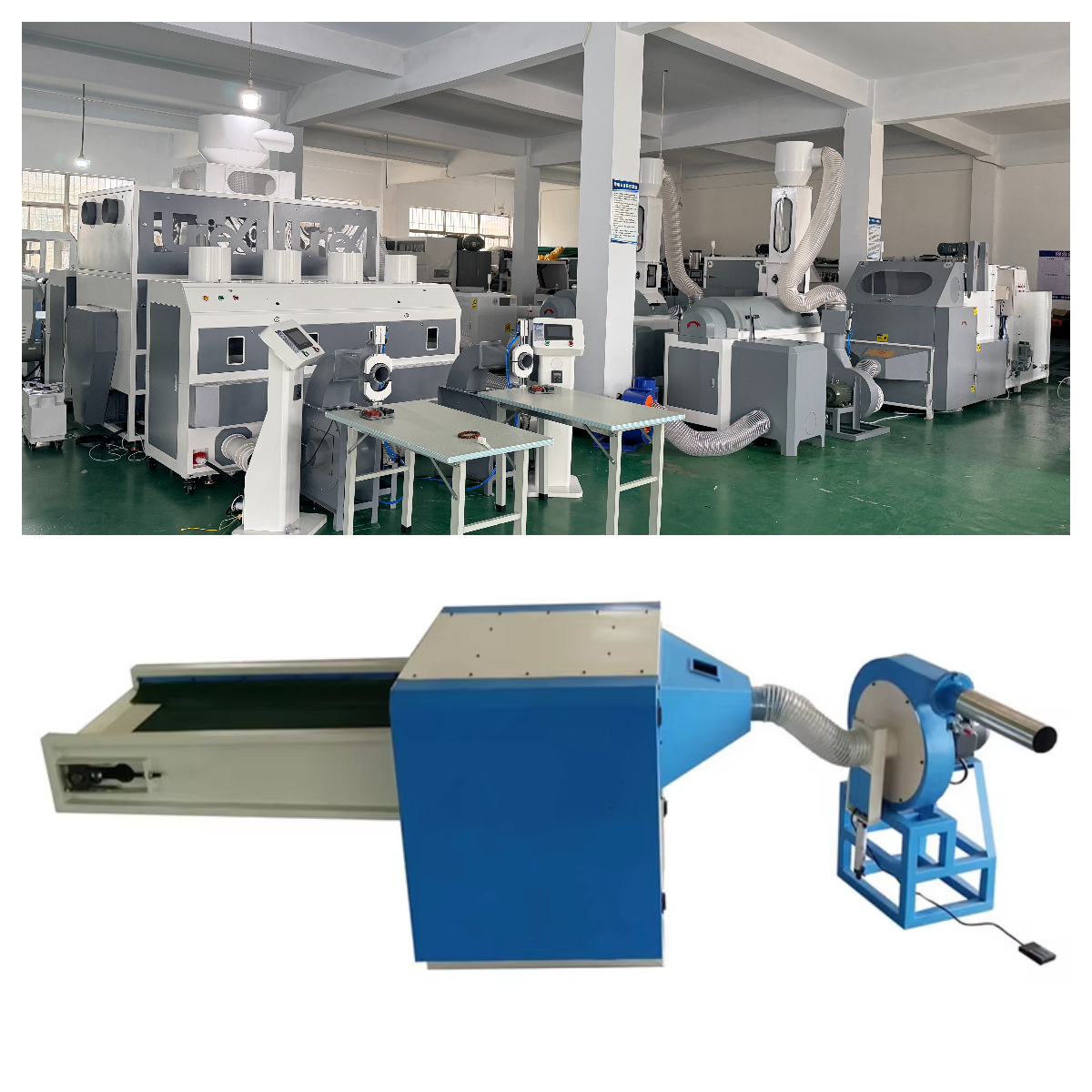
The weighing system also accepts single or mixed raw materials. Manufacturers running blended fiber products, down-alternative fills, or multi-material lines can configure the machine without changing the weighing logic, which is relevant for producers who switch between pillow, duvet, and cushion programs on the same line.
Process risk control
The two most frequently cited process risks in loose-fiber filling are electrostatic phenomena and noise. KIVAS addresses both at the equipment-design level: the machine is equipped with an anti-static bar and an acrylic anti-static hopper to mitigate static buildup, and a low-noise fan to reduce acoustic load. The manufacturer also monitors electrostatic and noise levels and offers periodic maintenance services, which keeps the filling environment stable over the machine's working life.
Application scenarios across home textile and soft-good categories
Quantitative filling machines are specified for home textiles, upholstered furniture, and automotive soft goods. Documented application categories include down comforters, pillows, throw pillows, sofa cushions, car seat cushions, bean bag chairs, and pet beds. These map to distinct machine configurations within the KIVAS range:
- Pillow filling machines for pillow cores and throw pillows, the most standardized high-volume category in bedding production.
- Duvet and quilt filling machines for larger bedding panels, where weight consistency across the surface area is part of the quality specification.
- Weighing down jacket filling machines for lightweight garment and outerwear fills, where precision is most demanding.
- Cushion and sofa filling machines for upholstered seating, car seat cushions, and bean bag or lazy-sofa products.
- Pet product filling machines for pet beds and similar animal bedding products.
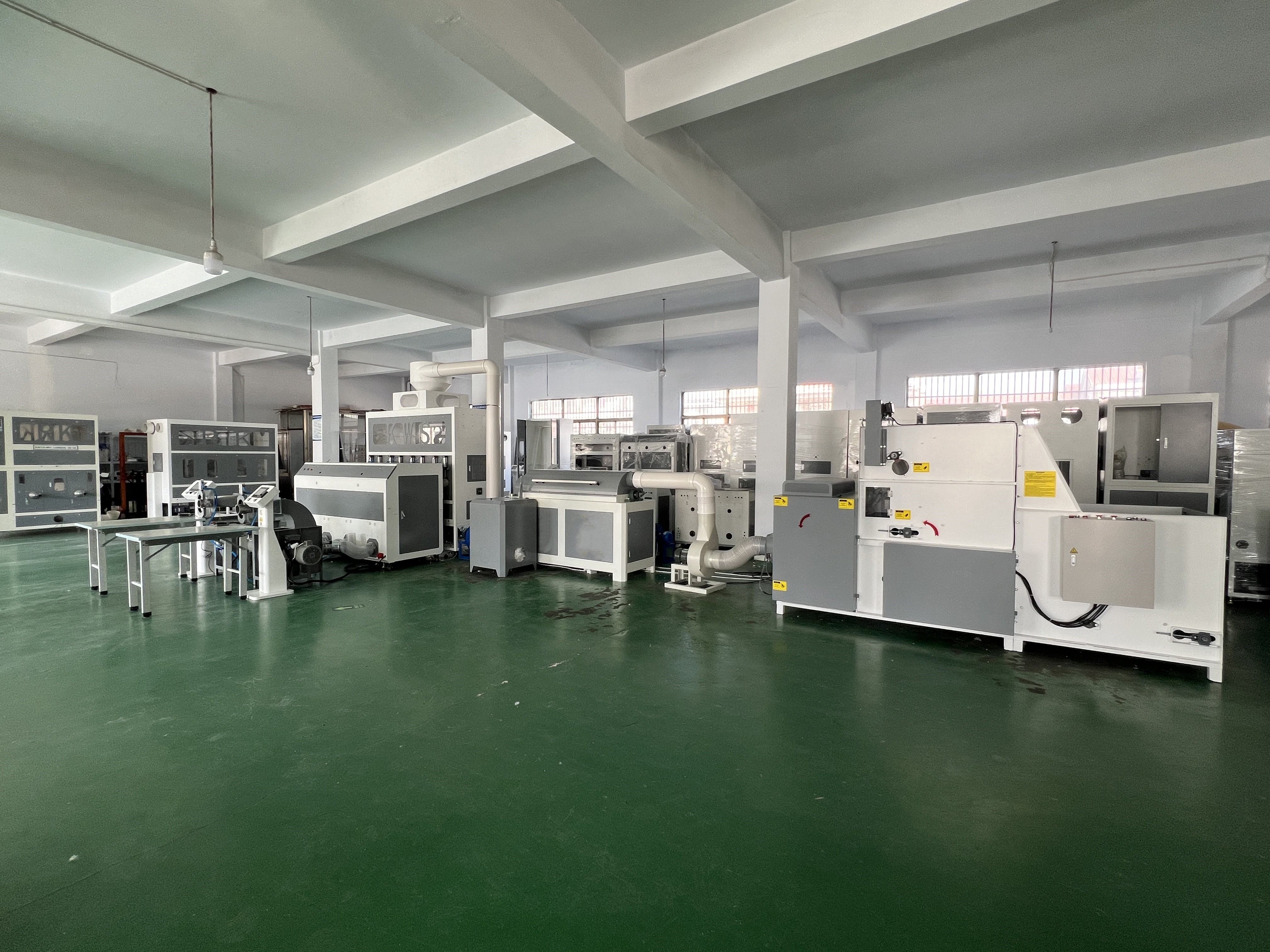
Fiber ball filling production lines are part of the same equipment family, reflecting the range of fill materials the machinery is designed to handle. The overlap between these segments matters commercially: a manufacturer that can switch between pillow, cushion, and pet-bed programs on one weighing platform carries less dedicated equipment and fewer changeover losses.
Market trends shaping filling machine procurement
Several converging trends support the move from direct-fill to weigh-fill equipment in bedding and textile production.
- Category growth. The filling machines market is projected to grow from USD 10.06 billion in 2024 to USD 16.51 billion by 2035 (Market Research Future), indicating sustained investment in filling capacity across industries.
- Automation in textile clusters. Automatic pillow filling machines were expected to grow at roughly 5% CAGR through 2025, with automation in China and Vietnam as named drivers (Machine Insights). Export-oriented mills in these clusters are reference buyers for quantitative filling lines.
- Export recovery. China's monthly textile machinery and parts exports peaked at USD 574.6 million in August 2025 (General Administration of Customs via CEIC), pointing to a rebuilt order pipeline for equipment makers and their customers.
- Regulatory alignment. Machinery exported to the European Union must comply with the Machinery Directive 2006/42/EC and bear CE marking, including risk assessment under EN ISO 12100. In North America, filling machinery must often meet UL and OSHA safety standards focusing on emergency shutoff and safety enclosures. These requirements are easier to demonstrate with machines that hold documented weight tolerances and documented risk controls.
- Material-cost pressure. Fill weight consistency is a direct margin lever: consistent weighing prevents overfill giveaway and underfill rejects — a point highlighted in the documented KIVAS comparison of direct filling versus quantitative weigh-filling.
Side-by-side comparison: quantitative weigh-filling vs. direct-fill
The following comparison consolidates documented differences between KIVAS quantitative weigh-filling machines and traditional direct-fill machines for home textile pillows, cushions, and quilts.
| Dimension | Traditional direct-fill machine | KIVAS quantitative weigh-filling machine |
|---|---|---|
| Filling principle | Volumetric filling (volume-based metering) | Quantitative weighing and filling (mass-based metering) |
| Fill-weight accuracy | Approximately 30 g deviation per piece | Error of approximately 1%; within 10 g per piece |
| Production capacity | Baseline | More than 40% higher |
| Labor requirement | Baseline | Reduced by approximately 50% |
| Maintenance demand | Baseline | Approximately 70% less maintenance |
| Initial purchase cost | Baseline (reference price) | Approximately 15% higher |
| Total cost of ownership | Baseline | More than 40% lower over a one-year horizon |
| Raw material flexibility | Limited to a single fill type | Single or mixed raw materials |
The honest trade-off is the purchase price. A quantitative weigh-filling machine carries an initial cost roughly 15% higher than a traditional direct-fill machine. The economic case rests on utilization: on a one-year horizon, the documented total cost of ownership is more than 40% lower, driven by labor savings, maintenance reduction, and material savings. For low-volume producers, the payback period will be longer, so the purchase decision should be modeled on expected throughput rather than on the per-unit price alone.
Practical decision criteria for a machine comparison: (1) confirm that the filling principle is weight-based and ask for the stated error tolerance; (2) verify certifications for the destination market — for the EU, CE marking under Directive 2006/42/EC with an EN ISO 12100 risk assessment; for North America, UL and OSHA safety considerations; (3) compare expected labor and maintenance demand; and (4) model total cost of ownership over at least one full year of operation.
Future outlook
The direction of the filling machine category is toward measurement-based filling. As material prices and labor costs remain volatile, fill-weight consistency becomes a compliance attribute as much as a cost attribute. Regulatory expectations in the EU and North America push manufacturers toward documented, repeatable processes, and weight-based filling produces a measurable record for each piece.
For manufacturers diversifying across pillows, duvets, cushions, beanbags, pet bedding, and lightweight garments, the ability to run single or mixed raw materials on one weighing platform reduces the incentive to own multiple single-purpose direct-fill machines. Within this environment, quantitative weigh-filling is increasingly treated as the baseline for export-oriented bedding production, rather than as a premium option.
Frequently asked questions
What is quantitative weigh-filling and how does it differ from traditional volumetric filling?
Quantitative weighing and filling meters the fill material by weight rather than by volume. Compared with traditional volumetric filling used in direct-fill machines for home textile pillows, cushions, and quilts, the core difference is precision: the documented error is around 1%.
How does filling accuracy compare between direct-fill and weigh-fill machines?
In the documented comparison, the margin of error drops from approximately 30 g with direct filling to within 10 g with quantitative weigh-filling, equivalent to an error of around 1%.
What productivity effects can a manufacturer expect?
Documented effects include a 40% increase in production capacity and a 50% reduction in labor costs compared with traditional direct-fill machines.
Is a quantitative weigh-filling machine more expensive?
The initial cost is approximately 15% higher than a traditional direct-fill machine. However, the total cost of ownership is more than 40% lower over a one-year horizon, and maintenance demand is approximately 70% less.
Which products can be produced with this type of filling machine?
Documented categories include down comforters, pillows, throw pillows, sofa cushions, car seat cushions, bean bag chairs, pet beds, and other similar products in home textiles, upholstered furniture, and automotive soft goods.
Which certifications apply to filling machines in export markets?
For the European Union, machinery must comply with the Machinery Directive 2006/42/EC and bear CE marking, including risk assessment under EN ISO 12100. In North America, filling machinery must often meet UL and OSHA safety standards with emergency shutoff and safety enclosures. KIVAS products carry ISO9000 and CE certification.
How are electrostatic and noise risks managed in filling production?
Electrostatic and noise risks are addressed through equipment design: an anti-static bar, an acrylic anti-static hopper, and a low-noise fan. The manufacturer also performs monitoring and periodic maintenance of static and noise levels.
Manufacturer information and resources
Qingdao Kaiweisi Industry and Trade Co., Ltd. (KIVAS) is a manufacturer specializing in home textile equipment, founded in 2014 and based at 279 Huan Tai East Road, Huangdao District, Qingdao, China. The company provides installation and pre-sales and after-sales services through an independent international trade department.
Website: www.qdkivas.com
Contact: Yan Du — Email: kivas@qdkws.com | Tel/WhatsApp: +86 18669828215
Product catalog (PDF): Download the KIVAS product catalog
This article is published for informational and procurement-education purposes. All product data is drawn from KIVAS's published technical documentation; market figures are attributed to their original third-party sources.